Curry Village Tent Cabins: Heated vs Unheated, Bear Rules, and Noise

Maya Lin
Maya Lin is a travel journalist and outdoor enthusiast who believes the best trips combine rugged adventures with urban comforts. After spending six years backpacking across four continents, she founded Trail & Town Guide to help fellow travelers navigate both hidden mountain passes and bustling city neighborhoods with confidence.
The first time I stayed in a Curry Village tent cabin, I had that classic Yosemite contradiction playing out in real time: I fell asleep to wind in the pines and woke up to the soft thump of someone’s headlamp strap hitting canvas at 6 a.m. It felt both wonderfully wild and very much like a village of humans doing human things.
If you are choosing Curry Village because you want to be in Yosemite Valley without committing to full camping, the canvas tent cabins are the sweet spot. They are simple, walkable to a lot of Valley highlights, and they force you into a healthy rhythm of early nights and coffee-fueled mornings. They also come with a few realities you will be happier knowing before you arrive: heat is not guaranteed, bathrooms are shared, bears are not a cute metaphor, and the walls are basically fabric.
What a tent cabin is
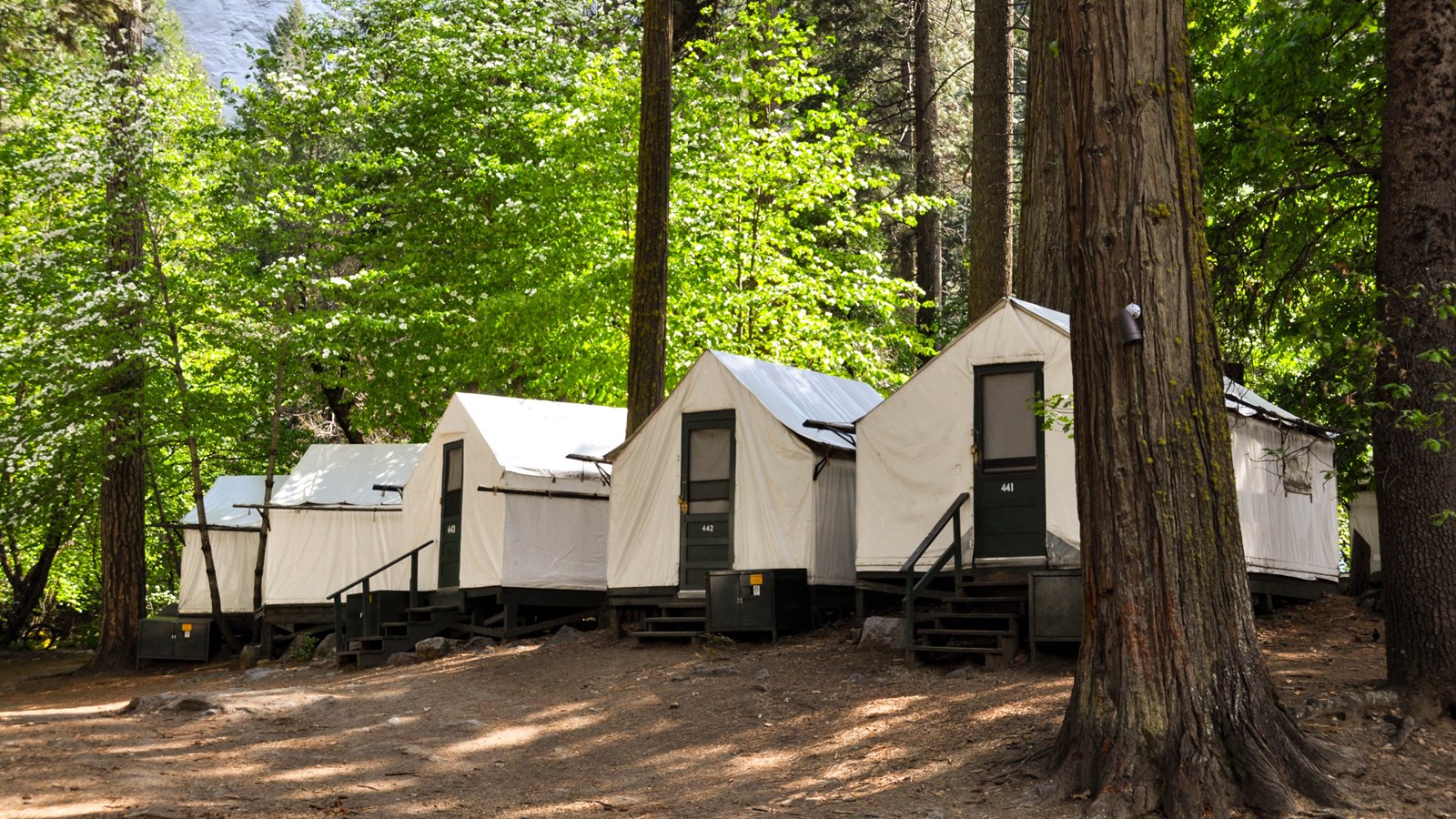
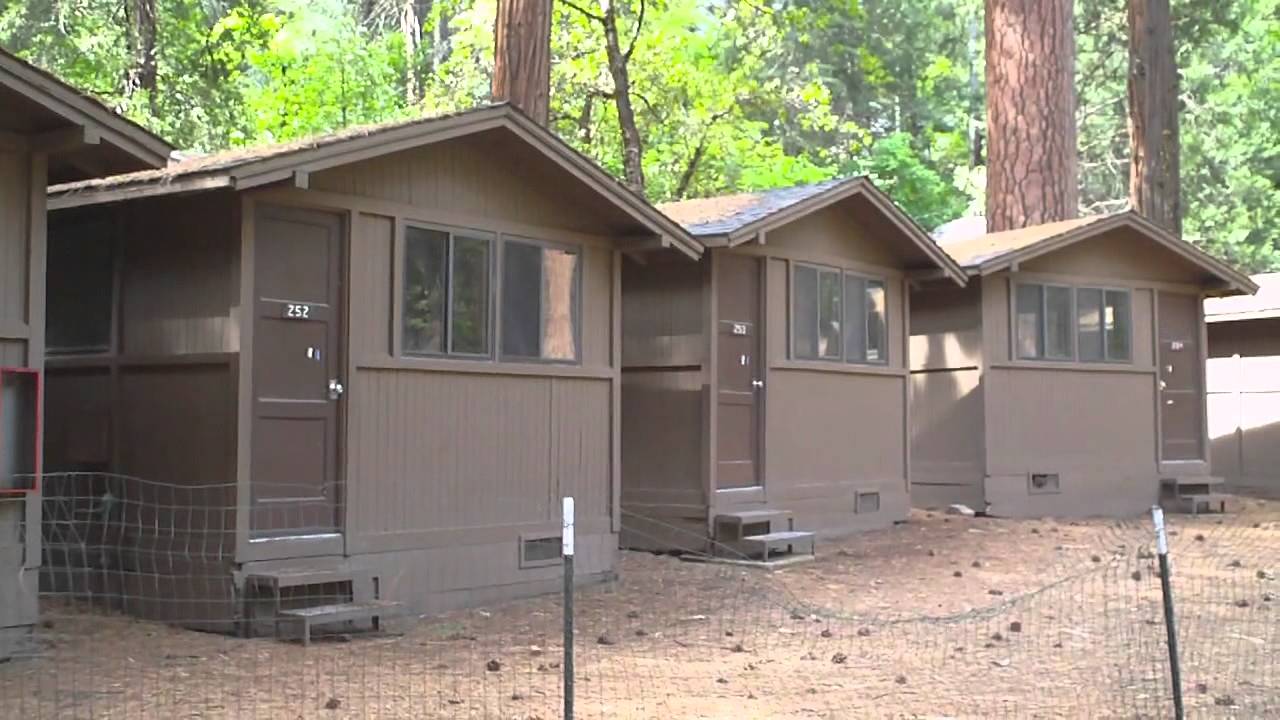
In plain terms, a Curry Village tent cabin is a canvas-walled structure on a raised platform with a real door that locks. Inside, you get beds and basic furnishings. Outside, you are still very much in the Valley forest, which is the whole point.
One quick reality check that helps: there are multiple tent-cabin configurations. The number of beds and the exact layout can vary by unit type, so I always treat my confirmation details as the final word.
What to expect inside
- Canvas walls and a solid door: The door locks, which is comforting, but the “walls” are fabric, so you hear a lot.
- Beds and basic blankets: Most stays I have had included bed linens and blankets, but policies can change and unit types differ. If you are picky about warmth or texture, pack like you might want one extra layer.
- Simple lighting and limited power: Some units have outlets and basic lighting, but do not assume you will have a lot of plug space for a crew. A small power strip can be a quiet hero.
- Minimal space: Room to sleep and stash your bags, not to sprawl. I treat it like a backpacking tent with furniture.
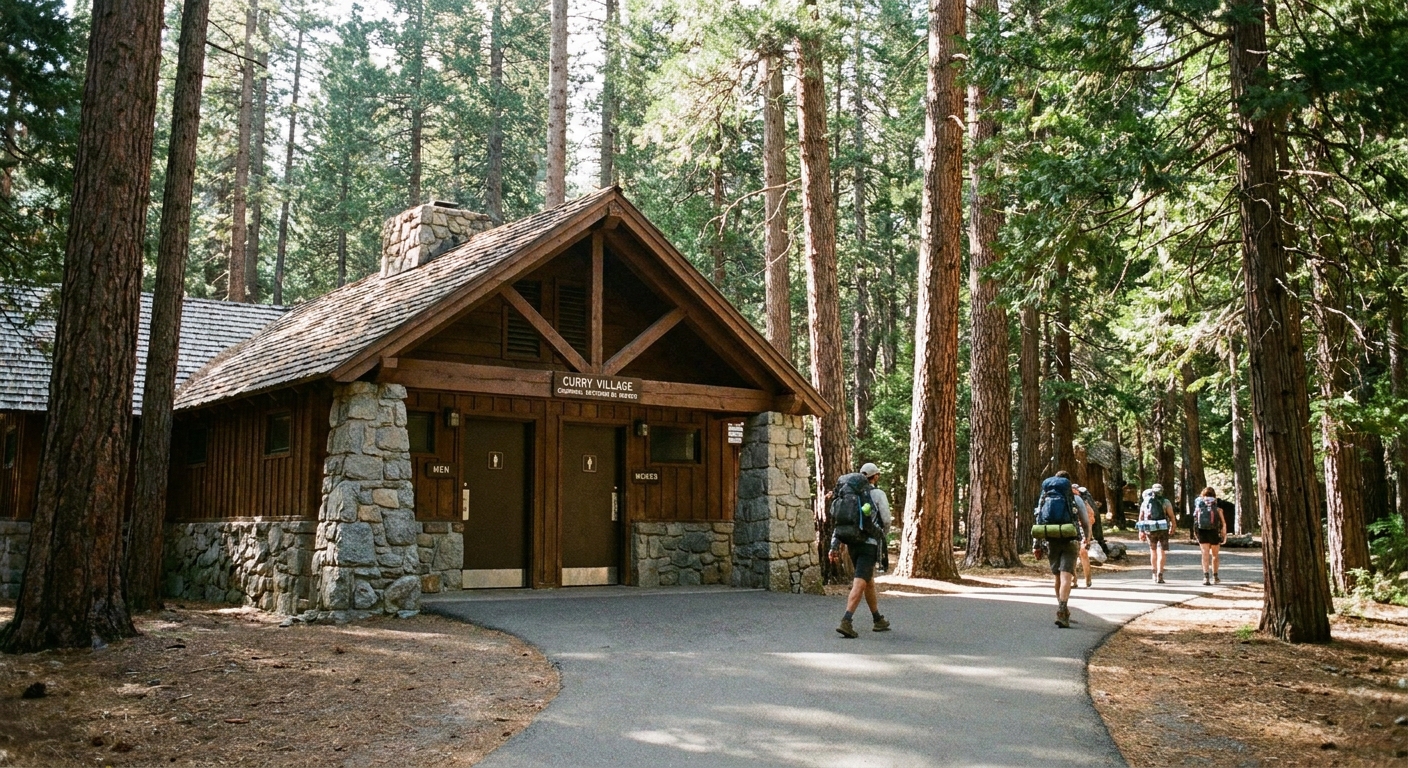
Bathrooms are not inside your tent cabin. You will walk to shared bathhouses, which are part of the Curry Village experience and, honestly, not bad if you plan for it.
Heated vs unheated
When people ask me whether they should book heated or unheated, what they are really asking is: “Am I going to freeze at 2 a.m.?” In Yosemite Valley, cold nights are not limited to deep winter. Shoulder seasons can surprise you.
Heated tent cabins
Heated units include a built-in heater. Specific heater type and how it is managed can vary by unit and season, but the practical takeaway is consistent: heat makes mornings easier. It helps you change clothes without doing the sleeping bag shimmy, and it takes the edge off crisp Valley nights.
- Best for: late fall through early spring, cold-sensitive sleepers, families with kids, and anyone who wants to linger over coffee instead of sprinting to it.
- Still bring warm layers: canvas sheds warmth quickly, and you will feel nighttime temperature swings.
Unheated tent cabins
Unheated units can be totally fine in warmer months, especially if you run hot or you are arriving with a camping mindset. But remember: Yosemite Valley can cool down fast after sunset, and canvas cabins track outdoor temps more closely than a hotel room.
- Best for: late spring through early fall (especially mid-summer), budget-focused travelers, and people who already sleep comfortably in a tent.
- Plan for cold snaps: a randomly chilly night happens, and you will be glad you packed one “too warm” layer.
My rule of thumb: if your trip includes April, May, September, October, or any winter month, I lean heated if you have the choice. If you are visiting in peak summer, unheated can be perfectly comfortable with smart sleep layers.
Bedding and sleep comfort
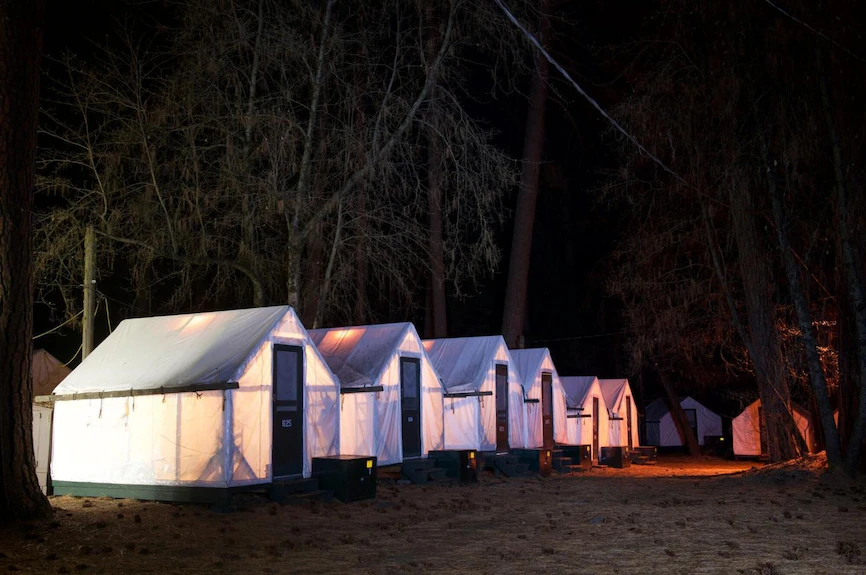
The tent cabin bed setup is meant to be easy: you arrive, drop your bag, and you are not wrestling with tent poles. Still, canvas cabins sleep differently than hard-walled rooms because drafts and temperature swings are part of the deal.
What bedding is like
Expect functional, lodge-style bedding. Many guests find linens and blankets provided, but because what is included can vary by unit type and policy changes, I plan like a pragmatic adult: if a warm, cozy bed is essential to your happiness, bring one extra sleep layer you can throw on top or wear to bed.
What I pack for cold nights
- Warm sleep layer: merino or thermal top and bottoms. These take almost no space and deliver huge comfort.
- Thick socks: dedicated sleep socks can be the difference between cozy and miserable.
- Beanie: if you get cold easily, sleeping in a beanie in a canvas cabin is not dramatic, it is efficient.
- Lightweight packable jacket: for late-night bathroom walks and early-morning coffee runs.
- Optional but elite: a compact sleeping bag liner for the “I want my own cocoon” feeling.
Noise tip that helps sleep, too: I bring soft foam earplugs. They solve two problems at once: thin walls and early risers.
Shared bathhouses
Shared bathrooms are part of the Curry Village tent cabin tradeoff. You are swapping en-suite convenience for location and that semi-camping vibe. The trick is packing and timing.
How to make it painless
- Bring shower shoes: lightweight sandals or flip-flops.
- Use a small toiletry tote: something that can hang or sit on a counter without exploding.
- Pack a headlamp: not because it is pitch black, but because it keeps your hands free and makes late-night walks easier.
- Go early or go late: peak times can feel like a busy ski lodge. Off-peak feels calm.
- Carry a small towel strategy: quick-dry towels earn their keep here.
If you are the type who needs a long, steamy shower to feel human, plan your day so you can shower at an off-hour. Yosemite mornings are better when you are not standing in a wet line.
Bear rules and lockers
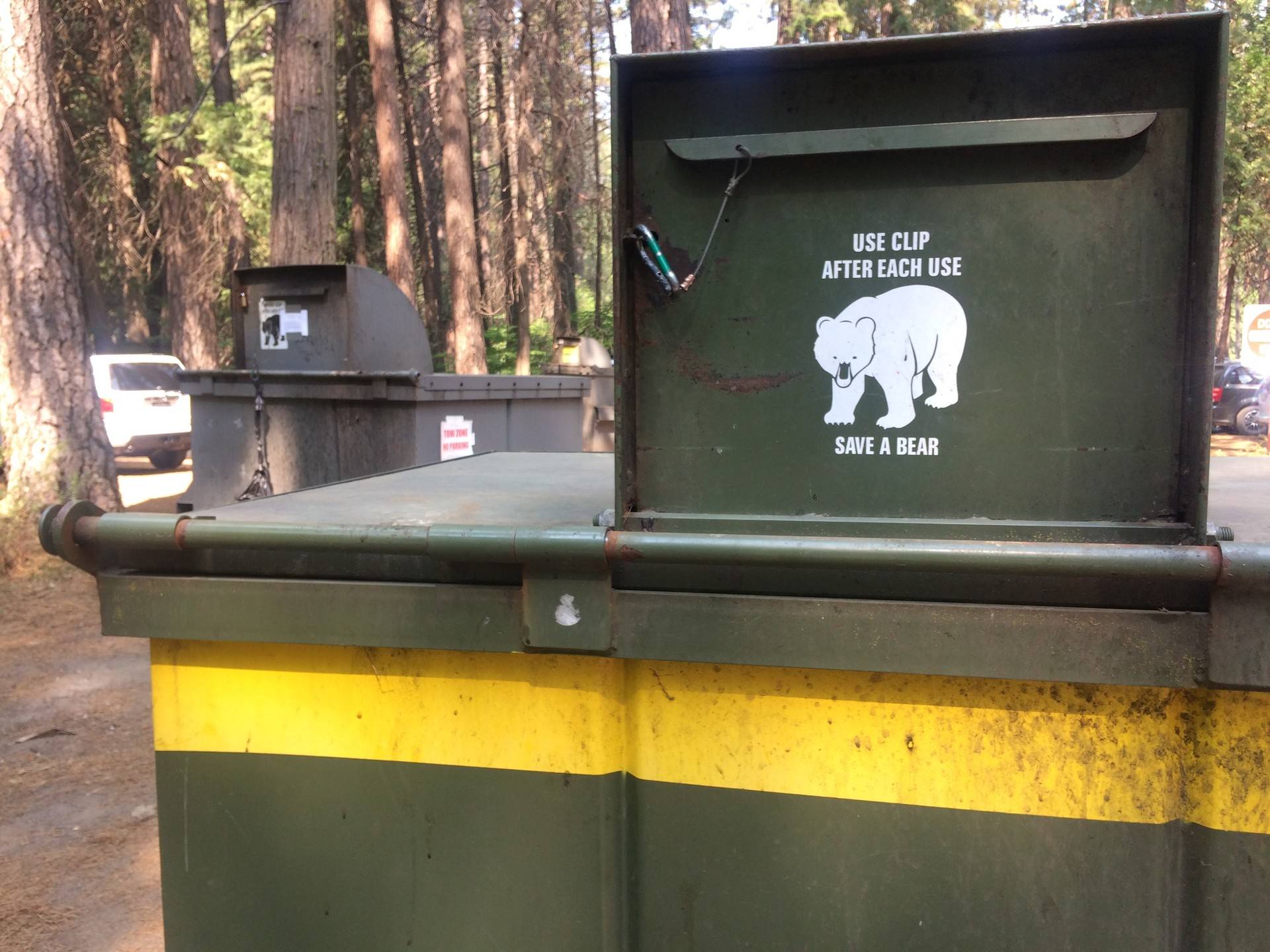
Yosemite bears are smart, persistent, and rewarded by human carelessness. Curry Village takes food storage seriously for a reason. The good news is that the system is simple once you commit to it.
The rule that matters
Do not keep food or scented items in your tent cabin. In Yosemite, “scented” is broader than people expect. Think toothpaste, deodorant, sunscreen, lip balm, gum, and anything else that smells like something a bear might want to investigate. Even if you are stepping out briefly, I treat the locker as the default home for anything scented.
How lockers work in practice
- Use the provided bear locker: store all food and scented items inside whenever you are not actively using them.
- Keep your car clean, too: if you brought a vehicle, do not treat it like a pantry.
- Do not try to hide things: bears and ravens are better at this game than we are.
- Set up a routine: I do a quick scent check before bed and again when I leave in the morning.
It can feel fussy on night one. By night two it becomes automatic, like locking your front door. And it protects wildlife, your stuff, and everyone else’s trip.
Noise and thin walls
Canvas is honest. It does not pretend to be soundproof. If you want silence, you want a different lodging style. If you want proximity to Yosemite Valley and you can roll with some neighbor noise, tent cabins are a great deal.
What you will hear
- Footsteps on paths and platforms
- Zippers, duffels, and the morning pack-up shuffle
- Kids waking up early (sometimes very early)
- Snippets of conversation through canvas
- Wind, rain, and wildlife sounds that are genuinely lovely
How I sleep anyway
- Earplugs: my number one Curry Village tent cabin essential.
- White noise: a phone app on low volume can smooth out the sharp sounds.
- Own the Yosemite schedule: earlier bedtimes help because the village wakes up early.
If you are a light sleeper and you know noise will ruin your trip, consider a hard-sided option in Curry Village instead of hoping the canvas will behave like drywall.
Tent cabins vs hard-sided
Curry Village has more than one lodging style. The biggest difference is the shell around you.
Canvas tent cabins
- Pros: feels outdoorsy, often more affordable, iconic Yosemite experience, great location within the village.
- Cons: more temperature swing, more noise, shared bathhouses, less privacy.
Hard-sided cabins
- Pros: better sound buffering, more stable temperature, more solid sense of privacy, still walkable to Curry Village services.
- Cons: less of that sleeping in the pines feeling, and availability can be tight.
When I am traveling with someone who is new to the outdoors, I lean hard-sided because it bridges the gap between national park dream and I would like to sleep. When I am traveling solo or with my fellow early-riser hikers, I love the tent cabins because they keep the whole trip feeling simple and grounded.
Logistics that matter
This is the stuff that can make your arrival feel smooth or chaotic.
Check-in and timing
Curry Village can feel like a small city at peak hours. If you can, arrive with daylight to spare so you are not learning the paths and bathhouse locations in the dark on your first night.
Parking and unloading
Plan for a little bit of schlepping. Depending on where your unit is, you may not be able to park directly next to your tent cabin. I pack so I can move everything in one or two trips and I keep my “essentials” (headlamp, layers, toiletries, chargers) easy to grab.
Trail access reality
Curry Village is well-positioned for exploring Yosemite Valley, but “close to the trailheads” depends on the trail. For example, it is relatively convenient for getting to the Happy Isles area, while other popular trailheads take more of a walk, a shuttle ride, or a drive. I like to check my intended trailhead the night before and commit to a morning plan.
What to pack
I am a carry-on-only person, even for Yosemite, so this list is intentionally realistic. The goal is warmth, sleep, and bear-rule compliance without hauling your entire closet into the Valley.
My non-negotiables
- Headlamp
- Earplugs
- Warm sleep layers (top and bottom)
- Puffy jacket or warm midlayer
- Shower shoes
- Quick-dry towel
- Small toiletry tote
- Reusable water bottle
- Portable power bank
Nice-to-haves
- Sleep mask (early sunrise, headlamps outside)
- Light gloves for cold mornings
- Small microfiber cloth for condensation or wet shoes
- Compact power strip (if you are sharing outlets)
Food and scented items strategy: pack a dedicated stuff sack or small tote that is your bear locker bag. When everything scented lives in one place, you are less likely to accidentally leave chapstick in your daypack overnight.
Quick expectations
- If you need hotel-quiet and climate control, choose a hard-sided cabin.
- If you want to be in the heart of Yosemite Valley with a semi-camping vibe, tent cabins are a win.
- Heated is worth it for shoulder season and winter comfort.
- Shared bathhouses are easy if you pack shower shoes and a headlamp.
- Bear lockers are mandatory, and your trip will go better if you treat them like part of the ritual.
FAQ
Are Curry Village tent cabins safe?
Yes, in the normal travel sense. You have a locking door, and Curry Village is a busy, well-trafficked area. The bigger safety item is wildlife safety: follow food storage rules and do not keep scented items in your cabin.
Will I be warm enough in an unheated tent cabin?
In summer, often yes. In shoulder seasons, it depends on the night and your personal tolerance. Pack thermal sleep layers, socks, and a warm midlayer so you are not gambling with your sleep.
Do the tent cabins have private bathrooms?
No. You will use shared bathhouses. Bring shower shoes, a headlamp, and a toiletry tote and it becomes a minor detail rather than a daily annoyance.
How bad is the noise?
It varies by neighbors and time of year, but you should assume you will hear people. Earplugs are the simplest fix. If you are very noise-sensitive, consider hard-sided lodging.
Can I keep snacks in my tent cabin if they are sealed?
No. In Yosemite, sealed does not mean scent-free. Store all food and scented items in the bear locker. This is one of those rules that protects both visitors and wildlife.