Alabama Hills Near Lone Pine
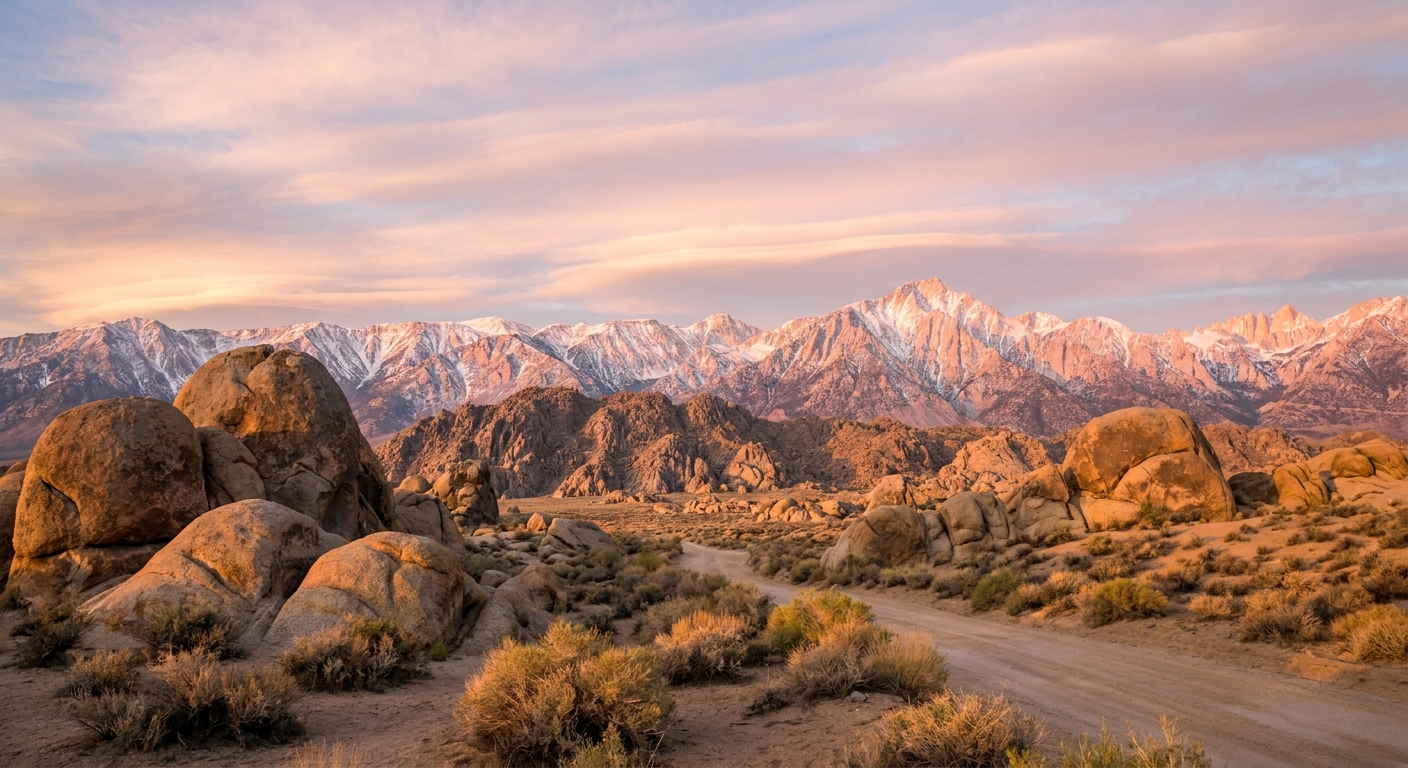
Alabama Hills National Scenic Area sits right where the Owens Valley turns cinematic: rounded granite boulders in the foreground, the Sierra Nevada rising like a stage curtain behind them. It is one of those rare places where you can hike to an arch before breakfast, sip a good coffee in town by mid-morning, and still be back out for golden hour without feeling like you spent the whole day in a car.
Because it is so close to big-name parks (and because the view screams “Sierra”), first-timers often assume the rules and road expectations are similar to Yosemite. They are not. Alabama Hills is primarily Bureau of Land Management (BLM) land with its own set of do’s and don’ts, plus a few local realities that matter more than bravado, like washboard roads, dust, and how quickly soft shoulders can swallow a low-clearance car.

Know where you are: BLM land
Think of Alabama Hills as its own destination, even if you are using it as a stop on an Eastern Sierra road trip. The land is managed by the BLM, and the vibe is different from a fee-gated national park: more open access, fewer facilities, and a bigger responsibility on visitors to keep the place intact.
What that means in plain language
- Expect limited services on-site. There are no lodges, camp stores, or reliable water sources scattered through the rocks.
- Facilities are minimal and change. Some popular areas may have vault toilets or seasonal portable toilets, but do not count on them. Bring what you need.
- Rules are posted at trailheads and main access points. When in doubt, defer to posted BLM signage first, then local guidance.
- Day-use and dispersed camping are different. You can usually wander, hike, and photograph freely in day-use areas, but camping has extra nuance and may be limited to specific designated zones with permit requirements.
Conservative rule of thumb: If you did not see it explicitly allowed on a sign or an official page, assume it may be restricted or discouraged and choose the lower-impact option. Alabama Hills is popular because it is easy. Keeping it easy depends on visitors not improvising new parking spots, new fire rings, or new “roads.”
Mobius Arch: the classic shot
Mobius Arch is the Alabama Hills photo icon for a reason: it frames the Whitney massif and the Sierra crest in a way that looks almost too perfect. The good news is that the hike is short. The more important news is that short does not mean empty.
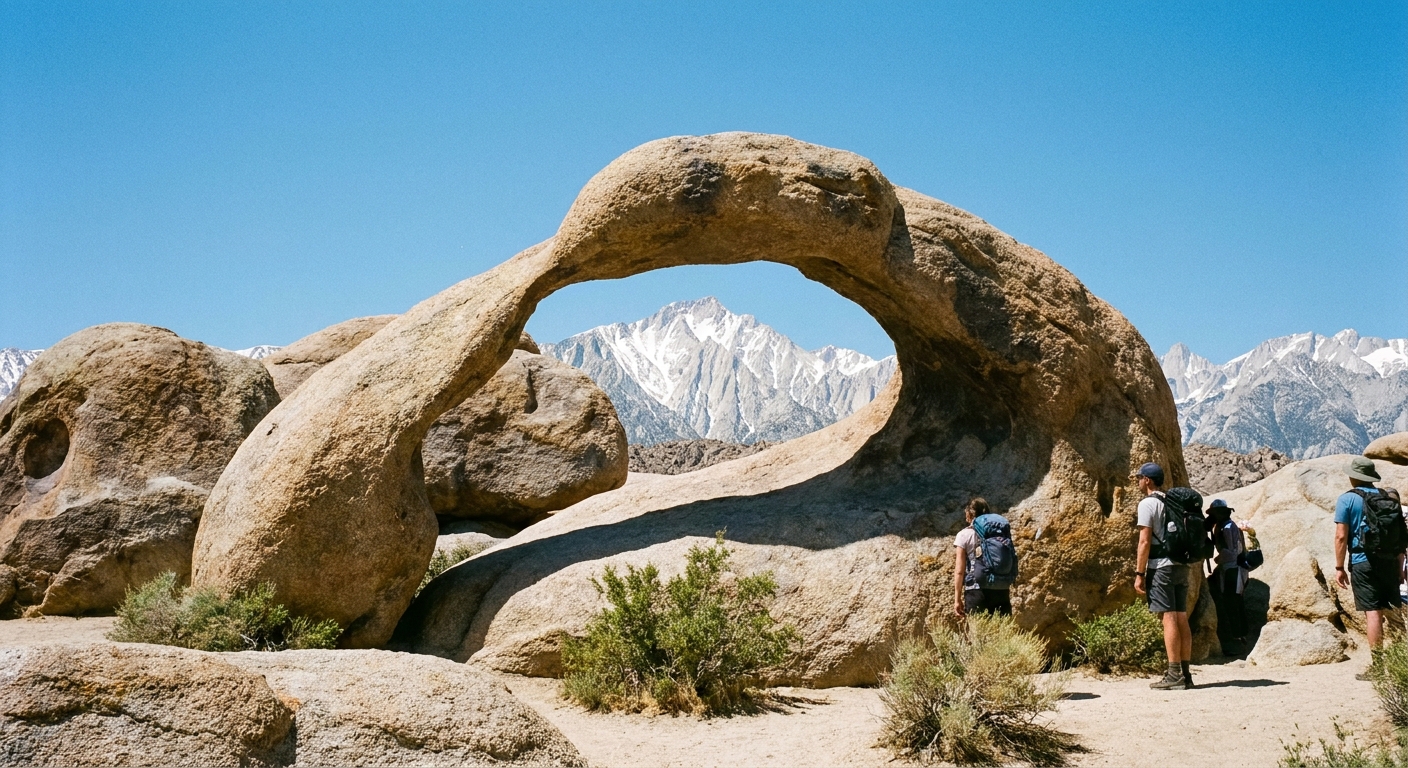
Mobius Arch loop basics
- Distance: Short loop, typically under 1 mile depending on how you wander.
- Difficulty: Easy, with a few rocky steps and uneven surfaces near the arch.
- Time: 20 to 45 minutes for a straightforward visit, longer if you are photographing.
- Best light: Sunrise and early morning for the Sierra glow and cooler temps. Late afternoon can be beautiful too, but crowds often stack up.
How to enjoy it without competing
- Arrive earlier than you think. If sunrise is at 6:00, being parked by 5:30 makes the whole stop feel calmer.
- Photograph respectfully. Take your shot, then step aside. Everyone is trying to line up the same frame.
- Stay on durable surfaces. In a boulder field it is tempting to cut anywhere. Repeated shortcuts widen social trails fast.
- Park like a grown-up. Use established parking areas, do not block the road, and do not turn shoulders into overflow lots.
My favorite Mobius Arch moment is not the hero shot. It is the minute after, when the sun clears the ridge and the whole valley warms up like someone turned on a dimmer switch.
Movie Road: dirt etiquette
Movie Road is the famous corridor through Alabama Hills where countless westerns and commercials were filmed. Today it is a scenic dirt drive that makes the landscape accessible, but it is also a place where visitor behavior directly affects conditions.
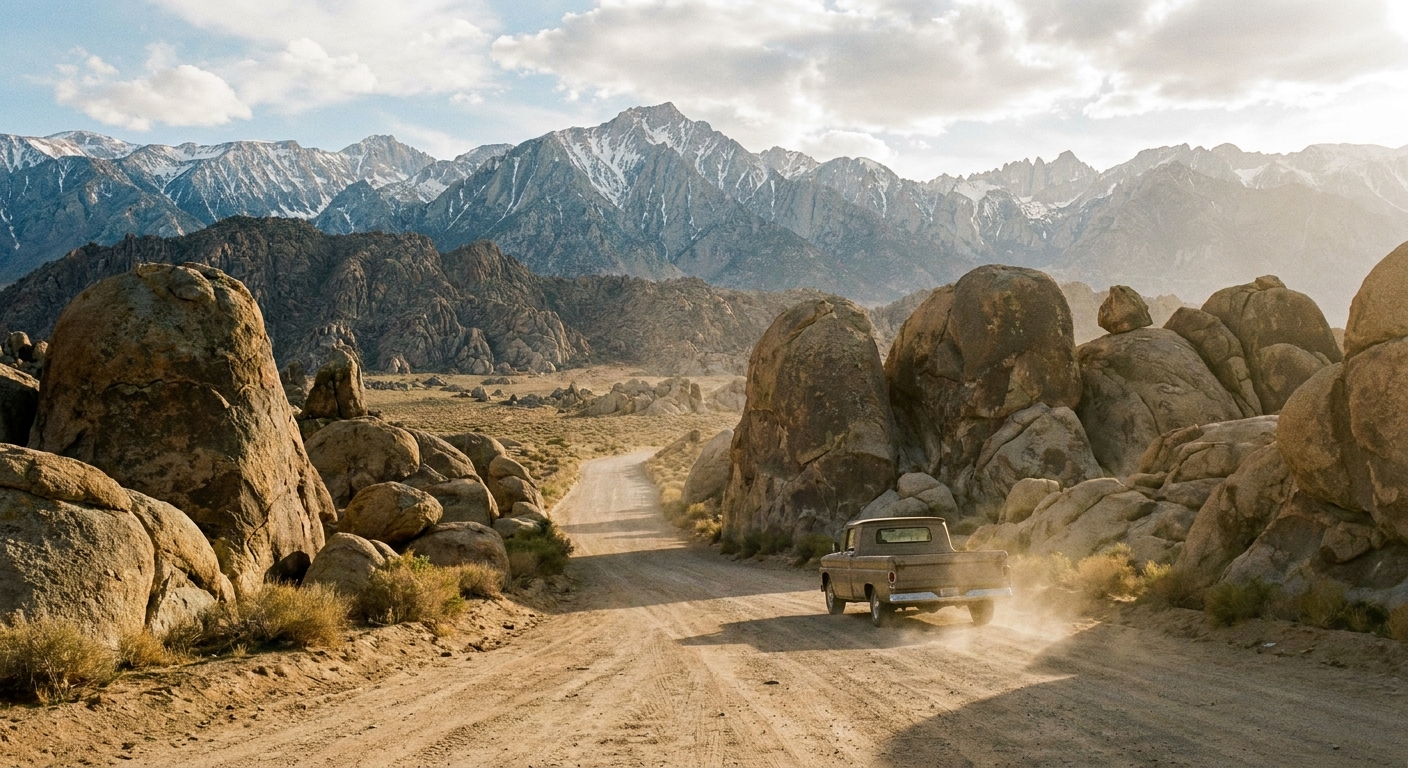
Drive like you want to come back
- Go slow for washboard. Speed does not “solve” corrugation. It adds dust, reduces control, and accelerates road damage.
- Yield and share pullouts. Let oncoming vehicles pass in established wider areas. Do not create new bypasses around ruts.
- Stay on the existing roadbed. Cutting corners or pulling off onto soft shoulders widens the track and scars the desert.
- Be dust-aware. If you are behind a cyclist, hiker, or a slower vehicle, give extra space and pass gently when safe.
- Pack out everything. That includes orange peels, coffee cups, and the tiny bits of tape people use for “marking” shots.
Clearance notes (cautious, not macho)
Most visitors can do the main Alabama Hills roads in a standard car when conditions are dry, but roads change quickly with washboard, potholes, and occasional deep ruts. If you are in a low-clearance vehicle:
- Drive slower than you think you should. Your goal is to avoid scraping, not to keep up with someone in a truck.
- Avoid questionable spur roads. Side tracks can get rougher fast and may end in tight turnarounds.
- After rain, reconsider. Mud and soft sand can turn an “easy dirt road” into an expensive tow.
If you are unsure, treat Movie Road as a scenic out-and-back and leave the rougher spurs for another time. Alabama Hills is not a place where you need to prove anything to get the view.
Camping and day-use: basics
Camping is one of the biggest points of confusion here, partly because people arrive with national-park expectations and partly because the area has seen changing restrictions over the years due to heavy use. The safe approach is to plan for day-use first, then treat camping as a bonus if you can confirm current rules.
What to know before you camp
- Day-use: Generally straightforward. Park in established areas, keep to existing routes, and follow posted signs.
- Dispersed camping: Dispersed camping is limited to designated areas, and a free BLM dispersed camping permit is required. Specific rules can include where you can camp, how long you can stay, and which routes you must use.
- Fires and stoves: Fire restrictions are common in the Eastern Sierra. Also, a free California Campfire Permit is typically required to operate a camp stove, even a portable gas stove. Check current restrictions and permit requirements before you arrive.
Best practice: Before you set your heart on a campsite, verify current Alabama Hills camping guidance via official BLM channels or local ranger information. If you cannot confirm, book a developed campground nearby or stay in Lone Pine. You will sleep better, and you will not risk a citation or an awkward late-night relocation.
Leave No Trace that matters here
- No new rock rings. Fire rings and “seating circles” multiply quickly in popular desert areas.
- Human waste: Use toilets when available. If none are available, follow local guidance closely and pack-out requirements if posted. Do not assume you can dig anywhere in desert soil.
- Quiet hours are a kindness. Sound travels across open rock like it has a megaphone.
Sunrise: timing and spots
The signature Alabama Hills sunrise is less about the sun itself and more about what it does to the Sierra. Peaks catch first light, the valley stays cool and shadowed, and the boulders glow softly as the sky shifts from steel-blue to apricot.
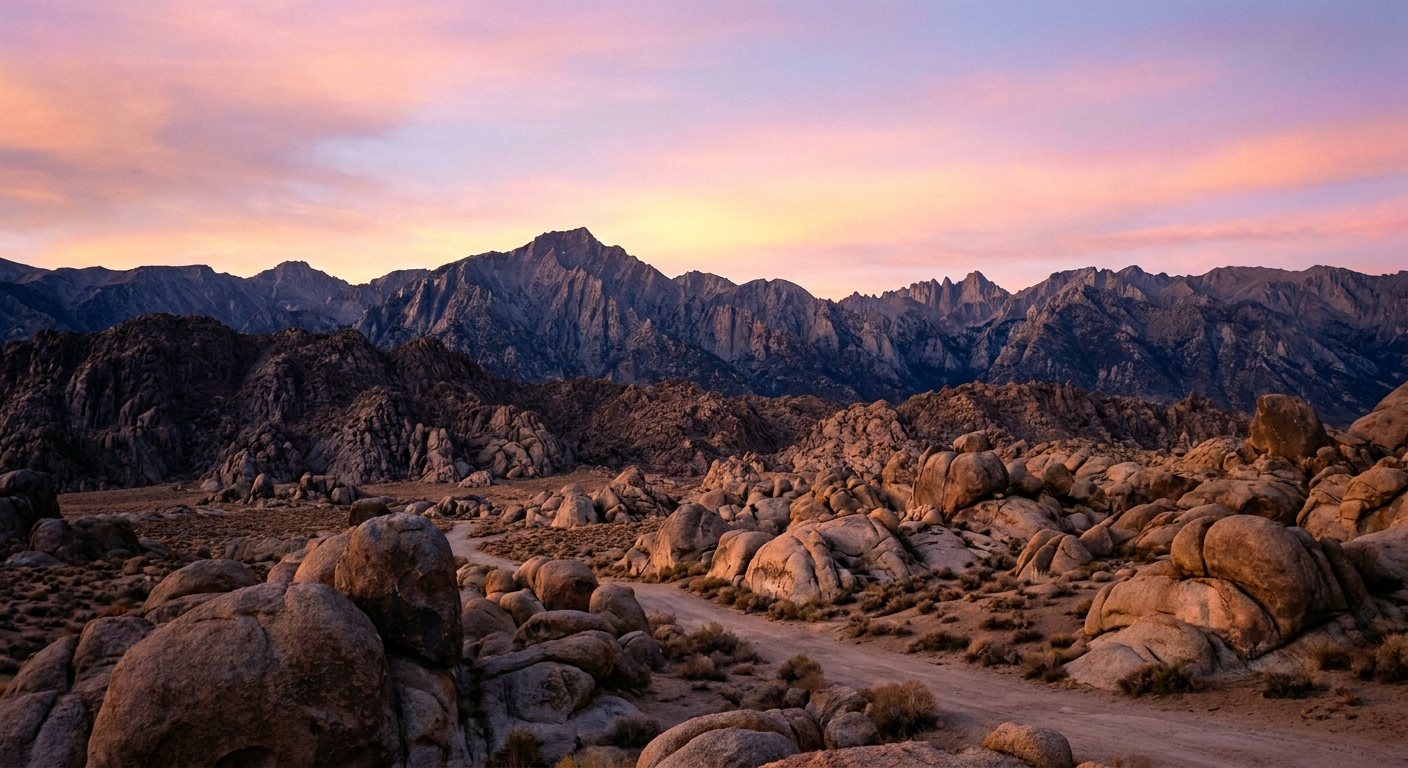
Simple sunrise plan
- Pick one primary spot. Mobius Arch is classic, but any open pullout with a clear Sierra view can be magic.
- Arrive 30 to 45 minutes before sunrise. The best color often starts before the sun crests.
- Bring layers. Even when Lone Pine is warm later, morning in the rocks can feel surprisingly cold and breezy.
- Use a headlamp. Not for drama, for ankles. The ground is uneven and easy to misstep in the dark.
Photo tips that keep it pleasant
- Skip loud music and bright lights. People come for quiet and dark-sky vibes.
- Keep phones and headlamps pointed down. It helps everyone preserve night vision and avoid lens flare in others’ shots.
- Be patient with the glow. The “money moment” can last five minutes. The best way to catch it is to already be there.
When to go
Alabama Hills is a year-round place, but your comfort level changes dramatically by season.
- Spring and fall: The sweet spot for cooler hikes and long photo light.
- Summer: Beautiful and harsh. Plan early and late, bring more water than you think, and do not linger in midday heat.
- Winter: Crisp light and fewer people, but wind can bite and snow or ice can affect dirt roads. Drive conservatively and have a backup plan.
Lone Pine: your basecamp stop
Lone Pine is your basecamp town, and it is conveniently close. This is where you top off gas, grab breakfast, and pick up the one thing you forgot because you packed carry-on only and convinced yourself you could “make do.”
What to do in town first
- Fuel up. Treat Lone Pine as your reliable stop before driving farther north or south along 395.
- Grab breakfast and water. Alabama Hills has views, not services.
- Check conditions. Ask locally about recent rain, road washouts, or closures if you are planning to explore beyond the main routes.
For current maps, closures, and BLM guidance, stop at the Eastern Sierra InterAgency Visitor Center (when open). For filming context and local storytelling, the Museum of Western Film History in Lone Pine is the place.
Access and navigation
Most people access Alabama Hills from Lone Pine via Whitney Portal Road, then turn onto the signed dirt routes such as Movie Road. Once you are in the boulders, many spurs are unsigned and all of them look plausible. Download an offline map before you lose service, and resist the temptation to “just see where that goes” if the track narrows into soft sand or a messy turnaround.
Half-day plan
If you want the highlights without turning it into an all-day production, this sequence is reliably satisfying.
- Pre-dawn: Drive up to Mobius Arch trailhead or a nearby pullout with Sierra views.
- Sunrise: Watch first light hit the peaks, then walk the short Mobius loop.
- Morning: Slow drive along Movie Road, stopping only at established pullouts.
- Late morning: Head back to Lone Pine for coffee and breakfast, then decide if you want a second round for afternoon light.
Quick checklist
- Headlamp for pre-dawn walking
- Warm layer and wind shell
- Extra water, even in cooler months
- Trash bag for pack-out
- Offline map or downloaded directions
- Patience for crowds at iconic photo spots
Alabama Hills is at its best when you treat it like a shared sunrise living room: beautiful, public, and surprisingly easy to mess up if everyone acts like they are the only person there. Drive gently, step lightly, and let the Sierra do what it does.