Aztec Ruins National Monument: West Ruins Loop

Maya Lin
Maya Lin is a travel journalist and outdoor enthusiast who believes the best trips combine rugged adventures with urban comforts. After spending six years backpacking across four continents, she founded Trail & Town Guide to help fellow travelers navigate both hidden mountain passes and bustling city neighborhoods with confidence.
Aztec Ruins National Monument is one of those rare Four Corners stops that feels both easy and genuinely big in story. You can park, grab context in the visitor center, and be walking a quiet loop through ancestral Puebloan architecture in minutes. Then, if you are stitching together the classic Mesa Verde to Chaco corridor, Aztec is the history stop that does not require an expedition mindset.
Despite the name, Aztec Ruins has nothing to do with the Aztec Empire. The monument preserves a major ancestral Puebloan great house community that was built primarily in the 1100s and occupied into the 1200s (with continued Puebloan history in the wider valley). It is tied into the broader Chacoan world through architecture, regional routes, and shared cultural systems.
Quick logistics you will actually use
- Where: Aztec Ruins National Monument in Aztec, New Mexico, just northeast of Farmington.
- Entrance fee: No entrance fee (still, it is worth a quick check on the official site before you go in case policies change).
- Main walk: The West Ruins self-guided loop starts near the visitor center and returns to the same area.
- Distance and feel: Roughly half a mile, mostly flat and easy, with some historic thresholds and uneven spots near walls.
- Time needed: Plan 60 to 90 minutes for the route plus the visitor center. If you love reading every sign and sitting quietly in the Great Kiva, give it 2 hours.
- Best time of day: Morning for cooler temps and calmer light on the masonry. Late afternoon can be lovely, but watch for seasonal closing times.
- Hours and seasonality: Hours can vary by season and occasionally by staffing or weather. Double check same-day details when you arrive.
Visitor center timing tip: Start inside first. The exhibits and orientation help the ruins click, and you will get current info on trail conditions, temporary closures, and which spaces are open that day. If you arrive near closing, reverse it: walk the loop first, then pop into the museum if time allows.
Walking the West Ruins Loop
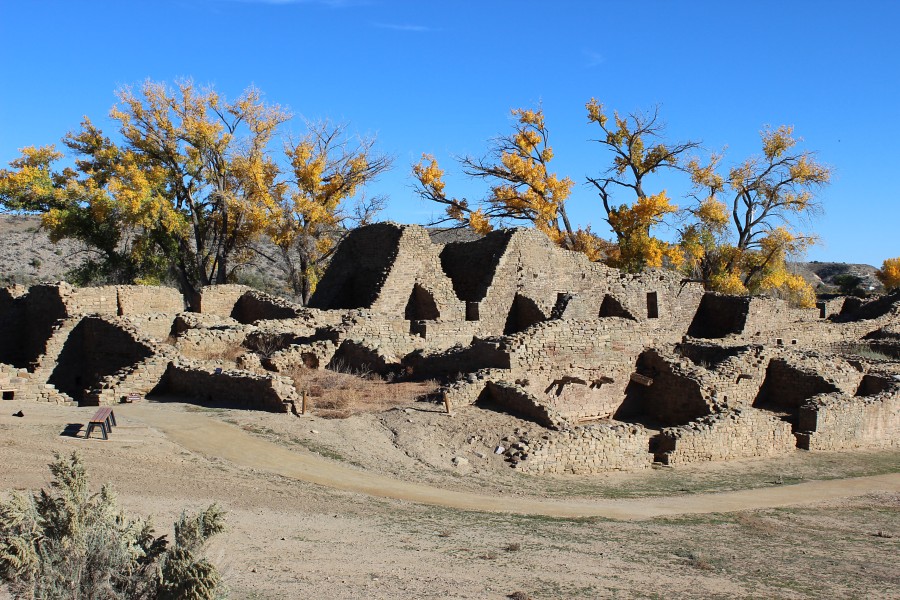
The West Ruins area protects the best-known structures in the monument, including a multi-room great house with remarkably preserved masonry and a reconstructed Great Kiva. The route is self-guided with interpretive signs, so you can move at your own pace and linger where the place pulls you in.
What you will see
- Chacoan-style great house architecture: Look for tight, clean stonework and the overall monumental layout that signals Aztec’s regional importance.
- Room blocks and courtyards: The low walls can look subtle at first. Pause and let your eye trace doorways, passages, and how spaces connect.
- Timber and masonry details: Even if you are not a “ruins person,” it is hard not to respect the engineering and patience in the construction.
A pacing strategy that works
If you are coming from Mesa Verde or heading toward Chaco, you may feel tempted to rush. The full loop is short, so this is optional, but it works well when you want the place to land:
- Walk the first third slowly and read the first few interpretive panels to calibrate your understanding.
- Move steadily through the middle and save your lingering time for the Great Kiva and the most intact masonry sections.
- Finish with a second-pass mindset on anything that you did not “get” the first time. Most people have an aha moment on the way back.
Great Kiva: how to visit respectfully
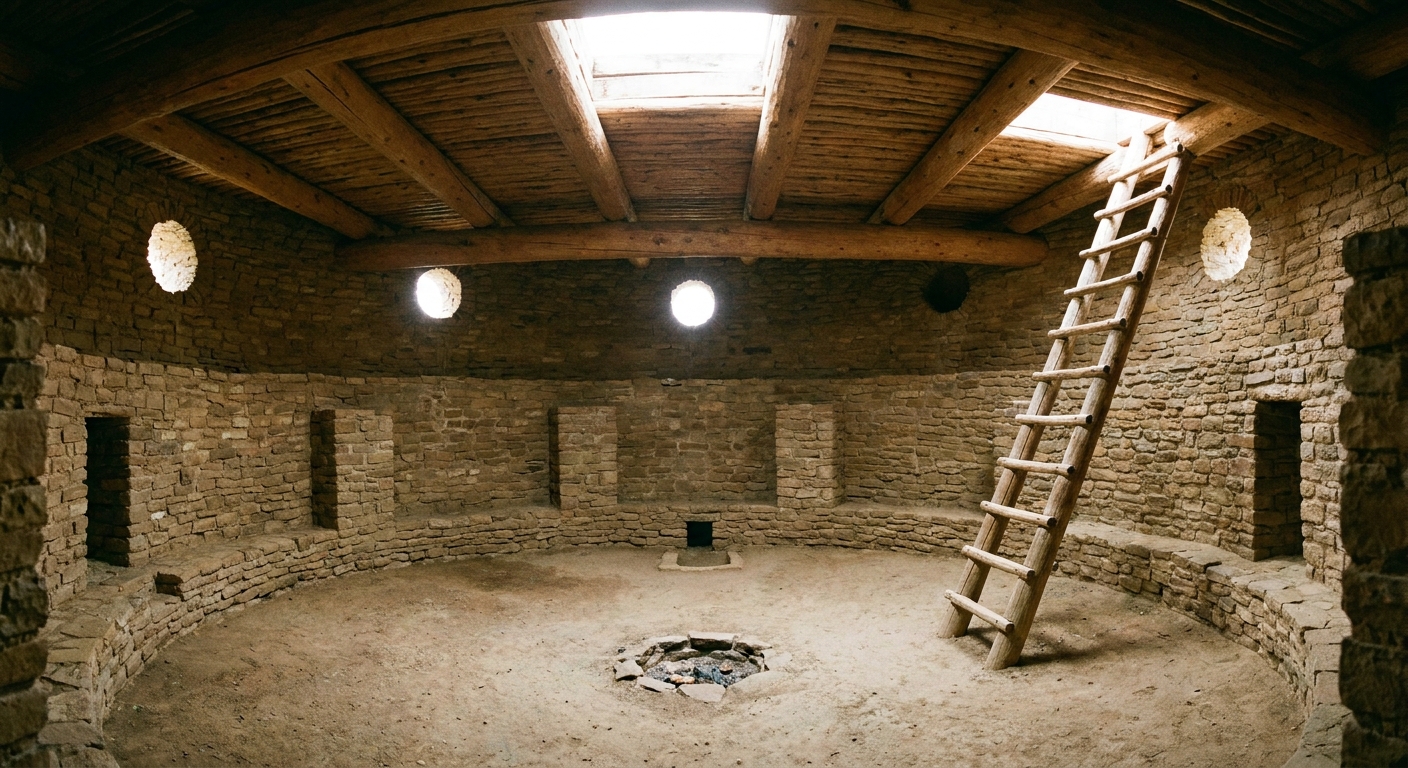
The Great Kiva is often the emotional center of the visit. It is a large, circular ceremonial space associated with community gatherings and ritual life. At Aztec Ruins, the Great Kiva has been reconstructed, which gives you a rare chance to understand scale and form without having to imagine every dimension from foundations alone.
A quick reconstruction note: The Great Kiva you see today was rebuilt in the 1930s under archaeologist Earl Morris, based on excavated evidence and careful documentation. Knowing that adds another layer: you are standing in both an ancestral place and a chapter of early Southwest archaeology.
Access notes: Great Kiva access can vary due to maintenance, weather, or resource protection needs, and it may be closed at times, including for extended periods. Check the visitor center when you arrive for the day’s status and any special guidance.
- Take your time: Step in, let your eyes adjust, and notice how the space changes sound and temperature.
- Keep voices low: Even on busy days, a quieter tone helps everyone experience the place with the seriousness it deserves.
- No climbing where you should not: Follow posted rules and barriers. Even small impacts add up.
Heat, sun, and wind
This corner of New Mexico can feel deceptively intense. The walk is not a backcountry hike, but it is still exposed in places, and the combination of high desert sun and low humidity can sneak up on you.
- Bring water: Especially late spring through early fall. If you are road-tripping between parks, keep an extra bottle in the car for the next leg.
- Sun protection: Hat, sunglasses, and sunscreen are not optional in midday light.
- Wind layer: A light long-sleeve or windbreaker can make shoulder-season visits far more comfortable.
- Monsoon awareness: In summer, short storms can arrive quickly. If thunder is close, prioritize safety and follow staff guidance.
Accessibility and comfort
Aztec Ruins is one of the more approachable archaeology sites in the region because the main experience is concentrated and close to services. Still, surfaces and thresholds are part of a historic setting.
- Path surfaces: Expect a mix of paved or packed surfaces and some uneven spots near ruins. Good walking shoes help.
- Mobility considerations: Some viewpoints are easier than others. If you have limited mobility, ask the visitor center for the most accessible route segments and current conditions.
- Restrooms and shade: Use visitor center facilities before heading out. Shade can be limited on portions of the route.
- Quiet breaks: If crowds spike, the best reset is to step aside, let a group pass, and then continue at your own pace.
Archaeology etiquette
These places are not just “old stones.” They are cultural sites with living descendant communities. A few small habits make a meaningful difference.
- Stay on designated trails: Soil crusts and fragile features are easy to damage and slow to recover.
- Do not touch masonry: Oils from hands, repeated contact, and pressure can degrade surfaces over time.
- Leave everything where it is: Pottery sherds, flakes, and small objects are part of the record. Photograph, do not pocket.
- Be thoughtful with photos: Follow posted rules. Avoid disrupting others who are experiencing the space quietly.
- Drones: Most National Park Service sites prohibit drones except by permit. Assume no, unless a ranger tells you otherwise.
- Pets: Pet rules can be strict at archeological sites. If you are traveling with a dog, check current policy and plan on taking turns or using shaded parking as appropriate.
My personal rule: if I would not do it in a church, memorial, or someone’s home, I do not do it in a kiva or great house.
Pairing Aztec with Salmon Ruins or Farmington
If you are driving the Mesa Verde to Chaco corridor, Aztec Ruins is perfectly placed for a history doubleheader or a quick city comfort break. Here are two easy add-ons that keep the day flowing instead of turning into a zigzag.
Option A: Add Salmon Ruins
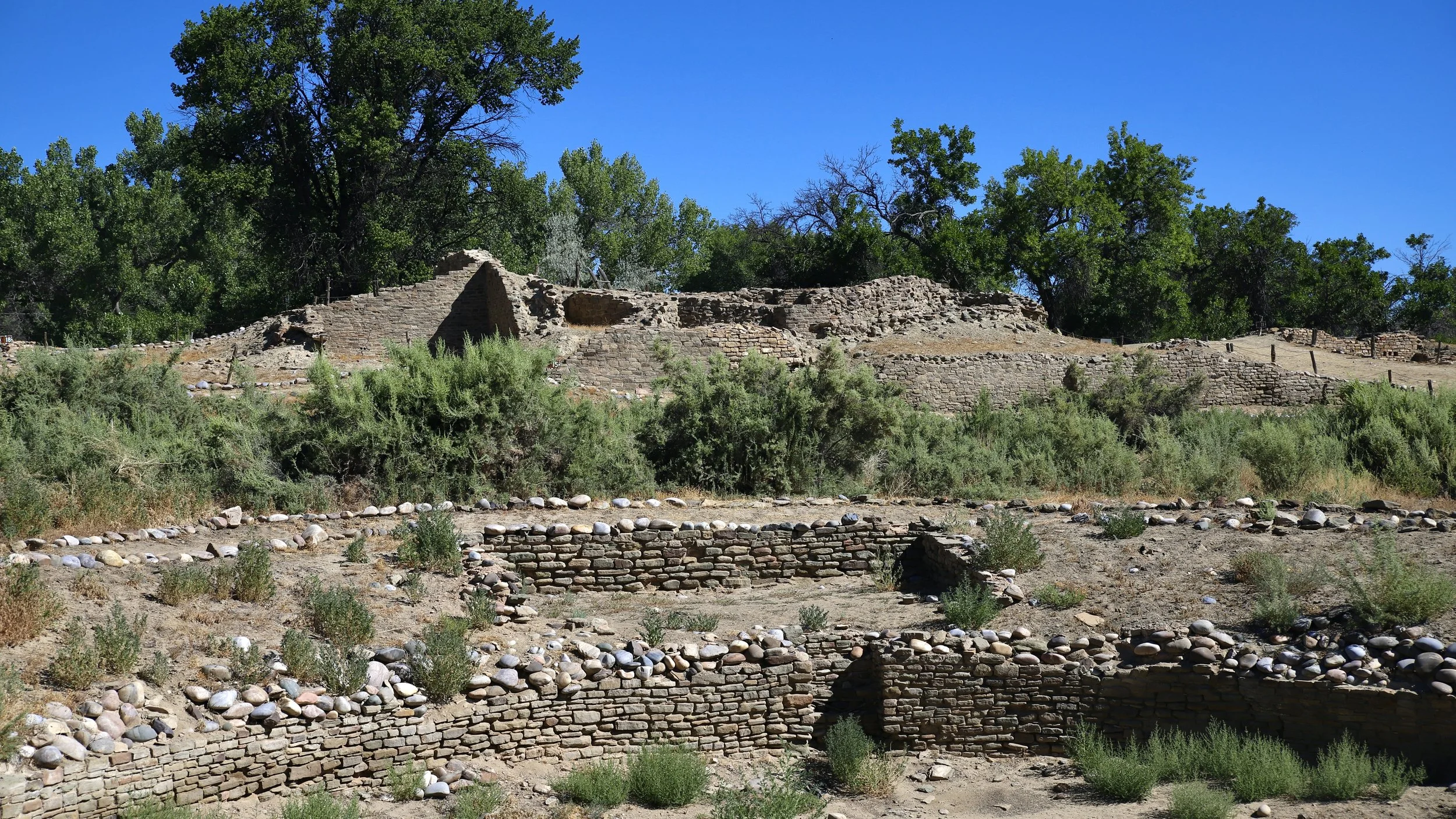
Salmon Ruins, near Bloomfield, is another major ancestral Puebloan great house site with a strong Chacoan connection. It is a smart pairing if you want to compare architecture and settlement patterns in the same day.
- Best for: Travelers who want more archaeology without committing to longer hikes.
- How to do it: Start at Aztec in the morning, then head to Salmon Ruins as a short second stop before continuing your drive.
- Why it works: You get two complementary sites and a deeper sense of regional scale.
Option B: Use Farmington
Farmington is your practical hub for gas, groceries, and a real meal. If your trip is balancing rugged parks with urban comforts, this is where you can do both.
- Coffee and food: Build in time for a sit-down meal or a good espresso before a longer drive segment.
- Stock up smart: Water, ice, and simple picnic items go a long way if you are heading toward more remote areas.
- Overnight option: If you are trying to avoid a punishing one-day push, Farmington makes a logical sleep stop between Mesa Verde and Chaco.
A smooth Mesa Verde to Chaco day
This route concept keeps your day realistic. Adjust based on where you slept, seasonal daylight, and how long you like to linger at sites.
- Morning: Drive in, start at Aztec Ruins visitor center for exhibits and current access notes.
- Late morning: Walk the West Ruins Loop and spend unhurried time in the Great Kiva if it is open.
- Lunch: Quick meal in Farmington or picnic with supplies you picked up earlier.
- Afternoon add-on: Choose Salmon Ruins for more archaeology or keep it simple with a Farmington break.
- Later drive: Continue on toward your next major stop on the corridor with water topped off and legs stretched.
Carry-on-only road trip mindset: Keep a small “site kit” accessible in the car: water, hat, sunscreen, a light layer, and a snack. It turns roadside history stops into something you actually enjoy instead of something you endure.
Before you go
Aztec Ruins National Monument rewards the traveler who shows up curious and unhurried. Give it a real hour, read a few signs, step into the Great Kiva with quiet respect, and you will leave with a clearer sense of how the Four Corners landscape connected communities long before modern state lines.
And if you are on that Mesa Verde to Chaco swing, this is the stop that makes the map feel like a story.