Badlands National Park: Door Trail, Notch Trail, One-Day Plan

Maya Lin
Maya Lin is a travel journalist and outdoor enthusiast who believes the best trips combine rugged adventures with urban comforts. After spending six years backpacking across four continents, she founded Trail & Town Guide to help fellow travelers navigate both hidden mountain passes and bustling city neighborhoods with confidence.
The Badlands feel like someone took the Great Plains, cracked it open, and revealed a whole other planet underneath. Sharp ridgelines, candy-striped buttes, prairie grass that glows at golden hour, and wildlife that wanders right up to the roadside as if it owns the place. The best part is you do not need a weeklong backpacking permit to get the wow factor. With two short, high-impact hikes and a smart driving loop on the Badlands Loop Road (SD-240), you can have a seriously memorable day here, then be eating a good dinner in Wall or Rapid City by night.
Know before you go
Best time of day
If you only remember one thing: build your day around light and heat. Badlands is exposed, windy, and often hotter than you expect.
- Sunrise is cooler and quieter, with soft shadows that make the ridges look sharper.
- Midday is fine for quick hikes if you have water and sun protection, but the light is flatter for photos.
- Sunset turns the formations warm and sculptural and is my favorite reward after an active day.
What to pack (carry-on only friendly)
- Water matters here: bring at least 2 liters per person for a one-day visit, and plan on 3 to 4 liters per person in summer or if you will be hiking in the heat. There is not reliable water on most trails.
- Sun protection: hat, sunglasses, sunscreen. There is very little shade.
- Grippy shoes. Notch in particular has steep, dusty footing.
- Light layer for wind and early mornings.
- Binoculars if you care about wildlife. You might surprise yourself.
Entrance, fees, basics
Badlands National Park has multiple entrances. Most travelers coming from I-90 use the Pinnacles Entrance near Wall. If you are based in Rapid City, you will likely approach from the west as well, unless you loop in the Minuteman Missile National Historic Site (a surprisingly compelling stop if you like history with context).
There is an entrance fee. If you already have an America the Beautiful pass, this is a great place to use it. Fees and hours can change, so check the official NPS page before you go.
Services inside the park are limited. Top off gas and grab food before you enter, especially if you are visiting outside peak hours.
Weather realities
- Heat and wind are the daily headline.
- Storms can roll in fast. If you hear thunder, move off exposed ridgelines and away from cliff edges. Do not try to “finish the last tenth of a mile” on a ledge in lightning weather.
- After rain, mudstone can be slick. Some trails also close periodically for safety or repairs.
Door Trail
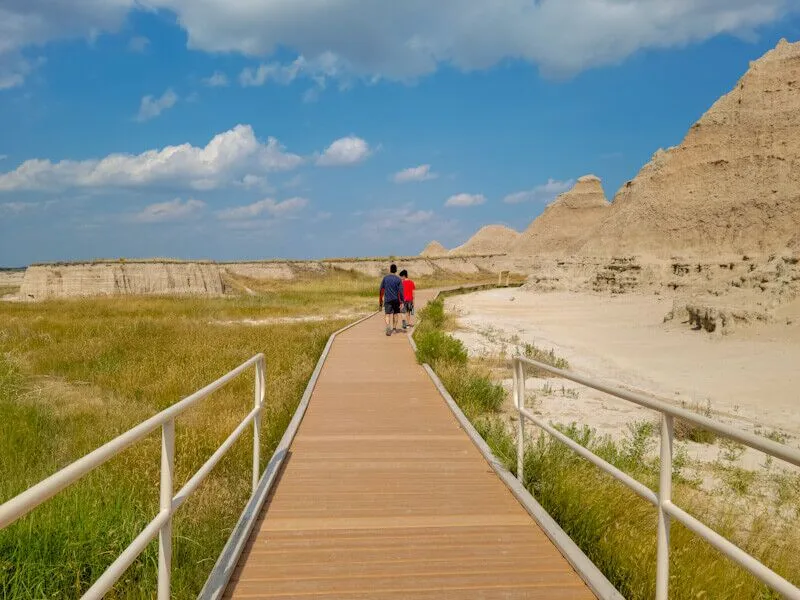
Door Trail is the best “welcome to the Badlands” hike because it delivers that alien-landscape feeling fast. The route begins as a boardwalk, then opens onto rock and hard-packed ground where you can walk among formations and look back toward the “door” in the wall of rock that gives the trail its name.
Quick stats (typical): about 0.75 miles round trip, often 20 to 45 minutes, easy with uneven surfaces once you leave the boardwalk. Note that the boardwalk has had periodic closures in recent years due to maintenance needs. Check current status before you build your day around it.
Why it is worth it
- Big payoff in little time. Ideal if you are arriving early, traveling with mixed ability levels, or trying to beat the heat.
- Excellent for photography. Textures and layers pop in slanty morning or late-day light.
- Great orientation. You get a sense of how the landscape is shaped before committing to steeper trails.
How to hike it well
- Go early if you can. Wind is often calmer and the light is kinder.
- Stay aware of edge zones and footing. Badlands mudstone can be slick after rain.
- Resist the urge to scramble on fragile slopes. The landscape is beautiful because it is delicate.
Accessibility note: when open, the boardwalk portion is often the most accessible segment. If Door is closed, pivot to Window Trail or spend that time at nearby overlooks for a similar first impression without the hassle.
Notch Trail
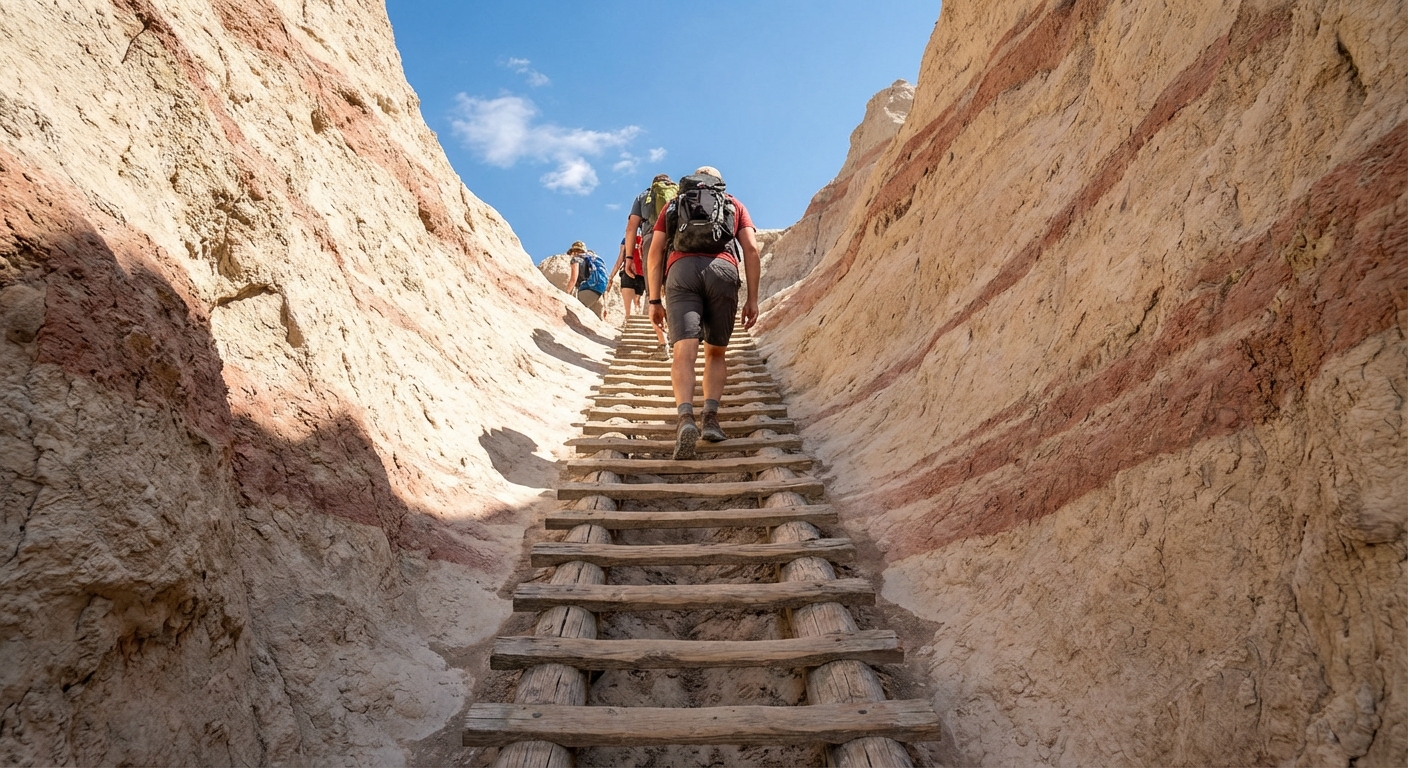
If Door Trail is your warm-up, Notch Trail is your mini-adventure. It is short, but it feels committing in the best way: a narrow canyon, a wooden ladder, a ledge section with big views, and a final overlook that makes you feel like you earned your panorama.
Quick stats (typical): about 1.5 miles round trip, often 1 to 2 hours, moderate to strenuous for the distance due to exposure, footing, and the ladder.
What makes Notch different
- The ladder: steep, memorable, and the reason some people skip it. If you have a fear of heights, take your time and let confident hikers pass.
- The ledge: you are walking along a cliffy section with drop-offs. It is not technical, but it demands attention.
- The finale view: you end at a notch-like opening with a sweeping look over the White River Valley.
Who should skip it
- If you are uncomfortable with heights or exposure, this is not the trail to “push through.”
- If it is very windy, stormy, or the ground is slick, pick a different hike.
- If anyone in your group has mobility limits that make ladders or narrow ledges a no-go, choose an easier option.
Tips for a smoother Notch hike
- Go earlier or later to avoid heat and crowds. The ladder can bottleneck.
- Wear shoes with traction. Loose gravel on hard clay is a classic Badlands combo.
- Skip it in high wind if you are uncomfortable on exposed sections.
- Be patient on the ladder. Treat it like a one-lane road. Yield, communicate, and move one person at a time.
My rule of thumb: if you are choosing between “get the shot” and “keep three points of contact,” choose your hands and feet. The view will still be there when you settle your balance.
Wildlife etiquette
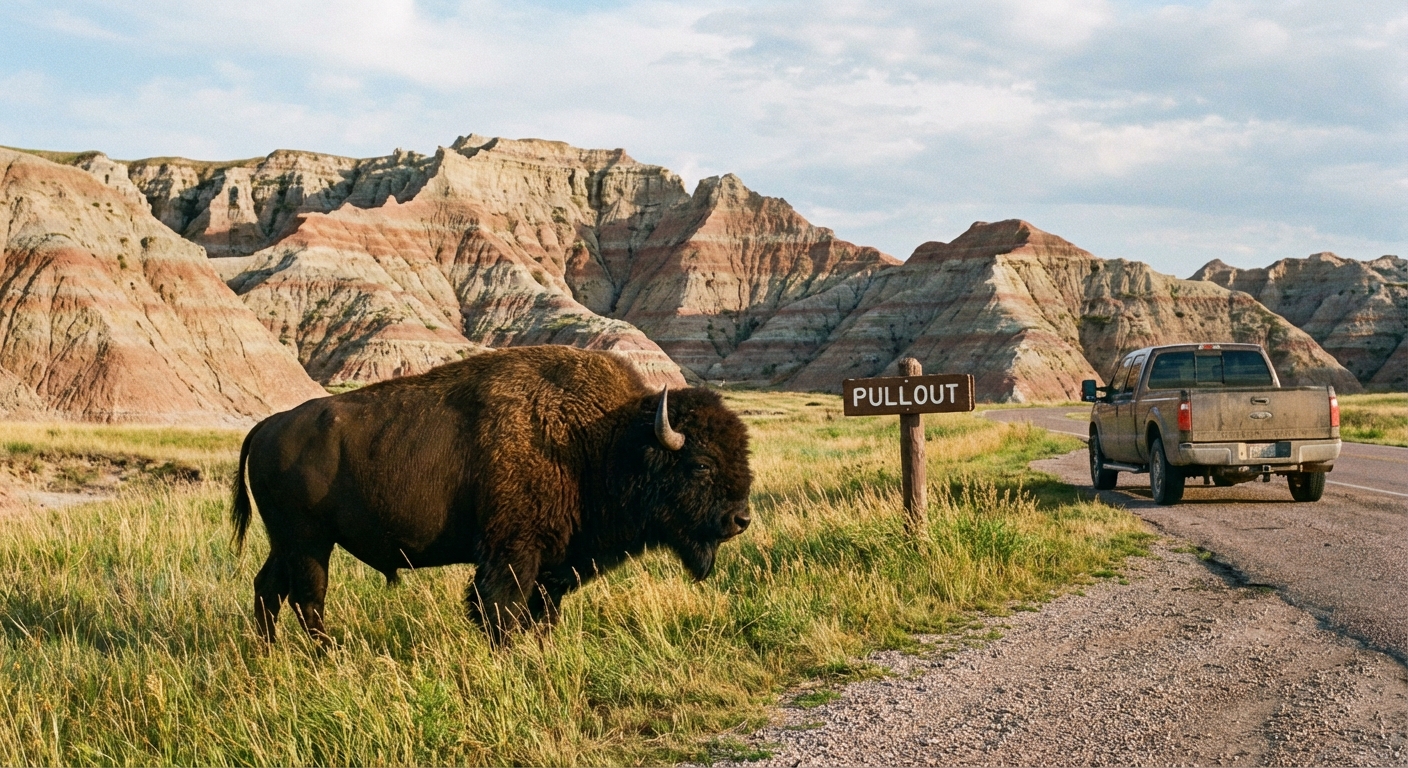
Badlands wildlife sightings can feel almost too easy: bison grazing near pullouts, bighorn sheep on the cliffs, prairie dogs chirping like tiny alarm clocks. Because animals are visible, people sometimes forget they are also wild.
Badlands wildlife basics
- Give animals space. If an animal changes its behavior because of you, you are too close.
- Follow distance guidance. A common NPS rule of thumb is 25 yards from most wildlife. Always verify current park guidance and use more distance when in doubt.
- For bison: do not approach on foot. View from your vehicle or from very far away, and never put yourself between a bison and where it wants to go. They can move fast, even when they look calm.
- Never feed wildlife. It is dangerous for them and for you, and it changes natural behavior.
- Use pullouts correctly. Fully off the road, hazards on if needed, and do not block traffic.
- Keep voices low near bighorn sheep and other sensitive species, especially if they are near steep terrain.
Sunrise and sunset stops
Badlands is a pullout paradise, but if you stop every two minutes you will spend the whole day opening and closing your car door. These are the stops I prioritize for dramatic light and strong compositions along the Badlands Loop Road (SD-240).
Sunrise picks
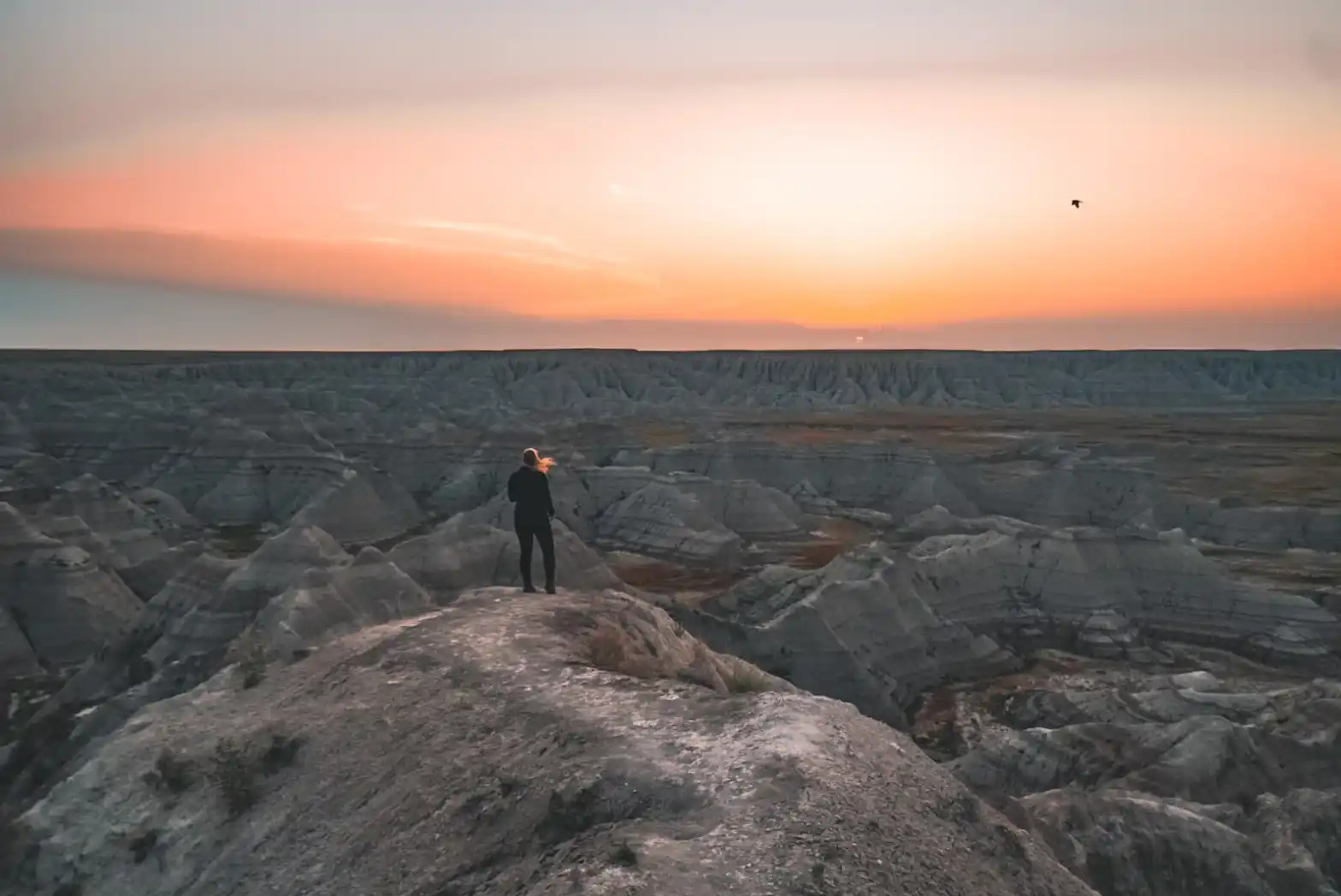
- Big Badlands Overlook: classic for a reason. Wide view, immediate impact, excellent shadows at first light.
- Door or Window area: easy access and close-up textures that glow at sunrise.
Golden hour and sunset picks
- Panorama Point: lives up to its name when the sun is low and the formations warm up.
- Hay Butte Overlook: layered horizons and an expansive sky that makes clouds feel like part of the landscape.
- Bigfoot Pass Overlook: strong ridgelines and repeating forms that photograph beautifully at sunset.
Photography note: bring a lens cloth. Dust and wind are part of the Badlands experience, and they show up on your photos faster than you think.
Visitor center stop
If you are trying to fit Badlands into a one-day plan, the visitor center can feel optional. I still recommend a short stop, because it makes the landscape more meaningful and your day safer.
Where to go
Ben Reifel Visitor Center is the primary visitor center most first-timers use.
What to do in 20 to 30 minutes
- Check current conditions for trail closures (including Door and Notch), heat advisories, and wildlife activity.
- Ask a ranger about best timing for Notch Trail based on wind and crowd patterns that day.
- Skim the geology and fossil context so the striped hills become more than just pretty ridges.
- Confirm where restrooms and water are available for your route that day.
One-day itinerary
This itinerary is designed for travelers who want two iconic hikes, plenty of scenic stops, and a smooth flow without feeling like you are racing the clock.
Option A: Full day
- Sunrise: Big Badlands Overlook
Arrive before first light and stay through the first color shift. The landscape changes every few minutes. - Morning: Door Trail
Short, energizing, and a great way to start moving after sunrise. If it is closed, swap in Window Trail and add an extra overlook stop. - Late morning: SD-240 pullouts
Pick two or three overlooks rather than all of them. Save energy for Notch. - Midday: Lunch break
Eat in your vehicle or any shade you can find, hydrate, and take a short reset. The park is exposed, and this is when people start fading. - Afternoon: Notch Trail
Plan it when you are alert and steady. If it is very hot or windy, do this earlier or pivot to an easier backup. - Golden hour: Panorama Point or Bigfoot Pass Overlook
Choose based on cloud patterns. Big skies love a little drama. - Sunset: Hay Butte Overlook
Stay for the afterglow. Badlands color lingers even after the sun drops.
Option B: Half day
If you want rugged morning and a comfortable afternoon, do sunrise + Door + Notch, then head out for a late lunch, coffee, and a walkable evening in either Wall or Rapid City.
Backup plan if Notch is a no
- Window Trail + Door area wandering for a low-stress version of the same landscape.
- Castle Trail (short out-and-back) near the Door and Window area if you want more walking without ladders and ledges. Turn around whenever the heat, wind, or timing says so.
- Saddle Pass Trail if you are a strong hiker who wants something steep and direct, and only if conditions are good. It is short, punchy, and not the best choice in high heat or slick footing.
Wall vs. Rapid City
The mistake I see most often is treating the area like it is all the same “Great Plains road trip” vibe. It is not. Your base changes the whole feel of the day.
Stay in Wall
- Why it works: You are close to the Pinnacles Entrance, which makes sunrise and sunset logistically easier.
- Best for: travelers who want early starts, minimal driving, and a simple home base.
- Town strategy: lean into an easy night. Quick dinner, early sleep, and you will win the next morning.
Stay in Rapid City
- Why it works: more lodging choices, more food variety, and a solid comfort reset after hiking.
- Best for: travelers doing a broader Black Hills loop, or anyone who likes ending the day with a great meal and a proper coffee the next morning.
- Town strategy: plan Badlands as your big outdoor day, then give yourself an evening to stroll, eat well, and reset.
Avoid the generic loop: If you are also doing the Black Hills, do not stack three similar scenic drives back-to-back. Pair Badlands with something that contrasts, like a museum stop in Rapid City or an evening walk and local meal, so the trip has texture, not repetition.
Extra stops
Window Trail
If you are already near the Door area, Window Trail is an easy, short walk to a viewpoint framed by rock. It is a nice bonus without turning into a whole new plan.
Prairie dog town pullouts
They are loud, chaotic, and completely delightful. Watch from a respectful distance and let them do their thing.
Night sky
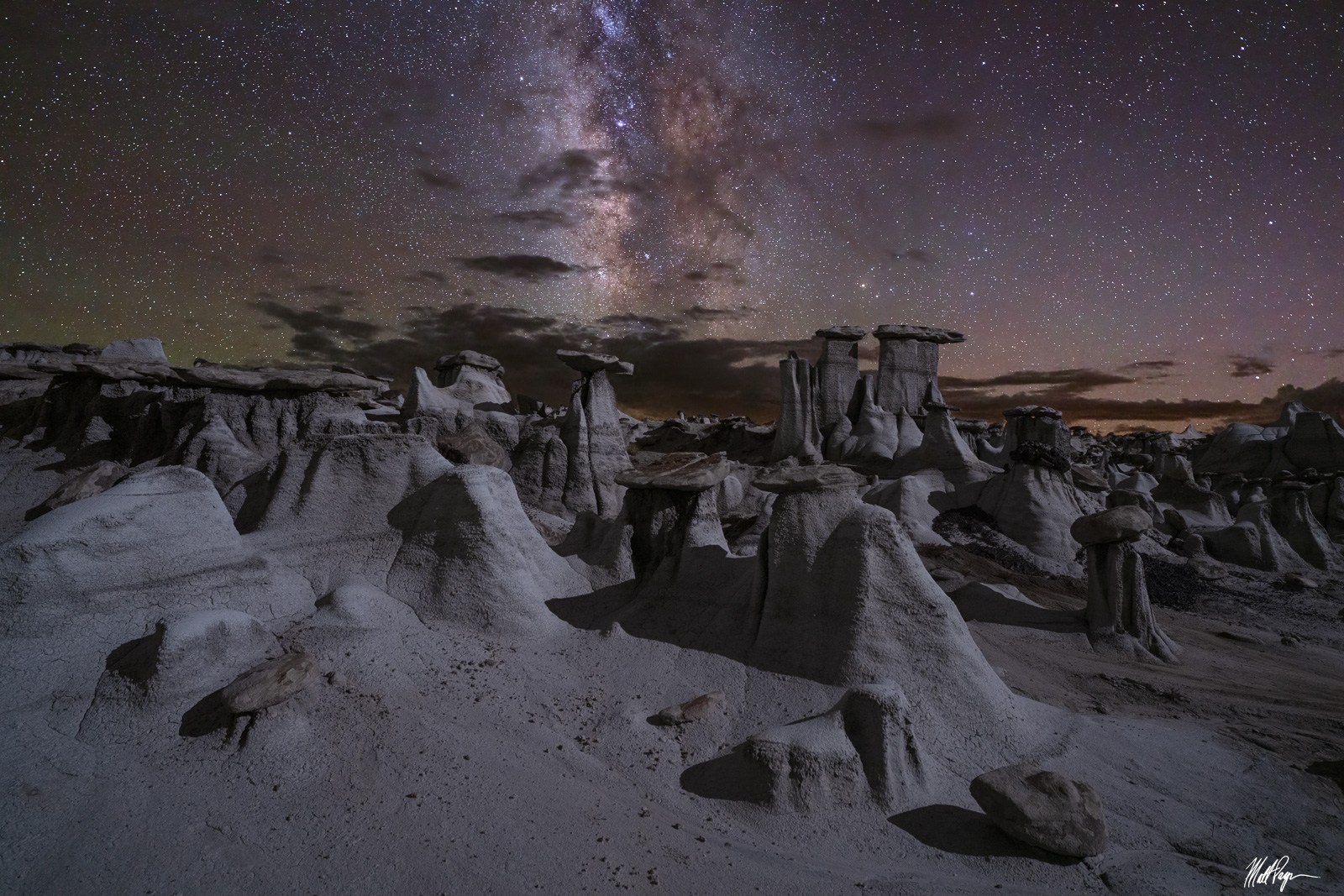
Badlands can be a fantastic place for stargazing on clear nights. Even a short stop after dinner can feel like a second adventure in the same day.
Mistakes to avoid
- Underestimating wind and sun: you can get chilled at sunrise and scorched by noon. Pack layers and water.
- Under-packing water: if you are debating whether you need more, you do.
- Trying to do every overlook: pick a few, then actually spend time looking.
- Forcing Notch in unsafe conditions: high wind, thunderstorms, or unstable footing after rain are good reasons to pivot to easier trails.
- Approaching wildlife for photos: use zoom, not your feet.
My ideal Badlands day
Sunrise at Big Badlands Overlook, Door Trail while the rock is still cool, Notch Trail for a hit of adrenaline, then a slow sunset at Hay Butte and a comfortable dinner back in Wall or Rapid City where you can finally sit down and relive it all.