Bear-Country Food Storage

Maya Lin
Maya Lin is a travel journalist and outdoor enthusiast who believes the best trips combine rugged adventures with urban comforts. After spending six years backpacking across four continents, she founded Trail & Town Guide to help fellow travelers navigate both hidden mountain passes and bustling city neighborhoods with confidence.
Bear country is not just about bears. It is about habits. The goal is simple: keep smells, crumbs, and curiosity from turning your campsite into a late-night snack bar. Do that consistently, and you protect wildlife, your gear, and your trip.
This guide focuses on preventive food storage and camp kitchen routines, not what to do in a surprise encounter. Always follow the rules and closures posted by the land manager for the specific trailhead, campground, or zone you are in.
Start with the rule: store anything that smells
In bear country, “food storage” includes more than dinner. Many parks and forests require you to secure all scented items, which can include:
- Food, snacks, drink mixes, gum
- Trash, food wrappers, used foil, cans
- Cookware that still smells like food
- Toiletries: toothpaste, deodorant, sunscreen, lip balm
- Baby wipes, hand sanitizer, scented medications or supplements
- Pet food and bowls
Think like a bear with a superpowered nose: if you can smell it, it belongs in your bear-resistant system.
IGBC-approved canisters: the simplest backpacking solution
If you backpack even a few trips a year in bear habitat, an IGBC-certified bear-resistant canister is the least complicated way to comply with most regulations. IGBC stands for the Interagency Grizzly Bear Committee, and their approved list is commonly used by land managers as the benchmark for “acceptable.”
Why canisters work so well
- Predictable compliance: Rangers and signage often specify canisters by name or certification.
- No perfect trees required: You do not need the right branch height or spacing.
- Fast routine: In wind, rain, or darkness, you can seal it and be done.
Canister best practices (the small details matter)
- Pack it early: Put snacks, trash bag, and smellables inside as you go, not only at bedtime.
- Close it every time: Even for a quick water run. A “two-minute” break is long enough for a curious animal.
- Use the bear triangle: When terrain allows, separate your sleeping area, cooking area, and food storage spot. The point is to avoid one “super-smelly” zone and reduce the chance a bear visits your tent after checking out your kitchen.
- Place it smart: Set the locked canister on the ground, upright, in a spot that will not roll into water or off a slope. Distances vary by agency and habitat. A common starting point is 100 feet (about 30 meters) from your tent and kitchen, but in some grizzly country guidance is often closer to 100 yards (about 300 feet). Follow local rules if they specify distances.
- Do not attach a rope: A rope can give an animal leverage to drag it farther or wedge it.
Capacity tip: Canisters always feel too small on day one. Repackage food into compact bags at home, and plan “low odor” meals to reduce greasy packaging.
Bear-resistant bags: a lighter option where allowed
Bear-resistant bags (the best-known example is an Ursack) fill a real gap in the food storage world: they are lighter than a hard-sided canister, tougher than a standard stuff sack, and popular with backpackers in places where regulations allow them. Some models and configurations are IGBC-certified, which is why you see them recommended so often.
That said, these bags are not a magic trick. They are designed to prevent an animal from getting the food, but the contents can still get crushed, slobbered, and unpleasant. Think “food secured” more than “food protected.”
When a bear-resistant bag makes sense
- Regs allow it: Some areas explicitly accept IGBC-certified bear-resistant bags, while others require hard canisters. Always check the exact rule for your zone.
- You want to save weight: Especially on trips where a canister is not required and your food volume is manageable.
- Trees or anchors are available: These bags must be tied off correctly so they cannot be carried away.
How to use one correctly
- Use the right model and closure: Follow the manufacturer instructions. Many approvals depend on a specific liner, knot, and tie-off method.
- Anchor it: Tie it to a sturdy tree trunk or solid anchor so it cannot be dragged into brush, down a slope, or into water.
- Pair it with odor control: Using an odor-resistant liner or bag inside helps reduce smell spread and keeps the outside cleaner.
- Keep your distance: Treat the storage spot like you would a canister. Separate it from your tent and kitchen using the bear triangle approach, and follow any local distance guidance (including the 100 yards recommendation you sometimes see in grizzly country).
Local-first reality check: Even if a bag is IGBC-certified, a land manager can still prohibit it in a specific park, corridor, or season. Compliance beats cleverness.
Bear lockers and storage boxes: use them when they exist
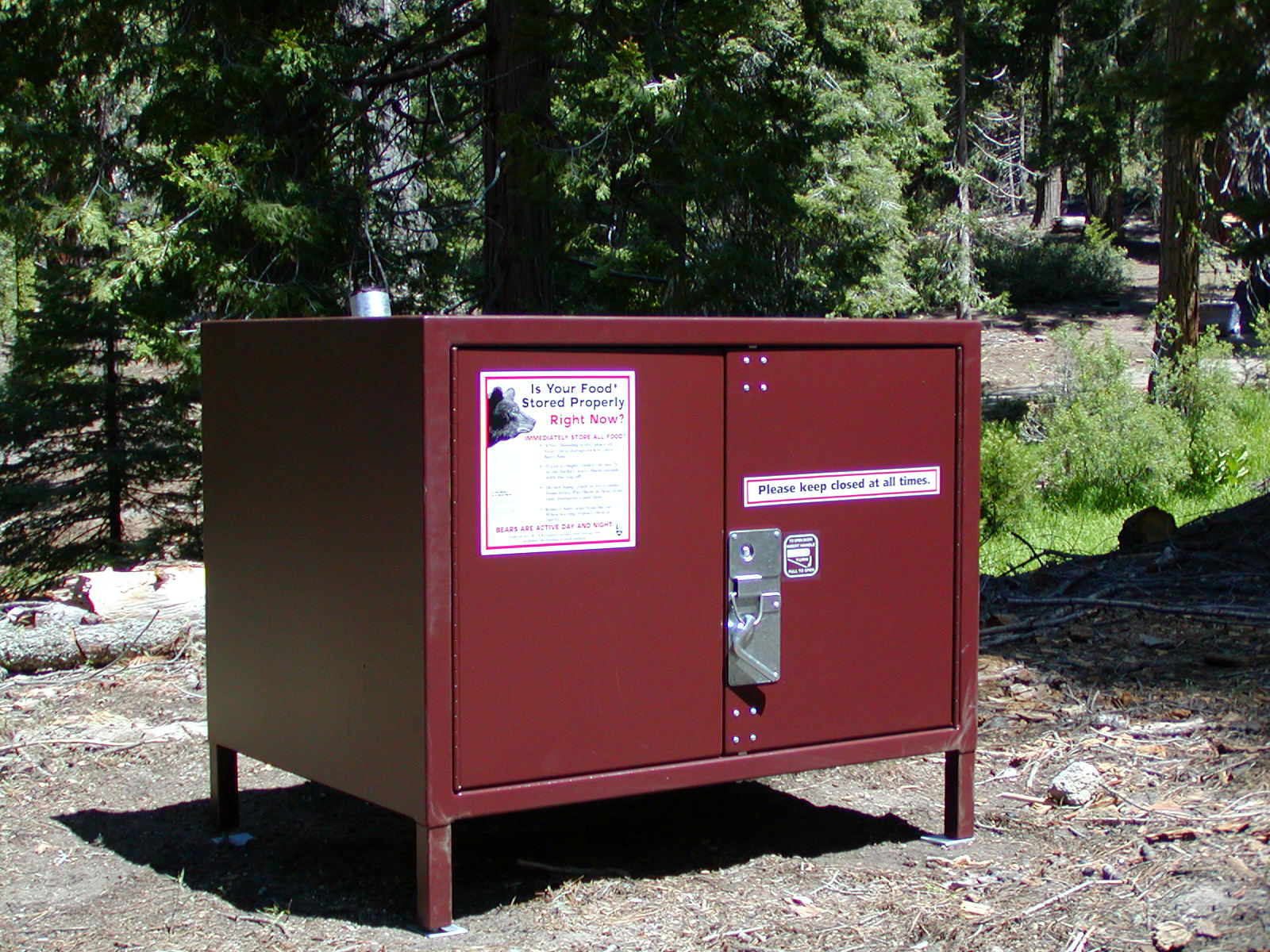
Frontcountry campgrounds in bear habitat often provide bear lockers or hard-sided storage boxes at sites or in shared areas. If you have a locker, use it. It is usually the most foolproof option because it is designed for that exact place and tested against local wildlife behavior.
Locker workflow that keeps your campsite calm
- Arrive and stash first: Put the cooler and food tote into the locker before setting up a kitchen spread.
- Keep it closed between grabs: Treat the locker like a refrigerator door. Open, retrieve, close.
- Store the boring stuff too: Trash, toiletries, stove fuel if required by local guidance, and any scented items that could be chewed.
If a locker is damaged, missing, or jammed, do not improvise with “just this once.” Ask the host, ranger station, or campground staff what they want you to do that night.
Hanging food: allowed in some places, ineffective in others
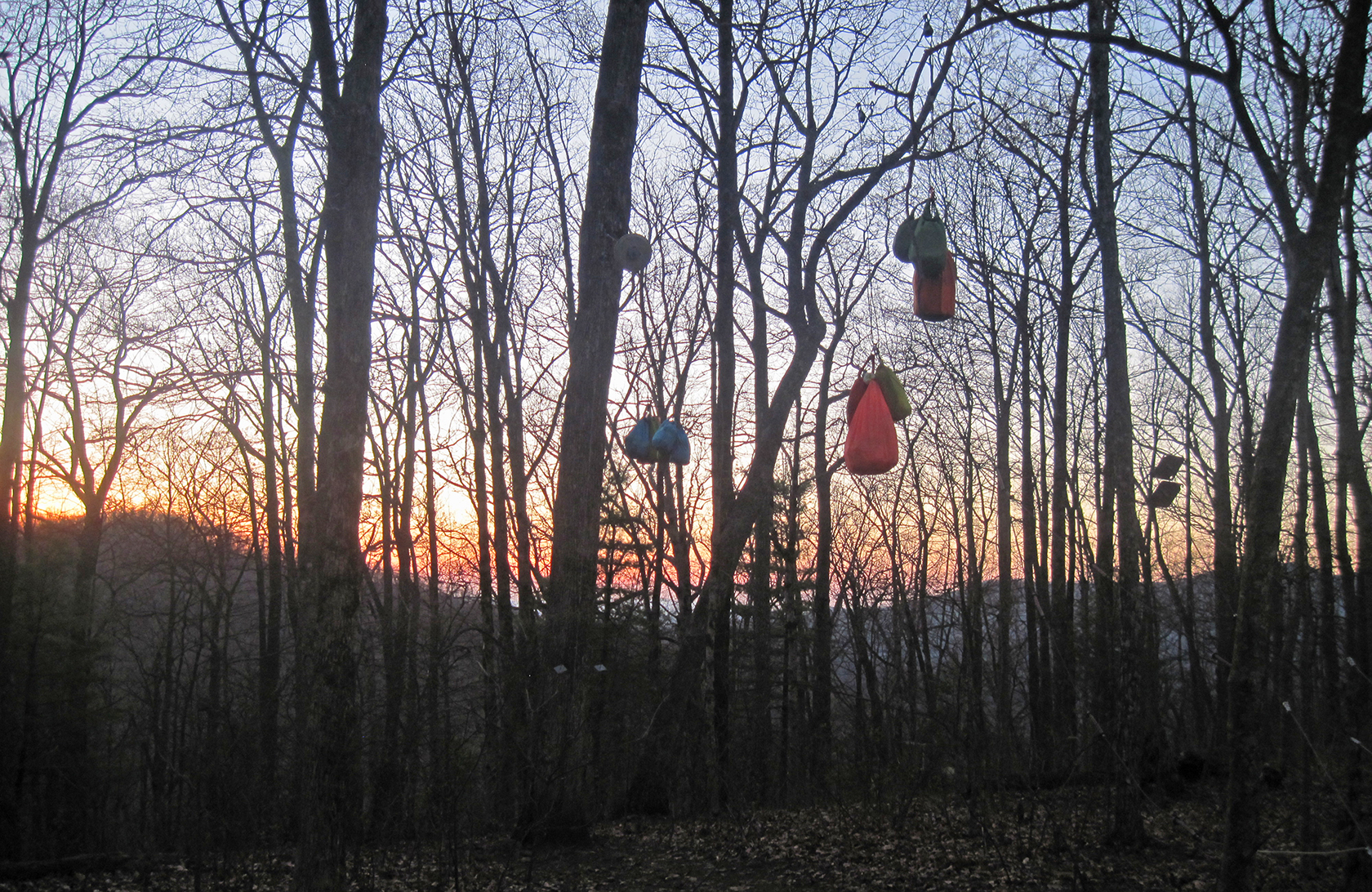
Food hangs are classic, but they are not universal. In many high-use areas, bears have learned how to defeat hangs, and some parks explicitly require canisters, bear-resistant bags, or lockers instead. If hanging is allowed and appropriate where you are going, it can work, but only when done correctly.
When hanging can make sense
- Some national forests and wilderness areas where regulations permit it
- Trips where trees are suitable and you have the skill and patience to do a proper hang
When hanging often fails
- Above treeline or in sparse forests with no suitable branches
- Areas with habituated bears that have seen every hanging method
- Places with explicit rules requiring an approved canister, bear-resistant bag, or fixed storage
If you hang, aim for “hard to reach” spacing
Specific measurements vary by agency, but the common goal is the same: the bag must hang high and far enough from the trunk and branches that an animal cannot reach it from above or below. If you cannot confidently achieve that, a canister or approved bear-resistant bag is the better call.
Local-first rule: Some areas recommend a specific hang method, like a counterbalance system. Always follow the land manager’s guidance for that zone.
Odor-proof bags: helpful, but not a force field
Odor-resistant bags are great for keeping your pack cleaner and reducing smell spread, but they are best treated as a supplement, not a replacement for bear-resistant storage. A determined animal can still crush, puncture, or carry off bags, and “odor-proof” depends on proper sealing and clean handling.
How to use odor-proof bags the right way
- Pair with a real barrier: Put odor-proof bags inside a canister, locker, bear-resistant bag system (when allowed), or hard-sided vehicle trunk where allowed.
- Use them for trash: They are especially helpful for used packaging and food scraps.
- Handle cleanly: Greasy hands on the outside of the bag defeat the purpose. Wipe hands and surfaces.
In practice, odor-proof bags are the “neat freak” layer that makes everything else work better.
Camp kitchen habits that prevent problems
Food storage is not just where you put food at night. It is how you cook, eat, and clean all day long. The best bear-proof campers I know are not fearless. They are tidy and consistent.
Cook with a small footprint
- Portion first: Only bring out what you will eat in that sitting.
- Keep food contained: Snacks live in a sealed bin, canister, bear-resistant bag, or closed cooler, not scattered on a picnic table.
- Do not store food in the tent: Not “just for tonight,” not “because it is raining.”
Clean like you mean it
- Strain dishwater: Pack out food particles with your trash.
- Wipe down: Table, stove, and hands. A few crumbs is still a reward.
- Trash discipline: If there is a bear-proof dumpster, use it. If not, store trash like food.
Night routine checklist
- All smellables secured (food, trash, toiletries)
- Cookware cleaned and stored as required
- Cooler latched and stored, or moved into locker
- Camp chairs and clothing checked for snack wrappers
Car camping workflows: cooler management is everything
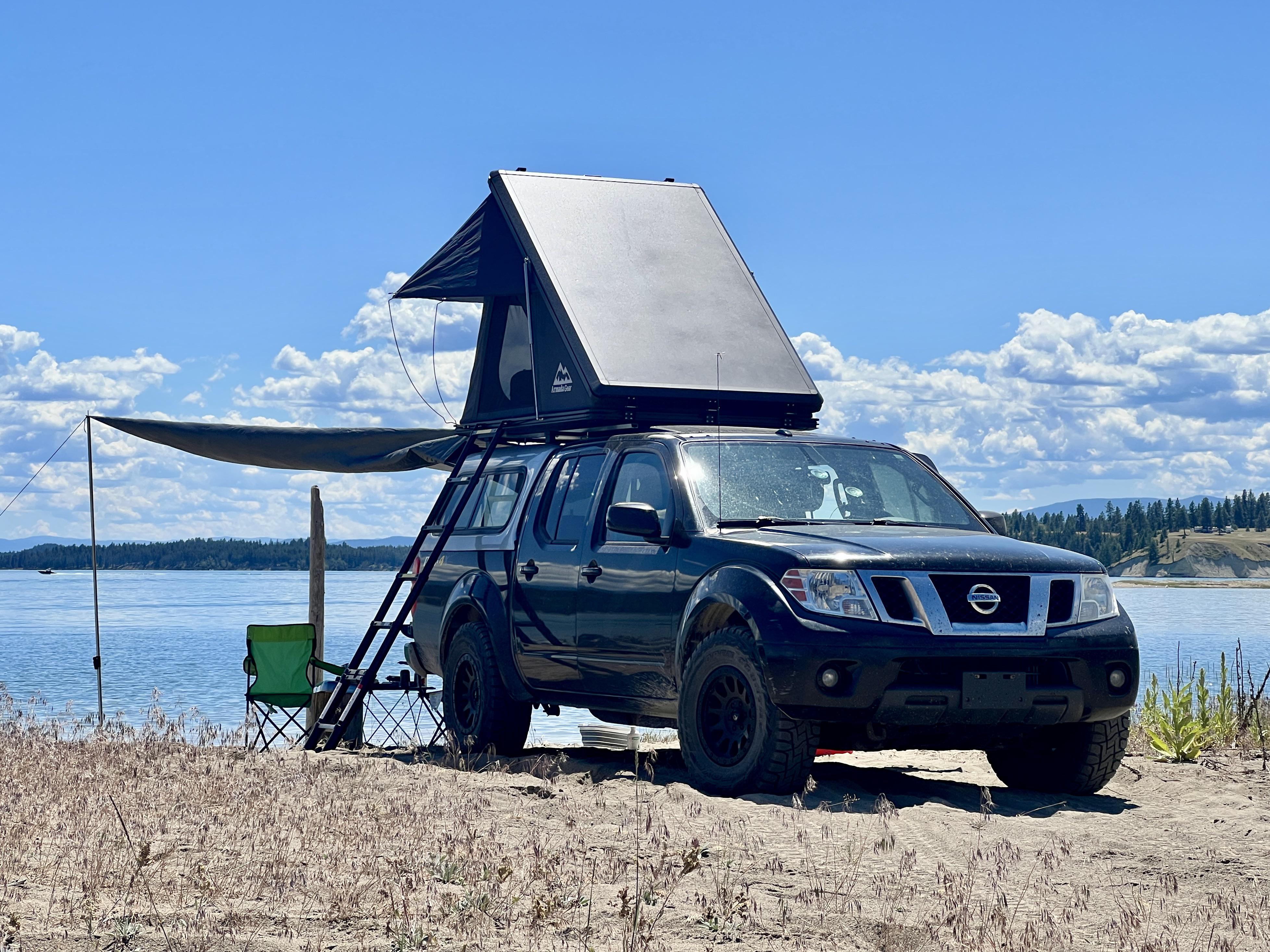
Car camping feels easier, and it is, but it comes with one big temptation: leaving a buffet in a cooler all day. In many bear areas, that is exactly what wildlife has learned to patrol.
If you have a bear locker
- Cooler and food bins go into the locker whenever you are not actively cooking.
- Keep the locker closed between trips, especially during dusk and dawn.
If you do not have a locker
- Follow local regulations first: Some places require food to be stored in a hard-sided vehicle, some prohibit leaving coolers outside, and some specify “in the trunk” or “windows closed.”
- Minimize odors: Double-bag meats, wipe spills immediately, and keep a dedicated “cooler towel” for drips.
- Set a kitchen boundary: Eat in one area, store in another, and do not snack inside the tent.
Quick reality check: A vehicle is not a bear-proof vault. Rules vary widely based on local bear behavior, and some areas discourage relying on cars alone. If canisters, lockers, or approved bear-resistant bags are required, use them.
Park examples: what “normal” looks like in popular places
Regulations change, and zones within the same park can differ. Use these as a starting point, then confirm on the official park or forest website and at the trailhead.
Yosemite National Park (California)
Yosemite is famous for strict food storage enforcement. In many areas, visitors use bear lockers in campgrounds and bear canisters in wilderness zones where required. The takeaway: plan your system before you arrive, because “I did not know” is not a strategy.
Sequoia and Kings Canyon National Parks (California)
Backpacking here commonly involves approved bear canisters in many wilderness areas. If you are heading into popular corridors, expect canisters to be the norm.
Grand Teton and Yellowstone (Wyoming)
In the Greater Yellowstone Ecosystem, food storage is taken seriously due to grizzly presence in many areas. Frontcountry sites often rely on bear boxes and strict cooler rules, while backcountry zones may require approved storage methods. Confirm the exact requirement for your itinerary, and pay attention to any guidance on spacing and the bear triangle concept.
Rocky Mountain National Park (Colorado)
My home-state reminder: even when you are close to town comforts, you are still in wildlife habitat. Many campgrounds and backcountry zones use bear-resistant storage rules, and rangers are used to seeing visitors underestimate how quickly a “clean campsite” can become messy.
Glacier National Park (Montana)
Glacier’s combination of high use and prime bear habitat means many visitors rely on bear lockers where provided and follow tight camp kitchen practices. If your trip involves backcountry camping, check whether canisters are required in your zone.
Important: These examples are not a substitute for current regulations. Always defer to the land manager’s posted rules.
Picking the right system for your trip
If you are deciding between options, here is a practical way to choose:
- Backpacking in a regulated park: Start by assuming you need an IGBC-approved canister, then confirm.
- Backpacking where bags are accepted: An IGBC-certified bear-resistant bag can be a great lighter option, especially when paired with odor control. Confirm the park’s exact rule first.
- Car camping with bear lockers: Use the locker, plus tidy kitchen habits.
- Car camping without lockers: Check rules for storing in a hard-sided vehicle, and consider bringing a bear-resistant container if recommended or required.
- Remote forest with hanging allowed: Hang only if you can do it properly and trees cooperate. Otherwise, bring a canister or an approved bear-resistant bag.
My personal bias, after too many midnight “did I lock it?” spirals: if a canister is feasible, it buys you sleep.
Before you go: a 2-minute food storage audit
- Look up the current food storage order for your park, forest, or wilderness zone
- Confirm whether IGBC-approved canisters are required and which models are accepted
- Confirm whether IGBC-certified bear-resistant bags are accepted in your zone, if you plan to use one
- Check whether bear lockers are provided at your campground or trailhead
- Plan meals to fit your storage capacity, and repackage at home
- Pack an odor-resistant trash bag and a small wiping cloth
Bear-country food storage is not about being perfect. It is about being predictably clean. Do that, and you help keep wild animals wild, while keeping your trip firmly in the “great story” category, not the “ranger report” category.