Best Day Hikes in Great Sand Dunes National Park
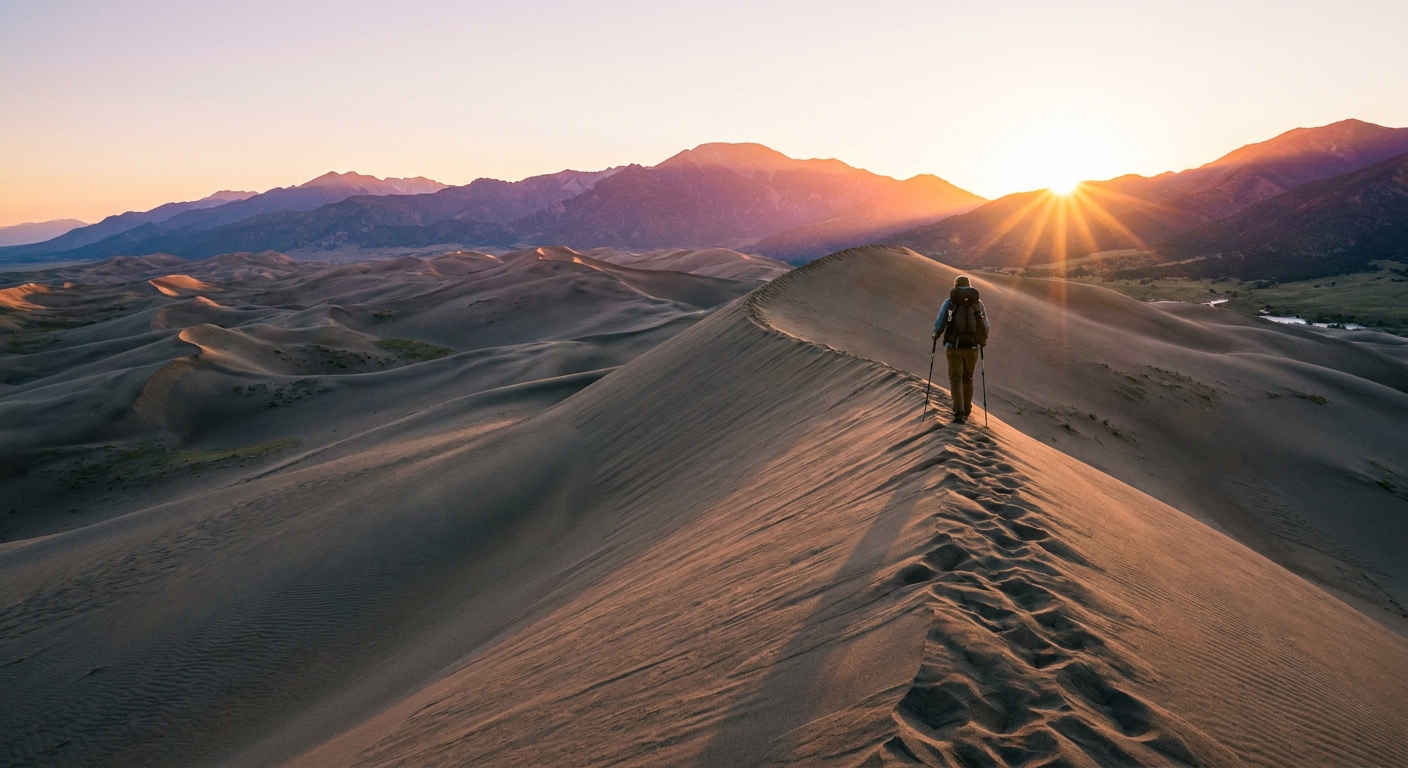
Great Sand Dunes National Park is one of those rare places where you can start your morning wading a creek, spend midday slogging up wind-sculpted sand, and end the day under aspens or even in the high country if the roads and weather cooperate. The trick is picking the right hike for the day you actually have, not the day you imagined back home.
This list is built like trail mix: a few must-try dune classics, some forested foothill options for when you crave shade and steady footing, and a couple of higher-elevation picks for mid-summer through fall when conditions allow. I also included fallback plans for when the sand is scorching, the wind is spicy, or the snowpack is still running the show.

Before you lace up
Quick planning notes (that save trips)
- Start early for dunes. Sand reflects heat, offers zero shade, and feels like hiking on a treadmill. Sunrise to mid-morning is prime.
- Sand can burn. In summer, midday sand can be hot enough to hurt bare feet. Bring sandals or closed-toe shoes so you are not forced to turn around early.
- Footwear and eyes matter. Many people go barefoot in cool sand, but wind can turn grains into tiny face-level missiles. Sunglasses help a lot. Gaiters help if you hate sand in your socks.
- Carry more water than you think. Dunes are dry, exposed, and deceptively draining. For most people, 2 to 4 liters for a half-day dune hike is a comfortable range.
- Lightning is real. Summer afternoons can bring fast thunderstorms. Dunes and high terrain are both places you do not want to be when the sky starts cracking.
- Check conditions the morning of. Creek levels, wind, and snow can change your best option. Road access for high-country hikes can also change week to week. Ranger updates are gold.
- Leave no trace (especially in dunes). Pack out trash, stay off vegetation at the dune edges, and keep sandboarding and sand sledding to areas allowed by the park (ask at the visitor center if you are unsure).
How I’m labeling each hike
- Difficulty: easy, moderate, hard (based on effort, footing, and exposure)
- Sun exposure: low, medium, high
- Time: a realistic ballpark for most visitors
- Best when: the conditions that make this hike shine
Dunes: flexible route hikes
The main dune field is intentionally flexible. There are routes, but not always trails in the traditional sense. Expect soft footing, constant micro-adjustments, and the kind of leg workout you feel in places you did not know existed.
Where to start: Most dune hikes begin at the Dunes Parking Area. Depending on season and creek flow, you may cross Medano Creek near the start (usually shallow and fun in late spring, sometimes higher earlier in runoff years).
1) High Dune
Difficulty: moderate to hard (soft sand is the boss)
Sun exposure: high
Time: about 2 to 4 hours round trip (varies widely)
Best when: early morning, cooler months, or calm wind
This is the park’s most popular dune goal for a reason: it is achievable for many hikers, gives you a huge payoff view, and introduces you to dune travel without committing to a marathon. Expect a steady climb with plenty of two steps up, one step slide.
- Why do it: Big panorama over the dune sea with mountains as a dramatic backdrop.
- Pro tip: Pick a firm ridge and stick to it. Ridges often feel more stable than the open faces.
- Turnaround cue: If your group is overheating, or wind starts sandblasting your legs, turn around. The view is still excellent partway up.
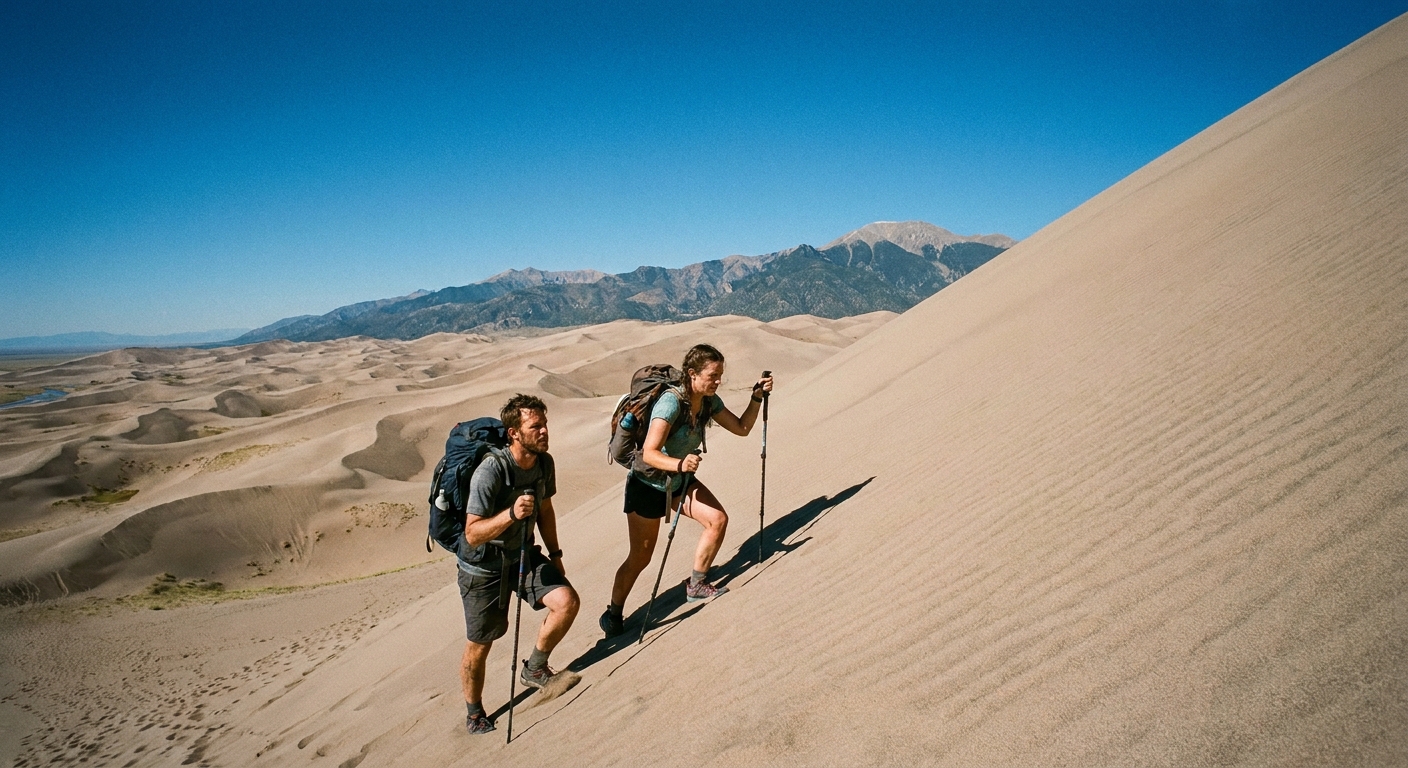
2) Dune ridgeline wander
Difficulty: easy to moderate
Sun exposure: high
Time: 1 to 3 hours (you choose the dial)
Best when: you want dunes without the longest climb
If you have limited time or you are traveling with mixed energy levels, aim for a ridgeline stroll instead of a specific named summit. You can keep it short, loop back when the sun gets intense, and still get that “I’m on another planet” feeling.
- Why do it: Flexible distance, easier to bail, still wildly scenic.
- Pro tip: Bring a small sit pad or a light layer. Wind cools fast if you stop for snacks.
3) Star Dune
Difficulty: hard
Sun exposure: high
Time: roughly 4 to 7 hours round trip for many hikers
Best when: cool temps, low wind, long morning, and a strong group
Star Dune is the most famous high point in the main dune field and one of the most effort-heavy payoffs in the park. It is also the most common place people underestimate the combination of heat, distance, and sand resistance. If you want a signature challenge and you are prepared, it is unforgettable. If not, High Dune plus a long ridgeline roam can feel just as satisfying.
Trail trivia: Depending on the measurement year, survey method, and how the wind has been behaving lately, Star Dune and Hidden Dune are often reported as trading the “tallest dune” headline. Either way, your calves will not care.
- Why do it: Peak-of-the-dunes bragging rights and huge views.
- Pro tip: Treat it like a desert hike: start earlier than you think, carry extra water, and set a firm turnaround time.
- When to skip: Hot afternoons, high winds, any sign of storms, or if you are already feeling spent after the first mile.
Foothills and forest: shaded options
When the dunes are blazing, the wind is ripping, or you just want your hike to feel like hiking instead of sand-slogging, head for the foothills. These trails trade sun exposure for trees, wildlife chances, and that satisfying crunch of dirt under your shoes.
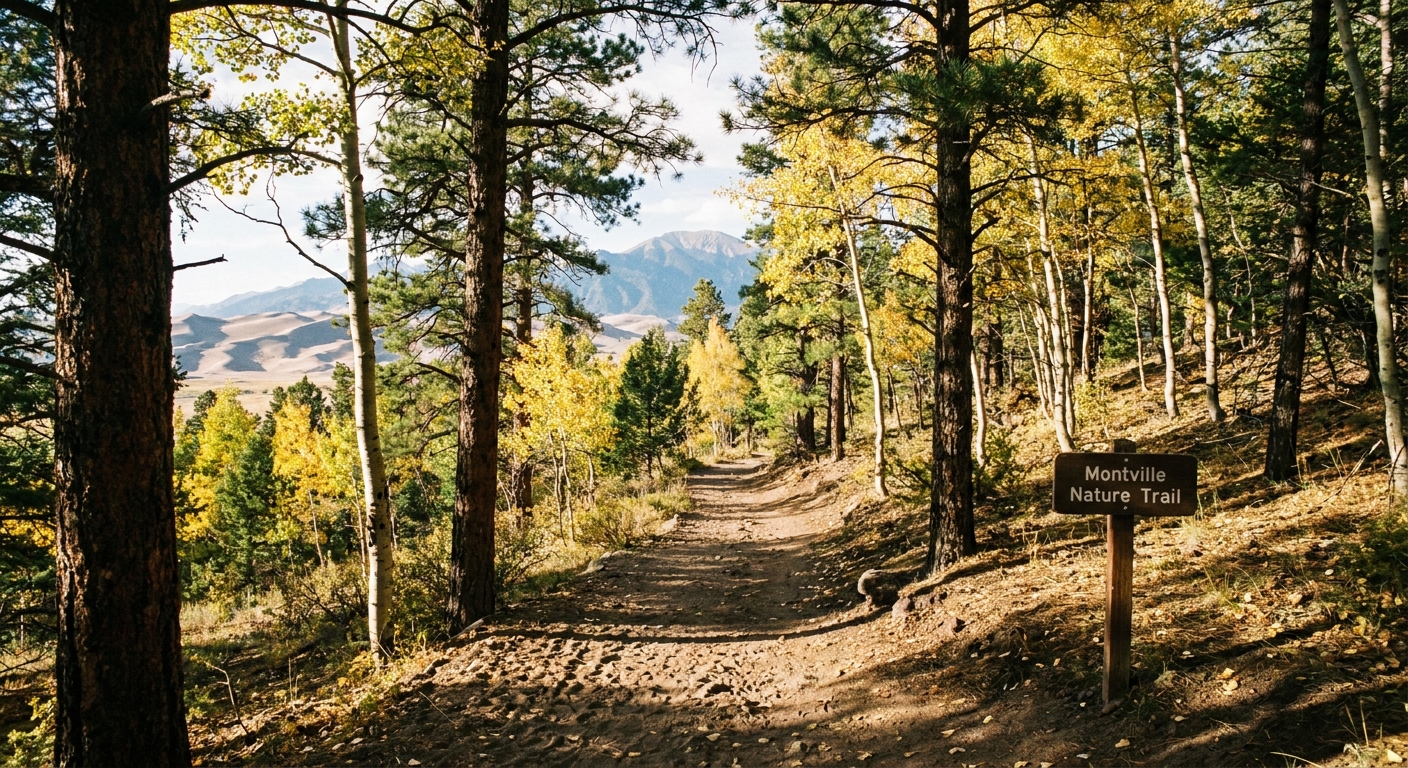
4) Montville Nature Trail
Difficulty: easy
Sun exposure: low to medium (more shade than dunes)
Time: about 30 to 60 minutes
Best when: midday heat, windy dune days, shoulder seasons
Montville is the park’s reset button trail. It is short, friendly, and a great palate cleanser if your legs are toasted from sand. It also pairs well with an early dune hike: do dunes at sunrise, then hit Montville once the sun turns aggressive.
- Why do it: Shaded walking, relaxed pace, good for kids and acclimating to the area.
- Pro tip: Bring binoculars if you have them. Foothill edges can be great for birds and mule deer sightings.
5) Wellington Ditch Trail
Difficulty: easy to moderate
Sun exposure: low to medium
Time: about 1.5 to 3.5 hours (out-and-back depending on your turnaround)
Best when: you are travel-tired, with family, or easing into altitude
If you want a real trail with predictable footing and you do not want to fight the dunes all day, the Wellington Ditch Trail is a solid, low-drama pick. It is the kind of hike where you can actually settle into a rhythm, enjoy the scenery, and keep your lungs from filing a formal complaint about the elevation.
- Why do it: A more traditional trail feel with cooler temps than the open sand.
- Pro tip: It can be seasonally wet and buggy in spots. Ask at the visitor center about current conditions and the best turnaround point.
- Quick reality check: Trail statuses and access can change. Confirm the current listing and any closures with NPS or the visitor center before you build your day around it.
6) Mosca Pass Trail
Difficulty: moderate
Sun exposure: low to medium
Time: about 3 to 6 hours round trip (most people turn around based on time)
Best when: you want a longer, shaded hike that is accessible by standard car
If you want a marquee non-dune hike that feels reliably “Colorado forest,” Mosca Pass is the move. You get shade, steady climbing, and a genuine sense of traveling somewhere, not just looping near the road.
- Why do it: Long shaded mileage, cooler temps, and a great alternative when dune wind is unpleasant.
- Pro tip: Build your own finish line. The pass is the goal for strong hikers, but turning around earlier is still a great outing.
High country: big views, real logistics
Great Sand Dunes has a dramatic vertical range, and that means the park can be summer at the dunes while the high country is still holding onto winter. Treat high-country plans as season-dependent and have a foothill backup ready.
7) Medano Lake Trail
Difficulty: hard (altitude and distance add up)
Sun exposure: medium (varies by section)
Time: a full day for most hikers
Best when: mid-summer through early fall, stable weather mornings
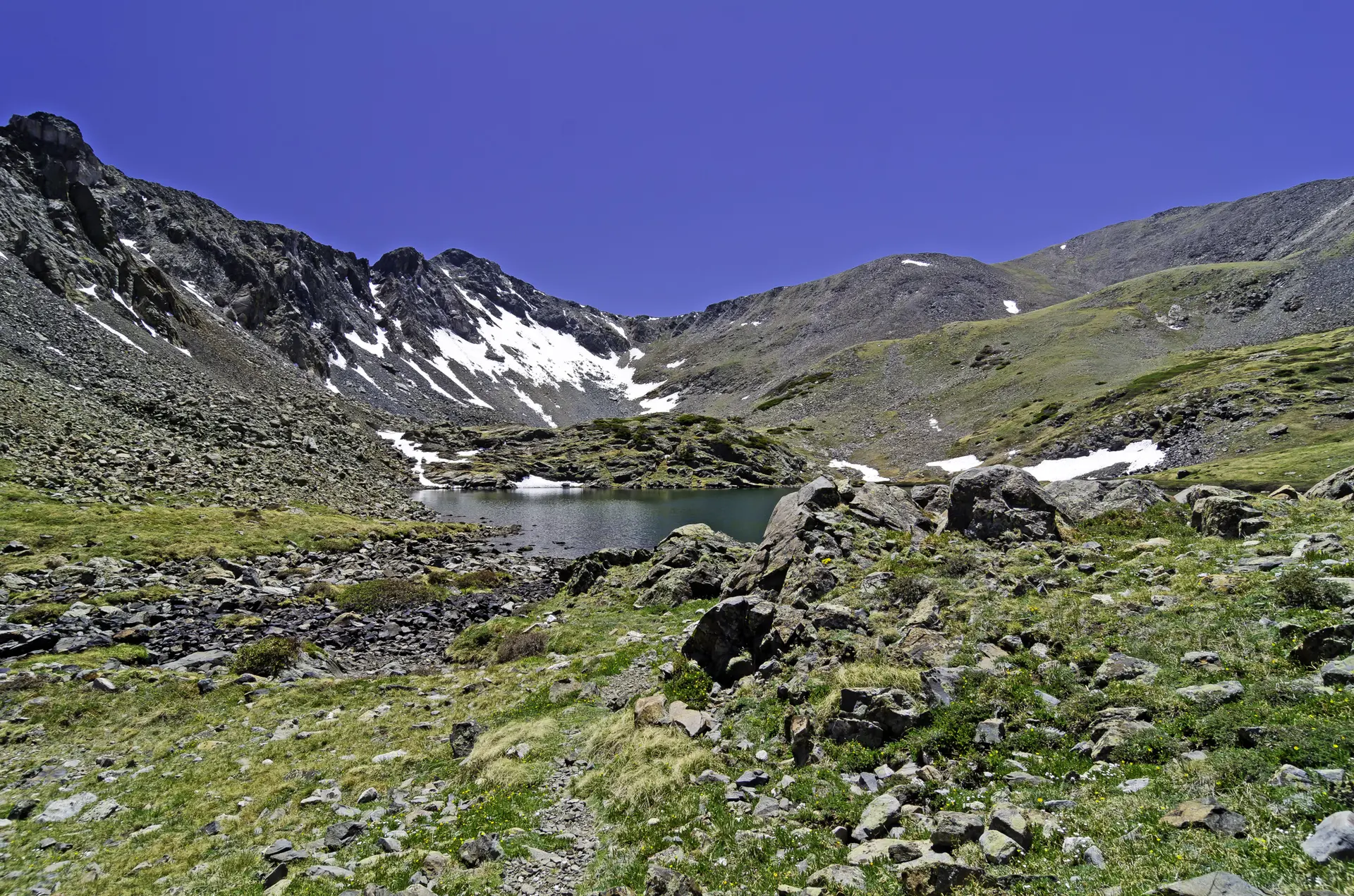
If you are craving alpine scenery, Medano Lake is the headline hike. It is also not a casual add-on. Mileage varies depending on the start point and current routing, but plan on approximately 7 miles or more round trip. For the most current number, confirm the trail mileage with the NPS site or the visitor center before you go.
Important access note: The most direct access involves the Medano Pass Primitive Road, which is typically high-clearance 4WD with deep sand, rocks, and multiple Medano Creek crossings. In early season, crossings can be high enough to be impassable, and access can also be blocked by snow or road conditions. This can change week to week. If you do not have the right vehicle or you are not comfortable with the crossings, do not try to force this itinerary. Swap in Mosca Pass or another foothill trail and save the high country for a properly planned day.
- Why do it: A totally different version of the park: crisp air, wildflowers, and peak views.
- Pro tip: Start early. Afternoon storms build fast in Colorado high country.
- Safety note: If you hear thunder, turn around. High terrain has very few safe places to wait it out.
When sand or snow changes the plan
If the dunes are too hot or windy
- Go early or go late. Sunset walks can be magical, especially when the sand cools and the light turns golden.
- Protect your feet and eyes. Hot sand and windblown grit are the two fastest fun-killers.
- Pick foothills instead. Montville, Wellington Ditch, and Mosca Pass feel dramatically better in extreme sun or wind.
- Lower your goal. A short ridge wander can still feel iconic without committing to a long push.
If Medano Creek is high
- Stick to the main dune access areas. You can still hike the dunes without driving the Medano Pass road.
- Do a two-part day. Dunes early, foothills midday, then a relaxed town dinner. This is my favorite best-of-both-worlds combo.
If roads or high country are not accessible
- Don’t force it. Snow travel and sketchy crossings add risk fast without the right gear and experience.
- Trade elevation for variety. Do a longer forest hike, then return for a short dune sunset stroll when temps drop.
- Ask for the current best bet. Conditions change weekly in shoulder season. Ranger updates are the cheat code.
My favorite 1-day combos
Combo A: First visit
- Sunrise: High Dune or a ridgeline wander
- Late morning: Cool down and snack near the creek area (season-dependent)
- Afternoon: Montville Nature Trail for shade and an easy finish
Combo B: Heat-proof
- Early: Short dune ridge stroll
- Midday: Mosca Pass or Montville for shade
- Evening: Sunset dunes from the edge with a strict turnaround time
Combo C: Longer shaded hike day
- Morning to afternoon: Mosca Pass Trail (turn around based on weather and energy)
- Golden hour: Quick dunes walk for photos and a short climb
Combo D: High country day (only if you have the right vehicle)
- Morning: Medano Lake Trail (early start, watch the sky)
- Late afternoon: Dunes for golden-hour photos and a quick climb
What to pack
- Sun protection: wide-brim hat, sunglasses, sunscreen
- Wind layer: a light shell makes dunes far more pleasant
- Foot plan: sandals or trail shoes, plus socks you do not mind sacrificing to sand
- Water and electrolytes: especially for dune days
- Navigation basics: downloaded offline map, even for obvious terrain
- Weather insurance: a warm layer if you are heading into foothills or higher elevations
If you only remember one thing: dunes are not technical, but they are taxing. Plan like it is a real hike, not a beach walk.
Final pick: match the zone
Great Sand Dunes is really three parks in one: open dune field, forested foothills, and high country terrain that plays by its own seasonal rules. If you match your hike to the day’s conditions, you will have more fun and more energy left for the best part of a Town Wander trip: a solid local meal and a great coffee afterward.
If you want help timing your visit around water levels and temperatures, pair this hike list with Town Wander’s seasonal Medano Creek timing guide, then build your day hikes around the weather you are actually getting.