Best Day Hikes in Zion National Park

Maya Lin
Maya Lin is a travel journalist and outdoor enthusiast who believes the best trips combine rugged adventures with urban comforts. After spending six years backpacking across four continents, she founded Trail & Town Guide to help fellow travelers navigate both hidden mountain passes and bustling city neighborhoods with confidence.
Zion is one of those parks that rewards you fast. In a single day, you can go from a riverside stroll to standing on a sandstone fin with the whole canyon laid out below you. The trick is choosing the right hike for your comfort level, the season, and the inevitable realities of Zion logistics: shuttles, permits, road access, and water levels.
Below are my favorite best day hikes in Zion National Park, with the practical details I always want in one place: difficulty, mileage, elevation, permits, and when to go. I also call out where Springdale fits in, because a strong morning coffee and a real dinner after a dusty day are part of the Zion experience.
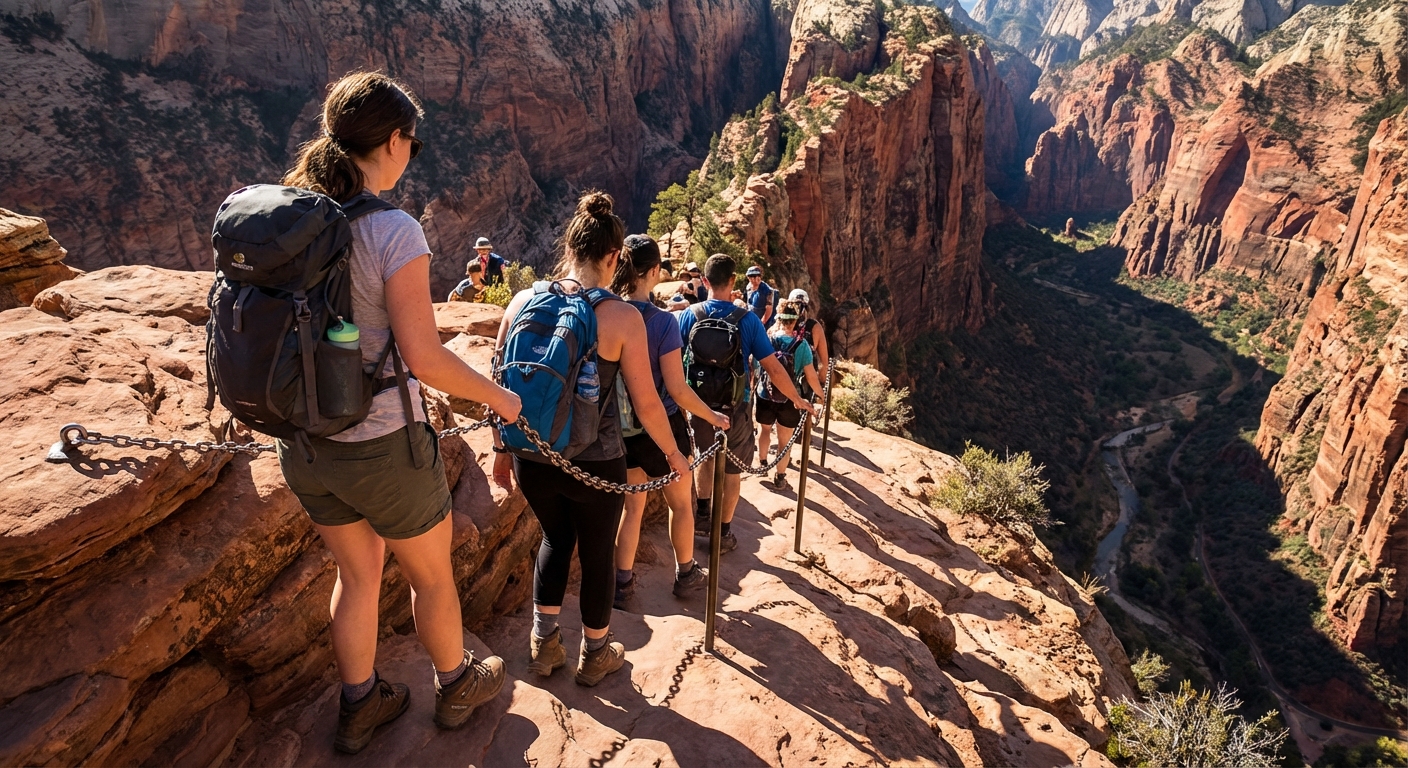
At-a-glance: Zion’s top day hikes
Distances and elevation can vary slightly depending on exact turnarounds and detours. Always confirm current conditions on the National Park Service site before you commit, especially for water levels, cyanobacteria advisories, and trail closures.
- Angels Landing: Strenuous, 5.4 miles round trip, about 1,500 feet gain, permit required for the chains section
- The Narrows (bottom-up): Moderate to strenuous, up to 9.4 miles round trip, minimal elevation but significant water walking, no permit for bottom-up
- Observation Point (East Mesa or Stave Spring): Moderate to strenuous depending on route, about 6.5 to 9+ miles round trip, big views, no permit typically
- Canyon Overlook Trail: Easy to moderate, 1.0 mile round trip, about 160 feet gain, no permit
- Emerald Pools: Easy to moderate, 1.2 to 3.0 miles round trip depending on route and what is open, small waterfalls and pools, no permit
- Riverside Walk: Easy, 2.2 miles round trip, mostly flat, no permit
- Watchman Trail: Moderate, about 3.3 miles round trip, about 400 feet gain, no permit
Before you hike: shuttles, starts, and Springdale strategy
Shuttle basics
During shuttle season, private cars are not allowed on the Zion Canyon Scenic Drive and you will use the park shuttle to reach classic trailheads like Angels Landing, The Narrows, Riverside Walk, and Emerald Pools. Plan for lines during peak hours. If you can, start early and ride the first shuttles so you are hiking while the canyon is still quiet and cool. Shuttle dates can change year to year, so confirm current operations before your trip.
Where to base yourself
Most visitors stay in Springdale, the gateway town right outside the park. It is walkable, packed with post-hike food options, and makes early starts dramatically easier. Town Wander already has a dedicated guide, so use it to dial in the details: see our Springdale gateway town guide for lodging picks, restaurants, and coffee stops.
What to pack (simple day-hike list)
- Water: Zion air is dry. Bring more than you think, especially in late spring through early fall.
- Sun protection: Hat, sunglasses, and sunscreen. The canyon reflects light like a mirror.
- Footwear: Grippy shoes for sandstone. For The Narrows, consider renting canyon shoes, socks, and a walking stick.
- Layers: Morning shade can feel chilly even on warm days.
- Navigation: Download maps offline. Cell service is unreliable inside the canyon.
Two quick planning rules
- Start time: For big-ticket hikes (Angels Landing, The Narrows, Observation Point), sunrise starts are your friend. You will beat heat, crowds, and afternoon storms.
- How much water: A rough baseline is 0.5 to 1 liter per hour in warm weather, more if you run hot. For The Narrows, you are cooler in the water, but you are still working hard. Bring plenty and do not count on filtering river water.
Angels Landing
If you are comfortable with heights and want a hike that feels like a rite of passage, Angels Landing is the one. The reward is a 360-degree view over Zion Canyon that looks like a painting someone forgot to frame.
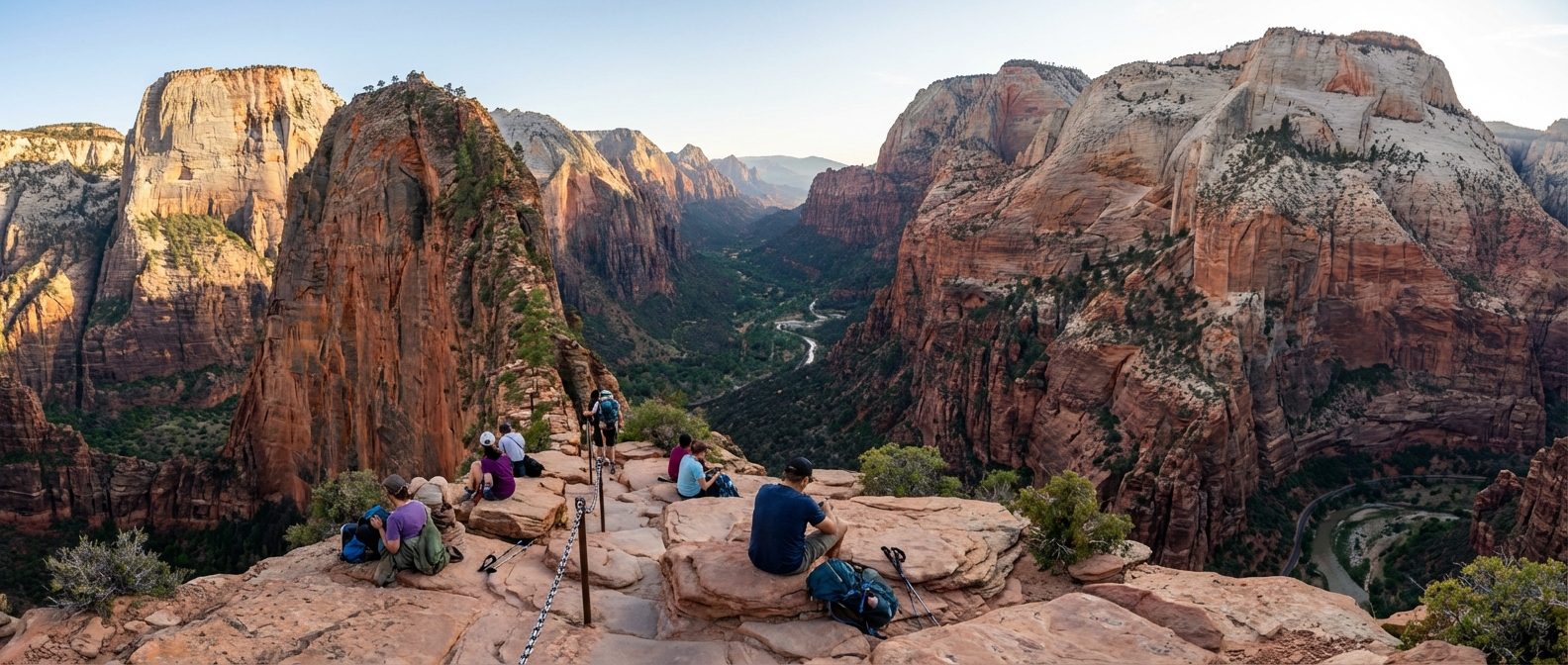
Trail stats
- Difficulty: Strenuous
- Distance: 5.4 miles round trip
- Elevation gain: About 1,500 feet
- Time: 4 to 6 hours for most hikers
- Trailhead: The Grotto (Zion Canyon shuttle stop)
Permit requirements
A permit is required for Angels Landing beyond Scout Lookout, meaning the famous chains section. Zion uses a seasonal lottery system for day-before and seasonal permits. If you do not get one, you can still hike up to Scout Lookout without a permit, which is a great workout and still has big canyon views.
Seasonal considerations
- Summer: Start early to avoid heat and crowds. Afternoon storms can make the chains section feel sketchy.
- Winter: Ice can form on shaded sections. Traction devices can be a smart call.
- Shoulder seasons: Spring and fall often have the best conditions, but permits are competitive.
My rule here is simple: if your legs feel wobbly from exposure, turn around at Scout Lookout. Zion will still be here tomorrow.
The Narrows (bottom-up day hike)
Walking upstream in the Virgin River is the most uniquely Zion thing you can do in a day. The walls narrow, the light bounces, and the canyon feels more like a cathedral than a trail.
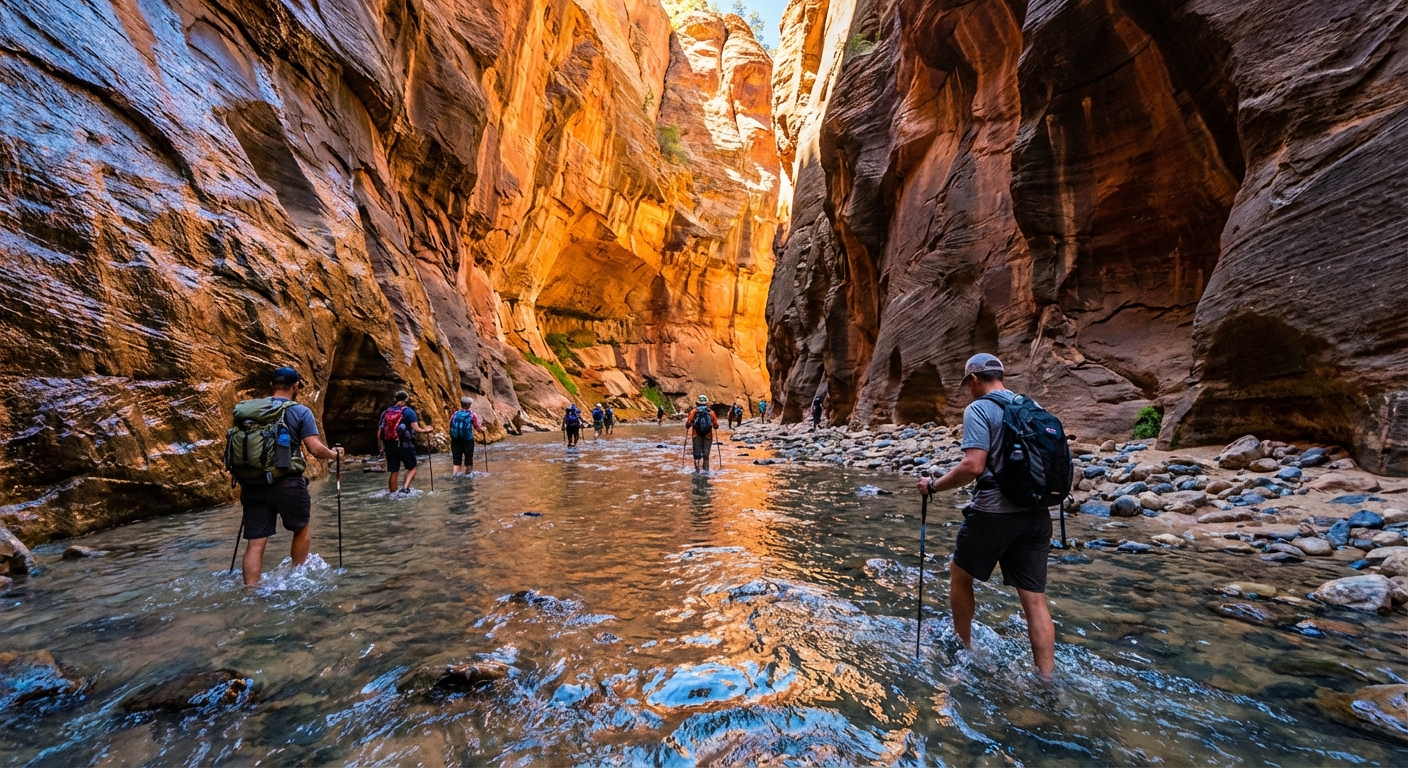
Trail stats
- Difficulty: Moderate to strenuous (depends on water conditions and turnaround point)
- Distance: Up to 9.4 miles round trip to Big Spring (most people turn around earlier)
- Elevation gain: Minimal, but river walking adds effort
- Time: 2 to 8 hours depending on how far you go
- Trailhead: Temple of Sinawava (end of the Zion Canyon shuttle)
Permit requirements
No permit is required for the bottom-up day hike. Permits are required for the top-down Narrows route, which is much longer, more committing, and often done as an overnight.
Safety notes (read this)
- Cyanobacteria: The Virgin River has had recurring toxic cyanobacteria blooms. Follow current NPS advisories. In plain terms, do not submerge your head, avoid getting river water in your mouth, and do not filter or treat Virgin River water as a drinking source.
- Closures: The park may close The Narrows based on river flow, flash flood risk, or other hazards. Check status the morning you go.
Best turnarounds
- Orderville Canyon junction: A popular first milestone for many hikers.
- Wall Street: The classic “this is why we came” section when conditions allow.
- Big Spring: The farthest legal turnaround for bottom-up hikers.
Seasonal considerations
- Spring: Snowmelt can raise water levels and close the hike. Always check current flow and closure status.
- Summer: Warm water and long days are ideal, but watch for flash flood risk, especially during monsoon season.
- Fall: Often the sweet spot for stable weather and comfortable temperatures.
- Winter: Cold water can be intense. A dry suit rental may be worth it if you are determined.
Practical tips
- Rent gear in Springdale if you want more confidence: canyon shoes, neoprene socks, and a sturdy walking stick change the whole experience.
- Turn around based on comfort, not a fixed mileage goal. The “best” Narrows day hike is the one where you still have energy to enjoy dinner later.
Observation Point
Observation Point is the view people imagine when they picture Zion from above. It looks down on Angels Landing, but from a higher, calmer perch.
Important update: The traditional route from Weeping Rock (via the East Rim Trail from Zion Canyon) is indefinitely closed due to major rockfalls. For day hikers right now, the practical options are the east-side approaches.
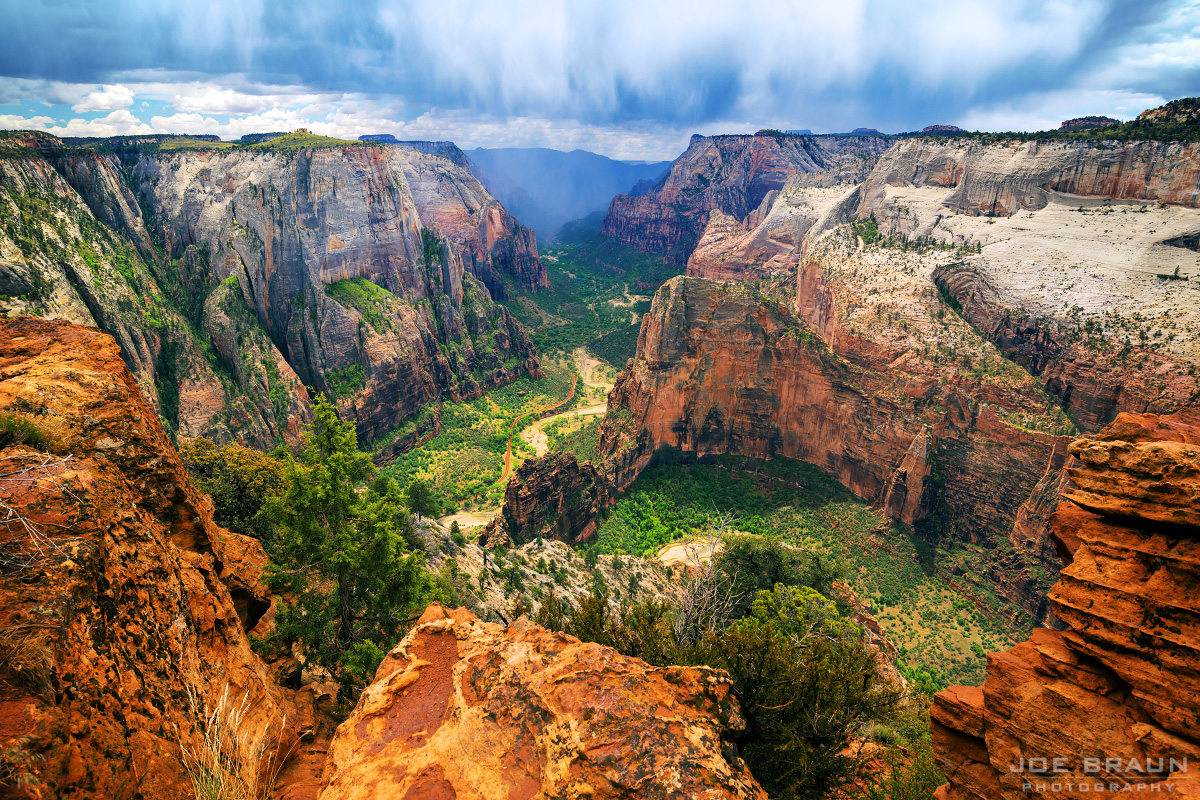
Route options (current day-hike approaches)
- East Mesa Trail: Moderate, about 6.5 to 7.0 miles round trip, generally modest elevation gain (often around 500 to 700 feet depending on exact start). This is the more straightforward choice when roads are in good shape.
- Stave Spring via East Rim Trail: Strenuous, commonly about 9 to 10+ miles round trip with more elevation change (often 1,000 feet or more depending on trailhead access). This option can feel wilder and more committing, and trailhead access can be the limiting factor.
Trailhead access notes
- These approaches start on the east side, and access can involve rough, seasonally muddy roads. After storms or in winter, road conditions can be the whole story.
- Because access details can change, confirm the latest route and parking info before you go, and do not assume any particular vehicle can make it to the trailhead.
Permit requirements
No permit is typically required for day hiking these routes, but access can change with road conditions and land management rules.
If Angels Landing feels like a thrill ride, Observation Point feels like the balcony seats. You get the same canyon, just with more breathing room.
Canyon Overlook Trail
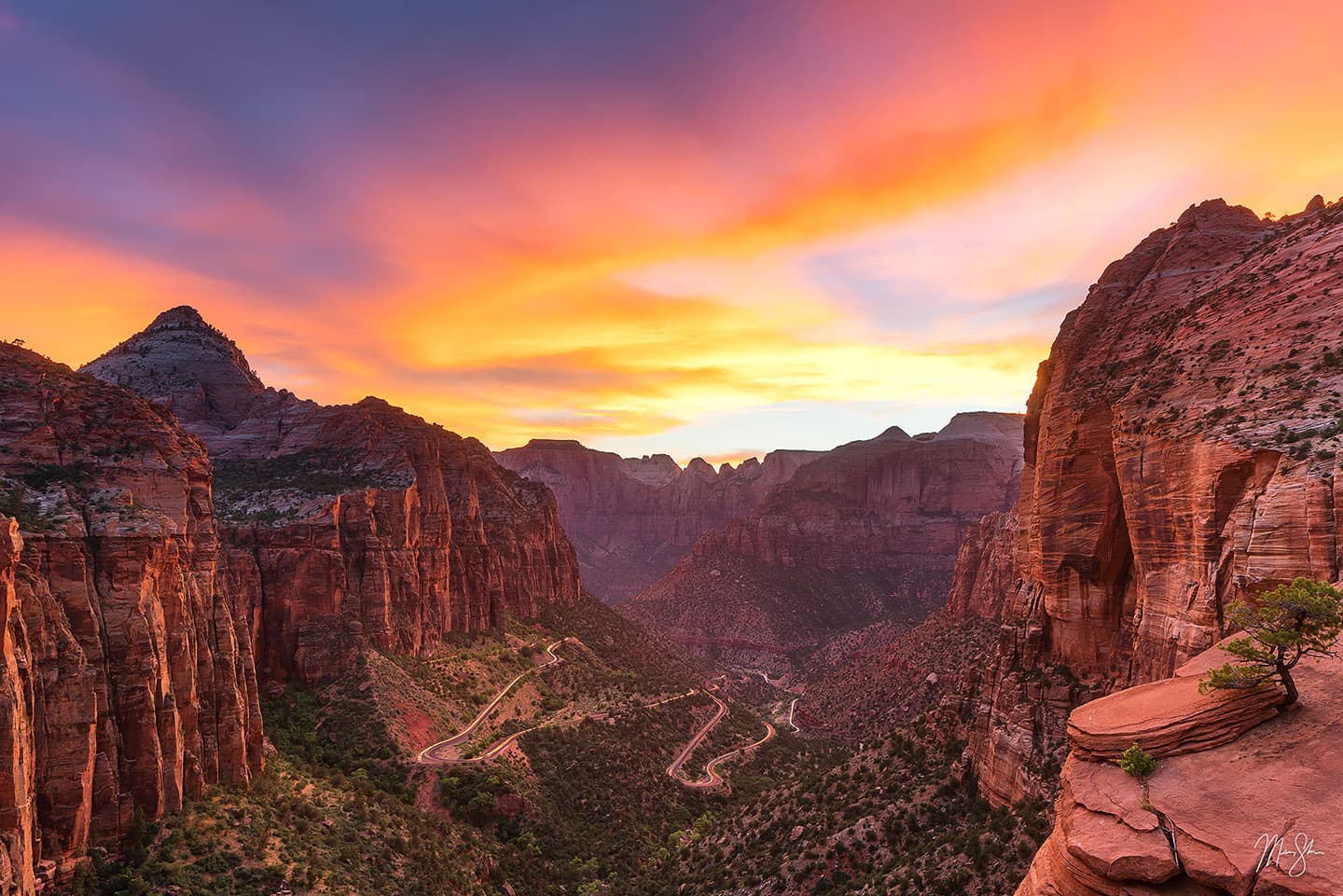
This is the hike I recommend to everyone, especially if you are short on time or arriving in the afternoon. It is quick, it is dramatic, and it ends with one of the best payoffs per mile in the park.
Trail stats
- Difficulty: Easy to moderate
- Distance: 1.0 mile round trip
- Elevation gain: About 160 feet
- Time: 30 to 60 minutes
- Trailhead: Near the Zion-Mount Carmel Tunnel on the east side
Permit requirements
No permit required.
Seasonal considerations
- Any season: Great year-round, but watch for icy patches in winter shade.
- Parking: Limited and competitive. Go early or aim for late afternoon if you want a quieter experience.
Emerald Pools
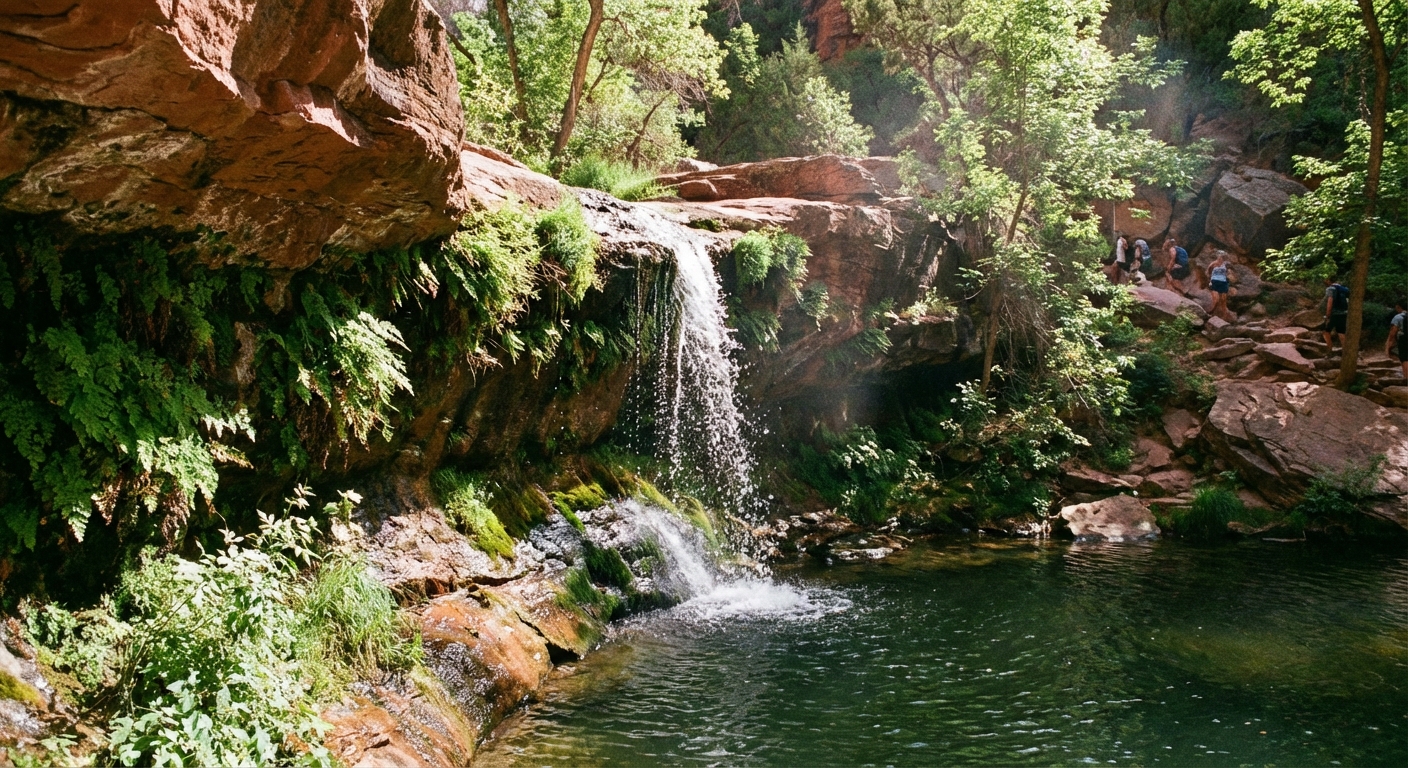
Emerald Pools is classic Zion: easy access, cooling mist when water is flowing, and a trail that works for families, first-timers, and anyone who wants a softer day between bigger objectives. The experience depends heavily on season. In dry periods, the pools can feel more like scenic alcoves than waterfalls.
Trail stats
- Difficulty: Easy to moderate
- Distance: About 1.2 to 3.0 miles round trip depending on Lower, Middle, and Upper pools and route options
- Elevation gain: Up to around 400 feet if you go higher
- Time: 1 to 3 hours
- Trailhead: Zion Lodge area (Zion Canyon shuttle stop)
Permit requirements
No permit required.
Know before you go
- Route status: This area has seen periodic closures and reroutes in past seasons. Verify what is currently open at Zion Lodge before you set expectations on mileage or which pools you can reach.
- Spring: Often best waterfall flow.
- Summer: Hot, but shaded sections help. Water features may be reduced.
- Fall and winter: Quieter. Traction can be helpful after freezing nights.
Riverside Walk
Riverside Walk is the calm, beautiful lead-in to The Narrows, and it is also one of the best true easy walks in the park. If your group has mixed energy levels, this is the confidence-builder that still feels unmistakably Zion.
Trail stats
- Difficulty: Easy
- Distance: 2.2 miles round trip
- Elevation gain: Mostly flat
- Time: 1 to 1.5 hours
- Trailhead: Temple of Sinawava (Zion Canyon shuttle)
Why it makes the list
- Big scenery, minimal effort, and it puts you at the mouth of The Narrows without committing to a river hike.
- Perfect late-day option when you arrive after lunch and want something real before dinner.
Watchman Trail
If you want a solid hike without the Zion Canyon bottlenecks, Watchman is a smart play. It is close to the visitor center, it skips the shuttle-only trailhead shuffle, and the views open up quickly.
Trail stats
- Difficulty: Moderate
- Distance: About 3.3 miles round trip
- Elevation gain: About 400 feet
- Time: 1.5 to 2.5 hours
- Trailhead: Near the Zion Visitor Center
Seasonal considerations
- Summer: Start early. Exposed sections get warm fast.
- Golden hour: This is a great late-afternoon hike when canyon walls glow and crowds thin out.
How to choose the right hike
If you want the iconic thrill
Angels Landing, as long as you have a permit for the chains section and you are comfortable with exposure.
If you want the most “Zion-only” experience
The Narrows. Check water conditions and cyanobacteria advisories first, rent the right gear, and embrace being wet.
If you want a huge view with less chaos
Observation Point from the east side, especially in shoulder season.
If you have one free hour
Canyon Overlook. It is the perfect first or last hike.
If your group wants something mellow
Emerald Pools or Riverside Walk, especially in spring when water is more lively.
If you want a quieter classic near town
Watchman Trail, for a satisfying hike that does not depend on a deep-canyon shuttle stop.
Season-by-season notes
- Spring (March to May): Great temperatures, strong waterfall flow, but variable Narrows conditions due to snowmelt. Expect crowds.
- Summer (June to August): Early starts are non-negotiable. Heat and monsoon storms raise flash flood risk, especially for slot canyons.
- Fall (September to November): Often the best blend of stable weather, comfortable temps, and lower water risk in The Narrows.
- Winter (December to February): Quiet and beautiful. Shorter days and icy shade mean traction and layers matter.
Permits and fees
- Park entry: Zion requires an entrance pass (day pass or an annual option like America the Beautiful). Check current fees before arrival.
- Angels Landing: Permit required beyond Scout Lookout. Apply via the seasonal lottery or day-before lottery depending on timing.
- The Narrows: Bottom-up day hike typically does not require a permit. Top-down requires a permit and is a different, longer undertaking.
Quick safety reminders
- Check conditions daily: Weather, water levels, cyanobacteria advisories, and trail closures change fast in canyon country.
- Start early: You will hike cooler, beat crowds, and reduce risk from afternoon storms.
- Know your limits: Exposure on Angels Landing and cold water in The Narrows are not the place to “push through” discomfort.
- Leave no trace: Stay on trail, pack out trash, and respect closures. Zion’s popularity makes small impacts add up.
Post-hike: Springdale comforts
One of my favorite parts of Zion is how quickly you can go from trail dust to a real meal. Base yourself in Springdale when you can. It simplifies sunrise starts, makes shuttle timing less stressful, and gives you plenty of options for dinner, groceries, and gear rentals.
If you want help choosing the best spots to refuel, Town Wander’s Springdale gateway town guide has current picks for coffee, dinner, and convenient places to stay.