Best European Christmas Market Towns

Maya Lin
Maya Lin is a travel journalist and outdoor enthusiast who believes the best trips combine rugged adventures with urban comforts. After spending six years backpacking across four continents, she founded Trail & Town Guide to help fellow travelers navigate both hidden mountain passes and bustling city neighborhoods with confidence.
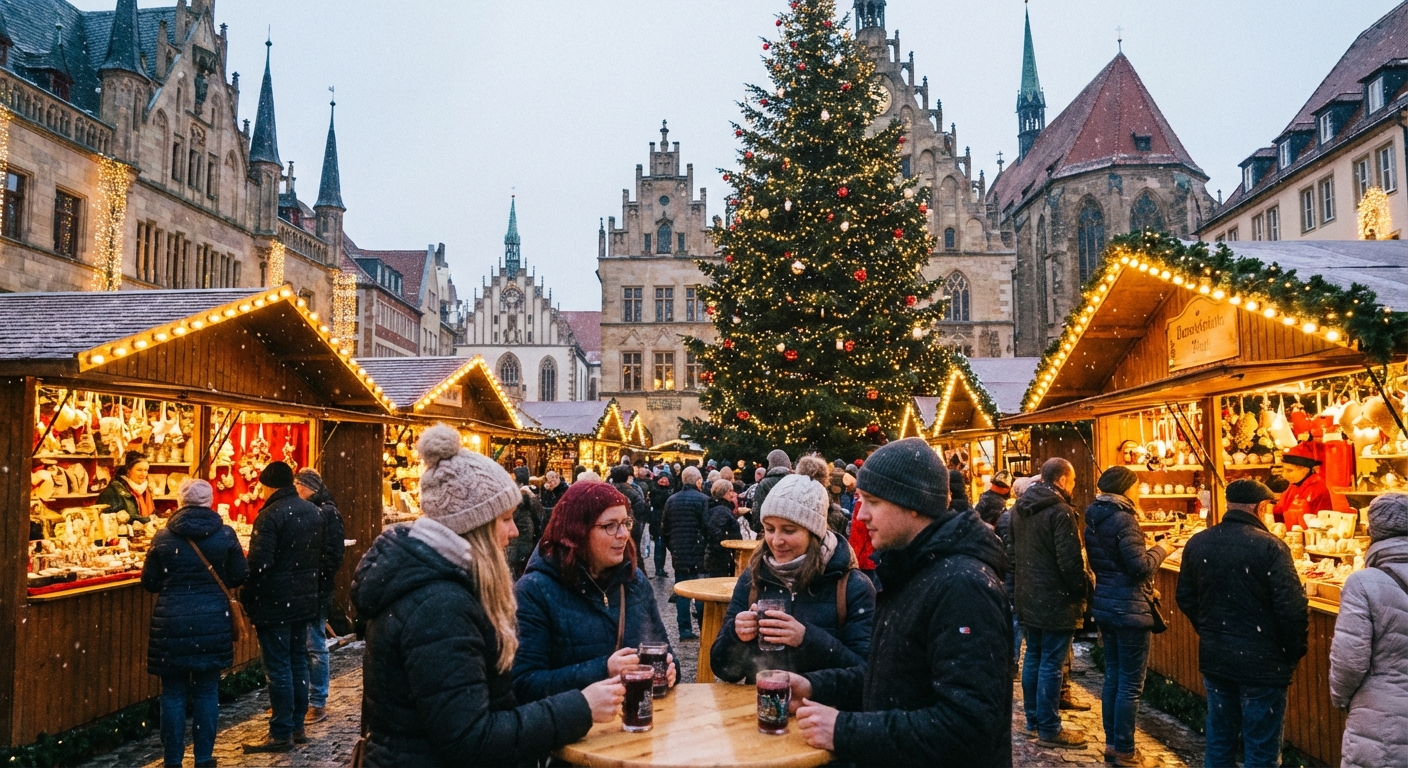
Christmas markets are the rare kind of travel magic that feels both cinematic and weirdly practical. You wander into a medieval square, the air smells like pine and roasted nuts, and somehow you still end up doing the most adult thing possible: comparing train times, budgeting for mugs of Glühwein, and deciding whether that hand-carved ornament is worth sacrificing sock space in your carry-on.
This route is built for travelers who want the cozy small-town sparkle without wasting hours backtracking. It strings together Germany and Austria’s most atmospheric market towns using efficient rail connections, with just enough flexibility for snowy detours and long coffee breaks.
Quick itinerary overview
Ideal trip length: 7 to 10 days
Best window: Late November through mid-December for peak charm and slightly fewer holiday-week crowds.
Dates caveat: Market schedules vary by city and year. Many end around Dec 23 or Dec 24, but some run to Dec 26 or into early January. Always confirm exact dates and hours on official city sites before booking trains and hotels.
Smaller-town note: Some smaller markets run shorter hours on weekdays or focus their biggest programming on weekends. If you are building your whole day around a tiny market, check the schedule first.
Core route (west to east):
- Nürnberg (Germany) as the classic base
- Bamberg for a storybook old town and smoked beer
- Rothenburg ob der Tauber for medieval walls and Christmas nostalgia
- Regensburg for UNESCO beauty and a special palace market
- Salzburg (Austria) for baroque elegance and alpine day trips
- Hallstatt for lakeside winter calm
- Innsbruck for mountains plus city comforts
If you only have 5 days, do: Nürnberg, Rothenburg (day trip), Regensburg, Salzburg.
How to get around
Germany and Austria are made for Christmas market hopping because the rail network is dense, stations are usually central, and you can arrive already warm. My rule in winter: choose trains over rental cars unless you are very comfortable driving on ice and hunting for parking in old towns.
Quick exception: A few places break the “station is central” rule in a memorable way. Hallstatt Bahnhof is across the lake from the village, which is part of the charm, but it does require a short boat connection (or alternative transport depending on season and schedule).
Best transport strategy
- Use trains as the backbone: Deutsche Bahn (DB) in Germany, ÖBB in Austria.
- Book long legs early: For routes like Regensburg to Salzburg or Salzburg to Innsbruck, booking ahead often saves money. On Railjet routes, consider reserving seats if you want peak-cozy, low-chaos travel days.
- Stay walking distance from the station: Cobblestones plus snow plus luggage is a specific kind of character building.
- Build in buffer time: Winter delays happen. Plan one flexible afternoon per 3 to 4 travel days.
Typical rail times (ballpark)
- Nürnberg to Bamberg: ~45 minutes
- Nürnberg to Rothenburg ob der Tauber: ~1.5 to 2 hours (usually with a change)
- Nürnberg to Regensburg: ~1 to 1.5 hours
- Regensburg to Salzburg: ~2.5 to 3.5 hours (connection-dependent, check current timetables)
- Salzburg to Hallstatt: ~2 to 2.75 hours (train plus boat across the lake from Hallstatt Bahnhof; confirm boat times in winter)
- Salzburg to Innsbruck: ~1.75 to 2.25 hours (timing varies by train)
Carry-on only tip: Winter markets are tempting, but bulky. Pack a foldable tote or a packable daypack, and plan for one “souvenir consolidation” night where you reorganize like it is a tactical operation.
Dates, hours, and closures
- Hours vary: Many markets open in the late morning or early afternoon and run into the evening. Some smaller markets close earlier on weekdays.
- Holiday quirks: Dec 24 can be abbreviated, and Dec 25 can be quiet depending on the town. Some markets continue on Dec 26.
- Sundays: Markets often operate, but Germany and Austria take Sunday closures seriously. Planning to buy something “normal” (pharmacy run, replacement gloves, etc.) can be harder on Sundays.
What to eat and drink
Every town has its own specialties, but a few staples show up again and again. Think of this as your “order with confidence” list.
Warm drinks
- Glühwein: Spiced hot wine, usually red. Look for Winzerglühwein in wine regions.
- Kinderpunsch: Non-alcoholic fruit punch. Excellent even for adults who want a break.
- Jägertee (Austria): Tea (often a strong concentrate) spiked with rum and spices. Sneaky strong.
Snacks worth the calories
- Bratwurst: Especially in Franconia around Nürnberg and Bamberg.
- Lebkuchen: Gingerbread, often with nuts and chocolate. Nürnberg is the superstar.
- Reibekuchen/Kartoffelpuffer: Crispy potato pancakes, usually with applesauce.
- Raclette: Melty cheese over potatoes or bread, common in bigger markets.
- Kaiserschmarrn (Austria): Shredded pancake with powdered sugar, perfect post-snowfall.
Market etiquette
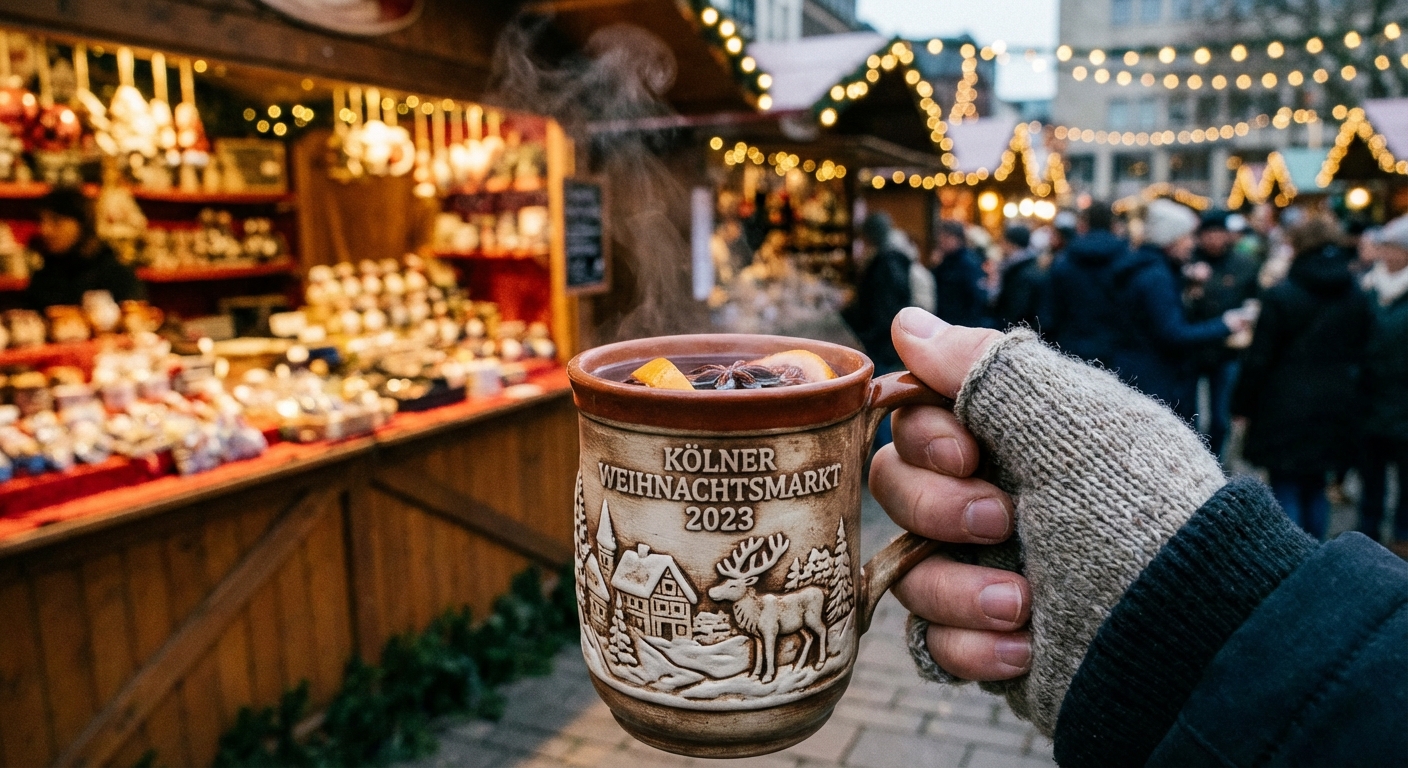
- Mug deposits are normal: You pay a deposit for the ceramic mug and get it back when you return it. Or keep it, which is how your luggage gets heavier.
- Cash still helps: Many stalls accept cards now, but smaller towns and older vendors can be cash-first.
- Bring gloves you can pay with: Touchscreen-compatible gloves (or flip-top mittens) save you from the frozen-fingers tap dance.
- Cold plus alcohol is a thing: Pace the boozy drinks. Warm does not always mean hydrated.
What to buy (and what to skip)
My anthropology brain loves markets because they reveal what a place values: craft traditions, regional foods, and the small luxuries that make winter feel survivable. Still, not every stall is artisanal. Here is how to shop like a pro.
Souvenirs that travel well
- Hand-carved ornaments: Look for woodwork from the Erzgebirge region in Germany.
- Beeswax candles: Lightweight, practical, and they smell like a warm cabin.
- Local edible gifts: Lebkuchen, spice blends, teas, small bottles of schnapps, or specialty mustards.
- Sheepskin slippers or wool socks: Buy in Austria if you plan on actual winter hiking days.
Common skip items
- Mass-produced trinkets: If it looks identical across three stalls, it probably is.
- Very fragile glass: Unless you have a hard case and a real plan.
- Oversized nutcrackers: Iconic, yes. Carry-on compatible, no.
My small-town test: Ask the vendor where it is made. The good ones love the question and can tell you the workshop or region.
Town 1: Nürnberg
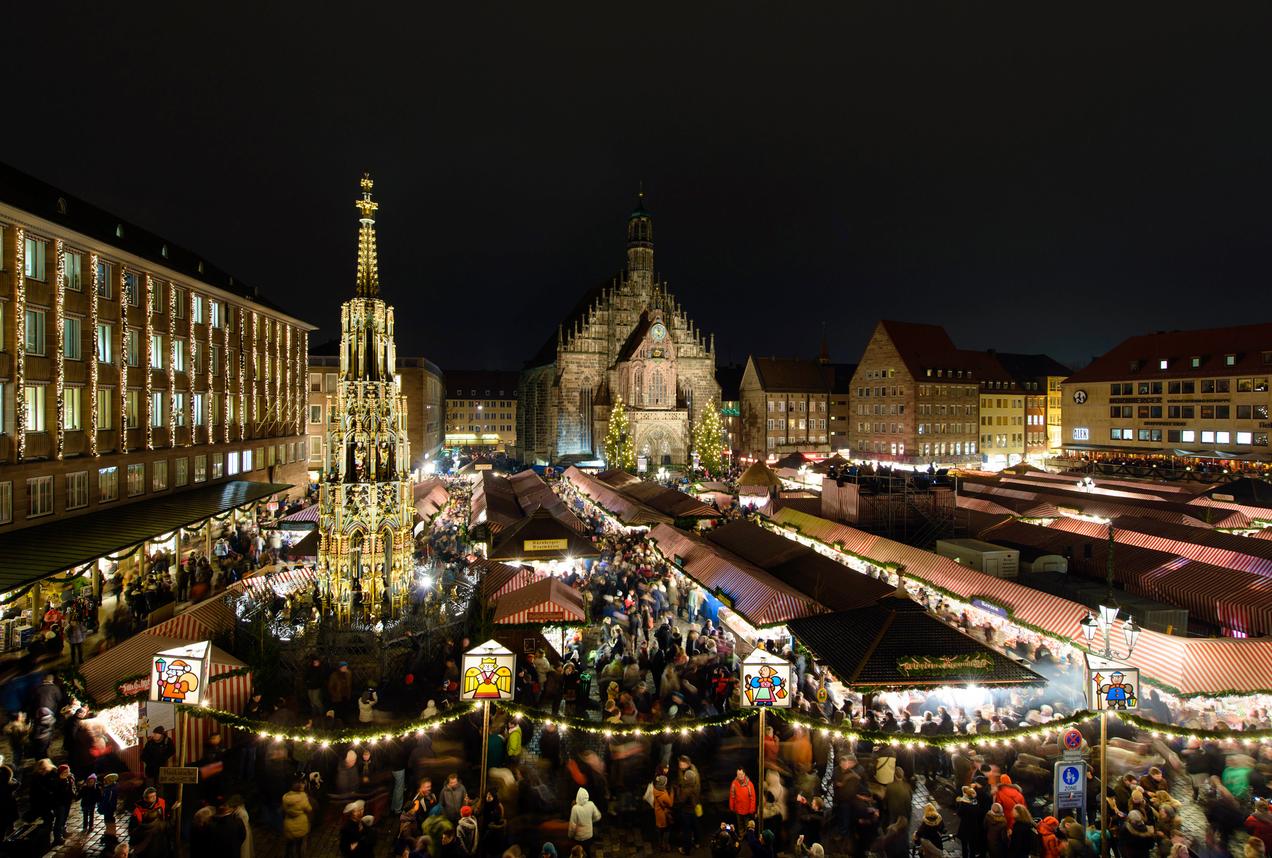
If you want one “classic” market town as your anchor, make it Nürnberg. It is a proper city with easy rail links, but the old town wraps you in medieval scale and candlelit warmth. The Christkindlesmarkt on Hauptmarkt is one of Europe’s most famous for a reason.
Don’t miss
- Lebkuchen: Buy from a reputable bakery stall, not the lowest-cost pile.
- Drei im Weggla: Three small Nürnberger sausages in a roll. Minimalist, perfect.
- Feuerzangenbowle: Mulled wine with a flaming rum-sugar cone. Great for warming up fast.
Best plan
- Arrive before dark: Walk the castle hill first, then descend into the lights.
- Weeknights are calmer: Friday and Saturday can be shoulder-to-shoulder.
Where to reset
Find a coffee shop near the old town walls and give yourself a non-market hour. Market energy is wonderful, but a quiet cappuccino makes the sparkle feel sparkly again.
Town 2: Bamberg
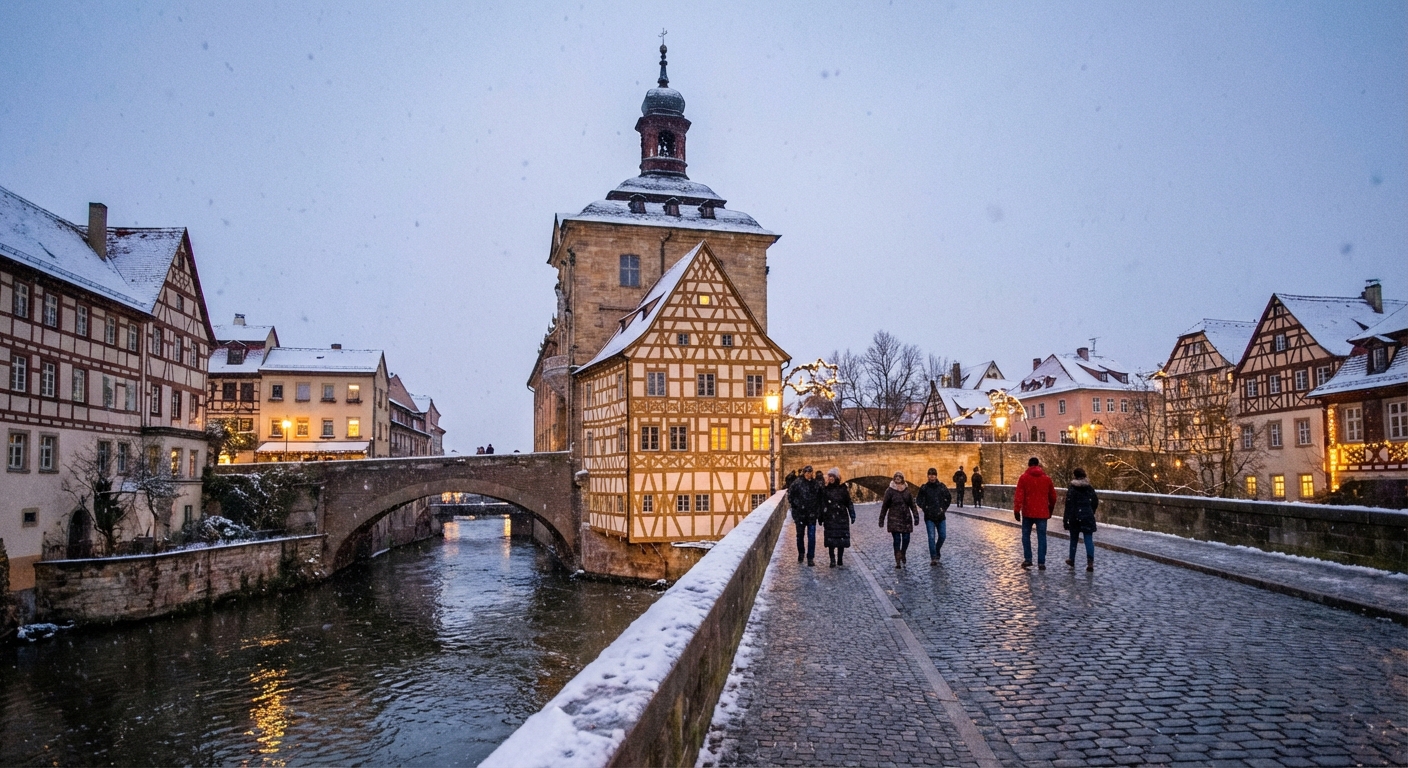
Bamberg is the kind of place that makes you slow down without trying. The old town sits on islands and river channels, and in winter the half-timbered buildings look like they were designed specifically for twinkle lights. It is an easy hop from Nürnberg, which makes it ideal as a day trip or a one-night detour.
Eat and drink
- Smoked beer (Rauchbier): Bamberg’s signature. Try it with hearty Franconian food.
- Franconian pastries: Grab something sweet for the train ride back.
Do one scenic thing
Walk to Altes Rathaus (the Old Town Hall) and linger on the bridge. Even if you do nothing else, you will remember that view.
Town 3: Rothenburg
Rothenburg ob der Tauber is pure medieval theater, and at Christmas it leans all the way in. Come for the ramparts, the narrow lanes, and that feeling of stepping into a snow globe. It can be busy, but winter crowds are generally kinder than summer tour groups.
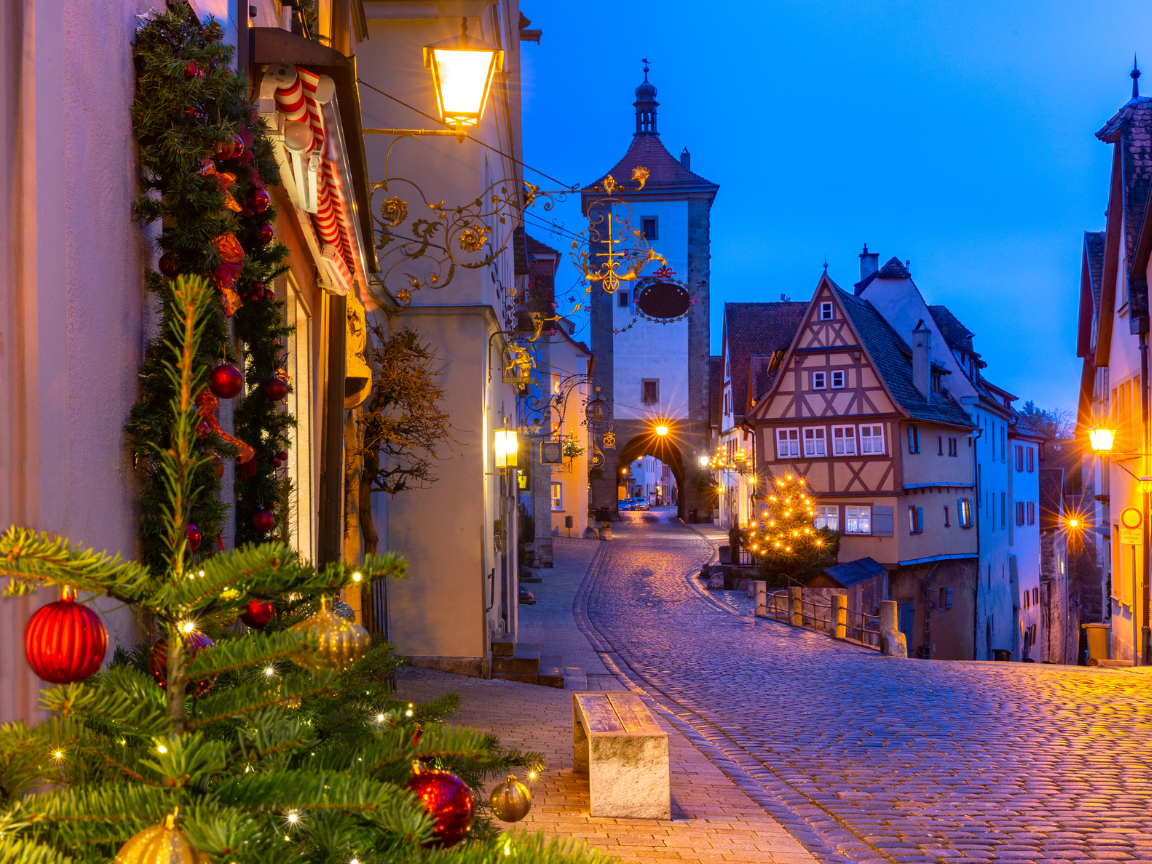
What to do
- Walk the town walls: Go late afternoon for soft light and fewer people.
- Pop into small craft shops: This is one of the better towns for traditional ornament shopping.
What to eat
- Schneeballen: A local pastry shaped like a “snowball.” It is more crunchy than delicate, but it is a Rothenburg rite of passage.
Carry-on note: Rothenburg is where people tend to buy their biggest, most breakable souvenirs. If you are flying with a small bag, set a rule before you enter the first shop.
Town 4: Regensburg
Regensburg feels like an old soul: Roman roots, Gothic spires, and a Danube-side calm that makes the market lights feel extra warm. The main Christmas market is lovely, but the real standout is the Christmas market at Schloss Thurn und Taxis, where you can shop by torchlight and lean into the medieval atmosphere.
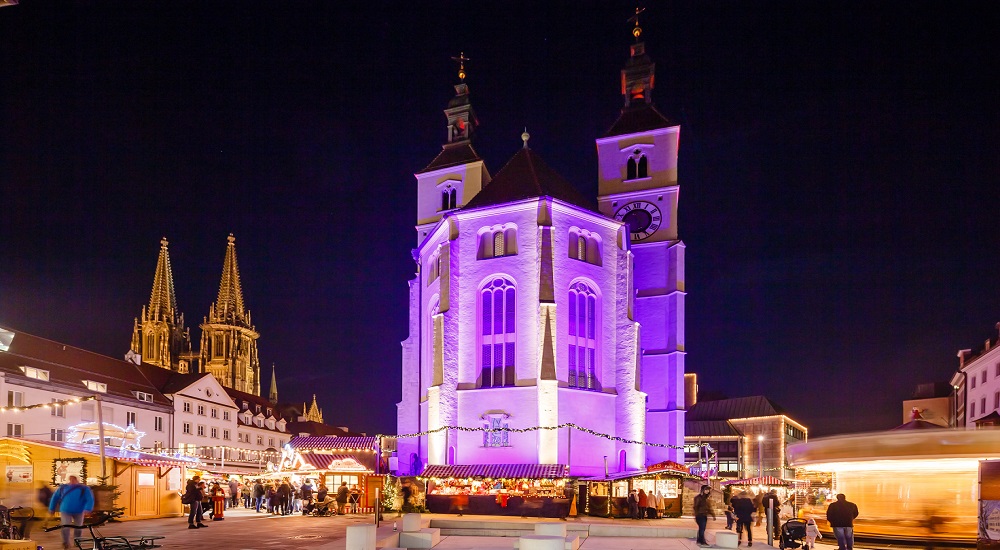
Best experiences
- Schloss Thurn und Taxis market: Immersive without being gimmicky (and very popular, so go earlier if you hate lines).
- Danube stroll: Walk off your market snacks along the river.
Buy here
- Handmade candles and ceramics: Great gifts that do not scream “souvenir.”
Town 5: Salzburg
Salzburg is where your itinerary gets a little more alpine and a little more elegant. The markets here are framed by baroque architecture and mountain silhouettes, which is a very strong combination. Use Salzburg as a base for day trips, because the rail connections are smooth and the city gives you plenty of cozy indoor options when the weather is doing the most.
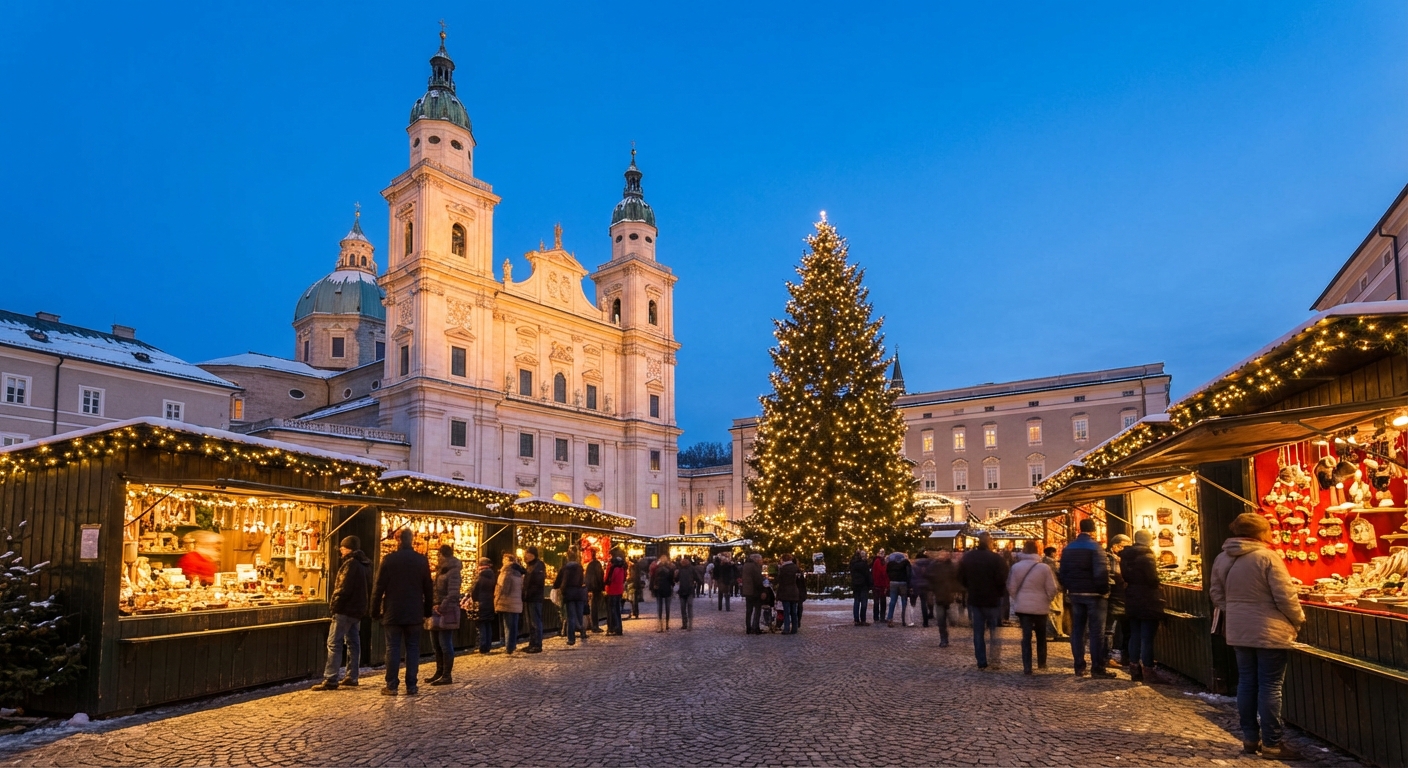
Don’t miss
- Domplatz and Residenzplatz markets: Central, scenic, and reliably festive.
- Fortress views: Take the funicular up to Hohensalzburg if the sky is clear.
Eat and drink
- Kaiserschmarrn: Order it when you need warmth and comfort in one bowl.
- Punsch variations: Austrian markets often have more punch flavors than you expect.
Practical note
December is busy here. If there is a restaurant you are excited about, book ahead, especially on weekends.
Town 6: Hallstatt
Hallstatt in winter is quieter, moodier, and more local-feeling than the summer version. It is not a “big market town,” but it is one of the most beautiful winter stops you can add to this route, especially if you are craving stillness after several busy market squares.
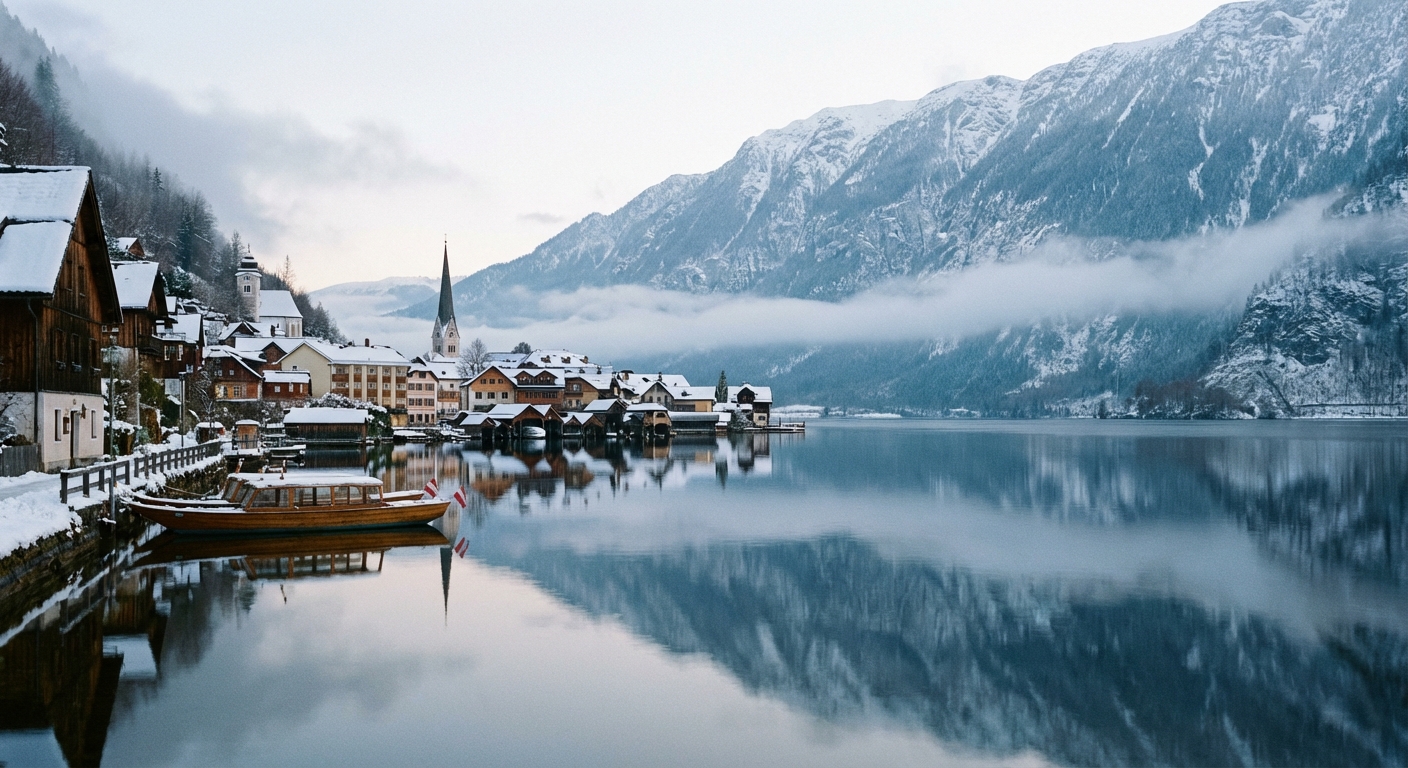
How to do it well
- Know it is a full day from Salzburg: It is doable, but it is a long day with limited winter daylight. Start early, and do not plan a late, high-effort evening back in Salzburg.
- Go early or stay overnight: Day trippers cluster midday. Mornings feel almost private.
- Mind the last mile: Most visitors arrive via Hallstatt Bahnhof and take the short boat across the lake. Confirm the boat schedule for your date.
- Dress for damp cold: Lakeside chill cuts through light jackets.
What to do
- Lakeside walk: Simple, iconic, and genuinely calming.
- Warm up with soup: This is a “sit down and thaw” town, not a stand-and-snack marathon.
Town 7: Innsbruck
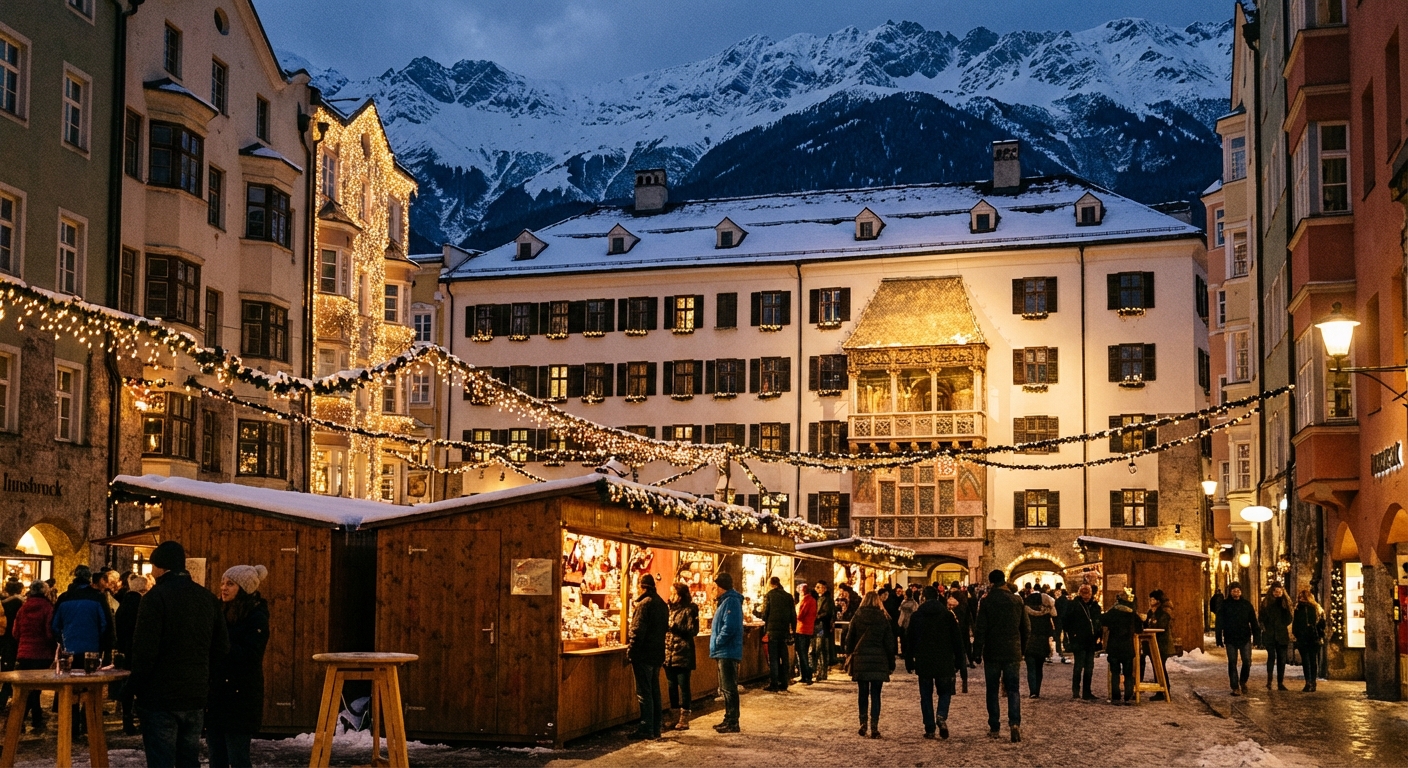
Innsbruck is the sweet spot if you like pairing city comforts with easy mountain access: a real city with transit, museums, and excellent cafes, plus mountains right there when you want snow and views. The markets are spread across different parts of town, which keeps the experience from feeling like one giant loop.
Market highlights
- Old Town market: Classic and central.
- Hungerburg market: Smaller, with elevated views if you ride the funicular.
Add a mountain moment
If the weather is clear, take a lift up for panoramic views. Even a short, snowy viewpoint walk will scratch the “I came to Austria for the Alps” itch without needing full hiking gear.
Suggested route (8 days)
Day 1: Arrive in Nürnberg
- Settle in and do a first lap of the Christkindlesmarkt.
- Early night if you arrived from a long flight. Jet lag plus Glühwein is a chaotic pairing.
Day 2: Nürnberg deep dive
- Castle hill and old town walk in daylight.
- Market dinner: sausages, lebkuchen, and one mug you actually return.
Day 3: Bamberg day trip
- Morning train to Bamberg.
- Old town wandering and Rauchbier stop.
- Back to Nürnberg or overnight in Bamberg for a slower pace.
Day 4: Rothenburg
- Train to Rothenburg ob der Tauber.
- Walk the walls before sunset.
- Evening market stroll and overnight.
Day 5: Regensburg
- Train to Regensburg.
- Schloss Thurn und Taxis market in the evening for maximum atmosphere.
Day 6: Salzburg
- Midday train to Salzburg.
- Domplatz market and a relaxed dinner indoors.
Day 7: Hallstatt day trip
- Early start for quiet lakeside time.
- Return to Salzburg to sleep (or upgrade your sanity and stay overnight in Hallstatt).
Day 8: Innsbruck
- Train to Innsbruck.
- Old Town market plus an optional funicular ride for views.
Why this order works: You cluster the Franconia and Bavaria stops around Nürnberg (short hops, minimal backtracking), then move east to Salzburg as a day-trip base, then finish in Innsbruck where the Alps do their thing without you needing to relocate every night.
Extra days? Add a second night in Salzburg (for museums and cafes), or a second night in Innsbruck (for a longer mountain outing).
Where to stay
I prioritize three things in market season: walking distance, warmth, and a breakfast that makes you want to get out of bed.
- Old town edges: Stay just outside the most tourist-dense core for better sleep while still walking everywhere.
- Look for included breakfast: It reduces decision fatigue when it is cold and dark at 8 a.m.
- Ask about late check-in: Winter train delays are real.
If you are traveling as a couple or with friends, apartments can be great because you can do a quick “drying station” for damp gloves and socks.
Packing list
This is the trip where people overpack and still feel cold. The fix is not more clothes. It is smarter layers.
Wearable essentials
- Waterproof boots with traction for slick cobblestones
- Wool socks (2 to 3 pairs, rewear with airing out)
- Base layers (merino if you can)
- Mid-layer fleece or wool sweater
- Winter coat that blocks wind
- Hat, scarf, and touchscreen-friendly gloves
Small items that matter
- Reusable tote for market purchases
- Zip-top bag for pastries and snacks on travel days
- Portable charger (cold drains batteries)
- Mini umbrella or compact rain shell
Accessibility note: Expect cobblestones, curbs, and occasional snowpack. If you have mobility needs, prioritize hotels with elevators and look up step-free routes to main squares when available.
Sustainability note: Bring a reusable bottle and say yes to mug deposits. It is one of the easiest low-waste habits you can adopt on this trip.
Budget expectations
Costs swing based on dates and how early you book, but here is what tends to be consistent.
- Markets are free to enter, but snacks add up fast.
- Plan 20 to 40 EUR per day for market food and drinks if you are actively sampling.
- Trains are cheaper when booked ahead for longer legs. Regional day tickets can be good value for day trips.
- Cash buffer: Keep small bills and coins for stalls and mug deposits.
Practical safety
- Pickpockets love crowds: Keep your phone and wallet in zipped pockets or a crossbody worn in front, especially in the busiest squares.
- Winter pacing: Cold weather hides fatigue. Do one main market per afternoon or evening, not five markets in one day like it is a scavenger hunt.
Responsible travel
The most festive thing you can do is travel in a way that keeps these towns livable for the people who call them home.
- Stay at least one night in smaller towns when possible, not just a quick photo stop.
- Shop local crafts and edible goods made in-region.
- Use trains instead of cars for most routes.
- Respect quiet hours in old town neighborhoods where sound carries.
If a market feels too crowded, step one street away. The magic is often hiding in the quieter lanes where you can actually smell the pine garlands and hear the church bells.
Final notes
The secret to loving Christmas markets is pacing. Do not try to “win” the markets by seeing five in one day. Pick one main market per afternoon and evening, add one scenic walk in daylight, and give yourself at least one sit-down meal every day. You will remember the glow, the music, and the taste of cinnamon more clearly when you are not sprinting between train platforms.
If you build this route with a little breathing room, you get the best of both worlds: rugged winter air in the streets, and the kind of urban comfort that tastes like coffee, warm pastries, and a seat near a window.