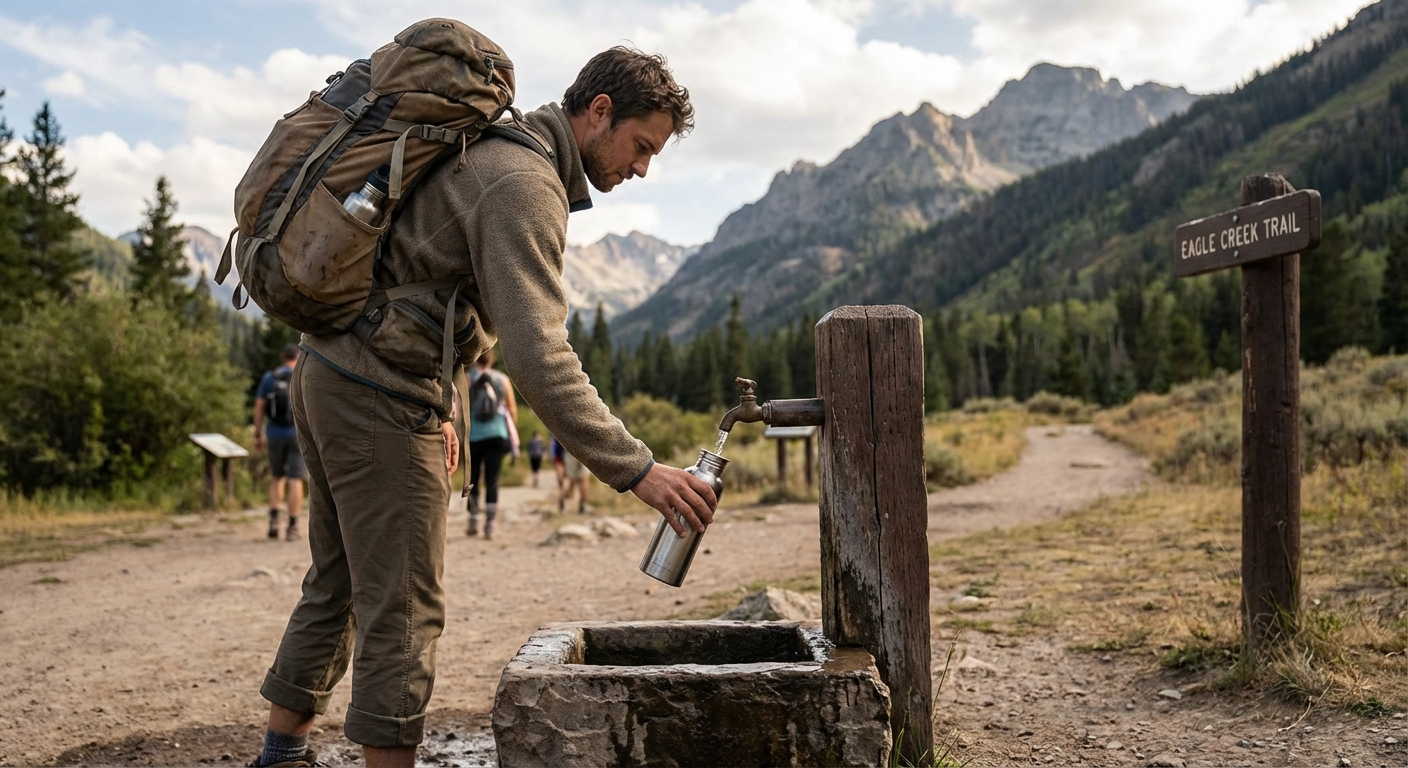
Best Travel Water Bottles and Purifiers

Maya Lin
Maya Lin is a travel journalist and outdoor enthusiast who believes the best trips combine rugged adventures with urban comforts. After spending six years backpacking across four continents, she founded Trail & Town Guide to help fellow travelers navigate both hidden mountain passes and bustling city neighborhoods with confidence.
I have strong feelings about two travel items: a good pair of walking shoes and a water setup that does not fail you when you are sweaty, jet-lagged, and staring at a sink you do not trust.
The good news is you do not need to choose between “rugged backcountry-ready” and “cute enough to bring into a café.” You just need to pick the right tool for the water risk in front of you. This guide compares insulated reusable bottles, UV purifiers, filter bottles, press-style purifiers, gravity systems, and filter straws, then helps you match them to your trip.
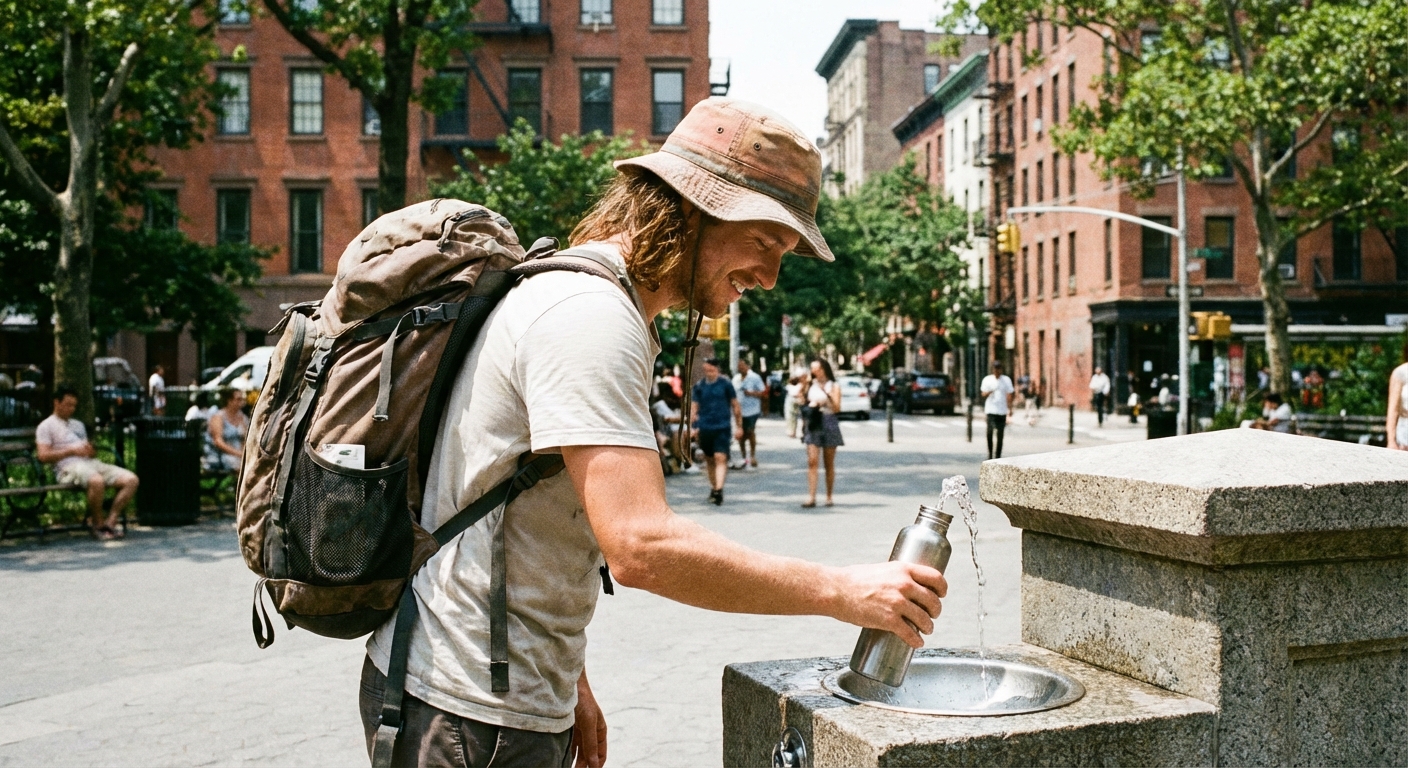
Start here: what needs to be removed?
Not all “bad water” is the same. A purifier that is perfect for a high-alpine stream can be the wrong choice in a place where viral contamination is a concern. Also: clear-looking water can still be contaminated, so do not let “it looks fine” be your safety plan.
- Bacteria (like E. coli, Salmonella): common in many settings, removed by most backpacking filters.
- Protozoa (like Giardia, Cryptosporidium): common in backcountry water, removed by quality filters rated to 0.2 microns (or smaller).
- Viruses (like norovirus, hepatitis A): more associated with human waste contamination, can be a bigger concern in dense urban areas and some developing regions. Most backpacking filters do not remove viruses because viruses are smaller than typical filter pore sizes. Virus coverage usually requires UV, chemical disinfection, or a virus-rated purifier.
- Chemicals and heavy metals: tricky. Some filters reduce certain chemicals, but not all. If you suspect industrial or agricultural contamination, avoid questionable sources and prioritize trusted supplies (reputable bottled water, known-safe treated sources, or water with clear third-party chemical reduction claims). If you want a device solution, look for activated carbon plus specific certifications or testing for the contaminants you care about.
- Taste and odor: often solved by activated carbon even when safety is already fine.
Rule of thumb: filters handle bacteria and protozoa well. purifiers are the umbrella category that can also address viruses through UV, chemical treatment, or specialized media.
What type of traveler are you?
If you want a quick match before we nerd out:
- City-forward travel with occasional day hikes: insulated bottle + optional UV purifier for sketchy taps and hotel sinks.
- Backpacking and trekking: squeeze filter or pump filter, plus a clean bottle or bladder. Consider chemical backup.
- International travel in places where you avoid tap water: UV purifier or a true purifier bottle (including press-style purifiers), plus a wide-mouth bottle for easy filling.
- Group trips or basecamp: gravity filter for volume and low effort.
- Ultralight emergency backup: filter straw or tiny squeeze filter, but plan for how you will actually collect water.
Insulated reusable bottles (the everyday hero)
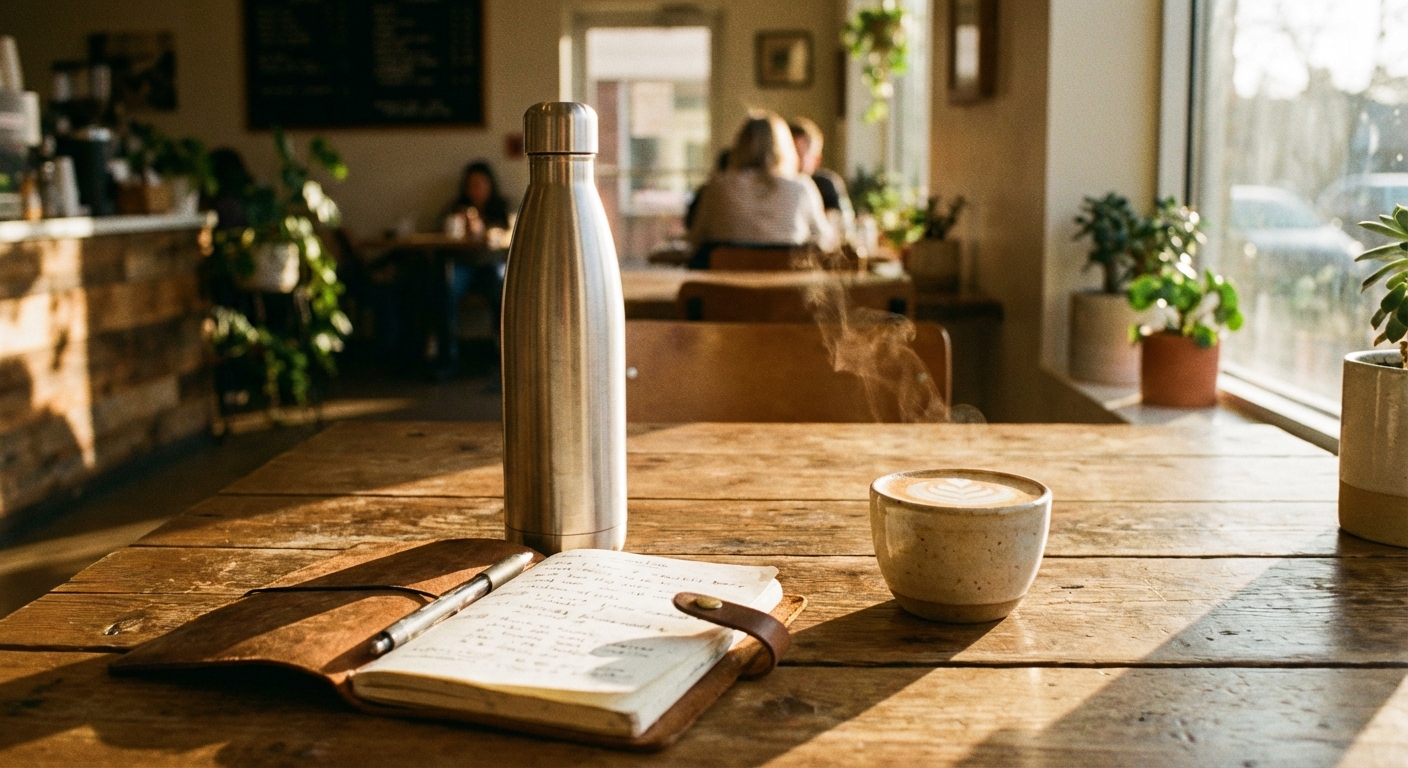
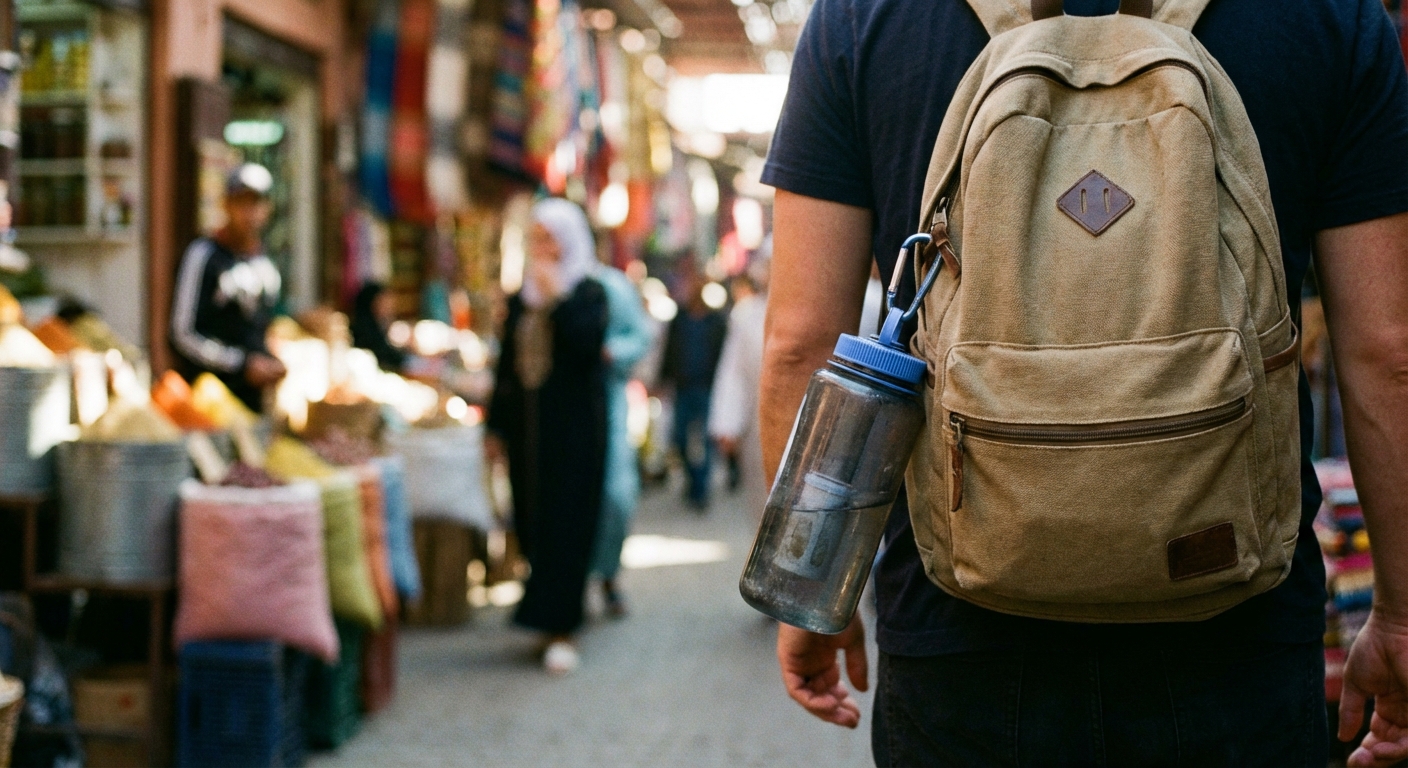
An insulated bottle does not purify anything, but it is still the best “first purchase” for most travelers. It keeps water cold on hot walking days, doubles as a coffee vessel when you are living that carry-on life, and reduces plastic bottle purchases in places with safe refilling options.
Why I pack one
- Comfort: cold water stays cold, which makes you drink more.
- City logistics: easy to carry between museums, markets, and train stations.
- Sustainability: fewer single-use plastics, especially when paired with refill apps and hotel or hostel stations.
What to look for
- Size: 20 to 24 oz for city days, 32 oz for long hikes. Bigger sounds better until it is heavy in your tote.
- Mouth opening: wide-mouth is easier for refilling and cleaning, narrow-mouth is nicer for sipping on the move.
- Leakproof lid: do not compromise here. Your passport does not deserve that.
- Coating and durability: powder coat helps grip and resists scuffs.
Best for: destinations with safe tap water, trips where you mostly buy treated water, and travelers who prioritize comfort and habit-building over purification.
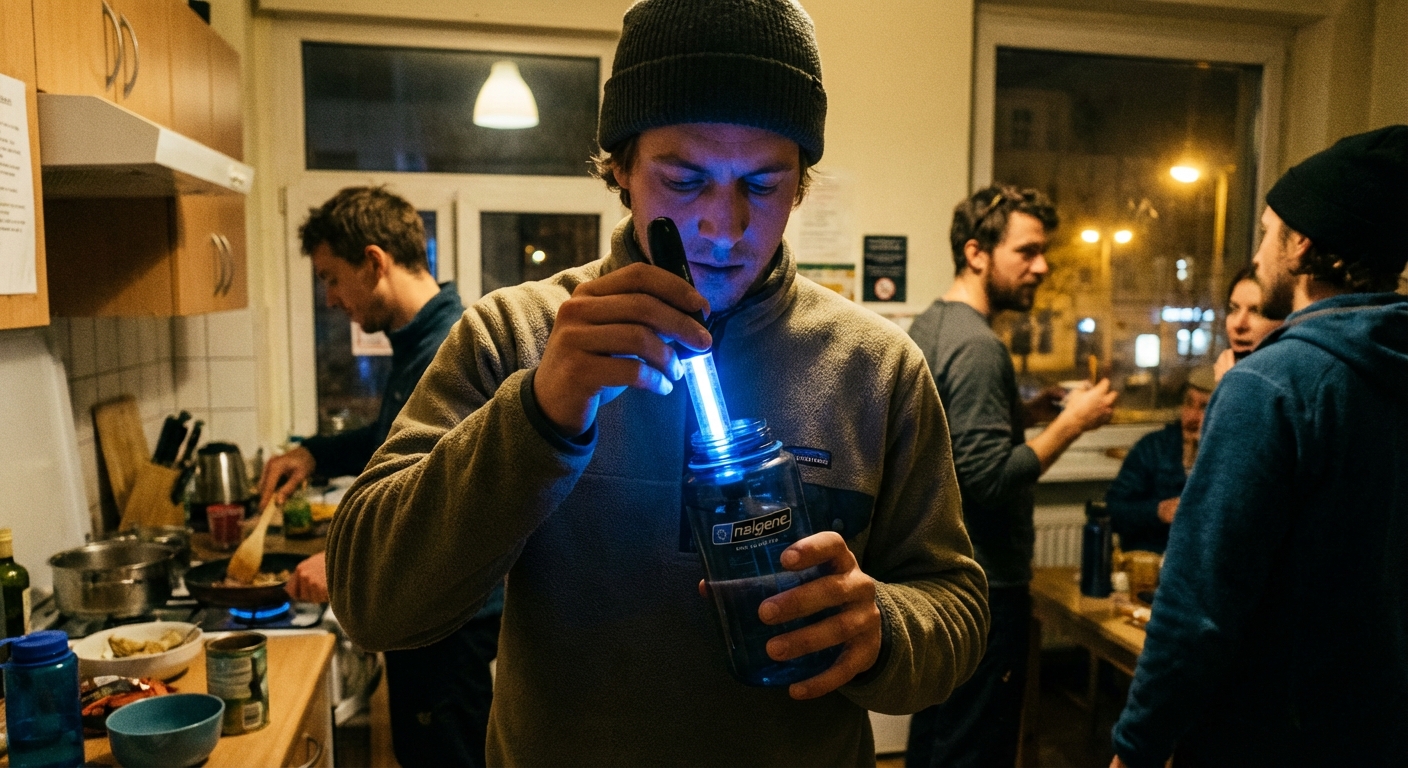
UV purifiers (fast, city-friendly, very effective)
UV purifiers use ultraviolet light to damage DNA or RNA so microbes cannot replicate. They are popular with travelers because they are quick, lightweight, and do not change the taste of water. Used correctly in clear water, they are genuinely powerful.
Where UV shines
- Hotels and apartments: treating water from a tap when you are not sure about safety.
- Clear water sources: UV works best when water is not cloudy.
- Minimal packing: small device, no filter cartridges to replace mid-trip.
Limitations to know (before you rely on it)
- Water must be clear: sediment can shield microbes from UV. Pre-filter cloudy water through a cloth or coffee filter if needed.
- Does not remove chemicals: it disinfects, it does not filter.
- Battery dependence: bring a power bank and keep the device charged. Batteries can also perform worse in cold temps.
- Finite device life: UV lamps or LEDs have a lifespan. It is not a “replace every month” thing, but it is also not immortal.
Best for: urban travel, international trips where tap water is questionable, and anyone who wants a “treat it in the bottle you already own” option.
Filter bottles (easy refills, better taste)
Filter bottles combine a reusable bottle with a built-in filter, usually activated carbon plus a membrane or media. Think of these as ideal for places where you will refill often and want convenience, plus better taste.
Important: most popular filter bottles are for taste and particulates, not for making unsafe water safe. If you are traveling somewhere you would not drink the tap water, you want a true purifier (more on that below) or you want to pair a bottle with UV or chemicals.
Why people love them
- One-step refills: fill and drink without extra gear.
- Taste improvement: activated carbon can make chlorine-heavy municipal water way more pleasant.
- Great for airports and long city days: you can top up anywhere.
What to verify before buying
- What the filter is rated to remove: many reduce chlorine and particulates but are not designed for pathogens.
- Virus protection claims: only a subset are true purifiers capable of viruses. Look for explicit virus reduction claims and third-party testing.
- Filter replacement cadence: check liters or months, whichever comes first.
Best for: travelers who want simplicity and better-tasting water from taps that are already reasonably safe, or bottles that have true purification ratings for higher-risk destinations.
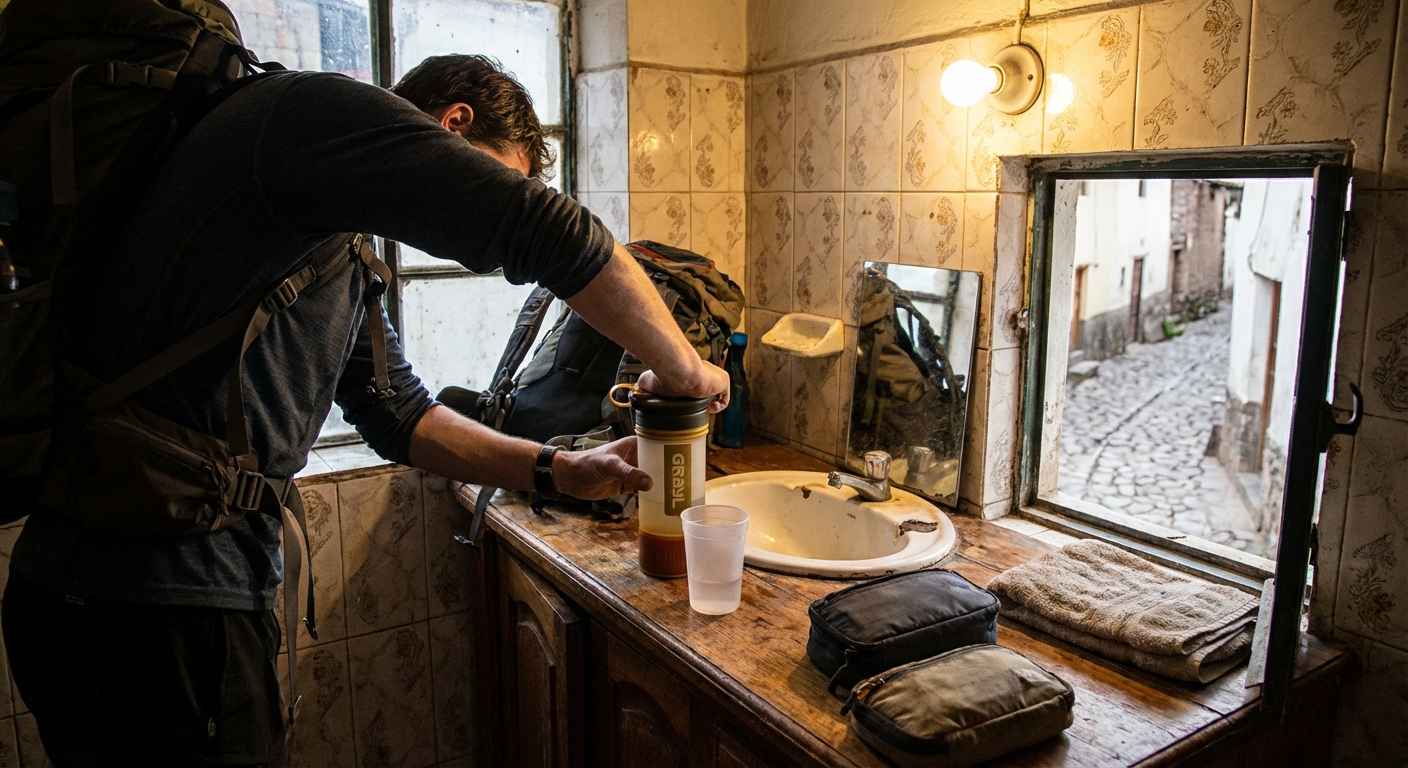
Press purifiers (the international travel favorite)
Press-style purifiers (think: a bottle you fill, then press water through a purifier cartridge) deserve their own callout because they are wildly popular for international travel. Many use advanced media (including electroadsorptive or similar technology) that can reduce viruses, and some also target heavy metals, depending on the model.
Why they are so popular
- Fast and self-contained: fill, press, drink. No extra bags or hoses.
- Confidence for higher-risk taps: many are designed for places where viruses are a real concern.
- Good travel rhythm: easy in hotel bathrooms, train stations, and airports.
Tradeoffs
- Effort per bottle: pressing takes some force.
- Cartridge cost and availability: plan replacements ahead for longer trips.
- Claims vary: verify what each cartridge is tested to reduce, especially for viruses and heavy metals.
Best for: international travel where you want an all-in-one purifier bottle and you are willing to stay on top of cartridge replacements.
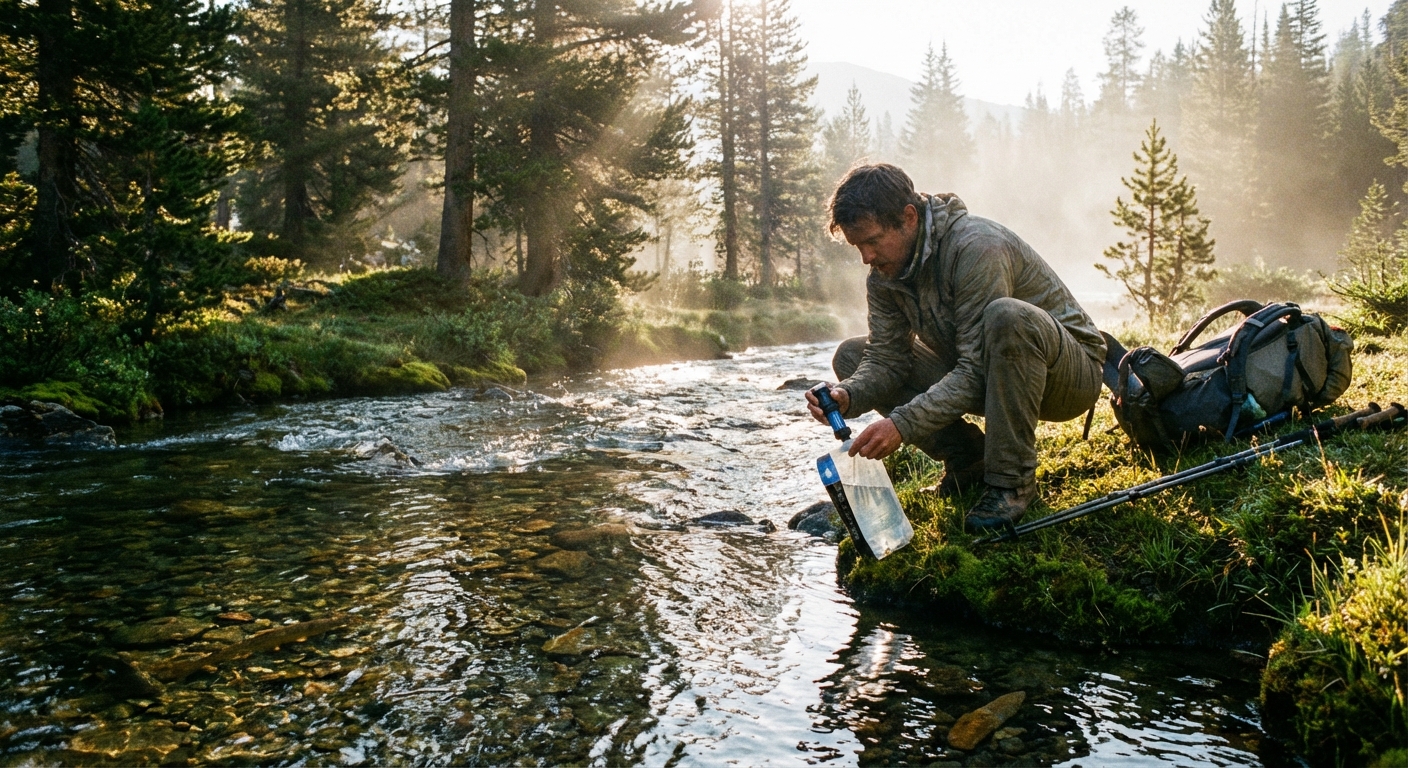
Squeeze and pump filters (the backcountry workhorses)
If your trip includes huts, camps, remote trails, or any “we will just refill from the river” optimism, this category is your friend. Most trail filters are built to remove bacteria and protozoa. They are not automatically virus solutions.
Squeeze filters
Lightweight and simple: you fill a soft bottle, squeeze water through a filter into your clean bottle. They are popular for fastpacking and solo trekking. Bring a compatible dirty-water pouch or confirm thread compatibility with your bottles so you are not doing weird hand-balancing over a stream.
- Pros: light, affordable, easy to pack.
- Cons: squeezing gets old for groups, and flow rate slows if you do not maintain the filter.
Pump filters
More effort per liter, but often easier when you have shallow water sources or want a steady flow without squeezing.
- Pros: good control, often faster than you expect in the field.
- Cons: heavier, more moving parts.
Maintenance tips that save trips
- Backflush when you can: it restores flow rate.
- Prevent freezing: if a hollow-fiber filter freezes, internal fibers can crack. Sleep with it in your bag on cold nights.
- Keep “dirty” and “clean” separate: dedicate one bottle or bag for collecting untreated water.
- Dry it for storage: for long breaks between trips, follow the manufacturer guidance to prevent mold and funky tastes.
Best for: treks in Patagonia, the Rockies, the Alps, Nepal, and basically anywhere you will drink from natural sources.
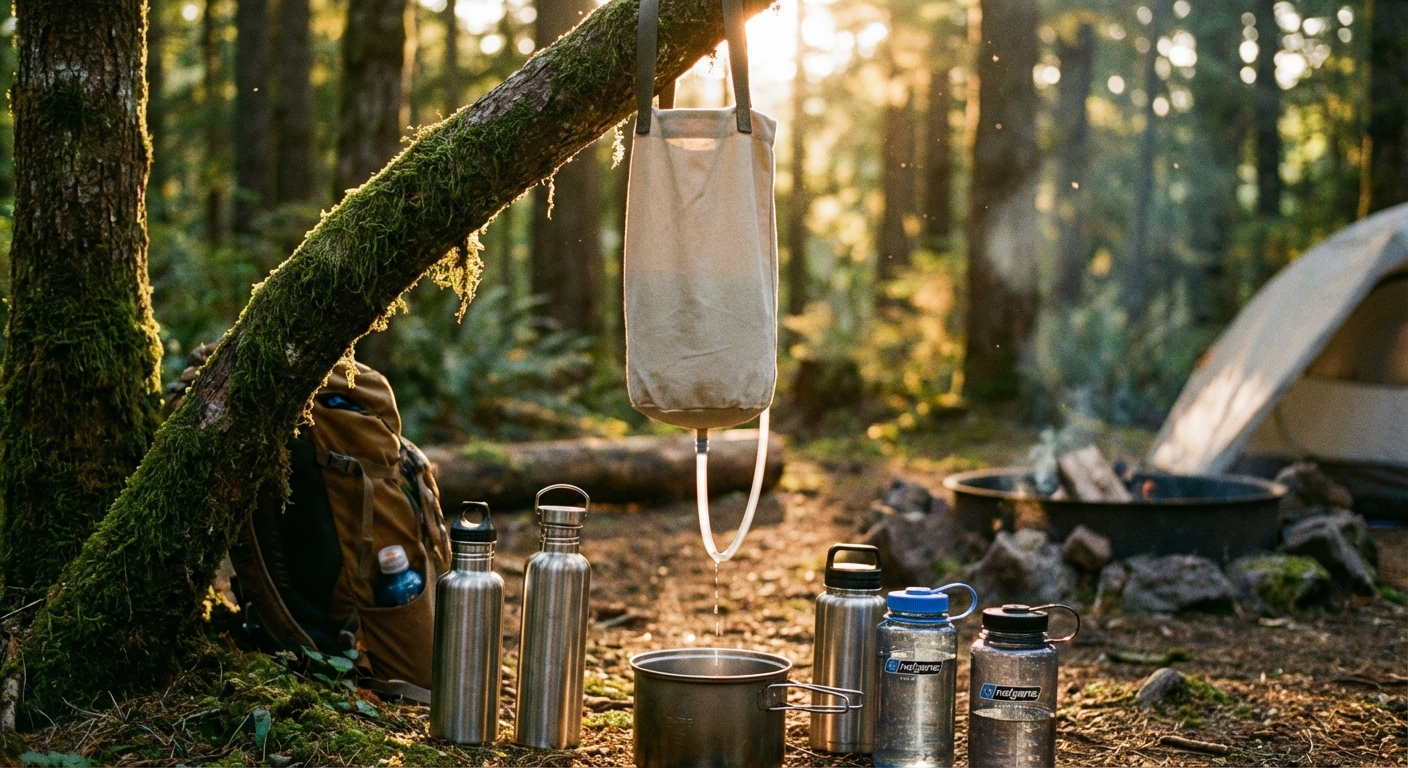
Gravity filters (best for groups and basecamps)
Gravity systems let you fill a dirty bag, hang it from a tree or hook, and let physics do the work while you set up camp or cook dinner. If you travel with partners, this is the least dramatic way to keep everyone hydrated.
- Pros: high volume, minimal effort, great for camp routines.
- Cons: bulkier, needs a place to hang, still generally not virus-focused unless specifically rated.
Best for: family trips, group trekking, van life, and any itinerary with a repeated basecamp.
Filter straws (emergency-simple, not always practical)
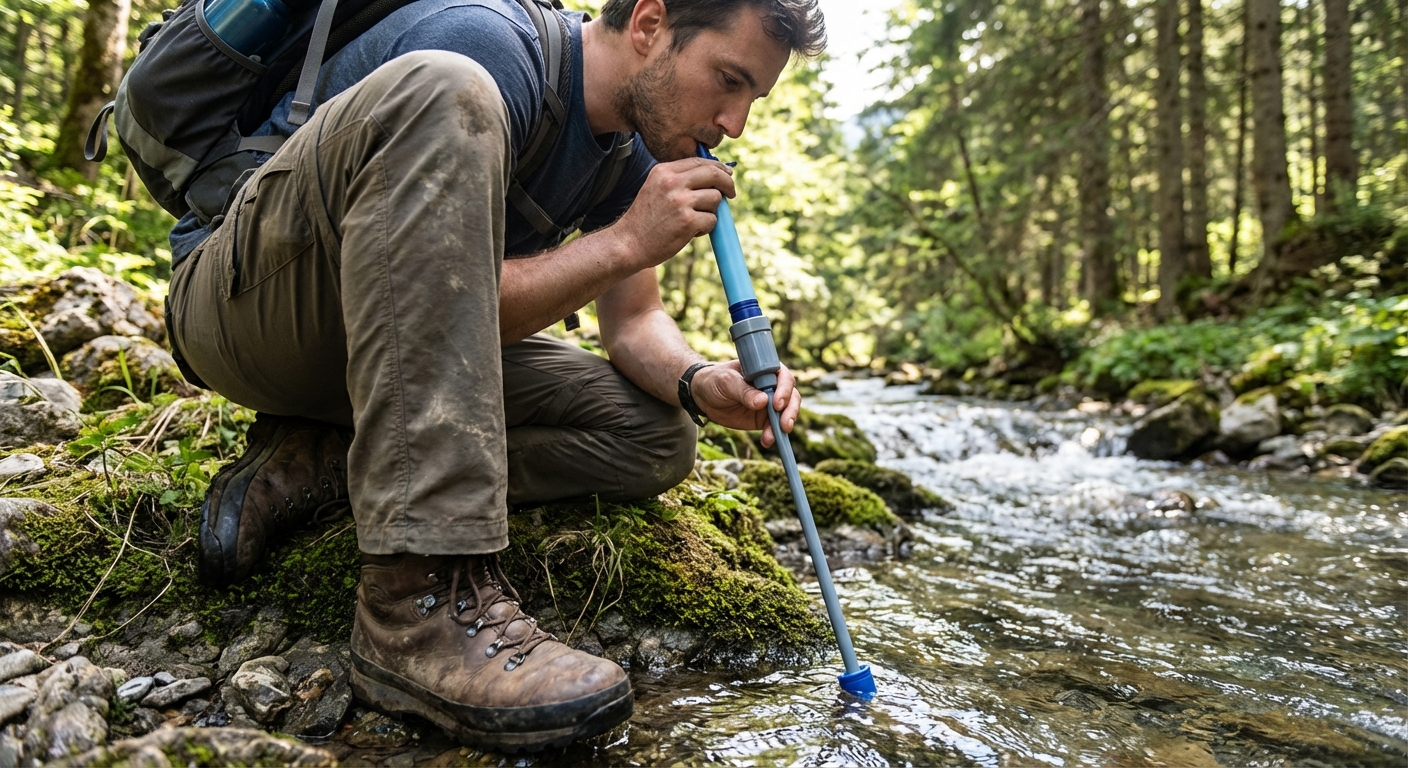
Filter straws are popular because they are compact and affordable. They can be a solid emergency backup, but they are not my first choice as a primary system for most trips.
When a filter straw makes sense
- Day hikes as a backup: toss in your pack and forget about it.
- Emergency kits: good peace of mind for disruptions.
Where they fall short
- Awkward water access: you have to sip from the source or a container, which is not always possible or pleasant.
- No easy way to carry treated water: great for a drink now, less great for “I need three liters for the next ridge.”
Best for: backup use, ultra-minimalists, and emergency preparedness.
Chemical treatment (the lightweight backup plan)
Chemical drops or tablets are not glamorous, but they are excellent insurance. They can be especially useful where viruses are a concern, depending on the product and contact time.
- Chlorine dioxide: the modern standard for many travelers. Effective against bacteria, viruses, and protozoa, but pay attention to contact time (especially for Cryptosporidium) and water temperature.
- Iodine: still exists, but it does not reliably kill Cryptosporidium and it has health restrictions (including for pregnant women and people with thyroid issues). For most travelers, chlorine dioxide is the smarter default.
- Pros: ultralight, inexpensive, good backup to a filter.
- Cons: waiting time, can affect taste, and effectiveness varies by water temperature and clarity.
If I am traveling somewhere remote, I like having chemical treatment as a “filter broke, now what” option.
How to choose the right setup
Pick based on your water sources
- Mostly city taps in lower-risk destinations: insulated bottle alone, or filter bottle for taste.
- Mixed cities and trail days: insulated bottle + squeeze filter, optional UV for taps.
- Higher-risk destinations with virus concerns: UV purifier or a true purifier bottle (press purifiers are great here), plus a plan for cloudy water.
- Long treks: squeeze or pump filter + backup chemicals. Add a small carbon stage if taste matters.
- Groups: gravity filter + personal bottles.
Consider your travel style
- Carry-on only: lighter systems, minimal parts, and easy-to-find replacements.
- Slow travel and rentals: UV and a favorite bottle can make daily routines feel normal fast.
- Comfort-first: prioritize a great lid, insulation, and a bottle shape that fits your day bag.
A quick word on certifications
Marketing claims are loud. Testing is quieter. When you can, look for third-party standards and test data (for example NSF or ANSI certifications for taste, metals, or chemical reduction). For pathogen performance, rely on clearly stated virus, bacteria, and protozoa claims supported by testing, not just vibes and a cool label.
My real-world packing combos
Urban week with day trips
- Insulated bottle (20 to 24 oz)
- UV purifier (for uncertain taps)
- Optional: compact carbon filter bottle if taste drives you crazy
Multi-day trek with huts or camps
- 1 liter wide-mouth bottle
- Squeeze filter + soft dirty-water pouch
- Chlorine dioxide tablets as backup
International trip with questionable tap water
- Press purifier bottle or UV purifier
- Wide-mouth bottle for filling (if using UV)
- Small pre-filter cloth for cloudy water days
Group camping or van trip
- Gravity filter for camp
- Everyone carries their own bottle
- One spare cartridge or backflush kit
Using purifiers safely (the boring part that keeps you healthy)
- Wash your hands: especially before touching clean bottle threads and lids.
- Avoid cross-contamination: do not let untreated water drip onto the clean mouthpiece.
- Mind contact time: for chemicals, follow directions exactly. Set a timer.
- Pre-filter cloudy water: a bandana works surprisingly well.
- Replace filters on schedule: expired cartridges are the travel equivalent of worn-out brake pads.
FAQ
Do I need virus protection?
It depends on where you are and your water sources. In many wilderness settings, bacteria and protozoa are the main concerns. In some international and dense urban settings, viruses can be a bigger risk. If you are unsure, choose a solution that explicitly addresses viruses or pair a filter with chemical treatment.
Is boiling still the gold standard?
Boiling is effective for killing pathogens, but it is slow, fuel-dependent, and not always convenient for daily hydration. Practical rule: bring water to a rolling boil. At higher elevations, you may need a longer boil time, so check local guidance if you are in the mountains for extended periods.
What about microplastics?
Some filters can reduce particulates, but capabilities vary widely. If microplastics are a key concern, look for clear manufacturer testing and consider a filter designed for particulate reduction, plus minimizing bottled water use when safe refills are available.
The bottom line
The best travel water setup is the one you will actually use every day. For me, that usually means an insulated bottle I love carrying, plus a purification method matched to the destination: a squeeze filter when I am chasing trails, a UV purifier when I am bouncing between neighborhoods, and a small chemical backup when I will be far from plan B.
Hydration is not a heroic decision. It is an hourly one. Choose the tools that make the safe choice the easy choice, and your trip gets instantly better.