Bobcat vs. Mountain Lion: How to Tell the Difference

Maya Lin
Maya Lin is a travel journalist and outdoor enthusiast who believes the best trips combine rugged adventures with urban comforts. After spending six years backpacking across four continents, she founded Trail & Town Guide to help fellow travelers navigate both hidden mountain passes and bustling city neighborhoods with confidence.
I have had the “big cat moment” more than once: a flash of tawny fur slipping through scrub oak, a pair of eyes at the edge of a headlamp beam, a set of fresh tracks crossing a dusty trail like a punctuation mark. And almost every time, the next sentence on the hike is the same: “Was that a mountain lion?”
Sometimes it is. Often it is a bobcat, a much smaller wild cat that still looks impressively wild when it is moving with purpose. Misidentifications vary by region and circumstance, but on busy trails the brain is famous for upgrading a two-second glimpse into a full-sized cougar.

Below is the field guide I wish everyone carried in their head. It is built for real trail conditions: quick sightings, low light, and partial views.
Fast ID
If you only remember one thing, remember this: tail and size solve most mysteries.
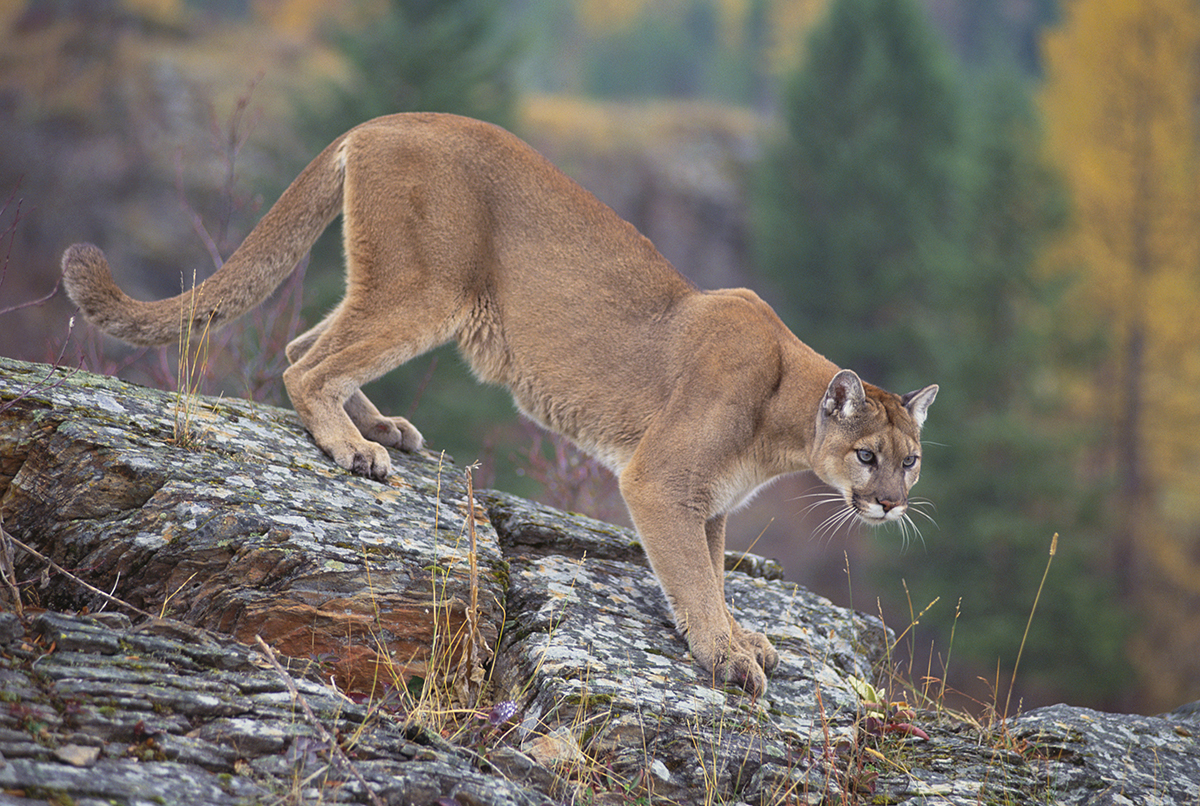
- Tail: Bobcat tails are short and “bobbed.” Mountain lion tails are long, thick, and usually hang low like a heavy rope.
- Overall size: Bobcats are roughly 2 to 3 times a house cat, often in that “medium dog” range. Mountain lions are big, long-bodied cats that can look shockingly large even at a distance.
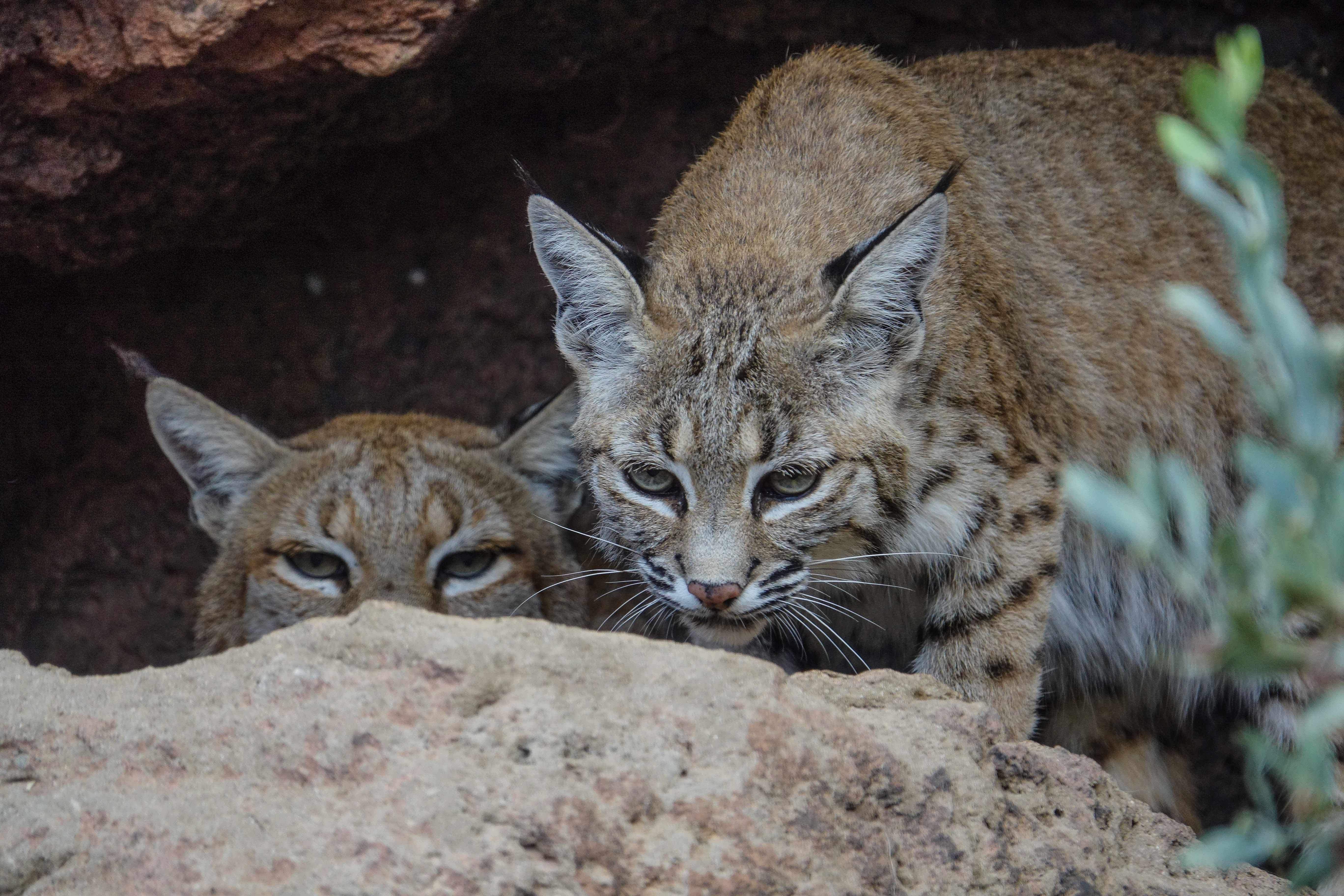
- Head and ears: Bobcats have a broader-looking face with pointed ears that may show small tufts. Mountain lions have smaller, rounder ears and a sleeker head.
- Coat pattern: Bobcats often show spotting or mottling, especially on legs and belly. Mountain lions are more uniform tan or sandy.
What they look like
Size and build
Bobcat: Compact and athletic, with relatively long legs for its body. Adults are often roughly 15 to 35 pounds, though some can be larger. On the trail, they read as “stocky cat” more than “mini lion.”
Mountain lion (cougar): Long-bodied, long-legged, and powerfully muscled. Weight varies a lot by sex and region, but adult females are commonly around 70 to 110 pounds and adult males often around 110 to 180 pounds, with occasional larger males. Even when crouched, a lion’s chest and shoulders tend to look substantial.
Tail length
Bobcat tail: Short, typically just a few inches to about a handspan. It often looks blunt at the end. Many bobcats show a dark tip on the upper side of the tail.
Mountain lion tail: Long and thick, nearly as long as the body. It usually has a darker tip, and you may see it curling slightly as the animal moves.
Ears and head shape
Bobcat: Tall, pointed ears, sometimes with small tufts. The face can look wide with pronounced cheek ruffs, giving a “bearded” profile in good light.
Mountain lion: Shorter, rounder ears. The head looks proportionally smaller compared to the body, with a smoother, sleeker facial outline.
Coat and markings
Bobcat: Often shows visible spots, bars, or mottling, especially on the legs and belly. The back can be reddish-brown, gray-brown, or buff depending on region and season.
Mountain lion: Usually a more uniform tan, sandy, or grayish-tan coat. In bright light it can look almost golden. Kittens have spots, but adults are largely unpatterned.
Tracks
Tracks are often more reliable than a quick visual sighting, especially if the animal vanished into brush.
Cat track basics
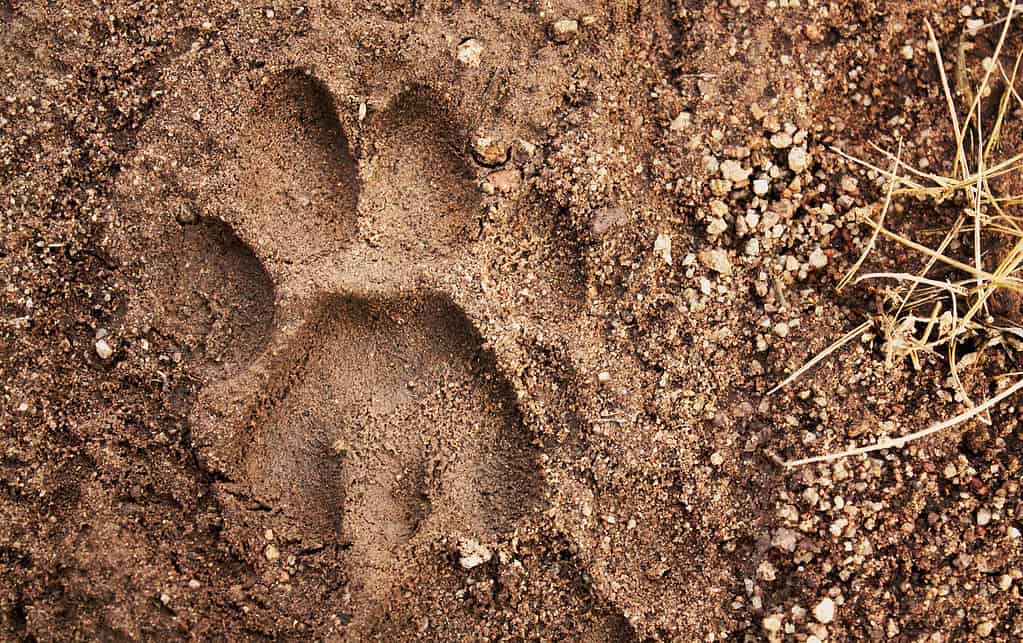
- Four toes in the main print.
- Heel pad with three lobes at the back edge (a classic feline shape).
- Usually no claw marks because cats retract claws, though claws can show in slippery mud, steep descents, or during a pounce.
Track size
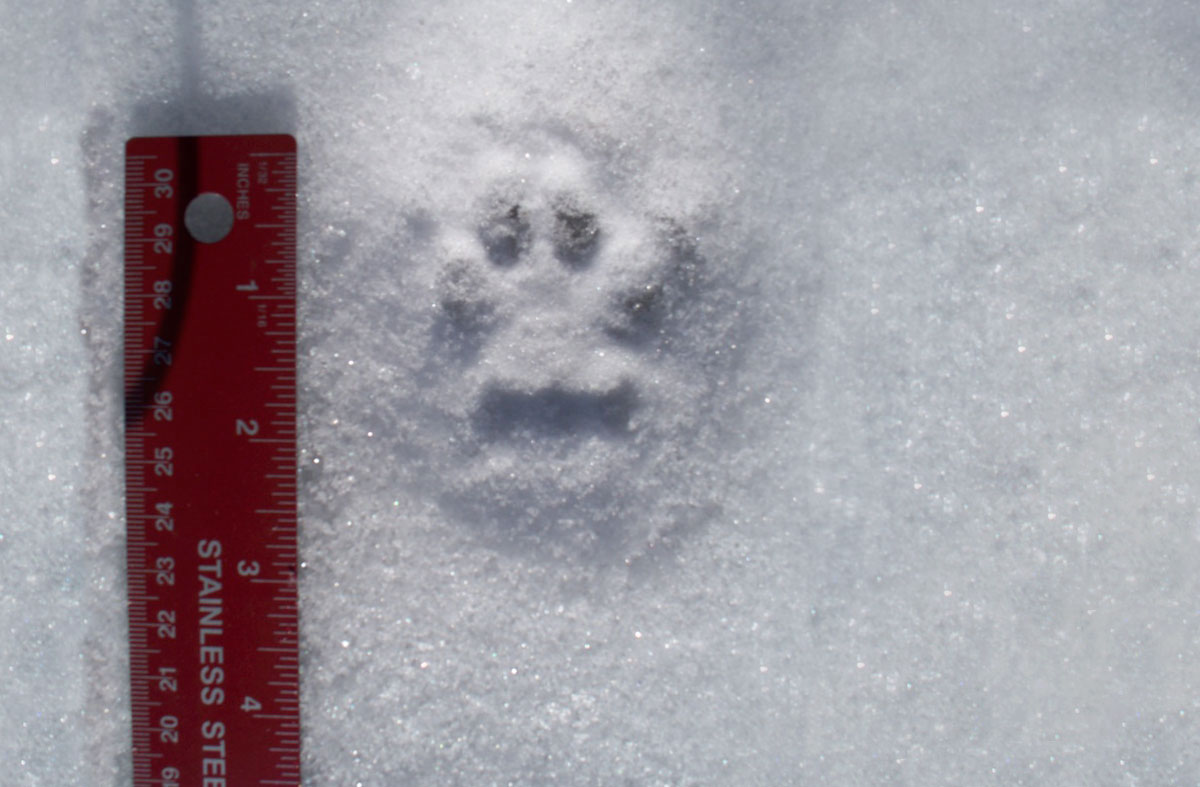
Bobcat: Typically around 1.5 to 2.5 inches wide. The overall impression looks neat and compact.
Mountain lion: Commonly around 3 to 4.5 inches wide, sometimes larger. The track looks broader and more imposing, with a bigger heel pad.
Important nuance: There is overlap. A big bobcat, a small lion, soft mud, and front versus hind prints can all blur the line. Use track size with stride length, overall trail pattern, and any other sign you have.
Stride and pattern
Bobcat: Shorter stride. In snow, you may see a tidy, direct line of prints, but with smaller spacing.
Mountain lion: Longer stride and a more powerful gait. A lion can cover ground efficiently, so prints can be farther apart than you expect.
Quick tip from the field: If you can safely do it, photograph the track next to something for scale, like a trekking pole tip, your boot, or a small ruler card you keep in your kit. Do not place your hand next to an unknown track.
Sounds and signs
Seeing either cat is uncommon. Hearing them can be even rarer, but a few clues come up again and again.
Vocalizations
Bobcat: Can yowl, growl, hiss, and make harsh screams, especially during breeding season. Their calls can sound surprisingly intense for their size.
Mountain lion: Also capable of eerie screams, chirps, whistles, and low growls. They do not produce a lion-like roar, but many “roars” people report are actually those loud, human-sounding screams echoing through terrain.
Other trail signs
- Scrapes: Both cats may make scrapes in dirt or leaf litter with a hind foot, sometimes with urine or scat nearby. Mountain lion scrapes can be larger and placed along travel corridors like ridge lines and trail edges.
- Prey remains: Mountain lions often cache large prey (like deer) by covering it with leaves, pine needles, or soil. If you see a partially buried carcass, that is a strong reason to leave the area calmly and immediately.
- Scat: Hard to ID confidently without experience. If you are close enough to inspect, you are already too close.
Range in the US
Bobcat range
Bobcats are one of the most adaptable wild cats in North America. They live across most of the continental United States, from forest edges and deserts to swamps and even near suburbs where cover and prey are available.
Mountain lion range
Mountain lions have strongholds in the western US and parts of Florida (the Florida panther). Dispersing young males occasionally show up far outside established breeding populations, but in most of the eastern US, verified sightings are uncommon and often involve transient animals.
Overlap zones
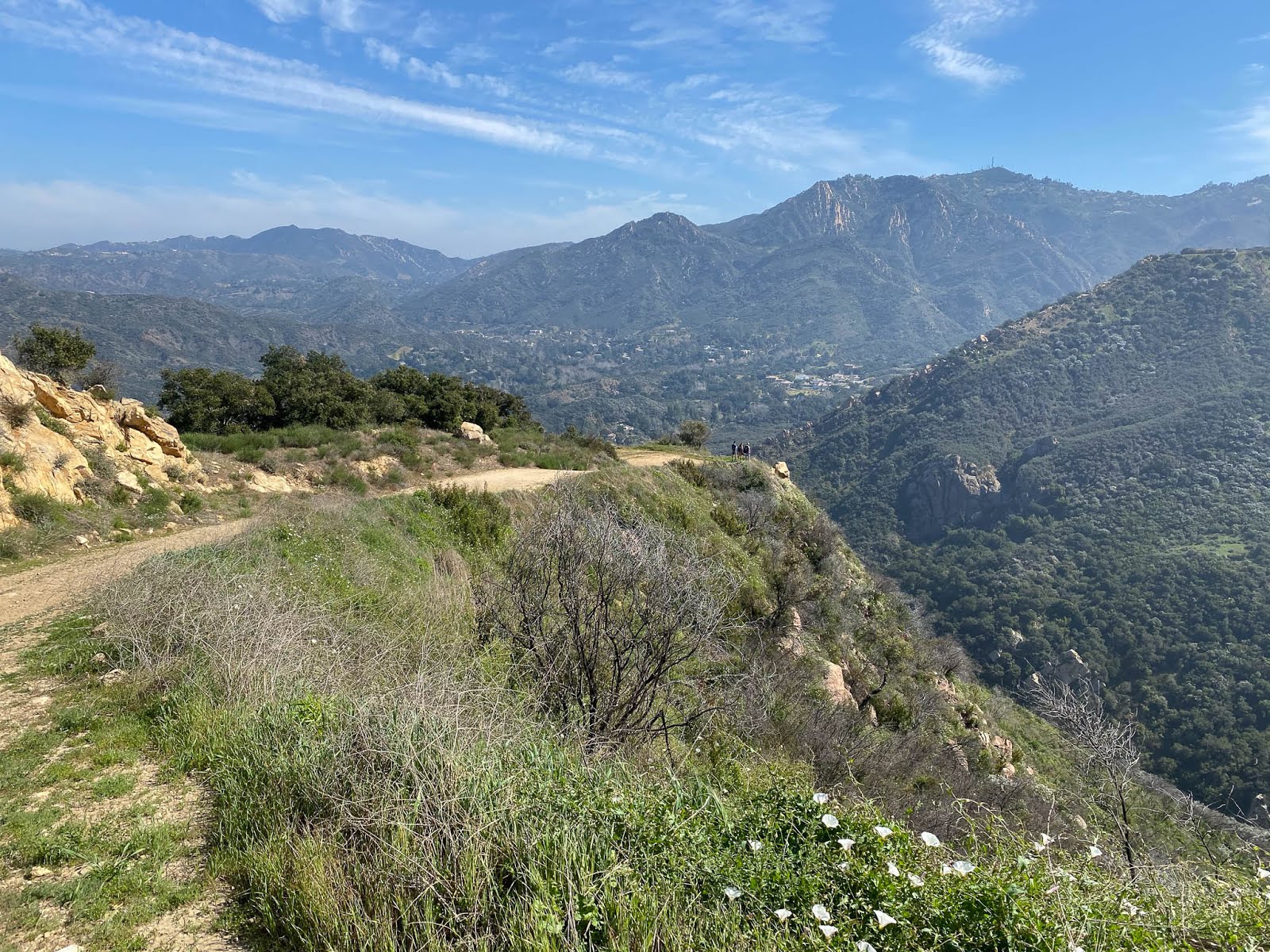
You will find both cats in many of the same landscapes in the West: foothills, canyon country, chaparral, forest edges, and rocky drainages. In those overlap zones, your best bet is to focus on tail length, body size, and track size rather than color alone.
How often are they seen?
Bobcats: More common than most people realize, but still secretive. Many “no sightings” hikes happen in bobcat habitat, simply because bobcats are good at staying out of view. If you hike dawn or dusk near brushy edges, you raise your odds.
Mountain lions: Much less frequently seen by hikers. Even in places with healthy populations, lions tend to avoid people. Most hikers never see one in a lifetime, and that is exactly how the cat prefers it.
If you want a practical takeaway: a brief glimpse of a cat near the trail is often more likely to be a bobcat, but you should treat any uncertain sighting with caution until you confirm otherwise.
How to respond
Both animals deserve respect. Only one of them typically changes your immediate safety plan.
If it is a bobcat
Bobcats rarely pose a danger to adults on a hike. Most will freeze, watch you, and then melt into cover. The right response is calm, confident, and boring.
- Give it space and do not approach for photos.
- Keep kids close and pick up small dogs.
- Back away slowly if it seems curious or does not move off.
- Never feed wildlife and do not run.
If it is a mountain lion
A mountain lion sighting calls for more deliberate, safety-first behavior, even though attacks are rare. The goal is to avoid triggering a chase response and to communicate that you are not prey.
- Stop and face the animal. Do not turn your back.
- Make yourself look larger. Stand tall, raise your arms, open your jacket.
- Speak firmly. A strong, steady voice works better than screaming.
- Back away slowly. Give the lion an exit route.
- Do not run. Running can trigger pursuit.
- Be ready to defend yourself if it approaches. Throw rocks, use trekking poles, and fight back if attacked.
If you cannot confidently identify the cat and it is close, watching you, or not leaving, use mountain lion precautions until you are sure. It is the safer default without turning a distant sighting into a panic.
If you see kittens or a cached kill
This is one of the few times I do not linger to “figure it out.” If you see kittens, assume the mother is close. If you find a cached carcass, assume the cat may return quickly and defend it. In both cases, leave the area calmly the way you came, keep your group tight, and report it to the park office or local wildlife agency once you are in a safe place.
Common mix-ups
- “It was tan so it must be a lion.” Bobcats can look tan in warm light. Look for spotting and, most importantly, tail length.
- “It was small so it must be a bobcat.” Distance shrinks everything. Use multiple clues, like tail, gait, and track size.
- “I saw a long tail, definitely a lion.” Be cautious here. Sometimes you are seeing a branch, a shadow, or a momentary angle. If you can, confirm with tracks.
- “It had tufty ears so it was a bobcat.” Ear tufts can be subtle or hidden. Do not rely on that alone.
- House cat at a distance: In brushy neighborhoods and trail edges, a domestic cat can look wild fast. A house cat usually has a thinner tail, smaller feet, and a more casual, stop-and-go gait.
- Coyote or fox in bad light: Canids show a different outline when you catch them wrong, especially if you only see a silhouette. Look for a longer muzzle, visible claws in tracks, and the way the tail is carried (often more level or out behind rather than heavy and low like a lion).
- Young mountain lion versus bobcat: A juvenile lion can look “not that big” and still have that long tail. If the tail is long, take it seriously.
Comparison table
| Feature | Bobcat | Mountain lion |
|---|---|---|
| Body size | Medium, compact | Large, long-bodied |
| Tail | Short, bobbed | Long, thick, rope-like |
| Ears | Pointed, may be tufted | Rounder, shorter |
| Coat | Spotted or mottled | Mostly uniform tan |
| Track width (typical) | ~1.5 to 2.5 in | ~3 to 4.5 in |
| Typical risk to hikers | Low | Low but higher consequence |
After a sighting
Whether it was a bobcat or a lion, a sighting is useful information for other trail users and land managers.
- Note the details: location (trail name, nearest mile marker), time, direction of travel, and any behavior (crossed trail, lingered, followed, ran).
- Leave the area calmly: especially if you saw a mountain lion, kittens, or a cached carcass.
- Report when appropriate: If the animal showed bold behavior, stayed near people, or the encounter happened near neighborhoods, consider reporting to the park office or local wildlife agency. In many parks, rangers track sightings to manage closures and warnings.
FAQ
Can a bobcat hurt a person?
It is very uncommon, and most bobcats avoid humans. The main risk scenarios involve a rabid or cornered animal, or a situation where someone approaches too closely. Give bobcats space and keep pets under control.
Do mountain lions live near cities?
In parts of the West, yes. Lions can use greenbelts, canyon systems, and undeveloped hillsides that connect to larger wild areas. Seeing one near a trail close to town is not impossible, especially at dawn, dusk, and night.
Is it true mountain lions stalk hikers?
Lions are ambush predators, and rare incidents have involved stalking behavior. That said, most lions avoid people. If you ever feel you are being followed, group up, face outward, and leave while staying alert and making yourself look bigger.
What about lynx?
In the Lower 48, lynx have a limited range and specific habitat needs, mostly in parts of the northern Rockies and northern forests. They have very large, furry paws and longer legs, plus prominent ear tufts. Most “lynx” sightings on US trails are bobcats.