Bonneville Salt Flats: Access, Rules, and Safety

Maya Lin
Maya Lin is a travel journalist and outdoor enthusiast who believes the best trips combine rugged adventures with urban comforts. After spending six years backpacking across four continents, she founded Trail & Town Guide to help fellow travelers navigate both hidden mountain passes and bustling city neighborhoods with confidence.
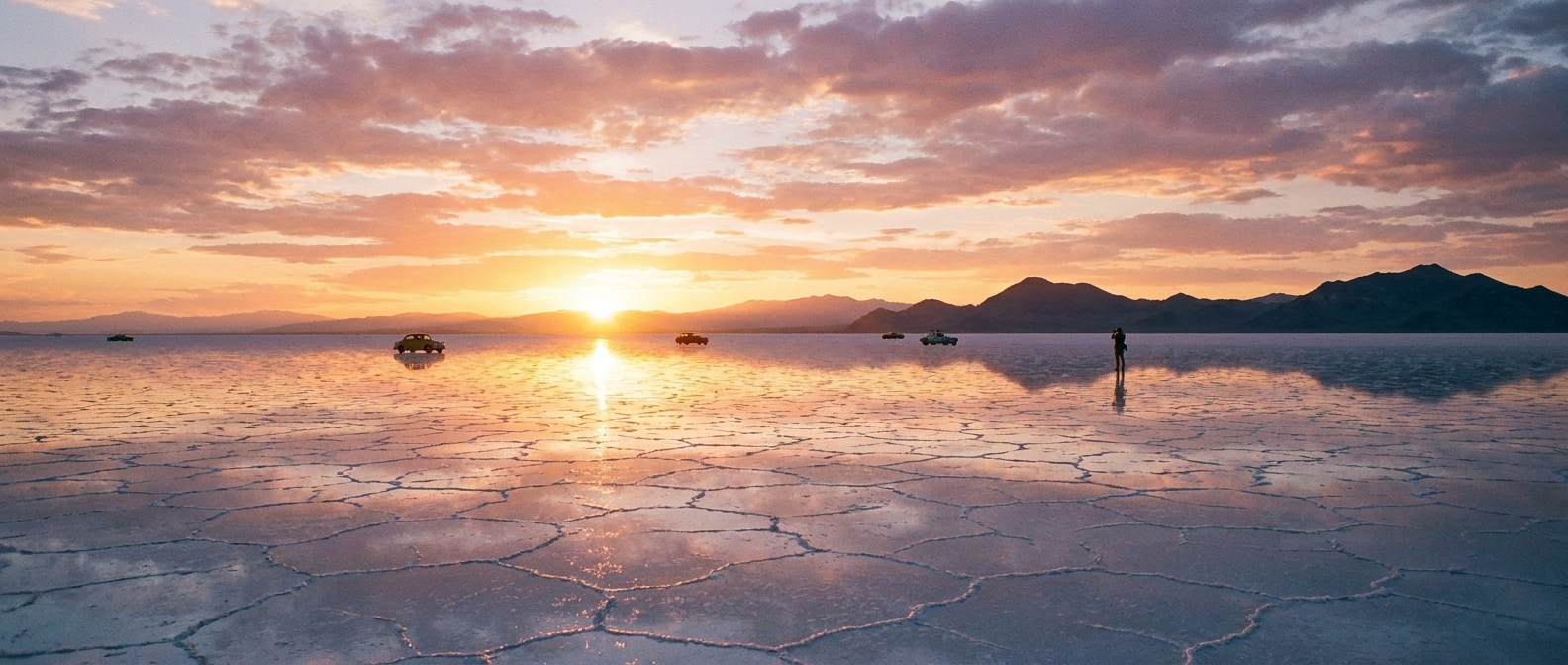
The Bonneville Salt Flats look like another planet, but they change like one too. One day the surface is a crisp, white crust you can walk for miles. The next, it is a thin, sneaky layer of water that turns into salty paste on your tires and shoes. This guide is for visiting from Salt Lake City or Wendover with the details that matter: where to stop legally, when the flats are actually dry enough, how speed events change access, and how to stay safe in Utah’s wide-open west desert.
Quick reality check
If you are comparing this to Antelope Island: the salt flats are about vast space, big light, and surreal photos, not wildlife viewing. There are no bison jams, no shoreline hikes, and no shade trees. It is a perfect half-day side trip for anyone craving an iconic Utah landscape that feels nothing like the Wasatch.
- Best for: photography, stargazing, sunset, a unique road trip stop, and a short walk on a truly unusual surface.
- Not ideal for: hot midday wandering, long “hikes,” or anyone expecting services on site.
Getting there
From Salt Lake City
Plan on roughly 1 hour 45 minutes to 2 hours 15 minutes each way depending on traffic and which access point you use. It is roughly 105 to 125 miles one-way. You will head west on I-80 across the Great Salt Lake Desert. This drive is gorgeous in a minimalist way, but it is also remote and fast.
- Fuel and food strategy: top off in the Salt Lake Valley or in Tooele. You will still find services farther west (Grantsville is a common last “easy” stop), but after that it gets limited until Wendover.
- Cell service: can be spotty once you are out on the open desert. Download offline maps.
From Wendover (West Wendover, Nevada and Wendover, Utah)
Wendover is the closest base. If you are already staying in town, you can be on the salt in about 10 to 25 minutes depending on which pullout you choose. It is also a practical place to grab ice, extra water, and coffee before you head out.
Where to access the flats
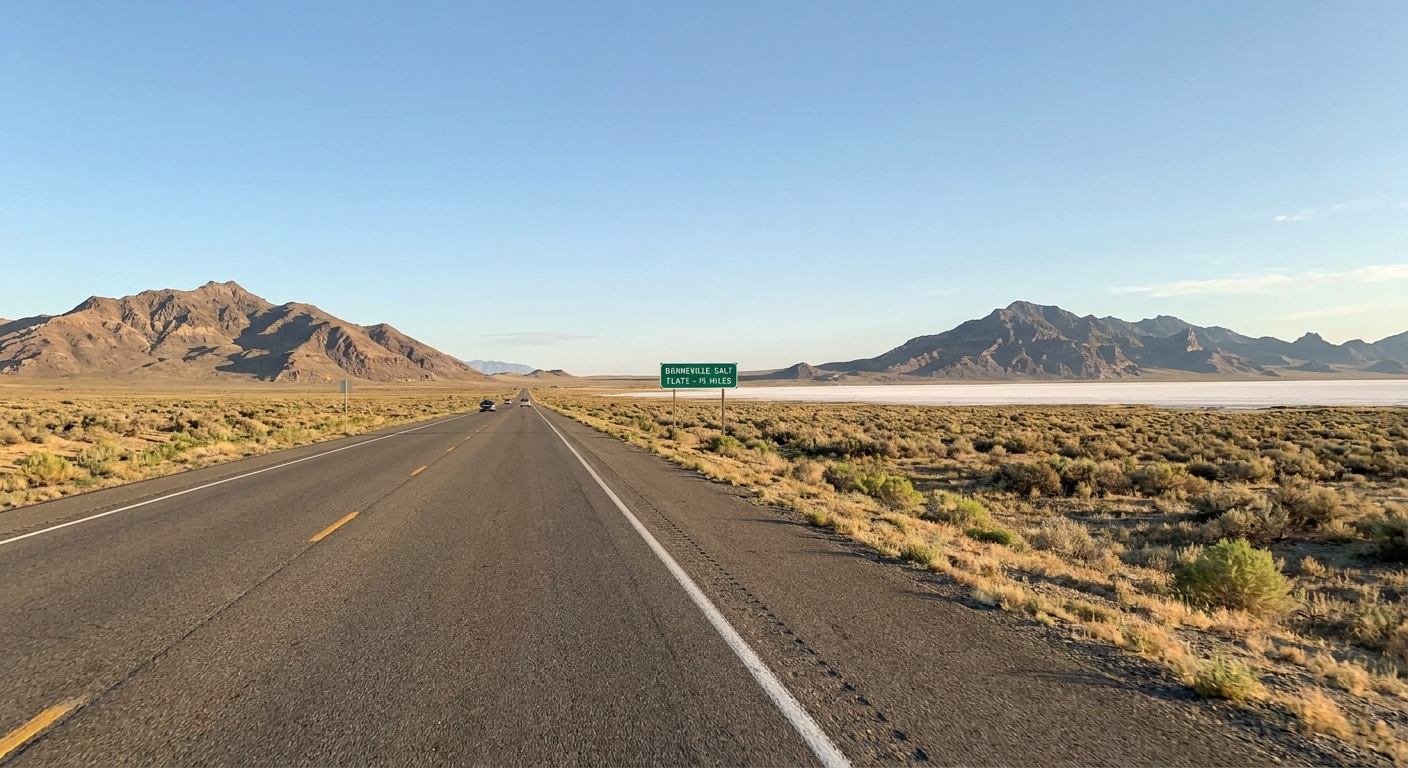
This is the piece that trips people up: the flats are not a single “park entrance.” Access shifts with conditions, events, and which side of I-80 you are on. In general, you will use designated pullouts and roads used by visitors and event crews.
Common access points
- Bonneville Speedway access road (Exit 4): this is the most famous public access and the one most people mean when they say they “drove out on the salt.” Plug “Bonneville Speedway” into GPS, or look for I-80 Exit 4. Note: this road can be muddy, soft, or temporarily closed when conditions are wet or when crews are setting up for events.
- Bonneville Salt Flats Rest Area: a simple, low-stress option when the surface is wet or when you just want a quick look and a photo without driving on the salt. You can walk out to the edge and judge conditions before doing anything ambitious.
- Signed pullouts along I-80: there are well-used turnoffs where visitors park and walk out. Use established gravel pullouts rather than improvising a shoulder stop.
Rest area direction tip
The official Bonneville Salt Flats Rest Area is on westbound I-80. If you are coming eastbound from Wendover, you cannot simply swing into it. Plan to use Exit 4 (Speedway access), a legal pullout, or turn around safely at a proper interchange if the rest area is your must-do stop.
Do not do these things
- Do not stop on the interstate shoulder unless it is an emergency. It is dangerous and can be illegal.
- Do not drive past barriers, cones, or “closed” signs. Closures are often about surface protection and safety, not convenience.
- Do not assume tire tracks mean it is safe. Tracks can be from earlier in the day or from vehicles that got lucky.
My personal rule: if you cannot find a clearly established pullout and you feel tempted to “make your own,” keep driving until you do. The west desert rewards patience.
When is it dry enough?
The Bonneville Salt Flats change with seasons and storms. The surface can look dry from the road and still be wet enough to swallow shoes or coat your car in salt paste. Timing matters more here than in most Utah “easy outdoor stops.”
Most reliable window
If you want your best odds of a truly dry, firm crust, aim for late summer through early fall (roughly July through October). Spring can be tricky. Even “late spring” is often still holding water or lingering mud from runoff and storms.
How to judge conditions
- Look for a crisp, matte crust rather than a glossy sheen. Shiny usually means moisture.
- Check your first steps: if you sink, squish, or immediately pick up wet salt, stop and reassess.
- Watch where others are walking: well-traveled areas are often firmer, but still not foolproof.
Driving onto the salt
Visitors do sometimes drive onto the flats when they are dry enough, but know what you are choosing. Wet salt can cake into wheel wells, accelerate corrosion, and create traction issues. Even in dry conditions, it is easy to get overconfident because the flats look like infinite open space.
- If there is standing water: skip driving on the salt.
- If the crust feels soft underfoot: skip driving on the salt.
- If you do drive: go slow, keep a wide buffer from other vehicles, and avoid hard turns that can break through the crust.
Leave no trace, west desert edition: the salt holds tire ruts and footprints longer than you think. When possible, use existing tracks or well-traveled zones rather than creating fresh scars across pristine crust.
Speed events and closures
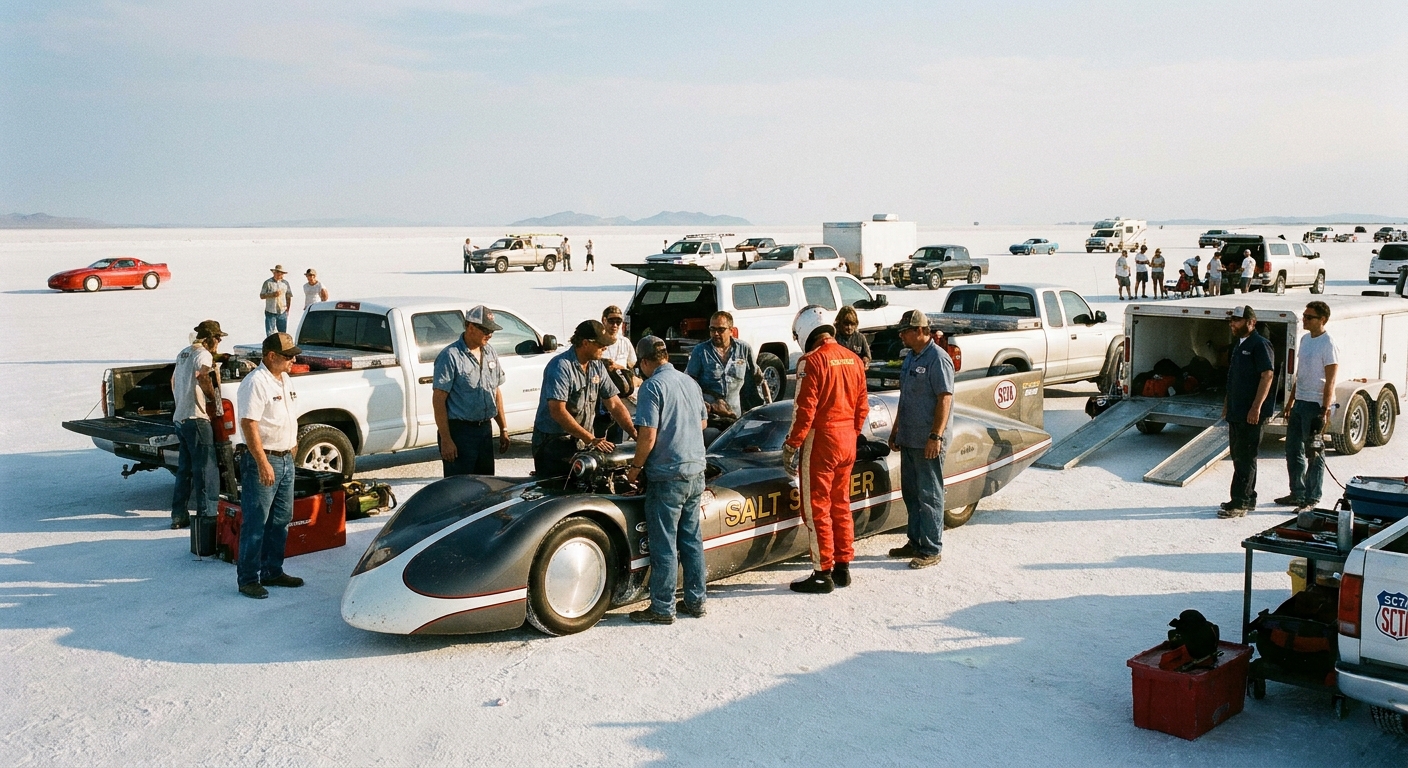
The Bonneville Salt Flats are famous for land speed racing. During major speed weeks and organized events, parts of the flats can be reserved for racing operations, and visitor access may be limited for safety and to protect the course surface.
- What closures look like: cones, signs, blocked routes, and staff directing traffic.
- What it means for your visit: you may still be able to access other areas, but expect reroutes and less freedom to roam.
- Smart move: check for scheduled events before you commit to the drive, especially in late summer and early fall (prime conditions and prime racing season often overlap).
If you arrive during an active event, treat it like showing up at a stadium. Be respectful, stay behind barriers, and enjoy the spectacle from approved areas.
West desert safety
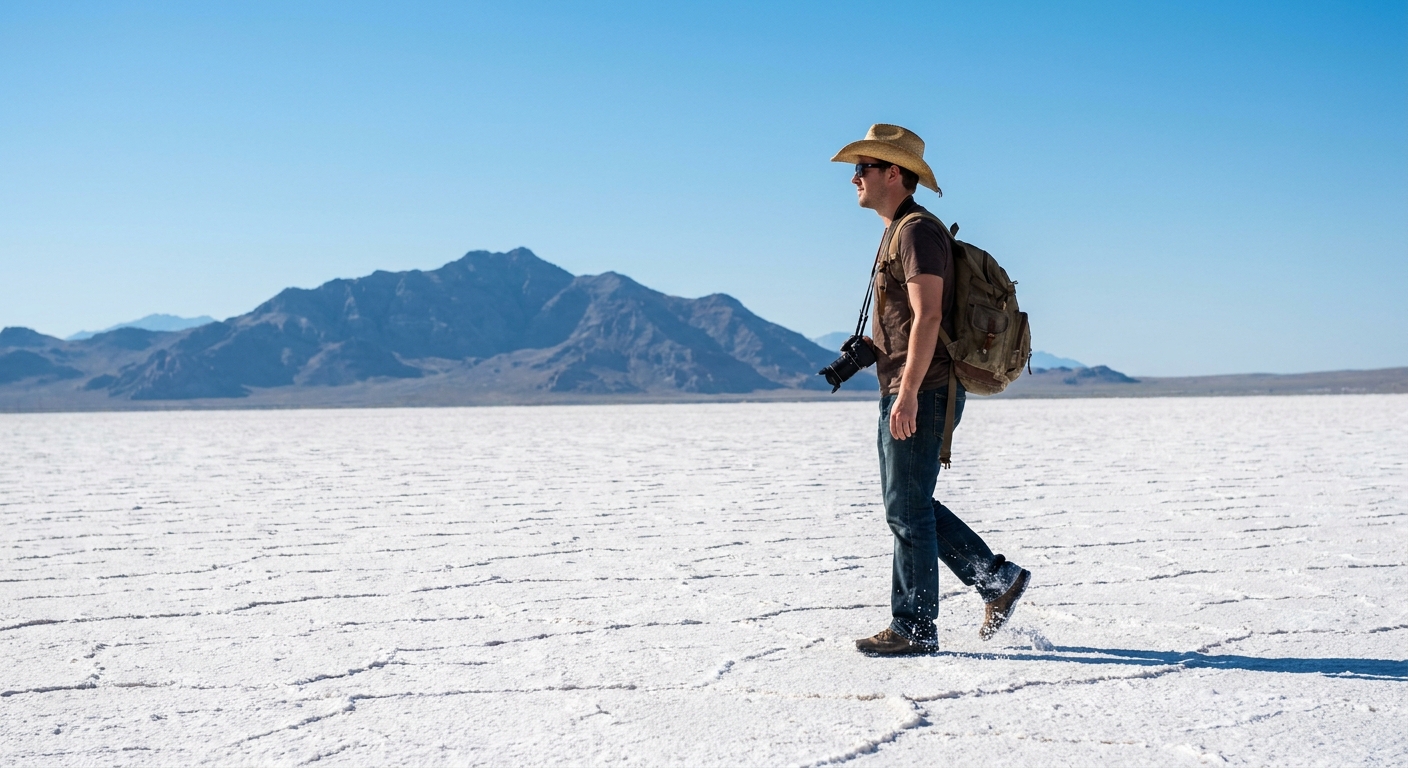
The salt flats are not technically difficult, but they are deceptively harsh. The combination of flat terrain, bright reflection, and distance without landmarks can turn a casual walk into a “why did we do this at noon” moment fast.
Glare
- Wear UV-blocking sunglasses. Polarized lenses help cut the bounce-back from the salt.
- Bring a hat with a brim. The overhead sun plus reflected light is no joke.
- Use sunscreen even on cool days. The reflection increases exposure.
Heat and dehydration
- Carry more water than you think you need. The air is dry, and you will not feel sweat the same way you do in the mountains.
- Plan your walk. A distant mountain can look close on the flats, and it never is.
- Midday in summer can be brutal. Sunrise and sunset are the sweet spot for both comfort and photos.
Navigation
- Keep your car in sight if possible. If you walk out for photos, set a clear turnaround point.
- If you are visiting near dusk, bring a headlamp. Darkness arrives fast in open terrain.
Getting stuck and vehicle care
- The fastest way to get stuck is driving on wet salt. If you are debating it, that is your sign to stay off.
- If you do drive on dry salt, consider bringing a small shovel and traction aid. Even a shallow soft patch can immobilize a low-clearance car.
- After your visit, wash your vehicle, especially undercarriage and wheel wells, to remove salt residue. If you are based in Wendover, plan a rinse sooner rather than later.
Bathrooms and services
Think of Bonneville as a scenic natural feature beside a major highway, not a developed park.
- Restrooms: the best bet is the Bonneville Salt Flats Rest Area (when accessible in your direction of travel). Do not count on bathrooms at random pullouts.
- Food, water, and shade: basically none on site. That is why Wendover and the Tooele Valley are part of the plan.
If it is wet
If the flats are glossy, squishy, or holding water, do not force the “walk for miles” version of this trip. Do the easy win instead: stop at the rest area viewpoint (or a legal pullout), grab your photos from the edge, then go enjoy a warm meal or coffee in Wendover. You will leave happier, and your car will thank you.
Half-day timing
The biggest planning mistake I see is treating the salt flats like Antelope Island, where you can string together wildlife stops, visitor center time, and multiple short trails. Bonneville is simpler and that is part of its charm. Here is a realistic half-day plan from each starting point.
From Salt Lake City (half-day, no stress)
- Drive: 2 hours to 2 hours 15 minutes
- On the flats: 60 to 120 minutes
- Buffer time: 20 to 30 minutes for pullouts, photos, and figuring out conditions
- Drive back: 2 hours to 2 hours 15 minutes
Total: about 5.5 to 7 hours. If you want sunset photos, treat this as an evening trip and leave earlier than you think so you are not rushing the drive in the dark.
From Wendover (easy morning or sunset outing)
- Drive: 10 to 25 minutes
- On the flats: 60 to 120 minutes
- Drive back: 10 to 25 minutes
Total: about 1.5 to 3 hours, which is perfect if you want a quick nature break between meals, coffee, and a comfortable bed.
What to pack
- Water (more than you think), plus electrolytes if it is hot
- Sunglasses, hat, sunscreen
- Closed-toe shoes you do not mind getting salty (the salt can be sharp and crunchy)
- Wet wipes or a small towel for hands and gear
- A plastic bag for salty shoes or damp items
- Phone battery pack. Cold nights and lots of photos drain batteries fast
- In cooler months: a wind layer. The flats can feel chilly even when the city is mild
Simple-day-trip approved: you do not need special gear, but you do need the basics because there is nowhere to “make up for it” once you are out there.
Etiquette
- Stay out of closed areas and respect event crews.
- Pack out everything. There are no handy trash cans once you leave the rest area zones.
- Keep it quiet. One of the best things here is the silence.
- Drones: follow FAA rules and use extra caution around events. Because this is largely BLM-managed land, rules can differ from national parks, but that does not mean anything goes. Check for temporary flight restrictions, and never fly over crowds or active race operations.
FAQ
Can I visit without driving on the salt?
Yes. Use established pullouts and viewpoints, then walk out a short distance if the crust is dry enough. If it is wet, enjoy the view from the edge and do not force it.
Is it safe to bring kids?
Generally yes with close supervision, strong sun protection, and a strict water plan. The main risks are glare, heat, and wandering too far from the car in a place without landmarks.
How do I know if it is too wet?
If the surface looks glossy, if you see standing water, or if your shoes immediately pick up wet salt and sink, treat it as too wet for walking far and definitely too wet for driving on.
What is the best time of day for photos?
Sunrise and sunset. You get softer light, cooler temps, and often a more dramatic horizon. Midday light can be harsh and blinding, although it can be striking for minimalist shots if you are prepared for the glare.
My favorite way to do this trip
If you are coming from Salt Lake City, I like an afternoon departure, a golden-hour wander, and a quick meal in Wendover before driving back. You get the rugged, wide-open west desert experience, then return to city comforts without trying to force Bonneville into a full-day “activity list.” Sometimes the best plan is a simple one: arrive, step onto the salt, let your eyes adjust to the white horizon, and stay long enough to feel how big Utah really is.