Bosque del Apache Crane Season Fly-Ins and Auto Tour Loops

Maya Lin
Maya Lin is a travel journalist and outdoor enthusiast who believes the best trips combine rugged adventures with urban comforts. After spending six years backpacking across four continents, she founded Trail & Town Guide to help fellow travelers navigate both hidden mountain passes and bustling city neighborhoods with confidence.
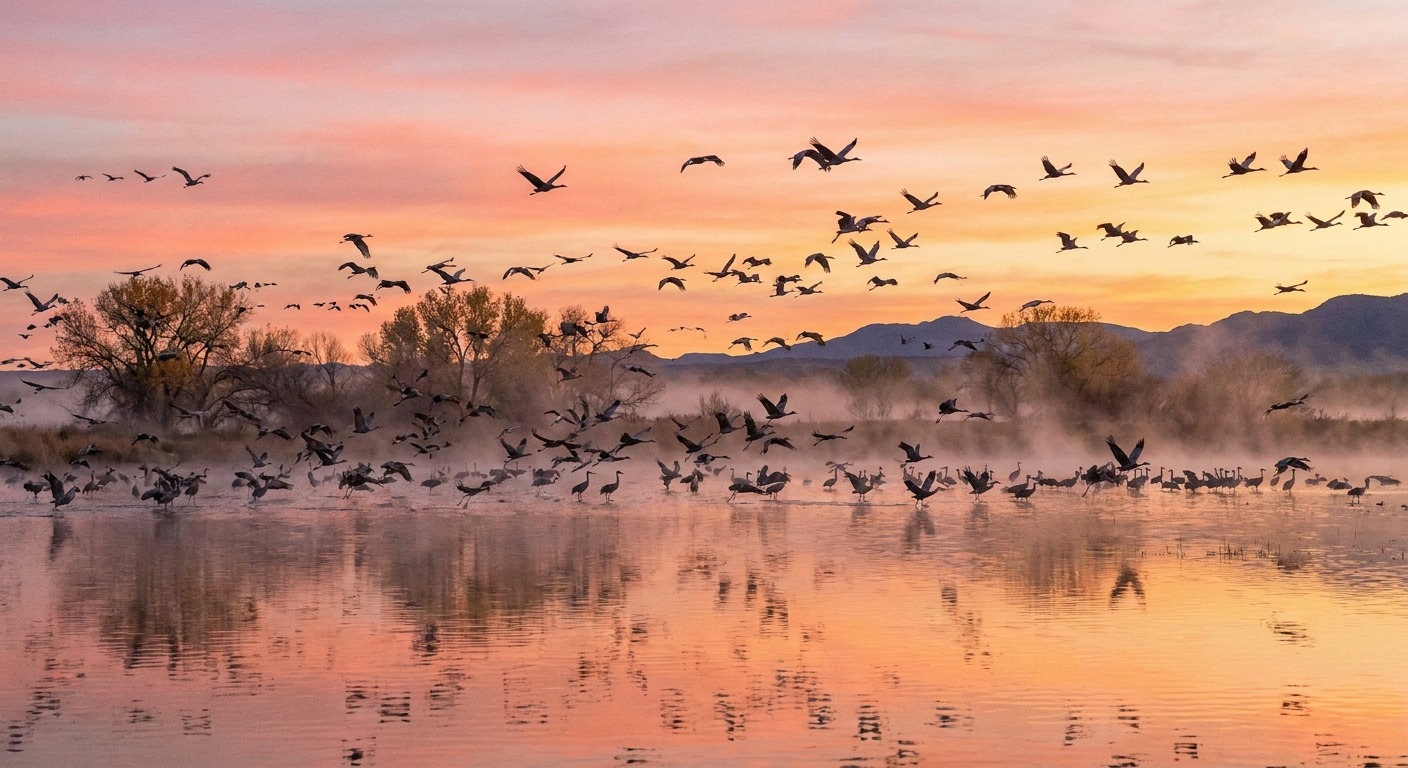
Bosque del Apache National Wildlife Refuge is the rare New Mexico stop where you can keep your hands warm on a coffee cup, stay in your car, and still witness one of North America’s great wildlife spectacles. In winter, the Rio Grande’s wetlands and farm fields become a staging ground for sandhill cranes, snow geese, and a rotating cast of ducks, raptors, and coyotes cruising the levees. The best part for town wanderers: it is wildly photogenic, genuinely accessible, and easy to pair with a science detour at the Very Large Array or a night in Albuquerque without turning your trip into a marathon.
When to go: a season-first cheat sheet
Bosque is worth visiting year-round, but “crane season fly-ins” is a winter game. Timing shifts slightly each year based on weather and water conditions, so think in windows instead of single perfect dates.
Late October to mid November: early arrivals, fewer crowds
- What you will see: Early sandhill cranes begin to gather, plus lots of ducks. Snow geese numbers start building but are not usually at their biggest yet.
- Why go now: More breathing room at pullouts, warmer mornings, and excellent golden light without the cold bite.
- Best for: Travelers who want a calm auto-tour day and still expect meaningful bird action.
Late November to early January: peak drama for fly-ins and lift-offs
- What you will see: Strong crane presence and big goose flocks. This is when the refuge most reliably delivers that classic roar of wings at dawn and dusk.
- Why go now: The most consistent “wow” factor, especially around sunrise and sunset when birds move between roost water and feeding fields.
- Note: This is also prime time for holiday crowds and chilly wind on the dikes.
Mid January to February: still excellent, often clearer skies
- What you will see: Cranes and geese remain, and raptors can be a highlight as they hunt the open fields. Some days feel quieter, other days still feel like a festival of wings.
- Why go now: Crisp light, fewer families traveling, and often great visibility for distant flocks.
March: shoulder season and spring restlessness
- What you will see: Numbers begin to thin as birds migrate north. You can still catch decent mornings, but the biggest flocks are less reliable.
- Why go now: If you are already road-tripping the Rio Grande Valley, it is still a worthwhile stop, just set expectations accordingly.
April to September: a different refuge entirely
- What you will see: Resident birds, shorebirds depending on water, and a lot more quiet space. Heat becomes the main challenge.
- Why go now: Birders who like slower days and travelers who want a scenic drive plus short walks without winter crowds.
How the fly-ins work (and why sunrise is not optional)
If you only remember one Bosque rule, make it this: the magic is movement. Most visitors are hoping to watch birds commute between sleeping and feeding areas.
- Morning: Birds roost on shallow water overnight for safety. At first light, they lift off in waves and head to nearby fields to feed.
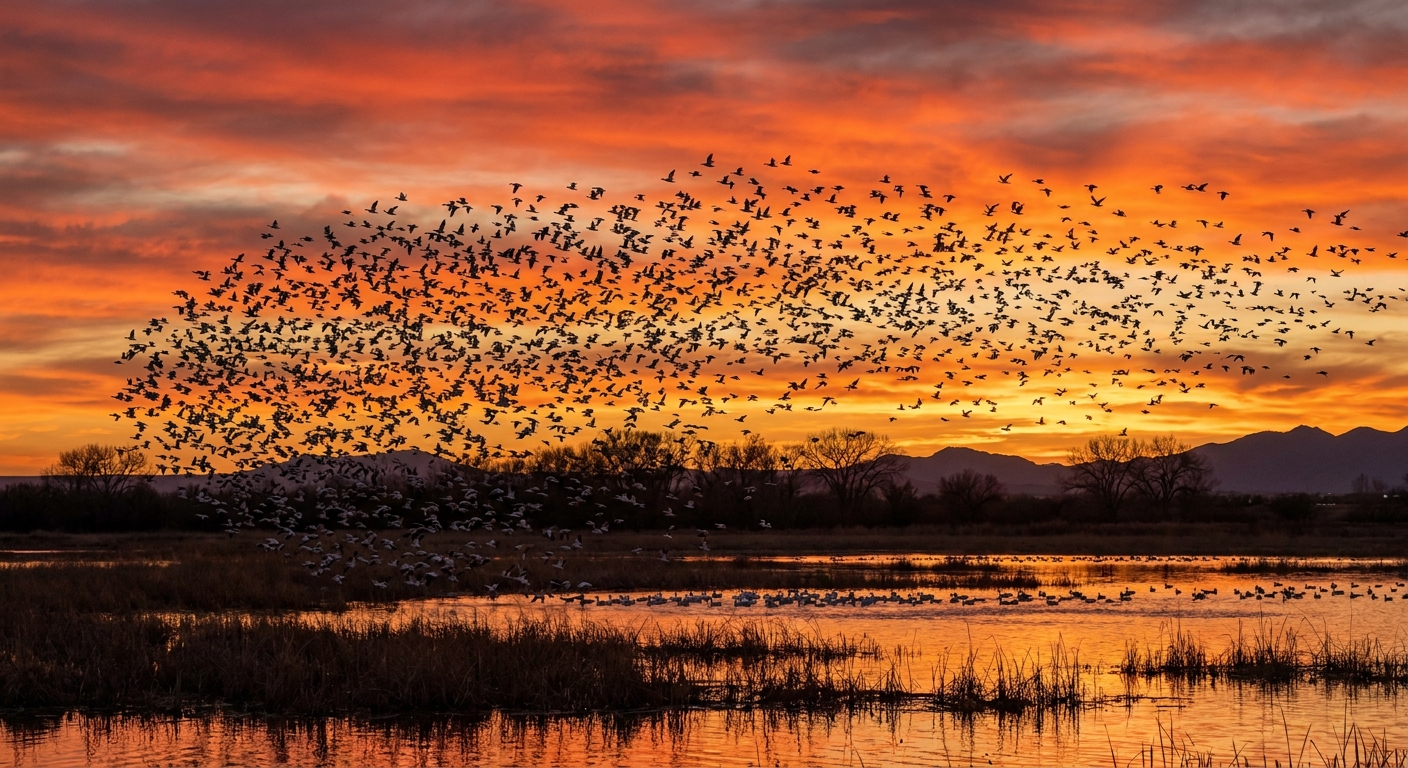
- Evening: As the light softens, flocks return to the wetlands. This is when you can watch long lines of cranes glide in, then hear the constant murmuring and bugling as they settle.
Midday can still be beautiful, especially for close-up wildlife along canals or raptor spotting, but if your schedule is tight, plan your drive around one bookend of the day.
Sunrise and sunset timing near Socorro
You do not need to be a sunrise person, but you do need to act like one for Bosque. In winter, the window is friendly: dawn comes late enough to drive down from Socorro or even Albuquerque if you start early.
- Plan to arrive: 30 to 45 minutes before sunrise (you want time to park, set up, and let your eyes adjust).
- Best lift-off light: From first glow through about 45 minutes after sunrise.
- Plan to be in position for sunset: 45 to 60 minutes before sunset (fly-ins can start earlier than you expect).
- After-sunset bonus: Stick around 15 to 25 minutes after the sun drops. The sky often goes pastel, and late waves of birds keep arriving.
If you are planning around a winter cold snap, know that the coldest moment is usually right before sunrise. Dress for that, and everything else feels easy.
Auto Tour Loops 101
Bosque is famous for its auto tour loop, which is exactly what it sounds like: a wildlife-rich driving route with frequent pullouts. It is ideal for photographers with long lenses, families, or anyone who prefers “adventure with a heated seat.”
What to expect
- Slow driving: Think of it like a moving hide. Expect frequent stops and very low speeds.
- Pullouts: Use them. They keep traffic moving and give you better angles without blocking the road.
- Field to water rhythm: Birds often feed in fields and roost on water. The best sightings bounce between both habitats, so keep scanning in every direction.
- Sound matters: If you can, crack the window for a moment. You will hear cranes before you see them, especially in fog.
How long to budget
- Quick loop: 60 to 90 minutes if you are disciplined and the pullouts are not too crowded.
- Realistic half-day: 3 to 5 hours if you want to do sunrise or sunset plus a full loop with stops.
- Full immersion: Sunrise and sunset with a midday break in Socorro for lunch and coffee.
Drive tip: Keep a small thermos and snacks within reach so you can stay parked longer when the action ramps up. The best moments do not always happen on your schedule.
The Flight Deck
The Flight Deck is the refuge’s purpose-built viewing area designed for watching mass fly-outs and fly-ins. It is popular for a reason: you get a wide, clean view over key wetlands where birds gather.
How to use it well
- Arrive early in peak weeks: If you roll in right at sunrise, you may end up watching from behind a sea of tripods.
- Bring a small ground cloth or pad: You might kneel or sit while waiting, and the decking can be icy cold.
- Choose your lens strategy: Wide angle for the sky-filling flocks, telephoto for individual cranes landing with feet down and wings flared.
- Keep movement minimal: Sudden gestures can spook nearby birds. Slow is always better here.
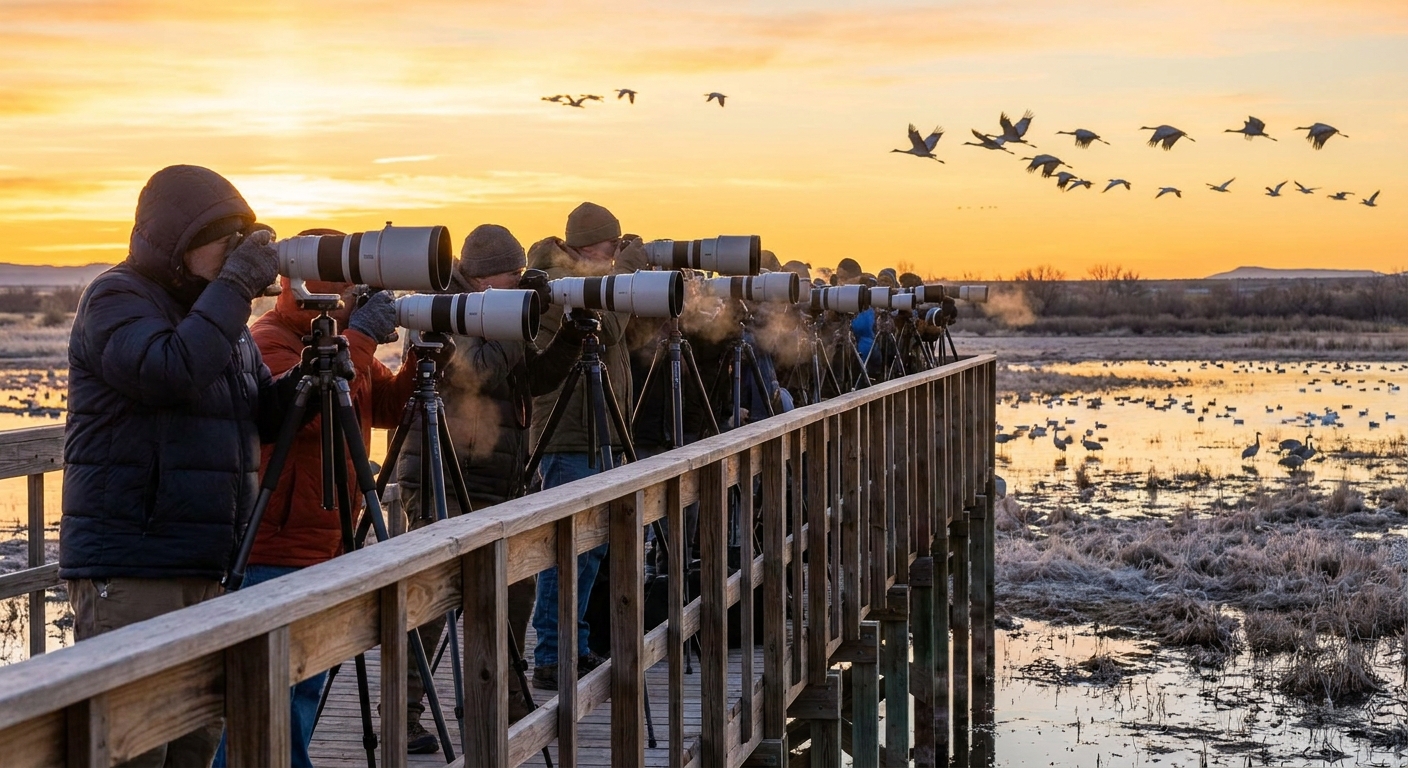
If you want a quieter experience, use the Flight Deck for one end of day, then spend the other end roaming the pullouts along the loop where you can pivot to wherever the birds are actually landing.
Cold-weather gear that matters
Southern New Mexico sounds warm until you are standing still in a wetland breeze at dawn. Bosque’s winter cold is a sneaky, finger-numbing kind of cold, and comfort directly affects how long you can stay out for the best fly-ins.
- Base layers: Lightweight merino or synthetic top and bottom. Cotton gets clammy fast.
- Insulation: A puffy jacket or warm fleece plus a wind shell. Wind is the real villain.
- Hands: Thin liner gloves under warmer gloves or mittens so you can operate camera knobs and binoculars without full exposure.
- Feet: Warm socks and insulated shoes or boots. Standing still makes your toes cold quickly.
- Head and neck: Beanie plus a neck gaiter. This is the easiest comfort upgrade you can pack.
- Optics comfort: Binocular harness or comfortable strap, lens cloth for condensation, and extra batteries stored in an inside pocket (cold drains them).
Carry-on-only note: If you are flying into Albuquerque and packing light, prioritize layers over bulk. Two thin insulating layers usually outperform one huge coat, and they pack better.
A half-day plan
Most people either under-plan Bosque and leave too early, or over-plan and spend the whole day circling the same ponds. Here is a clean half-day flow that hits the best odds for peak behavior without dragging.
Option A: Sunrise half-day (best for dramatic lift-offs)
- Arrive: 30 to 45 minutes before sunrise.
- First stop: Flight Deck for fly-out and early color.
- Then: Drive the auto tour loop slowly, focusing on field edges for feeding cranes and geese.
- Wrap: Late morning when the movement slows. Head to Socorro for lunch.
Option B: Sunset half-day (best for glowing fly-ins)
- Arrive: Mid afternoon for warmer temps and easier parking.
- Start: Auto tour loop first, scouting where birds are feeding.
- Golden hour: Move to Flight Deck or a favorite wetland pullout for fly-ins.
- Finish: Stay through afterglow, then drive back carefully for wildlife on roads.
Pair it with the VLA
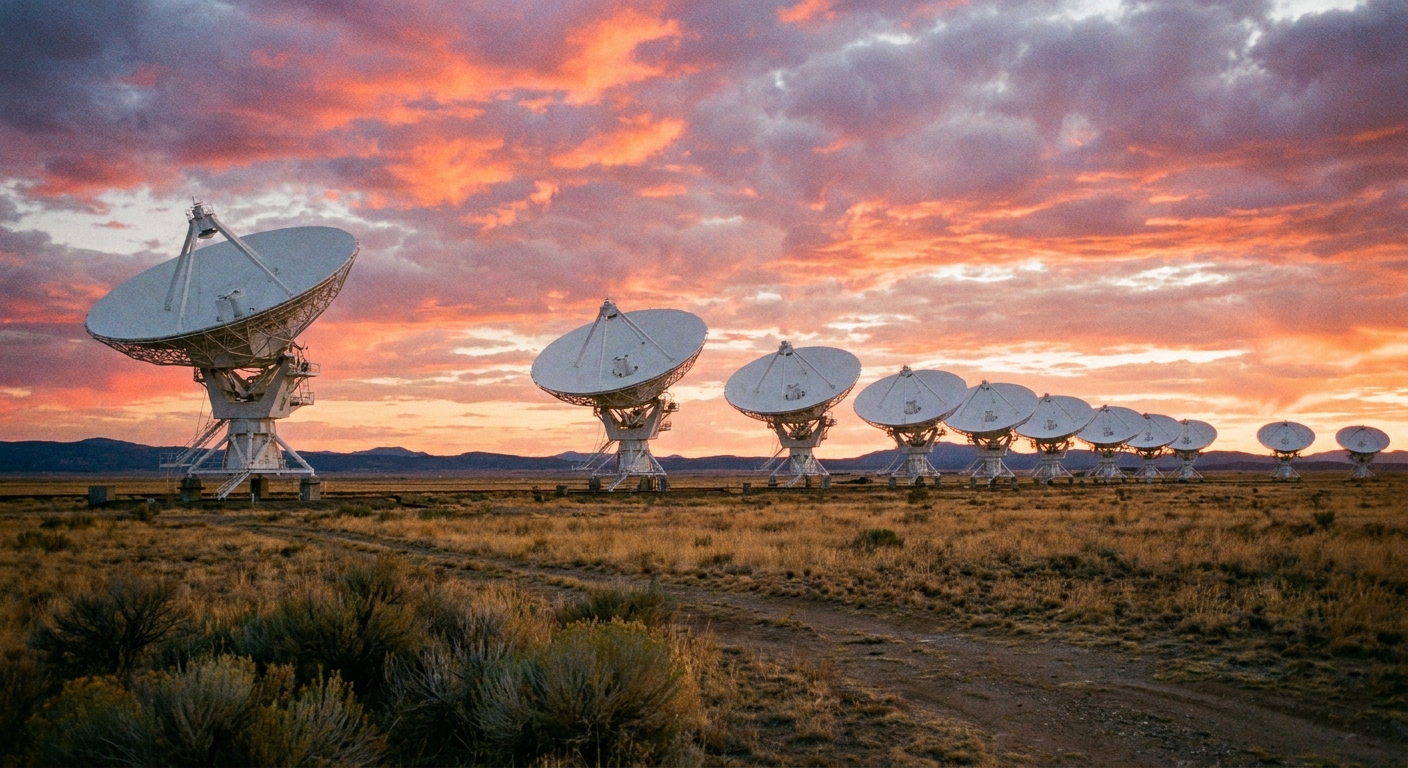
If your brain likes a little science with your nature, pairing Bosque with the Very Large Array is one of the most satisfying day combos in New Mexico. The VLA sits west of Socorro on open high desert, and the contrast is the point: wetlands full of wings, then a landscape that looks like a minimalist painting punctuated by massive radio dishes.
Best pairing strategy
- Do Bosque at sunrise (best wildlife behavior).
- Late morning: Grab food in Socorro and warm up.
- Afternoon: Drive out to the VLA for an easy, open-sky visit and a totally different photo palette.
Why this works: You are using the best light for birds, then shifting to an attraction that is not dependent on golden-hour timing. It is an ideal “town wander” balance day.
Pair it with Albuquerque
Albuquerque makes a smart base for Bosque because you get comfortable hotels, great food, and excellent coffee options. It also gives you an easy “warm up and refuel” landing pad after a cold dawn on the refuge.
Easy add-ons
- Old Town for dinner: Go for New Mexican comfort food after a cold morning at the refuge. Warm, cozy, and low effort.
- Sawmill Market or a food hall: Easy group option when everyone wants something different.
- Local coffee ritual: Pick one excellent shop near where you are staying and make it your pre-dawn stop before the drive south.
- Rio Grande Nature Center State Park: A gentle, urban-wildlife complement if you still want birds without another long drive. It keeps the theme going with a totally different pace.
Timing note: From Albuquerque, sunrise at Bosque means an early departure. The payoff is that you can be back in the city by mid afternoon, cleaned up, and ready for a great meal.
Practical tips
- Know the fee and passes: Bosque del Apache charges an entrance fee. Many visitors use an America the Beautiful interagency pass. Check the refuge website for current pricing and what is accepted before you go.
- Check current conditions: Water levels and wildlife concentrations vary. A quick look at official refuge updates before you drive can help you choose the best time of day.
- Download offline maps: Cell service can be spotty on the refuge and on nearby highways. Save offline maps ahead of time so you are not guessing at turns in the dark.
- Stay on roads and at pullouts: Many areas are sensitive habitat. Respect closures and signs.
- Be kind at pullouts: Do not block other people’s view with a sudden tripod setup. Rotate through and share space, especially at sunrise.
- Drive cautiously: Wildlife can appear on the road, and distracted drivers are common during peak season.
- Pack out everything: Even biodegradable scraps attract animals and change behavior patterns.
Quick packing list
- Binoculars (or a camera with a telephoto lens if you have one)
- Thermos with a hot drink and a snack you can eat with gloves on
- Base layer, insulating layer, and windproof outer layer
- Warm hat, neck gaiter, and two-layer glove system
- Extra batteries, lens cloth, and a small headlamp for pre-dawn setup
- Reusable water bottle and a trash bag for packing out
My personal rule at Bosque: if my fingers are warm, I stay longer, and if I stay longer, I see more. Pack for comfort and the birds will do the rest.