Brooks Falls Bears: Day Trip vs Lodge Stay
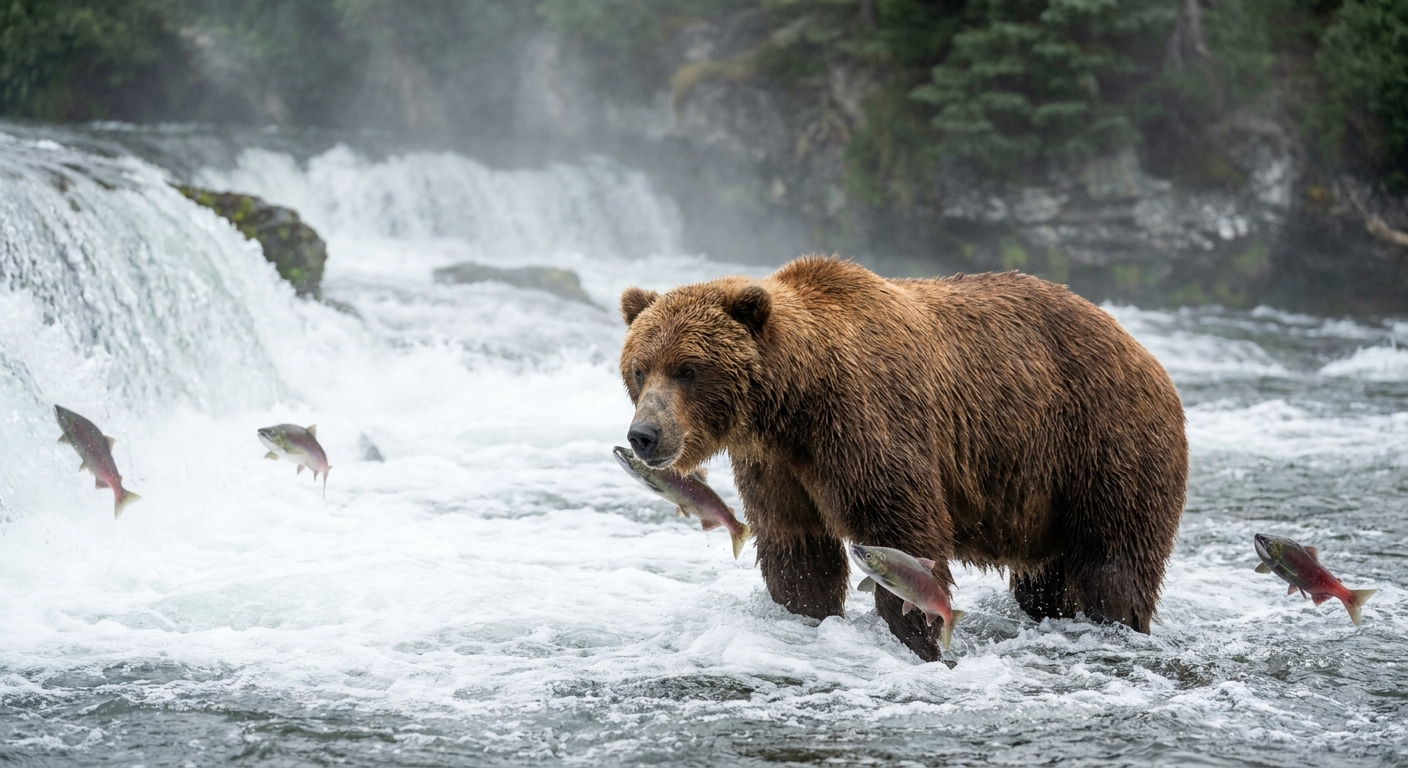
Brooks Falls in Katmai National Park is one of those places where the headline sounds simple: fly out, watch bears catch salmon, fly back. The reality is more like Alaska itself: spectacular, expensive, weather-dependent, and full of small rules that keep both humans and bears safe.
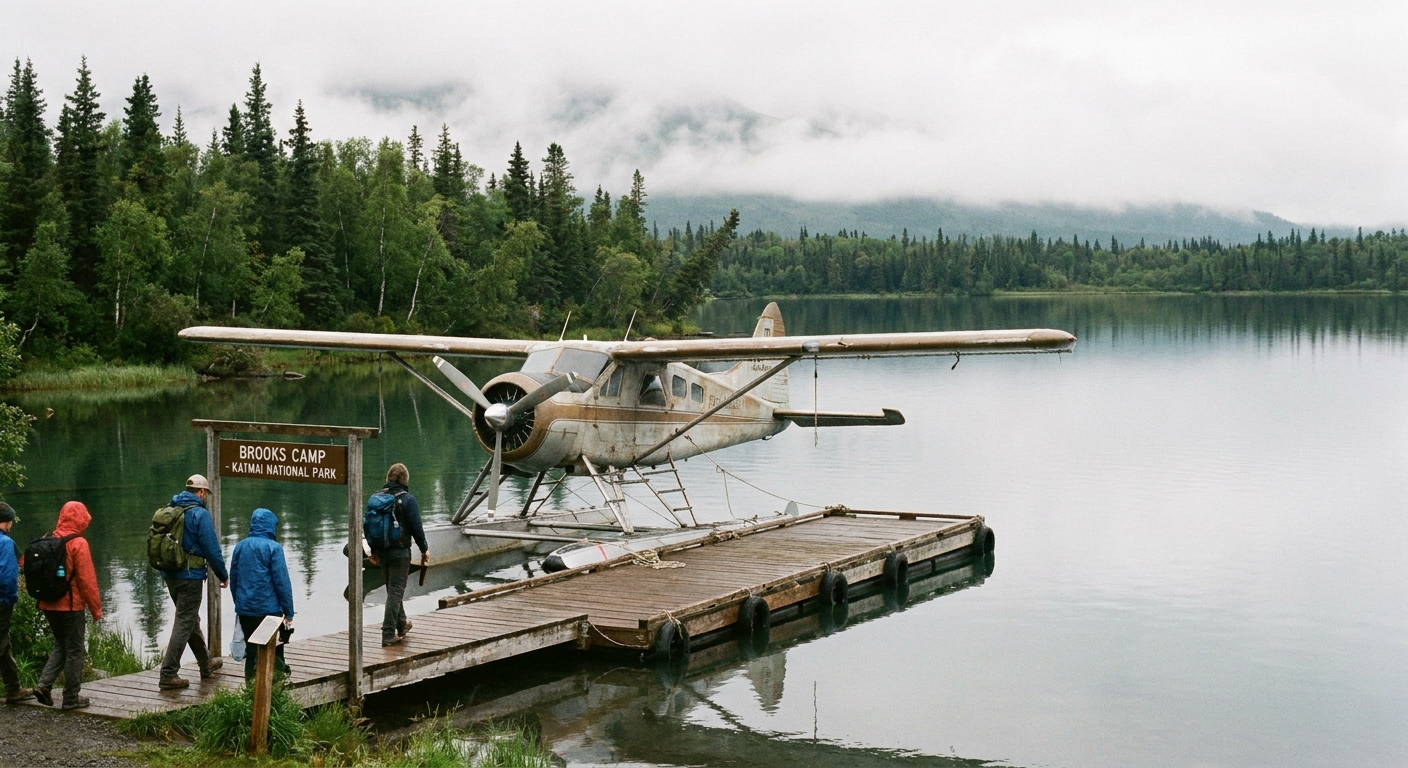
This page breaks down two common ways to do it from Anchorage: a fly-in day trip (most often routed Anchorage to King Salmon on a wheeled plane, then a short floatplane hop to Brooks Camp) versus a lodge-based multi-night stay in or near the Brooks Camp area. Neither is “better” in the abstract. They just buy you different things: time, flexibility, and odds.

What you are actually doing at Brooks Falls
Most bear viewing at Brooks Falls happens from a few managed areas at Brooks Camp, especially the viewing platforms near the falls and, depending on conditions, nearby trails and river sections. The experience is structured because it has to be. You are in prime bear habitat during peak feeding season.
- Access is managed by the National Park Service (NPS) through boardwalk rules, ranger direction, and (typically) a bear safety orientation. Details can change by season and current conditions, so confirm on the official NPS Brooks Camp page before you go.
- Time on site matters because bear activity shifts with time of day, salmon movement, weather, and crowding or management closures.
- Noise and proximity are managed so bears keep acting like bears, not like animals performing for people.
Whether you fly in for a day or stay multiple nights, your best mindset is “I am a visitor in a working ecosystem.” That framing makes the rules feel less like hassle and more like privilege.
The two main options from Anchorage
1) Day trip: the one-shot schedule
In a day trip, your whole plan rides on aviation logistics and weather windows. It can be exhilarating in a “big Alaska in one day” way, especially if you are short on vacation time or you want to add Katmai onto a larger Anchorage-based trip.
Important routing note: Many “Anchorage day trips” are not a single direct floatplane ride all the way. A common setup is:
- Anchorage to King Salmon on a wheeled commercial or charter flight.
- King Salmon to Brooks Camp by floatplane, often around 20 minutes in the air (conditions and routing vary).
Direct floatplanes from Anchorage do exist with some operators, but they are less common and typically much longer. Ask your operator exactly how the day is routed so you understand what is fixed, what is flexible, and where delays usually pile up.
Typical day-trip rhythm (varies by operator):
- Early departure from Anchorage and transit to King Salmon, then onward by floatplane.
- Arrive Brooks Camp, complete any required check-in and safety briefing, then head to the falls viewing area.
- Limited on-the-ground hours before the return flight sequence. On-the-ground time can be a few hours or more depending on routing, weather, and how the operator structures the day.
- Late return to Anchorage if everything runs on time.
2) Multi-night stay: the compounding-benefits approach
Staying multiple nights near Brooks Falls changes the math. You are not just buying more bear time. You are buying more attempts at good bear time.
- Multiple sessions at the platforms across different light and activity windows.
- Weather buffer that can turn a no-fly day into “we try again tomorrow.” Or the day after that.
- Lower pressure because you are not watching the clock all day.
The tradeoff is cost, availability, and commitment. Lodges and camp options are limited and book far out. If you are used to last-minute city weekends, Katmai will teach you patience.
Peak season platform limits
One of the biggest practical differences between a day trip and a multi-night stay is how Brooks Falls viewing works when it is busy.
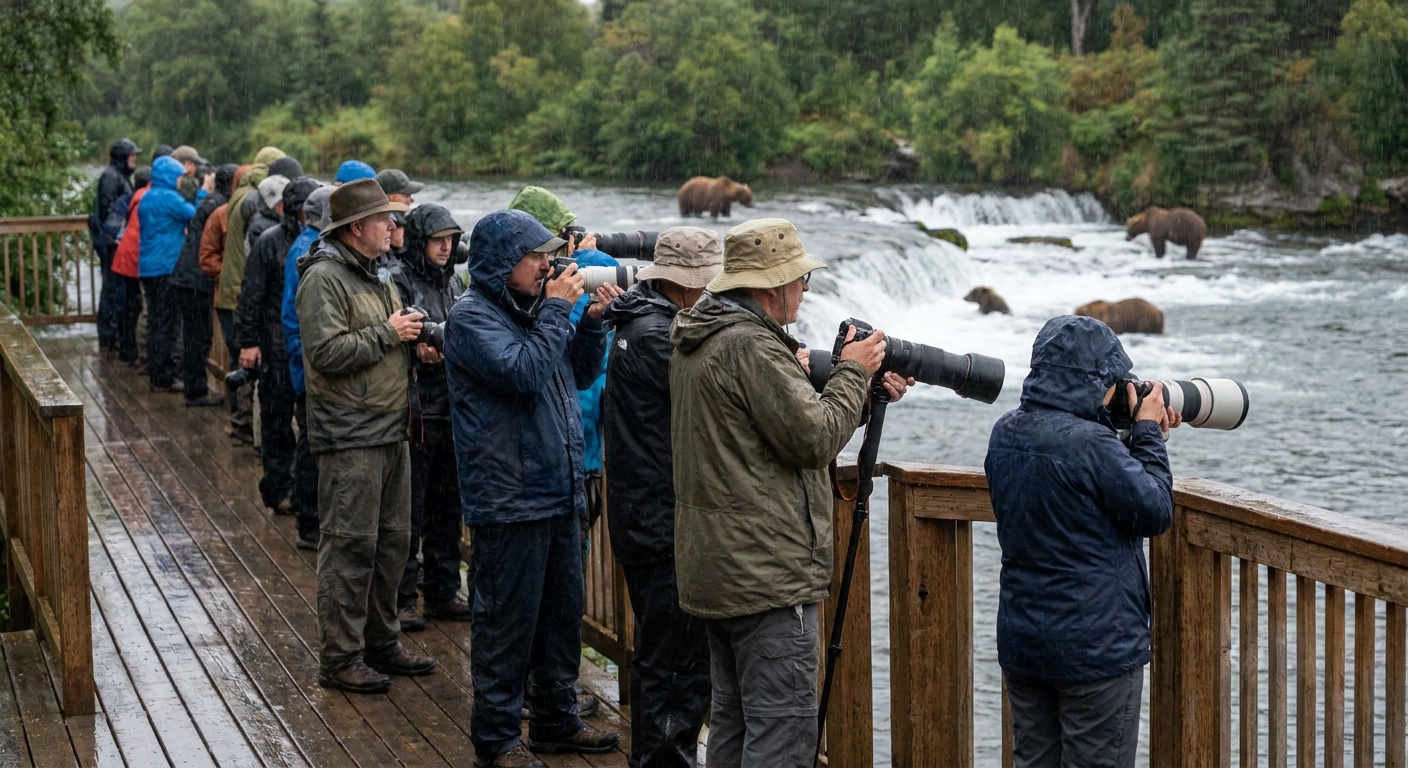
In peak season, especially July, the NPS may use a waitlist system and a time-limit policy (often 1 hour) on the main Brooks Falls viewing platform to manage crowding and keep the experience safe for people and bears. Policies can change by year and conditions, but the effect is consistent: your viewing time can be broken into shorter turns, and you may spend time waiting for your slot.
This is exactly where multi-night stays shine. When time is rationed, extra days do not just mean more total hours. They mean more chances to catch a good window after a wait, after a closure, or after the light finally does what you hoped.
Timing tradeoffs
Day trip strengths
- Minimal PTO required: You can sometimes do Brooks Falls without rebuilding your whole Alaska itinerary.
- One major spend day: Easier to swallow than multiple nights of remote Alaska pricing.
- Anchorage comfort base: You sleep in a real bed, eat at real restaurants, and keep your packing simple.
Day trip limits
- Pacing is tight: Any delay compresses your viewing time first.
- Activity and light are luck-based: You take what the day gives you, including possible waitlists and time limits at the platform.
- Crowds can feel heavier: With one window, you might hit peak platform traffic and the most structured viewing management.
Multi-night strengths
- More “shots on goal”: Bears move, people move, weather moves. Being there longer increases your odds of seeing classic fishing behavior.
- Better photography windows: Early and late light can be magic if platform hours and conditions align.
- More relaxed watching: You can spend time simply observing behavior rather than chasing a single iconic moment.
Multi-night limits
- Cost compounds: Lodging, meals, transfers, and guides add up quickly.
- Harder logistics: Limited inventory, stricter luggage rules, and more moving parts.
- Still weather-dependent: More time helps, but it never eliminates delays.
Weather and cancellation risk
Katmai access is aviation-first. In practical terms, that means your biggest variable is not salmon or bears. It is visibility, wind, ceiling, and water conditions for floatplane operations.
Here is the honest day-trip reality:
- A day trip has a higher “all-or-nothing” feel. If flights are canceled or significantly delayed, you may not have enough daylight or scheduling flexibility to salvage meaningful time at the falls.
- Multi-night stays spread risk. If Day 1 is a weather wash, Day 2 or Day 3 might be perfect.
- Return flights can shift. Even if you make it in, you might wait for a safe window to get out. Build psychological and practical flexibility into your plans.
What you can do to protect yourself:
- Do not schedule critical commitments for the same evening you plan to return to Anchorage.
- Ask operators directly about their cancellation policy, rebooking options, and what triggers a weather call.
- Consider travel insurance that covers weather-related trip interruption, especially for higher-cost itineraries.
Capacity and reservations
Brooks Camp is not a “show up anytime” destination. Access and daily visitor capacity are actively managed, and those details can vary by season and conditions. The safest assumption is that day visitor space is limited, and that popular dates can effectively sell out through operator inventory even before you think about the weather.
- Book early for July and early August in particular.
- Confirm what your booking includes, including any required NPS fees, check-in steps, and how the operator handles capacity constraints.
- Use NPS as your source of truth for current Brooks Camp rules, closures, and management actions.
Platform etiquette
Brooks Falls viewing platforms are shared space. People are excited, adrenaline is high, and the bears are doing bear things in close proximity. The best visitor skill is not wilderness bravado. It is calm courtesy.
On the platforms
- Follow ranger instructions immediately. Rules can change fast due to bear movement and crowd management.
- Keep voices low. Not silent, just respectful. You are in a wildlife viewing area, not a stadium.
- Do not block openings. If you are photographing, be mindful of your body position and the footprint of any gear.
- Take turns at prime rail spots. If you have been posted up for a while and people are clearly waiting, rotate when you can.
- Keep food put away unless you are in a designated eating area. Brooks Camp has specific food storage and eating rules designed to keep bears wild. Follow posted guidance and ranger direction.
On trails around Brooks Camp
- Stay alert and travel in groups when required. Rangers may impose group size rules depending on bear activity.
- Give bears the right of way. If a bear is on the trail or approaching it, the correct move is patience, not squeezing past.
- Keep your pack tidy. Loose snacks, trash, and scented items are not “minor.” They are bear problems.
Photography with minimal impact
If you are coming for Brooks Falls, you probably care about photography, even if it is just a phone plus a dream. The ethical goal is simple: use your gear to get close, not your body.
Practical gear advice
- Bring more reach than you think if photography is a priority. A telephoto zoom is the classic tool for bear viewing.
- Stabilize smartly. Tripod rules can be restrictive at busy times or on crowded platforms. Ask rangers on arrival what is allowed that day. A monopod can be a good compromise.
- Respect shared sightlines. Large lenses, swinging straps, and wide stances can take up more space than you think.
Stewardship habits that matter
- Do not bait or call animals. Let bears be bears.
- Skip flash. It is unnecessary and can be disruptive.
- Protect the place while chasing the shot. Stay within designated areas and do not step off trails for “one better angle.”
What to bring
Even in summer, Brooks Camp can feel like wet, chilly shoulder season. Pack for rain, bugs, and long periods of standing still.
- Layers plus rain gear: insulating mid-layer, waterproof shell, and gloves you can shoot in.
- Binoculars: helpful even if you have a long lens.
- Bug protection: season-dependent, but worth having.
- Water bottle and small snacks: follow all designated eating and food storage rules.
- Dry bag or rain cover for camera and phone.
- Simple daypack: easy to manage on boardwalks and platforms.
Accessibility notes
Brooks Camp is built around boardwalks, packed paths, and platform structures. Expect walking between key areas and some steps at viewing platforms. If you have mobility considerations, ask your operator and check the NPS Brooks Camp accessibility details ahead of time so you can plan realistically.
Bush-flight expectations
Floatplanes and small aircraft in Alaska run on tight weight and balance limits. If you are used to tossing a hard-shell roller into an overhead bin, this is your moment to embrace my favorite mantra: pack light, but make it bush-plane friendly.
Common constraints
- Soft bags beat hard suitcases. Operators often prefer duffels that pack efficiently in small cargo areas.
- Weight limits are real. Your bag may be weighed. Overages can mean fees, repacking, or leaving items behind.
- Food rules can be strict. Depending on your itinerary, you may be asked to minimize strong odors or keep food sealed, and to use designated storage areas at camp.
- Pack out what you pack in. Trash management in remote areas is not optional.
Sanitation basics
- Carry a small waste bag kit for tissues and hygiene items when appropriate, and dispose of them as directed by staff.
- Use leakproof containers for any liquids. Tight packing spaces are not kind to cheap caps.
- Do not assume services at every stop. Plan for minimal facilities during transfers.
If you are unsure about what is allowed, ask your operator before you fly. In Katmai logistics, surprises are usually expensive or inconvenient.
Respectful context
Katmai National Park and Preserve sits within a living Alaska Native landscape. Communities in the region have deep, long-standing relationships with these waters, fish runs, and travel routes. As visitors, our job is to be respectful without turning real places into vague mythology.
- Avoid inventing cultural stories or repeating unverified “legends” to make the moment feel more dramatic.
- Follow local guidance when it is offered, especially by rangers, permitted operators, and community-linked organizations.
- Practice low-impact travel that aligns with the idea that this is not just a park, but a place with ongoing human meaning.
If you want a deeper understanding, look for resources from the National Park Service and regional Alaska Native organizations, and prioritize listening over performing knowledge.
Which option fits you?
Choose a day trip if you want
- Maximum Alaska in minimum days and you can handle a long, early, tightly scheduled day.
- A single experience anchor inside a broader trip that includes Anchorage restaurants, museums, and easy day hikes.
- Simple packing and fewer overnights, even if the day itself is intense.
Choose a multi-night stay if you want
- Better odds across weather, platform waitlists, and bear activity windows.
- More time to slow down and observe behavior beyond the famous waterfall moment.
- A trip that is about Katmai, not Katmai squeezed into something else.
My personal bias, after years of stitching wilderness into city itineraries, is to treat Brooks Falls like a place that deserves margin. If you can afford the time and planning horizon, multi-night travel is calmer and kinder to your expectations. If a day trip is what fits, go anyway. Just go with eyes open, flexible plans, and respect for the rules that protect the bears that brought you there.
Quick checklist
- Book early for peak salmon season windows and limited seats.
- Build buffer time in Anchorage before and after in case flights shift.
- Confirm your routing (Anchorage to King Salmon to Brooks Camp is common) and ask how delays are handled.
- Dress for wet cold even in summer: layers, rain shell, and gloves you can shoot in.
- Pack light in a soft bag, and expect baggage limits.
- Plan for platform management in peak season, including possible waitlists and a 1-hour time limit on the main platform.
- Follow ranger and operator guidance on food storage, designated eating areas, trash, and trail rules.
- Keep wildlife wild with quiet voices, patient movement, and no shortcuts off trails.