Bryce Canyon in Winter: Roads, Traction, and Quiet Rim Walks
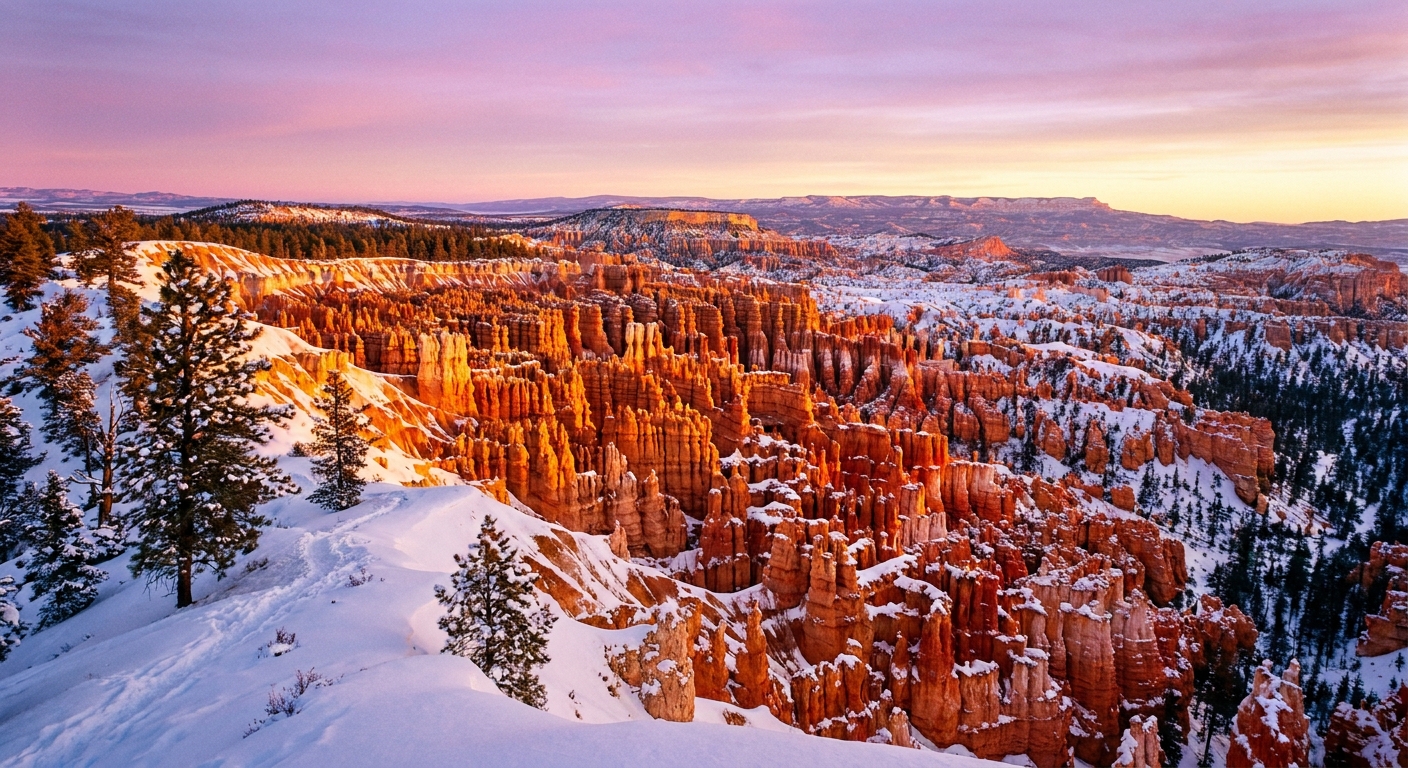
Bryce Canyon in winter feels like the park turned the volume down. The amphitheater goes quiet, the hoodoos look freshly dusted like powdered sugar, and the rim air is so crisp it practically snaps. It is also the season when Bryce demands a little more respect: roads can close fast, the rim turns into a low-key skating rink, and “just a viewpoint walk” can become the sketchiest 0.3 miles of your trip.
This guide focuses on what changes in the cold months: what usually stays open, how to choose traction, where the safest snowy viewpoints are, how to time sunrise when the sun is late and the wind is not, and what to know if you want to hike below the rim.

What winter in Bryce really means
Bryce Canyon sits high, roughly 8,000 to 9,000 feet along the rim, so winter is not a light accessory here. Snowstorms roll through, temperatures can drop well below freezing, and shaded corners of the rim can hold ice for days even after a sunny spell.
- Expect: cold mornings, wind on the rim, compacted snow and ice in high-traffic areas, and occasional short-notice road closures.
- Upside: fewer crowds, quieter overlooks, and some of the best contrast for photos of hoodoos you will see all year.
What stays open (and what changes)
Visitor center, restrooms, and services
The park is open year-round, and the Bryce Canyon Visitor Center is typically open daily, though hours can be shorter in winter. Restrooms at major nodes like the visitor center and popular viewpoints are usually available, but smaller seasonal facilities can close or have limited hours. In winter, plan as if services are sparse: bring water and snacks even for a “quick” rim stop.
Main park road and viewpoint access
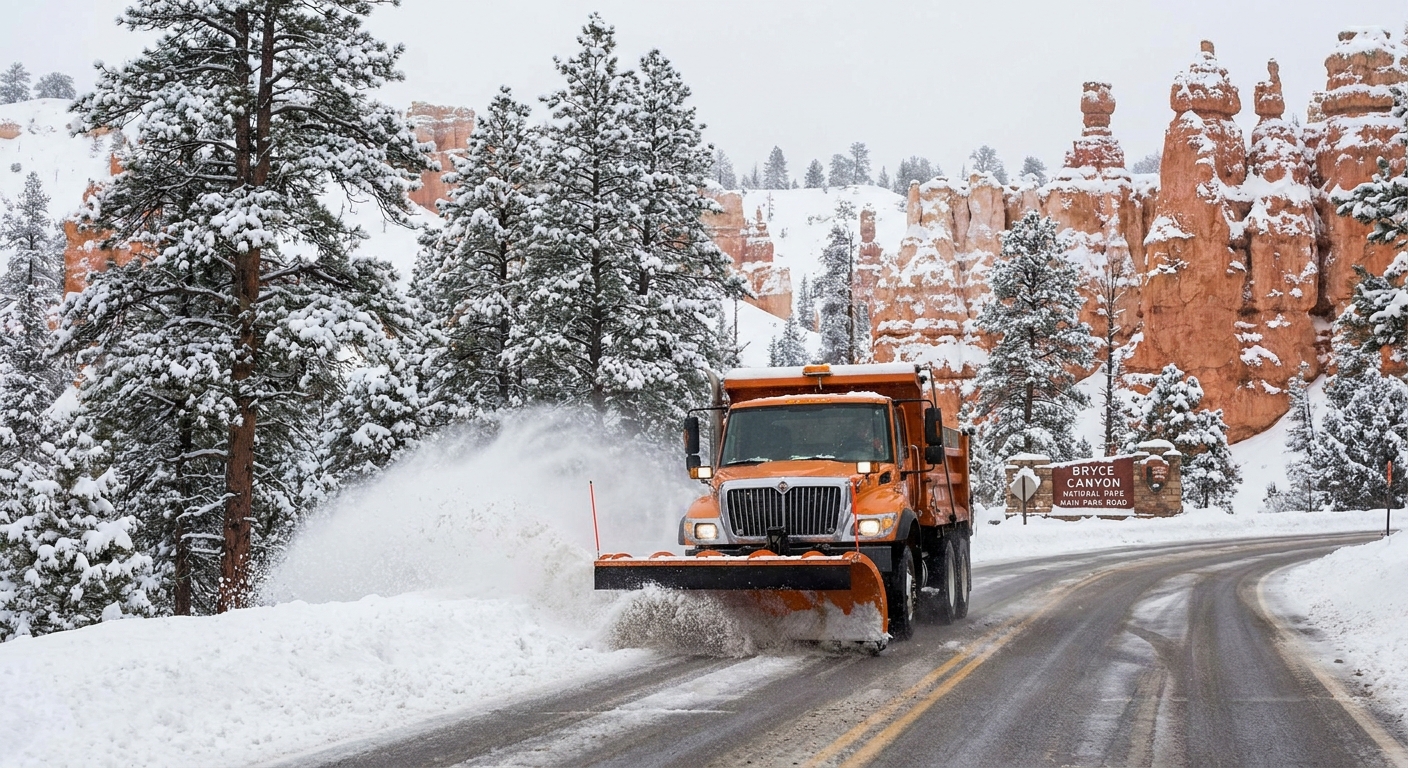
Utah Scenic Byway 12 and UT-63 to the park are generally maintained, but storms can still cause hazardous conditions. Inside the park, the Main Park Road often remains open to the primary amphitheater viewpoints, but the southern portion can close temporarily after heavy snow until plows catch up.
Best practice: check the National Park Service conditions update the morning you visit, and build a plan that still works if the road beyond the amphitheater is closed.
Shuttle changes
The Bryce Canyon shuttle is a warm-weather staple. In winter, shuttle service is often reduced or not operating depending on the season and staffing. That means you should plan to drive and park at viewpoints, which is usually easier in winter anyway because lots fill more slowly.
What to do: confirm the current shuttle status before you go, then plan your day assuming you will be self-driving.
Road closures and how to plan around them
Winter closures in Bryce are typically about snow removal, drifting, and ice, not long-term shutdowns. The park staff is good at reopening roads, but timing depends on storm intensity and wind.
A flexible winter route
- Start at the Visitor Center for conditions, traction advice, and a quick reality check on wind and temperature.
- Prioritize the amphitheater rim first: Sunrise Point, Sunset Point, Inspiration Point, and Bryce Point are your winter MVPs.
- If the southern road is open, continue to viewpoints like Natural Bridge.
- If the southern road is closed, pivot to longer rim walks between overlooks, photography, and a short hoodoo-adjacent hike only if you have traction and comfort with ice.
Parking tip: icy lots can turn into uneven ruts. Move slowly, leave extra stopping distance, and choose spots that let you pull forward out of a space if conditions look slick.
Ice on the rim
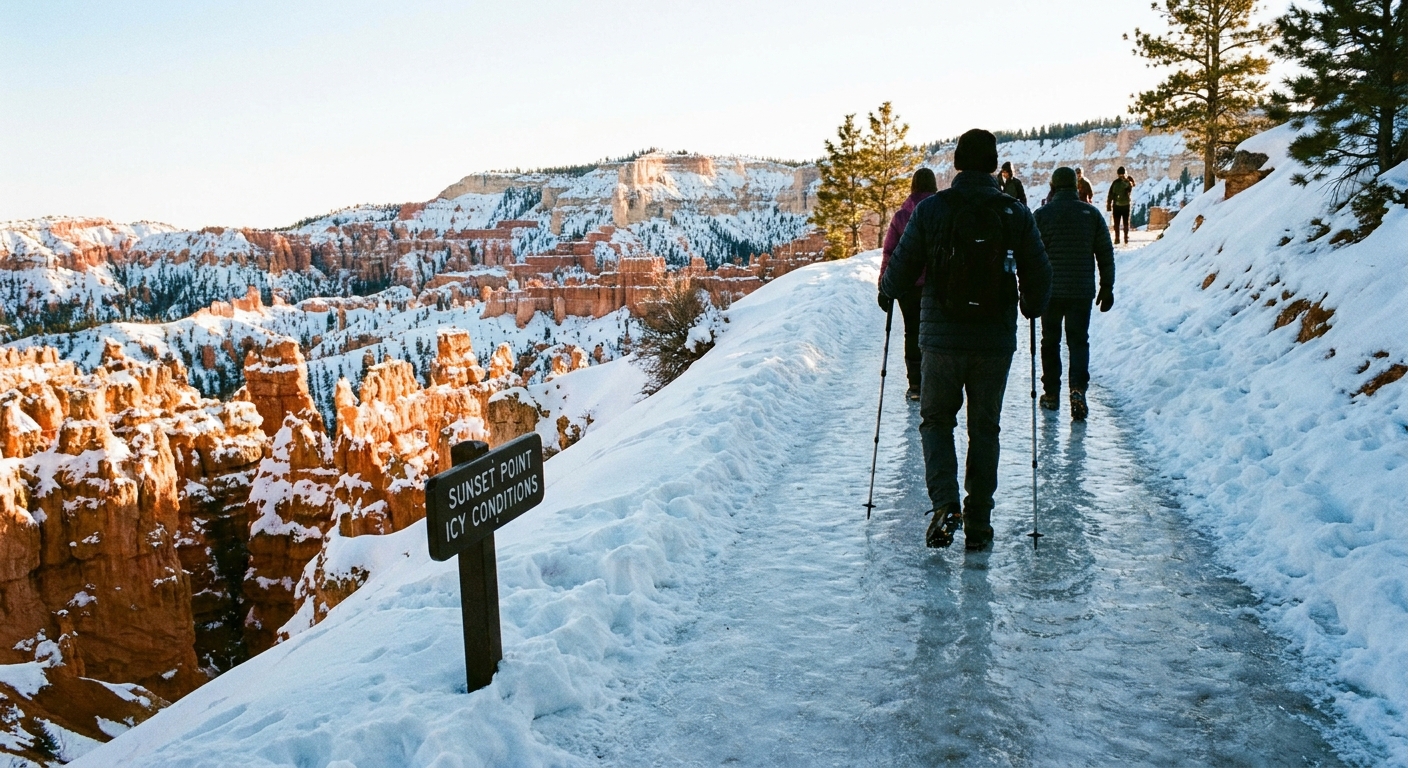
The rim trail and paved overlook paths in Bryce are deceptively tricky in winter because they get packed down by foot traffic. That creates a polished layer of ice that can be more slippery than fresh snow. Add wind and a cliff edge, and the “easy viewpoint” label starts to feel optimistic.
Where ice lingers
- Shaded sections near tree cover and north-facing corners of the rim
- Between Sunrise and Sunset where foot traffic compacts snow early
- Overlook ramps and rail-adjacent paths where meltwater refreezes overnight
My rule: if I see even one person doing the cartoon walk with arms windmilling, traction goes on immediately.
Traction choices
You do not need mountaineering gear to enjoy Bryce in winter, but you do need a plan for grip. Traction is the difference between a peaceful sunrise stroll and a stressy shuffle.
Microspikes
Microspikes have small metal points and a snug rubber harness. They are the most reliable option for icy rim paths and packed trails.
- Best for: rim walks with ice, packed snow, steeper sections
- Tradeoff: overkill on dry pavement, and you should remove them indoors to avoid damaging floors
Coil-style traction
Coil devices can help on lightly icy sidewalks, but they tend to feel less secure on uneven packed snow.
- Best for: short, mostly flat viewpoints when conditions are mild
- Tradeoff: can slip on hard ice compared to microspikes
Hiking poles
Pole tips help with balance, but poles do not replace traction on glare ice. If you use poles, consider adding snow baskets if there is fresh powder.
- Best for: balance, confidence, longer rim walks
- Tradeoff: still slippery without spikes on hard ice
Carry-on-only packing note: traction devices are small, light, and worth the bag space. They are the first thing I pack for Bryce between November and March.
Safest snowy viewpoints
Bryce has a lot of overlooks, but in winter you want the ones with well-maintained access and predictable footing. The goal is a great view without an adrenaline surcharge.
Safest bets
- Sunrise Point: wide paved access and a big reward-to-effort ratio.
- Sunset Point: popular, often more packed down which can mean more ice, but it is straightforward and close to facilities.
- Inspiration Point: incredible perspective, but take it slow on the final approach if it is shaded.
- Bryce Point: one of the best panoramas, often plowed, with room to spread out.
Use caution
- Narrow rim-adjacent sections: if the path pinches and there is wind, slow down and keep distance from edges.
- After thaw and refreeze: meltwater refreezes overnight and can turn ramps into slick sheets.
Good winter habit: if the overlook path looks shiny, assume it is ice even if the parking lot looks fine.
Quiet rim walks
If you want solitude without committing to a deep backcountry day, the rim is your friend. You can stitch together your own out-and-back based on wind, footing, and how your fingers feel after 20 minutes outside.
Sunrise to Sunset
This is the winter gateway walk. It is short, scenic, and easy to bail out of if the wind picks up. It is also one of the iciest stretches because it is so popular.
- Why go: big hoodoo views, minimal logistics
- Winter tip: wear traction from the start instead of waiting for the first slick patch
Sunset toward Bryce Point
Heading south from Sunset Point can thin the crowds fast. Do not fixate on a specific destination. In winter, the best strategy is to turn around when footing starts to feel inconsistent or wind gusts get pushy.
- Why go: more quiet, changing angles into the amphitheater
- Winter tip: keep your turnaround time honest so you are not rushing back near sunset when temperatures drop
Inspiration Point area
If you want maximum amphitheater drama with minimal walking, Inspiration Point delivers. Even a short stroll around the overlook area can feel like a real outing when everything is snow-bright and silent.
Below the rim in winter
If you came to Bryce to actually get down among the hoodoos, winter can still deliver, but the rules change. Expect steep switchbacks with packed snow, shaded sections that stay icy, and a much bigger difference between “looks fine” and “is fine.” Traction is not optional.
Navajo Loop and Queen’s Garden
- Wall Street: the Wall Street section of the Navajo Loop is closed in winter.
- Two Bridges: the Two Bridges side of the Navajo Loop is typically the winter-friendly option when you want a short below-the-rim taste.
- Queen’s Garden: usually remains open and is often the best choice for a classic hoodoo hike when conditions allow.
Winter reality check: the first half-mile down can be the iciest part of your day, and the last half-mile back up is where people realize they are tired. Give yourself extra time, use microspikes, and turn around early if you are losing confidence in your footing.
Sunrise timing
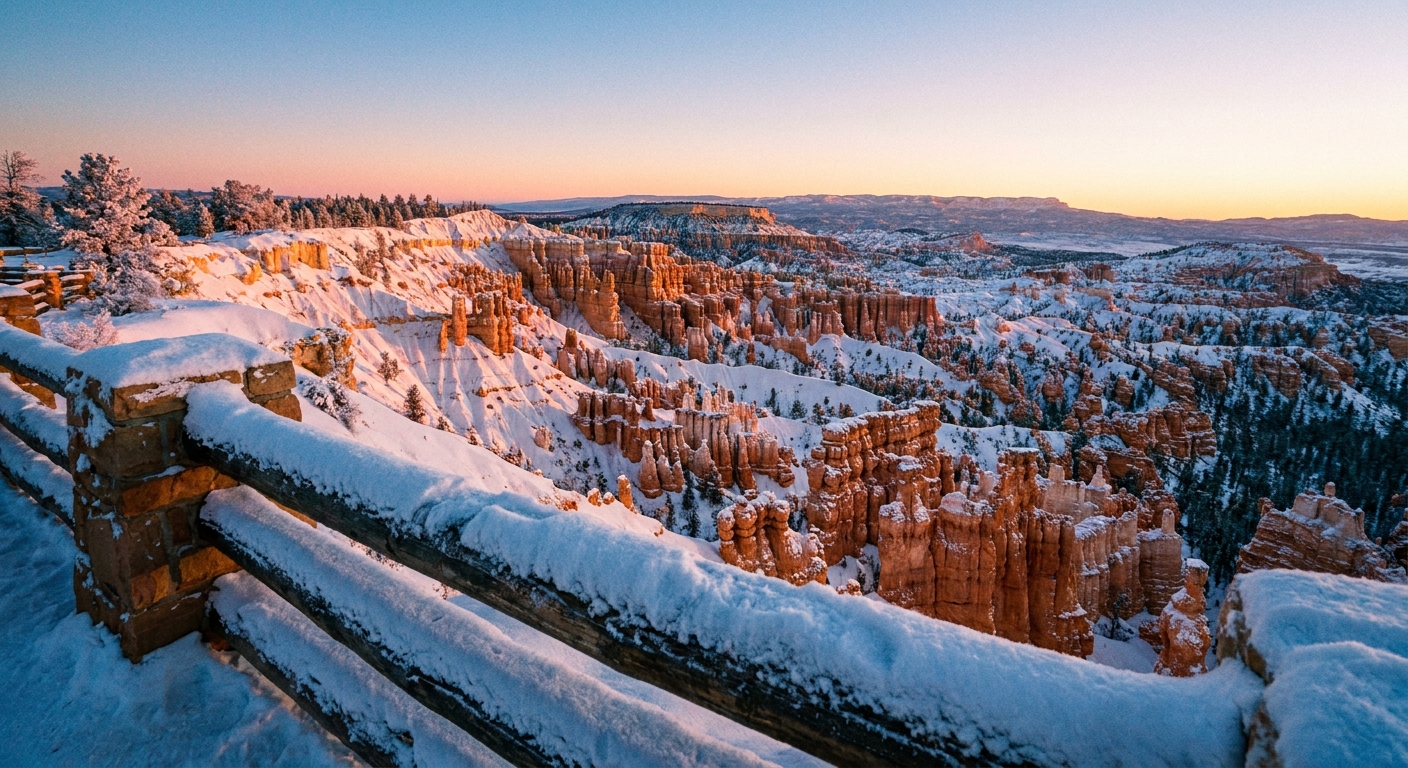
Winter sunrise at Bryce is magical, but it is also the coldest part of the day. The sun rises later than in summer, which helps, but you will still be standing on an exposed rim at high elevation.
How to time it
- Arrive early enough to park easily: even in winter, sunrise can be popular on weekends.
- Plan to be at the viewpoint 20 to 30 minutes before sunrise: the best color often starts before the sun clears the horizon.
- Expect the warm-up to lag: it can stay frigid until the sun is higher because the amphitheater and forested rim hold cold air.
Make it comfortable
- Bring a hot drink in a thermos and sip slowly.
- Wear a wind-blocking outer layer: wind is the real villain at Bryce.
- Use liner gloves under mittens so you can handle your phone or camera without bare fingers.
Footwear and clothing
If you are dressing for a city winter walk, add one more layer for Bryce. High elevation plus wind can make the same temperature feel far colder than you expect.
Footwear
- Waterproof boots or trail shoes: snow can melt into slush by midday, especially around parking lots.
- Warm socks: merino or a synthetic blend that still insulates if damp.
- Traction device: microspikes are the most dependable for icy days.
Clothing
- Base layer: breathable and warm, avoid cotton if you are walking much.
- Mid layer: fleece or light puffy.
- Outer layer: windproof shell or insulated jacket depending on temps.
- Extras: beanie, neck gaiter, and sunglasses because snow glare is real.
Driving notes
Bryce winter driving is usually manageable, but storms can change conditions quickly. If you are road-tripping from Zion, Capitol Reef, or Salt Lake City, keep your plan flexible.
- Check Utah road conditions before you leave town, not just park updates.
- Rental cars: confirm your tires are in good shape. Do not assume you will get snow tires.
- Carry basics: scraper, windshield fluid rated for freezing temps, and an extra layer in the car.
Common mistake: underestimating how icy parking lots can be. Even if roads are clear, lots can stay shaded and slick.
One winter day plan
Half-day
- Arrive mid-morning after roads are plowed and temps start rising
- Sunrise Point and Sunset Point overlooks
- Short rim walk between them with traction
- Inspiration Point for a wider panorama
Full-day
- Sunrise at Sunrise Point or Bryce Point
- Rim walking in sections, turning around based on footing
- Optional below-the-rim add-on: Queen’s Garden or the Two Bridges side, only with traction and enough daylight
- Drive south if the Main Park Road is open for more viewpoints and fewer people
- Golden-hour revisit to your favorite overlook for warmer light and softer crowds
Sustainable winter visiting
Bryce’s winter landscape is fragile. Staying on packed paths helps protect the crusted snow surface and the vegetation underneath.
- Stick to established walkways even if the snow makes shortcuts tempting.
- Pack out everything, including snack wrappers that love to escape in the wind.
- Idle less: if you are warming up in the car, do it mindfully and safely.
Quick winter checklist
- Check NPS Bryce conditions for road status and current hazards
- Confirm shuttle operations for your travel dates
- Pack microspikes or reliable traction
- Bring wind layers, warm gloves, and eye protection for glare
- Plan viewpoints first, longer walks second
- Start early, but do not rush on ice
If you treat Bryce winter like its own season, not just “Bryce but colder,” you will get the best version of it: quiet overlooks, clean air, and hoodoos that look like they dressed up for the occasion.