Buckskin Gulch from Wire Pass
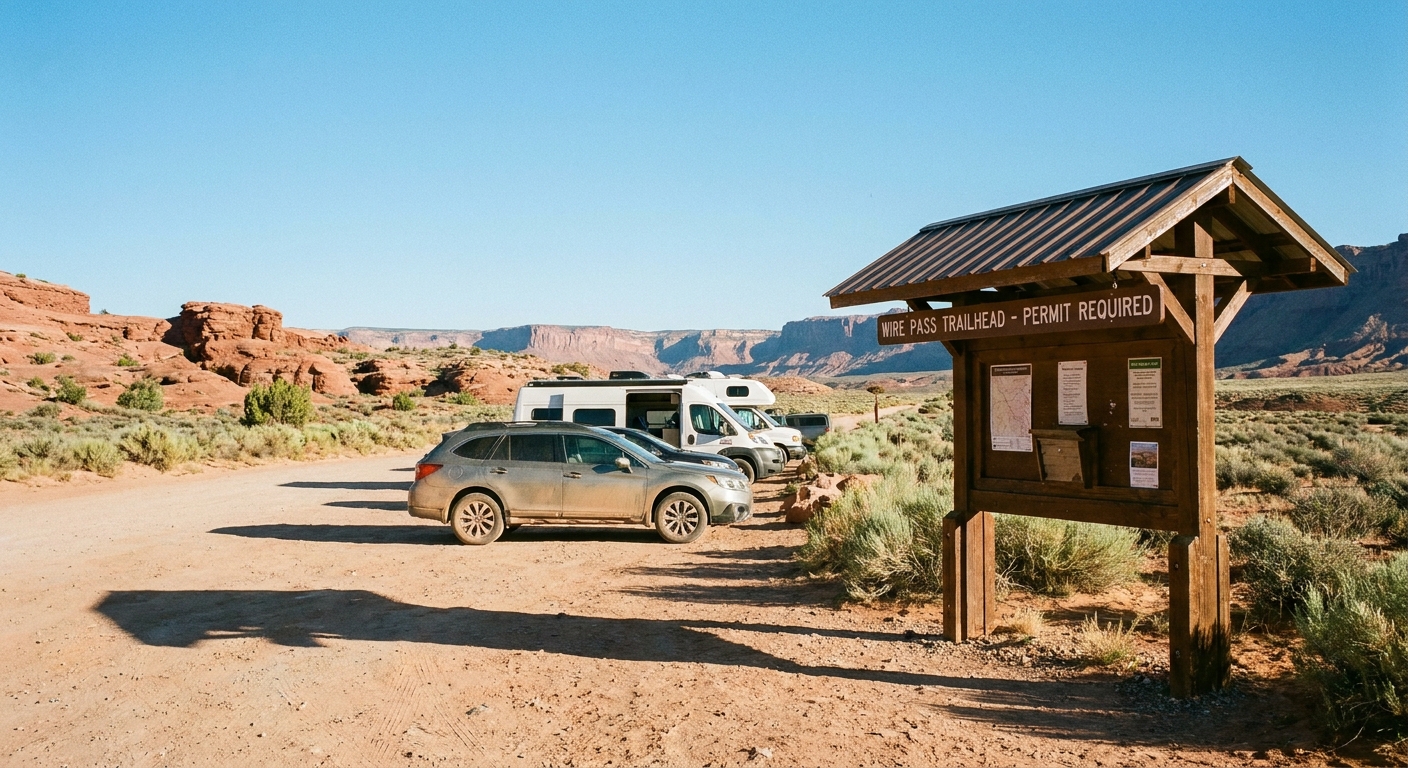
If you want the magic of Buckskin Gulch without committing to a full through-hike, Wire Pass is the friendliest way to sample one of the Southwest’s most famous slot canyons. You get a short approach, a quick taste of slot-canyon scenery in Wire Pass itself, then the option to wander Buckskin as far as conditions, daylight, and your comfort allow.
This is not a place to “wing it,” though. Buckskin is long, deep, and famous for water, mud, and flash floods. The good news is that a well-planned day hike here can be both spectacular and conservative. The key is choosing smart turnaround landmarks, understanding what “wading” really means in different seasons, and following strict flood rules even when the sky above you looks perfectly blue.

Quick plan at a glance
- Start: Wire Pass Trailhead (House Rock Valley Road)
- Route: Wire Pass slot to Buckskin Gulch, then out-and-back
- Typical day-hike distance: about 4 to 10+ miles round trip depending on turnaround and conditions
- Time needed: 3 to 8+ hours depending on mud, wading, and crowds
- Core risks: flash floods, deep mud, cold water, the Wire Pass dryfall, vehicle access on dirt roads
- Permits: day-use fee required for Wire Pass and Buckskin day hikes
Permits and parking
Do you need a permit?
Yes. Day hiking Wire Pass and Buckskin Gulch requires a day-use permit fee for the Paria Canyon Vermilion Cliffs Wilderness. Management and purchase methods can change, so confirm the current process and fees before you drive out. The most reliable places to verify are the BLM Arizona Strip District (which manages Vermilion Cliffs National Monument) and the Paria Contact Station area information. Keep proof of payment with you and follow the instructions posted at the trailhead.
Where to park
Park at the Wire Pass Trailhead off House Rock Valley Road (also called House Rock Road). The lot is a sandy desert pullout, not a paved facility. After storms it can be rutted or muddy, and high clearance helps. A 2WD car is often fine when the road is dry, but do not force it if the road is wet.
Timing tip
Start early. You will have cooler temperatures, fewer crowds in the tightest slots, and a bigger safety buffer if the canyon is slow due to mud or wading. Also leave extra time for the drive out. This road can turn into a time sink after weather.
What the hike is like
Approach and slot entry
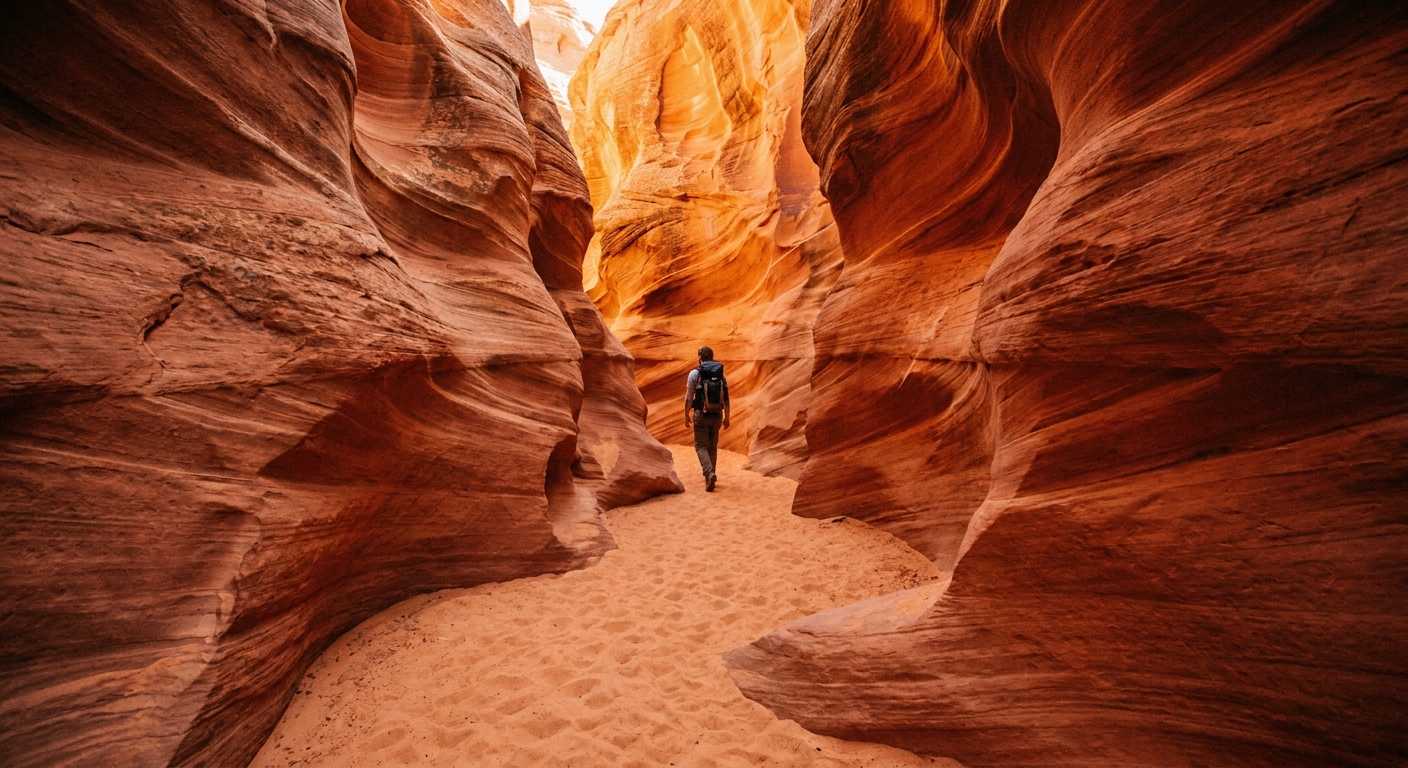
From the trailhead, the route crosses open desert and drops into a drainage. You will quickly enter Wire Pass’s narrow, sculpted corridors. In places you can touch both walls. It is beautiful, photogenic, and also exactly the kind of terrain where a flood becomes deadly fast.
The Wire Pass dryfall
Wire Pass includes a short dryfall (pour-off) that most hikers descend with careful footwork. Sometimes a wooden ladder is present, but it can wash away in floods and you should not count on it. Be prepared to scramble down and back up using hands, and treat it like a real obstacle. If anyone in your group looks uncomfortable here, that is a useful signal to keep your Buckskin day hike modest.
Distances and anchors
Mileage in this area varies a bit depending on how you track the wash and where you turn around, but these rough anchors help you plan:
- Trailhead to slot entry: short, generally under a mile.
- Trailhead to Buckskin confluence: a few miles round trip if you simply reach Buckskin and come back.
- Going deeper: distance rises quickly, and travel time can jump even more if you hit continuous mud or wading.
Before your trip, sanity-check your plan with a current map app and a recent, date-stamped trip report. In Buckskin, one season’s “easy stroll” can become another season’s “slow, cold slog.”
Turnarounds
Because Buckskin is a through-canyon, there is no single “right” day-hike endpoint. What you want is a turnaround you can recognize, that fits your daylight, and that keeps you from committing deeper when conditions are questionable.
Turnaround 1: First big Buckskin section
Best for: families, first-time slot hikers, anyone testing water and mud.
After Wire Pass meets Buckskin Gulch, wander downstream into Buckskin far enough to get the full cathedral-wall feeling, then turn around while energy is high and clothing is still mostly dry. This is the safest choice when storms are possible anywhere in the region or when you are unsure about water depth.
Turnaround 2: First sustained wet section
Best for: hikers who want a longer day but still want an obvious decision point.
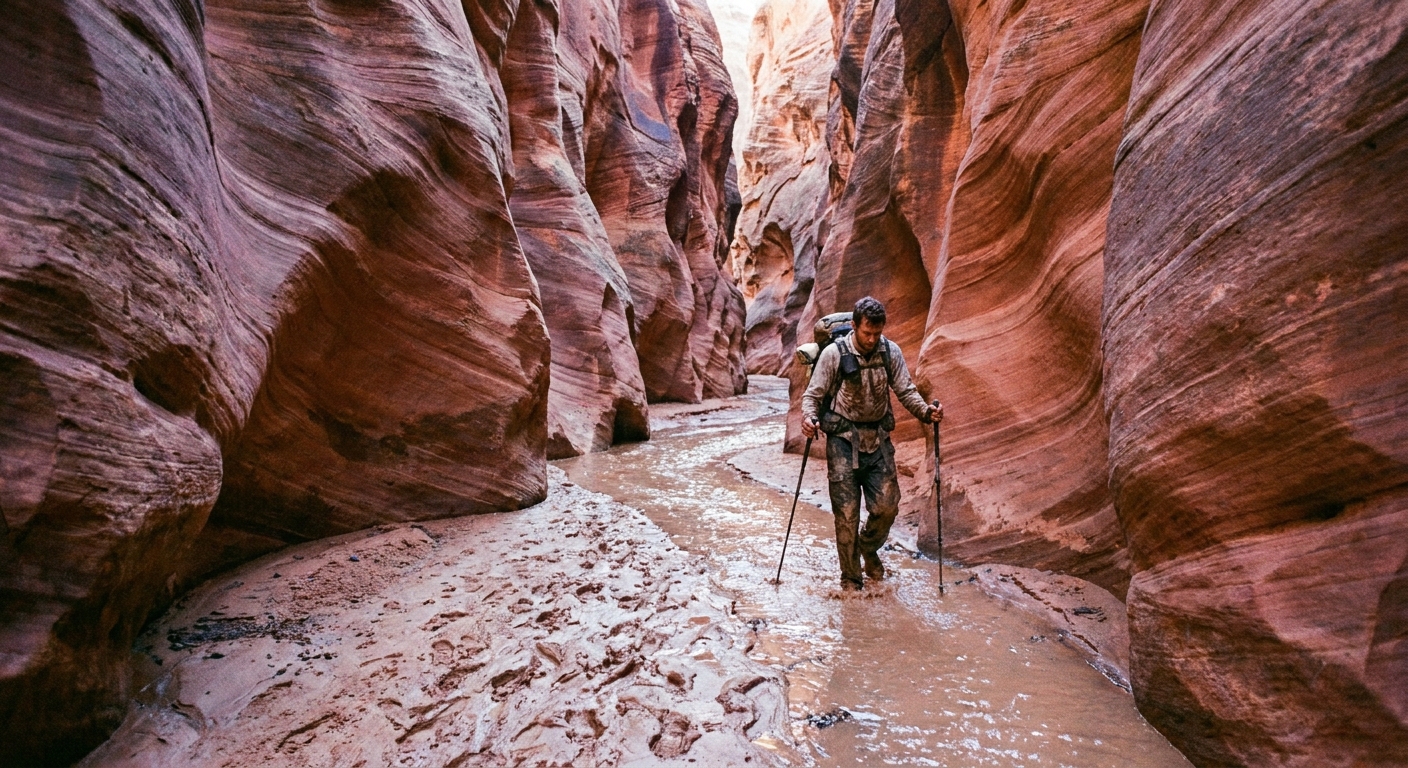
In many years, Buckskin’s wading becomes more consistent the farther you go. If you notice water becoming continuous, deeper, colder, or silty, that is a practical place to call it. Turning around while you are still warm and moving well is smarter than pushing until everyone is tired and then backtracking through cold pools.
Turnaround 3: Time-based commitment line
Best for: strong hikers with an early start, a solid forecast, and comfort with slow terrain.
This one is not a named landmark on purpose. Past the early sections, Buckskin gets more committing and more time-consuming. Set a hard turnaround time on your watch, not “one more bend.” A good rule is to turn around when you have used half of your daylight or when you hit your pre-set time, whichever comes first.
A simple rule I use
If the canyon starts slowing you down more than expected, turn around at the next obvious landmark. Deep slots punish optimism.
Water and wading
Buckskin’s water changes year to year and even week to week. Snowmelt, summer storms, and recent flash floods can leave standing water and mud in the narrowest trenches. Always check recent conditions with local land managers and reputable, date-stamped trip reports.
Spring (March to May)
- Typical feel: cool temperatures and potentially cold water if pools are present.
- Wading expectation: variable, but cold feet and numb legs are common if you hit pools.
- What to pack: wool socks, grippy shoes that can get wet, and an extra warm layer for stops. In colder years, consider neoprene socks.
Early summer (June)
- Typical feel: hot on the approach, cooler in the slot.
- Wading expectation: some years are fairly dry, but do not assume it. After storms, potholes can be deep.
- What to pack: electrolytes, sun protection for the approach, and footwear you can submerge.
Monsoon season (roughly July to September)
- Typical feel: intense heat, then sudden storms that can be far away from you.
- Wading expectation: higher chance of fresh debris, muddy water, and deeper pools after storms.
- Biggest takeaway: this is the season when conservative flood rules matter most. If the forecast is unstable, choose a different hike.
Fall (October to November)
- Typical feel: excellent temperatures, shorter daylight.
- Wading expectation: depends on summer storms. Water can linger into fall and feels colder as temperatures drop.
- What to pack: headlamp, warm layer, and an extra pair of dry socks for the car.
Winter (December to February)
- Typical feel: cold shade in the slot, possible ice.
- Wading expectation: even shallow water becomes serious in freezing temps.
- Proceed only if: you have the skills and gear to manage cold, slick surfaces, and short daylight. Neoprene socks or booties can be a game-changer, and some parties bring a wetsuit in very cold, wet conditions.
Flash-flood rules
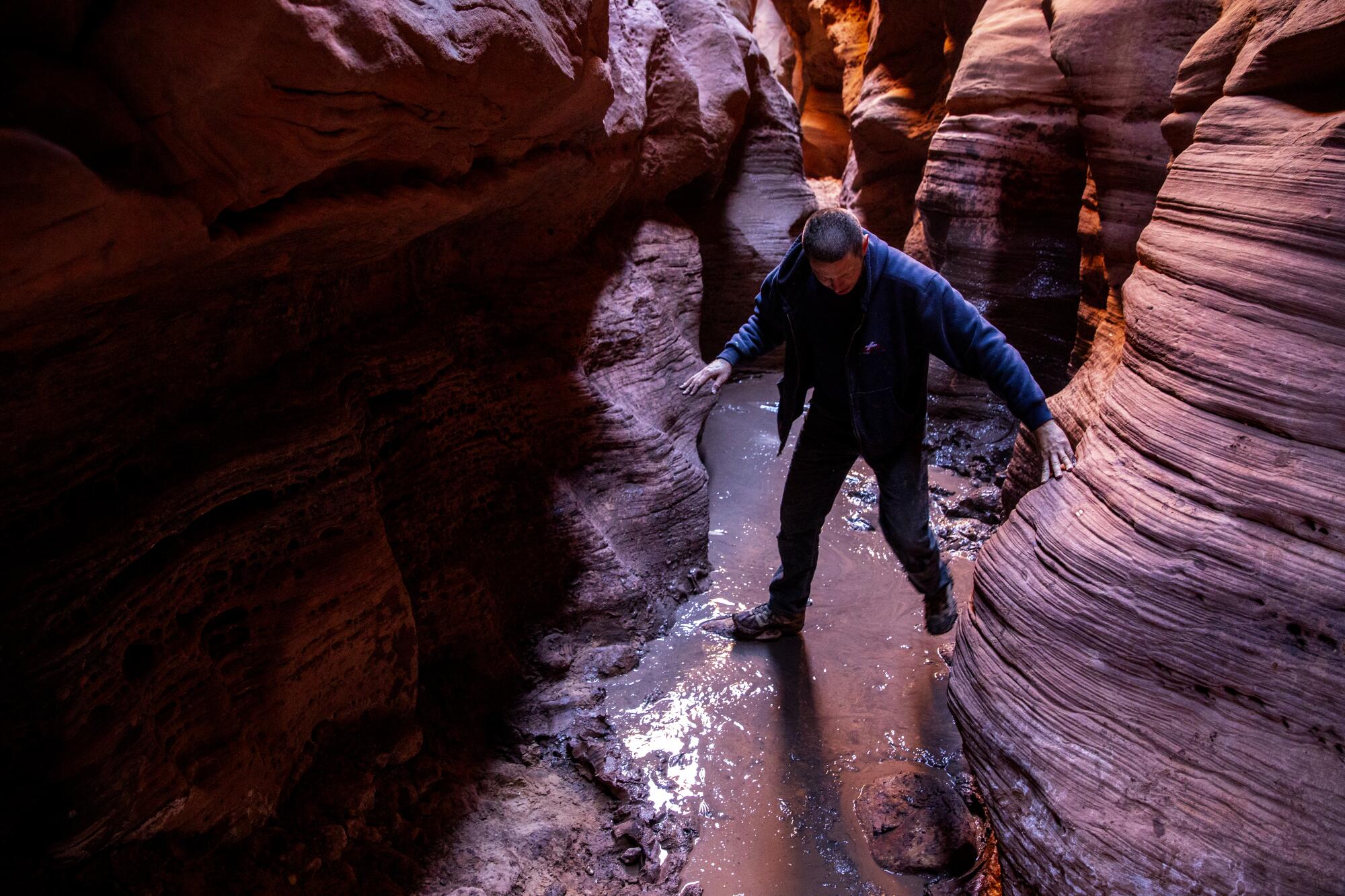
Flash floods are the headline hazard in Wire Pass and Buckskin for a reason. You can have sunshine overhead and still get a wall of water from storms miles away. The narrower the slot, the fewer options you have.
Before you go: check the whole drainage
- Use a forecast that is location-specific for the canyon area, such as a NOAA point forecast, and also scan radar.
- Remember: storms upstream are what matter. “No rain at the trailhead” means nothing if the basin is active.
- If you cannot confidently assess the weather, pick an open-terrain backup hike.
Do not enter if
- Thunderstorms are in the forecast anywhere in the region
- You hear thunder, even if skies are blue overhead
- You see fresh flood debris, heavy mud, or recently scoured sections that suggest recent flow
- The forecast feels uncertain or you do not have enough daylight buffer
If you are already in the canyon
- Turn around immediately if you hear thunder.
- Watch for signals: rising water, water turning muddy, debris, floating sticks, foam, or a new rushing sound.
- If you notice any of these, move toward wider areas and higher ground immediately if possible, and retreat out of the drainage as fast as you safely can.
In Buckskin, being conservative is not being timid. It is being realistic about how little control you have once water starts moving.
What to bring
Footwear and traction
- Closed-toe shoes with grip that you are willing to soak and muddy. Many hikers prefer trail runners.
- Wool or synthetic socks. Cotton is a fast track to blisters when wet.
- Trekking poles help in slippery mud and surprise drop-offs in pools.
Water and food
- Carry more drinking water than you think, especially in warm months. The slot stays cool, but the approach bakes.
- Do not plan to drink canyon water. It is often silty and unreliable, and filtering can be impractical.
- Salty snacks and a real lunch if you are aiming for a longer turnaround.
Navigation and lighting
- Offline map downloaded to your phone. The route is straightforward, but batteries die and people get turned around in drainages.
- Headlamp even for day hikes. Slots get dark early and delays are common.
Protection and basics
- Sun protection for the approach: hat, sunscreen, sunglasses.
- Small first-aid kit and blister care.
- Dry bag or zip bag for phone and keys, because wading is not always optional.
Human waste
Bring WAG bags and pack out solid waste. In narrow slot corridors, digging a proper cathole is often impractical and impacts pile up fast. For overnighters, packing out waste is required. For day hikers, it is the responsible move.
Dogs
Dogs are generally allowed with an additional fee, but whether you should bring one is a separate question. The Wire Pass dryfall is the big issue: it often requires lowering and lifting your dog. If you bring a dog, plan for a lifting harness and be honest about your ability to manage the obstacle safely both directions.
Also consider what Buckskin can do to a dog on a bad day: cold pools, deep mud, and sharp energy drain. If conditions are wet or the forecast is anything but stable, leaving pets at home is the conservative call.
Common mistakes
- Underestimating mud. Mud can slow you to a crawl and make every step cost energy.
- Entering with an iffy forecast. The slot does not reward maybe.
- Turning around too late. The hike back is the same distance, and often slower because you are tired and wet.
- Bringing sandals. Open toes and ankle-deep suction mud are a bad combo.
- Forgetting a headlamp. Even confident hikers misjudge time in narrow terrain.
Build your plan
Step 1: Pick a conservative target
Choose Turnaround 1 or Turnaround 2 unless you have a stable forecast, an early start, and a strong group.
Step 2: Set a turnaround time
Decide a time you will turn around no matter what. For example: “We turn at 11:00 a.m.” This removes the most common trap in Buckskin: chasing the next bend.
Step 3: Define exit triggers
- Thunder anywhere
- Rain you can see in the distance
- Rapidly rising, muddy, or debris-filled water
- Anyone getting cold, limping, or anxious in the slot
Step 4: Leave room for the road
House Rock Valley Road can become slow after weather. Keep extra time in your day so the drive out does not become a stressful rush.
Ethics
Buckskin and Wire Pass see heavy use, and the environment is fragile. Stay on durable surfaces where possible, pack out all trash including food scraps, and avoid marking walls or stacking rocks. If you must step around puddles, do it carefully and minimize widening social trails.
And one more small thing that matters: take your time in the easy sections so you do not feel pressured in the hard ones. In slots, calm pacing is safety.