Camelback Mountain: Echo Canyon vs Cholla Trail
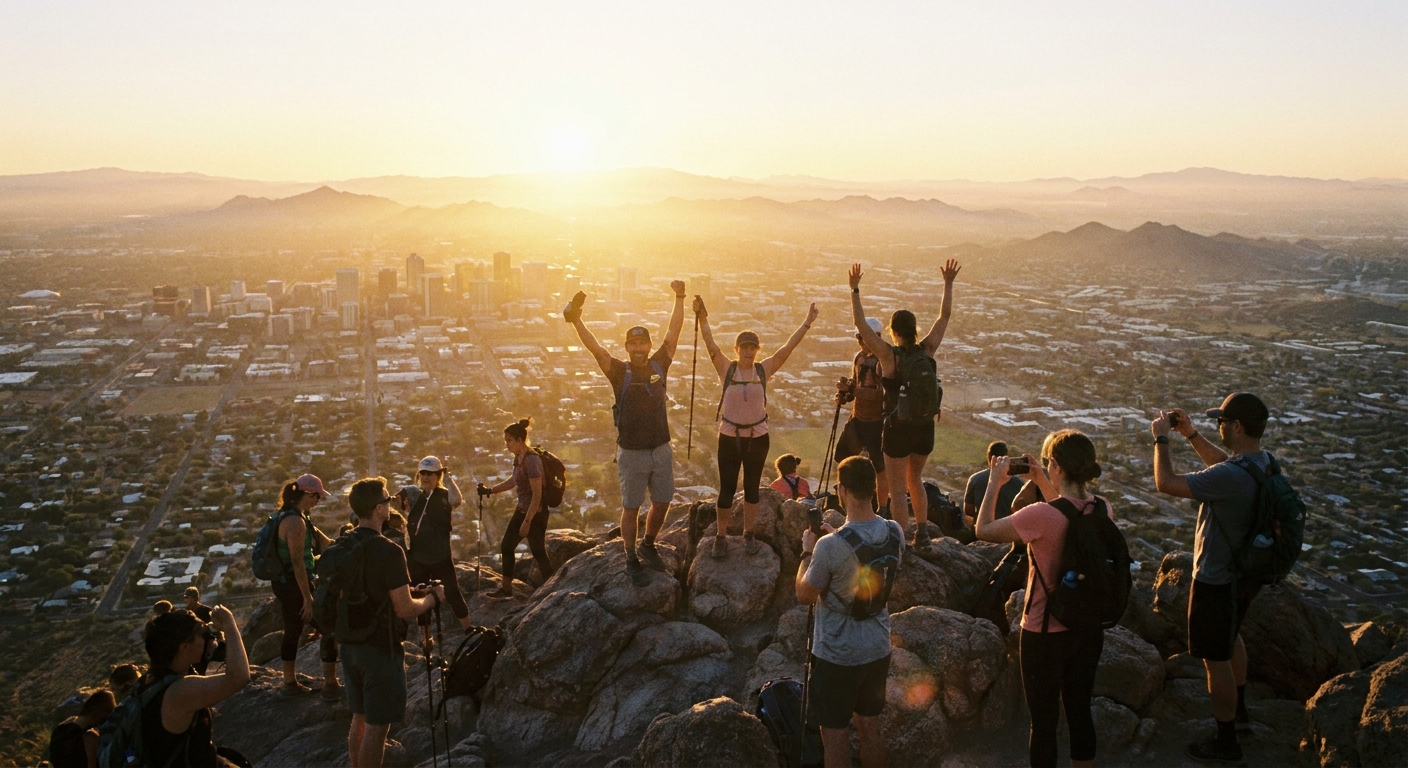
Camelback Mountain is the hike Phoenix visitors love to brag about and locals love to warn you about. It is short, steep, and in the sun. The good news is you get options. The two main routes to the summit are Echo Canyon and Cholla, and they feel like two different personalities of the same mountain.
If you want the fastest, most direct climb with more “help” in the tough spots, Echo Canyon is your lane. If you want a slightly longer, more gradual grind with more exposure and fewer built-in handholds, Cholla is usually the better fit. Below is a practical, visitor-friendly breakdown of what each trail really feels like, plus the stuff nobody wants to think about until they are halfway up: parking, rules, dehydration, and when to turn around.

At a glance: which trail should you pick?
Quick stats (one-way)
- Echo Canyon: about 1.2 miles, about 1,400 feet of gain
- Cholla: about 1.3 to 1.5 miles, about 1,300 to 1,400 feet of gain
Reality check: the “miles” are not the story here. The steepness and scrambling are. Also, exact numbers vary by source and GPS track, so treat these as approximations (AllTrails and City of Phoenix info may differ slightly).
Pick Echo Canyon if you want
- Steeper and faster with a more “vertical” feel
- More built infrastructure in crux spots (railings and fixed aids in sections)
- A big, social energy where you are rarely alone
- Clear line-finding thanks to heavy use and obvious worn path
Pick Cholla if you want
- Slightly longer and often a touch less punishing on the way up
- More exposure and hands-on scrambling without as many railings
- A more “hiker” vibe and a longer continuous climb
- Potentially easier parking depending on when you arrive and where you stage
My honest rule: If you are nervous about scrambling, go Echo. If you are confident on your feet but dislike crowded choke points, consider Cholla.
Ascent feel: steepness and rhythm
Both trails are short enough to tempt underprepared visitors, and steep enough to punish them for it. Here is how the climbs typically feel, ranked by “how quickly you get cooked.”
1) Echo Canyon: steepest, most compressed effort
Echo is the “stairmaster with boulders” route. You gain elevation quickly, with multiple sections where you are using hands, stepping up rock ledges, and waiting your turn at chokepoints. The payoff is that it is direct and the route is obvious.
- Effort pattern: intense bursts, micro-rests, repeat
- Terrain: rocky trail into scramble zones
- Common surprise: the descent feels harder than the climb for many people
2) Cholla: longer grind, fewer stop-and-go bottlenecks
Cholla usually feels more like a continuous climb. It still has scrambling and steep pitches, but the effort is spread out over a longer distance. Many visitors find it more manageable mentally because it is less “straight up right now,” even though it is still a serious hike.
- Effort pattern: steady climbing with a few crux moves
- Terrain: rock, loose footing, and exposed edges in places
- Common surprise: exposure can feel more intimidating than Echo’s rail-aided scrambles
Time reality check: Many visitors take about 2 to 3 hours round trip, and some take longer, especially with heat, traffic, and careful foot placement. Build in extra time if you want sunrise and expect crowds.
Railings vs exposure: crux spots
“Technical” on Camelback does not mean ropes and harnesses. It means steep rock, slick dust on stone, and places where a stumble has consequences. The difference is how each trail manages that risk.
Echo Canyon: more aids, more crowding
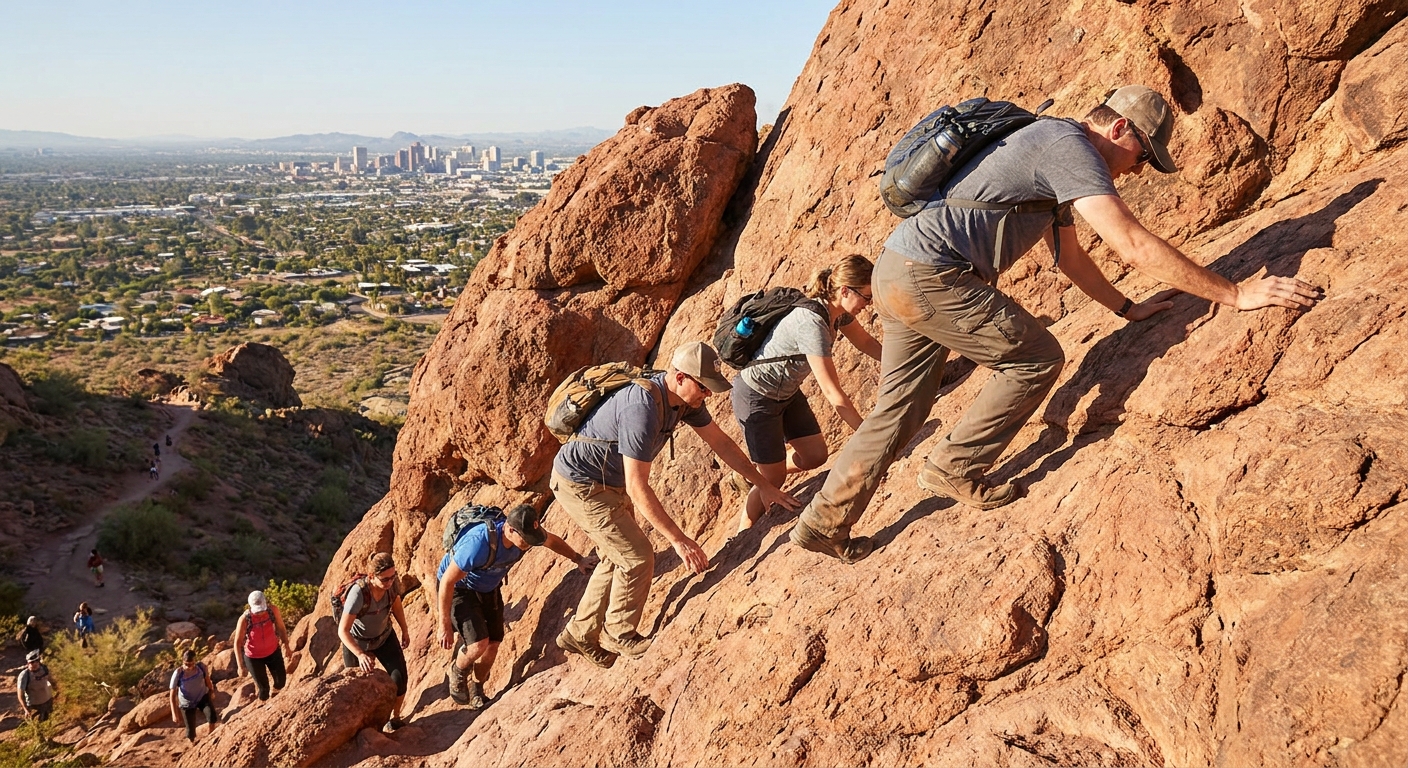
Echo’s signature is its assisted sections. You will find railings and fixed features in parts of the steeper scrambles. That can boost confidence for first-timers, but it also concentrates people into the same narrow moves.
- Pros: handholds and railings can reduce panic, clearer path, easier to coach a nervous friend
- Cons: waiting lines at narrow points, more temptation to push past your comfort zone because it “looks doable”
Cholla: fewer aids, more exposure
Cholla’s crux moments often feel more exposed because you are relying on your own balance and route choice. The trail can feel narrower in spots and the drop-offs feel more present. If you have a strong head for heights, it is thrilling. If you do not, it can be mentally exhausting.
- Pros: fewer bottlenecks, a more classic scramble vibe
- Cons: exposure can spike stress, loose gravel can make footing sketchy
Rules and closures
In most seasons, you generally do not need a permit to day hike Camelback. The bigger “gotchas” are operational rules and closures that change with weather, heat, or maintenance.
- Check same-day trail status: City of Phoenix parks can close trails for extreme heat, storms, maintenance, or rescue activity. Check the official City of Phoenix Parks and Recreation page for the latest updates before you go.
- Hours matter: trailheads have posted hours and can be closed outside those times. Do not assume you can start in the dark whenever you want.
- Dogs are not allowed: dogs are prohibited on Camelback Mountain year-round. Rules can change citywide, so confirm on the official page, but do not plan on bringing a dog here.
Visitor tip: If you are planning a sunrise hike, confirm what time the trailhead access opens and have a backup plan for where you will park legally if the main lot is full.
Sunrise parking: how to start
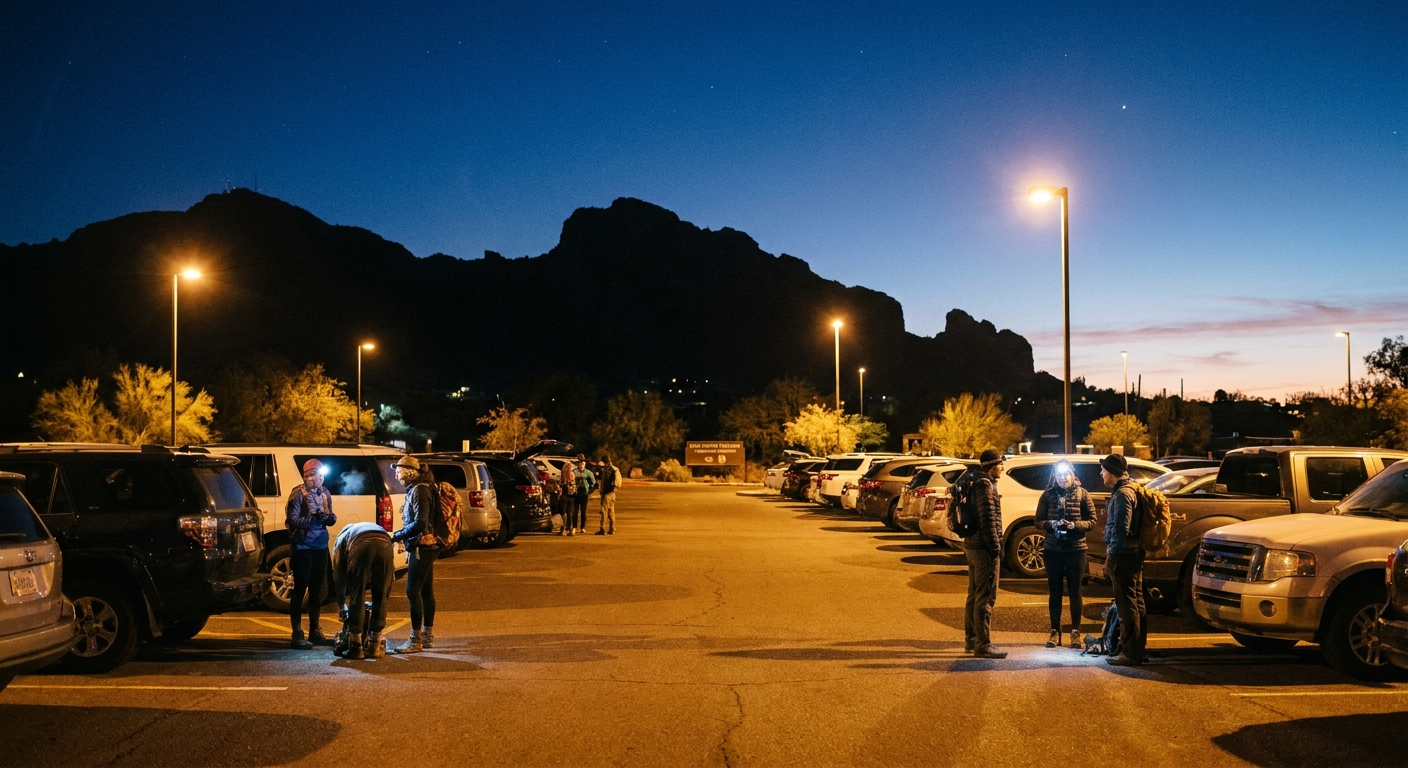
Camelback is not a “roll up whenever” hike, especially in peak season. Sunrise is popular because it is cooler and gorgeous, which also means lots fill early.
Echo Canyon parking
- Gated lot: Echo Canyon has a main trailhead lot with controlled access and posted hours. If you arrive before it opens, you will be waiting or pivoting.
- Expect crowding: Echo is the default route for many visitors, so the lot can fill very early.
- Strategy: arrive earlier than you think you need to. If you are aiming for sunrise on a weekend, treat it like a concert.
- Do not wing it: illegal parking in nearby neighborhoods is aggressively enforced in many areas.
Cholla access and parking
- Neighborhood-adjacent parking: Cholla access often involves street parking near the trail access point. This is where visitors get ticketed or towed if they ignore signage.
- Strategy: read every sign, do not block driveways, and consider ride-share if you are unsure.
If you lose the parking battle: pivot to an early coffee in Scottsdale or Arcadia and come back later only if temperatures are safe for your fitness level. In warm months, “later” can quickly become “do not go.”
Dehydration math in dry air
Phoenix dryness is sneaky. You do not feel sweaty, but you are losing water constantly. On Camelback, that can turn into dizziness or cramps fast, especially if you flew in yesterday, drank alcohol last night, or started the hike already behind.
Before you start: top off
Both main trailheads typically have restrooms and water available. Use them if they are working, but do not rely on fountains being on or functional. Bring what you need from the start.
A simple hydration target
For many hikers, a realistic target is 0.5 to 1 liter of water per hour of hiking in hot, dry conditions. Camelback is short, but most people take longer than planned due to steep terrain and traffic.
- Cooler months, early start: often 1 to 2 liters total per person is reasonable
- Warmer days or midday sun: 2 to 3 liters can be more appropriate
- Electrolytes: bring them. Water alone is not always enough if you are sweating heavily.
Carry-on-only packing note from me: I still bring a real bottle setup here. A single tiny disposable bottle is the classic Camelback mistake.
Quick self-check while hiking
- Headache that grows as you climb
- Muscle cramps or “dead legs” way earlier than expected
- Stopping stops helping, meaning rest does not restore you
- Dry mouth plus irritability, nausea, or chills
Bailout cues: heat trouble
Turning around on Camelback is not quitting. It is good desert decision-making. The mountain will still be there tomorrow, and Phoenix rescue crews are busy enough.
Turn around immediately if you notice
- Lightheadedness that returns quickly after you rest
- Nausea or vomiting
- Confusion, poor coordination, or stumbling
- Goosebumps or chills in the heat
- Hot, flushed skin and a pounding heart that does not settle
On-trail actions that help
- Stop in shade if any exists and cool the body with water on neck and forearms
- Drink slowly, add electrolytes, and eat something simple
- Descend earlier rather than later, because downhill in heat still costs energy
- If someone is worsening, call 911 and stay with them. Share your location (phone GPS), and do not send a struggling person down alone.
Desert reality: If you are debating whether it is “that bad,” it is time to start descending. Most emergencies begin as a stubborn summit attempt.
Descent tips: save your knees
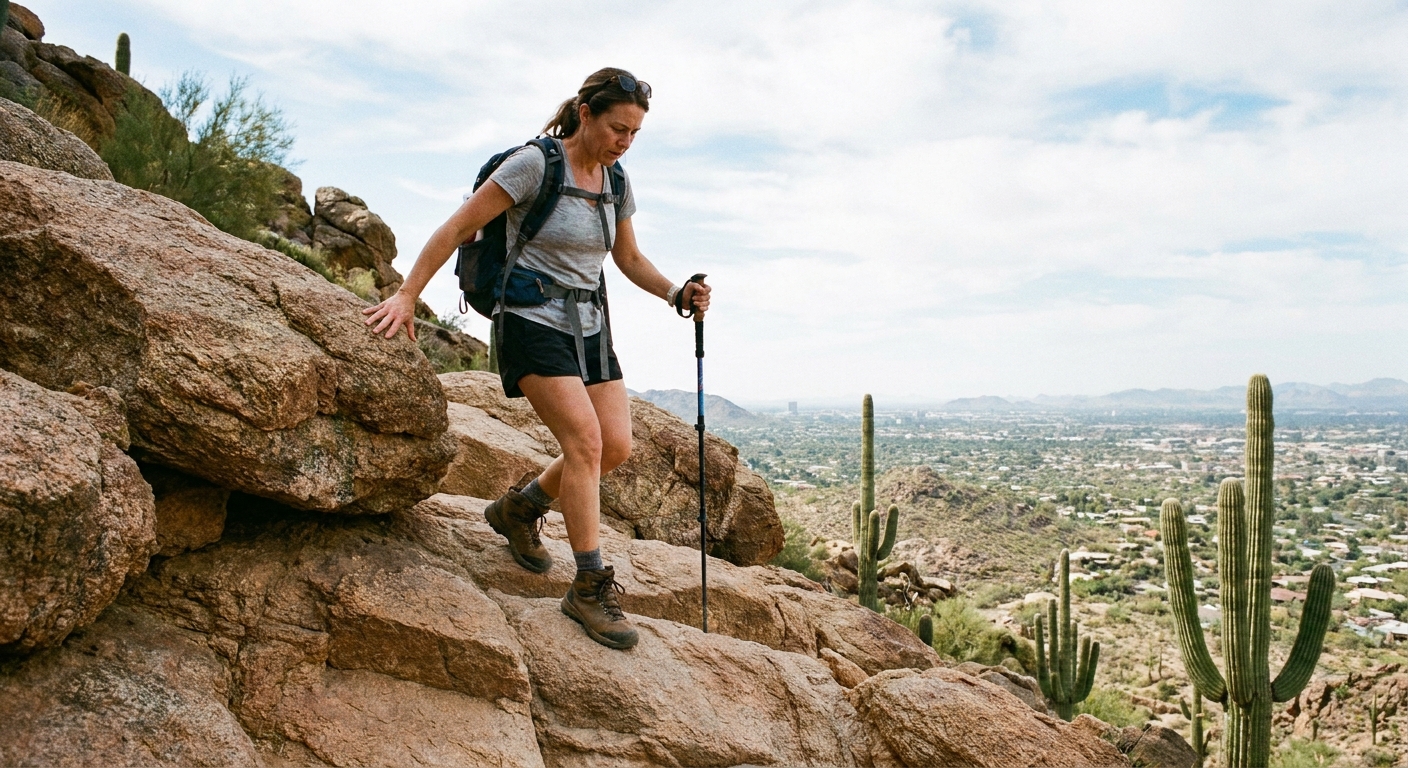
Camelback’s steep descents can torch quads and aggravate knees, especially if you rushed the climb and your legs are already cooked.
Technique that helps
- Short steps: reduce impact by keeping your center of gravity over your feet
- Side-step steep drops: turn your hips slightly and step down like a ladder when it feels safer
- Use your hands: controlled three-point contact beats a hop every time
- Give faster hikers room: stepping aside reduces pressure to move faster than your footing allows
Gear and planning
- Trail shoes with grip beat fashion sneakers on dusty rock
- Thin gloves can be a quiet win on rough rock and rail sections, especially on the descent
- Trekking poles can help on the approach and some descent sections, but you may stow them during scrambles
- Start earlier so you are not descending in peak heat with shaky legs
My call: best pick for visitors
Echo Canyon is often the better first Camelback for visitors who want a classic “I did Camelback” experience, especially if you are uneasy with route-finding or scrambling. The rail-aided cruxes can feel reassuring, and the crowds can provide a weird kind of comfort.
Cholla is a great choice if you want a slightly longer, steadier climb and you are comfortable with exposure and using your hands without relying on railings. It can feel more fluid and less like waiting in line on a staircase of boulders.
A simple decision filter
- If heights make you freeze, choose Echo.
- If crowds stress you out, consider Cholla at an off-peak time.
- If it is hot, choose neither. Pick an early, lower-elevation desert walk and save Camelback for a cooler day.
If you want the best of Trail and Town energy, do this: hike early, hydrate like it is your job, then reward yourself with a slow coffee and a shady patio brunch in Scottsdale or Arcadia. Rugged morning, urban comfort afternoon. Phoenix does that combo beautifully.