Camping at Colchuck Lake: Stuart Zone Sites Before Aasgard

Maya Lin
Maya Lin is a travel journalist and outdoor enthusiast who believes the best trips combine rugged adventures with urban comforts. After spending six years backpacking across four continents, she founded Trail & Town Guide to help fellow travelers navigate both hidden mountain passes and bustling city neighborhoods with confidence.
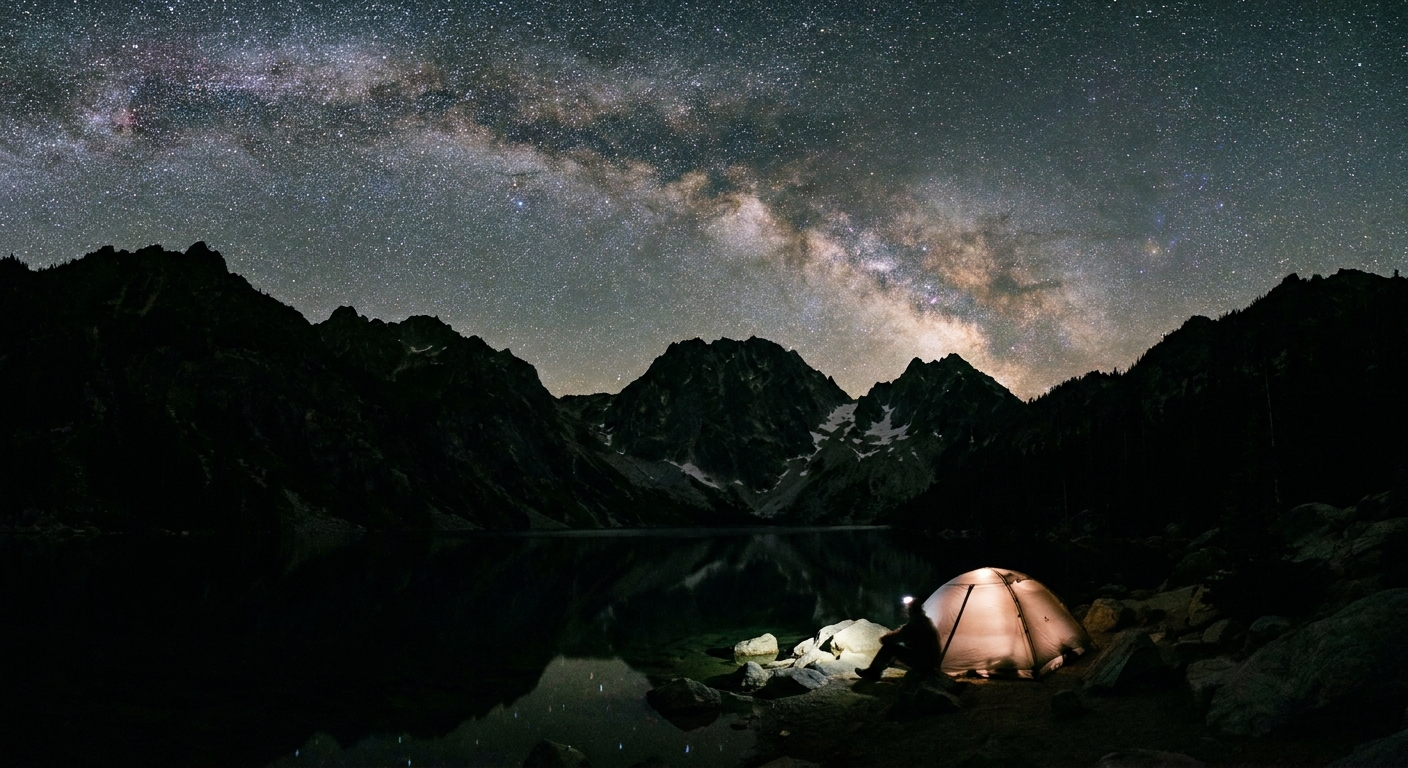
Colchuck Lake has a way of making you feel like you have arrived somewhere grand before you have even started the “real” work. The first time I camped here, I watched alpenglow slide down Dragontail and Colchuck Peak while dinner rehydrated in my mug, then I set an alarm that felt criminally early for a weekend. That is the Colchuck overnight rhythm: a big, beautiful evening reward, followed by a practical, headlamp-heavy morning.
If you are camping at Colchuck Lake specifically to position yourself for Aasgard Pass the next day, this page covers the logistics that matter on the ground: which permit you need for Stuart Zone camping, what the established sites are like, where the toilet usually is, how to store food, what the bugs can do to morale, whether fires are allowed, and why an alpine start helps, even though it does not magically change the character of the upper chute.
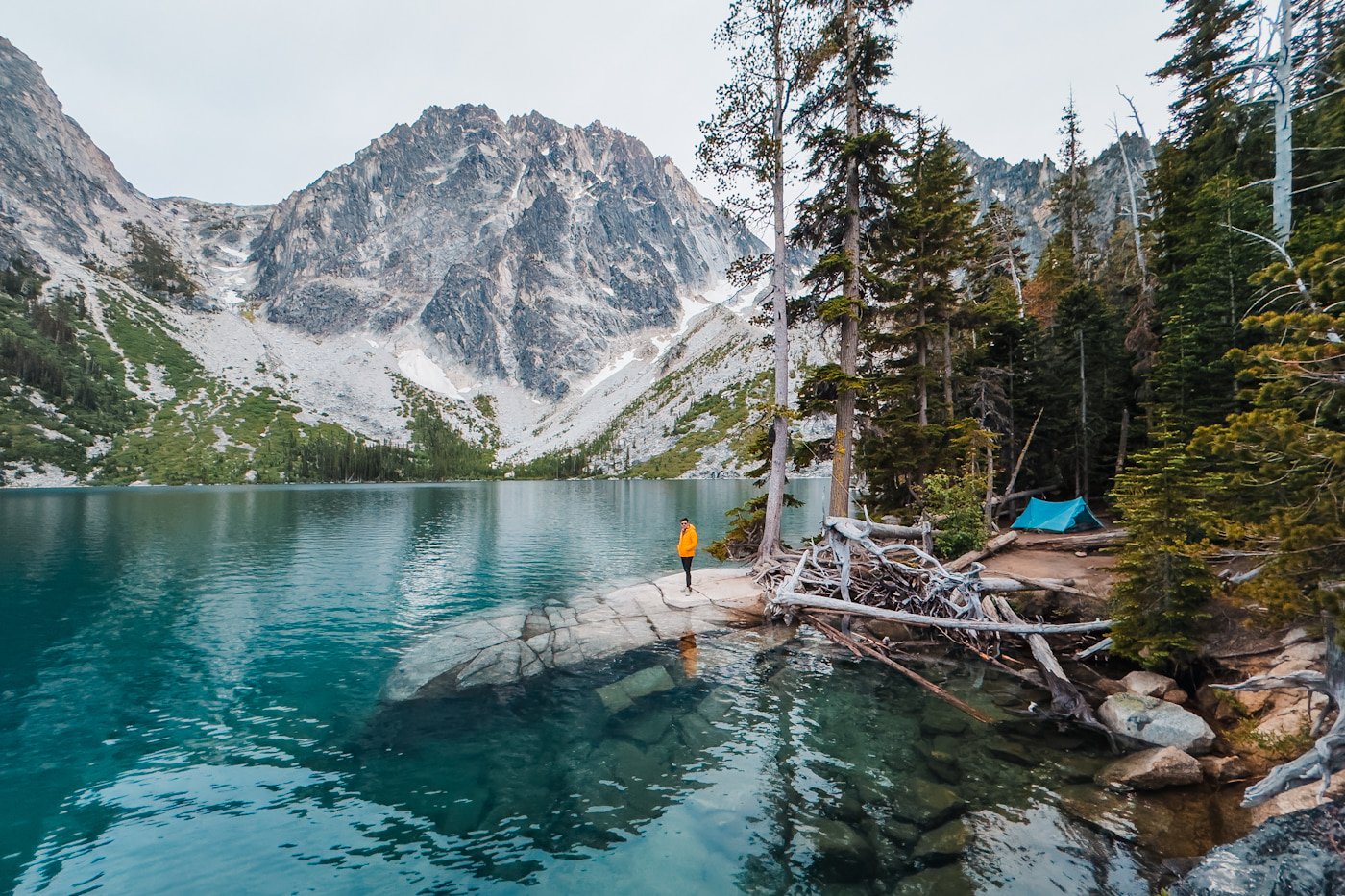
Stuart Zone camping: the permit
To camp at Colchuck Lake, you typically need an Enchantments Wilderness Permit for the Stuart Zone, not a Core Zone permit. Colchuck Lake is outside the Enchantments Core Zone, and overnight use is managed by zone.
Because the permit system and the way zones are listed can change, I always double-check the current setup right before I go. The planning concept stays the same: overnighting at Colchuck Lake is usually a Stuart Zone reservation, and it is one of the most common points of confusion for first-timers.
Key takeaways
- Camping at the lake usually requires a Stuart Zone overnight permit.
- Day hiking to Colchuck Lake does not use the overnight permit. This page is about spending the night.
- Where you camp matters. A Stuart Zone permit is not permission to camp in the Core Zone.
What the campsites are like
Colchuck camping is not a choose-anywhere situation. You will find a set of impacted, well-established sites near the lake, and you will do everyone a favor by using them rather than inventing a new one.
Site feel
Expect campsites that range from sandy to rocky, often bordered by boulders and roots. Many spots fit small to mid-size tents better than sprawling ones. Even when a site looks flat from five steps away, Colchuck is excellent at hiding ankle-tilting lumps. I like to arrive with enough daylight to wander for 10 extra minutes and choose a spot that does not turn sleep into a slow slide downhill.
Where sites tend to be
Most established camps cluster on durable ground in the trees and boulders near the lake rather than on open, fragile shoreline. If a spot feels like you are basically camping on the beach, it is worth taking another lap. Besides the Leave No Trace angle, camping back a bit also helps with wind, privacy, and midnight foot traffic.
Wind and exposure
Colchuck sits in a dramatic basin and wind can funnel through. Bring stakes that can handle shallow, rocky soil, and be prepared to anchor with rocks when the ground does not cooperate. Nights can feel surprisingly cold even in peak summer, especially if clouds move in.
Water access
You are camping next to your water source, which is a luxury. Still, treat and filter. Cold alpine water can look perfect and still carry the usual backcountry risks.
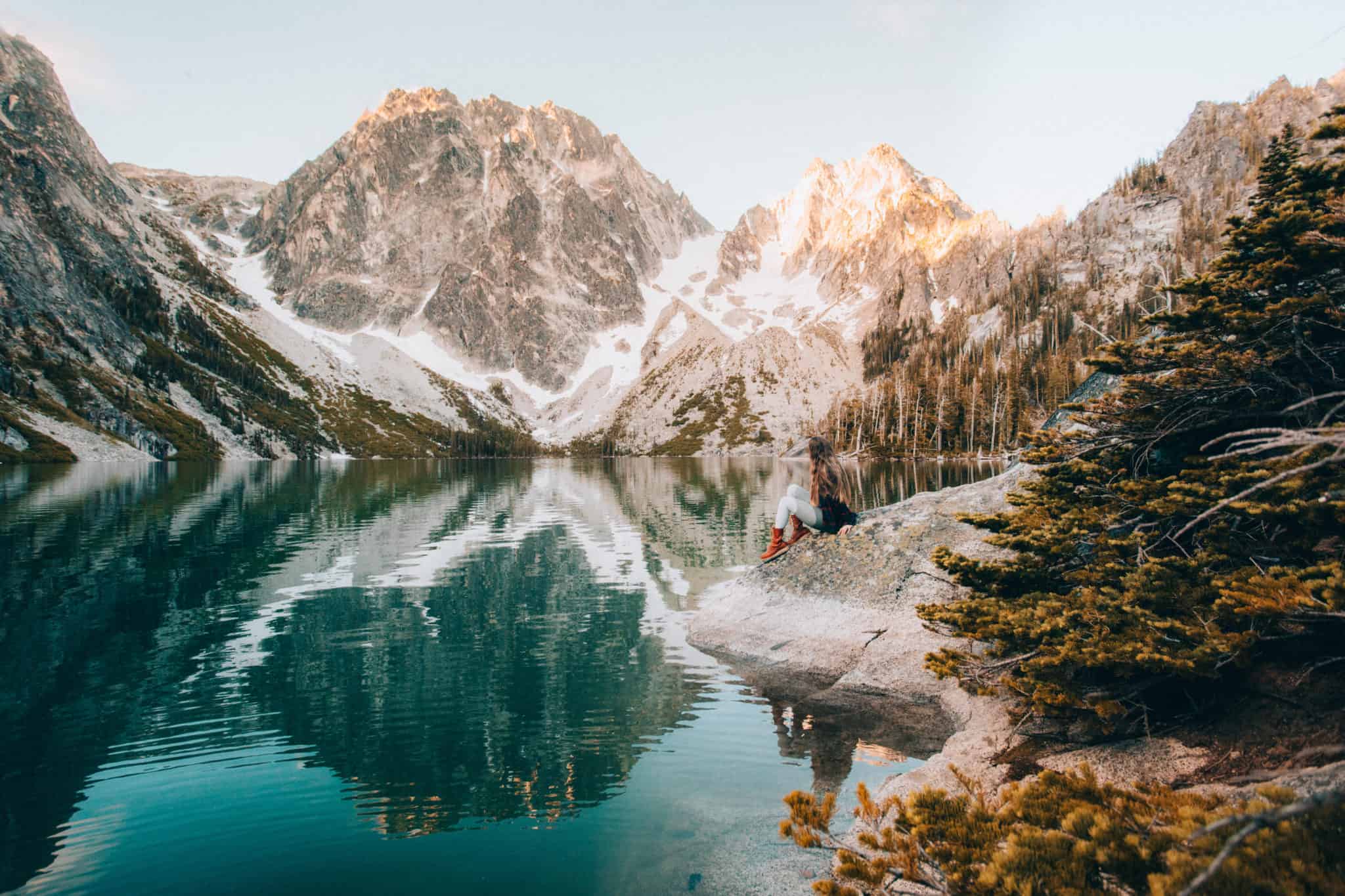
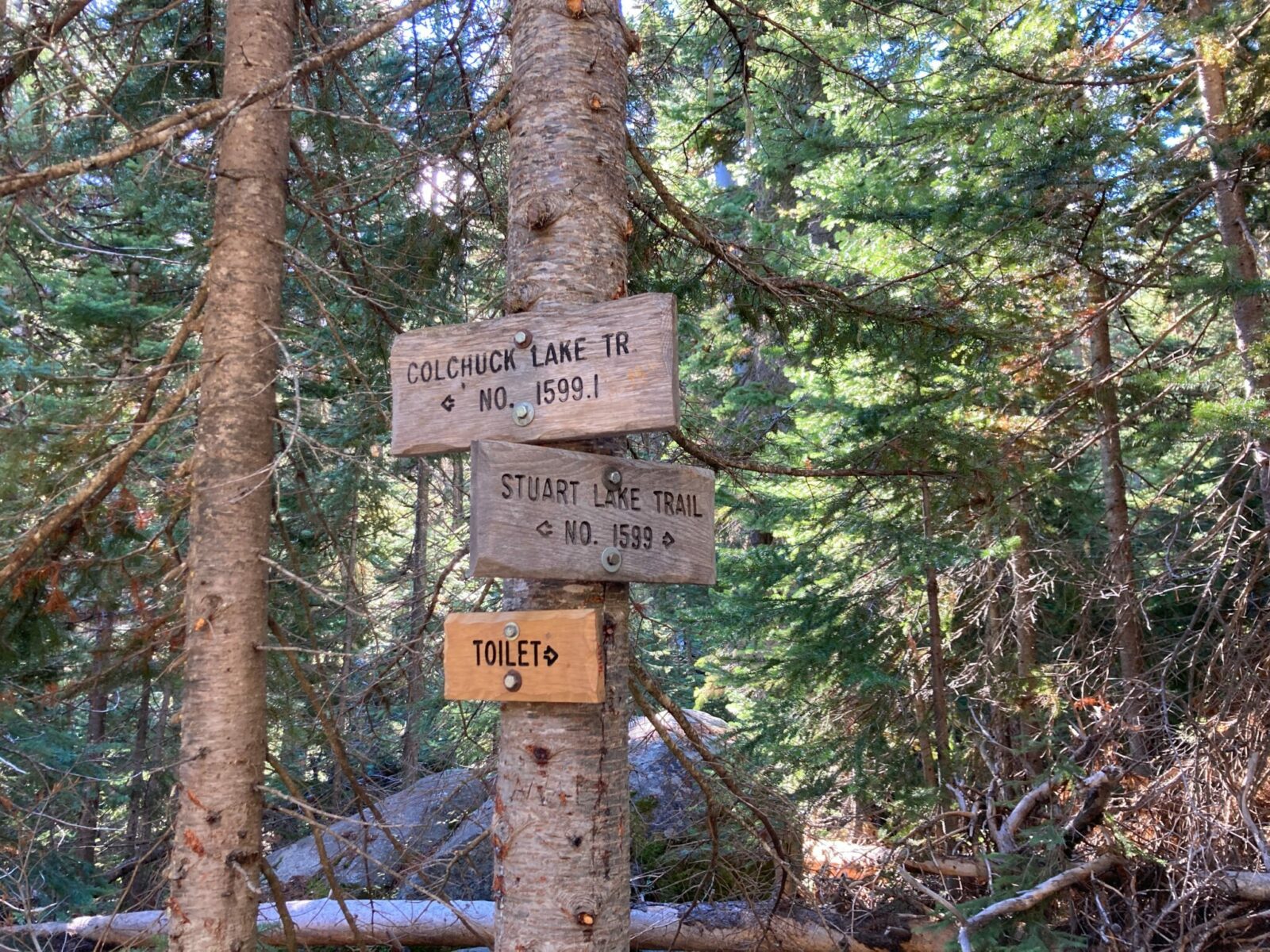
Toilet info
There is typically a backcountry toilet serving the Colchuck Lake camping area, and in peak season it can see a lot of traffic, especially in the evening and in the pre-dawn wave when everyone is trying to get moving.
Practical tips
- Carry your own toilet paper. Do not count on supplies being stocked.
- Bring hand sanitizer. Always.
- Use the toilet, not the woods. This basin gets loved hard, and the difference shows fast.
If you arrive and it is busy, be patient and keep it clean. The best etiquette at Colchuck is the unglamorous kind.
Food storage
Colchuck Lake is classic black bear country, and it is also full of smaller, more persistent thieves. Whether it is a bear, a bold chipmunk, or a mouse with ambition, the result is the same: your trip gets worse fast.
What I recommend
- Plan to be self-sufficient. Do not assume there will be bear wires, lockers, or any other infrastructure waiting for you at camp.
- Use an approved storage method for the area. For many backpackers, the simplest reliable move is a hard-sided canister. If you hang food, do it correctly and only where it is allowed and practical.
- Store everything smelly. Food, trash, toothpaste, sunscreen, and the “it is basically empty” snack wrapper.
- Keep a clean camp. Cook away from your tent when you can, and do not spill ramen perfume all over your sleeping area.
My carry-on-only brain loves a minimal kit, but food storage is where I do not cut corners. A hard-sided canister is not glamorous to lug uphill, but it is a lot more pleasant than waking up to a shredded food bag and a hungry hike out.
Bugs at the lake
Some Colchuck evenings are breezy and bug-free. Others are a mosquito convention with mountain views. The worst stretches are often early to mid-summer as snowmelt creates shallow breeding zones around wet areas, but conditions vary year to year.
My low-drama approach
- Bring a head net if you are mosquito-magnet adjacent (I am).
- Wear long sleeves and pants at camp, especially at dusk.
- Use repellent strategically rather than bathing in it. Apply to cuffs, socks, and hat brim.
- Choose a breezier site if you can. A little airflow can change everything.
If you are trying to sleep with a tent door unzipped for the view, this is your reminder that the view will still be there at 5:00 a.m. and you will like it more after actual rest.
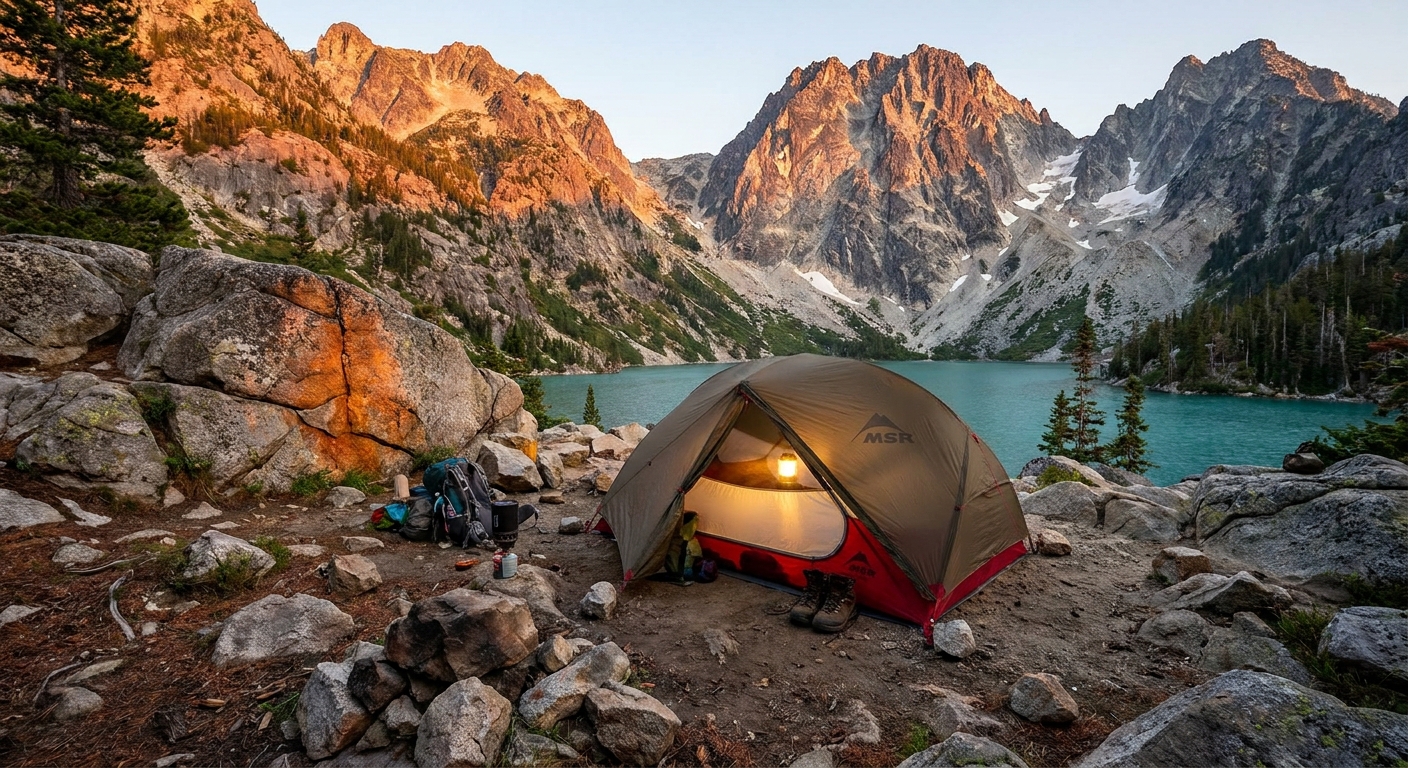
Campfires and stoves
Fire rules in the Enchantments area can be strict, and they can change with conditions. My default assumption at Colchuck is simple: plan on using a stove and skipping a campfire. Even when a fire is technically allowed somewhere in the broader area, it may be prohibited by elevation, seasonal restriction, or a temporary ban.
If you care about a fire for your trip experience, verify the current rules for the Stuart Zone before you go. If you are not 100 percent sure, keep it easy and go stove-only.
Why camping here helps
Camping at Colchuck Lake is the classic move if your goal is to head up toward Aasgard early. Sleeping near the lake gives you a head start on distance and lets you tackle the ascent before the day heats up and before you are sharing every foothold with a long line of hikers.
What camping improves
- Earlier start without the car-to-lake grind. You wake up already in the basin.
- More flexible pacing. You can climb at your pace rather than racing daylight from the trailhead.
- Better margins for weather. Afternoon storms are a real thing in the mountains.
What camping does not change
An overnight at the lake does not change the reality of the route above the lake. The climb still involves steep, loose terrain, route-finding decisions, and real exposure in places. Starting early helps with crowds, temperature, and time, but the chute is still the chute.
If you want the step-by-step route details, keep those in an Aasgard-focused guide. This one stays focused on the Colchuck overnight logistics so you can show up rested, organized, and ready.
Night-before strategy
Colchuck mornings are the definition of “do future you a favor.” Here is what I lay out before I crawl into my sleeping bag.
My camp checklist
- Filter water for dinner, breakfast, and the first stretch of morning hiking.
- Pack your smellables into one bag so food storage is fast and consistent.
- Stage your layers for pre-dawn: puffy, gloves, hat.
- Headlamp check (fresh batteries or a full charge).
- Footwear ready and socks you actually want to hike in, not your “camp socks of optimism.”
- Breakfast you will eat even when you feel sleepy and slightly nauseous from altitude and nerves.
If you are camping with friends, agree on the morning plan before you are all zipped into tents. It is amazing how many groups lose 45 minutes to “so, what time did you mean by early?”
Service and safety basics
Do not count on reliable cell service at the lake. Sometimes you will get a bar in a random spot. Sometimes you will get nothing. Plan like you will be offline, especially if you are coordinating a split group or relying on messages for pickups.
If you are heading up toward Aasgard, the crowd factor is real. Give space between hikers in loose terrain, watch for rockfall, and avoid climbing directly below another group when you can. A little patience here is not just politeness, it is self-preservation.
Leave No Trace
Colchuck Lake is stunning, and it is also heavily impacted. Small choices matter here more than they do on a lesser-known backcountry pond.
- Camp on established sites even if your dream spot is 20 feet away on fragile ground.
- Keep soaps out of the lake. Even biodegradable soap does not belong in the water.
- Pack out all trash, including micro-trash like torn bar corners and tea tags.
- Respect quiet hours. Sound travels across the basin.
The goal is simple: the next person should arrive and feel like they discovered something wild, not like they checked into a crowded outdoor hostel.
Quick FAQ
Can I camp at Colchuck Lake without a Core permit?
Usually, yes. Colchuck Lake is outside the Enchantments Core Zone and is typically permitted under the Stuart Zone. Confirm the current zone listing and season rules when you reserve.
Are there designated campsites?
There are well-established, heavily used sites near the lake. Use those rather than creating new impacted areas.
Is there a toilet at Colchuck Lake?
There is typically a backcountry toilet serving the camping area, but do not treat it like a guaranteed amenity. Bring your own toilet paper and hand sanitizer either way.
Do I need bear spray?
Bear spray is uncommon on this trail. Prioritize solid food storage and clean camp habits, and follow current local guidance and your own comfort level.
Does camping at the lake make Aasgard safer?
Camping helps you start earlier and manage time, heat, and crowds. It does not change the steep, loose nature of the climb above the lake.