Camping in the Core Enchantments

Maya Lin
Maya Lin is a travel journalist and outdoor enthusiast who believes the best trips combine rugged adventures with urban comforts. After spending six years backpacking across four continents, she founded Trail & Town Guide to help fellow travelers navigate both hidden mountain passes and bustling city neighborhoods with confidence.
The first time I slept in the Core Enchantments, I learned two things fast: the alpine glow feels almost unreal, and the goats are not just a cute side character. They are bold, persistent, and incredibly interested in your salty gear. If you have a Core permit and you are wondering what an overnight actually feels like up there, this is the nitty-gritty guide I wish I had the night I watched a mountain goat stroll past my tent like it owned the lease.
This page stays focused on the Core Zone itself: which lakes people base camp near, how toilets work, what goat pressure is like, and the practical rules around food, water, and fires. I am skipping Stuart Zone camping and the permit-versus-day-hike decision here so you can keep this as your playbook.
What “Core Zone” means
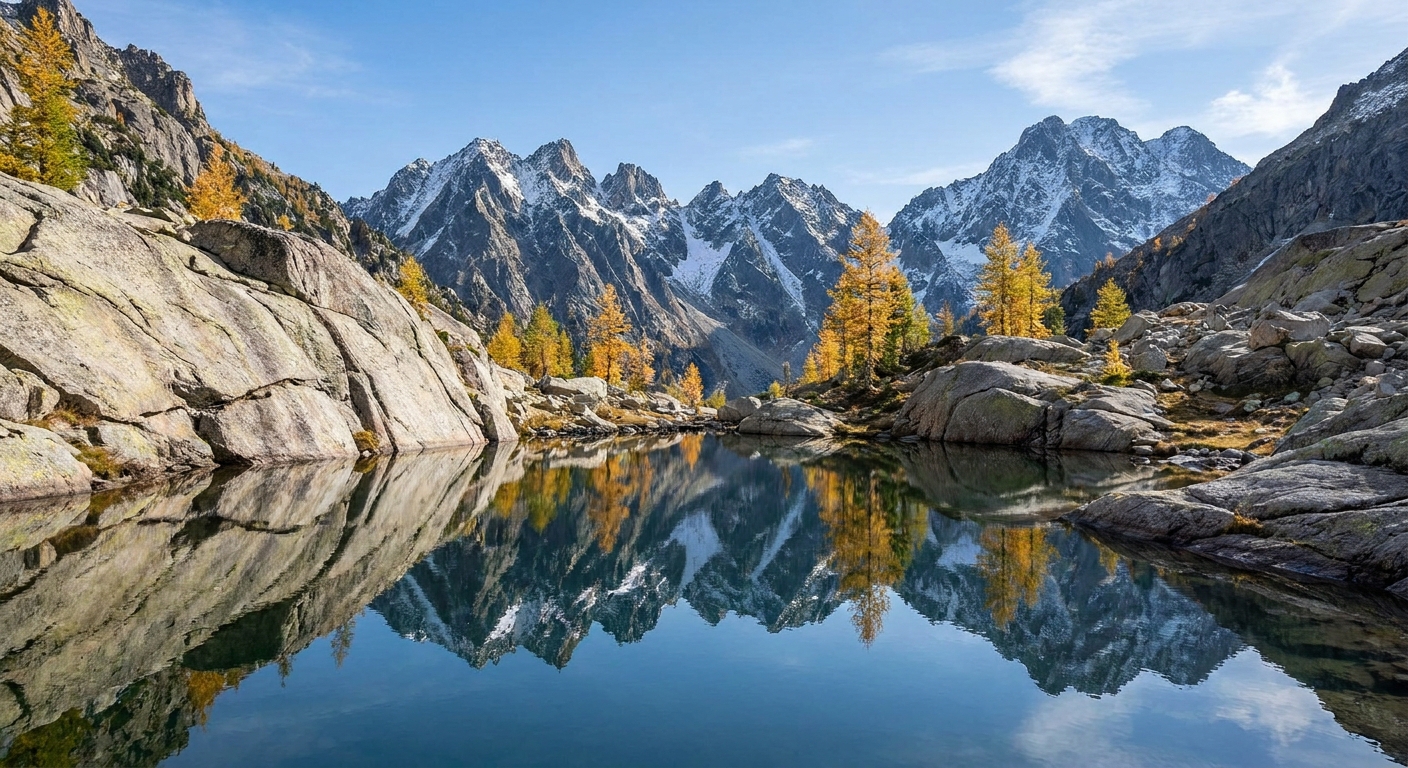
The Core Zone is the high basin of lakes and granite in the heart of the Enchantments, roughly between Aasgard Pass and the Snow Lakes side, including the big-name water features people dream about: Inspiration Lake, Perfection Lake, Leprechaun Lake, Viviane Lake, and the smaller tarns sprinkled between polished rock and larches.
Camping here is not a “pick any flat spot near water” situation. You are expected to use established campsites, camp on durable surfaces, and follow strict human-waste and food-storage rules. Rangers do patrol, and more importantly, the landscape shows impact quickly.
Where people actually camp
There is no single “Core campground.” Think of the basin as a set of clusters. Your goal is to land on an established site that is durable, not right on the shoreline, and not on fragile vegetation. Below are the areas most overnight hikers gravitate toward, plus what to expect from each.
Inspiration Lake
If you want a classic Core Enchantments evening, Inspiration is a common target. It sits centrally, with easy wandering access to nearby slabs and views. Because of that, it also tends to feel busier and more “social,” especially in peak season.
- Why camp here: Central location for day roaming, iconic scenery, good sunrise and sunset angles.
- Tradeoffs: Higher foot traffic, more goat pressure, and more competition for established sites.
Perfection Lake
Perfection is another prime base for Core overnights, with that polished granite and larch vibe that makes you forget you carried a pack up Aasgard. It is gorgeous, but it is also popular, and campsites can feel exposed to wind depending on where you land.
- Why camp here: Big views, quick access to ridge wandering and lake hopping.
- Tradeoffs: Crowds and goats. Assume goats will patrol your area.
Viviane Lake
Viviane sits a bit above and away from the central “lake-hop highway,” and it can feel slightly quieter. It is also a common zone for scramblers and photographers because the granite here is dramatic and the sunset light can be unreal.
- Why camp here: Slightly removed feel, striking granite, good launch point for exploring.
- Tradeoffs: Less “flat” real estate, and you will still contend with goats.
Leprechaun Lake and nearby tarns
This area can feel more intimate, with smaller water and a tighter basin vibe. It is a good option if you like wandering between little tarns rather than planting yourself at one of the headline lakes.
- Why camp here: Beautiful micro-scenery, easy exploring, less of a crossroads than Inspiration.
- Tradeoffs: Sites can be more limited, and the terrain is rock-heavy. Good camp shoes matter.
Upper Snow Lakes side
Some Core itineraries trend toward the Snow Lakes side, especially if you are exiting that way. These areas can be practical for positioning, but they do not always deliver the same “front row seat” feeling as the central lakes.
- Why camp here: Smart positioning for a Snow Lakes exit, fewer people lingering late.
- Tradeoffs: Depending on where you end up, it can feel like you are already on the move rather than settled in.
Trailhead distances
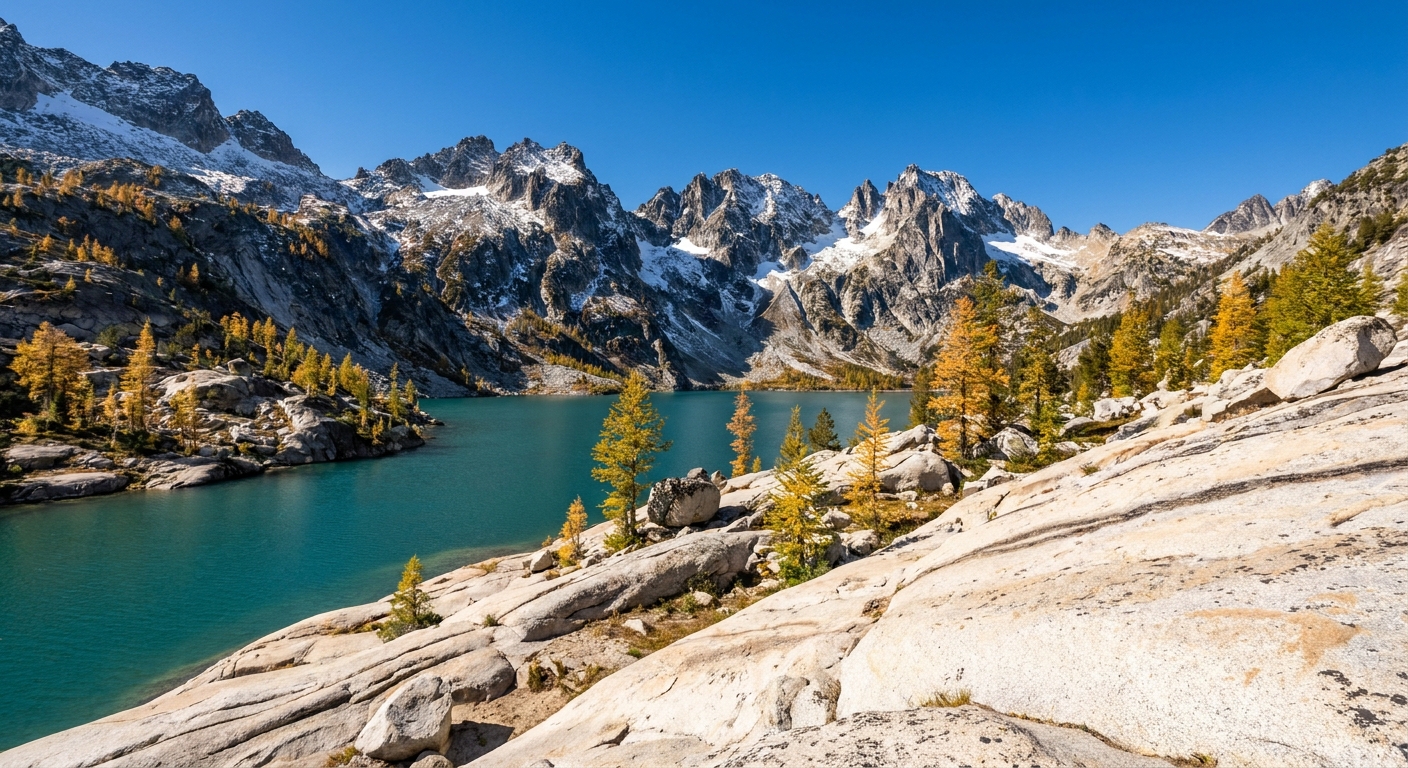
Distances in the Enchantments are famously “map true, body false.” Granite hopping, photo stops, route-finding around slabs, and the simple fact that you will stare at everything can slow your pace. Treat the ranges below as rough planning ballparks, and confirm your exact line with a current map (Green Trails, CalTopo, Gaia, USFS).
Stuart Lake trailhead via Colchuck and Aasgard
- To Colchuck Lake: about 4 miles.
- To the top of Aasgard Pass: roughly 7 to 8.5 miles total, depending on where you start counting around Colchuck and what you call “the top.” Elevation gain is substantial and continuous.
- To Inspiration or Perfection areas: commonly around 9 to 11 miles total once you drop off Aasgard and start weaving through the basin.
- To Viviane area: often around 10 to 12+ miles total, depending on which lake you hit first and how much slab-wandering happens.
Snow Lakes trailhead
- To the lower edge of the high basin: often around 10 to 12+ miles, with a long, steady climb.
- To Inspiration or Perfection areas: commonly around 12 to 15+ miles depending on your line and side explorations.
Reality check: “Miles” up here do not behave like miles on a mellow forest trail. Plan by time, daylight, and effort, not just a number on a screen.
Campsite rules in practice
The Core is managed tightly because it needs it. In the field, this is what that means:
- Use established campsites. If a spot looks “new,” it probably is, and it is not your job to create another one.
- Stay on durable surfaces. Granite slabs, compacted dirt, and already-impacted pads are your friends. Soft green alpine plants are not.
- Give the lakes a buffer. Even when there is not a posted number in front of you, the enforcement reality and the Leave No Trace reality point the same direction: camp back from shorelines and fragile edges.
- Carry your permit. Rangers do check. I keep mine accessible and treat it like my keys.
If you are unsure whether a site is “in,” look for the telltale signs: a clearly impacted pad, obvious traffic to and from it, and no need to crush new vegetation to make it work. When in doubt, pick the more durable option, even if the view is slightly less cinematic.
Toilets in the Core
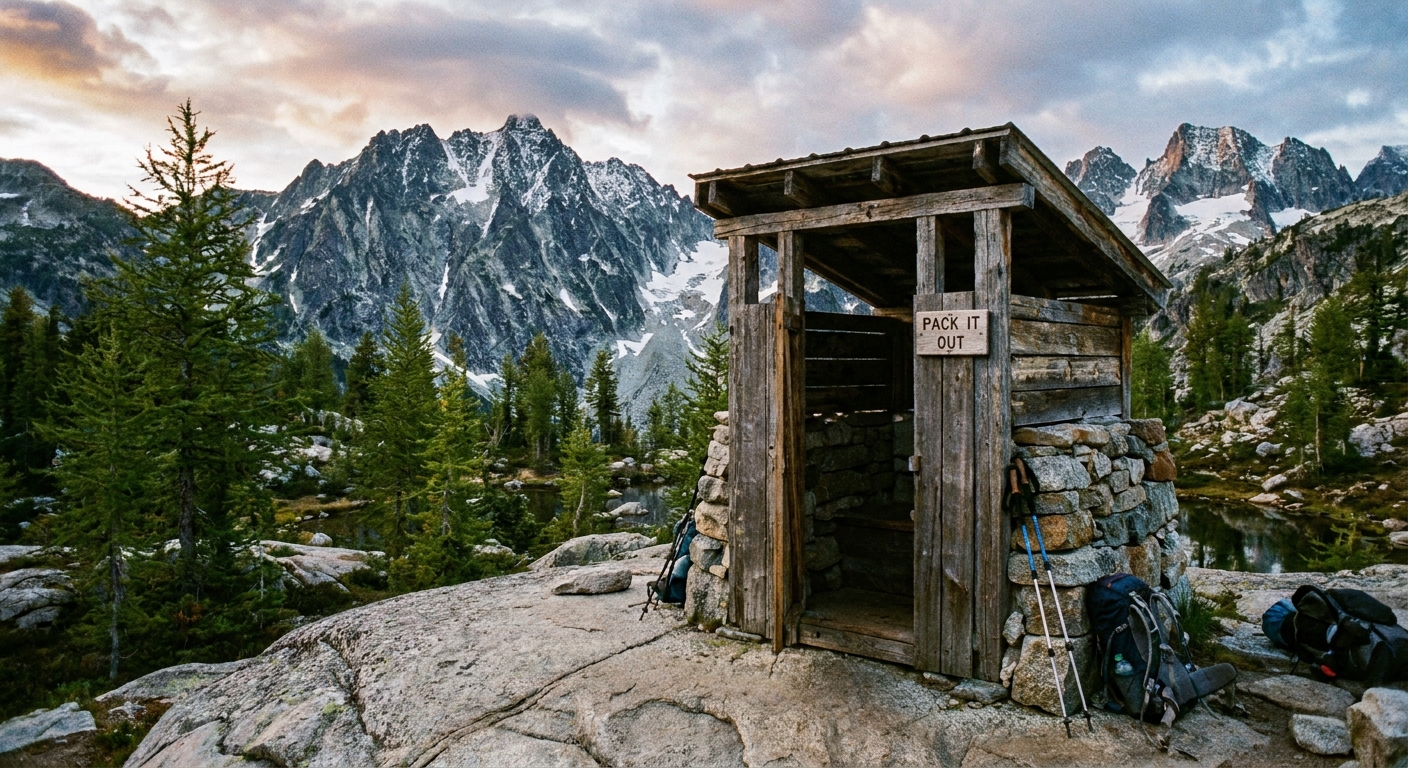
The Core Zone has backcountry toilets in key areas, but do not assume one is right beside your exact camp. Locations and maintenance can change, and “nearby” in slab country can still mean a short wander. They are basic, they can be a lifesaver, and they are a big part of protecting this basin from turning into an impacted mess.
- Bring your own toilet paper and do not assume any will be stocked.
- Follow posted instructions at the toilet. If there is specific guidance on toilet paper disposal, do what it says. If signage is missing or unclear, plan to pack out used paper in a sealed bag rather than guessing.
- Hand hygiene matters. Pack hand sanitizer and actually use it. These are high-use areas.
- Do not “shortcut” with catholes near lakes and camps. In the Core, concentrated use is exactly why toilets exist.
If you arrive and the nearest toilet is farther than you expected, treat that as normal. The best camps are often not right beside the toilet area, and that is intentional for aesthetics, smell, and sanitation.
Goats
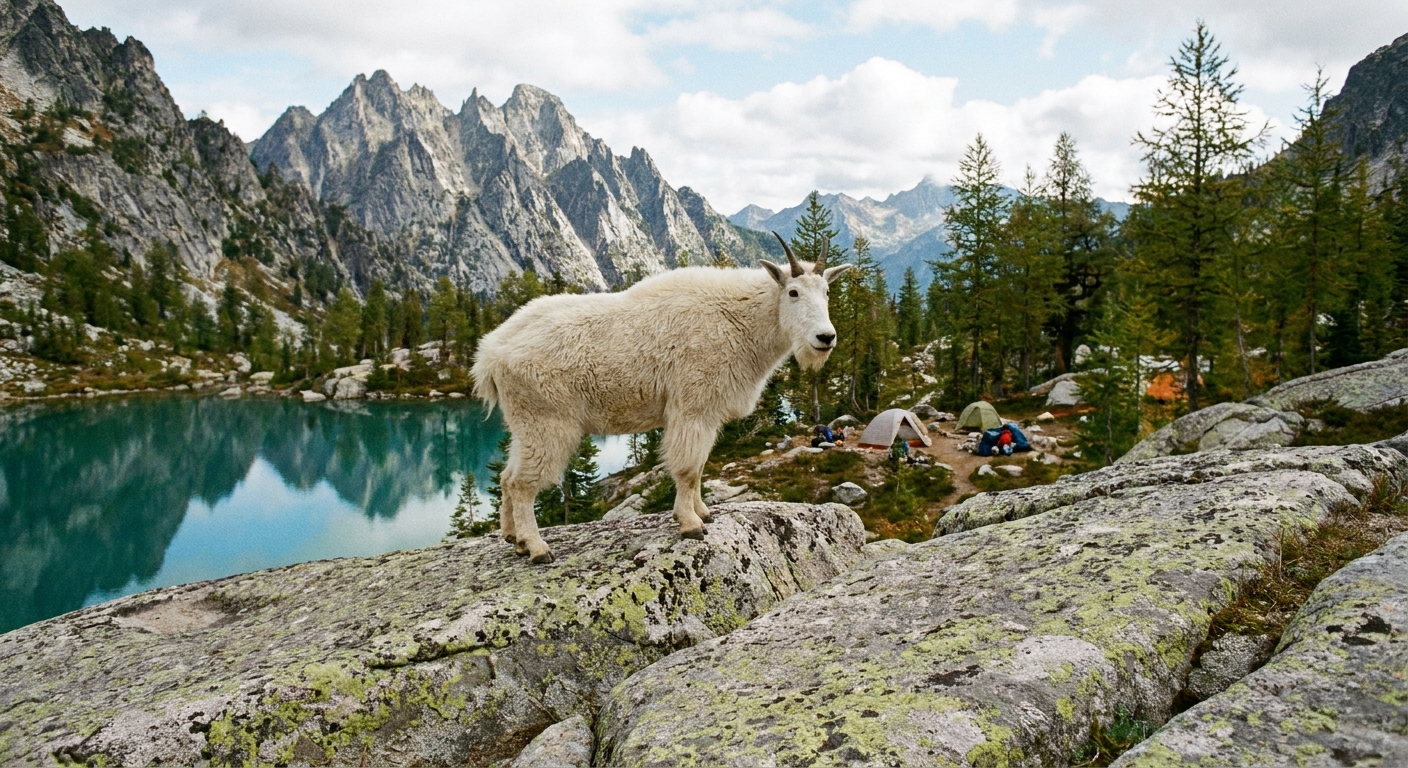
Mountain goats in the Enchantments are famous for seeking salt, and human sweat, urine, and salty gear can train them into bad behavior. In the Core, you should assume you will see goats, and you should plan for them like you plan for weather.
What goats want
- Salt. Sweat-soaked shoulder straps, hat bands, socks, sports drink residue, and yes, places where people pee.
- Curiosity. Goats will wander through camp to investigate anything that smells interesting.
How to keep goats from wrecking your night
- Do not pee on trails, campsites, or near lakes. Go on durable surfaces well away from camp and water, and do not create a “goat lick” right beside your tent.
- Store sweaty items like food. If it smells salty, it belongs secured. Do not leave trekking pole grips, packs, or shirts out unattended.
- Give goats space. Do not corner them. If one approaches camp, group up, hold your ground, and shoo it away firmly without getting close.
- Keep a clean camp. Spilled ramen water on granite is basically a dinner bell.
Etiquette that helps everyone
The Core is small, and habits spread fast. When one person pees right next to camp or leaves sweaty gear on a rock, goats learn that camp equals salt. The best thing you can do for future hikers is to be relentlessly boring to goats.
Food storage
Even if goats are the nightly nuisance, food storage still matters for the full cast of critters: rodents, birds, and opportunistic mammals. In the Core, the on-the-ground reality is simple: hanging food is usually a fantasy. There are not many hang-worthy trees where you actually camp, and most of the basin is granite, scrub, and larch spacing that does not cooperate.
- Check the current Okanogan-Wenatchee National Forest Enchantments regulations before you go. Rules can change, and the managing agency is the source of truth for what is required in the permit area right now.
- Plan on a hard-sided canister. Required or not on your exact dates, a bear canister is the least stressful way to keep food and scented items secure in this terrain.
- Store all scented items together. Food, trash, toiletries, sunscreen, toothpaste, and lip balm all count in my book.
- Do not stash food “nearby.” Nearby is exactly where a goat will go first.
- Pack out all trash, including micro-trash. Corners of ramen packets, tea bag strings, and candy wrappers are the stuff that ends up in rocks and water.
I also treat anything salty as “food” here. That includes the sweaty stuff you might normally drape over a rock at dinner.
Fires
Campfires are prohibited year-round in the Enchantments permit area, including the Core Zone. Plan on a stove for all cooking and go in with a no-fire mindset from the start.
Because “fire” rules can include more than just classic campfires, I also verify stove guidance on the current Okanogan-Wenatchee National Forest Enchantments regulations page before I leave. My baseline assumption in the Core is simple: bring a standard backpacking stove, skip the romance, keep the basin intact.
If you are the type who loves a little backcountry comfort, this is where urban comfort thinking actually helps: upgrade your hot drink, pack a warmer puffy, and bring a real spoon. You will miss the fire less than you think.
Water
The Core is dotted with lakes and streams, so water access is rarely the limiting factor. The limiting factor is protecting the water quality for everyone and avoiding illness.
- Treat all water with a filter, purifier, or chemical method.
- Collect water away from high-use shorelines when possible, and never wash dishes or yourself directly in a lake.
- Carry water to camp so you are not trampling the same access point repeatedly.
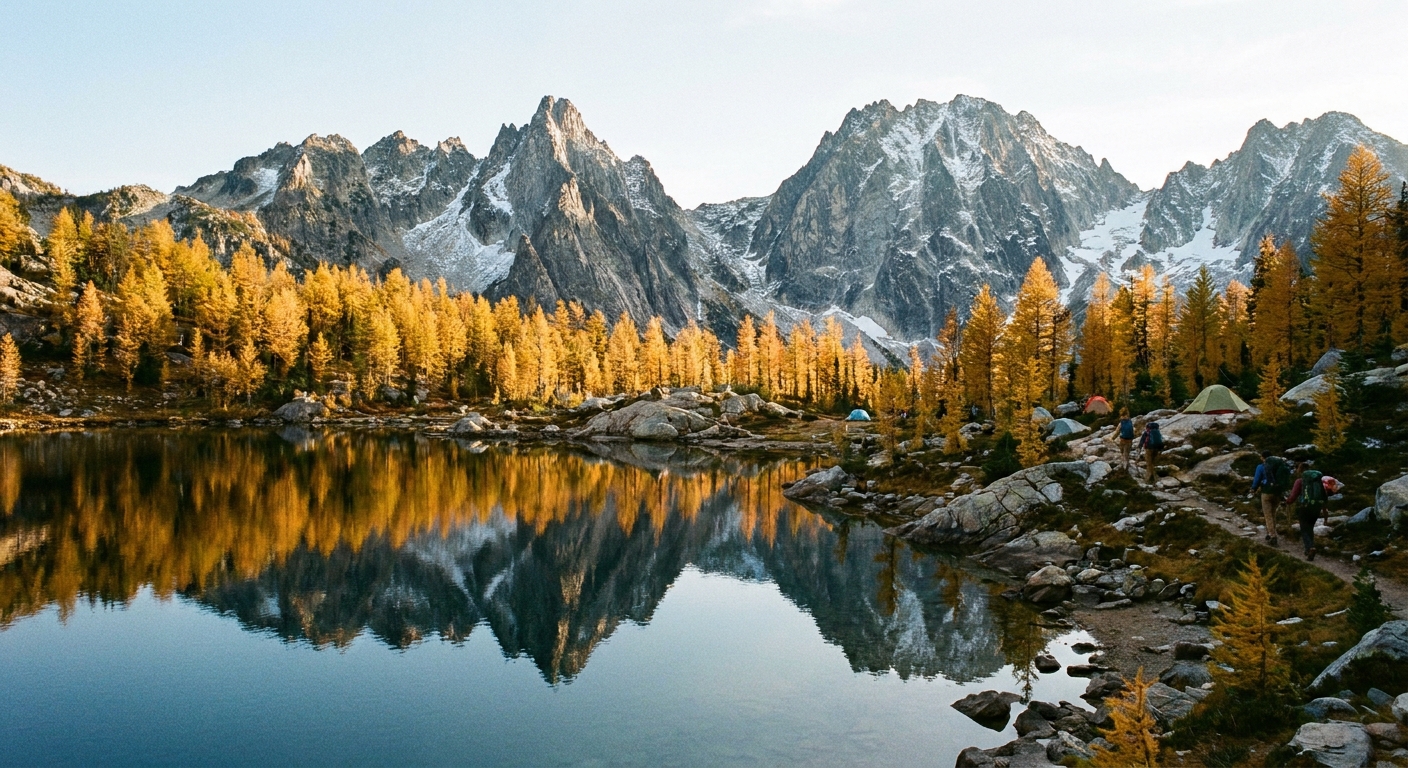
Campsite basics
Core Zone campsites are often a mix of compacted dirt pads, granite slabs, and rocky benches. A few practical notes that make a huge difference at bedtime:
- Expect hard ground. Good stakes help, but some sites require creativity with rocks. Bring a few extra guyline lengths.
- Freestanding tents shine. If you rely on stakes for structure, practice a rock-anchor setup before you go.
- Wind happens. Even on calm afternoons, katabatic winds can slide down at night. Choose a site that feels stable, not just scenic.
- Think runoff. If weather turns, avoid low spots where water could flow across your tent area.
- Stay on durable surfaces. It is tempting to “improve” a site by moving to softer ground. In the Core, that softness is often fragile alpine vegetation.
A simple overnight rhythm
If you want a low-stress Core overnight, here is the routine I stick to:
- Arrive with daylight to spare. Find a legal, durable site and get settled before the golden-hour chaos and evening chill.
- Secure salty gear immediately. Pack, poles, sweaty layers, shoes, and anything that smells like effort.
- Grab water once. Filter enough for dinner, breakfast, and morning coffee so you are not running shoreline laps.
- Use the toilet before dark. Nighttime toilet missions on granite are not my favorite hobby.
- Cook and clean like a minimalist. Less smell, less mess, fewer reasons for animals to investigate.
- Enjoy the best part. The Core at dusk is all soft light, quiet footsteps, and larch silhouettes. Put the phone away for at least ten minutes.
Quick FAQ
Can I camp right next to the water?
In practice, the best and most responsible sites are set back. Aim for established campsites on durable surfaces and avoid fragile shorelines. You will still have lake access for water and views without loving the shoreline to death.
Are goats dangerous?
They are usually not aggressive in a predatory way, but they can be bold, especially around salt. Give them space, do not corner them, and do not let them learn that people equal salt rewards. If one will not leave camp, stay calm, stand together, and shoo it away without approaching.
Do I need to carry extra water?
Usually no, but I like having capacity to carry enough for the evening so I am not repeatedly walking to the same access point. Think “efficient,” not “haul gallons.”
What is the biggest mistake first-timers make?
Leaving gear out. A sweaty pack or shirt on a rock is a goat magnet. The second biggest mistake is arriving late, which leads to poor campsite choices and more impact.
Are dogs allowed?
No. Dogs are prohibited year-round in the Enchantments permit area, including the Core Zone. Leave them at home for this one.
What should I double-check before I go?
Current Okanogan-Wenatchee National Forest Enchantments regulations, food storage requirements, sanitation guidance for toilets and toilet paper, and your route details. I treat those as the “do not wing it” items in the Core.
Core checklist
- Current map and a route you understand (do not rely on vibes between slabs)
- Permit carried and accessible for ranger checks
- Hard-sided bear canister or food storage that matches current Okanogan-Wenatchee National Forest Enchantments regulations
- Toilet kit: toilet paper, sanitizer, and a reliable way to pack out used paper if needed
- Water treatment and a container to carry water away from shore
- Warm layers for long evenings and wind
- A plan for goats: secure sweaty gear, pee away from camp, keep camp boring
- Stove-based meals and a no-fire plan (campfires are prohibited year-round)
- No dogs (they are prohibited year-round in the Enchantments permit area)