Cassidy Arch Trail: Exposure, Heat, and Photo Safety
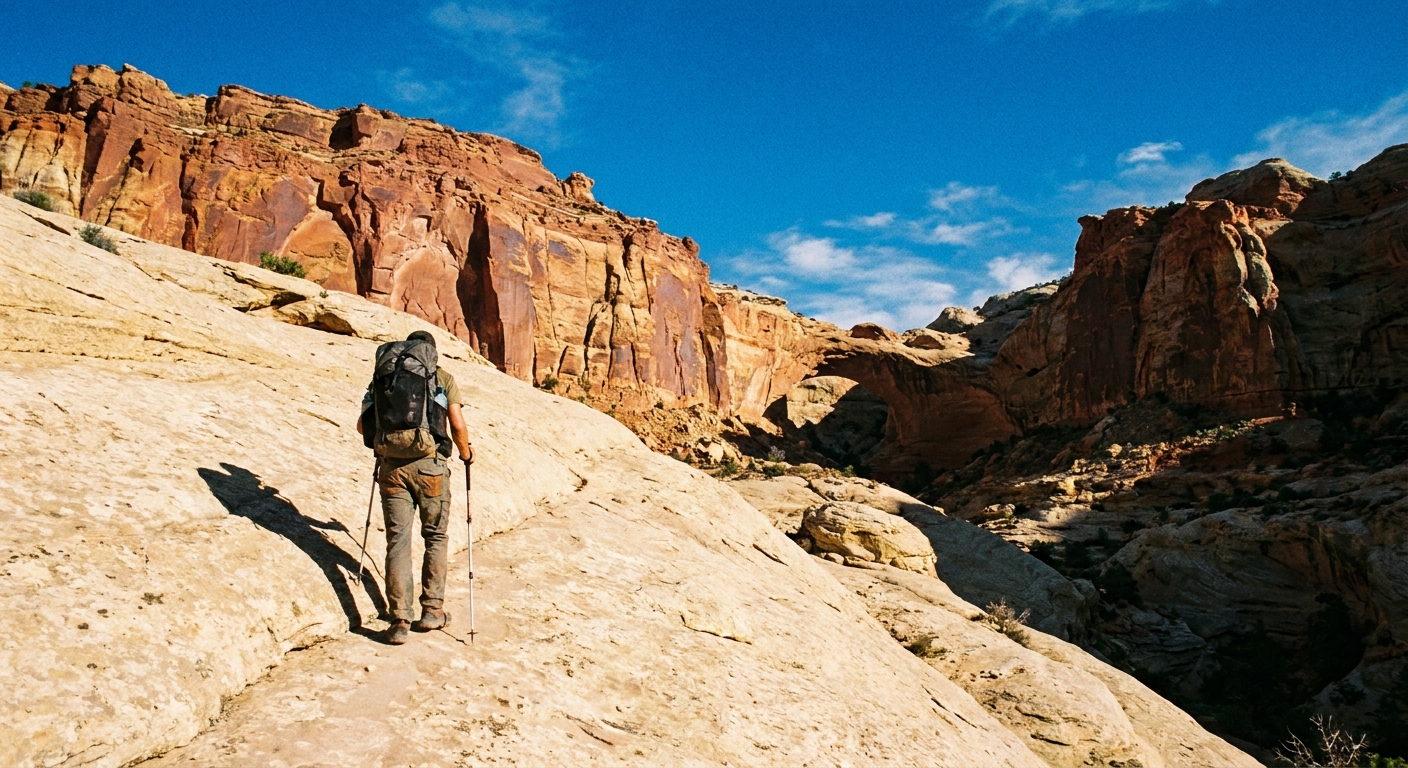
Cassidy Arch is the Capitol Reef hike that punches way above its mileage. In 2 hours or less you get slickrock, canyon views, and the rare thrill of standing on top of a real arch. It is also the hike where many people underestimate three things: exposure, heat, and how quickly a casual photo moment can turn sketchy (a common theme in ranger-style safety guidance across the Utah parks).
This micro-guide is for squeezing Cassidy into one morning without drama, whether you are an experienced hiker who just wants the clean beta or a city-weekender trying your first Utah slickrock.

Quick facts for planners
- Distance: about 3.1 to 3.4 miles round trip (GPS and route choices vary)
- Elevation gain: roughly 650 to 700 feet
- Typical time: 1.5 to 2.5 hours (add time for photos and waiting your turn on the arch)
- Trailhead: Grand Wash Trailhead at the end of Scenic Drive; follow the Grand Wash briefly, then take the signed Cassidy Arch spur
- Fees: Scenic Drive access requires a Capitol Reef entrance fee or a valid park pass
- Shade: very limited, mostly exposed slickrock
- Best seasons: spring and fall for comfort; winter can be excellent if dry
Reality check: the mileage is short, but the effort feels bigger in heat because the climb is direct and the sandstone reflects sun like a skillet.
What the trail feels like
The Cassidy Arch Trail climbs in a few distinct beats:
- Early desert path: sandy and rocky footing that warms you up.
- Slickrock ramps: the “friction” sections (steep-ish sandstone slabs). Dry sandstone has excellent grip, so most people feel secure as long as they keep their steps deliberate.
- Ledgey traverses: not technical, but there are spots where the trail narrows and you notice the drop-off to the side.
- Final approach: a short, steeper climb to the arch viewpoint where the trail meets broad rock.
If you have only hiked forest trails, slickrock can feel odd at first. Think of it like walking up a giant, gritty sidewalk. The key is to keep your weight over your feet and avoid sudden pivots on sandy patches.
Navigation note: across slickrock, the “trail” is often marked by cairns (rock stacks) and occasional route markers. Keep your eyes up and aim for the next cairn before you commit to a random-looking slab.
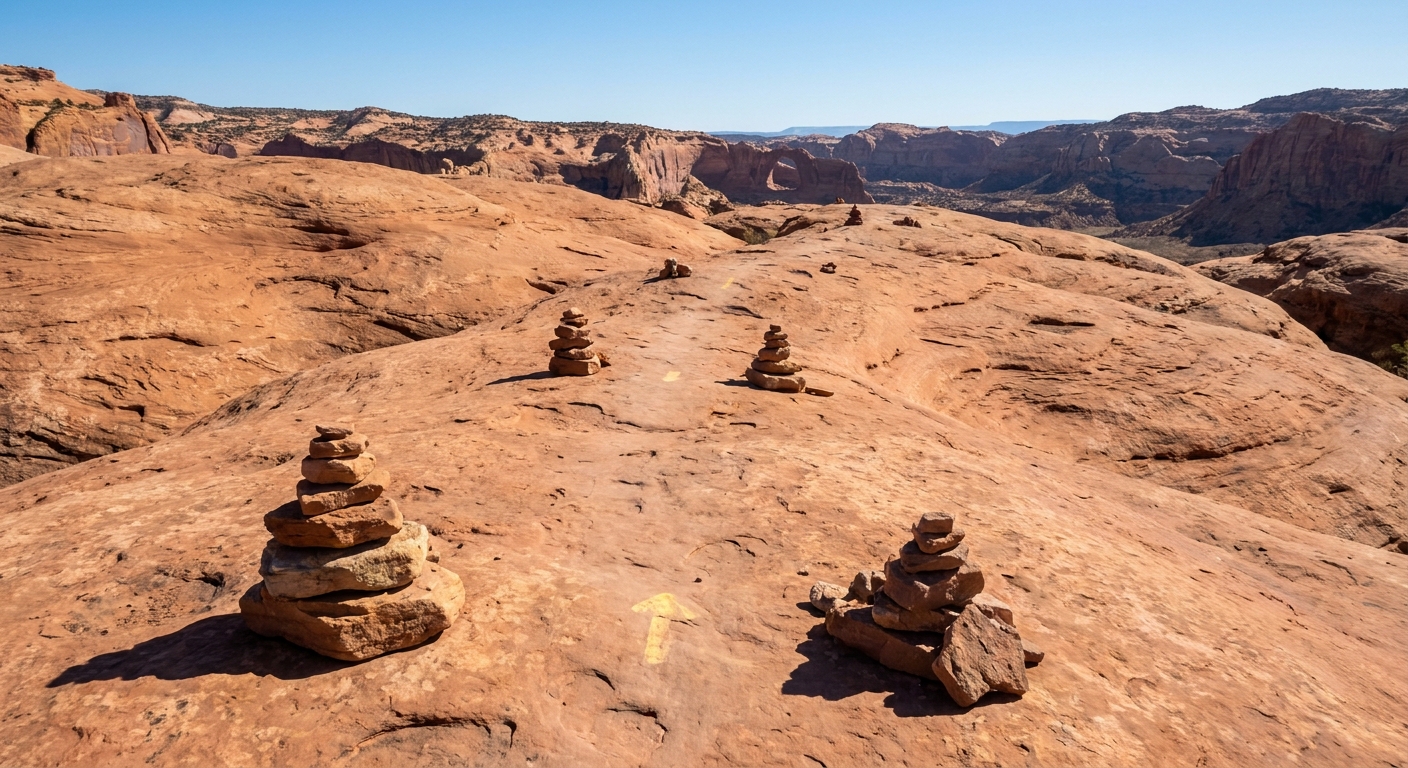
Exposure: where it shows up
Most of the hike is not a knife-edge, but there are a handful of places where the trail crosses slanted slickrock with open space beside you. If heights make your knees turn to water, you will feel it.
Exposure hotspots
- Slanted slickrock traverses: wide enough for normal walking, but the angle plus drop-off can feel airy.
- Near the arch area: people spread out on open rock, which can encourage wandering too close to edges.
Standing on the arch: optional
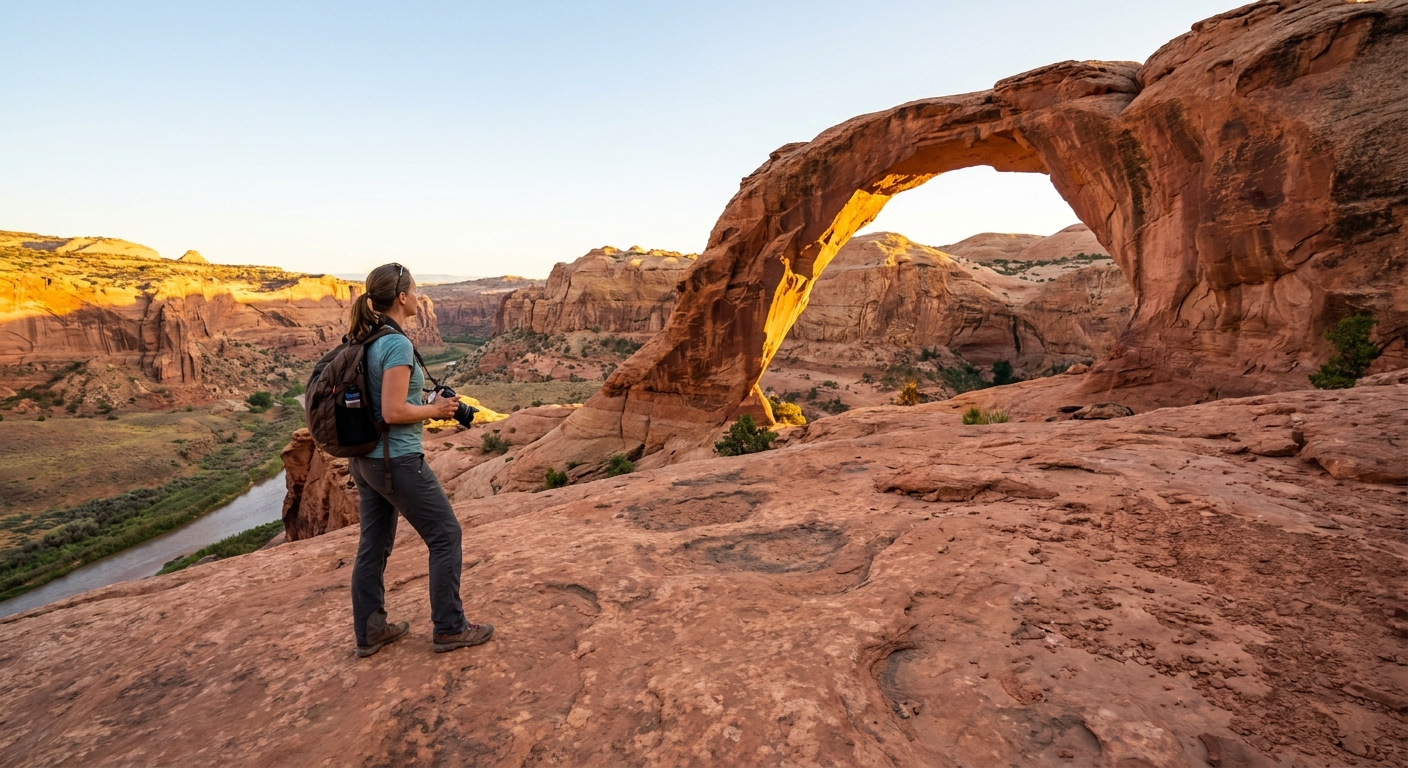
You can see the arch well without stepping onto it. If you do choose to walk on top, treat it like a no-mistakes zone. The surface is broad, but edges are real edges. Wind, sand on your shoes, and the urge to back up for a shot are the usual culprits.
Skip walking on the arch if: you are wearing smooth-soled fashion sneakers, it is wet, you are managing kids who like to sprint, or you already feel shaky on the exposed sections. There is zero shame in enjoying the view from a safe distance.
Heat strategy
Capitol Reef heat is sneaky because the hike is “only three miles.” On sun-baked sandstone, your body works harder, and there is very little shade to bail you out.
Best start times (by season)
- Late spring to early fall: start at sunrise to 9:00 a.m. if you can. After that, it becomes an exercise in heat management.
- Peak summer: treat this as a very early hike. If the forecast is pushing extreme heat, consider swapping in shaded scenic drive stops and save Cassidy for another day.
- Fall and spring: morning or late afternoon is ideal for light and comfort.
- Winter: mid-morning through early afternoon is often perfect if the rock is dry.
Minimum water carry
There is no water on the trail. For most adults:
- Cool weather: bring at least 1 liter per person.
- Warm to hot weather: bring 2 liters per person.
- Peak summer heat or if you run hot: 3 liters per person is not overkill for comfort and safety.
Add electrolytes if you are sweating heavily. Plain water is great until it is not.
Clothing and sun basics
- Wide-brim hat or cap plus neck coverage
- Light long sleeves for sun protection without constant sunscreen reapplication
- Real shoes with grippy soles. Slick soles plus sand is where slips happen.
Photo safety
Cassidy Arch is a magnet for big, cinematic poses. The problem is that the best angles are usually closest to exposure.
No-regret photo rules
- Keep a buffer: stay a few steps back from any edge, especially when stepping backward to frame the arch.
- One person moves at a time: if you are taking turns on the arch top, avoid crowding. Wait until the person ahead is done and stable.
- Watch for sand: windblown sand on slickrock can turn traction from excellent to sketchy.
- No jumping shots: yes, the background is epic. No, it is not worth it.
- Secure your phone: use a wrist strap or keep two hands on it near edges. Dropped phones lead to bad decisions.
If you want the classic shot without the risky steps, stand back on the broad slickrock near the arch and use a 2x zoom. You will get scale, canyon depth, and a calmer heart rate.
Weather: when to turn around
Dry slickrock grips beautifully. Wet slickrock can feel like walking on a bar of soap, especially on slanted sections.
- After rain or during storms: postpone. The rock gets slick and lightning is a real threat on open terrain.
- Winter freeze: shaded spots can hold ice longer than you expect.
- Wind: gusts near exposed viewpoints can throw off balance. If you are getting pushed around, keep your photos quick and your stance wide.
- Wash conditions: because the approach connects with Grand Wash, be extra cautious if storms are building. Desert rain can turn washes into a bad place to linger.
Also, keep an eye out for dark clouds. Capitol Reef storms can build fast, and slickrock offers no pleasant place to wait it out.
How Cassidy compares
If you are building a one-morning itinerary, here is the honest comparison for time and payoff.
Cassidy vs. Hickman Bridge
- Time: Cassidy often takes longer because people linger at the arch and the exposed viewpoints. Hickman is usually a bit quicker for many hikers.
- Exposure: Cassidy has more airy moments. Hickman feels more straightforward for height-sensitive hikers.
- Payoff: Cassidy wins for drama and the unique on-top-of-an-arch experience. Hickman is a classic arch view with less edge factor.
Cassidy vs. scenic drive stops
If your group has mixed energy levels, consider doing Cassidy early, then cool down with short stops along the Scenic Drive where you can stay close to the car and still rack up huge views. Cassidy is the workout. The Scenic Drive is the reward lap with better shade opportunities and fewer consequences for tired legs.
A tight morning plan
Option A: Cassidy first
- 6:30 to 7:30 a.m.: arrive, gear check, start hiking (earlier in summer)
- 8:00 to 10:00 a.m.: finish Cassidy Arch with photo time
- 10:00 a.m. onward: scenic drive pullouts and a slow transition back to town mode in Torrey
Option B: Heat-avoiding
- Sunrise: start Cassidy immediately
- Mid-morning: shift to short, shaded, or car-based stops
- Lunch: rehydrate, electrolytes, salty food
What to pack
- 2 liters water (minimum for warm days), more in summer
- Electrolytes or salty snack
- Sun protection: hat, sunglasses, sunscreen
- Grippy shoes you trust on rock
- Light layer for shoulder seasons and wind
- Phone strap or secure pocket for photos near exposure
If you are hiking with kids: bring extra water, set a clear edge rule, and plan to stop often. The trail is short, but attention is the real safety tool here.
Leave No Trace
This area sees heavy foot traffic, and the desert takes a long time to heal.
- Stay on the trail and slickrock route markers to avoid crushing cryptobiotic soil.
- Pack out everything, including fruit peels and tissues.
- Bathrooms: use facilities at trailheads and developed areas before you start.
Bottom line
Cassidy Arch is short, classic, and absolutely worth a morning. Follow the cairns across slickrock, treat the friction slabs with respect, start early to beat the heat, carry more water than your ego thinks you need, and take photos with a buffer from edges. Do that, and you will walk away with the kind of desert high that pairs perfectly with an iced coffee back in town.