Columbia River Gorge Waterfalls: Portland Day-Trip Loop Without the Parking Headaches

Maya Lin
Maya Lin is a travel journalist and outdoor enthusiast who believes the best trips combine rugged adventures with urban comforts. After spending six years backpacking across four continents, she founded Trail & Town Guide to help fellow travelers navigate both hidden mountain passes and bustling city neighborhoods with confidence.
The Columbia River Gorge is Portland’s most iconic day trip for a reason: rainforest-y canyons, basalt cliffs, and waterfalls that feel like they belong in a fantasy novel. The problem is not the scenery. The problem is trying to do it on a Saturday at 11:30 am with no plan, no cell service, and a growing sense of dread as every pullout says LOT FULL.
This loop is built to keep the day beautiful and realistic. You will start early, stack the most parking-sensitive stops first, and use a couple of “always worth it” backups so you are never stuck circling lots. I will also flag where permits and timed entry rules can apply, plus wet-season cautions that matter in the Gorge more than almost anywhere else near Portland.
Quick logistics from Portland
Drive time
- Downtown Portland to Multnomah Falls: about 35 to 45 minutes without heavy traffic.
- Downtown Portland to Hood River: about 1 hour to 1 hour 15 minutes.
Which road to take
If you can, use I-84 to move between clusters and the Historic Columbia River Highway for scenic stretches and short hops. The Historic Highway is gorgeous but slower, and some parking areas are small. That is why the order matters.
Quick reality check: segments of the Historic Highway can be impacted by seasonal closures, construction, or landslides. Before you leave Portland, check current road status on ODOT TripCheck so you are not forced into a surprise reroute.
The “loop” idea
This day is a true loop in the “you end up back in Portland without backtracking for hours” sense, but it is not a simple straight shot east. The crowd-beating move is:
- Go east first on I-84 to hit Multnomah early.
- Then go west on the Historic Highway for the classic waterfall corridor and Vista House.
- Then go east again by dropping back to I-84 at Corbett to continue to Hood River.
It sounds zigzaggy on paper. In practice, it is exactly how you dodge the worst parking chaos at the most famous stop.
What to bring
- Waterproof shell and a warm layer, even in spring. Gorge spray plus wind is real.
- Good traction shoes. Wet basalt can be slick.
- Snacks you can eat in the car. It saves time and reduces “hangry waterfall decisions.”
- A small towel or dry socks if you are traveling with kids.
- Offline map downloaded ahead of time.
Restrooms (you will care)
Restrooms are reliable at Multnomah Falls, usually available at Vista House/Crown Point when facilities are open, and easy in Hood River. Smaller trailheads and pullouts can be hit or miss, so plan around the “big stops” if you are traveling with kids.
The no-headache loop
This is the core itinerary I recommend most of the year. It prioritizes the stops that are hardest to park at later, then uses the Historic Highway for scenery, then heads to Hood River for a clean midday reset.
Start: Portland early
Leave Portland by 7:00 am on weekends in peak season (late spring through fall). On weekdays, you can often slide later, but early still pays off with quieter trails and easier parking.
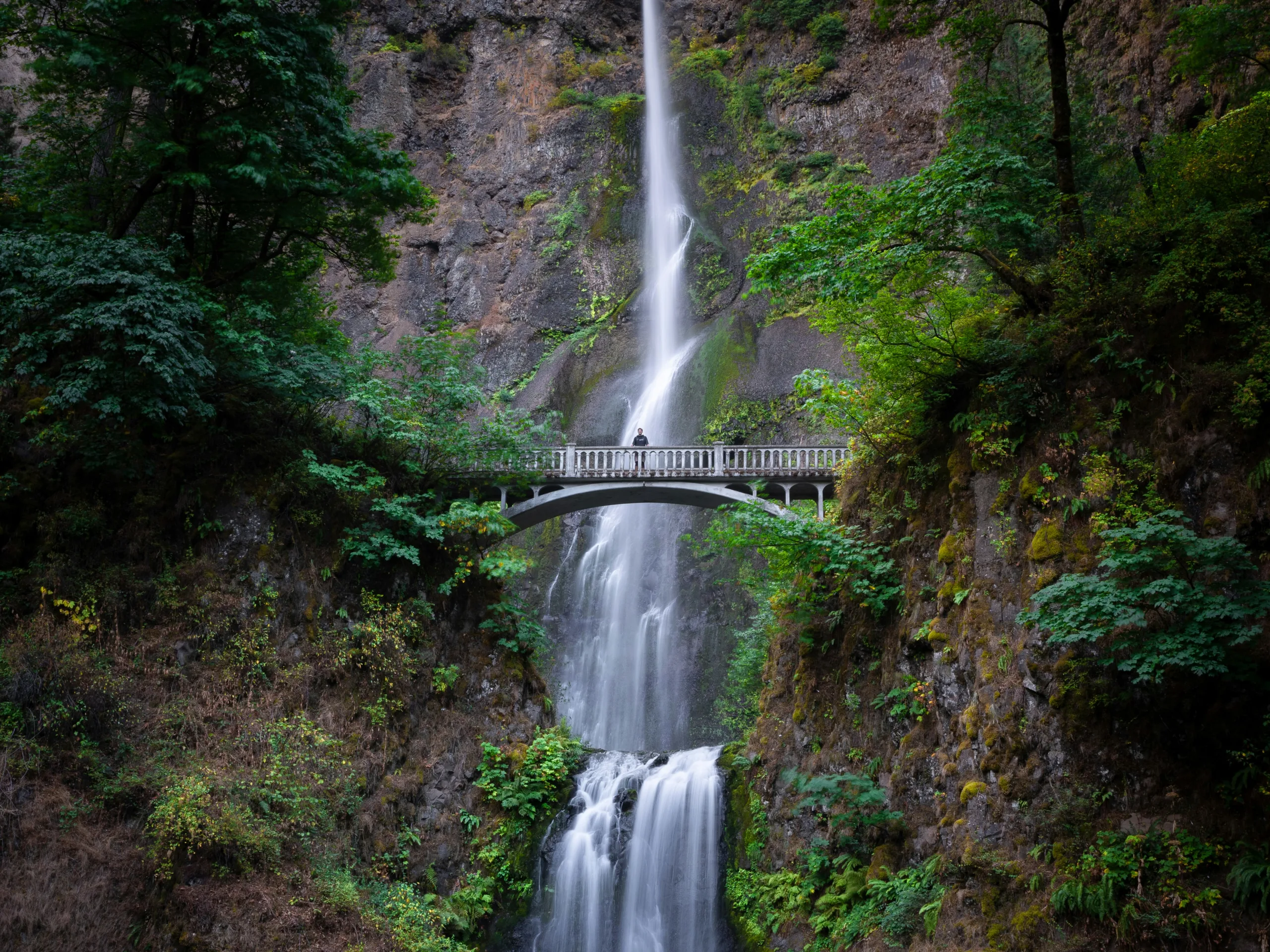
Stop 1: Multnomah Falls
Multnomah is the headline waterfall, and it is also the place where timing is everything. Arriving early is the single best “parking hack” you can control.
- How to get there: Take I-84 east to Multnomah Falls (Exit 31).
- Parking strategy: Aim to arrive before 8:00 am on weekends in busy months.
- How long: 30 to 60 minutes for the lower viewing area and Benson Bridge.
- Accessibility note: The lower viewing area is generally the most accessible part of the day. Many other Gorge trails involve uneven surfaces, stairs, or steep grades.
- Optional add-on: If you want a leg-stretcher with fewer people, hike a bit up the paved trail toward the top viewpoint, then turn around when it stops being fun. The grade gets more real as you climb.
Timed use note
Rules change over time, but the Gorge has used timed entry and/or parking reservation systems at Multnomah Falls in recent years during peak season. Before you go, check the current requirements through Oregon State Parks (and any linked reservation page they direct you to).
If timed permits are in effect and you missed them, do not scrap the whole day. Use the backup section below and hit Multnomah at a lower-demand time, or on a shoulder-season weekday.
Stop 2: Wahkeena Falls
Just west of Multnomah, Wahkeena is a quick win with a different vibe. The falls and stonework feel classic Gorge, and the stop is brief enough to fit almost any pace.
- How to do it: After Multnomah, hop onto the Historic Columbia River Highway and start working west.
- Parking strategy: Small lot. Go right after Multnomah while you are already early.
- How long: 20 to 40 minutes.
Stop 3: Latourell Falls
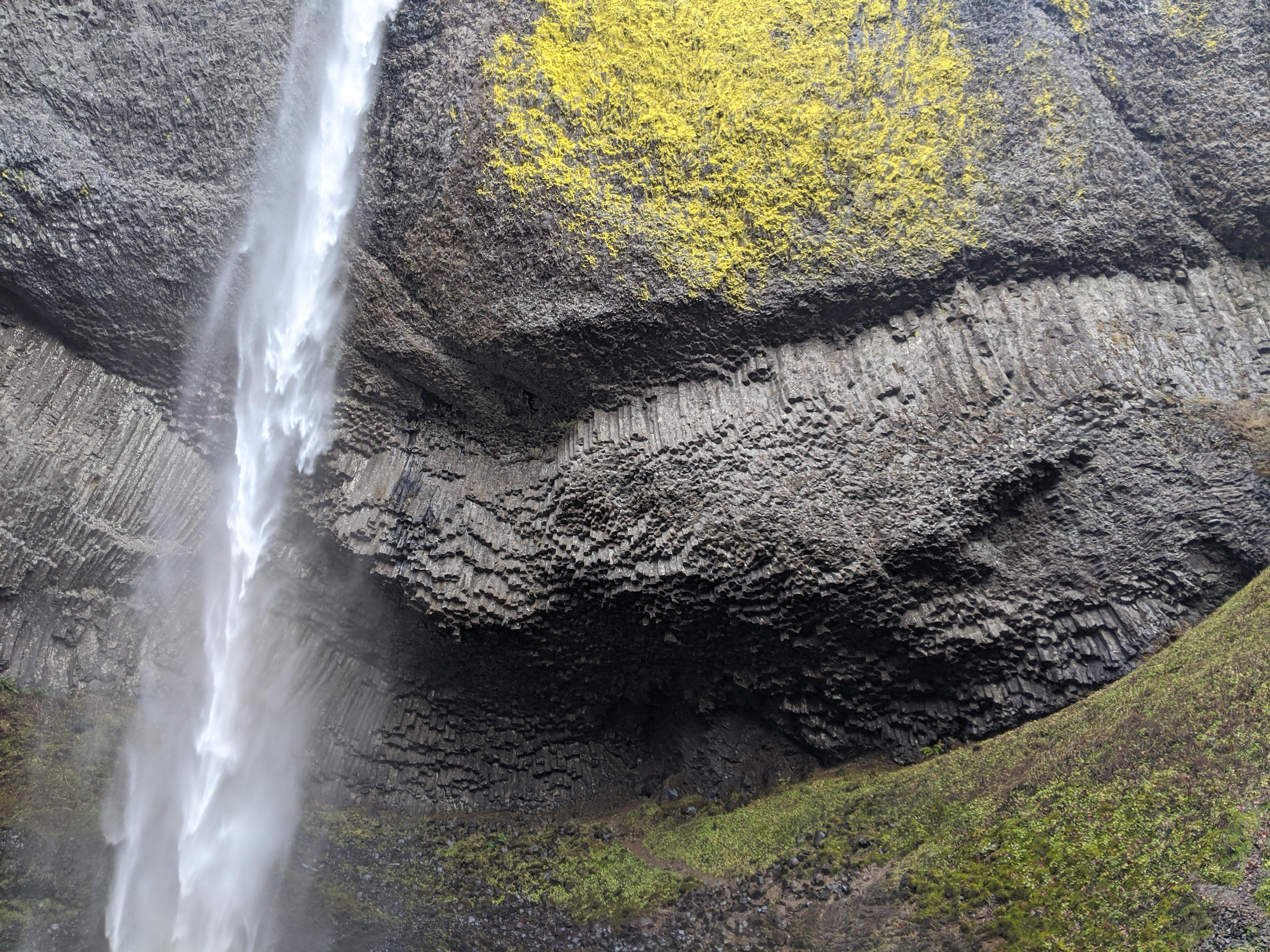
Latourell drops in a clean, dramatic line over dark columnar basalt. It photographs beautifully even on gray days, and the walk is approachable for most travelers.
- How long: 30 to 75 minutes depending on whether you do a short out-and-back or a longer loop.
- Why here now: It is a reliable mid-morning stop while the Multnomah area starts building into full midday mode.
- Next move: After Latourell, continue west toward Corbett and Crown Point (Vista House), then drop down to I-84 at Corbett when you are ready to head to Hood River.
Midday: views and lunch
Stop 4: Vista House
Vista House at Crown Point is the classic big-sky overlook. Wind can be intense, so layer up and keep hats secured.
- How to do it: Continue west on the Historic Highway toward Corbett and Crown Point.
- How long: 15 to 30 minutes.
- Parking strategy: High turnover. If it is packed, make one pass through the lot, then move on. You can often catch it on the return later.
Lunch: Hood River
Now you pivot back into efficient travel mode. From Crown Point, head down toward Corbett and reconnect with I-84 east to continue to Hood River.
Hood River is my favorite place to switch from trail mode to town mode. You get walkable streets, strong coffee culture, and quick lunch options. If you want to keep it simple: park once, stretch your legs, and refuel.
- Time budget: 60 to 90 minutes if you want a relaxed lunch and a coffee stop.
- Sustainable travel tip: Bring a reusable bottle and fill it in town so you are not buying more plastic between trailheads.
Afternoon options
This is where most Gorge itineraries fall apart: people try to do every waterfall hike at peak afternoon congestion. Instead, pick one strong afternoon anchor based on your group.
Option A: easy pace
- Hood River waterfront stroll for open space and views
- One short waterfall stop on the way back (Latourell or Wahkeena if you skipped earlier)
- End with an easy viewpoint like Vista House if parking looks manageable
Why it works: Kids do better with fewer “all-or-nothing” trail moments and more predictable breaks.
Option B: one real hike
If your group wants a bigger effort, commit to one longer trail and treat everything else as optional. In the Gorge, the best longer hike is often the one where you have the most bandwidth for wet conditions and trail closures.
- Angel’s Rest is a popular, steep viewpoint hike with big payoff, but it can be crowded and slippery in wet conditions.
- Multnomah-Wahkeena loop (when conditions and closures allow) is a classic waterfall-heavy option, but it is a real hike, not a stroll.
Wet-season reality check: In late fall through spring, expect mud, runoff, and occasional trail damage or closures. Choose a route you can safely turn around on without feeling like the day is ruined.
Option C: Rowena Crest
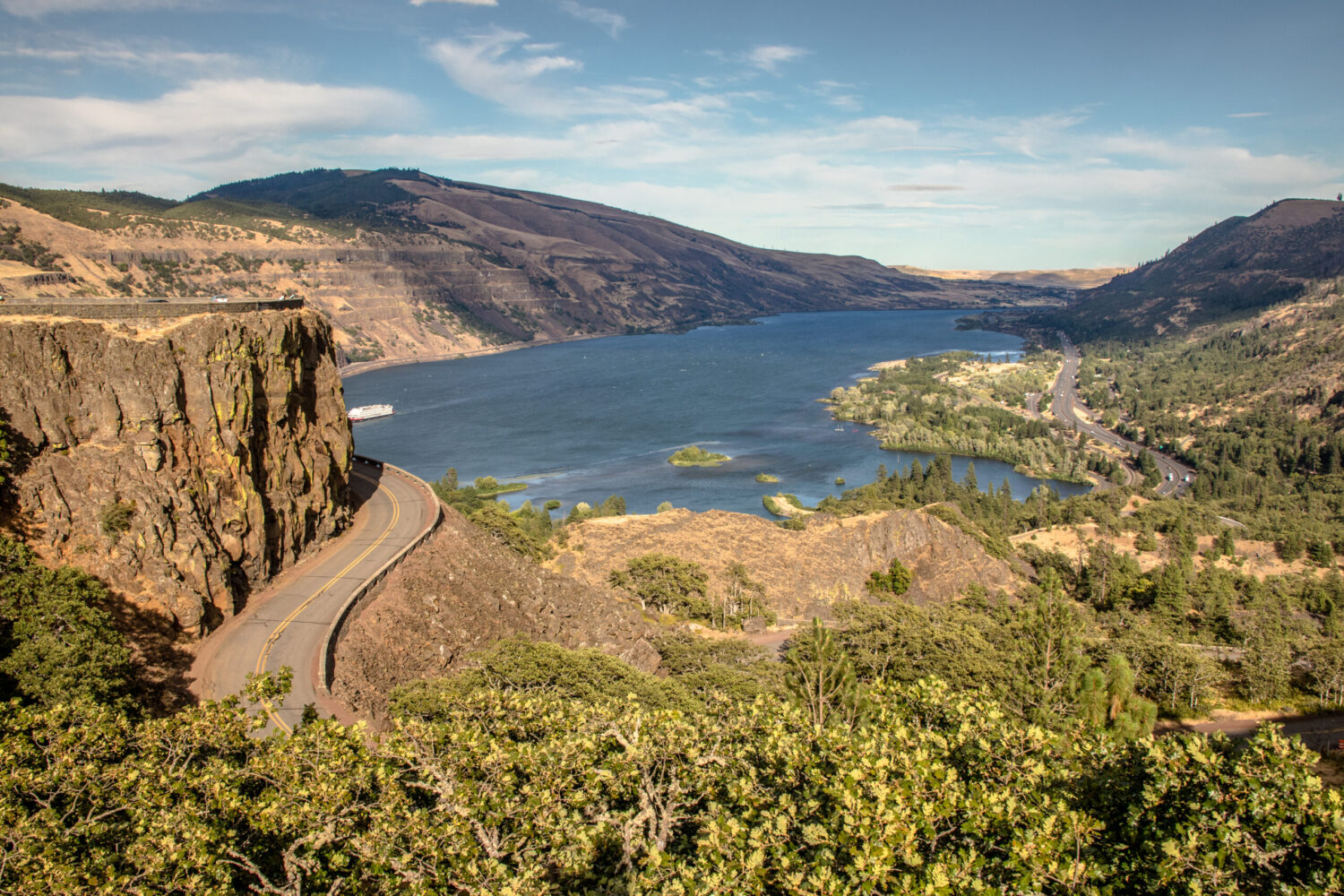
Rowena Crest is one of the Gorge’s most famous viewpoints, but it is not “on the way” to Hood River. It is east of Hood River, so treat it as an afternoon extension if you have the time and daylight.
- How long: 10 to 20 minutes.
- Why it helps your day: Viewpoints soak up “midday crowd time” without requiring scarce trailhead parking.
- Good to know: It is especially pretty in late afternoon light, but wind can be intense.
My rule for the Gorge: pick one “must-do” hike, then treat every other stop as a bonus. It protects your mood and your ankles.
Parking strategy
1) Stack tight-parking stops early
Multnomah Falls and nearby lots fill first. Get them done before the day-tripper wave arrives.
2) Use a no-circling rule
If you roll up and a lot is full, do not circle for 20 minutes. Give yourself one pass, then switch to a backup stop or a viewpoint with higher turnover.
3) Use town time to dodge peak congestion
Midday is the worst time to arrive at the most popular trailheads. Eating lunch in Hood River while others hunt for parking is a sneaky win.
4) Use shuttles when they are running
In peak season, shuttles can be the difference between a calm day and a stressful one. Service patterns change, so check what is currently operating (for example, Columbia Gorge Express when it is in service) and build around the latest official schedule.
Seasonal cautions
The Gorge is magical in the wet season because the waterfalls roar. It is also when slips, rockfall hazards, and trail washouts are more likely.
- Watch for slick surfaces: Stone steps, bridges, and basalt viewpoints can be slick even when it is not actively raining.
- Respect closure signs: They are common after storms due to falling rock or damaged trail sections.
- Keep kids close near viewpoints: Wind gusts at Crown Point and exposed areas can be strong.
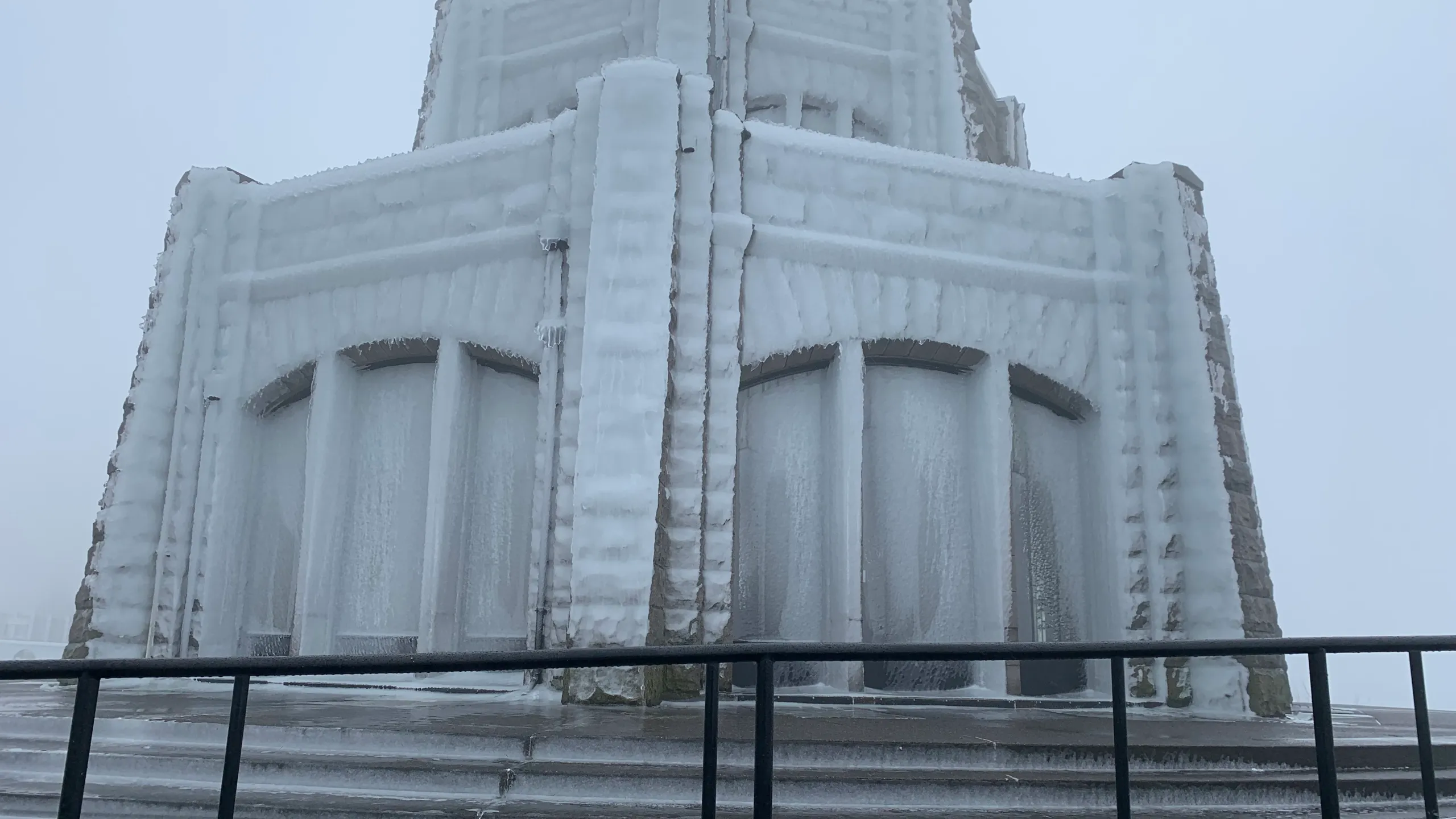
- Winter difference from Portland: Conditions can shift fast as you head east. You can leave Portland in rain and hit snow or ice near Hood River or Rowena. Check forecasts and road conditions, and do not force the plan.
- Check conditions: Look up current trail and road updates before leaving Portland, especially after heavy rain, ice, or snow events.
Permits and fees
The Gorge has a patchwork of rules depending on the site, season, and managing agency. These are the items that most often trip people up:
- Timed use permits or parking reservations: Sometimes used at Multnomah Falls during peak periods. Confirm via Oregon State Parks before you go.
- Parking passes (some USFS trailheads): Some trailheads require a Northwest Forest Pass or an America the Beautiful Pass (which covers day-use fees at many federal sites). Always read the trailhead signs and confirm current requirements.
- Agency nuance: Not every stop follows USFS trailhead fee rules. Vista House/Crown Point and Multnomah Falls are managed differently than many forest trailheads, so treat posted signage and current official guidance as the final word.
- Fire season restrictions: In late summer and early fall, expect burn bans and trail restrictions that can change quickly.
If you want a “set it and forget it” approach, plan to verify rules the evening before and screenshot key pages in case you lose service.
Sample schedule
- 7:00 am Leave Portland
- 7:45 am Multnomah Falls (I-84 east)
- 8:45 am Wahkeena Falls (Historic Highway west)
- 9:30 am Latourell Falls
- 10:45 am Vista House at Crown Point
- 12:15 pm Hood River lunch and coffee (drop to I-84 at Corbett, then east)
- 2:00 pm Choose one: waterfront stroll, one longer hike, or Rowena Crest extension east
- 4:30 pm Optional viewpoint stop on the return if energy is good
- 6:00 to 7:00 pm Back in Portland
Easy backups
These are my go-to pivots when the Gorge is busier than expected:
- Swap the order: If Multnomah timed use is unavailable, start with Latourell and Vista House, then try Multnomah later in the afternoon or plan it for a weekday.
- More viewpoints, fewer trailheads: Crown Point and (if you go east of Hood River) Rowena Crest can deliver huge scenery with less trailhead competition.
- Make Hood River the anchor: If the Historic Highway pullouts are a zoo, enjoy a fuller town break and do one short waterfall stop on the way back.
Wrap-up
The best Gorge day is not the one where you check every waterfall off a list. It is the one where you move smoothly between iconic stops and quieter moments, with enough time to feel the mist on your face and still make it back to Portland for dinner.
Start early, keep your “must-dos” few, and let the day be a loop, not a battle.