Congaree National Park Boardwalk Hikes and Mosquito Season

Maya Lin
Maya Lin is a travel journalist and outdoor enthusiast who believes the best trips combine rugged adventures with urban comforts. After spending six years backpacking across four continents, she founded Trail & Town Guide to help fellow travelers navigate both hidden mountain passes and bustling city neighborhoods with confidence.
Congaree National Park is the kind of place that surprises people who think “national park” automatically means mountains. Here, the main attraction is a cathedral of trees in a floodplain forest, where knees of cypress poke up like little sculptures and the air smells faintly like sweet, wet earth. The best part is that you can experience a lot of it without committing to a long backcountry day. You just have to plan around two very real factors: water and bugs.

Below is a boardwalk-first game plan for Congaree, plus a quick look at paddling on Cedar Creek, and the practical truth about mosquito season and summertime heat and humidity. You will see a quick tick note, but Congaree’s main challenge for most visitors is swarms, sweat, and timing.
What Congaree is
Congaree protects a nationally significant expanse of old-growth bottomland hardwood forest. It is flat, low, and often wet. Trails can flood after heavy rain or when the river rises. That is why the park’s boardwalk is such a big deal. It gives you a simple, low-stress way to get into the heart of the forest even when the ground is muddy.
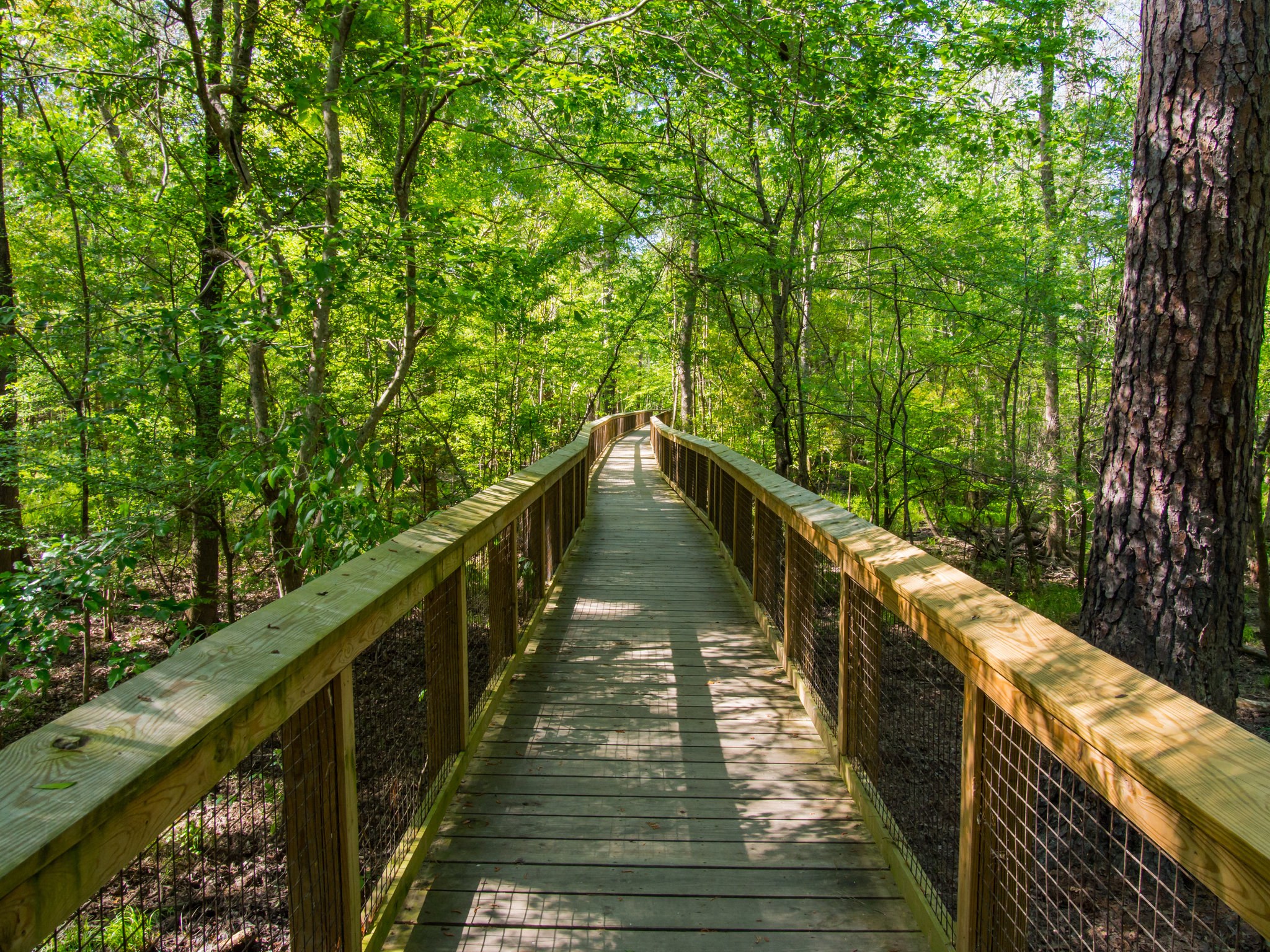
The boardwalk starts near the Harry Hampton Visitor Center, so you can step straight from “I just parked” into full floodplain scenery. It is also generally wheelchair- and stroller-friendly when open and clear, but flooding and closures happen, so it is smart to confirm current conditions before you commit.
Expect a landscape that changes week to week. One visit might feel like a shady green tunnel with dry footing. Another might include standing water under the trees, reflecting trunks like mirrors. Always check trail and boardwalk status before you go, especially after storms.
Boardwalk routes
The most popular starting point is the Harry Hampton Visitor Center area, where you can stitch together a short loop or a longer wander. The trail system is well-established, but “well-established” in Congaree still means you should be comfortable with humid air, occasional mud, and the fact that a flooded section can change your plan.
1) Boardwalk Loop
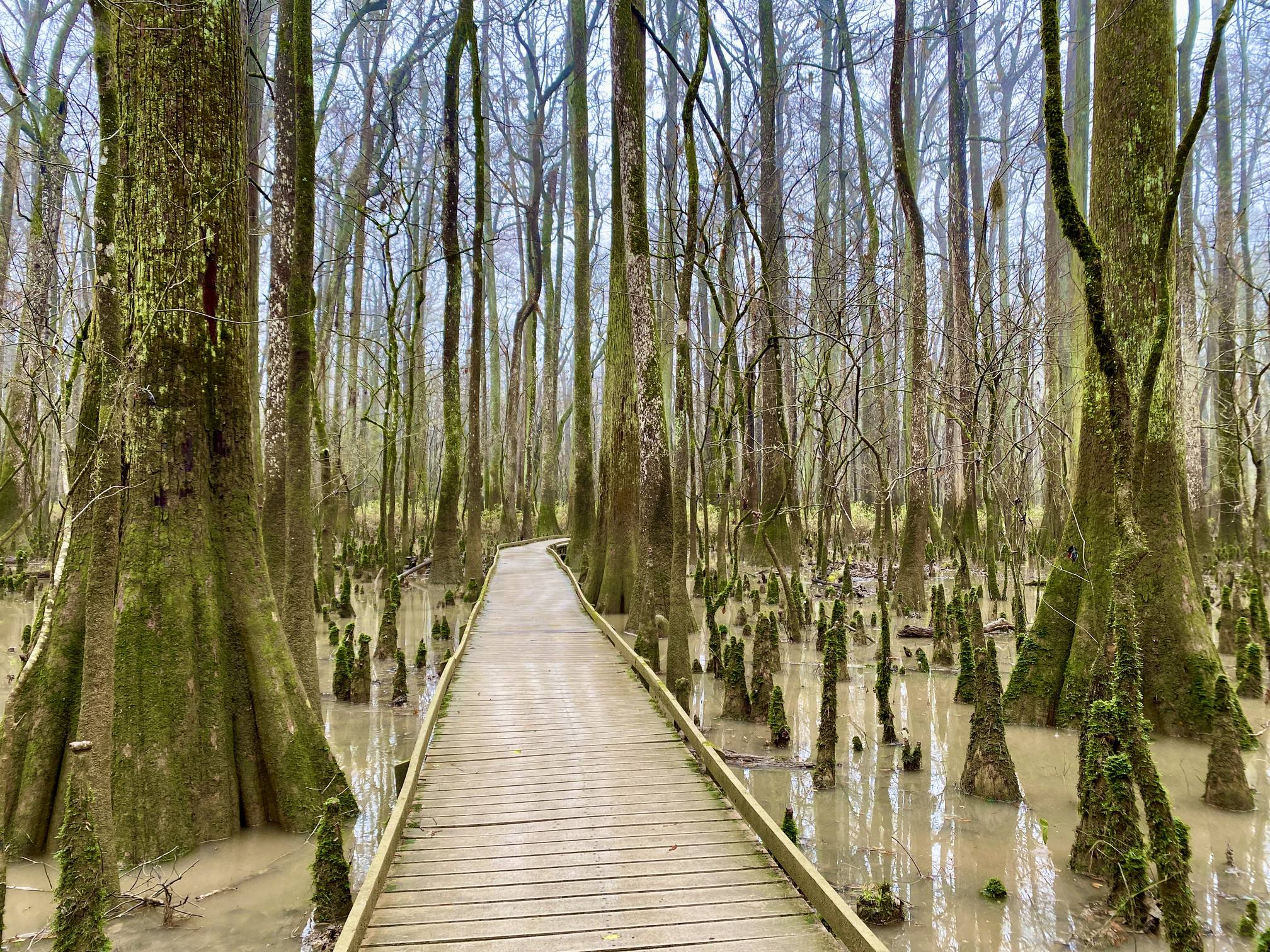
If you only do one thing in Congaree, do the Boardwalk Loop. It is the park’s signature walk and the easiest way to see the floodplain forest up close with minimal navigation stress. You will pass towering hardwoods, cypress knees, and the kind of quiet that makes you lower your voice without thinking.
- Distance: About 2.4 miles round trip (loop)
- Typical time: 45 to 90 minutes, depending on stops
- Best for: First-timers, families, anyone short on time
- Why it works: Elevated walkway keeps you out of mud and protects sensitive areas
- What you will notice: The air feels cooler under the canopy, but still damp. Bring water anyway.
2) Add Weston Lake Loop
For a slightly longer, still very manageable walk, pair the boardwalk with the Weston Lake Loop. This is where you start to feel like you have stepped away from the quick out-and-back crowd. You are still close to the visitor center area, but the vibe is quieter and more “deep woods.”
- Distance: About 4.4 miles total if you combine Boardwalk Loop plus Weston Lake Loop
- Typical time: 2 to 3 hours with a relaxed pace
- Best for: Travelers who want more time in the forest without a full-day hike
- Heads-up: Some sections can be wetter and more buggy, especially near standing water
3) Longleaf and Bluff Trails
If the boardwalk area feels extra steamy or the mosquitoes are in a mood, consider the Longleaf and Bluff trails near the visitor center. They tend to be a bit drier and can feel breezier than the swampier interior. You still get Congaree’s forest character, just with slightly less “wet blanket” energy.
- Where: Trailheads are near the Harry Hampton Visitor Center area
- Best for: A backup plan when the floodplain trails are wet or you want a more open feel
- Bonus: Good for a quick leg-stretch before a paddle or picnic
4) Deeper trails
Congaree has longer trails that push deeper into the wilderness area, and they can be fantastic if you like quiet miles. But these are not the place to underestimate conditions. In warm months, you are balancing heat, humidity, and bugs. After rain, high water can reroute you.
- Best for: Confident hikers with time, navigation comfort, and a realistic plan for hydration
- Smart move: Start early, carry more water than you think you need, and check conditions first
Paddling on Cedar Creek
If the boardwalk shows you Congaree from above, paddling shows it from inside the story. The park’s primary designated paddling route is Cedar Creek. A kayak or canoe lets you drift past trunks and reflections and hear birds without footstep noise. You do not need to be an expedition paddler to enjoy it, but you do need to be honest about current, water level, and your comfort on moving water.
- Easy approach: Choose a short, mellow out-and-back when water levels are reasonable, and skip days that look pushy or fast.
- Timing tip: Early morning paddles can be cooler and calmer, with better wildlife watching.
- Logistics reality: Shuttles and launch options vary. Check the park site for designated access points, conditions, and any closures or advisories.
- Safety reality: In floodplain systems, conditions can change quickly after rain. Check water levels and local guidance before you commit.
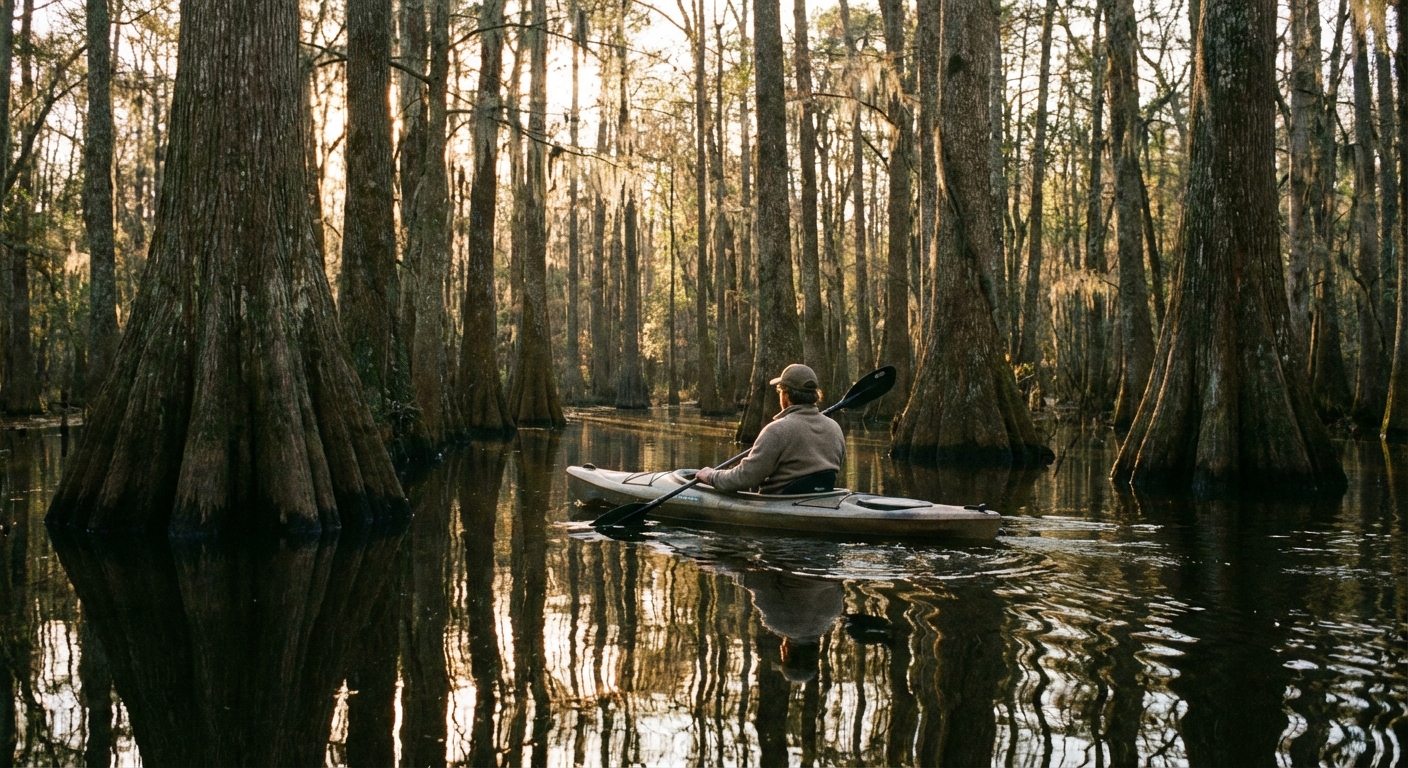
If you are deciding between walking and paddling on a hot day, here is my honest take: the boardwalk is easier, but Cedar Creek can feel more immersive and sometimes slightly cooler because you are on the water. Both can be buggy. Neither is magically mosquito-free.
Mosquito season
Let’s talk about what people really mean when they ask about Congaree: mosquitoes. They are part of the ecosystem, and in peak season they can be intense enough to change the entire mood of your visit. You are not being dramatic if you plan your trip around them.
Start with the park’s own little piece of truth-in-advertising: the Mosquito Meter at the visitor center. It is quirky, iconic, and usually accurate enough to help you decide whether today is a “light repellent” day or a “head net and commitment” day.
When they are worst
In general, mosquito activity ramps up in warm months and can surge after rain and flooding. The highest misery potential is typically late spring through summer, when heat and standing water line up perfectly. Expect the most aggressive conditions at dawn and dusk, and in still, shaded areas near water.
- Highest risk window: Late spring through summer, especially after wet weather
- Lower-bug window: Late fall through winter, and often early spring (weather varies year to year)
- Daily peak times: Dawn and dusk, plus any windless, humid stretch
- Where they concentrate: Near standing water, dense vegetation, and sheltered forest pockets
How to reduce bites
I am a big fan of simple systems that actually get used. Here is what works well in Congaree, especially if you are doing the boardwalk and a short trail add-on.
- Go early, leave early: Morning can still be buggy, but you often avoid the worst heat. Aim to be on trail shortly after the park opens.
- Choose breezy moments: Even a light breeze can make a difference. If the air is dead still, expect more insects.
- Wear coverage you can tolerate: Lightweight long sleeves and long pants can be more comfortable than you expect because they reduce sun exposure and bites.
- Use an effective repellent: Use a proven product and apply it before you step onto the trail, not after the first swarm. Reapply as directed, especially if you are sweating heavily.
- Pack a head net if you hate being distracted: It looks a little intense, but it can turn a miserable walk into a peaceful one during peak season.
- Skip heavy fragrances: Strongly scented lotions or sprays may draw attention from insects and can feel overwhelming in humid heat.
Ticks, briefly
Ticks exist in the Southeast. Standard awareness applies: stay on trail where you can, do a post-hike check, and consider treated clothing if you are hiking beyond the boardwalk. Most visitors still end up talking about mosquitoes first.
My rule of thumb: if you want a relaxed boardwalk stroll without swatting every 10 seconds, aim for cooler months or a dry stretch, and prioritize early starts.
Heat and humidity
Congaree’s humidity is not subtle. In warmer months, the air can feel thick, and you may sweat more than you expect on a flat, easy walk. The boardwalk is not strenuous, but the climate can make it feel like a workout.
What it feels like
- Heat that lingers: Even in shade, the air can stay warm.
- Humidity that steals your energy: You might feel tired faster than on a drier trail.
- Less cooling: Sweat does not cool you as effectively, so you can overheat faster than you expect.
Stay comfortable
- Start early: This is the single best strategy.
- Hydrate before you arrive: Do not wait until you are on the boardwalk to start drinking water.
- Bring more water than “seems necessary”: Flat terrain tricks people into under-packing.
- Wear breathable fabrics: Think airy sun shirts and quick-dry materials. Cotton can feel heavy when soaked.
- Plan a cool-down stop: After the walk, give yourself a shaded break and something cold to drink before you jump into the next activity.
Red flags
If anyone in your group feels dizzy, nauseated, weak, unusually tired, develops a headache, becomes confused, or symptoms worsen in the heat, that is your cue to stop, cool down, hydrate, and reassess. Congaree can feel deceptively manageable because the trail is easy.
Check before you go
- Boardwalk and trail status: Flooding and storm damage can close sections.
- Weather: Heat index matters here more than you think.
- Water levels: If you plan to paddle Cedar Creek, check current conditions and guidance.
- Mosquito reality check: Look for the Mosquito Meter at the visitor center and plan accordingly.
- Leave no trace: Stay on the boardwalk where posted, respect closures, and pack out what you bring in.
Quick planning checklist
- Best low-bug seasons: Late fall and winter are often the most comfortable. Early spring can be great too, depending on rain.
- Best time of day: Early morning to beat heat, with awareness that dawn can still be active for insects.
- Boardwalk plan: Do the Boardwalk Loop (about 2.4 miles), then add Weston Lake for a longer walk (about 4.4 miles total).
- Paddle plan: Consider Cedar Creek if water levels and your skills match the day’s conditions. Confirm access points and advisories.
- Bug strategy: Coverage, repellent, and a head net during peak season.
- Comfort strategy: Hydration, breathable clothing, and a realistic pace in humidity.
- Tick note: Do a quick check after your hike, especially if you leave the boardwalk for longer trails.
What Congaree does best
Congaree is not a summit-chasing park. It is a slow, sensory place. The payoff is subtle and beautiful: the hush of a floodplain forest, the geometry of cypress knees, and the feeling that you are walking through an ecosystem that runs on water.
If you go in with the right expectations and a mosquito plan, the boardwalk can be one of the most memorable short hikes in the Southeast. And if you add a paddle on Cedar Creek on a good day, you will understand why people who love wild places keep coming back to this flat, steamy, magical patch of South Carolina.