Devils Tower Half-Day Plan
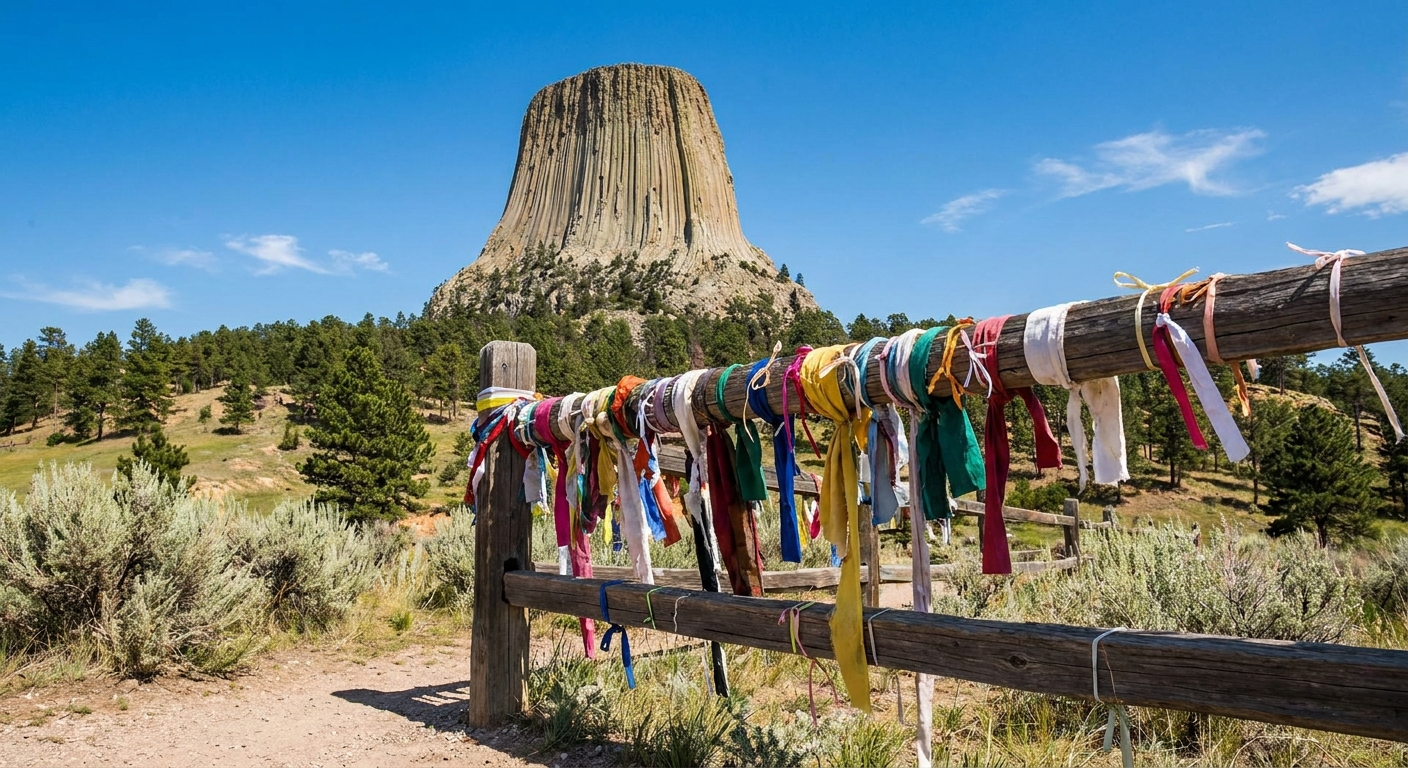
Devils Tower rises out of the Wyoming grasslands like a stone lighthouse, and it can feel tempting to treat it as a quick photo stop. But this place is more than a landmark. To many Indigenous nations, it is sacred, tied to origin stories, prayer, and ongoing ceremonies. You may also hear it referred to by Indigenous names such as Bear Lodge or Mato Tipila.
So yes, come for the geology and the views. Also come ready to visit with a little more care than usual. The good news is that respectful behavior here is simple, and it makes the experience better for everyone.

Respectful visiting first
Prayer cloths and ribbons
You will likely see small bundles of cloth tied to trees or fences, sometimes called prayer cloths or prayer ribbons. They are not decorations. They are offerings and prayers.
- Do not touch, untie, or move them.
- Photo gently: avoid close-up, intrusive shots that treat them like props. If signage asks you not to photograph, follow it. If people are present, do not photograph ceremonies or moments of prayer.
- Give space if you see people in quiet reflection.
- Keep voices low near these areas, even if the trail feels busy.
Climbing context
Rock climbing is generally allowed at Devils Tower, with occasional route closures. The National Park Service also requests a voluntary climbing closure in June out of respect for cultural use during that time. Even if you are not climbing, the main takeaway is simple: keep the tone calm, stay on designated trails, and let others have a quiet experience.
Town Wander tip: If you want the most respectful and peaceful visit, choose a weekday morning, speak softly on the loop, and take your photos from pullouts and established viewpoints instead of stepping off-trail for angles.
Your half-day flow (3.5 to 5 hours)
This plan assumes you want a full experience without turning the day into a marathon. The rhythm is: orient first, enjoy the prairie, then circle the tower on the loop when you are ready to slow down.
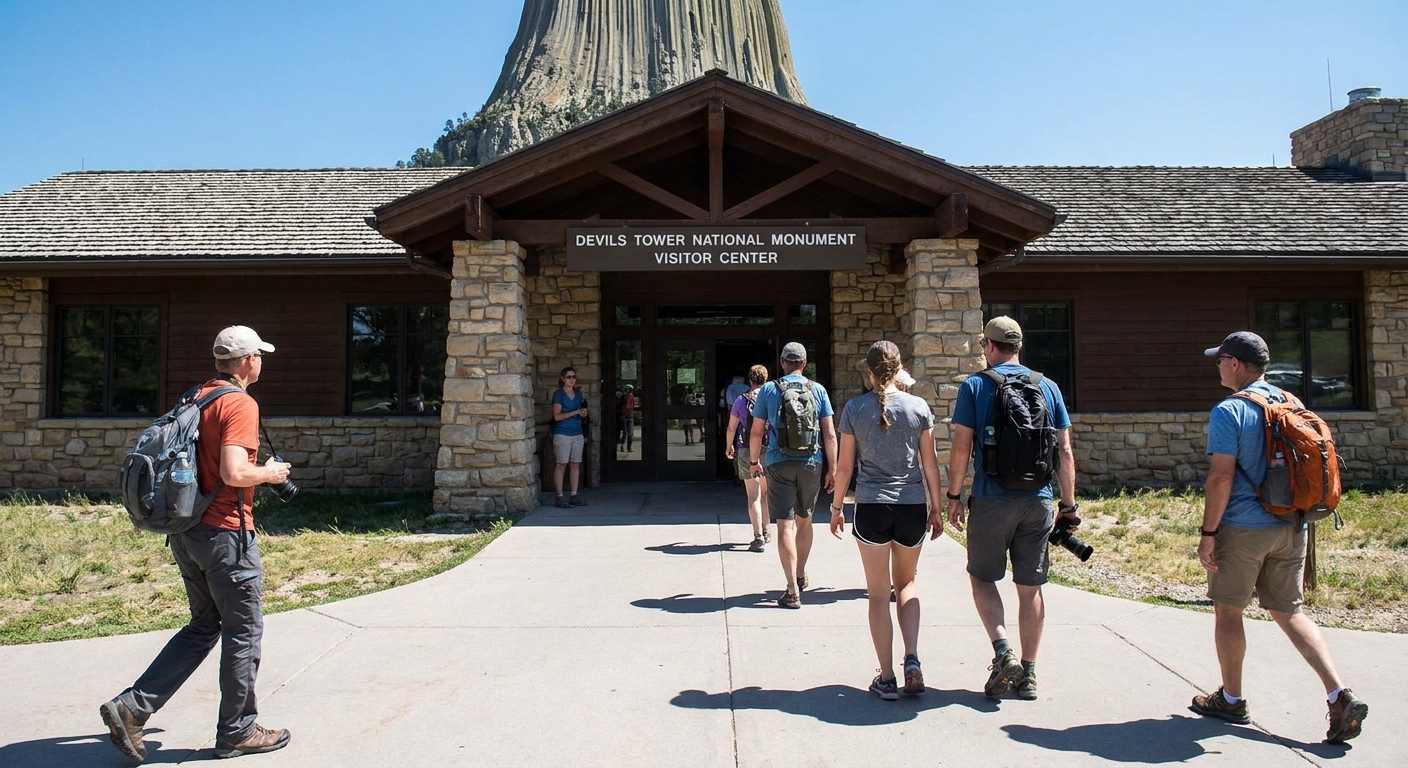
Stop 1: Visitor Center basics (20 to 40 minutes)
Start at the Visitor Center to ground your visit in both geology and cultural history. Even a quick pass helps you understand why the tower looks the way it does and why it matters so deeply.
- Plan for entrance fees: this is a fee area, and an America the Beautiful pass can be a great value if you are visiting other federal sites.
- Arrive early for parking in summer. If you can, aim for before 9 AM. If upper lots are full, use lower lots and walk rather than circling in peak traffic.
- Check trail and weather updates for wind, heat, and especially thunderstorms.
- Ask about ranger programs if you have time. Short talks can add a lot of meaning.
- Grab a trail map and confirm current access for viewpoint pullouts.
Stop 2: Prairie dog towns (20 to 45 minutes)
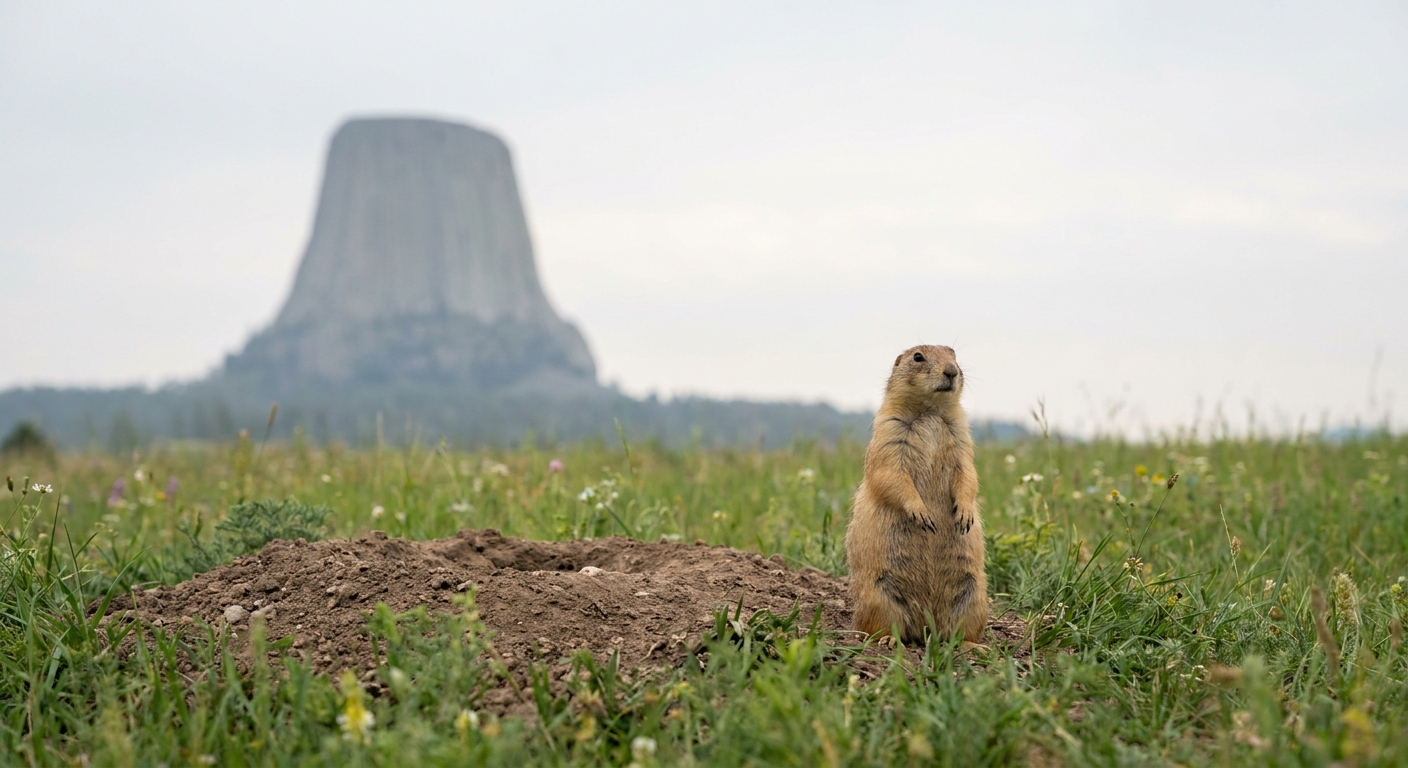
Before you head straight to the tower, spend time with the prairie. The monument’s grasslands are lively, and prairie dog towns are often the most surprisingly fun stop, especially for families or anyone who likes wildlife watching.
- Bring binoculars if you have them.
- Keep food secured and never feed wildlife.
- Stay a respectful distance. Watching from the edge is best for you and them.
- Do not touch prairie dogs and keep pets away. NPS sometimes posts health advisories in prairie dog areas, so check current notices at the Visitor Center.
If the tower area feels crowded when you arrive, this is also a great “pressure valve” stop. You will still be in the monument, but away from the densest foot traffic.
Stop 3: Tower Trail loop (60 to 90 minutes at an easy pace)
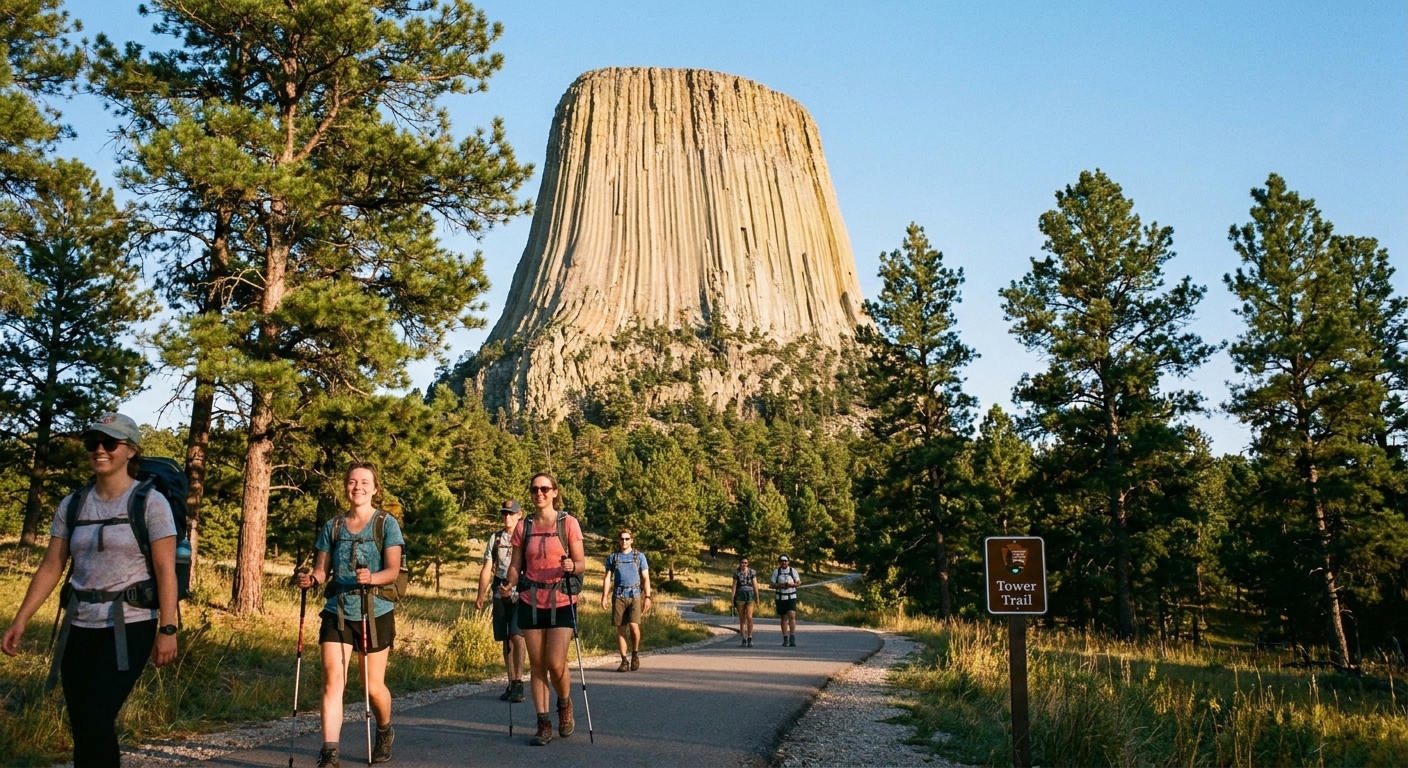
The paved Tower Trail is the classic must-do. It loops around the base of Devils Tower and gives you changing angles, close-up views of the columnar rock, and a feel for the monument’s scale.
Distance and timing
The Tower Trail is commonly listed at about 1.3 miles (2.1 km). In real life, your timing depends on three things: crowd levels, how often you stop for photos, and whether you pause at interpretive signs.
- Fast walk, minimal stops: about 45 to 60 minutes
- Normal visit with photos and pauses: about 60 to 90 minutes
- Slow, contemplative loop: 90 minutes or more
Where to slow down
- Base-of-the-columns viewpoints: look for the long vertical lines and the broken talus at the bottom.
- Forest sections: you may feel temperature drop slightly, which matters on hot days.
- Quieter corners of the loop: these are the best places to notice birds, wind in the pines, and the tower’s shifting color.
Stay on designated trails. Cutting corners damages fragile vegetation and can pull you into areas that are culturally sensitive.
Accessibility note: Because this is a paved loop, it is a solid option for many strollers and wheelchairs, though crowding and short slopes can make it feel slower. Check current accessibility details at the Visitor Center for the most up-to-date guidance.
Viewpoint pullouts by season
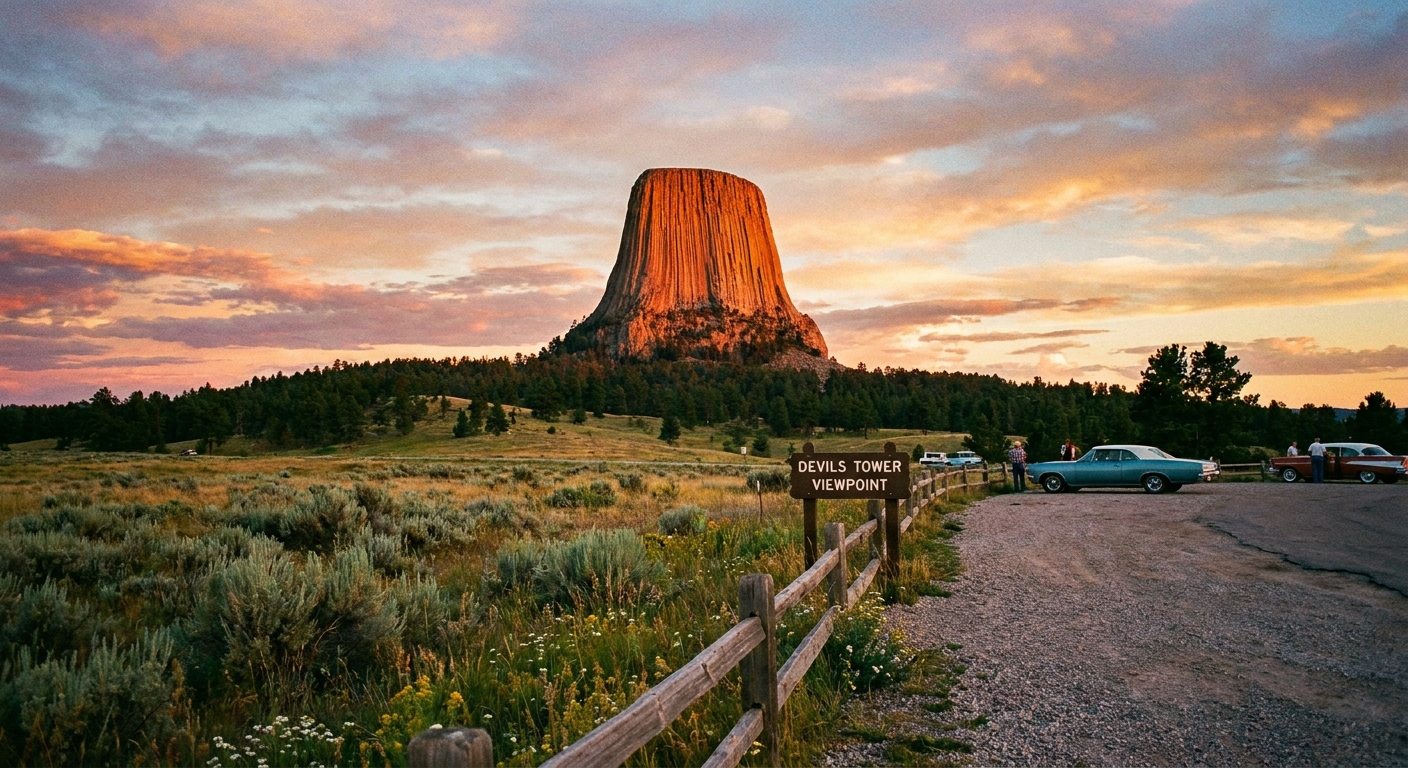
Devils Tower is one of those places where the light changes the whole mood. If you can fit in even one short drive to a pullout, you will come away with a completely different impression than you get from the base.
If you want something simple and reliable, ask at the Visitor Center which tower view pullouts are best that day and which are easiest for parking. Conditions and access can vary by season.
Spring
- Best for: crisp air, greener grass, dramatic clouds
- Plan for: mud on short side paths and fast-changing weather
- Photo note: layered storm light can make the columns look extra textured
Summer
- Best for: long days and reliable road access
- Plan for: heat at midday and pop-up thunderstorms
- Photo note: golden hour softens the tower’s edges and reduces harsh contrast
Fall
- Best for: lower crowds, comfortable hiking temperatures
- Plan for: shorter daylight and chilly mornings
- Photo note: warm tones in grasses pair beautifully with the tower’s darker rock
Winter
- Best for: solitude and stark, cinematic scenery
- Plan for: wind chill, icy patches, and limited services
- Photo note: low sun angles can create long shadows that emphasize the tower’s shape
Weather and safety
Devils Tower’s open terrain makes weather feel bigger. Take it seriously, especially in summer.
Heat
- Start early if you are visiting June through August.
- Carry more water than you think, even for a paved loop.
- Use the forested sections of the Tower Trail as built-in shade breaks.
Wind
- Bring a light layer even when the parking lot feels warm.
- Secure hats and maps. Gusts can be surprisingly strong.
Lightning
This is the big one. A tall monolith in open country is not the place to gamble with storms.
- If you hear thunder, move toward your vehicle or substantial shelter immediately.
- Do not linger at viewpoints when clouds build quickly.
- Avoid being the tallest thing around on open prairie paths.
If storms are in the forecast, flip your order: do the Tower Trail earlier, then finish with prairie dog watching from safer, lower-profile areas and your car nearby.
When to pivot for crowds
There are days when the base area feels like a slow-moving parade, especially midday in summer. If that is your moment, give yourself permission to pivot.
Here is when I recommend trading a packed Tower Trail start for a quieter prairie-focused visit first:
- You arrive late morning or early afternoon and parking feels tense.
- You want a calmer, more reflective experience near prayer cloth areas.
- It is very hot and you would rather wait for cooler light.
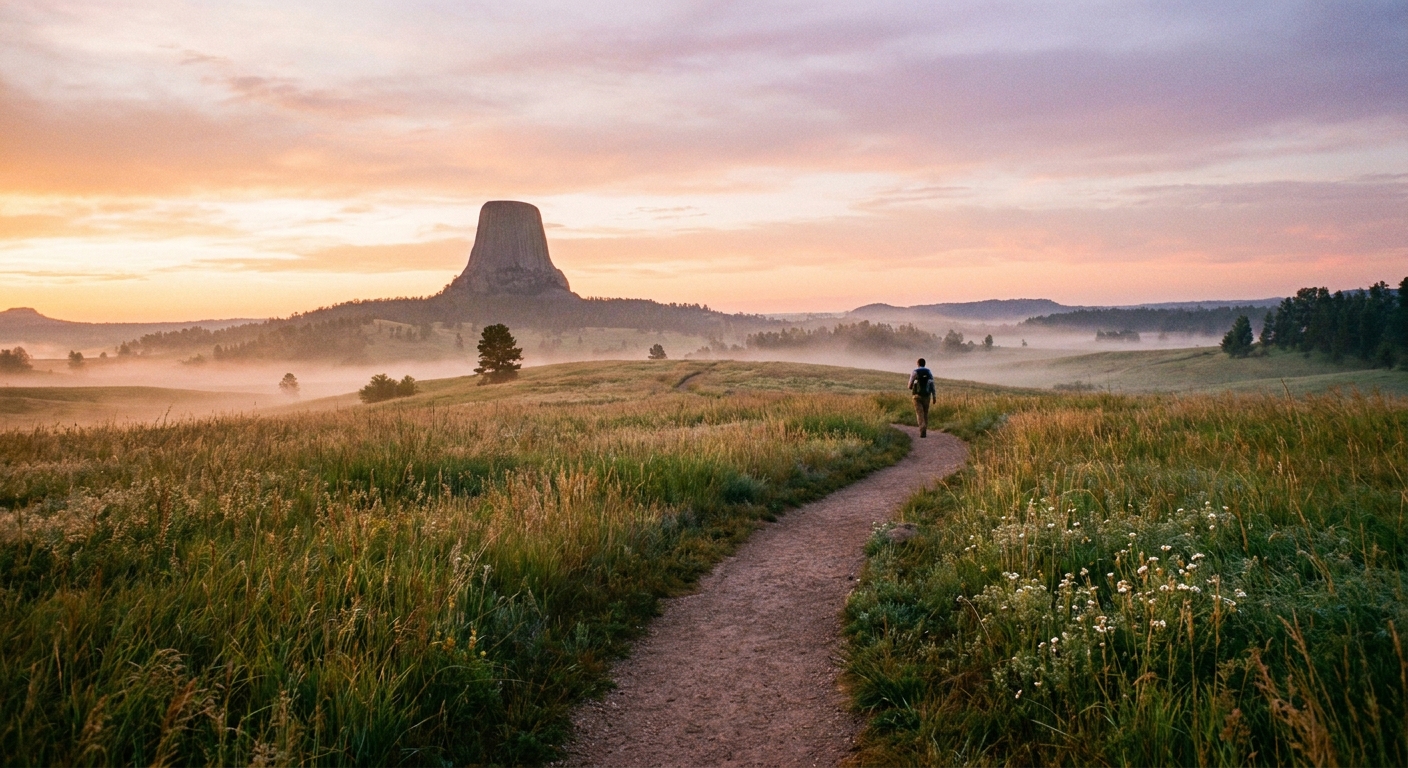
Do your prairie dog towns and open-country wandering first, then return to the Tower Trail later when the day softens. You will often get better photos and a quieter atmosphere.
Day-pack packing list
- Water bottle or hydration pack
- Sun protection: hat, sunglasses, sunscreen
- Light layer for wind
- Comfortable shoes with decent grip, even on paved paths
- Binoculars for prairie dogs and birds
- Snacks you can pack out completely
- Phone battery or small power bank for photos and weather radar
A half-day schedule you can copy
- First 40 minutes: Visitor Center, map, cultural context, fee and pass check, weather check
- Next 40 minutes: Prairie dog towns and grassland viewing
- Next 1 hour 40 minutes: Tower Trail loop at a relaxed pace
- Next 1 hour: Viewpoint pullout drive and final photos
- Optional add-on (30 to 60 minutes): Return to prairie areas if the base is busy or storms threaten
If you only have three hours total, keep it simple: Visitor Center plus Tower Trail, then one pullout on your way out.