Dry Tortugas Day Trip from Key West (Ferry Guide)

Maya Lin
Maya Lin is a travel journalist and outdoor enthusiast who believes the best trips combine rugged adventures with urban comforts. After spending six years backpacking across four continents, she founded Trail & Town Guide to help fellow travelers navigate both hidden mountain passes and bustling city neighborhoods with confidence.
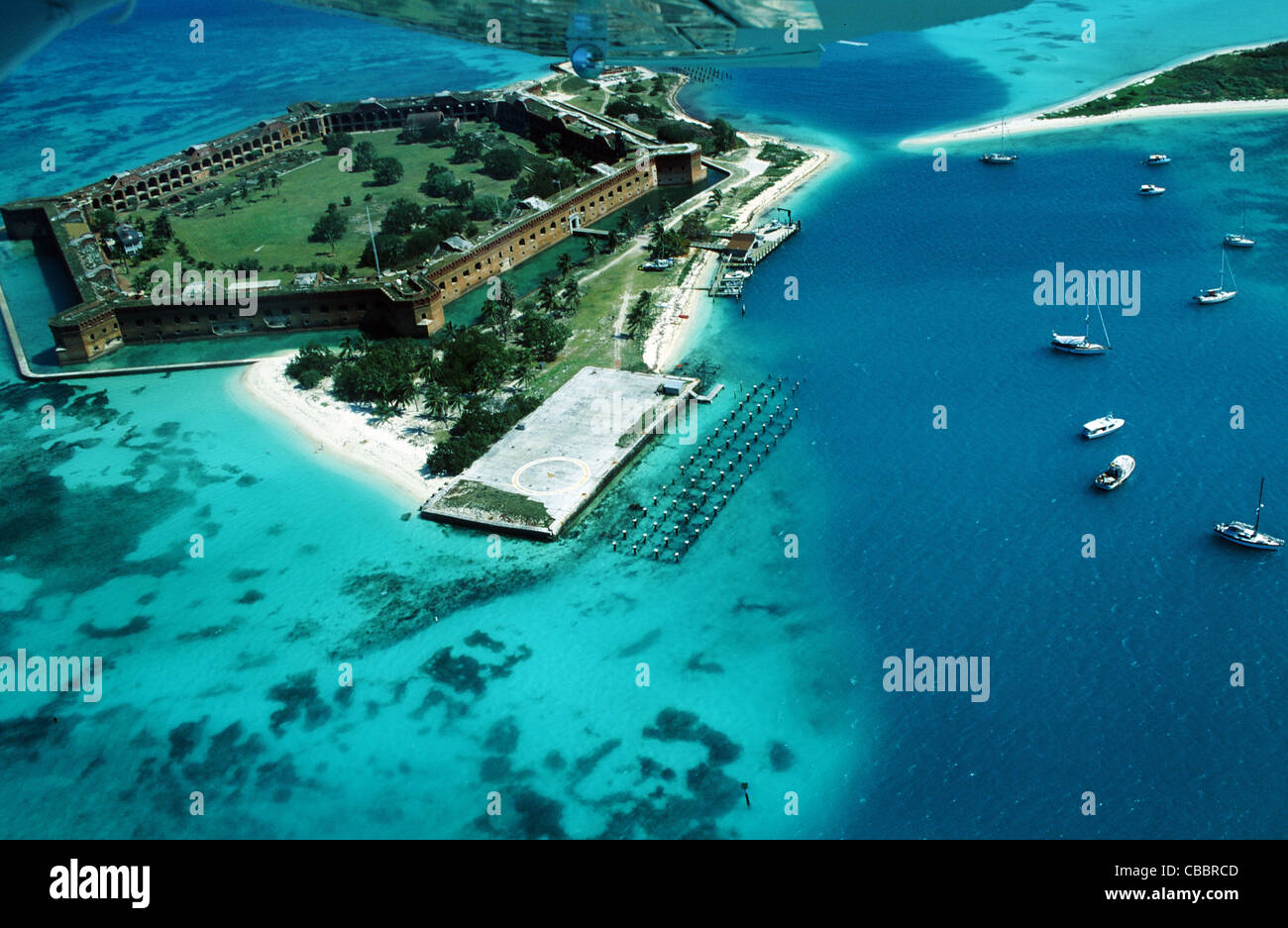
Dry Tortugas National Park is the Florida Keys plot twist you do not see coming. One minute you are ordering Cuban coffee on Duval Street, the next you are stepping onto a 19th-century fortress ringed by electric-blue water and a horizon that looks like it has been edited. The catch is logistics: you cannot just swing by. You earn it with a boat ride or a flight, and your “day trip” is a carefully measured block of time between transit, weather, and the sun.
This page is built for the most common question I get from Key West travelers: Can I do Dry Tortugas in a day and still feel like it was worth it? Yes, absolutely, as long as you choose the right transport, understand the realities out there, and pack like you mean it.
At a glance
- Ferry: Longer transit, more budget-friendly, bundled day. Typical ride is about 2 to 2.5 hours each way, with roughly 4 to 5 hours on Garden Key (varies by season and conditions).
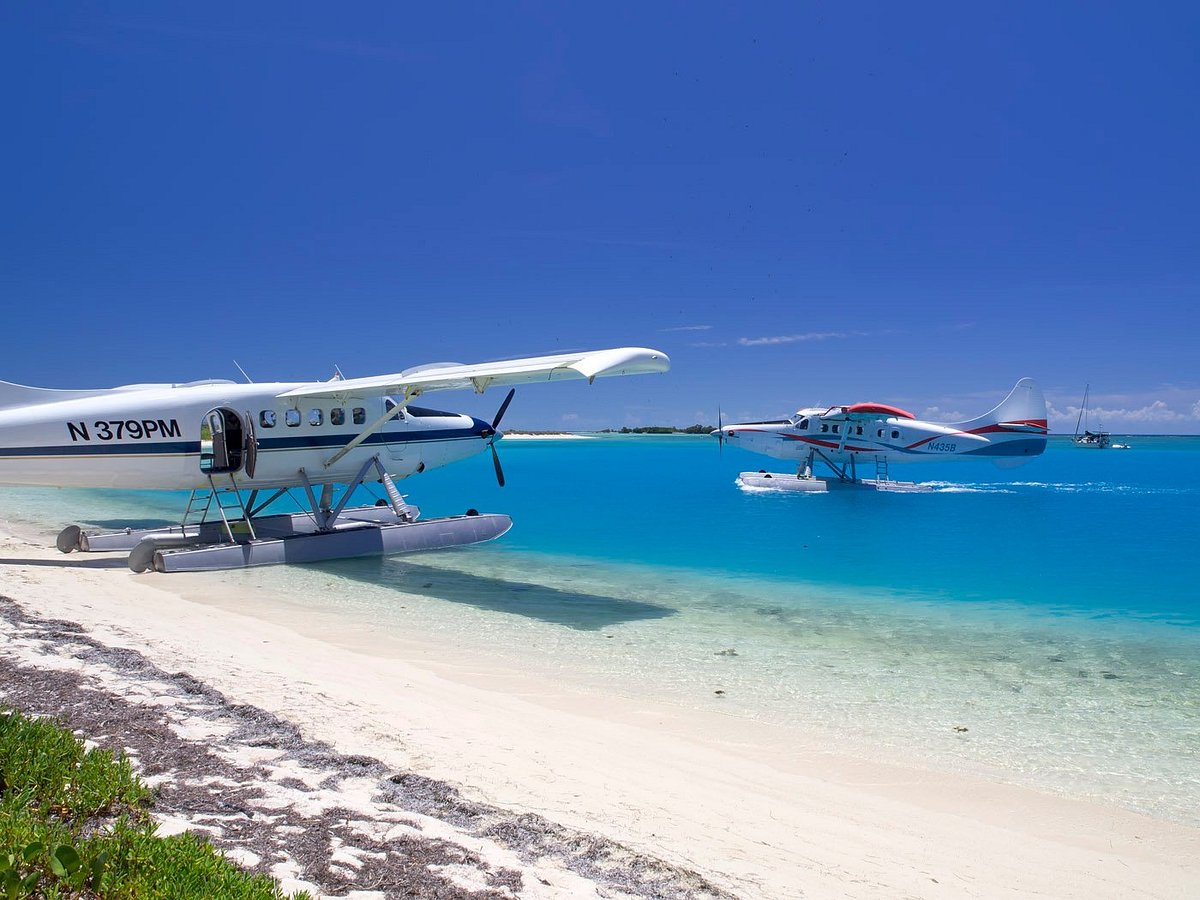
- Seaplane: Faster, pricier, big wow-factor. Typical flight is about 35 to 45 minutes each way, with options that usually give you roughly 2.5 to 6+ hours on the island depending on what you book.
- Book ahead: In peak season, seats can sell out weeks (sometimes months) in advance.
- Facilities: Very limited on the island. Plan to be self-sufficient.
Ferry vs seaplane
There are two main ways most visitors reach Dry Tortugas from Key West for a day trip: the ferry (the classic option) and the seaplane (the splurge). Private boats and charters exist too, but they are a different category in cost and planning.
Both ferry and seaplane can be incredible. The right choice depends on your budget, your seasickness threshold, and how much time you want on the island.
Choose the ferry if you want the easiest all-in-one day
- Best for: Most travelers, families, first-timers, anyone who wants a straightforward plan.
- Why it works: It is structured. The Yankee Freedom ferry typically includes breakfast, lunch, and snorkeling gear. Always confirm current inclusions and rules when you book.
- Tradeoffs: The boat ride is long and can be rough in wind. Your time on the island is limited by the fixed schedule.
Choose the seaplane if you want maximum wow-factor and less transit
- Best for: Travelers who value time over cost, photographers, proposal-level trips, anyone who gets motion sick on boats.
- Why it works: The flight itself is part of the experience. You can see reef colors from above, and you typically spend less time in transit.
- Tradeoffs: It is more expensive, weight limits are strict, and weather can still cancel flights.
Editor’s gut-check: If you are on a tight Key West schedule or you know choppy water makes you miserable, seaplane can be the difference between “I survived that day” and “I would do that again tomorrow.” If you want a more budget-friendly, bundled experience and you can handle an early morning start, the ferry is a solid choice.
Fees and entry
Dry Tortugas is a National Park, so there is a National Park entrance fee. In many cases, that fee is included in your ferry or seaplane ticket, but policies can vary by operator and change over time.
- If you have an America the Beautiful pass (or other qualifying pass), bring it and ask at booking whether you can receive a passholder adjustment or refund on the park fee portion.
- If you are not sure what is included, confirm before you pay. It is a small question that prevents surprise fees at check-in.
Facilities and rules
This is the part people do not picture when they imagine “tropical island day.” Dry Tortugas is remote, and the island setup reflects that.
- No food or drink vendors: There is nothing to buy on the island. Bring what you need, or rely on what your operator provides.
- No running freshwater for visitors: Plan for salt, sweat, and sunscreen. You will not have a resort-style rinse-off situation.
- Restrooms: There are restrooms on Garden Key. If you are doing the ferry, the boat also has restrooms, including while docked.
- Pack in, pack out: There are no public trash cans for visitors. Whatever you bring, you take back with you. Pack a small trash bag so you are not juggling wrappers and peels all day.
Leave-no-trace reality check: Do not take shells, coral, or “souvenirs.” Respect wildlife, especially nesting birds. Dry Tortugas feels pristine because people treat it that way.
What you can actually do in one day
On paper, a day trip sounds like plenty. In reality, Dry Tortugas rewards travelers who focus on a few high-impact experiences instead of trying to do everything.
Non-negotiables for most visitors
- Fort Jefferson: Walk the moat wall, step inside the brick arches, and climb to viewpoints if open. The fort is massive, and even a casual wander feels cinematic.
- Beach time: Bright sand, clear water, and that “I cannot believe this is still Florida” feeling.
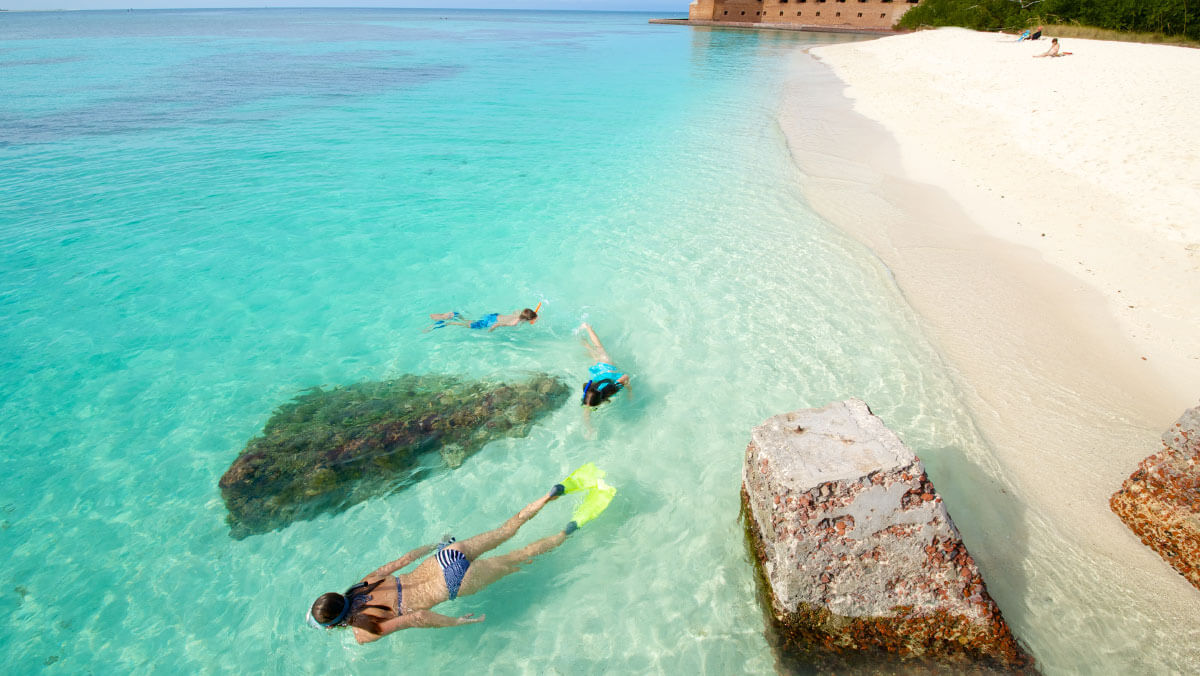
- Snorkeling (conditions permitting): Easy access close to shore can be great for first-timers. Visibility and current are weather-dependent.
A realistic day-trip rhythm
This is the pace that tends to feel satisfying rather than frantic:
- Arrival: Get oriented, hydrate immediately, and claim a spot for your bag.
- Fort first: Do the fort before peak sun if possible. Brick radiates heat.
- Snorkel window: Aim for the calmest-looking period of the day and do not overthink it. If the water is choppy, pivot to fort and beach instead of forcing it.
- Wrap-up: Leave time to dry off, change, and re-pack without rushing. Remember, you are packing your trash back out too.
Reality check: A day trip is usually not the time to chase far-off snorkeling spots, long swims, or “every corner” of the fort. Dry Tortugas is better when you slow down and let the place sink in.

Snorkeling
People often book Dry Tortugas imagining a perfect snorkel session in aquarium-clear water. That can happen, but it is not guaranteed. Wind, tide, and visibility change fast out there.
How to set yourself up for the best snorkeling
- Go early if you can: The earlier part of your island time often has calmer conditions, though not always.
- Protect your feet: Bring water shoes or sturdy sandals. Many entries are sandy, but some areas can be rocky depending on where you enter.
- Use a flotation option if you are not a confident swimmer: It keeps the experience relaxed, which is the whole point.
- Do not skip the fort for snorkeling: If conditions are mediocre, you still have a world-class historic site steps away.
Quick note on wildlife: You might see colorful reef fish, rays, and plenty of birds. Keep your distance and never chase animals for a photo. The best sightings happen when you stay calm and let the reef do its thing.
What to pack
Dry Tortugas is remote. Think “boat island day” not “resort beach day.” You want to be self-sufficient, sun-smart, and ready for wind and salt spray.
Essentials
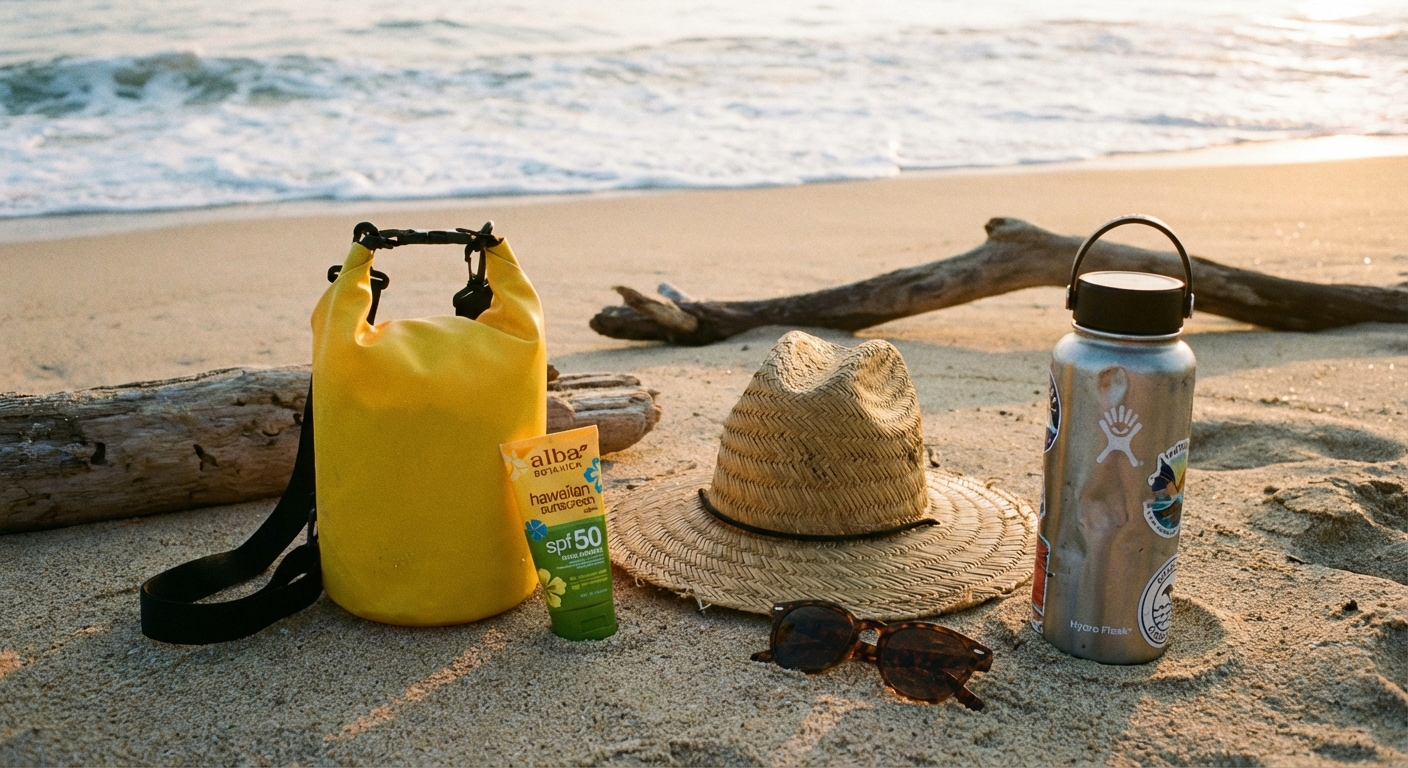
- Water: Bring a filled reusable bottle. If you have space and your operator allows it, pack extra. Some trips provide beverages, but do not assume it. Confirm at booking.
- Sun protection you will actually use: High-SPF sunscreen, a wide-brim hat, sunglasses, and a lightweight long-sleeve layer are a winning combo.
- Swimsuit plus a quick-dry layer: You will be more comfortable in the fort and on the ride with something over your suit.
- Snorkel gear: If your trip includes loaner gear, consider bringing your own mask for the best fit.
- Water shoes: For hot sand and occasional rocky spots.
- Small towel or packable towel: Dries fast and does not hog space.
- Dry bag or zip pouches: For your phone, wallet, and anything you do not want salty.
- Trash bag: Small, light, and essential for the pack-in, pack-out rule.
Nice-to-haves
- Electrolytes: Packets are lightweight and worth it.
- Light snacks: Even if lunch is included, having a snack you like helps with motion sickness and energy.
- Reef-smart habits: The best “reef-safe” move is covering up with a sun shirt so you use less sunscreen overall.
- Simple first aid: Blister bandages and a couple of basics can save your mood.
Do not bring
- Too much gear: You will carry it all day and fight it in the wind.
- Valuables you would cry over: Salt water is not gentle, and there is sand everywhere.
Seasickness and sun
If you do the ferry, the most challenging part for many travelers is not the park. It is the ride. Add intense sun once you arrive, and you have two very manageable problems if you plan ahead.
Seasickness
- Start early: If you use medication, follow directions and take it before departure, not after you feel bad.
- Eat something bland: An empty stomach can be as unhelpful as a heavy, greasy breakfast.
- Pick your spot: Mid-ship tends to feel more stable than the very front or back.
- Look at the horizon: It is classic advice because it works.
- Hydrate, but sip: Chugging water can backfire if you are queasy.
Sun exposure
Dry Tortugas is gorgeous and intensely bright. Water and pale sand bounce light back at you. Plan for maximum exposure.
- Cover up first: Sun shirt, hat, and sunglasses do more work than sunscreen alone.
- Reapply sunscreen on a schedule: Especially after snorkeling.
- Cool-down breaks: The fort has shaded areas, although some sections can still feel warm and humid. Use it as a reset when you need one.
If you only do one thing: bring a long-sleeve sun shirt. It is the easiest way to stay comfortable all day and still enjoy the beach.

Return timing
Dry Tortugas day trips are full-day commitments. Even if you feel energetic, your schedule is not infinitely flexible because your ride back to Key West is fixed.
What to expect on the way back
- You will be tired: Sun plus salt plus walking equals an early bedtime vibe.
- The return ride can feel rougher: Afternoon wind can pick up, and fatigue makes motion sensitivity worse.
- You may arrive later than you imagine: Build buffer time for docking, disembarking, and getting back to your hotel.
A sample day (times vary)
A common ferry-style day looks like this: early morning check-in, departure around 8 am, arrival late morning, a few solid hours on the island, departure mid-afternoon, and back in Key West early evening. Seaplane schedules vary more, but the same rule applies: do not book a “tight” dinner reservation.
How to plan your Key West evening
- Make dinner reservations for later: Give yourself space to shower and regroup.
- Keep it close: Choose a dinner spot near where you are staying so you are not trekking across the island exhausted.
- Say no to a packed night: This is not the day to schedule a sunset cruise, bar crawl, and live music marathon unless you are truly built different.
Ferry checklist
Use this as your quick pre-departure scan the night before.
- ID and booking confirmation
- Reusable water bottle (filled) plus extra water if allowed
- Sunscreen, hat, sunglasses, sun shirt
- Swimsuit, quick-dry cover-up, packable towel
- Water shoes
- Dry bag or waterproof pouch for phone and wallet
- Snacks and electrolytes
- Seasickness plan (medication or alternatives you trust)
- Light layer for the boat ride
- Small trash bag (pack in, pack out)
Is it worth it?
Yes, if you go in with the right expectations. You are not buying an all-day beach lounge with amenities. You are buying access to one of the most surreal, historically rich corners of Florida, plus the bragging rights of reaching a national park that feels genuinely remote.
If you are deciding between “another Key West day” and “Dry Tortugas,” I would choose Dry Tortugas. Key West will still be there when you get back, and your post-park shower and iced coffee will feel like luxury.
Town Wander tip: If you can, plan a lighter day after your trip. Dry Tortugas looks like a postcard, but it hits like an adventure.