El Santuario de Chimayó: Hours, Etiquette, and a High Road Stop

Maya Lin
Maya Lin is a travel journalist and outdoor enthusiast who believes the best trips combine rugged adventures with urban comforts. After spending six years backpacking across four continents, she founded Trail & Town Guide to help fellow travelers navigate both hidden mountain passes and bustling city neighborhoods with confidence.
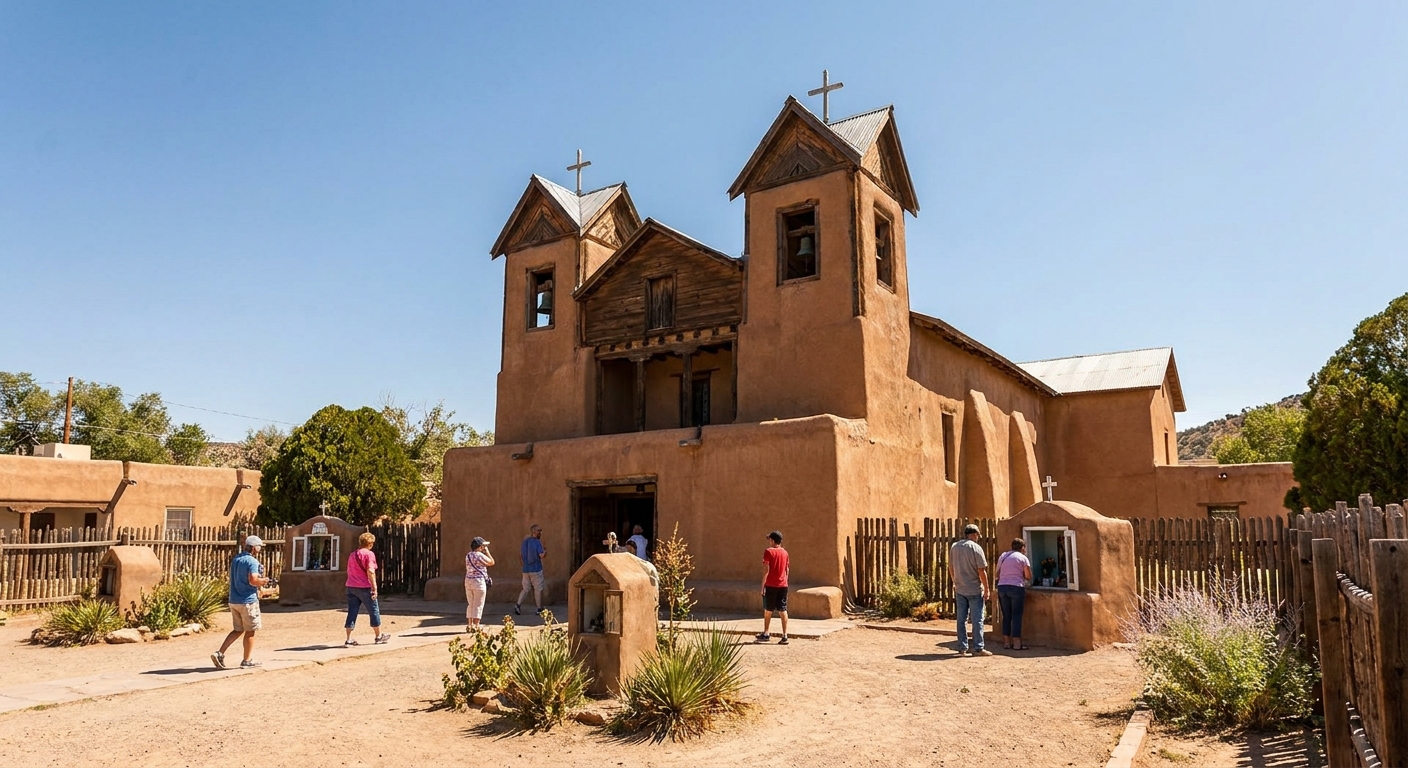
If you are driving New Mexico’s High Road between Santa Fe and Taos, Chimayó is the stop that quietly pulls you out of road-trip mode and into something more grounded. El Santuario de Chimayó is not just a beautiful adobe church. It is an active pilgrimage site with living traditions, especially around Holy Week, and it deserves the kind of visit that is both curious and careful.
This guide covers the basics that actually matter on the ground: when to go, how long to budget, where to park on NM-503, what the healing dirt room is (and how to approach it respectfully), plus photo and recording norms so you do not accidentally turn someone’s prayer into your content.
Where Chimayó fits on the High Road
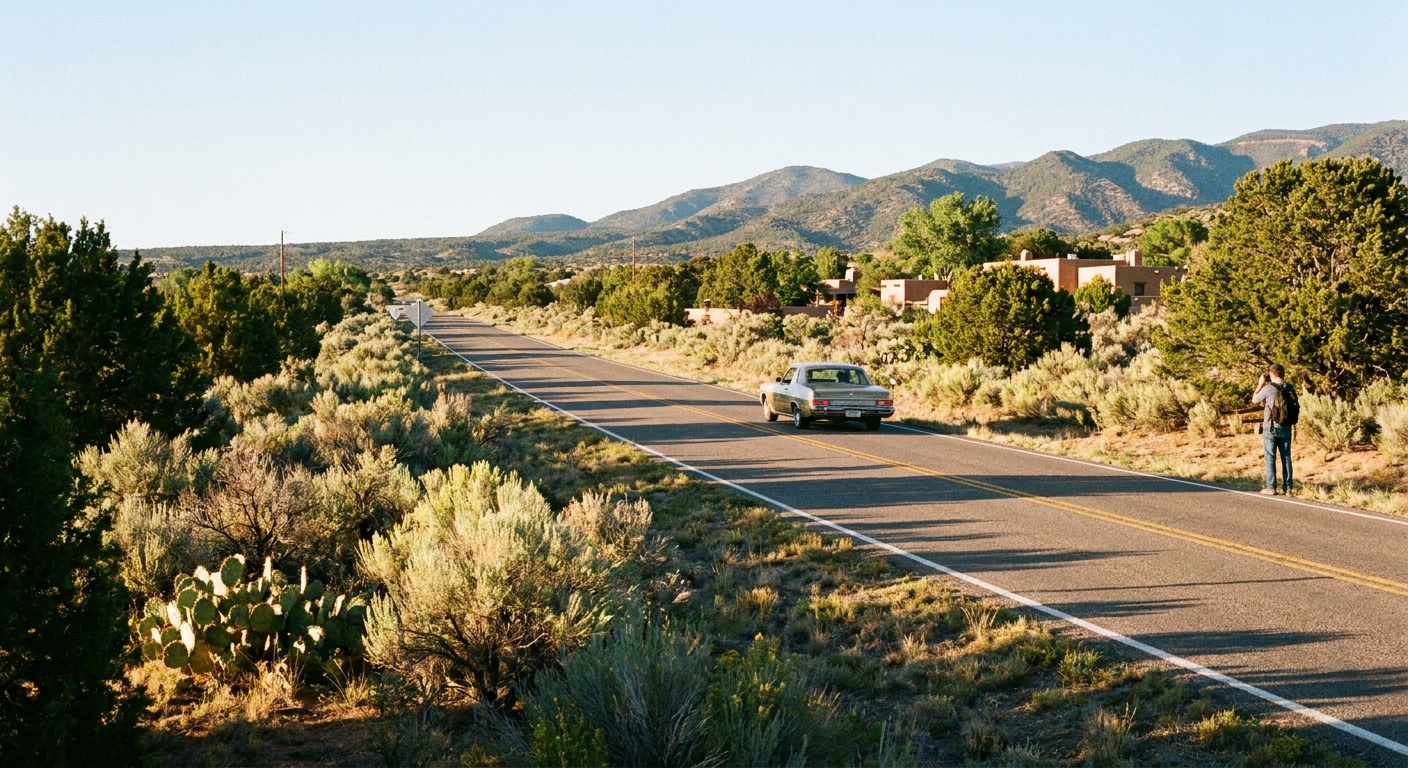
Chimayó sits just off the High Road corridor on NM-503, north of Española. It is an easy detour if you are doing the classic Santa Fe to Taos route, and it also works as a cultural stop if you are building a wider day that includes places like Española, Truchas, or even a long loop toward Abiquiú and Ghost Ranch.
From Santa Fe or Taos
- From Santa Fe: Head toward Española, then take NM-503 into Chimayó.
- From Taos: Come down through the High Road corridor toward Española, then take NM-503 into Chimayó.
Cell service can be spotty on parts of the High Road, so it helps to load your map before you leave town.
How much time to budget
- Quick, respectful pop-in (30 to 45 minutes): Park, walk the grounds, step inside briefly if open, and leave space for others.
- Ideal visit (60 to 90 minutes): Time to sit quietly, read plaques, visit the devotional spaces, and stroll the courtyard without rushing.
- Holy Week or a busy weekend (90+ minutes): Add time for parking, lines, and slow-moving foot traffic.
If you only have an hour, you can still have a meaningful visit. The key is arriving with the right expectations: this is a sanctuary first and a sightseeing stop second.
Why this place matters
El Santuario de Chimayó dates to the early 1800s and is one of the best-known Catholic pilgrimage sites in the United States. Its significance is tied to local Hispano and Indigenous history in northern New Mexico and to a devotional tradition connected to Our Lord of Esquipulas.
According to tradition, the site’s holiness is linked to a miraculous discovery of a crucifix of Our Lord of Esquipulas, which helped shape Chimayó’s identity as a place of prayer and healing. You do not need a deep history lesson to visit well, but it helps to know you are stepping into a living story, not a museum stop.
Hours and timing
Hours at pilgrimage sites can change with seasons, special services, and restoration needs, so treat any online schedule as typical rather than guaranteed. The safest move is to confirm day-of via the official sanctuary listing or a quick phone check before you drive up, especially in winter or around major Catholic holidays.
Typical visiting windows
In general, visitors can often access the grounds during daylight hours, but access is not always consistent. Some days the property may have limited entry, gated areas, or reduced interior hours depending on staffing and services. If you want to go inside, aim for late morning through mid-afternoon rather than arriving near closing.
Best times for a quieter visit
- Weekdays, mid-morning: Calm, good light, and easier parking.
- Shoulder seasons: Late fall and winter can be quieter, but verify access because weather and staffing can affect hours.
- Early afternoon: Often steady but manageable outside of spring peaks.
Holy Week crowds
Chimayó is widely known for Holy Week pilgrimages. During Holy Week, especially leading up to Good Friday and Easter, you may see:
- Heavy foot traffic on approach roads and in the village
- Very limited parking and slower vehicle flow on NM-503
- Long lines to enter small devotional areas
- A more intense, prayerful atmosphere where photo-taking can feel intrusive even if it is technically allowed in some outdoor areas
If your goal is a peaceful cultural stop, choose a non-holiday weekday. If your goal is to witness pilgrimage tradition, arrive early, be patient, and treat the day as a community event rather than a checklist item.
The healing dirt tradition
You will hear Chimayó described as a place of healing, often connected to a small room associated with holy dirt. For many pilgrims, this tradition is deeply personal and religious, tied to prayers for health, gratitude, and hope. Visitors do not have to share the belief to be respectful of it.
What it is
The devotional room is traditionally known as el pocito, meaning “the little well.” Pilgrims may take a small amount of dirt as part of prayer and faith practices, and over time, stories and testimonies of healing have become part of Chimayó’s identity.
You may also notice crutches and canes left behind as offerings of gratitude. Whether you read them as faith, hope, symbolism, or something in between, they can make the room feel emotionally heavy. It helps to walk in prepared for that.
How to approach it as a visitor
- Move slowly and quietly. If there is a line, do not cut or hover over people who are praying.
- Follow posted instructions. Quantity limits and collection methods can change, so treat current guidance on-site as the rule.
- Take only what is permitted. More is not better, and it is not a souvenir scoop.
- Skip it if you are unsure. You can still have a meaningful visit by observing respectfully.
A good rule of thumb: if you would not talk over someone’s prayer in a hospital chapel, do not do it here.
Visiting etiquette
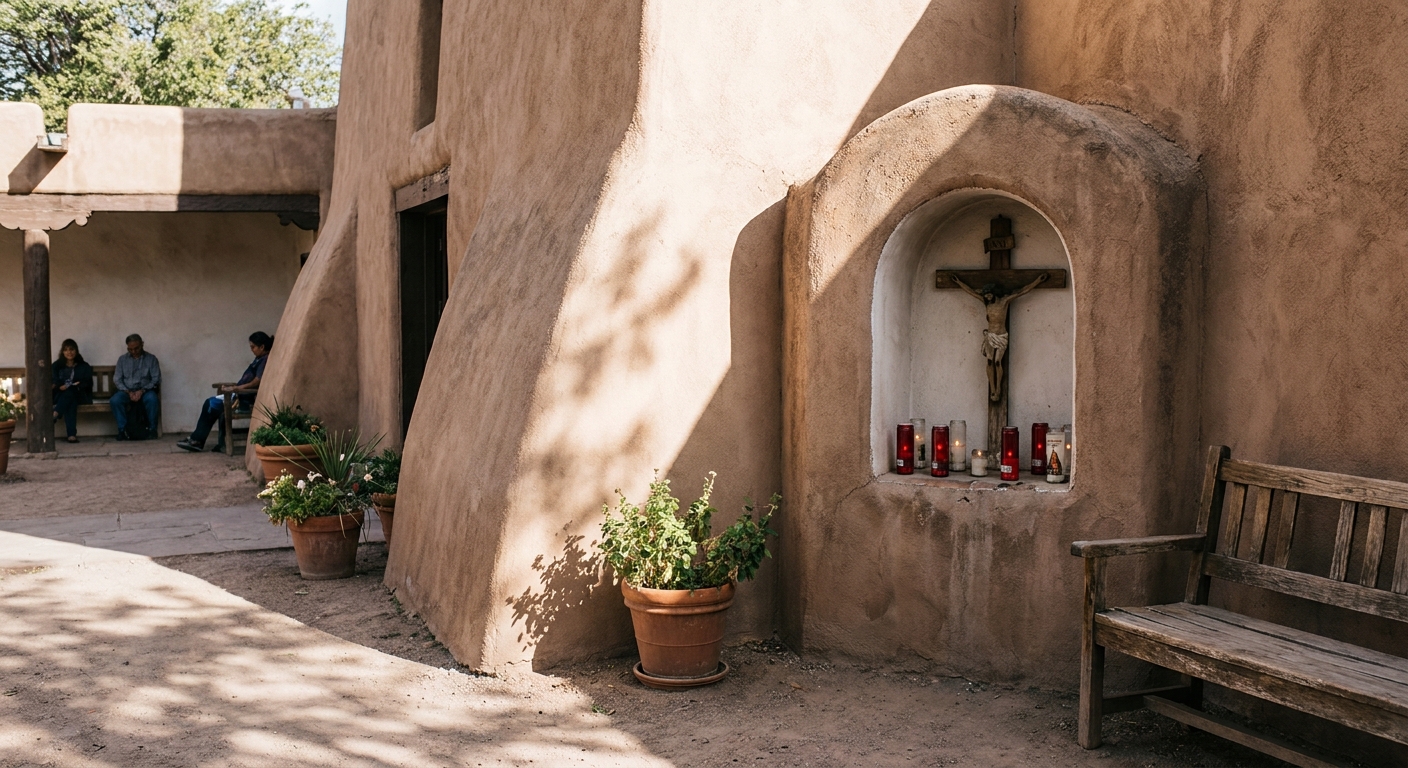
El Santuario de Chimayó is an active religious site serving local families and pilgrims. A little etiquette goes a long way, and it is easy to follow if you think of yourself as a guest in someone else’s sacred space.
What to wear
- Choose modest, non-beach attire if you plan to enter the church.
- Bring layers. The High Road can feel sunny and warm, then abruptly windy and cool.
- Comfortable shoes help for uneven paths and standing.
Inside voices and phone habits
- Silence your phone before you enter.
- Take calls outside and away from doorways.
- Keep conversations short and low, especially near devotional areas.
Donations and local support
Many sites like this rely on donations and gift-shop purchases to maintain the grounds. If you have the budget, consider a small donation, then keep spending locally in Chimayó or nearby Española.
Photos and recording
Rules can vary by season and specific areas, so posted signs and staff guidance always win. Even when something is technically allowed, there is still the question of whether it is considerate in the moment.
A simple photo rule
Outdoors, usually yes. Indoors, only if clearly permitted and you can do it discreetly. If people are actively praying, I put the camera away.
Practical norms
- Do not photograph people praying up close. If people appear in your frame, keep them unidentifiable or wait until the area clears.
- No flash. Flash changes the entire mood and draws attention in a way that feels jarring in sacred spaces.
- Skip tripods and large setups. They block walkways and feel like a production.
- Be careful with audio and video. Do not record services, prayers, or conversations unless explicit permission is posted or granted.
If you want one strong memory without taking many photos, step back and photograph the exterior and courtyard in soft afternoon light. The architecture and atmosphere carry the story on their own.
Parking and arrival
NM-503 is the main approach into Chimayó. The road itself is straightforward, but parking near the sanctuary can feel tight, especially on weekends and during Holy Week.
What to expect
- Limited close-in parking: Arrive earlier if you need a short walk.
- Overflow parking and walking: During peak times, be ready to park farther away and walk in with the crowd.
- Pedestrians: Drive slowly and stay alert for people crossing and groups walking along the road.
Small-town parking etiquette
Do not block driveways, gates, or narrow shoulders. Chimayó is a small community first. The best way to keep this stop welcoming for travelers is to park legally, walk patiently, and treat residents like neighbors.
Accessibility and facilities
This is a historic adobe site, so expect a mix of smooth areas and uneven surfaces.
- Accessibility: Some paths may be uneven, and certain doorways or rooms may be tight. If you need step-free access, it is worth calling ahead to ask what is currently available.
- Seating: Seating is typically available inside the church when open, and there are places to pause outdoors.
- Restrooms and water: Availability can vary. Plan ahead and do not assume you will find water on-site, especially during hot, bright weather.
- Gift shop: Often present, but hours can be limited or seasonal.
- Food nearby: Chimayó is small. For more options, Española is the reliable nearby hub.
How to fit it into your day
Chimayó is an easy add-on because it does not require hiking boots, a reservation system, or a half-day commitment. Here are two realistic ways to slot it in without turning your day into a frantic loop.
Option A: High Road day
- Stop 1: Chimayó (60 to 90 minutes)
- Stop 2: A village stop like Truchas for views and art galleries (30 to 60 minutes)
- Stop 3: Late lunch or coffee in Taos or Santa Fe depending on direction (60+ minutes)
This version is great if you like a balance of culture, scenery, and a little spontaneity.
Option B: Ghost Ranch direction
- Morning: Chimayó visit (arrive earlier for calm)
- Midday: Drive toward Abiquiú for lunch and views
- Afternoon: Continue to Ghost Ranch area activities or scenic overlooks, then head back before dark if you are day-tripping
The key is simple: treat Chimayó as your grounding stop first, then do the bigger landscapes after. It keeps the day from feeling like you are sprinting between landmarks.
Quick checklist
- Confirm hours day-of, especially in winter or around Holy Week.
- Bring a layer and wear modest, comfortable clothing.
- Plan for 60 to 90 minutes for an unhurried visit.
- Park legally and expect a walk during busy times.
- Keep photos respectful, especially indoors and around people praying.
- Follow current rules for el pocito and any dirt-taking guidance posted on-site.
Chimayó is one of those places that makes New Mexico feel like New Mexico: art and faith, history and everyday life, all in one small village tucked into the hills. Give it the time and quiet it deserves and it will be the stop you remember long after the High Road views blur together.