Fern Canyon in the Redwoods: Permits, Creek Crossings, and Mud Season
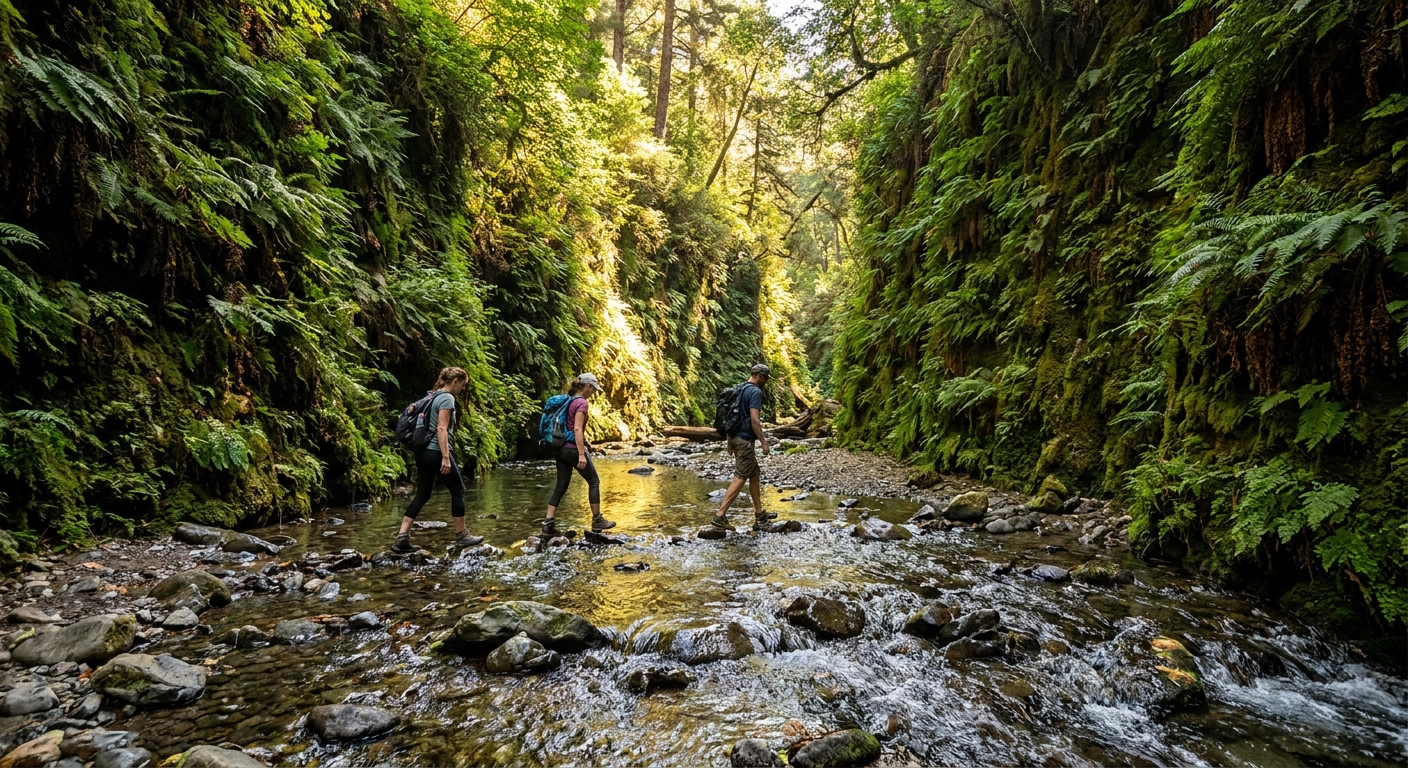
Fern Canyon is one of those places that looks like a movie set because it basically is. Vertical walls draped in five kinds of fern, ribbons of water sliding over moss, and that cool, green hush that makes you talk quieter without meaning to. It is also one of the most logistics-heavy “short hikes” in the Redwoods. The loop is roughly 1 mile, but the road can close, the creek can be ankle-deep or knee-deep, and the parking situation has its own personality depending on season.
This page is the nitty-gritty: when you might need a permit or reservation, how to approach the stream crossings without turning your day into a soggy misery march, what to do when you meet Roosevelt elk, and why mud season is not a cute nickname.

Where Fern Canyon is
Fern Canyon sits in Prairie Creek Redwoods State Park, one of the Redwoods National and State Parks (RNSP) units near Orick, California. Most day visitors access it from the Gold Bluffs Beach area and the Fern Canyon trailhead parking lot.
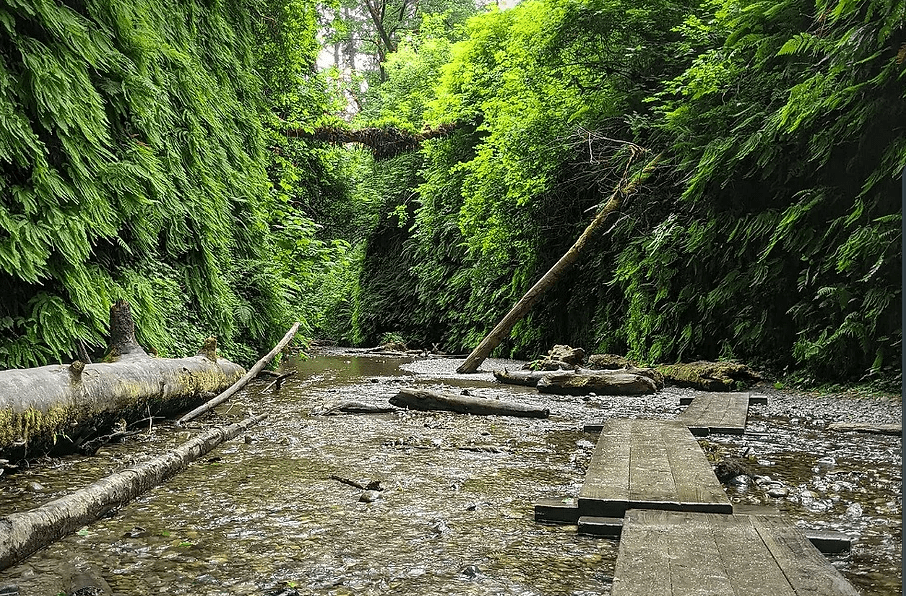
The “trail” experience is variable: sometimes you are walking on a firm path and hopping footbridges, and other times you are simply walking in the creek because the creek is the path. Either way, plan on it taking longer than a normal 1-mile loop because you are negotiating water, rocks, and people.
Permits and reservations
Do you need a permit?
It depends on season and access route. Fern Canyon access is managed to protect resources and to keep the small parking area from becoming a gridlock situation. In busy periods, day-use access can require a reservation or day-use permit for the Gold Bluffs Beach and Fern Canyon area.
Because requirements can change by year, week, and even weather events, treat this as the rule of thumb:
- Peak season often comes with some form of controlled entry (reservation or permit) for day-use parking.
- Shoulder and winter seasons are more likely to be first-come, first-served, but road and flood closures become the bigger issue.
What I do every time: the night before, I check the official Redwoods National and State Parks alerts and the Prairie Creek Redwoods State Park page for current access requirements, road status, and any active reservation links. If there is a permit system in place, book it as soon as your dates firm up.
Biking or arriving without a car
Controlled entry systems are typically focused on vehicle access and parking capacity. If you are arriving by bike or being dropped off, you still need to follow any posted area closure rules and day-use regulations. Do not assume “no car” automatically means “no permit.” When in doubt, confirm through the park’s current alerts.
Fees you might encounter
Even when you do not need a reservation, you may encounter day-use fees for the Gold Bluffs Beach area, depending on current park management. Bring a card and a backup payment method in case self-pay stations are in use.
Getting there
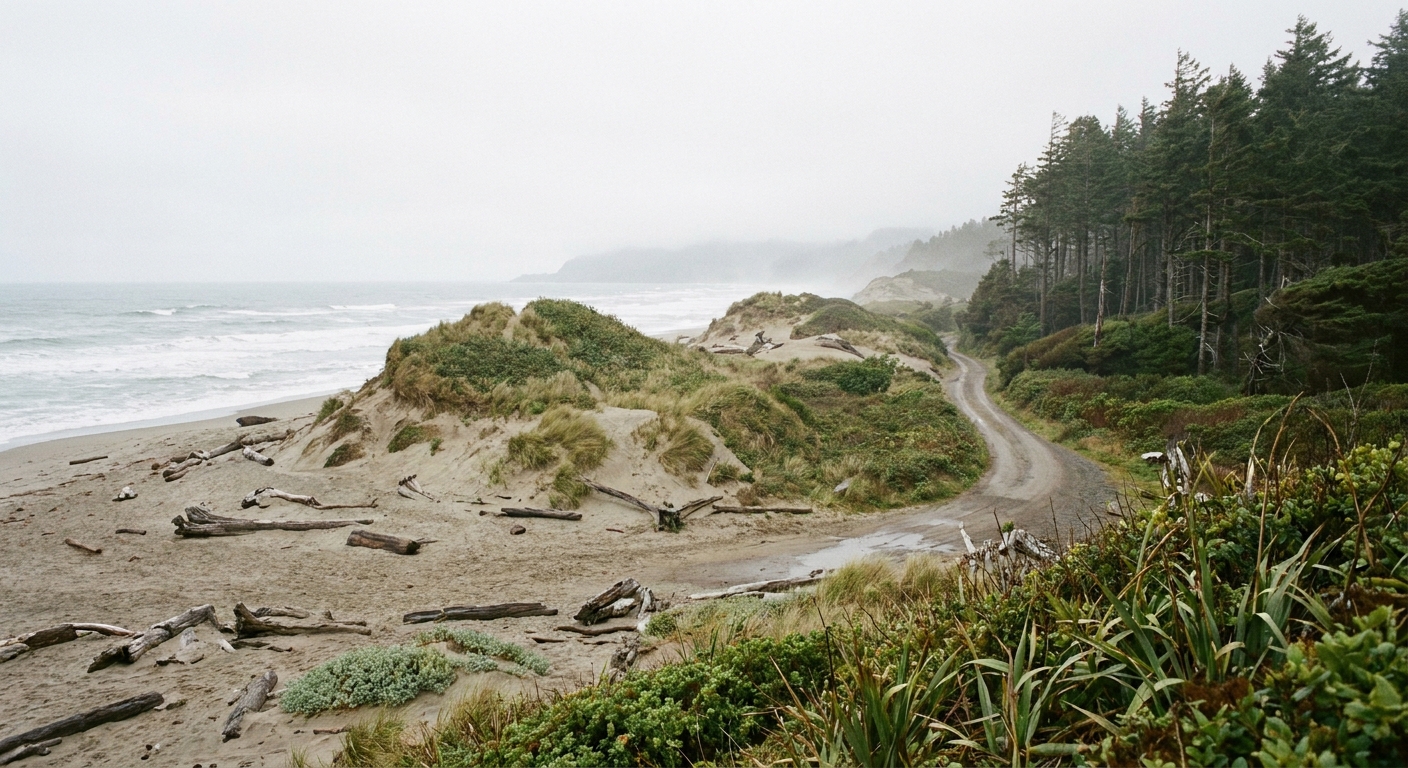
The access road to Fern Canyon is scenic and narrow, and after rain it can be pothole-heavy. Conditions change fast on the North Coast.
The road name to know
The notorious approach is Davison Road, the dirt road that leads out to Gold Bluffs Beach and the Fern Canyon area. This is the name you will see in official alerts, so it is the one to search when you are trying to figure out if you are about to waste a drive.
Closure reality
In wet months, the biggest trip-ender is not the hike, it is the approach. Seasonal flooding can close Davison Road, and storms can down trees. If you see a closure notice, believe it. There is no “maybe my SUV can handle it” workaround that ends well for you or the rescue staff.
Timing tip
If Fern Canyon is open and you are visiting in a high-demand window, arrive early. The parking area is small, and once it fills, your options are limited. Going early also means fewer people in the canyon, which makes the whole place feel more cathedral-like.
Stream crossings
Fern Canyon’s creek crossings are the make-or-break detail for comfort. You might cross the stream multiple times, and in wetter periods the water can be cold enough to numb your feet quickly.
Typical conditions by season
- Summer: often the easiest time for shallow crossings, more footbridges in use, and generally lower water. Still expect wet feet if you explore side sections or if bridges are moved or limited.
- Fall: can be fantastic, but the first major rains can raise water levels quickly.
- Winter and spring: higher water, more mud, and a much higher chance you will be walking in water for sections rather than “crossing” it.
Footwear
I am a carry-on only traveler, which means I am picky about shoes that earn their spot. For Fern Canyon, choose based on your tolerance for wet feet.
- Best overall for comfort: closed-toe water shoes or sturdy hiking sandals with toe protection. You want grip on slick stones and you want to avoid stubbing your toes on hidden rocks.
- Best if you hate cold water: waterproof hiking boots plus waterproof socks or gaiters can work in low water, but if water overtops your boot, you will be wet and cold for longer. This is the classic Fern Canyon gamble.
- Good budget compromise: trail runners that dry fast. You will get wet, but you will also get back to normal faster than in soaked boots.
What I avoid: flip-flops (slippery, no support) and brand-new boots (wet leather plus grit equals blisters in a hurry).
Small gear that pays off
- Trekking poles if you have them, especially in winter or spring. They make creek crossings steadier and reduce slips.
- Quick-dry socks and a spare pair in the car.
- A small towel for your feet if you plan to swap shoes after.
- Dry bag for phone and keys if you are prone to dropping things while balancing on logs.
Mud season
Let’s define mud season the honest way: it is the time of year when you stop trying to keep your shoes clean and start trying not to lose them.
What mud is like
This is not dry, dusty trail mud. This is coastal rainforest mud. It can be slick, suction-cuppy, and surprisingly deep in low spots. Add in leaf litter and you have hidden puddles that look harmless until your foot disappears.
How to plan around it
- Expect slower hiking times. A short distance can take longer when every step is a traction decision.
- Wear shoes with real tread. Smooth soles become ice skates on wet clay.
- Bring a change of clothes for the drive back. At minimum, extra socks and a layer for warmth. The coast cools you down fast once you are damp.
- Protect your car. A trash bag or rubber mat in the footwell saves your sanity.
If you are visiting after a storm and you want a pristine outfit for dinner in town later, plan a “mud buffer” into your day: Fern Canyon first, coffee and a change of socks second, then your city comforts.
Elk etiquette
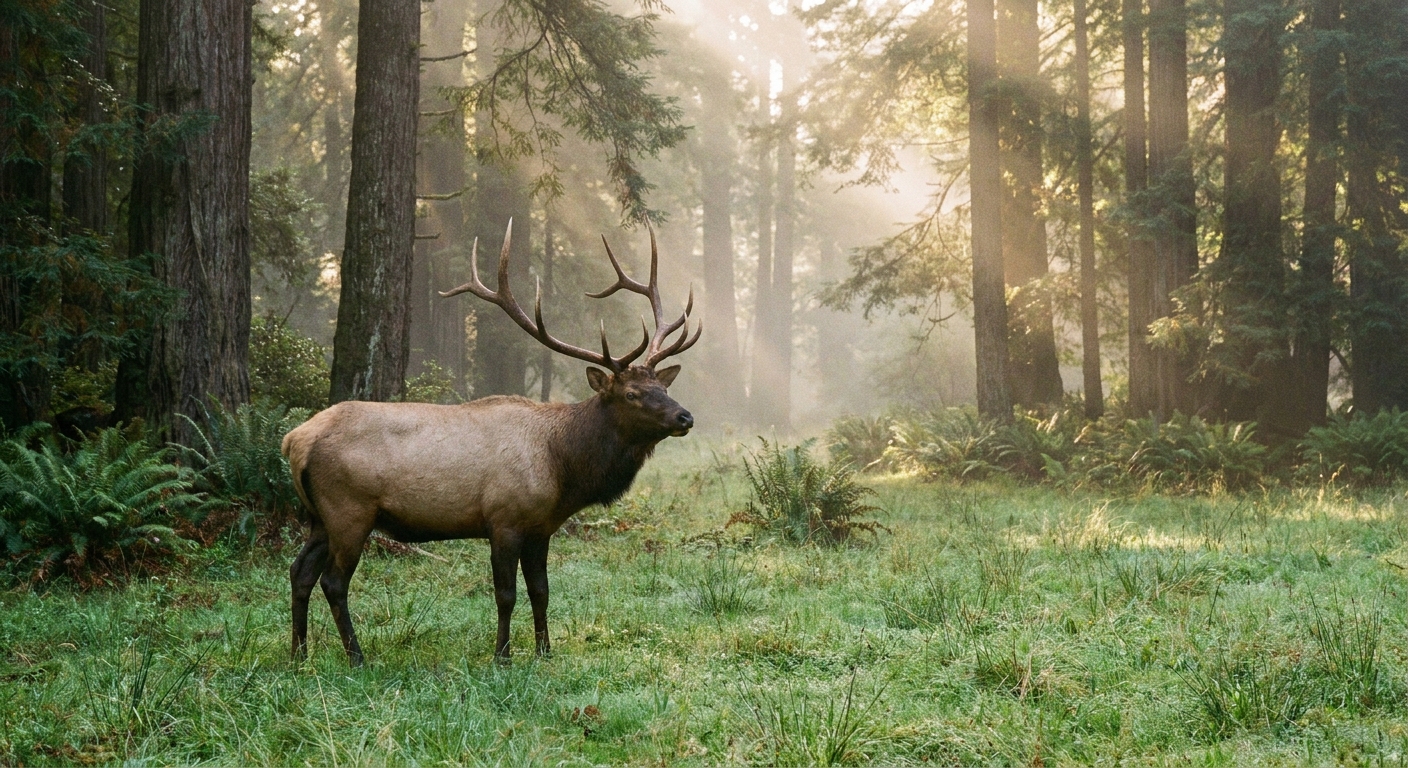
Prairie Creek is prime Roosevelt elk territory. Seeing them is a highlight. Treating them like props is the fastest way to ruin your day.
How close is too close?
Use this simple rule: if an elk changes its behavior because of you, you are too close. If it stands up, shifts position, stares you down, pins ears back, or you see agitation, back away. Give them a wide buffer, especially during rut (fall) and calving season.
If elk are on the road or at the trailhead
- Stay in your vehicle if they are near the road and you are driving.
- Do not try to thread the needle between elk and the rest of the herd.
- Give them time. They move when they move. Your schedule does not matter to a 700-pound animal.
Photography basics
- Use a zoom lens instead of your feet.
- Do not approach for selfies.
- Keep kids close. Leave pets at home.
What to pack
Fern Canyon is short, but conditions are what make it feel like an expedition. Here is my compact, no-drama packing list.
The essentials
- Footwear plan: water-friendly shoes or fast-drying trail shoes, plus a backup pair for after.
- Warm layer: even in summer, the canyon can feel chilly once you are wet.
- Rain shell: coastal weather is moody, and fern fronds drip long after rain stops.
- Snacks and water: enough for a few hours, especially if you plan to linger at the beach after.
- Navigation and power: downloaded maps and a charged phone. Service can be spotty.
Nice-to-haves
- Gaiters for mud season.
- Small first aid kit for blisters and minor scrapes.
- Microfiber towel for feet, camera gear, or an impromptu car seat cover.
Dogs
This one is simple: dogs are not allowed on the Fern Canyon Trail. Not on leash, not in a carrier, not “just for a quick photo.” If you are traveling with a dog, plan a different stop and save Fern Canyon for a pet-free day.
Leave No Trace
Fern Canyon’s beauty is built on moisture, shade, and slow growth. It does not recover quickly from off-trail trampling.
- Stay on established paths and use footbridges when they are in place.
- Do not climb the canyon walls or grab ferns for balance.
- Pack out everything, including food scraps. Even biodegradable items change wildlife behavior.
- Respect closures and seasonal reroutes. They exist to protect habitat and prevent erosion.
Should you go today?
If you are staring at the forecast and trying to decide whether Fern Canyon is worth the drive, use this checklist.
- Go today if: roads are open, you have the required reservation or permit if applicable, and you are okay with wet feet and some mud.
- Wait for a better window if: there is a road closure alert for Davison Road, heavy rain is actively falling, or you are traveling with anyone who will be miserable in cold water.
- Adjust your plan if: you want the canyon vibe without the cold creek. Aim for a drier stretch of weather, bring the right shoes, and go early.
Fern Canyon rewards a little preparation. Treat it like a mini-adventure rather than a casual stroll, and it becomes one of the most memorable half-days on the North Coast.