Garden of the Gods Loops, Paved Paths, and Parking
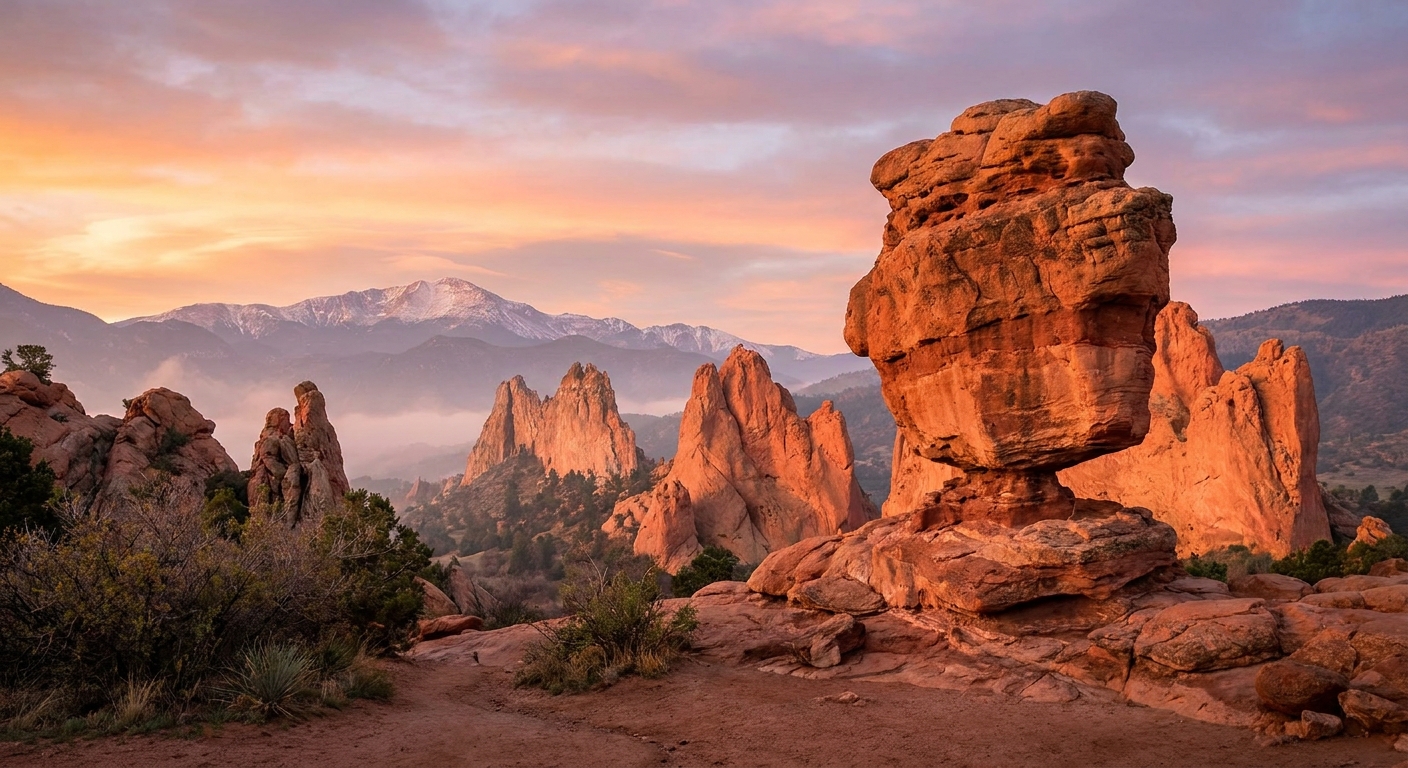
Garden of the Gods is the kind of place where you can squeeze in a sunrise walk between coffee and brunch or stack a legit half-day hike by pairing it with Ute Valley. The catch is that this is Colorado Springs’ most famous front-range playground, which means the logistics matter as much as the route. Here are the best short loops and paved paths, how to combine Garden of the Gods and Ute Valley in one morning, what the sandstone steps do to ankles and strollers, and how to survive weekend parking without turning your morning into a slow-motion traffic jam.

Know before you go
Quick reality check: Garden of the Gods and Ute Valley are separate areas. Most visitors treat them as a two-stop half-day and drive between them (Plan B below shows how).
Hours, entry, and the rules people forget
Garden of the Gods Park is free and open daily. The Garden of the Gods Visitor & Nature Center has its own hours and is worth using as a base when parking is chaotic. The park is popular with walkers, runners, cyclists, climbers, and tour vehicles, so treat it like a small city street grid with trailheads, not like a quiet wilderness trailhead.
- Stay on designated trails. The sandstone and fragile soils around the formations erode fast.
- Dogs must be on a 6-foot leash at all times. This is a big one, and it is enforced. It also helps with the sudden-stops-and-direction-changes chaos in crowds.
- Plan water like it’s a desert hike. Shade is limited and reflected heat off rock is real.
- Expect crowds on weekends, holidays, and summer afternoons. A “quick loop” can become a long wait if you arrive at the wrong time.
How the park is laid out (so routes make sense)
Most “hikes” here are built by stitching together short segments and spur trails. A few common anchors:
- Central Garden area: the iconic paved corridor between the tallest fins.
- Balanced Rock pullout: quick roadside access and classic sunrise light.
- Siamese Twins Trailhead: short trail to a famous window-framed view.
- Visitor & Nature Center: exhibits, restrooms, water, and a reliable starting point.
Services and comfort basics
Restrooms, water, and the most reliable info are at the Garden of the Gods Visitor & Nature Center. Once you leave that hub, services get limited fast. If you are doing anything longer than the central paved stroll, bring what you need.
Midday heat escapes that still feel like a win
If you arrive late morning or midday in warm months, don’t force a sun-baked exposed loop. Instead:
- Use the paved Central Garden Trail for a shorter, more controlled outing where you can bail quickly.
- Head toward Ute Valley Park for more rolling terrain and pockets of shade in drainages and along the foothills.
- Take a Visitor & Nature Center break for water, restrooms, and a reset, then return for golden hour.
Quick safety and etiquette (worth 30 seconds)
- Yield and pass like you’re in a busy park. Bikes move fast, pedestrians stop suddenly, and dogs zig. Keep right, pass politely.
- Watch summer storms. Lightning can build quickly on hot afternoons. If thunder is in the area, shorten your plan.
- Climbing note. The park is a major climbing destination, but routes and rules vary by area and closures. Check current guidance before you assume something is open.
Distances disclaimer: mileage and elevation change with your start point and which spurs you add. Treat the ranges below as planning estimates and verify with an official city trail map or your map app before you go.
Short loops and paved paths
These are ranked by effort and written for real-life planning, not perfect GPS precision.
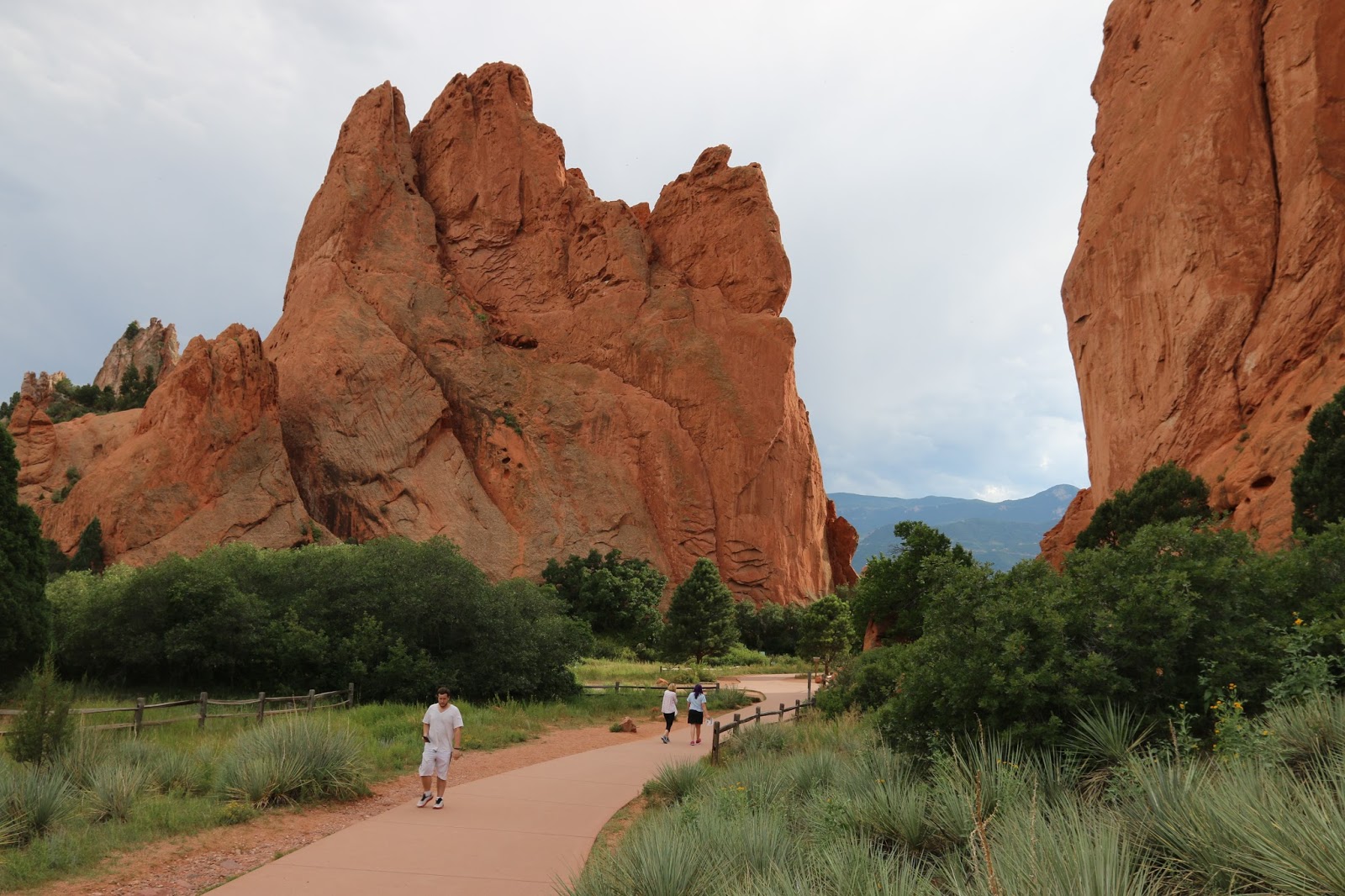
1) Central Garden Trail (about 1.1 to 1.5 miles round trip, mostly flat)
This is the classic, most accessible walk and the best pick when you want maximum scenery per minute. The Central Garden Trail is paved and mostly level, threading between dramatic fins with frequent pull-offs for photos. You can extend it with short connectors, but even the straight-up out-and-back delivers.
- Best for: families, visitors with limited time, mobility devices, anyone dodging heat.
- Surface: paved with some gentle grades.
- Crowd level: highest, especially 9 am to 4 pm on weekends.
2) Balanced Rock quick walks (0.5 to 1.5 miles, low gain)
Balanced Rock is one of the park’s most recognizable formations and it’s extremely close to the road. This is ideal if you want a scenic “micro-hike,” especially at sunrise or late afternoon when the rock glows and tour traffic thins.
- Best for: quick stops, sunrise photos, visitors mixing the park with other Springs plans.
- Watch for: roadside crossings and busy pullouts.
3) Siamese Twins (about 0.8 to 1.2 miles round trip, easy)
The Siamese Twins Trail is short, sweet, and photo-friendly. From the Siamese Twins Trailhead, you will follow a mostly easy path to the rock “window” view.
- Best for: casual hikers who want a quick payoff that feels more like a trail than a sidewalk.
- Stroller note: not ideal for standard strollers. An all-terrain stroller might manage parts, but be ready for rough spots.
4) Build-your-own longer loop in the park (3 to 5 miles, moderate rolling gain)
If you are comfortable with rolling elevation and mixed surfaces, you can stitch together multiple Garden of the Gods segments into a longer loop that hits several viewpoints and gets you away from the densest crowds. The payoff is a more “hike” feeling without committing to a separate park.
- Best for: walkers and runners who want distance without a big climb.
- Watch for: trail junctions, bike traffic, and uneven stone steps.
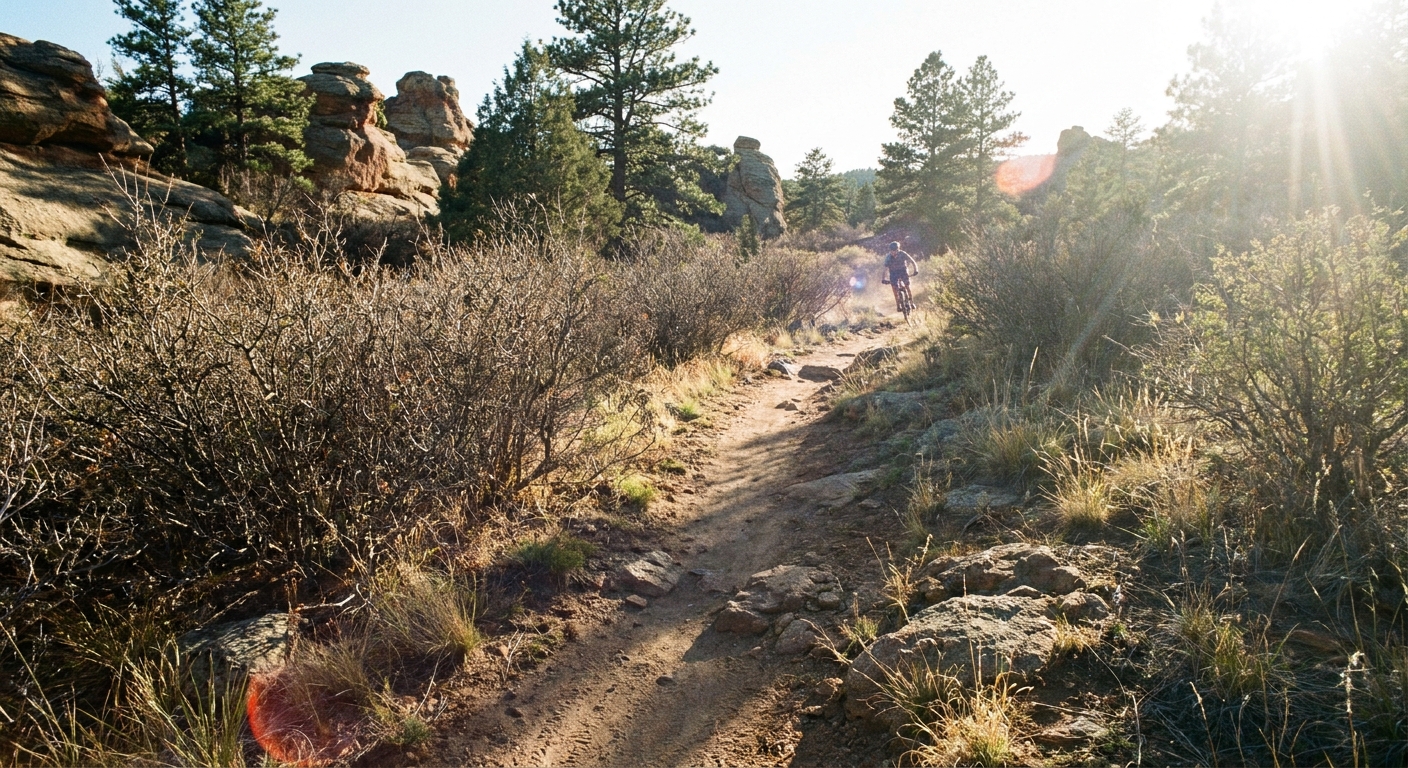
5) Garden of the Gods + Ute Valley half-day combo (5 to 10+ miles total, moderate to higher gain)
This is the locals’ move when you want the iconic sandstone plus a more rugged trail network. Key detail: for most visitors, this is a two-stop day. You hike Garden of the Gods first, then drive to Ute Valley Park and pick up longer mileage there. Start early, carry more water, and treat Ute Valley like a real hike with more route choices.
- Best for: weekend hikers training for bigger Front Range objectives.
- Route reality: your mileage and elevation depend heavily on which Ute Valley loops you choose and how far you wander.
Effort cheat sheet
- Easiest: Central Garden Trail out-and-back
- Easy: Balanced Rock area strolls
- Easy: Siamese Twins out-and-back
- Moderate: longer mixed loops within Garden of the Gods
- Most demanding: Garden of the Gods plus Ute Valley as a two-stop half-day
Sandstone steps and slick spots
The biggest surprise for many first-timers is that the “easy” park can still bite. Garden of the Gods has sections with stone steps, polished rock, and uneven ledges where people trip, especially when moving fast for photos.
- Sandstone steps can be uneven. Step heights vary and edges can be rounded.
- Polished areas get slick. After rain or snow, smooth rock and packed dirt can be surprisingly slippery.
- Loose gravel piles up on hardpack. That combo is classic ankle-roll territory.
- People stop suddenly. Crowds mean abrupt pauses for selfies, kids darting, and leashed dogs changing direction.
Practical fixes: wear shoes with real tread, slow down on steps, keep hands free (phone away on rocky sections), and give yourself more time than the mileage suggests.
Accessible views
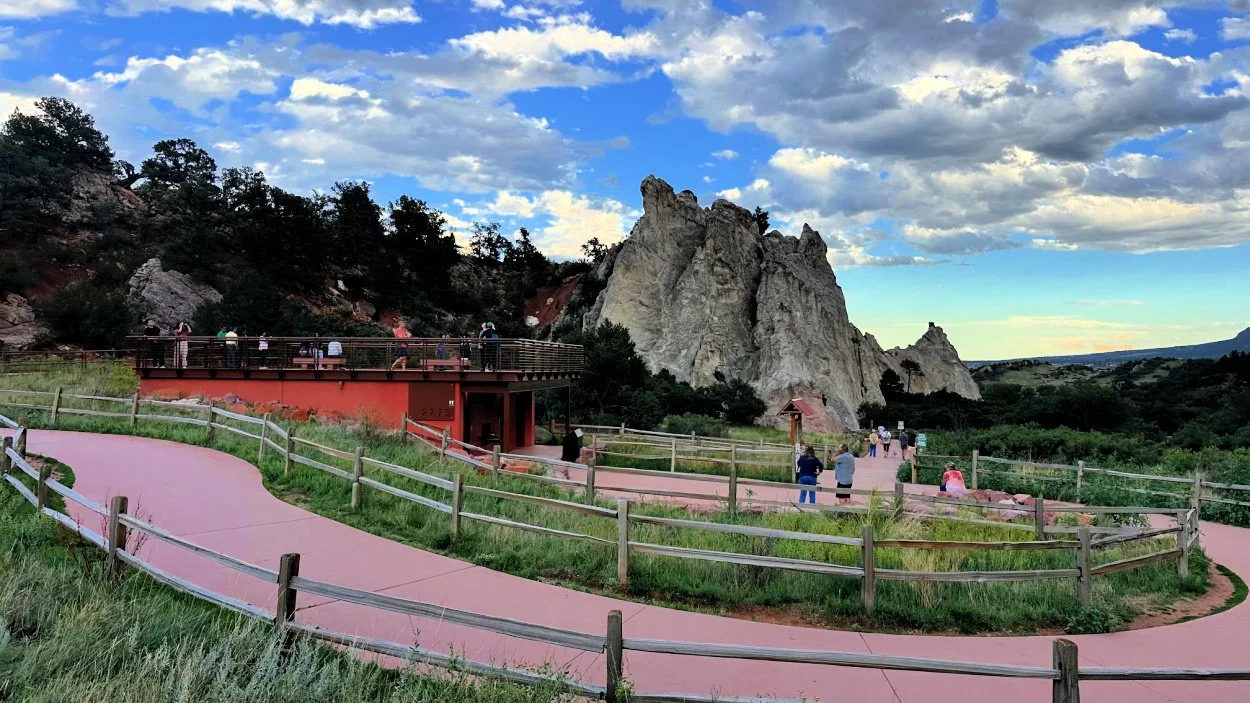
Garden of the Gods is one of the better Front Range parks for accessible sightseeing because the most iconic corridor has a paved option. Accessibility details can vary with grade, crowding, sand on pavement, and where you park, so it helps to check the park’s official accessibility notes if you need specifics.
Where it tends to work best
- Central Garden Trail: paved, scenic, and built for high visitor volume.
- Visitor & Nature Center area: facilities, exhibits, and easier access to services.
- Roadside viewpoints: several pullouts let you see major formations with minimal walking.
Reality check for wheelchairs and mobility devices
Even on paved sections, expect occasional grades, tight passing during peak times, and windblown sand on pavement. If you want the calmest experience, go at sunrise, near sunset, or on a weekday morning.
Strollers
If you are traveling with a stroller, Garden of the Gods is doable, but not everywhere is worth the effort.
- Best bet: Central Garden Trail on a weekday or early morning. A regular stroller can work here.
- Okay with effort: wider packed trails when dry, using an all-terrain stroller. Expect bumps.
- Often not worth it: routes with stone steps, narrow pinch points, or steep, rutted sections. You may end up carrying the stroller more than pushing it.
If your goal is a pleasant family walk, stick to the paved corridor and add short roadside viewpoint stops. Save Ute Valley for a separate outing when you can move faster and lighter.
Weekend parking
When to arrive
For a stress-free start, arrive before 8 am on weekends, especially in summer and during holiday weeks. After mid-morning, popular lots can fill and the park roads slow to a crawl.
Where to base yourself
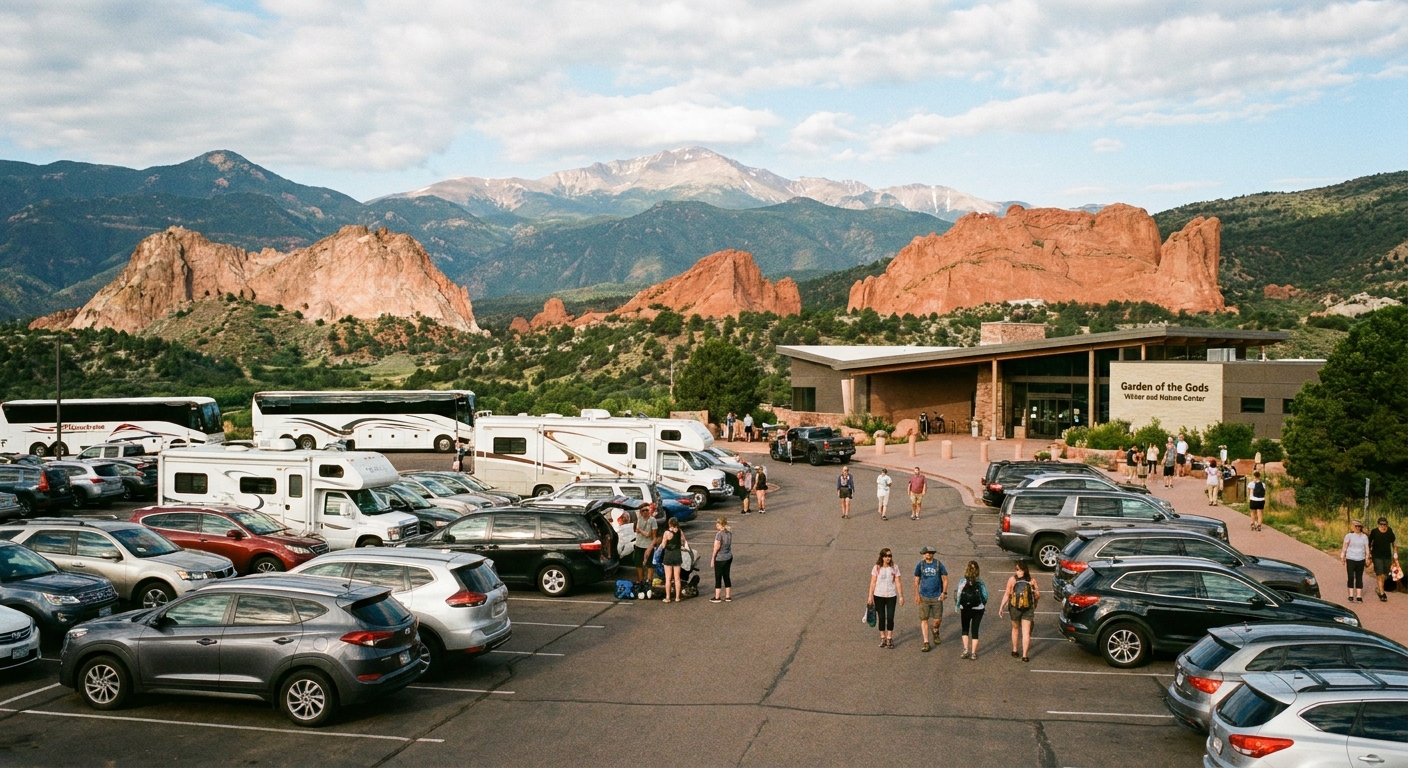
- Garden of the Gods Visitor & Nature Center: a logical starting point with services and information. It can also be a good fallback when smaller lots are full.
- Popular pullouts and small lots: great when you hit them early, frustrating when you do not.
Overflow and peak-season etiquette
- Do not block travel lanes or shoulders. If a pullout is full, keep moving. Stopping “just for a minute” creates unsafe conditions.
- Respect neighborhood access. Avoid spilling into residential streets where signage discourages visitor parking.
- Carpool when possible. Fewer vehicles helps everyone, including cyclists and pedestrians.
- Pack patience for the exit. Late morning through afternoon can bottleneck at key intersections.
Shuttles and seasonal operations
In peak season, the city typically runs a free summer shuttle that helps absorb overflow parking and cut down on gridlock. Details can change by year, so check the City of Colorado Springs and the Garden of the Gods Visitor & Nature Center updates before you go for current shuttle dates, overflow lot locations, and any temporary parking restrictions.
Programs and talks
If you like your hikes with a side of context, check for naturalist-led and interpretive programs through the Garden of the Gods Visitor & Nature Center. Programming varies, but it commonly includes geology, local ecology, and cultural history. This is a smart midday option when the sun is harsh and you want a slower pace without giving up the experience.
- Tip: Pair a morning loop with a midday program, then come back for a short golden-hour walk on the paved trail.
Two half-day plans
Plan A: Easy, iconic, low-stress
- Arrive early and start at the Garden of the Gods Visitor & Nature Center
- Walk the Central Garden Trail out-and-back
- Add a short Balanced Rock stop
- Leave before peak midday crowds or take a long coffee and lunch break in town
Plan B: Garden of the Gods + Ute Valley morning
- Arrive at sunrise with water and sun protection
- Do a short Garden of the Gods loop first while it is cool
- Drive to Ute Valley for longer mileage and more solitude
- Finish with an iced coffee in Colorado Springs, then save the Visitor & Nature Center exhibits for later if you want shade
That mix is my favorite “trail and town” combo here: red rock drama first, foothill grind second, then a proper sit-down to end it.
What to pack
- Water: more than you think you need, especially for Ute Valley
- Sun protection: hat, sunscreen, sunglasses
- Footwear: grippy shoes, avoid smooth soles on sandstone steps
- Layers: mornings can be cool, afternoons can feel hot fast
- Optional: trekking poles if you are prone to slipping on stone steps or loose gravel