Ghost Ranch and Abiquiu: Hikes, Tours, and Timing

Maya Lin
Maya Lin is a travel journalist and outdoor enthusiast who believes the best trips combine rugged adventures with urban comforts. After spending six years backpacking across four continents, she founded Trail & Town Guide to help fellow travelers navigate both hidden mountain passes and bustling city neighborhoods with confidence.
If Northern New Mexico had a signature scent, Ghost Ranch would bottle it: sun-warmed sage, juniper, and that dusty mineral snap you taste when the light gets sharp. This is the landscape Georgia O'Keeffe painted again and again, not because it was “pretty,” but because it was specific. The cliffs hold color like layered pigment, and even short walks feel cinematic.
This page is built for the traveler who wants the real Ghost Ranch experience, not a vague “day trip” mention. You will find trail and tour access notes (including the day-use conservation fee), Abiquiu photo pull-offs, winter road cautions, O'Keeffe context and tours that fill quickly, plus two realistic itineraries from Santa Fe that keep the day honest.
Know before you go: Access and fees
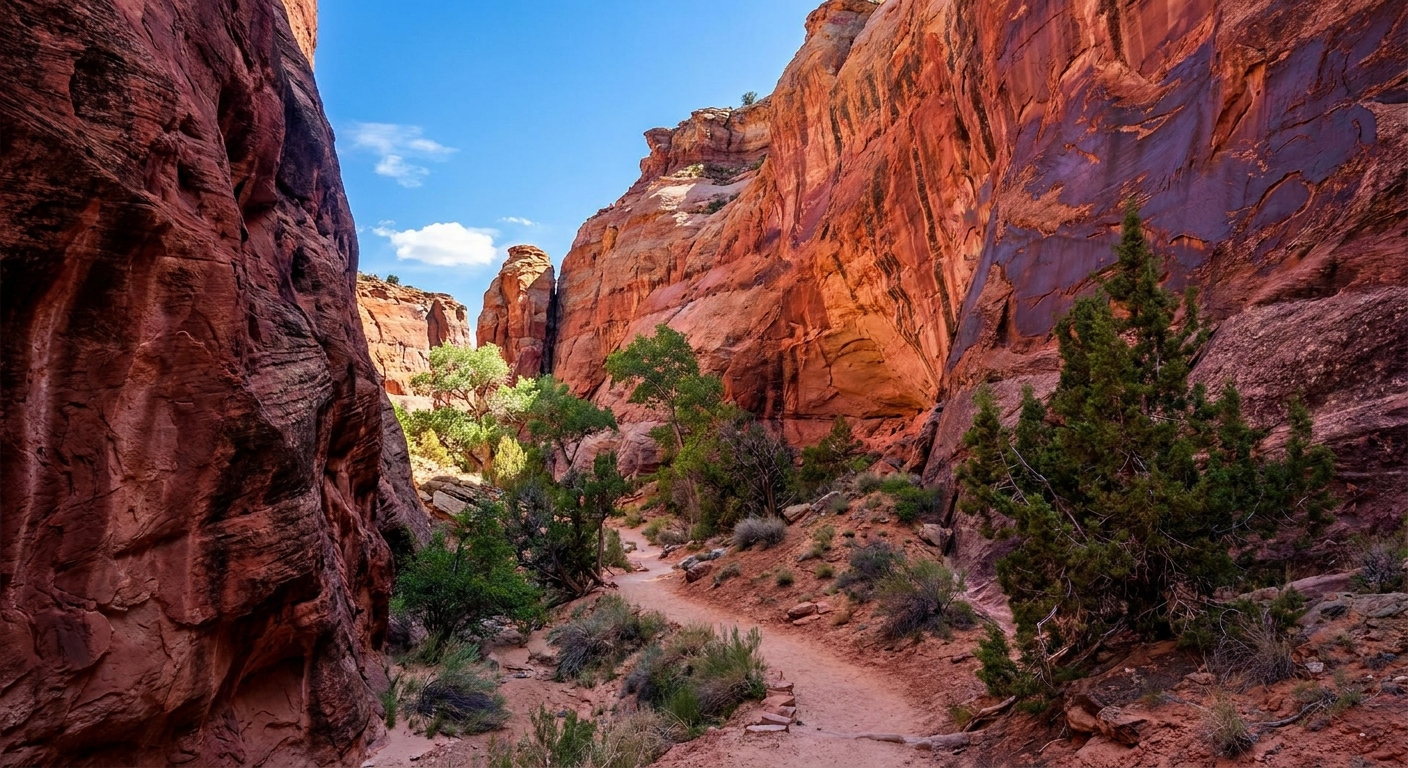
Ghost Ranch is a working retreat and education center, and access works a little differently than a typical state park trailhead. The good news is that it is straightforward once you arrive: check in at the Welcome Center, pay the day-use fee, and confirm what is open that day. If you are aiming for a specific guided tour, book ahead and confirm details before you drive up.
Day-use fee
- Yes, there is a day-use conservation fee. Plan on paying it for hiking and day access. It is commonly around $10 per person, but exact amounts and payment policies can change, so verify the current fee on the official Ghost Ranch site or by phone.
- Pay at the Welcome Center. Day-use check-in is typically handled at the main arrival area (often referred to as the Welcome Center). If signage directs you elsewhere, follow on-site instructions.
- Some activities cost extra. Guided tours, special programs, and limited-access areas may require a separate ticket in addition to day-use.
- Bring a backup payment option. Rural systems can be finicky. Do not let a payment glitch be the reason you miss your hike.
Trail access basics
- Start at the Welcome Center. This is where you confirm which trails are open, where to park, and any time-of-day restrictions.
- Restrooms and water. Expect restrooms near the main facilities, but do not assume potable water at trailheads. Top off water before you head out.
- Stay on signed routes. The terrain is fragile, and the ranch manages sensitive areas for research, programs, and conservation.
- Pets and bikes. Policies vary by area and season. Verify current rules at check-in.
- Groups and events. Retreat groups and programs can affect access. If you are on a tight timeline, call ahead.
Guided tours
Ghost Ranch is famous for its guided offerings because they put you in places that casual visitors might miss and add context that makes the landscape click. Depending on the season, you may see:
- Geology and landscape tours that explain why the cliffs look like layered cake and how erosion shapes the canyons.
- Paleontology-focused programming tied to the ranch’s long research history in the region.
- O'Keeffe landscape interpretation that helps you connect specific landforms to her compositions.
If you have time for only one add-on beyond a hike, choose a tour that matches your curiosity. It turns a pretty walk into a story you can retell.
Safety basics
This is high desert travel: sun, wind, and fast-changing weather. Trails are often exposed with minimal shade, and cell service can be spotty. In summer, monsoon storms can build quickly. If thunder is in the area, get off ridgelines and away from exposed high points, and avoid narrow washes when flash flooding is a risk.
Best Ghost Ranch hikes
The magic of Ghost Ranch is that you can get a big payoff on a short hike. Start earlier than you think, even in cooler months, and bring more water than you would for a similar distance back home. Do not assume there will be water spigots at trailheads.
One simple disclaimer: Trail access can change due to weather, staffing, or scheduled programs. Confirm open trails and current rules at the Welcome Center when you check in.
1) Box Canyon Trail
If you want one signature Ghost Ranch hike, do Box Canyon. It delivers towering walls, shifting light, and that quiet-desert acoustics effect where your footsteps sound like a soundtrack.
- Why do it: Scenic payoff fast, great for photographers, excellent “first taste” of Ghost Ranch.
- What it feels like: Sandy trail, narrow walls in sections, dramatic color bands.
- Tips: Go earlier for softer light and fewer people. In monsoon season, take flash-flood warnings seriously and avoid the canyon if storms are building.
2) Chimney Rock Trail
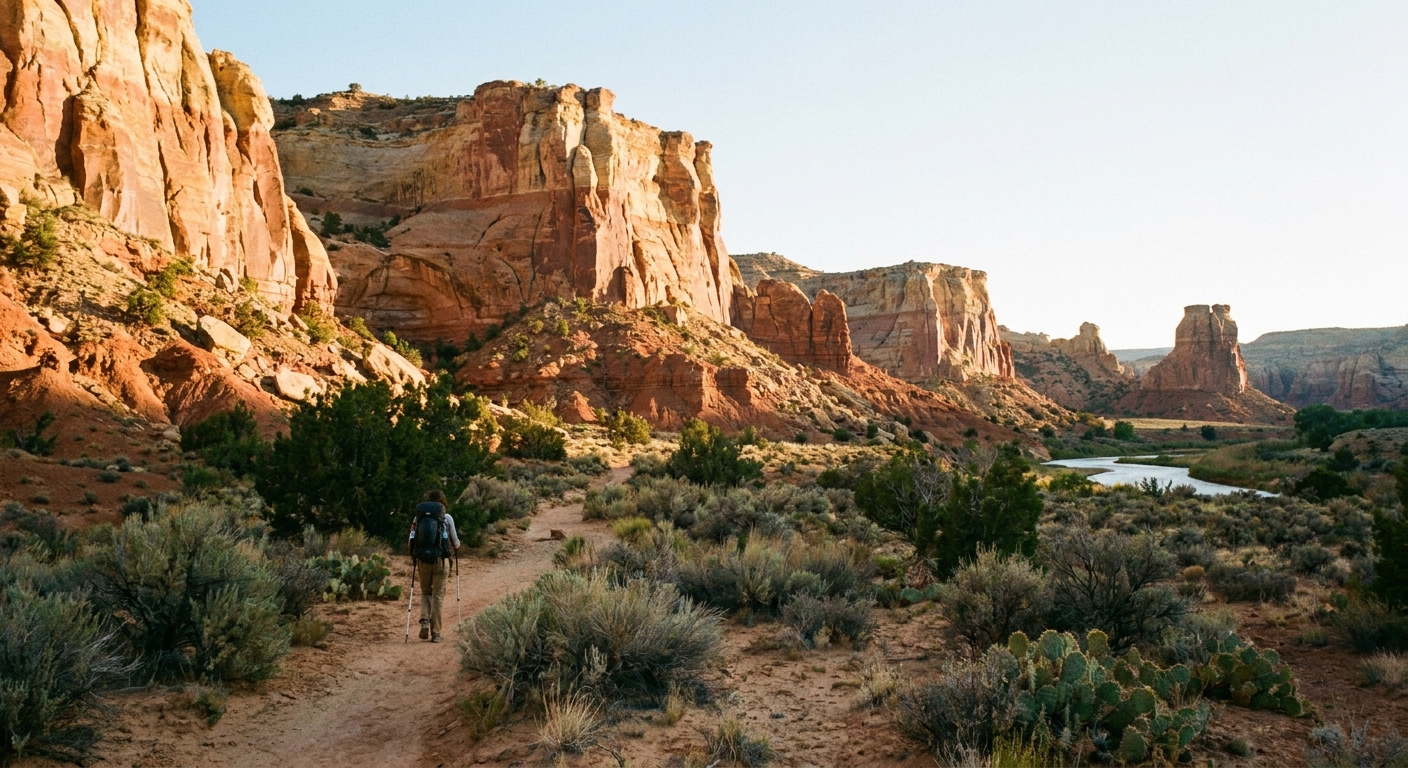
Chimney Rock is the classic “big view” hike. It is the one that gives you the sweeping ranch panorama where the mesas stack up and the sky looks oversized on purpose.
- Why do it: Wide-open views, satisfying climb, the kind of overlook that makes you stop talking.
- What it feels like: Open slopes, wind on top, wide-angle photo moments.
- Tips: Bring a brimmed hat and a light wind layer. If thunderheads show up, turn around early. Lightning is not subtle out here.
3) Kitchen Mesa
If you want a little more space and mileage than Chimney Rock, ask about Kitchen Mesa. It is a standout for that elevated, walking-on-the-edge-of-a-painting feeling, with long views that reward a steady pace.
- Why do it: Big mesa scenery, fewer “stop-and-turn-back” crowds, excellent for hikers who like a longer rhythm.
- What it feels like: Desert trail climbing to open mesa views, exposed stretches, plenty of sky.
- Tips: Start early, carry more water than you think, and do not underestimate wind and sun exposure.
4) Short nature trails
If you are road-tripping, traveling with kids, or simply saving your legs for something else, a short nature trail still delivers the high desert vibe with less time commitment.
- Why do it: Minimal elevation, quick loop, easy to combine with a guided tour.
- Tips: Spend your effort on timing. Sunrise or late afternoon makes even a simple trail feel extraordinary.
Sustainable travel note: Ghost Ranch is a place where staying on trail is not just etiquette. It protects biological soil crusts, often called cryptobiotic soil, and delicate plant communities that can take years to recover.
O'Keeffe: Context and tours
O'Keeffe did not paint “New Mexico” in the generic sense. She painted forms: a particular ridge line, a bone-white curve, a cliff with a certain pink edge. Ghost Ranch and the Abiquiu area offered her repeating shapes under radically shifting light.
When you hike here, look for three things she loved:
- Clean edges. The cliffs make strong lines, especially in early and late light.
- Layered color fields. Tan, rose, rust, gray-green juniper, and an unreal blue sky.
- Negative space. Huge open sky and simple horizons that make the landforms feel sculptural.
O'Keeffe Home and Studio
If O'Keeffe is part of your reason for coming, do not skip the Georgia O'Keeffe Home and Studio in Abiquiu. It is one of the most in-demand cultural stops in Northern New Mexico, and it can book out weeks to months ahead in peak seasons. Treat it like a key reservation, not a casual add-on. For the most current schedules and availability, book through the Georgia O'Keeffe Museum.
If you cannot get a slot, you can still build an O'Keeffe day by pairing Ghost Ranch views with Pedernal pull-offs and an Abiquiu wander, but the Home and Studio tour is the anchor when timing works.
Abiquiu photo stops
Abiquiu is not about one “main viewpoint.” It is a sequence of small moments: a bend in the road, a sudden glimpse of Pedernal, cottonwoods along the river, adobe walls catching sun. Build in time to stop safely, and never park where you block narrow shoulders.
Quick, high-reward stops
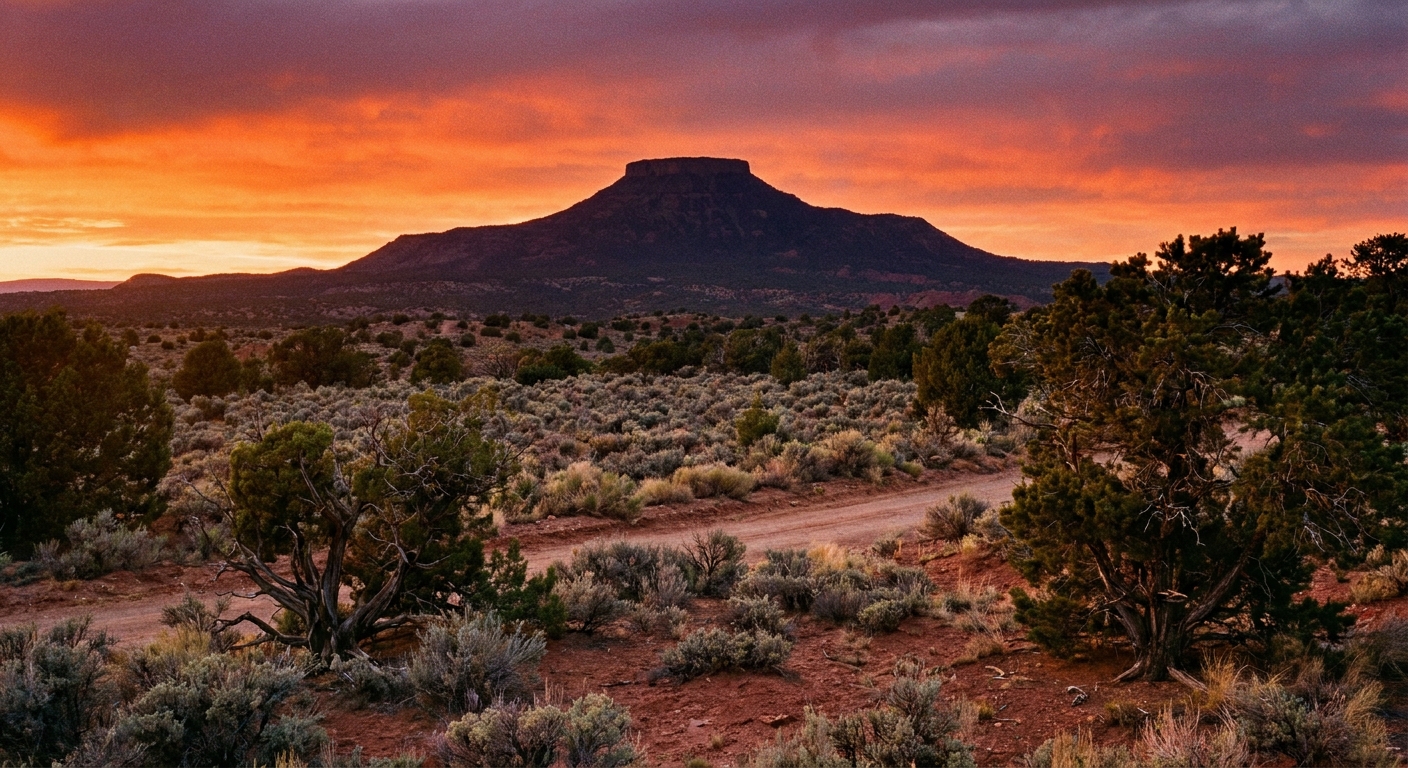
- Pedernal viewpoints. You will see the flat-topped mountain appear and disappear as you drive. If you spot a safe turnout, it is worth a two-minute pause.
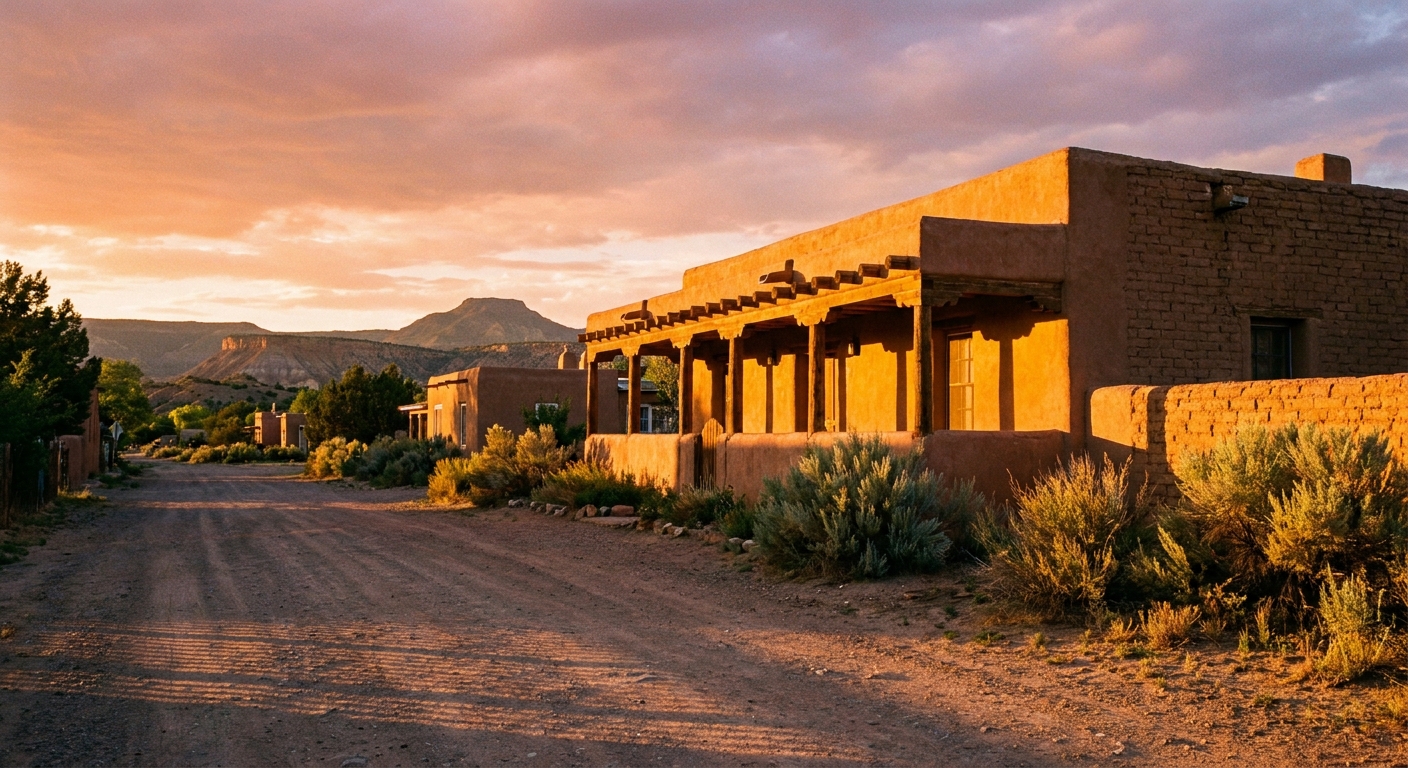
- Plaza and adobe streets in Abiquiu. Short walk, soft textures, great for detail shots, especially in golden hour.
- Rio Chama corridor viewpoints. In cooler months, the cottonwoods and river light can feel almost luminous.
If you are traveling carry-on only, this is one of those rare places where a small microfiber cloth earns its keep. Dust and lens smudges happen fast on windy desert days.
Chimayo: Quick add-on
Chimayo sits closer to Santa Fe than Ghost Ranch, and it makes a smart second scene if you want to break up driving with a completely different kind of walk. Think river corridors, rolling hills, and cultural landmarks rather than towering red-rock walls.
Two simple ways to make this feel intentional without overplanning:
- El Santuario de Chimayo. Even if you are not doing a long hike, the visit adds cultural weight and a sense of place to the day.
- Santa Cruz Lake Recreation Area. If you want a real walk with minimal logistics, this is the most reliable outdoor add-on near Chimayo. Expect easy lakeside miles, big sky, and a softer, greener feel than Ghost Ranch. Check access and day-use details before you go, and leave time to drive slowly on local roads.
How to choose: If your Ghost Ranch hike is an exposed overlook route like Chimney Rock or Kitchen Mesa, pair it with the easy lake walk. If your Ghost Ranch day is a short canyon stroll, you can afford more time in Chimayo village.
Winter road cautions
Northern New Mexico winter is not always dramatic, but it can be sneaky. Storms roll in fast, and shaded stretches can hold ice long after the sun hits Santa Fe. Drive times can stretch significantly in poor conditions, so keep your schedule flexible.
Driving tips
- Start earlier. Daylight is short, and you do not want to be rushing back on unfamiliar roads after dark.
- Watch for black ice in shaded curves. This is especially common early morning and after light snow.
- Fuel up before you head north. Treat it like a rural drive. Have a buffer, not a gamble.
- Pack a small cold-weather car kit. Water, a warm layer, snacks, and a flashlight are enough to make an unexpected delay far less stressful.
Also, winter is when the light can be absolutely unreal. Low sun angles make the cliffs glow and the shadows go ink-dark. If you are comfortable with the roads, it is one of my favorite seasons here.
From Santa Fe: Timing
If you are staying in Santa Fe and want to do Ghost Ranch well, your main decision is not which trail to pick. It is whether you are doing a true half-day or a compact full day. The drive time alone makes “half-day” a stretch unless you keep it very tight. Plan for roughly 1:45 to 2:15 each way in normal conditions, plus extra time for winter weather or Abiquiu pull-offs.
Option A: Tight half-day
- Depart (0:00) Leave Santa Fe early.
- +1:45 to +2:15 Arrive Ghost Ranch, check in at the Welcome Center, pay the day-use fee, confirm trail status.
- +2:15 to +3:45 Do one signature hike (Box Canyon is the cleanest choice when you are short on time), then photos.
- +3:45 to +5:30 Drive back to Santa Fe.
Total: Roughly 5.5 hours plus stops and any extra time at check-in.
This version works best when you are okay skipping Abiquiu stops and you are not trying to fit in a scheduled tour.
Option B: Compact full day
- Morning Depart Santa Fe early, arrive Ghost Ranch, check in, hike one signature route (Box Canyon, Chimney Rock, or Kitchen Mesa depending on your energy).
- Midday Quick scenic drive toward Abiquiu for one or two safe pull-offs.
- Afternoon Abiquiu time: an adobe street walk and, if booked, the Georgia O'Keeffe Home and Studio tour.
- Late afternoon Drive back before dark, especially in winter.
My rule: If you are tempted to add Chimayo on the same day, do it only if Ghost Ranch is a short trail day and the roads are perfect. Otherwise, save Chimayo for a separate half-day closer to Santa Fe.
What to pack
This is high desert travel, which means sun, wind, and surprise temperature swings. You do not need a giant backpack, but you do need the right basics. Cell service can be spotty, so do not count on streaming maps in real time.
- Water: More than you think you need, plus electrolytes if it is warm.
- Sun protection: Hat, sunscreen, and sunglasses.
- Layers: A light insulating layer and a wind shell even on mild days.
- Footwear: Shoes with decent tread for sand and rock.
- Navigation: Download maps offline.
- Leave no trace kit: Small bag for trash and food scraps.
Quick FAQ
Do I need a reservation to hike at Ghost Ranch?
Typically no, but you should expect to pay the day-use conservation fee. For same-day trail availability, closures, and current rules, confirm at the Welcome Center when you arrive.
Do I need reservations for the O'Keeffe Home and Studio?
Yes, usually. It is a high-demand tour in Abiquiu and can fill weeks to months ahead. Reserve as early as you can through the Georgia O'Keeffe Museum if it matters to your trip.
Is Ghost Ranch good if I am not a hardcore hiker?
Yes. Box Canyon is a high-reward option without a huge commitment, and guided tours can deliver the iconic scenery without a big mileage day.
What is the single best photo subject near Abiquiu?
Pedernal, especially in early or late light. It is the landmark that anchors many O'Keeffe compositions and it photographs beautifully from multiple angles.
One last note
Ghost Ranch and Abiquiu reward the traveler who slows down. Pick one trail, take a few unhurried photo stops, and let the colors change as the sun shifts. You can do a lot in a day, but the real flex is leaving time to just stand there and watch the cliffs glow.