Going-to-the-Sun Road: Shuttle Plan, Stops, and Closures

Maya Lin
Maya Lin is a travel journalist and outdoor enthusiast who believes the best trips combine rugged adventures with urban comforts. After spending six years backpacking across four continents, she founded Trail & Town Guide to help fellow travelers navigate both hidden mountain passes and bustling city neighborhoods with confidence.
Going-to-the-Sun Road is the kind of place that turns confident drivers into nervous poets. One minute you are cruising past a turquoise lake, the next you are threading a cliffside lane behind an oversized pickup that looks like it took a wrong turn on the way to a football stadium. The good news: you do not need nerves of steel to have an incredible day here. You need a plan that respects parking reality, shuttle timing, and the simple fact that Glacier does whatever Glacier wants with weather.
This guide is built for first-timers who want maximum views with minimal stress: how to think about vehicle reservations (when required), the best one-day stop sequence, realistic timing, wildlife jam etiquette, and what to do if the road is only partly open. I will also sprinkle in a few short hike ideas that pair well with the stops, without turning this into a full hikes list.
Before you go: 5 things that trip people up
1) The road may not be fully open
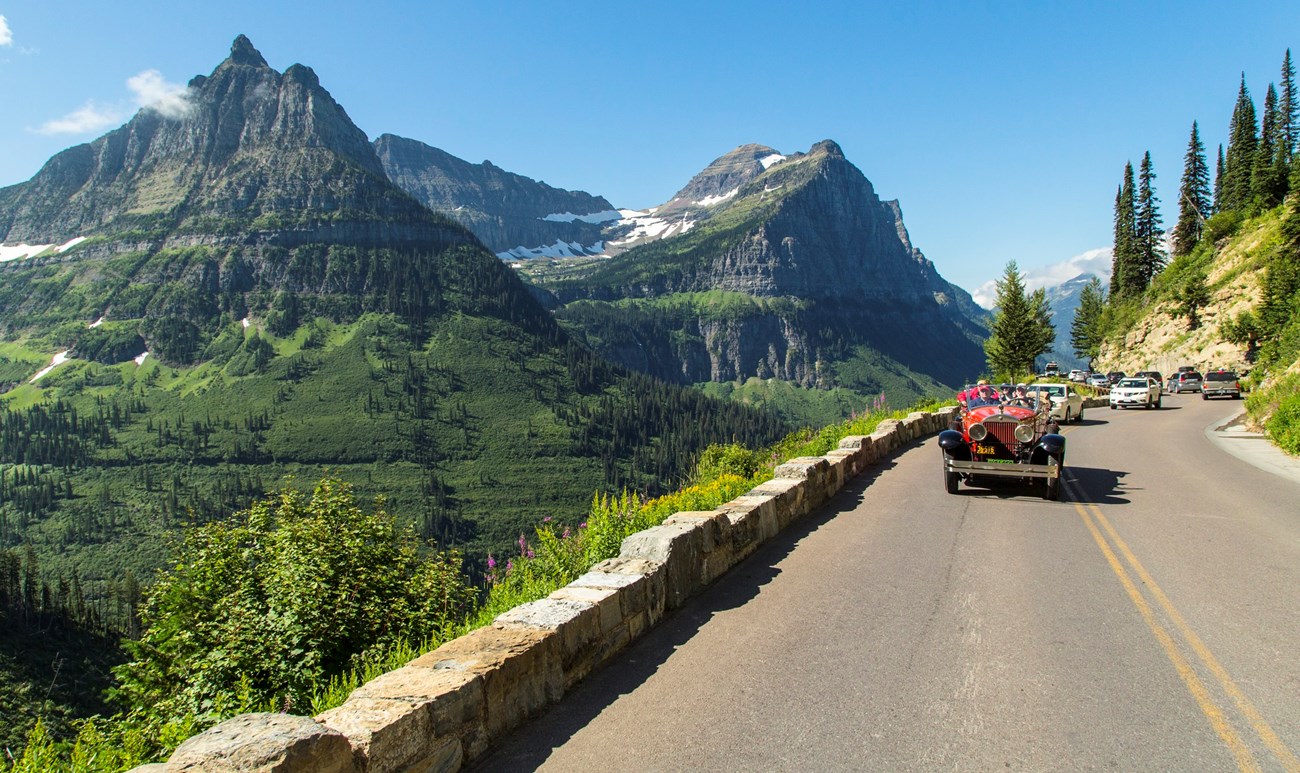
Going-to-the-Sun Road usually opens in stages as crews clear avalanche debris and plow deep snow near Logan Pass. Even in summer, temporary closures can happen for construction, wildfires, smoke impacts, and fire operations, or sudden weather. Build a day that still works if you cannot cross the Continental Divide.
2) Parking, not distance, is the real limiter
The drive across the park looks short on a map. In practice, the day is defined by parking availability at popular stops like Logan Pass and by traffic slowdowns on narrow sections. Your “easy” day can turn into 9 hours door-to-door if you arrive at peak time and circle lots.
3) Shuttles can save your sanity
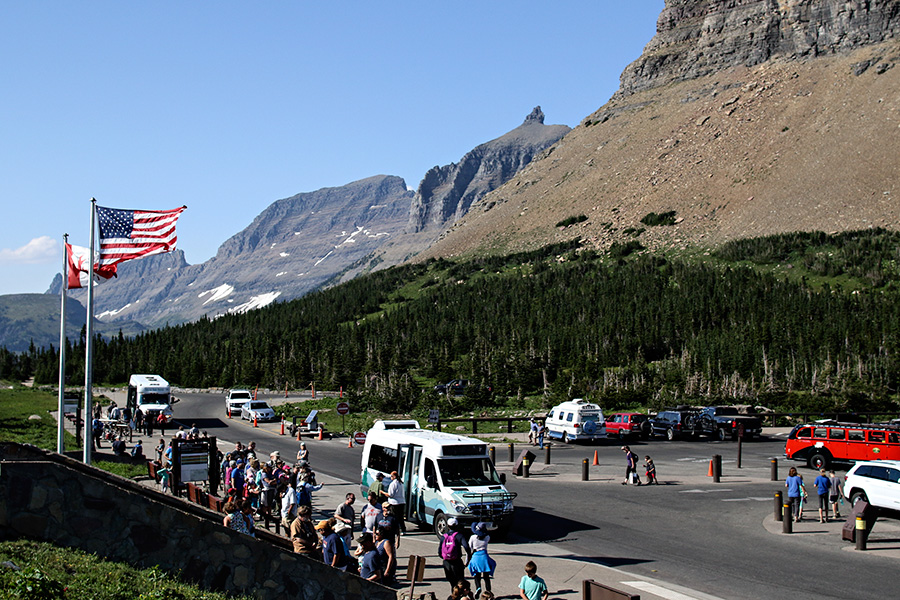
Even if you have a car, using the shuttle for the busiest middle section can eliminate the hardest part: finding a spot at Logan Pass. The key is to treat your car like a base camp and the shuttle like your mountain transit.
4) Vehicle size limits are real
This is a big first-timer surprise: the Sun Road has strict vehicle size restrictions. Oversize vehicles (including many RVs and some trailers) are prohibited on the highest, narrow cliffside section. Rules and exact limits can be updated, so check the current NPS Going-to-the-Sun Road vehicle restrictions before you commit to a rental.
5) There is no gas on the road
There are no gas stations along Going-to-the-Sun Road itself. Fill up before you enter the corridor, especially if you plan to idle in traffic or spend the whole day doing pullouts.
Entry and reservations
Glacier has used timed entry systems in recent years to manage congestion. The exact requirements can change by season, by corridor, and by time of day, so do not rely on a blog from two summers ago, including mine.
- Park entry: You need a valid park pass or entrance fee for your vehicle (or per person if entering by foot or bike).
- Timed vehicle reservation (when required): In seasons when timed entry is in effect, you may need a separate vehicle reservation to enter specific areas during peak daytime hours. Requirements can differ for the Going-to-the-Sun Road corridor versus other regions of the park.
- What often works: Many timed entry systems allow access if you have a qualifying service reservation inside the area (for example lodging or a tour). Eligible reservation types, corridors, and hours vary. Confirm on the official National Park Service Glacier page for the current year.
My quick habit: The night before, I screenshot the current entry rules, my reservation confirmation (if I have one), and the park map. Cell service is inconsistent, and you do not want to argue your case at a gate with a spinning loading wheel.
Shuttle plan for first-timers
If you are willing to use the shuttle for the alpine core of the route, here is the simplest way to do it: drive early to a base area with more parking, then shuttle to the hardest-to-park spots. Translation: bigger lots, bathrooms, and a shuttle hub, so your day starts calm instead of combative.
Option A: West base + shuttle
- Base at Apgar Visitor Center area (West Glacier): Arrive early for easier parking and bathrooms.
- Ride the shuttle toward Logan Pass: Enjoy the views without white-knuckling the narrow sections.
- Return by shuttle to your car: Plan a firm “last shuttle” turnaround time so you are not negotiating with your watch at the end of the day.
Shuttle note: Depending on the year, you may need one or more transfers (often at Avalanche and or Logan Pass), and “beyond” depends on which segments are running.
Who this is best for: First-timers, anyone anxious about cliffside driving, and travelers visiting during peak summer weekends.
Option B: East base + shuttle
- Base at St. Mary Visitor Center area: Convenient if you are staying in Many Glacier, St. Mary, or East Glacier.
- Shuttle up and over as far as service allows: Depending on the year and operations, shuttle routes may require transfers. Build in buffer time.
Shuttle reality check
Shuttles are fantastic, but they are not magic. Lines can form mid-morning, and you may need patience, especially if a bus fills before you board. Bring water, a layer, and snacks even for “just a quick ride,” because Glacier runs on mountain math.
Best one-day stop sequence
This is my favorite first-time flow because it balances iconic viewpoints with parking strategy. It assumes a full road opening and decent summer conditions. If you only do one thing differently than your original plan, do this: start early. Sunrise is optional. Parking is not.
Route: West to East
Why: Morning light on Lake McDonald, and you tackle the popular middle section before the day heats up.
- Lake McDonald (Apgar area): 20 to 40 minutes. Grab coffee, stroll the shore, take the classic pebble-and-mountain photo.
- Avalanche area (optional but worth it): 45 to 90 minutes. Do Trail of the Cedars if you want shade, water, and an easy win early in the day.
- The Loop: 10 to 15 minutes. Quick leg-stretch, and it gives you a sense of the road’s scale.
- Logan Pass: 60 to 150 minutes. This is the big one. If you want a short, high-reward hike, do Hidden Lake Overlook. Wind can be intense even in July, so keep a layer handy.
- Siyeh Bend pullout (if open): 10 to 20 minutes. Big scenery without a big commitment.
- Jackson Glacier Overlook: 15 to 30 minutes. One of the best roadside geology moments in the park.
- St. Mary Lake viewpoints (Sun Point or nearby pullouts): 30 to 60 minutes. This is where you slow down, breathe, and realize your jaw has been clenched since the last hairpin turn.
- End: St. Mary Visitor Center: 20 to 40 minutes. Bathrooms, exhibits, and a good place to check conditions before you decide whether to backtrack or continue to your lodging.
When East to West is better
If you are staying on the east side, starting in St. Mary can save a lot of backtracking. It can also be a strong choice if you want afternoon light on Lake McDonald and do not mind ending the day on the west side.
How long does it take?
Point-to-point driving across the park is about 50 miles one-way, but that is not the trip you came for. For a first-time sightseeing day with a short hike and several stops, plan 8 to 10 hours total. Add time if you enter after 9 am, if you are visiting on a weekend, or if wildlife decides to headline your afternoon.
Short hikes that fit this day
- Hidden Lake Overlook (Logan Pass): A classic for a reason. Go early to dodge crowds.
- Sun Point: Easy shoreline walking with huge lake payoff.
- Trail of the Cedars (near Avalanche area): Boardwalk-friendly, great when you want shade and a low-effort nature fix.
Trail note: Conditions and closures change. Check at visitor centers for trail status, bear activity, and any temporary restrictions.
Wildlife jam etiquette
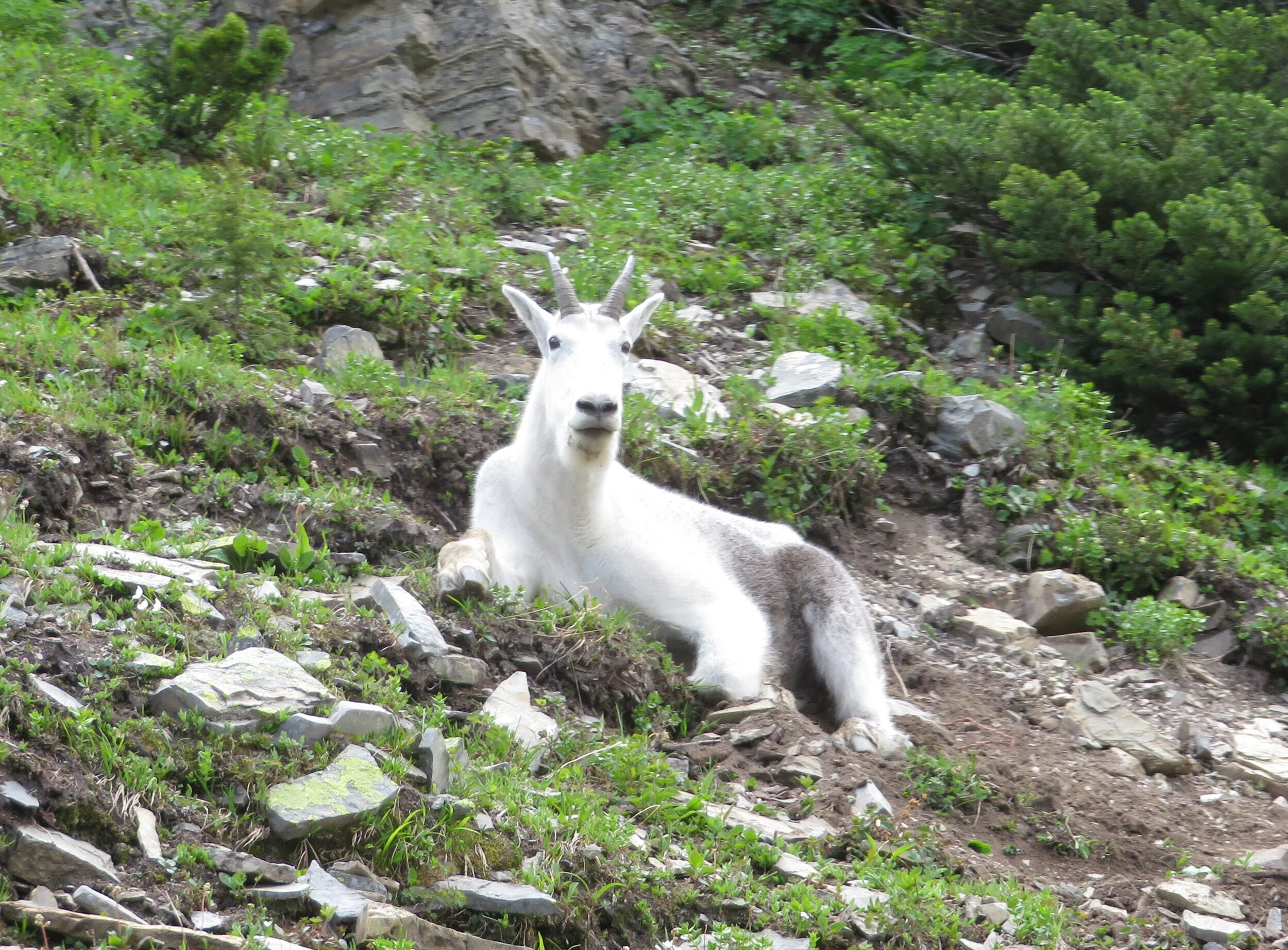
Seeing wildlife on Going-to-the-Sun Road is thrilling and very normal. What is not normal, at least it should not be, is treating the road like a safari set.
- Do not stop in the travel lane. If you cannot fully pull off into a safe turnout, keep moving.
- Use designated pullouts. Glacier has many for a reason. Park fully inside the lines.
- Stay in your vehicle unless it is clearly safe. If people are spilling into the road or the shoulder is narrow, staying inside is often the smartest move.
- Give animals space. Do not approach. Do not feed. Do not create a crowd that blocks their movement.
- Keep it quick. Take your photo, have your moment, and help the line start moving again.
- Passengers can spot. If you are driving, let your passenger handle the binoculars. Your job is road, mirrors, and turnouts.
If the road is partly open
This happens a lot in late spring and early summer, and sometimes again in early fall storms. The trick is to stop thinking “cross-park drive” and start thinking “two great half-days.” You still get big scenery, just in different doses.
Scenario 1: West side open to Avalanche or The Loop
- Best plan: Spend your time around Lake McDonald, Avalanche area, and the lower waterfalls and forest sections.
- Short hike idea: Trail of the Cedars, plus a stroll near Avalanche Creek if trails are open.
- Town comfort pairing: Head back toward West Glacier or Columbia Falls for a proper meal and a local coffee stop, then return for golden-hour lake light.
Scenario 2: East side open to St. Mary viewpoints
- Best plan: Lean into St. Mary Lake, Sun Point area, and visitor center info for current trail options.
- Short hike idea: Sun Point for a low-commitment shoreline walk with huge payoff.
- Extra detour if you have time: Consider nearby East-side drives and overlooks outside the Sun Road corridor, depending on conditions and fire activity.
Scenario 3: Logan Pass is closed or parking is impossible
If Logan Pass is the only thing on your wish list, this is where shuttles can rescue the day. If shuttles are running, pivot to a base-and-ride plan. If shuttles are not running or lines are intense, choose a different highlight and come back another day very early. Glacier rewards dawn energy.
My personal rule: if you have circled a lot twice, it is time to move on. The park is too beautiful to spend it staring at reverse lights.
Drive-time cheatsheet
These are not GPS promises. They are “real day in Glacier” estimates that include slow sections and typical summer traffic.
- West Glacier to Apgar: about 10 minutes.
- Apgar to Avalanche area: about 25 to 40 minutes, more with stops.
- Avalanche area to Logan Pass: about 45 to 75 minutes, more with congestion.
- Logan Pass to St. Mary Visitor Center: about 45 to 70 minutes, more with pullouts and wildlife.
Time buffer that makes the day feel easy: Add 60 to 90 minutes of “life happens” time. Bathroom lines, shuttle waits, sudden hail, a perfect viewpoint you did not expect. That is the magic, as long as you planned for it.
What to pack
I am a carry-on-only person in cities, and I keep that same energy in national parks: small, intentional, and ready for weather mood swings.
- Layers: A light insulating layer and a rain shell, even on a bluebird forecast.
- Water and snacks: Enough that you are not forced into a rushed stop because everyone is suddenly hungry at the same turnout.
- Sun protection: Hat, sunglasses, sunscreen. Alpine sun hits differently.
- Binoculars: Optional, but they turn “tiny moving dot” into “oh wow, that is a bighorn sheep.”
- Offline map: Download ahead of time. Service comes and goes.
Services and restrooms
Plan for gaps. There are bathrooms at major hubs, but you will still have stretches where options are limited, lines are long, or seasonal facilities are closed. Food options on the road are limited too, so having your own snacks is the move.
- Most reliable hubs: Apgar, Logan Pass area when facilities are open, and St. Mary.
- Best habit: Use restrooms when you see them, not when it becomes an emergency.
Simple safety notes
- Stay patient on narrow sections. Let faster drivers pass at pullouts and do not let someone else’s hurry become your stress.
- Watch for cyclists. Especially in shoulder-less areas. Give them space and pass only when you can do it cleanly.
- Weather can change fast. If visibility drops or conditions deteriorate, slow down and consider turning around.
- Follow rangers and signage. Closures are not suggestions. They are there because the mountain is in charge.
End-of-day ideas
After a day on the Sun Road, I like an ending that feels like a soft landing: a warm meal, a local coffee, and a short walk that does not require a parking lottery.
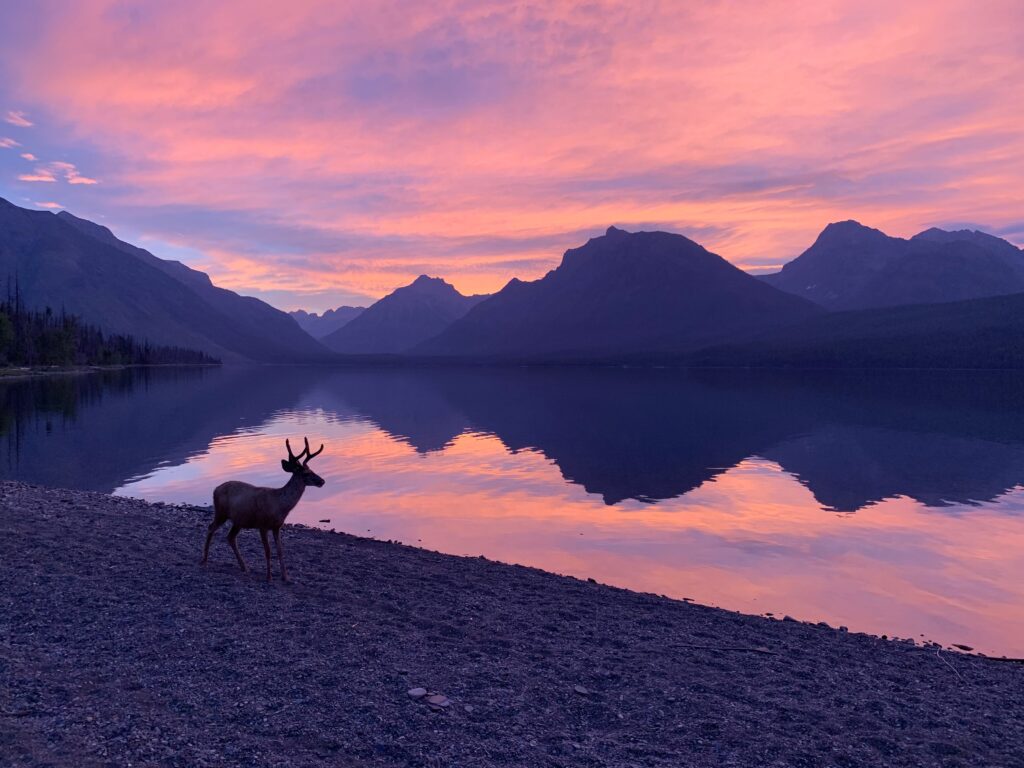
- West side: Unwind around Apgar Village and Lake McDonald as the light goes golden.
- East side: Catch late light on St. Mary Lake viewpoints, then head to your lodging before dusk driving becomes a wildlife-spotting challenge.
Quick checklist
- Check current timed entry and corridor rules on the official NPS Glacier website.
- Check Going-to-the-Sun Road vehicle size restrictions before renting an RV or towing anything.
- Fill your gas tank before you enter the Sun Road corridor.
- Start early, especially if Logan Pass is a priority.
- Choose either a full-drive day or a shuttle-focused day, not a chaotic mix.
- Plan 8 to 10 hours for a relaxed experience with stops and one short hike.
- Use pullouts, not lanes, for photos and wildlife viewing.
- Have a partial-opening backup plan so your day still feels like a win.