Grand Canyon Rim-to-Rim in One Day
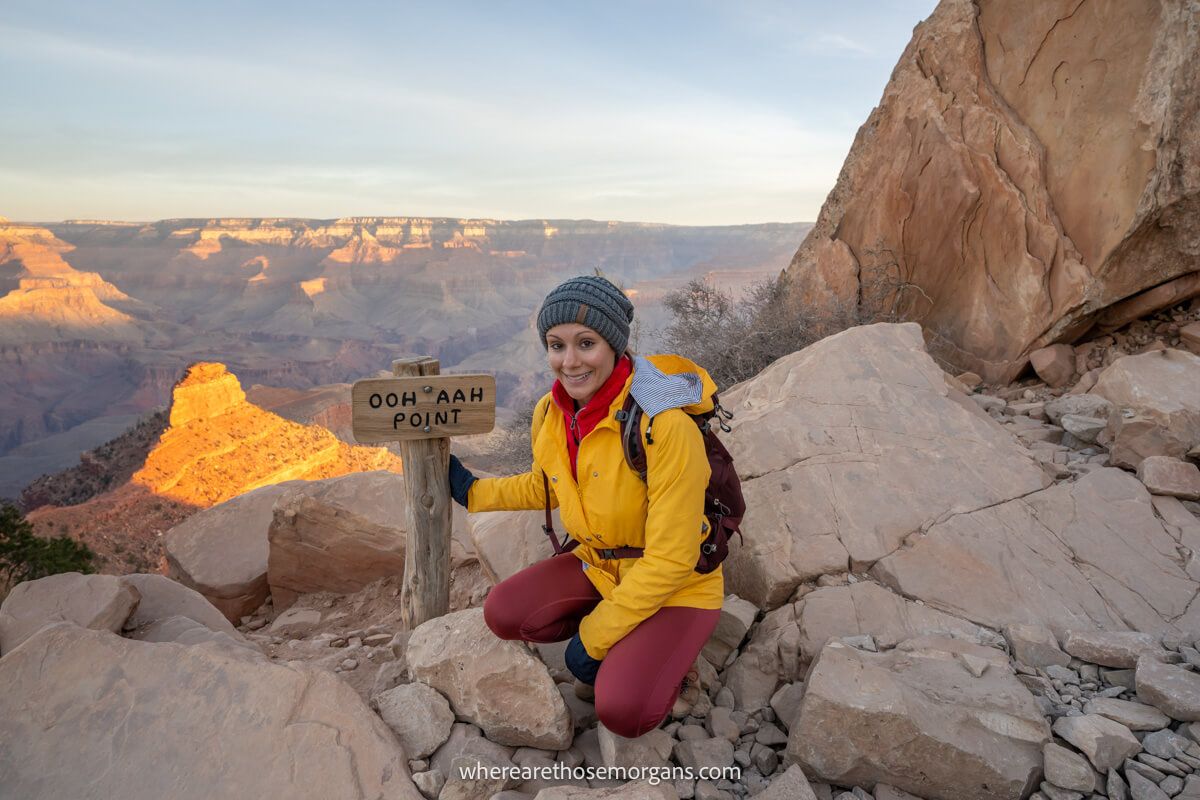
Rim-to-Rim in a day sounds like the Grand Canyon version of a mic drop. And it can be, if you show up with the fitness, the logistics, and the humility to turn around when the canyon tells you to. If you show up with vibes and a half-charged phone, it turns into the kind of rescue story nobody wants to star in.
Let’s talk plainly about what a one-day Rim-to-Rim (R2R) actually demands, how permits work, the North Rim seasonality curveball, the shuttle and parking puzzle, and how to decide if a rim-only day hike is the smarter win.

What “Rim-to-Rim in One Day” Means
In plain terms, a one-day R2R is a single continuous hike from one rim to the other, most commonly:
- South Rim to North Rim (often called “south to north”)
- North Rim to South Rim (often called “north to south”)
Either direction is long. Both are serious. The canyon does not care which rim has your hotel reservation.
Distance and elevation reality
Numbers vary a bit depending on exact start and finish points, but the physical cost does not. Expect marathon distance, thousands of feet of steep descending, then a long climb out, plus temperature swings that can feel like traveling through seasons in a single day.
- South Kaibab to North Kaibab (via the river): about 21 miles. Roughly 4,700 feet down to the river, then about 5,800 feet up to the North Rim.
- Bright Angel to North Kaibab: about 24 miles. Similar overall elevation profile to the above, with the same basic math: a big descent into the canyon, then a long climb to the opposite rim. Bright Angel has more shade and seasonal water options on the South Rim side, but it adds distance.
- North Kaibab to Bright Angel: about 24 miles. Roughly 5,800 feet down to the river, then about 4,400 feet up to the South Rim.
Important: those elevation numbers are approximate and trailhead-dependent, but they are close enough to make the point. This is not just “a long hike.” It is a long hike that asks your legs to do two very different jobs, for a very long time.
Town Wander reality check: the crux is not just distance. It’s steep grades, heat management, hydration logistics, and how you move after hour 8.
Permits: What You Need
This is where a lot of people overcomplicate things.
Day hiking Rim-to-Rim
No backcountry permit is required if you are doing the entire crossing as a single-day hike and you are not camping, staying in Phantom Ranch dorms/cabins, or using backcountry campgrounds.
When you do need a permit
- Overnighting in the canyon (camping at Bright Angel Campground, Cottonwood Campground, or other backcountry sites)
- Phantom Ranch (lodging is not a permit, but it is a competitive reservation system, and your overall plan becomes “overnight,” not “in a day”)
Other permissions to know about
- Parking and shuttles are not “permits,” but they are the most common reason an R2R plan collapses at 4 a.m.
- Commercial shuttles have their own reservation requirements and seasonal schedules.
Always check the National Park Service updates for trail closures, water status, and seasonal restrictions before you go. In the Grand Canyon, conditions change faster than your optimism.
North Rim Seasonality
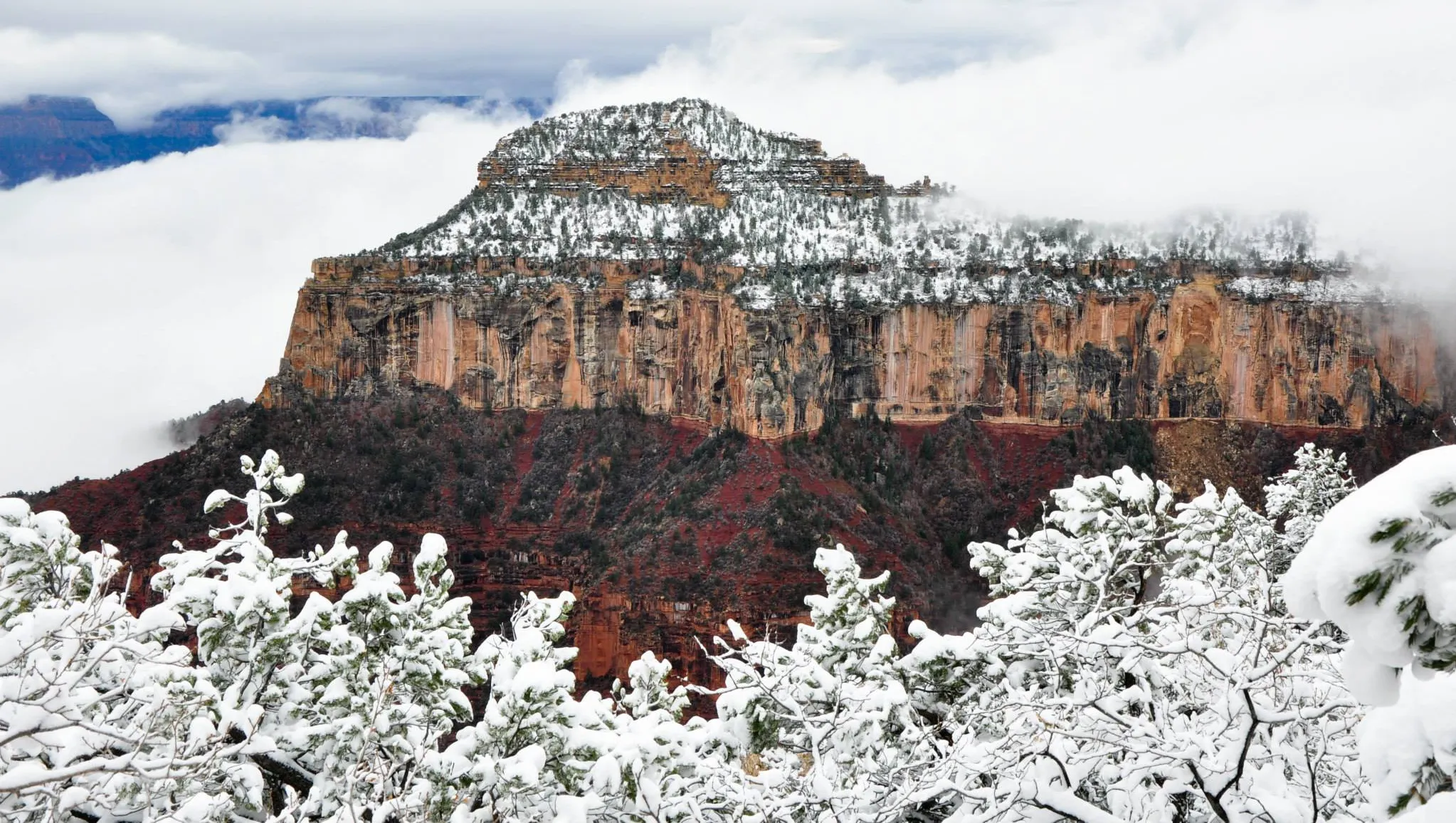
The North Rim is higher, colder, and far more seasonal than the South Rim. That impacts road access, services, and your finish-line logistics.
Why the North Rim changes everything
- Road access is seasonal. The North Rim is generally accessible in the warmer months, and then the main road typically closes for winter conditions.
- Services are seasonal. Lodging, dining, and even shuttle options can be limited to a narrower operating window.
- Shoulder seasons are tricky. Snow can linger. Early storms can hit. A “nice” forecast on the South Rim does not guarantee friendly conditions at the North Rim.
If you are planning a one-day R2R, you should treat the North Rim operating season as your first constraint, not your afterthought.
Shuttles and Parking
Unlike an out-and-back day hike, Rim-to-Rim is a point-to-point route. That means you need a transportation plan that works before you step onto the trail.
Strategies that work
- Commercial trans-canyon shuttle: You park on one rim, shuttle to the other, and hike back to your car. This is the cleanest solution for most visitors, but it requires reservations and only runs when roads and services are operating.
- Two-car shuttle with a friend: One car on each rim, then drive and swap before the hike. It is flexible, but it adds a long, tiring drive on the front end and requires a reliable partner.
- Stay on one rim, shuttle the night before: Many hikers sleep on the rim where they plan to start, shuttle the evening before, then begin at dawn. It reduces morning chaos and protects your start time.
Why “I’ll figure it out” is dangerous
If your post-hike ride fails, you are stranded on the opposite rim from your lodging, your vehicle, and in many cases your cell service. The canyon is not the place to discover that your shuttle was seasonal, sold out, or canceled.
South Rim shuttle notes
The South Rim has internal park shuttles that help you reach popular trailheads, but those do not solve the inter-rim problem. They do, however, help reduce parking stress if you plan smart.
Planning rule: Before you finalize the hike, finalize the ride. Then build the rest of the day around that hard constraint.
Water and Refills
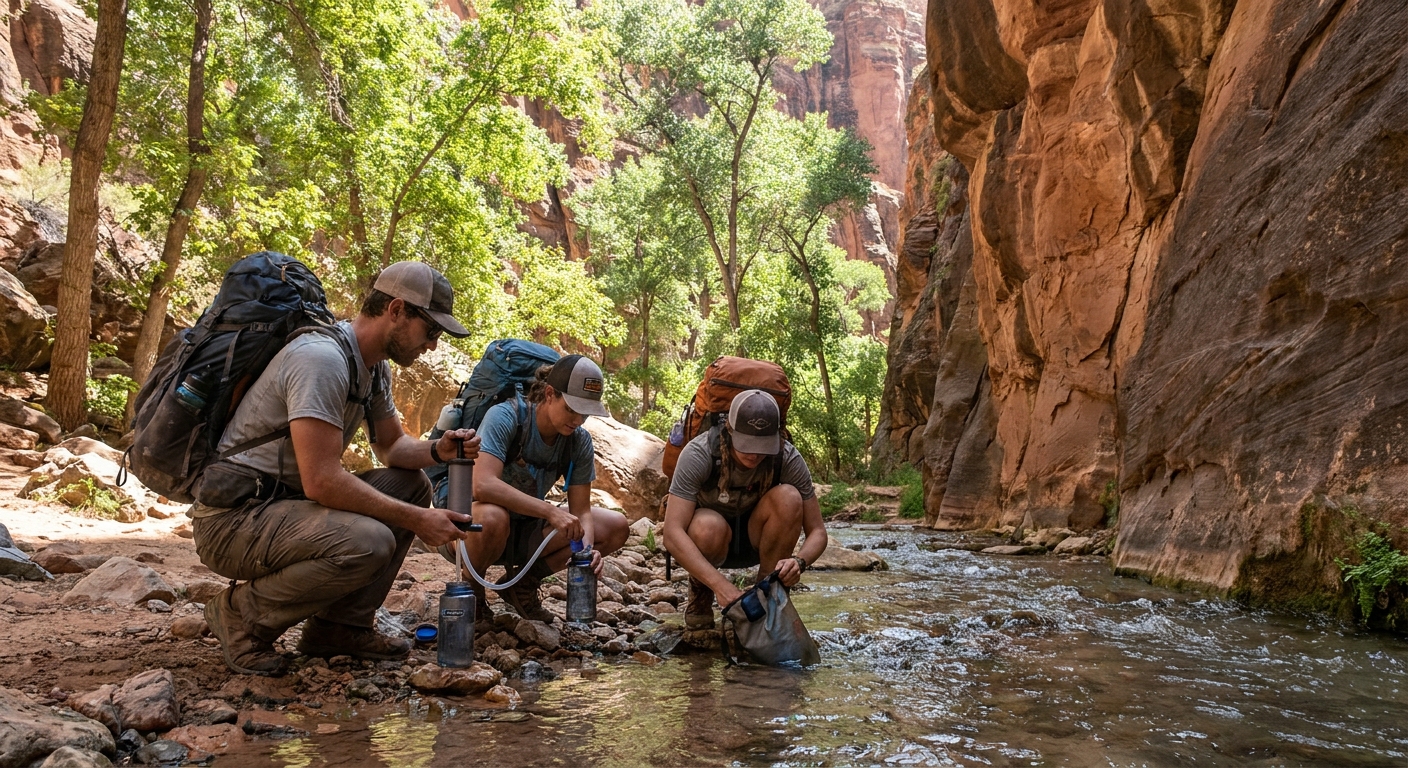
Water is the make-or-break variable for one-day R2R. You will likely need a mix of carrying capacity and refills, plus electrolytes.
Where people go wrong
- Relying on seasonal water without verifying status
- Skipping electrolytes and then wondering why they feel nauseated and weak
- Underestimating heat in the Inner Gorge, even in spring and fall
Corridor trail water reality
On the main corridor routes, there are seasonal water stations and pipeline-fed spigots in key areas, but they can be shut off for maintenance, freezing temperatures, or breaks. Always check the park’s current water availability report right before your hike.
A practical, conservative approach
- Start with capacity: many strong hikers carry 2 to 3 liters capacity minimum, more in warm weather.
- Refill whenever you can: treat every working spigot as a gift, not a guarantee.
- Electrolytes are non-negotiable: plan on steady intake, not a single emergency dose.
If you are not experienced with hydration planning for long, hot climbs, consider doing rim-only hikes first to learn how your body responds in desert conditions.
Fitness Reality Check
I love ambitious itineraries. I also love finishing them without an IV drip. One-day R2R is not a “tough but doable” hike for the average vacation hiker, even if you are generally fit.
Reconsider if any of these are true
- You have not recently completed a 15 to 20+ mile hike with sustained elevation gain.
- You live at low elevation and have not trained for long climbs at altitude.
- You struggle with heat, cramps, or hydration management on long efforts.
- You are planning to hike mid-day in hot months because “that’s when we’re there.”
- You are counting on hiking fast to beat darkness but have not tested that pace on steep terrain.
- You are injured, returning from injury, or have chronic knee issues that worsen on descents.
A baseline that makes this more reasonable
There is no single magic number, but most successful one-day R2R hikers have a base that includes:
- Regular long hikes, often weekly
- Back-to-back long days (because canyon legs are different legs)
- Comfortable movement for 10 to 14 hours with steady fueling
- Practice with trekking poles, headlamps, and trail nutrition
Also, your brain needs training. Can you keep making good choices at mile 18? That is the real test.
If you are reading this and hoping willpower will cover the gap, choose a rim-only hike. You will still have an incredible day.
R2R vs Rim-Only Day Hikes
Rim-to-Rim is famous, but rim-only hikes can be more enjoyable, safer, and still deeply satisfying, especially if you want a big day without the transportation headache.
Why rim-only is often the better call
- Simpler logistics: you start and end at your car or shuttle hub.
- Safer pacing: you can turn around based on heat, time, and energy.
- Still dramatic: the first few miles below the rim deliver some of the best views in the park.
Rim-to-river and back
A lot of people eye “rim to river and back” as the big, iconic day-hike alternative. It is iconic. It is also brutal.
Here is the safety caveat people skip: the National Park Service strongly warns against attempting a rim-to-river-and-back hike in a single day, especially in warmer conditions. It is a common itinerary behind heat illness, dehydration, and rescues, in part because hikers underestimate the climb out and overestimate how they will feel after hours in the furnace.
The advantage versus R2R is logistics, not effort. You eliminate the cross-rim transportation problem and keep your exit plan straightforward. The effort is still enormous, and it still requires an early start, conservative pacing, water planning, and the willingness to turn around when the day goes sideways.
Think of it like this: R2R is a celebration hike for people who have already learned their canyon lessons. Rim-only hikes are where most people should start.
A Smart One-Day R2R Plan
If you have the training and the experience, stack the odds in your favor.
Timing
- Start early: pre-dawn starts are common for a reason.
- Plan for darkness: carry a headlamp with fresh batteries even if you “won’t need it.”
- Avoid the hottest months for one-day crossings unless you have extensive desert endurance experience.
Fueling
- Eat early, eat often: small, frequent calories beat a big lunch you will not want.
- Salt plus water: pair fluids with electrolytes, especially once temperatures rise.
- Bring food you can stomach when tired: this is not the day for experimental gels.
Gear that earns its weight
- Trekking poles (especially for long descents and late-day climbs)
- Sun protection: hat, sunglasses, sunscreen
- Light insulating layer for rim temperatures
- Blister care and a small first-aid kit
- Offline map and a portable charger
Safety Calls
Decision gates
Even on a one-way hike, you need decision gates. Examples:
- If you are behind schedule by a certain point, you slow down and adjust expectations, not speed up.
- If you cannot keep fluids down, you stop, cool down, and reassess.
- If temps are higher than forecast, you prioritize shade and hydration and consider bailing to a safer plan if available.
Heat is not character-building
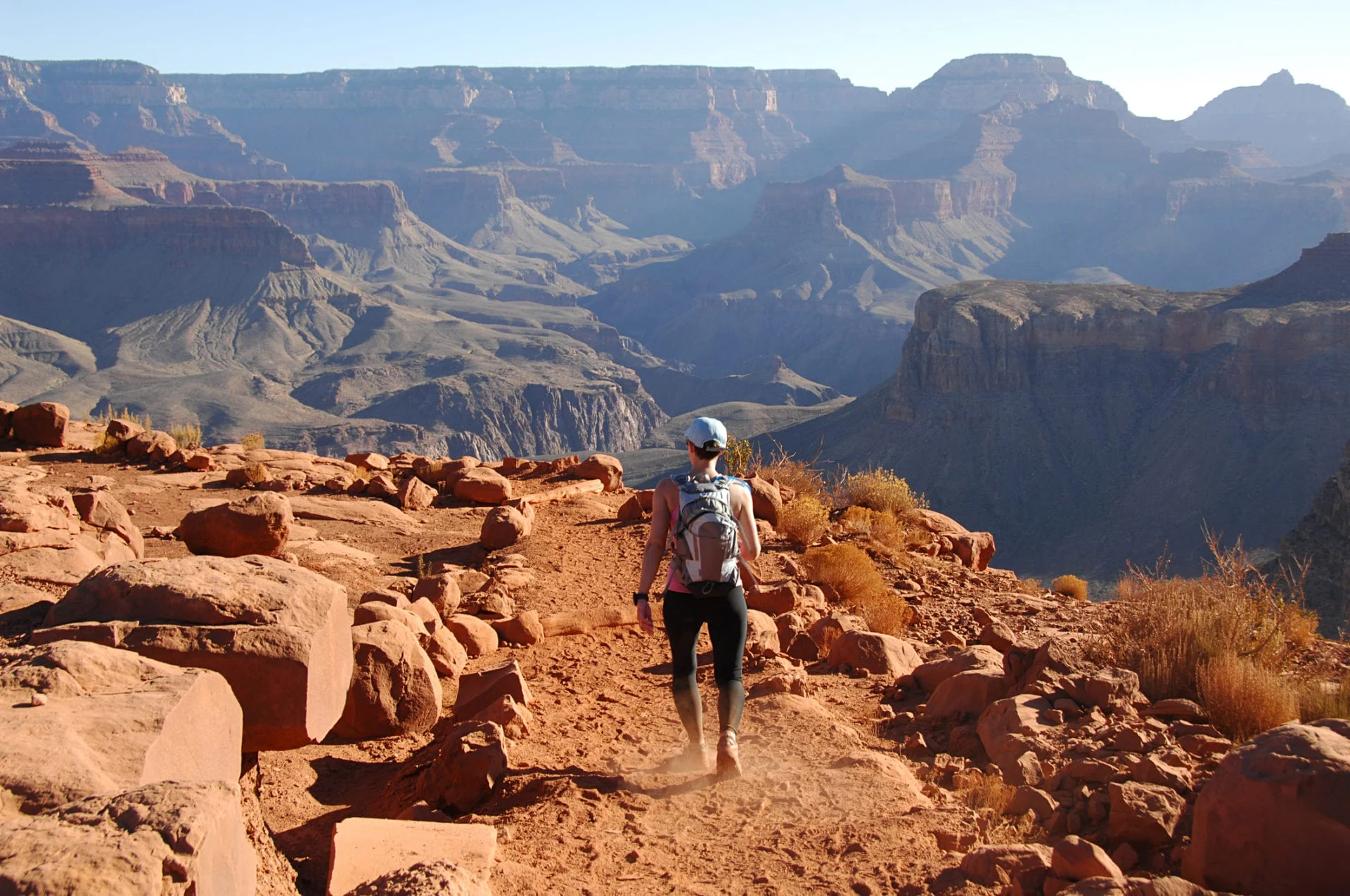
The Inner Gorge can be brutally hot, and heat illness can escalate fast. The right move is often to rest in shade, cool the body, and prevent the spiral rather than pushing “just one more mile.”
Do not count on cell service
Have offline navigation and a plan that does not require a signal. Tell someone your route and expected finish window.
Quick FAQ
Is one-day Rim-to-Rim harder than it sounds?
Yes, for most people. The distance is only part of it. The heat, grade, and cumulative fatigue are what turn it into a different category of day hike.
Do I need a permit for one-day R2R?
Not for day hiking if you are not camping or staying overnight in the canyon. Permits apply to backcountry overnight use.
Which direction is easier?
Neither is easy. Many hikers prefer starting on the North Rim because you finish on the South Rim where services and transportation are generally more abundant. But your shuttle plan and the season will decide what is realistic.
Can I do this in summer?
It is possible for highly experienced desert endurance hikers, but it is also when heat risk is highest. Many visitors should choose a different objective in hot months.
The Bottom Line
One-day Rim-to-Rim is an incredible achievement, but it is not the best Grand Canyon day for everyone. If you can confidently solve the North Rim seasonality, the trans-canyon transportation, and the fitness and heat management pieces, it can be a peak life memory.
If any of those pieces feel shaky, pick a rim-only or rim-to-river day hike and do it well. The canyon does not hand out bonus points for suffering, but it does reward good judgment with the kind of sunrise and sandstone silence you will remember for years.