Grand Canyon South Rim Day Hikes and Tusayan Guide

Maya Lin
Maya Lin is a travel journalist and outdoor enthusiast who believes the best trips combine rugged adventures with urban comforts. After spending six years backpacking across four continents, she founded Trail & Town Guide to help fellow travelers navigate both hidden mountain passes and bustling city neighborhoods with confidence.
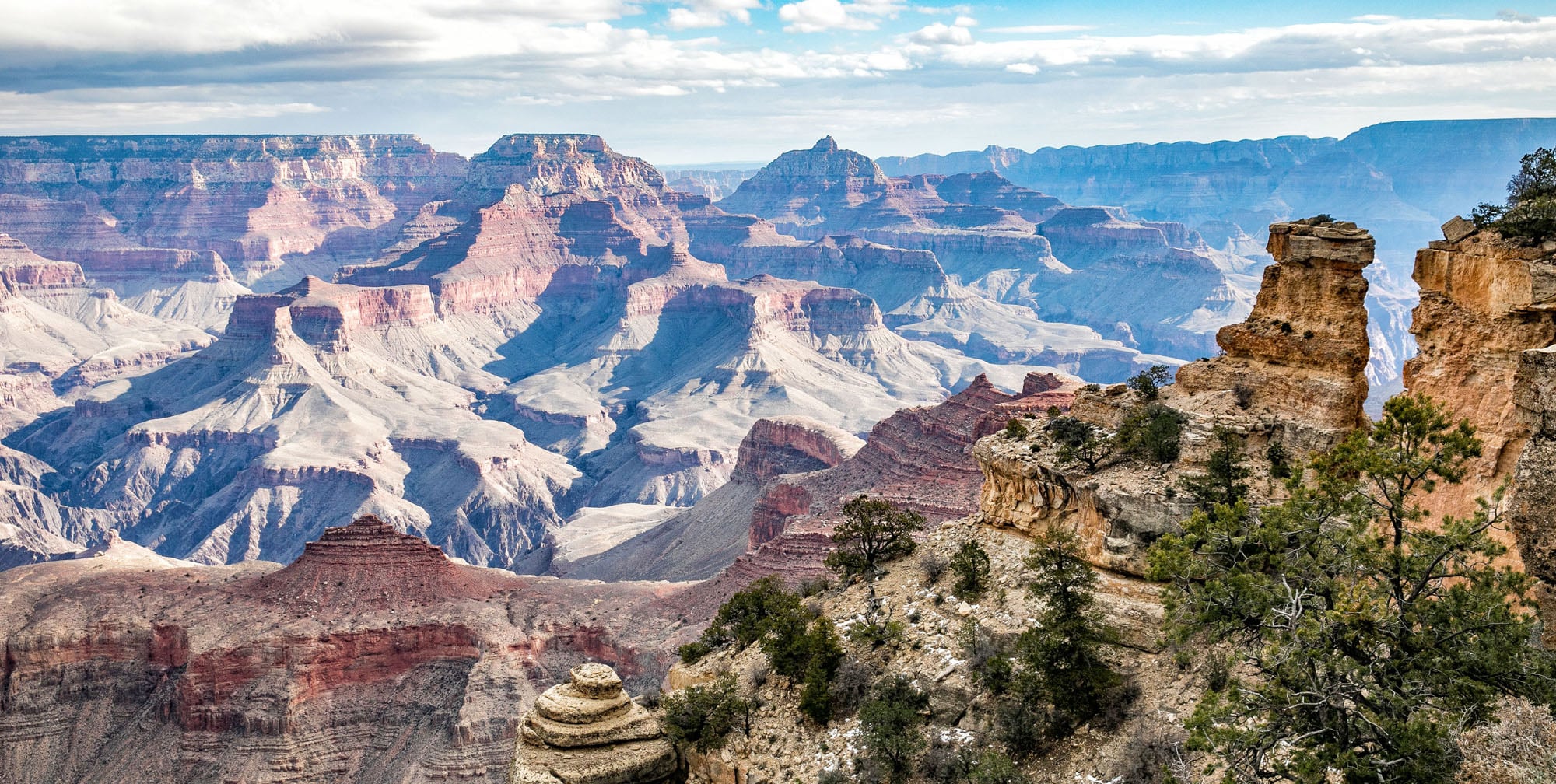
The Grand Canyon South Rim is the rare place that delivers on the hype within the first five minutes. You step out of the pines, the earth drops away, and suddenly you are looking at nearly 2 billion years of geologic history stacked like pages in a book you cannot finish in one lifetime.
This guide focuses on what you can realistically do in a day, especially if you want both rugged trail time and a comfortable reset in Tusayan afterward. I will cover three of the best South Rim day hikes, the viewpoint stops worth your time, and where to sleep and eat in the gateway town just outside the park.
Before you hike: South Rim basics
Entry fees and passes
You will pay a park entrance fee at the gate. If you visit national parks often, an America the Beautiful pass can be a great value. Check current fees and hours on the NPS site before you go.
Do not underestimate the canyon
The South Rim sits around 6,800 to 7,000 feet in the Village area. Even “short” hikes can feel harder than expected, and the climb back up is always the crux. In warm months, heat radiates off the rock and water needs spike. The park’s classic advice is still the best: go down only as far as you can comfortably come back up.
- Start early: Sunrise to mid-morning is the sweet spot for cooler temps and better light.
- Carry more water than you think: For most day hikers, 1 to 2 liters for a short hike and 2 to 3 liters for longer outings is a reasonable baseline. In summer and on exposed trails, many hikers carry 3 to 4 liters or more.
- Footwear: Trail runners or hiking shoes with good grip. The corridor trails can be dusty and slick in spots.
- Weather: The rim can be cold and windy even when the inner canyon is hot. Layers matter.
Heat timing matters
If you are visiting in peak summer heat, treat the inner canyon like a different planet. It can be much hotter below the rim than at the rim, and shade can be scarce. The National Park Service warns against hiking in the inner canyon during the hottest part of the day, generally between 10 AM and 4 PM. Build your day around early starts, earlier turnarounds, and a comfortable “off-trail” midday plan on the rim.
Storms, exposure, and cell service
Summer afternoons can bring fast-moving thunderstorms and lightning risk, especially on exposed stretches and viewpoints. Also, do not count on reliable cell service below the rim. Plan like you are on your own, because you might be.
Shuttles and getting around
From spring through fall and during busy periods, the free park shuttles are the easiest way to hop between trailheads and viewpoints without fighting for parking. The South Kaibab Trailhead is a big one: there is no public parking at the trailhead, so plan to use the shuttle system (or an authorized commercial shuttle or taxi where available).
Seasonal note: Hermit Road is shuttle-only during most of the main season, and typically open to private vehicles in winter. Always confirm current access before you go.
Permits and rules
These hikes are all day hikes that do not require a backcountry permit if you are not camping overnight. Stay on trail, pack out trash, and do not feed wildlife. Ravens are bold, squirrels are persistent, and both will happily take your snack if you let them.
Best South Rim day hikes
These three hikes are popular for a reason. They fit well into a one-day plan, they showcase different angles of the canyon, and they give you a real trail experience without committing to an all-day sufferfest.
Bright Angel to 1.5 Mile Resthouse
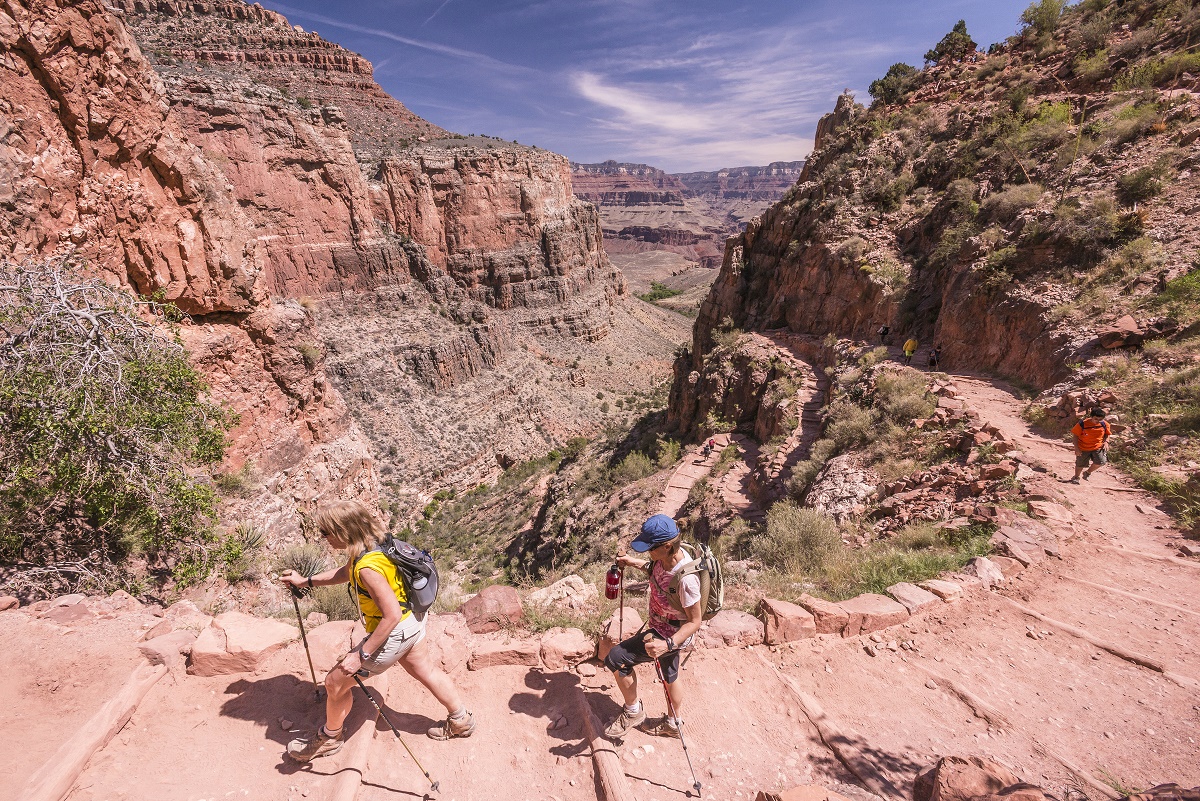
If you want one iconic below-the-rim hike that feels achievable, start here. The Bright Angel is a well-graded corridor trail that switchbacks down from near Grand Canyon Village and delivers immediate canyon views. The out-and-back to 1.5 Mile Resthouse is a classic sampler that still gives you that “I hiked into the Grand Canyon” feeling.
- Distance: about 3 miles round trip
- Time: roughly 2 to 4 hours depending on pace and photo stops
- What it feels like: steady downhill on the way out, steady uphill on the way back
- Why do it: dependable trail, big views, and a clear turnaround point
My pacing tip: Hike down with a light touch. The goal is to arrive at the resthouse feeling fresh enough to climb back up without bargaining with yourself every switchback.
Water note: Water availability can be seasonal and can change due to maintenance issues. Check the NPS current water status before you commit, and still carry what you need.
South Kaibab to Ooh Aah Point
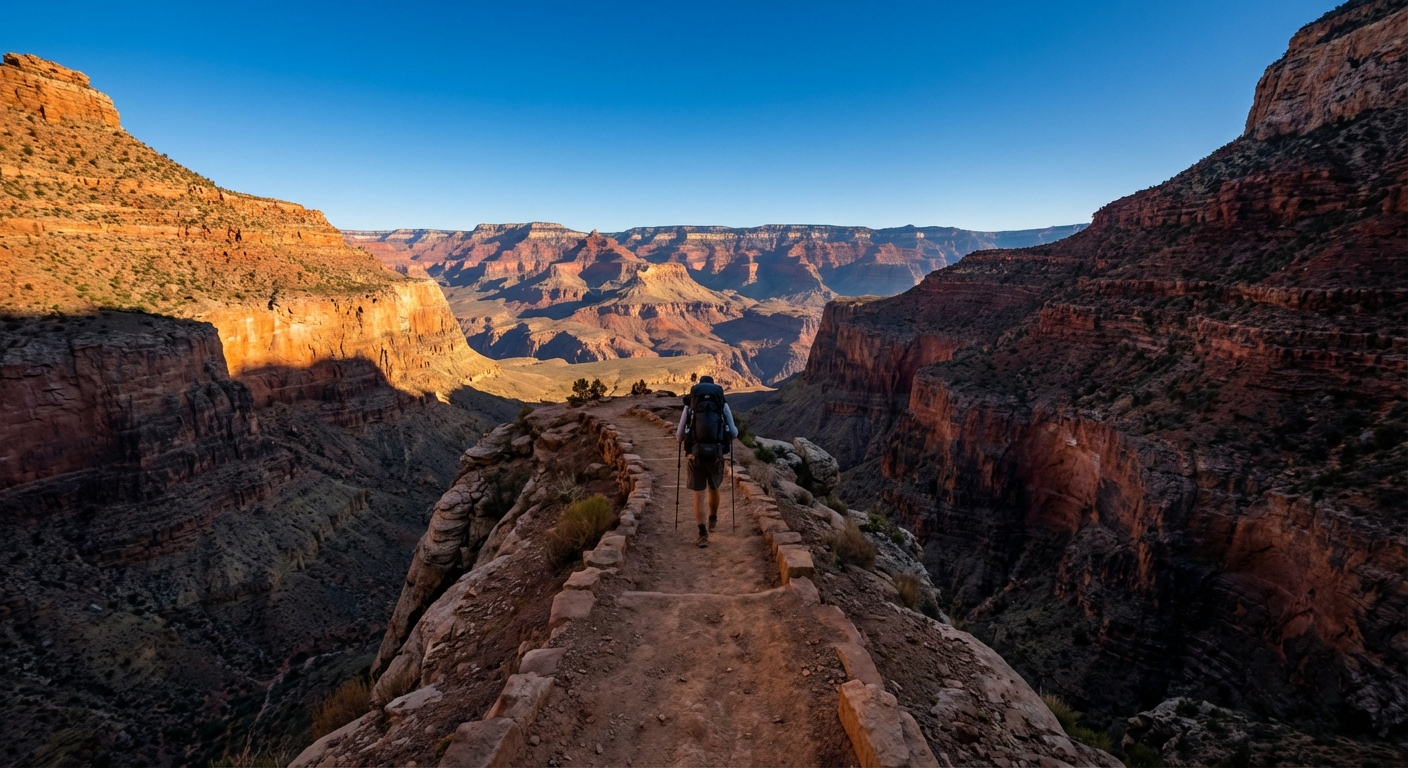
For maximum payoff in minimal time, the South Kaibab wins. The trail follows a ridgeline with fewer trees blocking the view, which means the canyon is basically in your face the entire way. Ooh Aah Point is the perfect turnaround for many visitors and an especially good sunrise option.
- Distance: about 1.8 miles round trip
- Time: roughly 1.5 to 3 hours
- What it feels like: steeper and more exposed than Bright Angel
- Why do it: ridiculously scenic for a short hike
Important: South Kaibab has no water. Treat this as a bring-your-own-water situation and start early to avoid heat and crowds.
Confidence tip: Even if you feel great at Ooh Aah Point, remember this trail makes you pay on the way back up. Turning around early is a flex.
Rim Trail sections
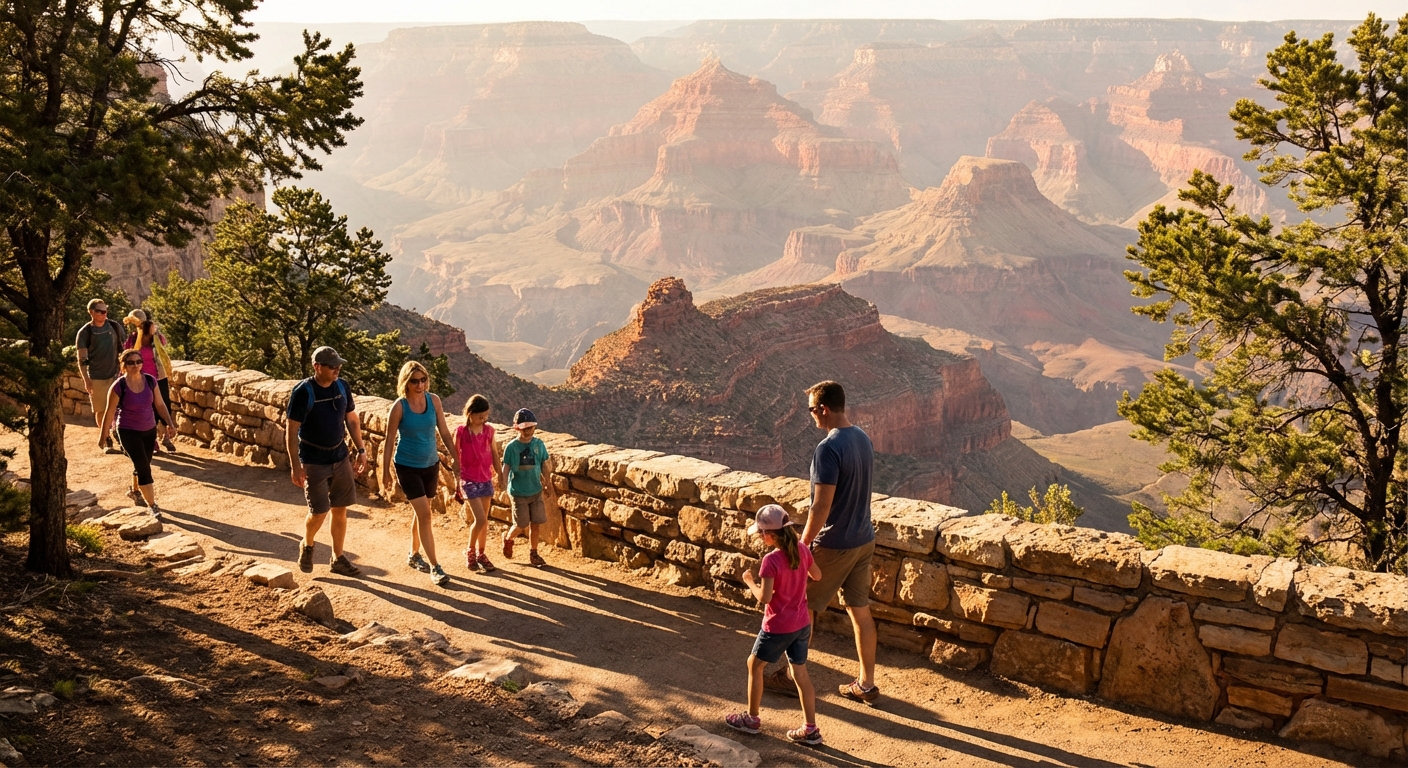
The Rim Trail is my favorite “choose your own adventure” on the South Rim. It is mostly paved or hard-packed, generally gentle, and loaded with viewpoints. You can walk 20 minutes or wander for hours, linking up overlooks, lodges, and shuttle stops.
- Best for: families, anyone acclimating to altitude, photographers, and people who want big views without a big climb
- Terrain: mostly flat with occasional short rises
- How to use it: treat it like a scenic corridor between overlooks
My favorite way to do it: Pick one scenic stretch near Grand Canyon Village in the late afternoon, then time your last viewpoint for golden hour. It pairs perfectly with an easy dinner plan back in Tusayan.
Viewpoints worth your time
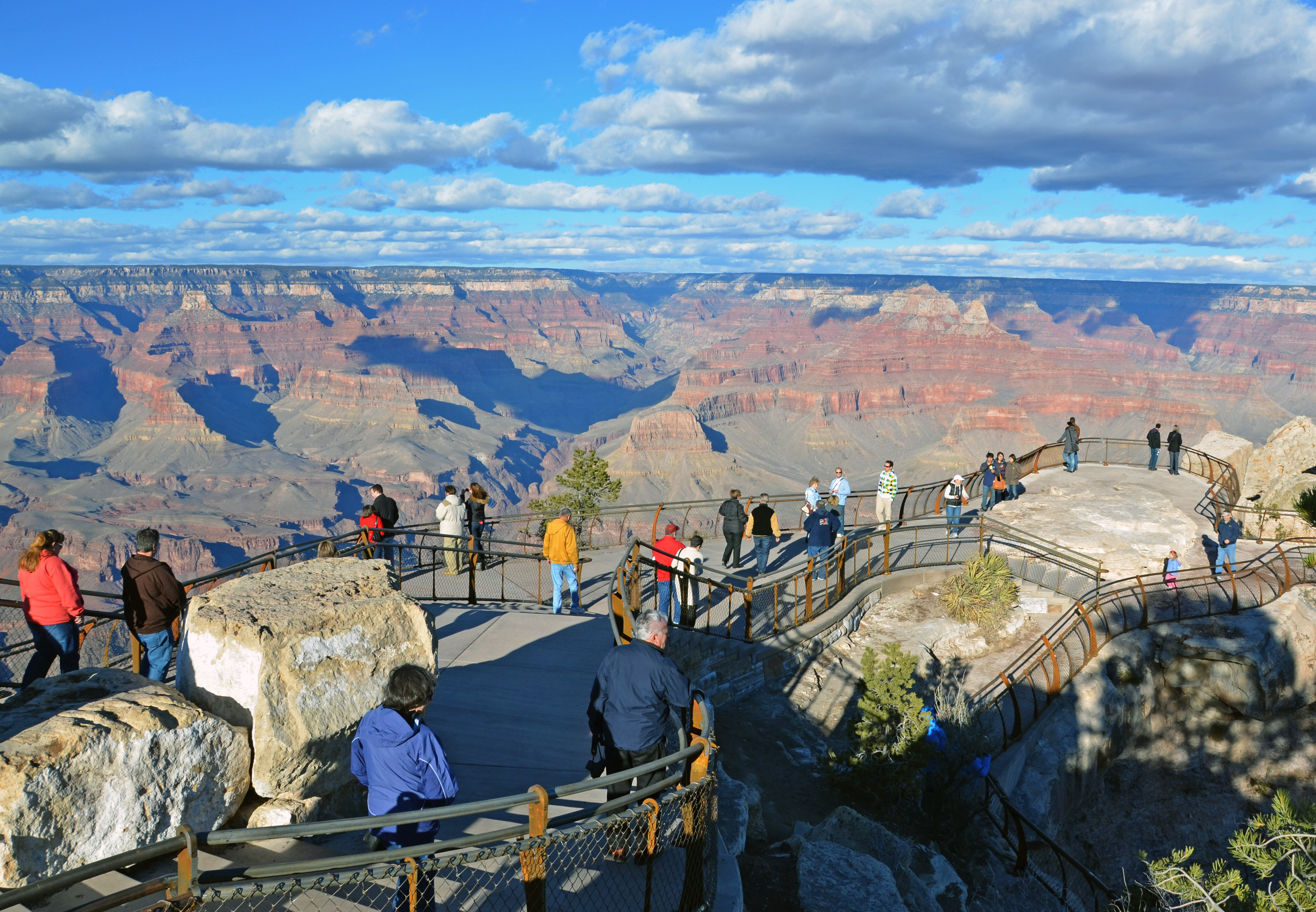
The South Rim is lined with overlooks, and you could spend all day hopping between them. If you want a tight list that feels varied, start with these. They offer different angles, different light, and different vibes, from quick roadside stops to linger-worthy panoramic ledges.
Mather Point
This is the classic first view for many visitors, and yes it is busy. Go early. The wide panorama is an excellent orientation moment, especially if it is your first time seeing the canyon.
Yavapai Point
Big views, slightly less chaotic than Mather, and close to the geology-focused exhibits at Yavapai. If you want to understand what you are looking at, this is a great stop.
Hopi Point
Hopi Point is famous for sunset for a reason: long views down canyon and dramatic light on the layers. It is on the shuttle-served Hermit Road area during most of the main season, which helps reduce traffic stress.
Hermits Rest
A historic stone building at the end of Hermit Road with a viewpoint nearby. Even if you just hop out for 10 minutes, it feels like a satisfying “end of the line” stop.
One-day itinerary ideas
Option A: First-timer hits
- Sunrise: Mather Point
- Morning hike: South Kaibab to Ooh Aah Point
- Midday: Rim Trail stroll near Grand Canyon Village and a relaxed lunch
- Afternoon viewpoint: Yavapai Point
- Sunset: Hopi Point or another Hermit Road overlook
- Evening: Dinner in Tusayan
Option B: Trail-forward day
- Early-morning hike: Bright Angel to 1.5 Mile Resthouse
- Brunch: back on the rim in the Village area
- Afternoon: short Rim Trail section for views and recovery
- Sunset: Hopi Point
If you are choosing between Bright Angel and South Kaibab for one short below-the-rim hike, pick Bright Angel for shade and a steadier grade, and pick South Kaibab for nonstop views and a punchier climb back up.
Tusayan: a gateway base
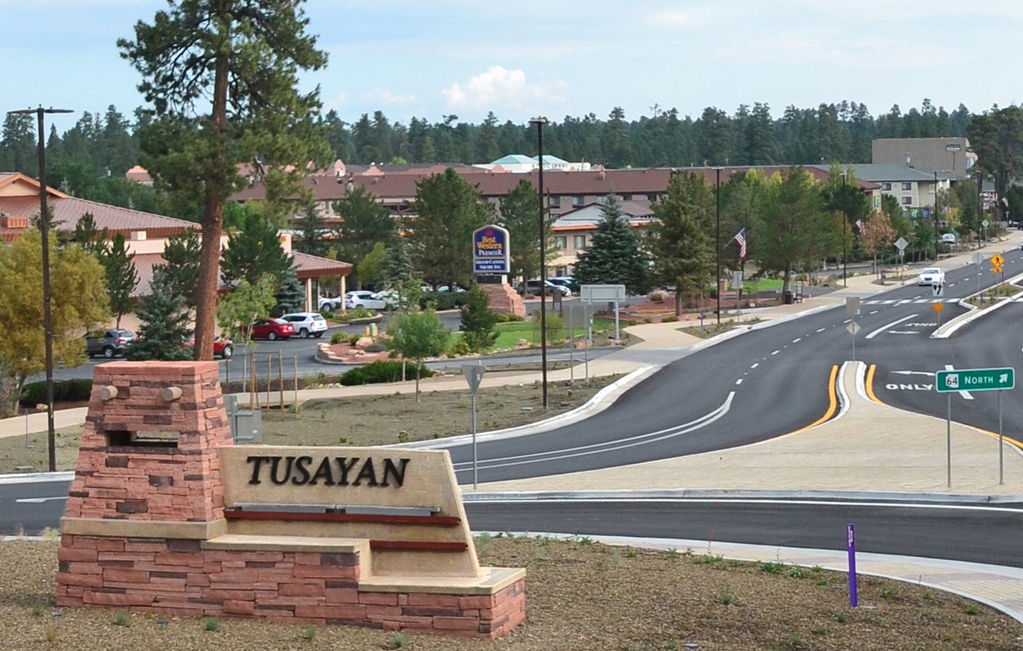
Tusayan sits just outside the South Rim entrance, about a 10 to 15 minute drive to the gate plus whatever the entrance line decides to do that morning. It is not a quaint mountain hamlet, but it is extremely convenient, especially if you want an early start without paying in-park lodging prices or playing parking roulette at dawn.
What I like about Tusayan is how it supports the Town Wander travel style: hike hard in the morning, shower properly, eat something warm, and sleep somewhere quiet enough to do it all again.
Where to stay in Tusayan
Availability swings wildly by season, weekends, and school breaks. Book early if you are traveling in spring, summer, or around holidays. (As always, confirm current names and branding at booking.)
- Squire Resort at the Grand Canyon (BW Signature Collection): A classic base with lots of on-site amenities, good for groups and anyone who wants downtime without leaving the property.
- Holiday Inn Express and Suites Grand Canyon: Straightforward, consistent, and a solid choice when your priority is early hiking and a comfortable bed.
- The Grand Hotel at the Grand Canyon: Another convenient option when in-park lodging is full and you want a quick drive to the entrance.
Where to eat and drink
Tusayan is small, so you are not here for a restaurant crawl. You are here for a satisfying meal that does not require another hour in the car.
- Big E Steakhouse and Saloon: A dependable post-hike stop for hearty plates and that classic Arizona road-trip vibe.
- We Cook Pizza and Pasta: Casual, family-friendly, and a great option when you want carbs that feel earned.
- Tusayan General Store: Useful for quick bites and snacks, especially if you are building a trail lunch.
Coffee note: Coffee options can be limited compared with big cities, so if you have a “must-have” morning ritual, consider packing a simple travel setup or grabbing what you can the night before. I have learned the hard way that sunrise does not wait for a latte.
Quick stops
- Grocery and snacks: Grab trail food in Tusayan before entering the park to save time.
- Fuel: Top off your tank here if you are continuing toward Desert View or doing more regional driving.
- Park entrance timing: Arrive early during peak season to reduce time spent idling at the gate.
Packing list for a South Rim day
My carry-on-only instincts still apply here: pack light, but pack smart. The Grand Canyon punishes the unprepared, mostly through sun, dehydration, and temperature swings.
- Water and electrolytes
- Sun protection: hat, sunglasses, sunscreen
- Light layers: windbreaker or warm layer for the rim
- Snacks that will not melt: nuts, bars, tortillas, jerky
- Comfortable shoes with traction
- Headlamp if you are starting before sunrise or planning sunset
- Small first-aid kit and blister care
Refill tip: There are water bottle filling stations around the rim in high-traffic areas, but do not assume anything below the rim. Check current NPS updates and top off whenever you can.
Responsible travel
The South Rim gets heavy visitation, which means your small choices matter. Stay on trail to protect fragile soils and plants, keep a respectful distance from wildlife, and carry out everything you carry in.
If you are visiting during hot months, plan around the heat, not your ego. Earlier starts, shorter below-the-rim hikes, and avoiding the inner canyon between 10 AM and 4 PM can be the difference between a great day and a rescue story. The canyon will be here next time, and your future self will thank you for leaving a margin.
Closing thoughts
The best South Rim day is a mix of scale and simplicity: one solid hike, a few overlooks that make you stop talking, and a comfortable evening base in Tusayan where you can eat well and reset. Do that, and the Grand Canyon stops being a checkbox and starts feeling like a place you will return to.