Great Sand Dunes Timing: High Dune, Medano Creek, Zapata Falls

Maya Lin
Maya Lin is a travel journalist and outdoor enthusiast who believes the best trips combine rugged adventures with urban comforts. After spending six years backpacking across four continents, she founded Trail & Town Guide to help fellow travelers navigate both hidden mountain passes and bustling city neighborhoods with confidence.
Great Sand Dunes National Park is one of Colorado’s best two-for-one landscapes. You can slog up a mountain of sand that looks like the Sahara accidentally landed in the Rockies, then cool off in a real creek that runs right along the base of the dunes. Add nearby Zapata Falls, and you have a full day that feels like three different trips.
The catch is timing. The dunes can be dangerously hot at midday in summer, Medano Creek is famously seasonal, and Zapata Falls is easy when the water is low but turns into a different beast with spring runoff or winter ice.
Quick timing cheatsheet
- Best overall months: late May to early June for creek play, then September for cooler dune hiking with fewer crowds.
- Best time of day for High Dune: sunrise to late morning, or late afternoon to sunset. Avoid midday heat in summer.
- Best time for Medano Creek: typically peaks late May to early June, then fades through summer.
- Best time for Zapata Falls: easiest and most comfortable in late summer and early fall. Winter can be beautiful but often icy and not always practical without traction.
Safety note: Weather, access, and creek flow vary year to year with snowpack and storms. Check current NPS alerts and conditions before you go, and treat this as a planning baseline rather than a promise.
Before you go: parking and basics
- Where you are actually going: For the main dunes and Medano Creek, most visitors head to the Dunes Parking Area at the end of the main park road. From there, you walk straight onto sand and toward the creek edge.
- Parking reality (read this): During peak Medano Creek season, the main lot can fill by mid-morning, sometimes as early as 9 AM on weekends and holidays. If you want an easy start (and less stress), treat sunrise as your arrival target, not your hiking start time.
- Park hours: The park is generally open 24 hours, which is why sunrise hikes and stargazing are so good here. The visitor center and facilities keep their own hours, and occasional closures happen due to weather or road conditions.
- Entrance fees: There is an entrance fee for the park. Fees and pass options can change, so confirm the current rate on the NPS site before you go, especially if you are deciding between a single visit and an annual pass.
Quick access reality check: Soft sand is a workout. If you want the most approachable version of the park, spend time along the dunes edge and Medano Creek rather than committing to a summit.
Season by season
Spring (March to mid May)
What it’s like: Quiet, windy, and dramatic. You may get cool days that are perfect for a long dune hike, but spring gusts can sandblast exposed skin and make the dunes feel surprisingly harsh.
- Medano Creek: Often low early spring, then starts building as melt ramps up. Check current conditions and any posted creek updates on the NPS site.
- Dune heat risk: Low to moderate. Great for midday hikes on cooler days, but watch wind.
- Zapata Falls: Can be cold and slick. High runoff later in spring can make the stream walk louder, colder, and more intense.
Early summer (late May to late June)
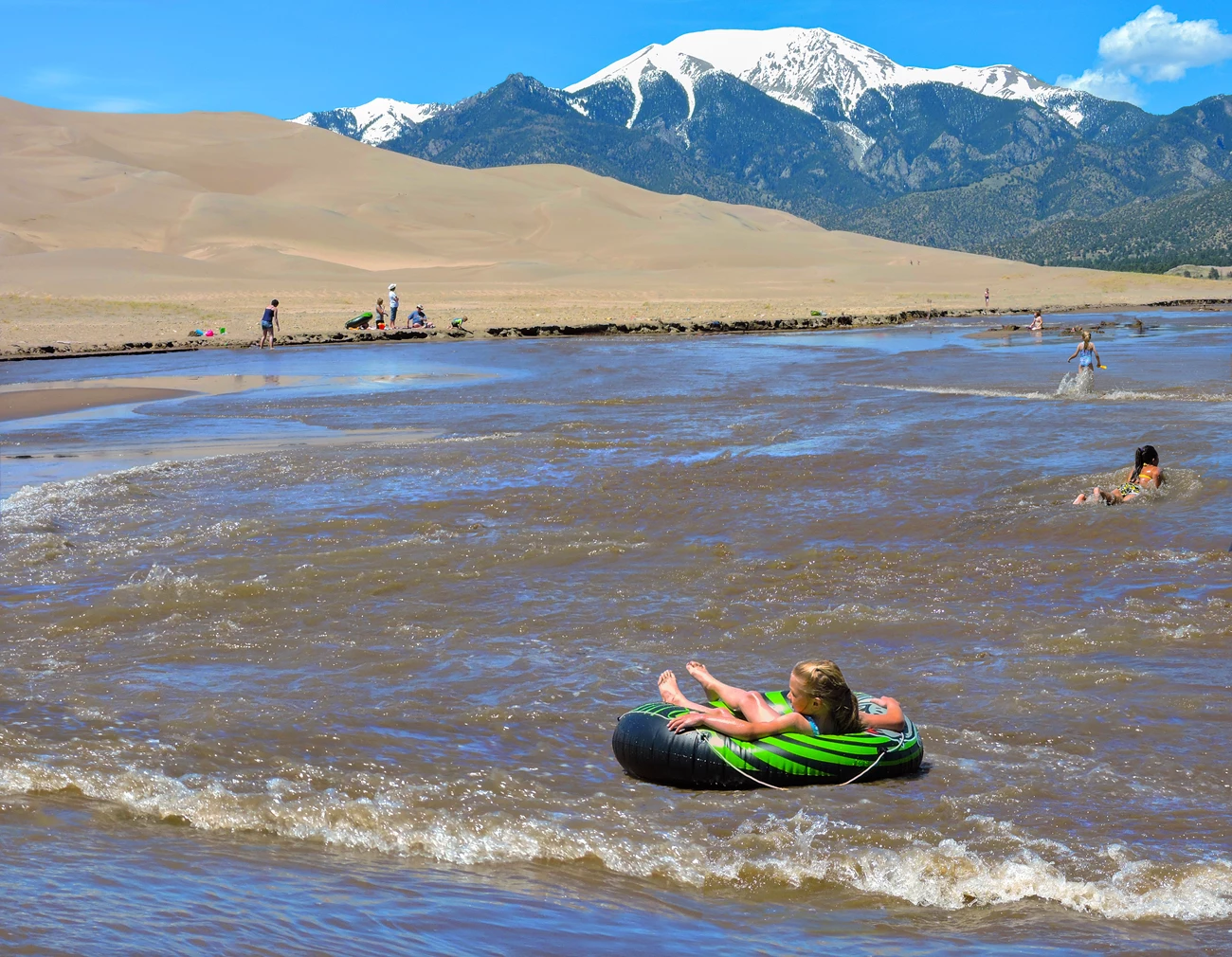
What it’s like: This is the classic Great Sand Dunes window. The creek is usually at its best, and you can do the iconic combo: sand in the morning, creek play at midday, sunset dunes if you still have legs.
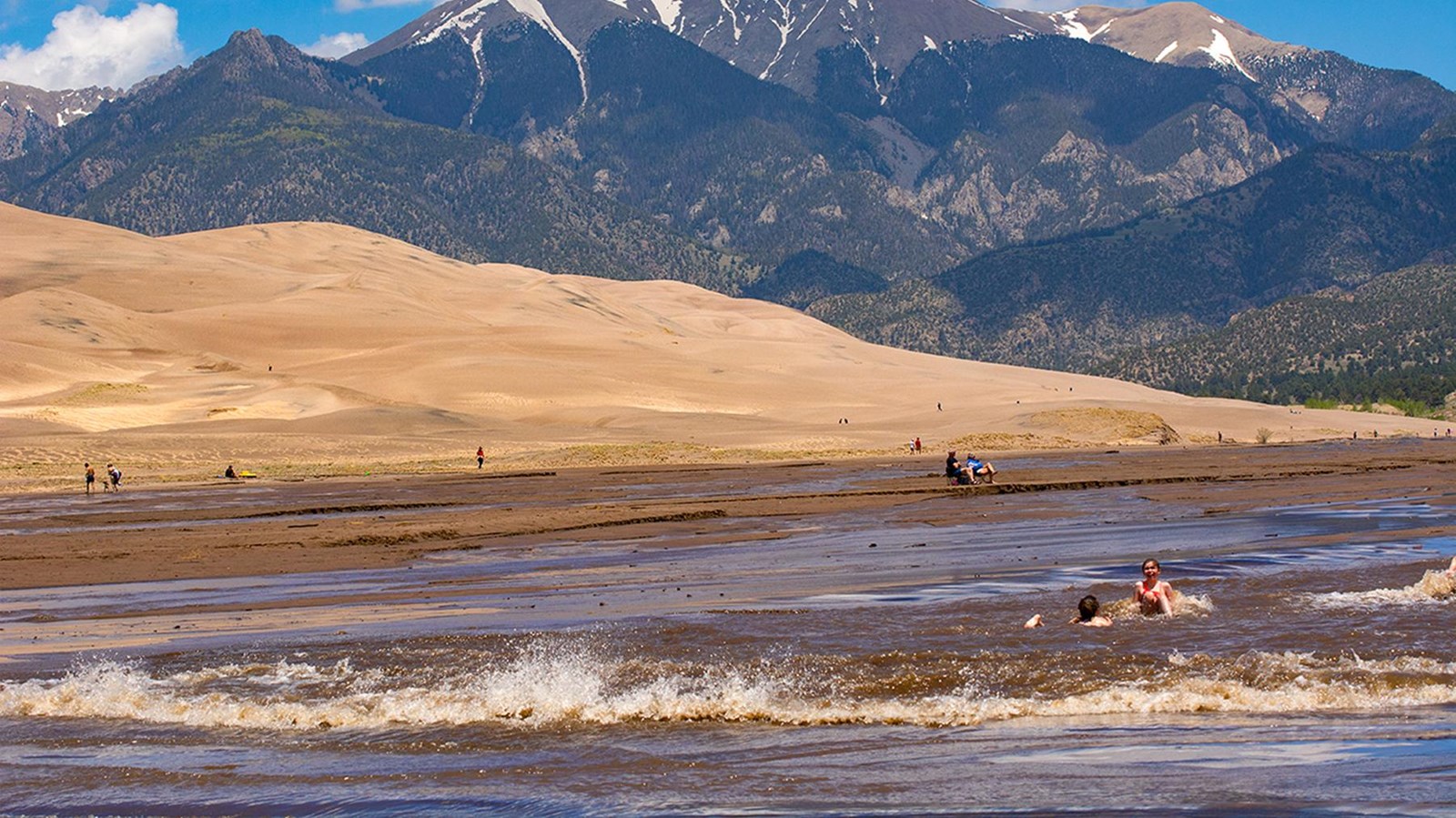
- Medano Creek: Typically strongest now. In good snow years, you can see a “surge flow” effect where water comes in pulses like tiny waves.
- Dune heat risk: Rises quickly as days warm. The sand can get hot enough to burn bare feet (and paws).
- Zapata Falls: Refreshing, but spring runoff can linger into June. Expect colder water and faster current.
Peak summer (July to August)
What it’s like: The dunes are stunning, but summer is a timing game. Midday can be a no-go on the open sand, especially for kids, dogs, or anyone not heat-adapted.
- Medano Creek: Often recedes and can become shallow, braided, or dry in late summer.
- Dune heat risk: High. Plan around sunrise and evening, and consider skipping a full High Dune summit if temps are extreme.
- Zapata Falls: One of the best summer add-ons because it stays cooler in the canyon, but it is still a wet, rocky stream walk with slip hazards. Take your time.
Fall (September to November)
What it’s like: My favorite season for High Dune. The light gets honey-gold, days are cooler, and you can actually enjoy a longer hike without feeling like your shoes are melting. Creek play is usually not the main event by now.
- Medano Creek: Frequently low or dry.
- Dune heat risk: Low to moderate. Midday hikes become realistic again.
- Zapata Falls: Excellent, with cooler but manageable water and fewer crowds.
Winter (December to February)
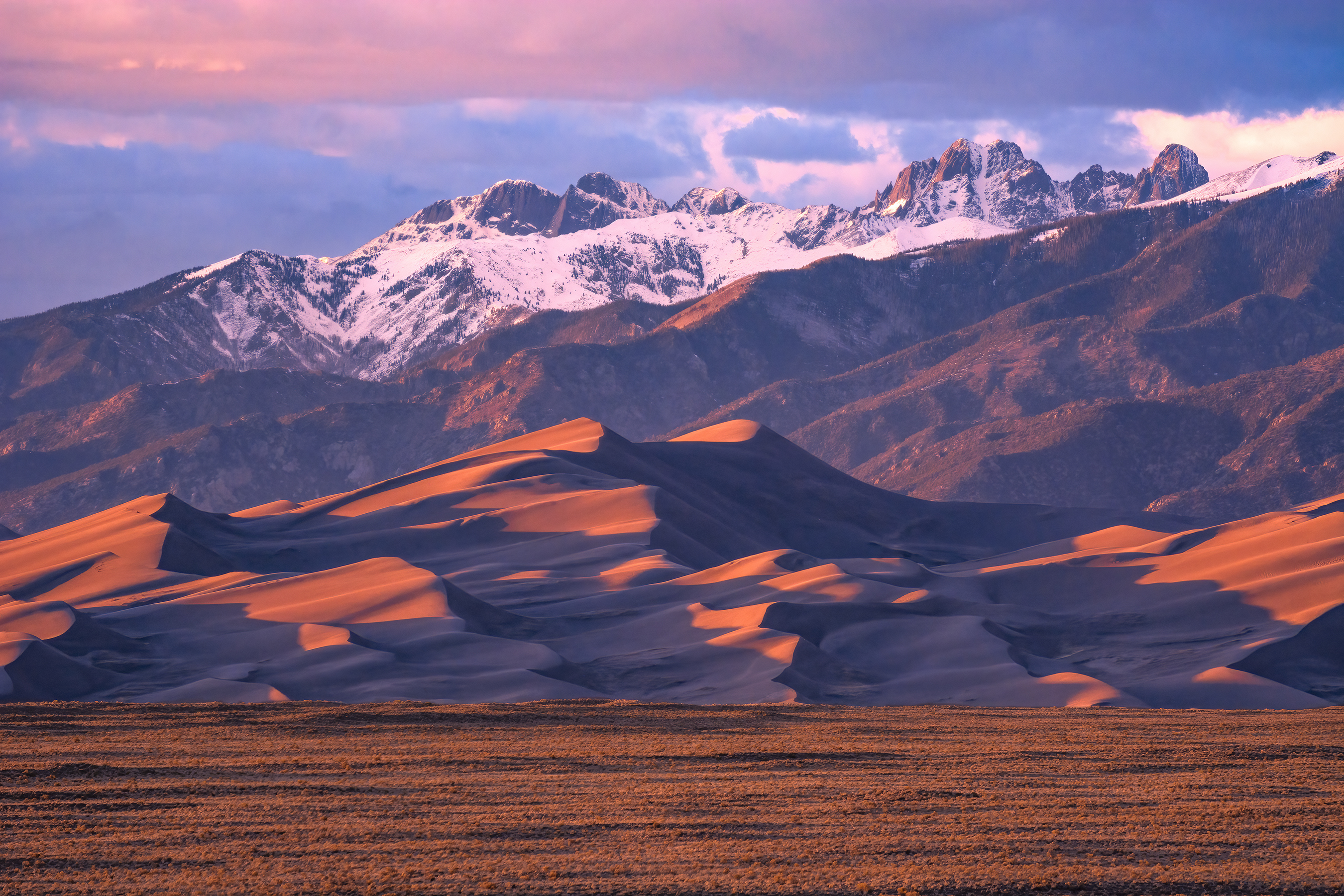
What it’s like: Quiet, stark, and wildly beautiful. The dunes can look like a minimalist painting when wind smooths them out, and crowds drop to almost nothing. Conditions change fast, so plan conservatively.
- Medano Creek: Minimal flow, may be frozen in places.
- Dune heat risk: Very low, but windchill can be biting.
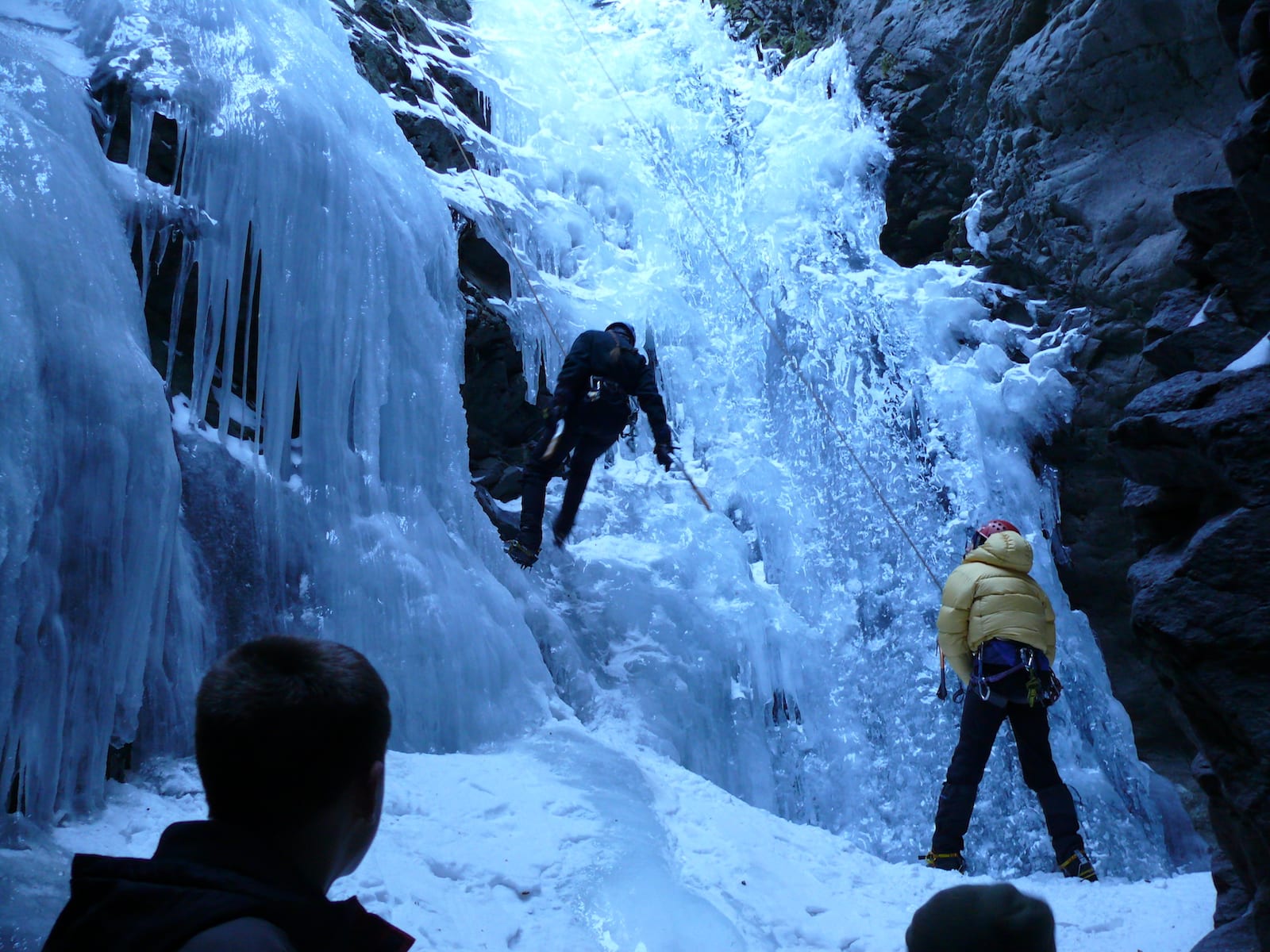
- Zapata Falls: Often icy. The route can be slippery and the stream walk can be unsafe without traction and comfort on ice. Access can also be limited by snow and road conditions. Consider turning around if it feels sketchy.
High Dune: when to hike
High Dune is a classic target because it feels like a true summit without technical hiking. It is also exposed, steep, and deceptively exhausting. On sand, every step forward is a negotiation.
First-timer note: There are no formal trails on the dunes. Most people pick a ridgeline and climb, adjusting as they go based on wind, energy, and where they want to end up. If you are unsure, follow the general flow of footprints toward a popular ridge, then make it your own.
Best times of day
- Sunrise to late morning: Cool sand, calmer air, and the best chance for firm footing. This is the safest summer window.
- Late afternoon to sunset: Cooler temps and gorgeous light. Start early enough that you are not descending in the dark unless you planned for it.
- Midday in summer: Only if temperatures are mild and you are prepared for heat and burning sand. For many visitors, this is the time that turns “fun” into “never again.”
How long to budget
Time varies wildly by fitness, heat, wind, and how many photo breaks you take. Add extra buffer for kids or anyone who hates sand in their shoes.
- High Dune out-and-back: 2 to 4 hours for most people at a steady pace.
- Add creek lounging and wandering the flats: easily 4 to 6 hours total in the dunes area.
Footwear and sand comfort
Sand is the main character here, and it has opinions about your footwear.
- Cool seasons or early morning: Trail runners are great. Gaiters help if you hate sand in your shoes.
- Hot summer days: Barefoot can burn. Think closed-toe sandals, light shoes, or water shoes that can handle both sand and creek crossings.
- Creek plus dunes combo: Water shoes or sandals for the creek, and a light shoe for climbing is ideal. If you only bring one pair, pick something that drains and does not chafe.
Heat and hydration basics
- Carry more water than you think: There is no shade on the climb. A hydration bladder makes sipping easy.
- Protect feet and hands: Hot sand burns faster than you expect, and sunburned hands feel awful gripping sand.
- Watch for thunderstorms: Summer afternoons can bring lightning and sudden downpours. The dunes are an exposed place to be during a storm.
- Dogs: Hot sand can injure paws fast. If you bring a dog, avoid midday, carry extra water, and be ready to turn around early.
Medano Creek: how to time it
Medano Creek is the surprise twist that makes Great Sand Dunes feel like a beach day in the mountains. When it is flowing well, families build sand dams, adults do cold-water therapy without calling it that, and everyone suddenly forgets they were tired five minutes ago.
When creek flow is best
- Late May to early June: Often peak play season.
- Mid June: Still good in many years, though it can start dropping depending on snowpack.
- July and August: Often lower, sometimes intermittent.
- Fall through early spring: Usually low, dry, or too cold to be fun.
Reality check: Snowpack drives everything. Before you commit to a creek-focused day, check the NPS conditions page for current Medano Creek updates.
Best creek time of day
On warm days, midday is great for wading and cooling off. If you hike High Dune early, the natural rhythm is: dunes first, creek second.
What to wear for creek plus dunes
- Footwear: Water shoes, sturdy sandals, or old sneakers you do not mind getting sandy.
- Layers: A light sun shirt helps with both UV and wind.
- Towel or packable layer: The breeze can feel chilly once you are wet, even in summer.
Zapata Falls: easy add-on
Zapata Falls sits just outside the park and is perfect when you want something cool and shaded after the dunes. It is a short outing, but it includes a stream walk to reach the waterfall, so plan to get your feet wet.
How long it takes
- From the Zapata Falls trailhead: Plan about 30 to 60 minutes round trip for most visitors, longer if you linger.
- From the main dunes area: Budget additional driving time each way. The road climbs to the trailhead and the temperature often drops noticeably.
Road and access notes
- Getting to the trailhead: The access road is typically passable, but it can be washboard, muddy, or icy depending on season and weather. Check conditions if you are visiting early spring or winter.
- Final approach: Reaching the falls requires walking in the stream over rocks. In high runoff or icy conditions, this can shift from “fun” to “not worth it” quickly.
Best time of day
- Midday: Excellent in summer because it stays cooler in the canyon.
- Late afternoon: Also great, but be mindful of light and slick rocks if you are hustling.
What to bring
- Footwear with grip: Rocks can be slick.
- A warm layer: The falls area can feel chilly compared to the dunes.
- Phone protection: A simple dry pouch is handy if you are walking in the stream.
One-day itineraries
Alamosa is the most common base for Great Sand Dunes, and it works well for both early starts and comfortable evenings. Mosca and Hooper are closer, quieter alternatives if you want fewer amenities and quicker access.
Option A: Classic day
- Early morning: Arrive near sunrise (this also helps with parking). Start with the dunes while the sand is cool. Aim for High Dune or a shorter ridge walk if you are with kids.
- Late morning to early afternoon: Medano Creek time. Wading, lounging, sand engineering.
- Mid afternoon: Leave the dunes before peak heat fatigue hits. Grab a late lunch or coffee back in Alamosa.
- Late afternoon: Drive up to Zapata Falls for a cool-down walk.
- Evening: Dinner in town and a real bed, because sand has a way of ending up everywhere.
Option B: Summer heat hack
- Sunrise: Dunes hike immediately. Keep it conservative if the forecast is hot.
- Midday: Zapata Falls when the dunes are roasting (but take the stream walk seriously if water is high).
- Late afternoon: Return to the dunes for creek time and golden-hour wandering if conditions are comfortable.
Option C: Shoulder season
- Mid morning: Start with dunes after temps rise a bit. Wind is often the bigger factor than heat.
- Early afternoon: Scenic drive and short stop at Zapata Falls.
- Late afternoon: Back to the dunes for sunset light if the wind calms.
Two-day pacing
If you can spare two days, Great Sand Dunes gets dramatically better. You stop treating it like a checklist and start noticing the textures, the way the dunes change color, and how different the park feels at sunrise versus dusk.
Day 1: Dunes and creek
- Morning: High Dune hike in the cool hours.
- Midday: Long Medano Creek hang. Eat lunch picnic-style, then nap like you are at the world’s strangest beach.
- Evening: Sunset walk on the dunes. If you are visiting during a moonless window, stick around for stargazing.
Day 2: Zapata Falls and dunes
- Morning: Zapata Falls before crowds and before the canyon warms up.
- Afternoon: Return for a shorter dunes wander or creek time, depending on the season.
- Departure: Head back to Alamosa or continue the road trip toward the San Luis Valley hot springs or the Sangre de Cristo foothills.
What I would pack
- Footwear plan: One pair that handles sand plus one pair that handles water, if you have room.
- Sun protection: Sunglasses, hat, sunscreen, and a sun shirt. The glare off sand is real.
- Water and snacks: More than a typical city day. The dunes burn calories fast.
- Simple first aid: Blister care and a bandana for wind.
- Small trash bag: Easy way to keep crumbs and waste contained for Leave No Trace.
- Traction (winter or shoulder season): If you are even thinking about Zapata Falls in icy conditions, bring traction and a cautious mindset.
Final call
If you want the iconic “sand plus creek” experience, aim for late May to early June and plan your High Dune hike for morning or evening. If your priority is a longer, more comfortable hike with fewer heat worries, go for September and treat Medano Creek as a bonus rather than the headline.
Either way, build your day like a local: big effort when it is cool, slow moments when it is hot, and one cold, shaded detour to Zapata Falls to reset your body and your mood. Just keep one tab open for reality: the NPS alerts and current conditions page.