Haleakalā Sunrise at the Summit
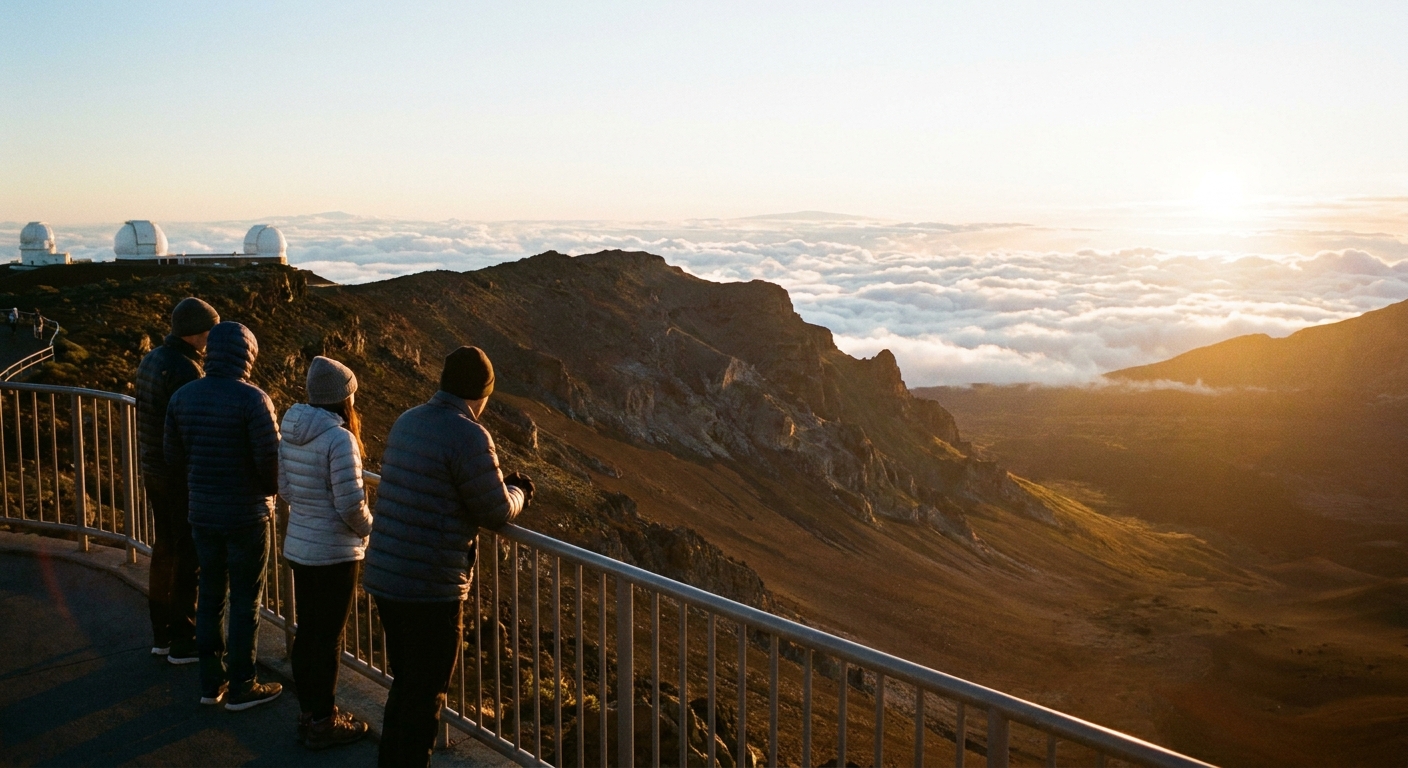
Haleakalā sunrise is not just a pretty moment. It is a whole pre-dawn mission with a reservation window, a temperature reality check, and a winding road that asks you to be awake even if your brain is still in “hotel coffee” mode.
If you treat it like its own itinerary, the morning gets a lot calmer. You will know when to leave, where the bathrooms are, what “layers” actually means at 10,000 feet, and what to do if the summit is buried in clouds. This is the version of Haleakalā sunrise that feels intentional, not frantic.

Reservations and entry
Sunrise window: 3:00 a.m. to 7:00 a.m.
Haleakalā National Park requires a sunrise reservation to enter the Summit District during the 3:00 a.m. to 7:00 a.m. window. You also need a valid park entrance pass (or an annual pass). Think of the reservation as your timed permission to be on that road at that hour, and the entrance pass as your ticket into the park.
- Reservation: Typically required for summit entry during 3:00 a.m. to 7:00 a.m. You will show it at the entrance station.
- Entrance fee: Paid at the gate unless you already have a pass. Keep the receipt or pass accessible.
Where to book and how it works
Sunrise reservations are typically booked through Recreation.gov and are generally per vehicle (not per person). Inventory and release timing can change, so verify the current details on Recreation.gov and the official Haleakalā National Park site before your trip. In many seasons, reservations are released well in advance with a small amount that may open closer in, but do not rely on last-minute luck.
What to double-check before you set an alarm for 3:00 a.m.
- Reservation date and confirmation: Screenshot it. Service can be spotty.
- Name and vehicle info: Bring whatever the current system requires (name, plate, or vehicle details can vary).
- Gate rules: Confirm the 3:00 a.m. to 7:00 a.m. reservation window and any seasonal updates on the official NPS page.
- Entrance pass plan: Decide whether you are paying at the gate, using America the Beautiful, or using a park-specific pass.
Pre-dawn pocket tip: Put your reservation screenshot, driver’s license, and a credit card in the same pocket. Pre-dawn you is not a reliable organizer.
When to leave
Most sunrise problems happen because people plan for “drive time” and forget “everything else time”: getting out of bed, getting dressed in the dark, a last-minute gas stop, waiting at the gate, and walking from parking to the viewpoint.
A simple planning formula
- Start with sunrise time.
- Add 30 to 45 minutes for parking, walking, and settling in.
- Add your drive time from where you are staying, then add a buffer for curves and slower pre-dawn traffic.
If you like rough planning ranges, use these as a sanity check (then confirm with your map app for your exact lodging):
- Kahului / Wailuku: often about 1 hour 15 minutes to 1 hour 45 minutes to the summit area
- Kīhei / Wailea: often about 1 hour 30 minutes to 2+ hours
- Lahaina / Kāʻanapali (West Maui): often about 2 to 3+ hours depending on your route and conditions
- Upcountry (Makawao / Kula): often about 45 minutes to 1 hour 15 minutes
Plan it like an airport run. You want to arrive calm, not white-knuckled and sprinting.
Restrooms and food: know the reality
There are restrooms in the summit area, but lines can spike around the same time everyone arrives. If you have a nervous bladder, go earlier than you think you need to.
Do not plan on buying breakfast at the top. The Summit District has visitor centers and interpretive facilities, but food service at the summit is not something you should count on and hours can change. Bring water and something you can eat with gloves on, then reward yourself with a real breakfast on the way down.
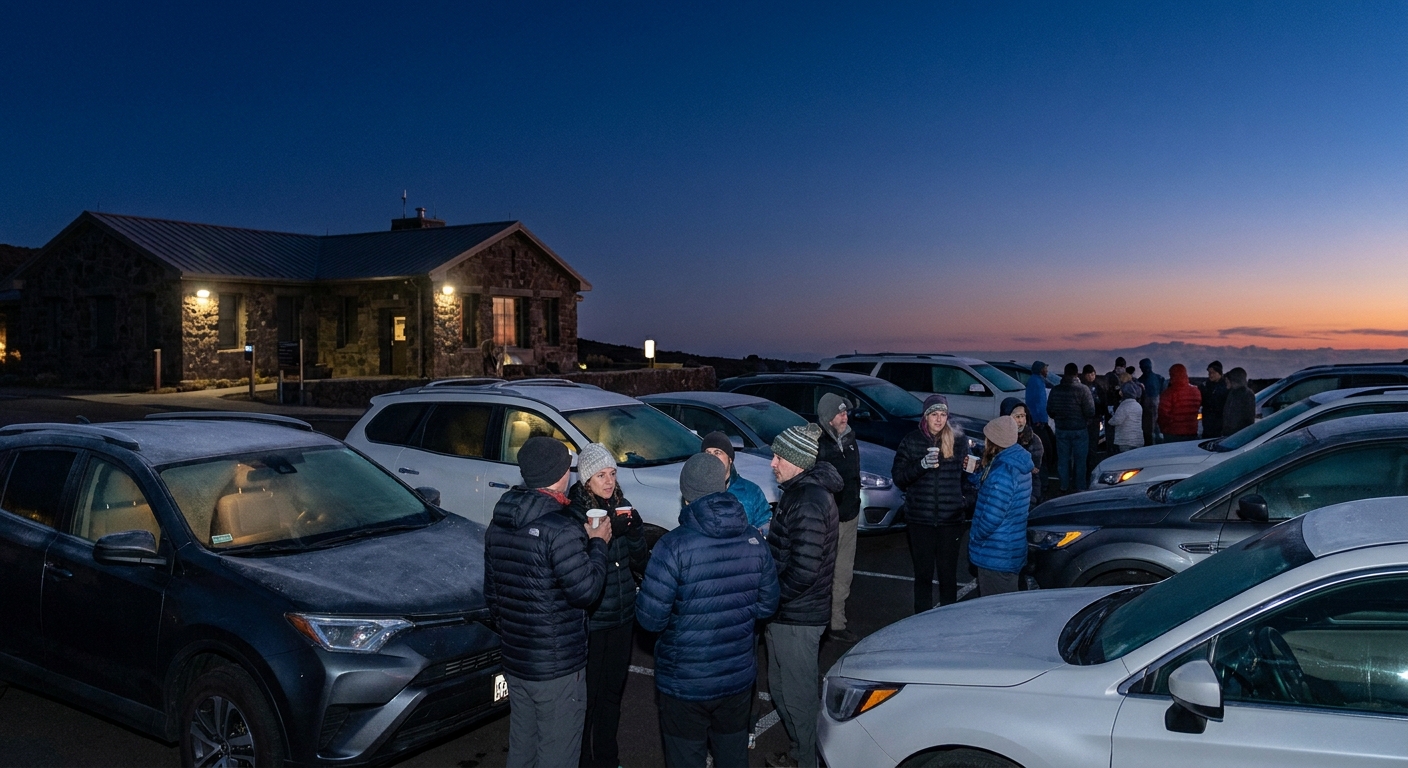
Layers
Haleakalā’s summit sits a little over 10,000 feet (about 10,023). Even when Maui feels tropical at sea level, the summit can be cold, windy, and damp. The wind is the sneaky part. It finds gaps in your outfit and convinces you to leave early.
What to wear (and why it works)
- Base layer: Light long sleeve or thermal top. This keeps you comfortable when you warm up later.
- Insulating layer: Fleece or puffy jacket. This is the core warmth.
- Shell: Windbreaker or rain shell. Summit wind can feel like it is erasing your body heat.
- Bottoms: Long pants. If you run cold, add leggings underneath.
- Warm extras: Beanie, gloves, and warm socks. Tiny items, huge difference.
- Footwear: Closed-toe shoes. You will be on uneven ground and it can be slick.
Comfort hack: Bring a thermos of something hot. It is the cheapest morale boost on the island.
Driving safely
The road to the summit is paved and well-traveled, but it is still a mountain road: lots of switchbacks, limited shoulders, and drivers who may be tired or unfamiliar with the route.
Drive rules that make sunrise better for everyone
- Go slower than you think you need to. The curves stack up, and you want zero surprises.
- Use pullouts correctly. If someone faster is behind you, let them pass safely at a turnout.
- Keep headlights predictable. High beams can be blinding at close range. Use them thoughtfully.
- Watch for cyclists. Many commercial bike tours start later, but independent riders can still be out early.
- Fuel up the day before. Do not assume you will find what you need at 3:30 a.m.
One more thing that matters: do not stop in unsafe areas. Only pull over where it is legal and clearly safe. A “quick photo” is not worth becoming the hazard.
Where to watch sunrise
You will see a few names pop up again and again. They are all in the same general summit area, but they feel different once you are there in the dark.
- Summit Visitor Center area: Popular, close to parking, and a classic choice when you want the simple version.
- Haleakalā Overlook area: Often used as a main viewing spot with wide crater views when visibility is good.
- Leleiwi Overlook: A favorite for crater-rim drama when it is open and clear, and it can feel less congested than the main cluster.
Wherever you end up, the same rule applies: arrive early enough to pick a spot, then let the light do the work.
Viewpoint etiquette
Sunrise at Haleakalā can feel surprisingly communal. It is quiet, layered in puffy jackets, and everyone is trying to see the same horizon. The best way to enjoy it is to make space for the shared experience.
Unwritten rules that locals and regulars appreciate
- Arrive, then stop moving. Once it is getting bright, constant shuffling and phone-waving blocks views.
- Keep voices low. Let the wind and the birds do the soundtrack.
- Red-light your flashlight. If you need light, keep it dim and pointed down.
- Tripods belong at the edges. Set up without becoming a human barricade.
- Leave no trace. Every wrapper, every tissue, every coffee lid goes back with you.
Photo reality: The best colors can happen before the sun breaks the horizon and again 10 to 20 minutes after. Do not pack up the second the sun appears.
Respect note: Haleakalā is culturally significant. You do not have to know everything to show basic respect: stay on designated paths, keep the morning quiet, and treat the place like it matters.
Altitude caution
You do not need a full acclimatization guide to be smart up there. Haleakalā’s summit altitude can make some visitors feel off, even if they are fit.
What to watch for
- Headache, nausea, dizziness, unusual shortness of breath
- Feeling “foggy” or unusually wiped out
What helps in the moment
- Take it slow. Walk shorter distances and move gently.
- Hydrate. Dry air plus early wake-ups can catch up with you.
- Warm up. Shivering can make everything feel worse.
- Go lower if needed. The simplest fix is often descending.
If you have heart or lung conditions, are pregnant, or know altitude hits you hard, consider enjoying sunrise from a lower elevation viewpoint instead. You will still get a memorable morning without pushing your body.
Weather checks
Conditions change fast up there. Check the official Haleakalā National Park updates for closures and alerts, and use a reputable forecast that shows wind and cloud cover, not just temperature. If the summit is getting slammed, you will be happier knowing that before you commit to the drive.
After sunrise
Two things happen after sunrise: the parking lots churn as people leave, and the light improves for crater views. If you can, give yourself a little post-sunrise time, then plan your exit before the road feels like a funnel.
A clean cutoff to plan around
As a rule of thumb, decide in advance whether you are doing:
- Sunrise only: Watch, warm up, restroom stop, then head down.
- Sunrise plus one short walk: A quick, weather-dependent stroll, then leave before you get overtired.
- Half-day summit district: Sunrise, visitor center, longer hike, then down with a real breakfast later.
Your biggest enemy is the combo of sleep deprivation + curves + sun glare on the descent. If the driver is fading, swap drivers if you can, or take a longer break before heading down.
Short walks
Only do these if you feel good at altitude and conditions are calm. Wind can be intense, and fog can roll in fast.
Easy, satisfying options
- Summit area viewpoint wandering: Short paved or packed paths near the visitor center let you change angles without committing to a big hike.
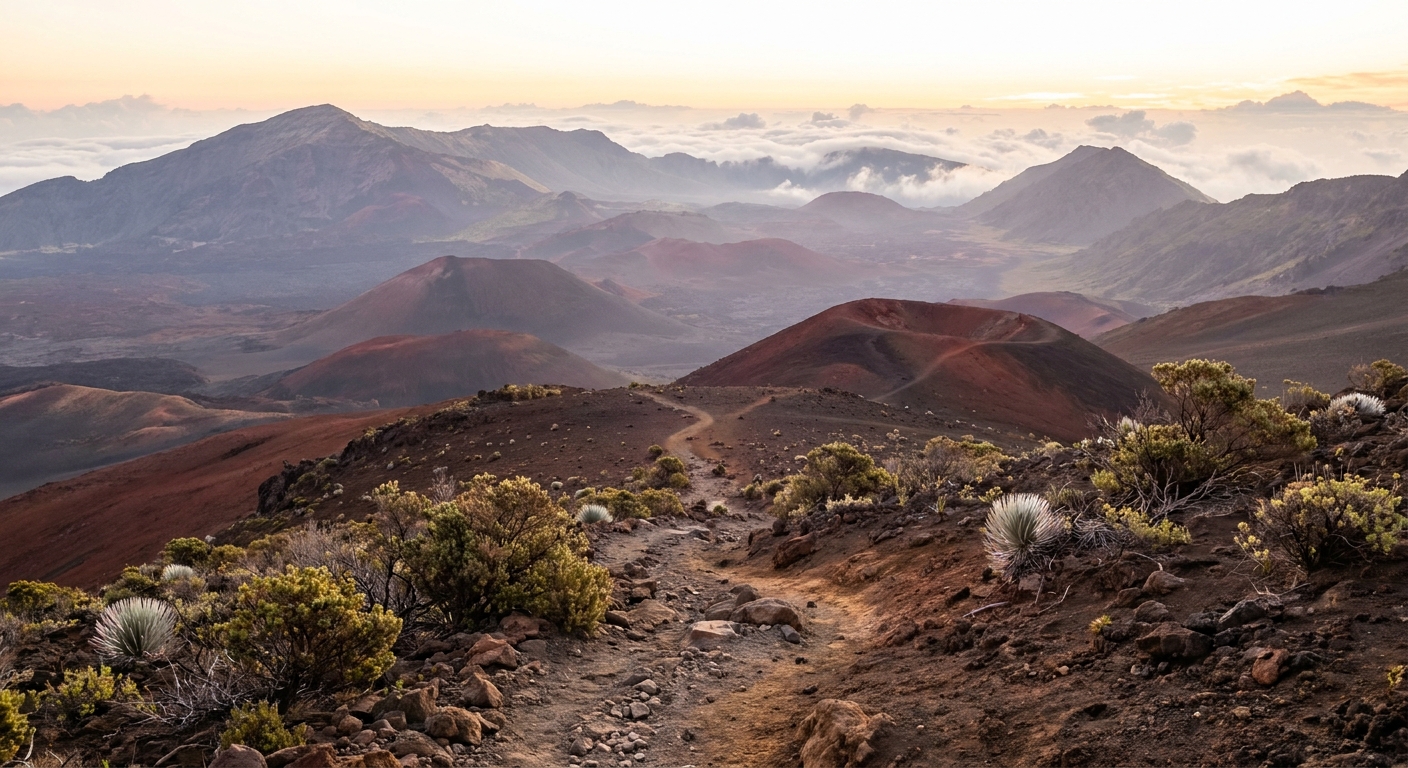
- Pa Ka‘oao Trail (White Hill Trail): The short, popular path near the visitor center (often described as about 0.4 miles round trip) with big crater views when visibility is good.
Even a 15-minute walk can be enough to make the morning feel like more than a parking-lot sunrise stop.
If it is cloudy
Here is the truth: sometimes you do everything right and the summit is socked in. That does not mean the morning is ruined. It means you pivot.
Why lower can be better
Cloud layers often sit like a blanket at specific elevations. Dropping a few thousand feet can put you under the gray and into clearer skies, especially if the clouds are hugging the crater rim.
Backup plan options
- Lower pullouts along the summit road: As you descend, watch for breaks and pullouts where you can safely stop. If the summit is pure whiteout, these can be dramatically clearer.
- Leleiwi Overlook area: When open and clear, this is one of the most visually striking rim perspectives into the crater, and it can be less chaotic than the main sunrise crowd.
- Upcountry sunrise with coffee: If the park is a bust, pivot to a slow morning in Kula or Makawao. Trade windburn for a warm pastry and a farm view.
Decision tip: Give the summit a quick assessment. If visibility is poor and wind is brutal, do not force it. Drive down to calmer air and look for openings in the cloud deck.
If you did not get a reservation
If you miss out, you still have good options:
- Do sunset instead: Sunset does not use the same sunrise reservation system, and it can be stunning. Always verify current rules before you go.
- Visit after 7:00 a.m.: Once the sunrise reservation window ends, you can enter with just your park pass (subject to current rules and closures).
- Choose a lower-elevation sunrise: Upcountry viewpoints can be beautiful without the summit logistics, and your morning starts with less stress.
What to pack
- Reservation screenshot and a backup copy
- Park pass or payment method
- Headlamp or small flashlight (dim)
- Water and a snack you actually want at 5:30 a.m.
- Thermos with hot coffee or tea
- Beanie and gloves
- Small blanket for passengers (optional but beloved)
- Motion sickness meds if you need them
- Phone charger or power bank
My favorite way
If you want the “rugged plus comfortable” version of Haleakalā sunrise, aim for this rhythm: arrive early, stand quietly for the color shift, linger for the post-sunrise glow, then drive down to Upcountry for a real breakfast and a proper coffee shop stop. You get the summit drama, then you reclaim the day.
Sunrise is the headline, but the win is a morning that still feels good at 10:00 a.m.