Heat Exhaustion vs. Heat Stroke on the Trail

Maya Lin
Maya Lin is a travel journalist and outdoor enthusiast who believes the best trips combine rugged adventures with urban comforts. After spending six years backpacking across four continents, she founded Trail & Town Guide to help fellow travelers navigate both hidden mountain passes and bustling city neighborhoods with confidence.
Hot-weather hikes are sneaky because they often start out feeling like nothing. A little sweat, a little slower pace, a little less appetite. Then you look up and someone is stumbling, glassy-eyed, or saying they feel “fine” while clearly not fine.
Heat exhaustion and heat stroke are related heat illnesses, and one can progress into the other. Heat exhaustion is serious and common. Heat stroke is a medical emergency that can become fatal fast.
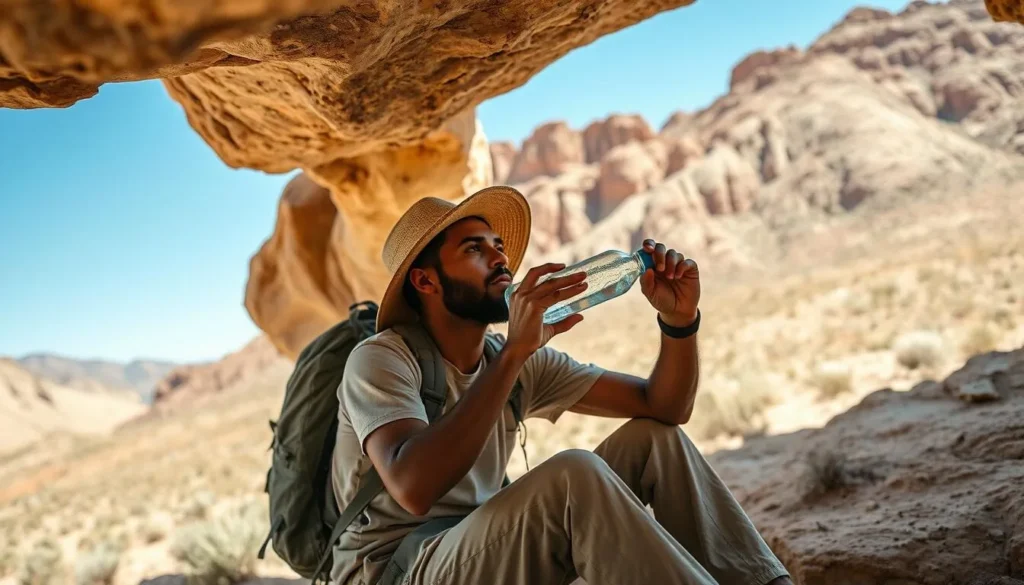
Heat exhaustion vs. heat stroke: quick comparison
If you only remember one thing: any change in mental status is a major red flag. Confusion, agitation, irrational behavior, fainting, seizures. Treat that as your line in the sand. Also note: severe heat exhaustion can look messy, and early heat stroke can start subtle. When you are unsure, assume the more dangerous option and respond aggressively.
| What to check | Heat exhaustion (common, can worsen) | Heat stroke (life-threatening emergency) |
|---|---|---|
| Core issue | Body is struggling to cool down and maintain fluids and electrolytes | Body temperature regulation is failing and organs are at risk |
| How they feel | Weak, dizzy, headache, nausea, heavy fatigue | Severe illness, may feel “weird,” panicked, or suddenly collapse |
| Mental status | Usually alert and coherent, maybe irritable or “off” | Confused, disoriented, slurred speech, irrational behavior, fainting, seizures |
| Skin | Often sweaty and cool or clammy, can be warm | Often very hot; may be sweaty or may stop sweating. Do not wait for “dry skin.” |
| Heart rate | Fast | Very fast, may be weak or thready |
| What you do next | Stop, cool, rehydrate, reassess. Turn around if not improving. | Call emergency help now. Aggressive cooling while waiting. |
How fast can it escalate?
Heat illness is not a stopwatch, but on a hot day with sun exposure, still air, humidity, or a heavy pack, it can ramp up quickly. It is not unusual for someone to go from “just off” to clearly impaired within 30 to 60 minutes if they keep pushing.
Early warning phase (often missed)
- Unusually high effort for your pace
- Headache, irritability, chills or “goosebumps” in the heat
- Muscle cramps, especially calves and quads
- Stopping more often, falling behind for no clear reason
- “My stomach feels off” or loss of appetite
Heat exhaustion phase (minutes to hours)
- Heavy sweating, weakness, dizziness
- Nausea or vomiting
- Headache, lightheadedness when standing
- Fast heart rate
- Person is usually coherent but looks unwell
Heat stroke phase (can be sudden)
- Confusion, stumbling, acting “drunk,” agitation, or blank stare
- Fainting, seizures
- Very hot skin (may still be sweaty)
- Severe vomiting or inability to keep fluids down
If someone is getting worse despite stopping and cooling, treat it as an emergency and move up your response level.
What to do right now
Your job is to stop heat gain and start cooling before the body tips into crisis.
Step 1: Stop and get shade
- Call a halt. Not “we’ll stop at the next switchback.” Now.
- Move to shade: trees, rock overhang, canyon wall shadow, even the lee side of a boulder.
- Loosen clothing and pack straps. Take the pack off.
Step 2: Cool the body fast
Cooling beats debating. Use what works in your environment.
- Wet skin: pour water on skin and clothing, especially head, neck, armpits, and groin.
- Increase airflow: fan with a map, shirt, or hat. Create breeze.
- Cold sources: place cold wet cloths on neck and armpits. If you have a cold stream, soak a bandana and reapply.
If you suspect heat stroke and it is available and safe, cold-water immersion is the most effective cooling method. That means immersing the body in cold water up to the neck while keeping the airway protected and the person supervised. If immersion is not feasible, keep doing aggressive evaporative cooling (soak and fan) without pauses.
If you are near water, a shallow soak with clothing on can help for heat exhaustion. Keep them safe from slipping, and do not fully submerge someone who is confused.
Step 3: Rehydrate smart
Hydration is not just “drink a ton of water.” You want the right pace and the right mix.
- If they are alert and not vomiting: give small, frequent sips.
- Add electrolytes if available. Sweat is salt and minerals, not just water.
- If no electrolyte mix: a salty snack plus water is better than water alone.
- Avoid chugging. Large gulps can trigger nausea and vomiting. Small sips are easier to tolerate.
- Carbs can help with energy and can make drinking easier on long, hot slogs.
Step 4: Check mental status and walking ability
Ask simple questions: name, date, where you are, what trail you are on. Watch for unusual behavior: impatience, confusion, clumsiness, or refusal to stop.
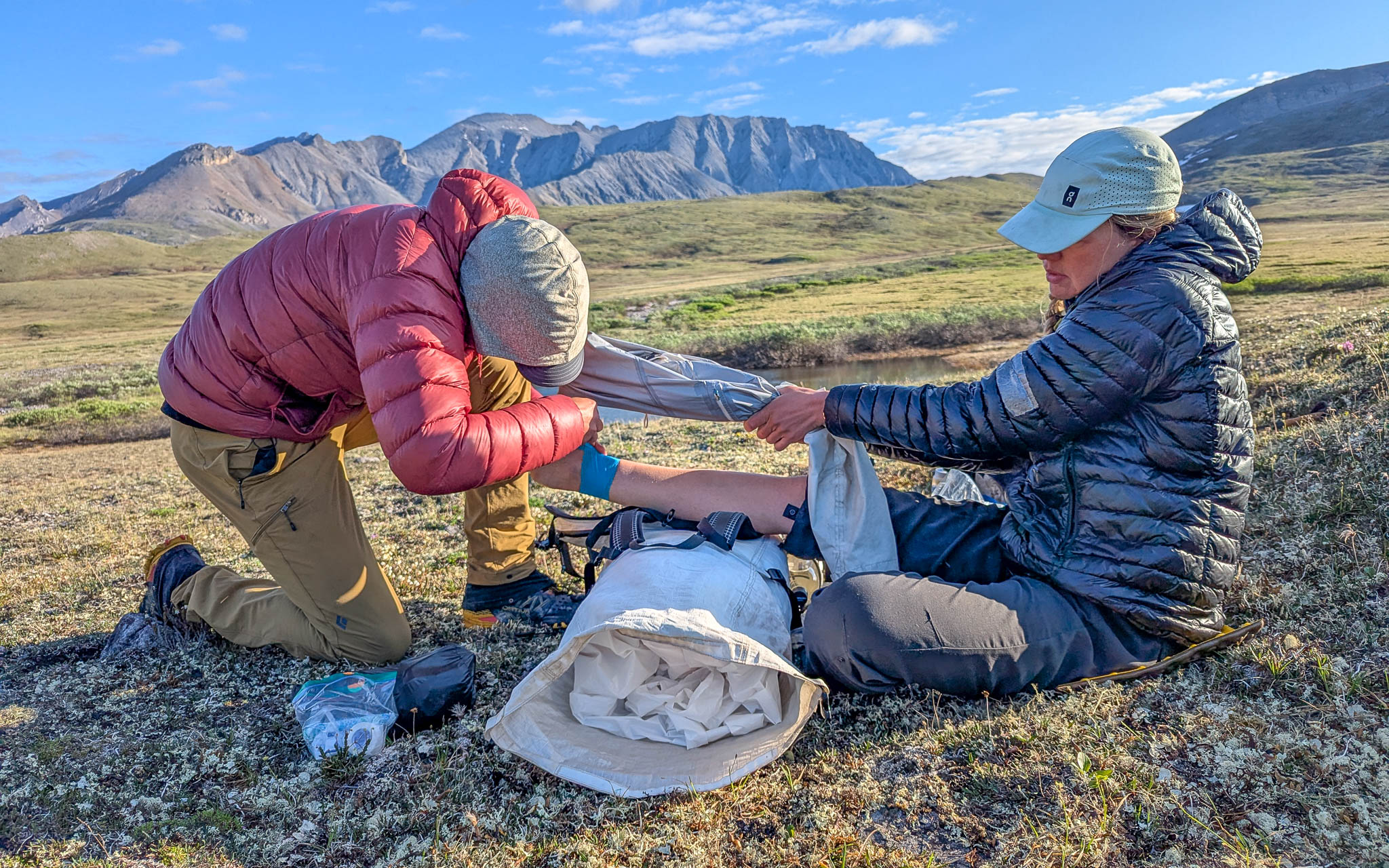
Do not do these
- Do not leave them alone. Heat illness can turn fast.
- Do not push onward to “just finish” or “just reach the car” if symptoms are not clearly improving.
- Do not rely on sweating as proof it is not heat stroke. Exertional heat stroke can be sweaty.
- Do not give fluids to someone who is confused, very drowsy, vomiting repeatedly, or unable to sit up and swallow safely.
- Do not give alcohol during recovery.
- Do not wait for certainty if mental status changes. Start cooling and call for help.
Stop hiking vs. call for help
I love a good “push to the viewpoint” moment as much as anyone, but heat illness is one of those situations where being stubborn is not grit. It is risk.
When to stop and turn around
Stop and strongly consider ending the hike if:
- Symptoms fit heat exhaustion and do not noticeably improve after 20 to 30 minutes of shade and active cooling
- They cannot keep fluids down
- They are stumbling or too weak to safely manage uneven terrain
- They have a history of heat illness, heart disease, or are taking medications that affect heat tolerance
Best-case trail outcome for heat exhaustion is usually slow retreat to a cooler place, not continuing deeper into exposure.
When to call emergency help now
Call emergency services (or trigger a satellite SOS) if any of these are present:
- Confusion, disorientation, fainting, seizure, or altered behavior
- Suspected heat stroke even if they are still sweating
- Symptoms are rapidly worsening
- They stop being able to walk or stay awake
- Very high body temperature if you can measure it
While waiting: keep cooling aggressively and continuously. In suspected heat stroke, cooling is time-critical.
What to tell rescuers
- Your exact location (GPS coordinates if possible), trail name, nearest landmark
- What you suspect (heat exhaustion vs. heat stroke) and the symptoms you see
- Mental status (alert, confused, unconscious), ability to walk
- What cooling you are doing right now (dousing, fanning, immersion)
- How many people are in the group and your supplies (water, shade, shelter)
Trail rule I live by: if their brain is not acting normal, you are no longer “managing symptoms.” You are managing an emergency.
Cooling methods that work
If you have lots of water
- Douse clothing and skin repeatedly
- Soak a shirt and put it back on for evaporative cooling
- Rotate wet cloths on neck, armpits, groin
If water is limited
- Prioritize wetting cloth at high blood-flow areas (neck, armpits)
- Create shade with a rain jacket, tarp, or emergency blanket (shiny side out to reflect sun)
- Fan continuously
If you are in humid heat
Evaporation is less effective. Shade plus airflow becomes even more important. If you can move to a breezier spot safely, do it.
If you are in dry heat
Evaporation works great, but it also hides dehydration. You might not feel sweaty because your sweat evaporates instantly. Keep drinking and salting steadily.
Hydration nuance
Most trail heat exhaustion is a three-part problem: heat load, fluid loss, and electrolyte loss.
How to hydrate during hot hikes
- Drink early and steadily rather than catching up later.
- Use electrolytes on long, sweaty days, especially if you see salt crust on clothing or taste salt on your skin.
- Pair water with snacks. Food helps keep energy steady and supports hydration.
Watch for overhydration (hyponatremia)
It is less common than dehydration, but it is real and can be dangerous. Risk rises when someone drinks large amounts of plain water for hours while sweating heavily and not eating.
Red flags can include worsening headache, nausea, bloating or puffiness (sometimes hands), and confusion. It can look like heat illness. Diagnosis requires medical evaluation, so if mental status is changing, treat it as an emergency and seek help.
If you are prone to “I forget to eat,” set a timer or make food part of your water breaks. Your body needs both.
Hot-weather pacing
Prevention is not glamorous, but it is what keeps your trip from turning into a rescue story. Also: heat stroke can happen to fit, experienced hikers too. Fitness helps, but it does not make you heat-proof.
- Start earlier. The first mile at 7 a.m. can feel like a different planet than the same mile at noon.
- Plan shade stops. Aim for breaks before you feel wrecked.
- Use the talk test. If you cannot speak in full sentences, you are going too hard for the heat.
- Shorten goals. Heat changes your normal pace, especially with elevation.
- Lighten your carry. Every extra pound is extra heat production.
- Dress for airflow. Light-colored, breathable fabrics and a sun hat beat dark cotton every time.
Recovery
After heat exhaustion
Many people can recover with rest, cooling, and rehydration, but the key is full symptom resolution and a conservative plan.
Consider continuing only if all are true:
- They are fully alert and steady on their feet
- Headache and nausea are gone or clearly improving
- Heart rate feels closer to normal at rest
- They can drink and keep fluids down
- You have an easy exit route and cooler conditions ahead (more shade, lower elevation, or nearer to trailhead)
Even then, I would usually choose the boring win: turn around, get to shade and A/C, and salvage the trip in town later.
After suspected heat stroke
Do not return to hiking the same day. Medical evaluation is needed. Heat stroke can cause internal injury that is not obvious in the moment.
Back in town checklist
This is for that classic Town Wander day: a morning hike followed by an afternoon museum, coffee crawl, or food market. If someone had heat exhaustion, treat the rest of the day like recovery, not “we’re fine now.”
- Cool environment: air conditioning or a fan, curtains closed
- Cool shower: lukewarm to cool, not ice-cold if they feel faint
- Rehydrate slowly: water plus electrolytes, small frequent sips
- Eat something salty and simple: soup, rice bowl, eggs and toast, noodles
- Check urine color: aim for pale yellow over the next several hours (not perfect, but a useful trend)
- Skip alcohol until fully recovered
- Rest: a real nap, feet up, no “quick errands” in the sun
- Reassess symptoms: persistent headache, nausea, dizziness, or confusion warrants medical care
Risk factors
Heat can humble anyone, but some situations stack the odds.
- High humidity or still air
- High altitude or rapid altitude gain
- Little shade, reflective terrain (sand, slickrock)
- Heavy pack, pushing pace, long climbs
- Recent illness, dehydration, diarrhea, or poor sleep
- Alcohol the night before
- Some medications, including diuretics, stimulants, and certain antidepressants
If any of these apply, build a conservative plan: earlier start, shorter route, more breaks, and electrolytes on board.
A simple group script
If you are hiking with friends, it helps to have agreed language that makes stopping feel normal, not dramatic.
- “Let’s do a 10-minute shade stop and check in.”
- “Answer me three questions: where are we, what time is it, and what did we hike last?”
- “We turn around if you are not clearly better in 20 minutes.”
- “No hero miles today. We want tacos later, not an IV.”
When in doubt
If you are deciding between “maybe it is fine” and “this seems serious,” assume it is serious. Heat stroke is one of those emergencies where waiting for certainty is how people lose time they cannot afford.
Stop early, cool aggressively, hydrate smart, and call for help if mental status changes.
Note: This article is for general education and trip planning, not a substitute for professional medical advice. If you suspect heat stroke or a medical emergency, seek urgent help immediately.