Hidden Canyon Trail in Zion: Closed Update and Safer Alternatives

Maya Lin
Maya Lin is a travel journalist and outdoor enthusiast who believes the best trips combine rugged adventures with urban comforts. After spending six years backpacking across four continents, she founded Trail & Town Guide to help fellow travelers navigate both hidden mountain passes and bustling city neighborhoods with confidence.
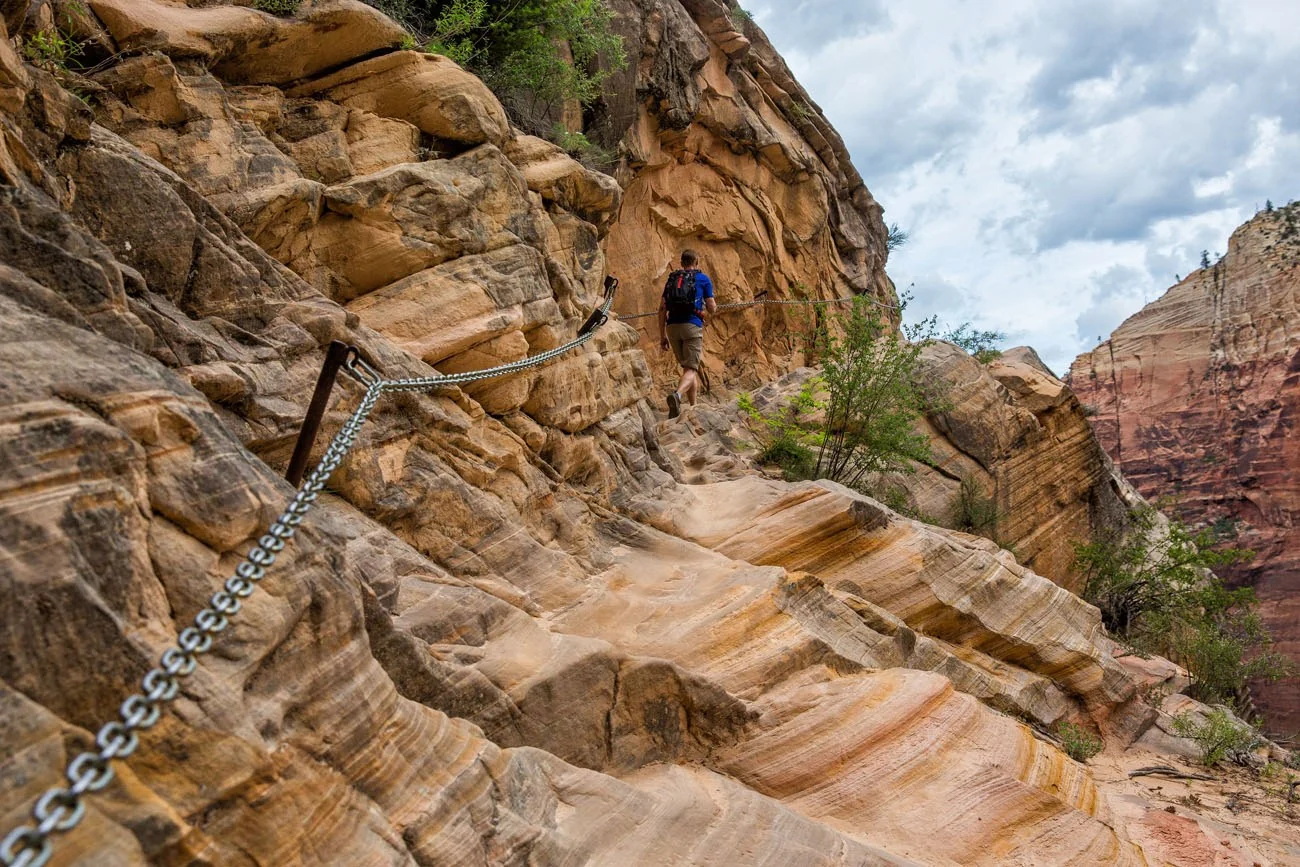
Hidden Canyon is one of those Zion hikes that sounds cute on paper. Short distance. Cool name. Starts at a famous trailhead. Then you round a corner and realize you are walking a narrow sandstone shelf with a hand chain and open air where the next footstep mistake is not a scraped knee. It is not a long hike, but it is a serious one.
I love routes like this because they give you that classic Zion thrill without committing to an all-day epic. But I also believe in calling a hike what it is. Hidden Canyon is exposed, and it is not for everyone. If you have even a little doubt about heights, balance, or panic, this is the place to listen to that voice.
Closure update
Before we get into the fun and the fear: Hidden Canyon Trail and the Weeping Rock area have been closed since the massive rockfall in 2018, and the closure has been long-term. The Weeping Rock spur and trailhead area are also closed, which is the standard access point for this route.
Conditions and access can change, but you should assume this hike is not available unless the National Park Service officially reopens it. For current info, check the official Zion National Park website (Alerts and Conditions) before you build your day around it.
I am leaving the details below because people still ask what it was like, and because the same exposure lessons apply to other Zion trails. But if you are planning your trip, build your itinerary around hikes that are currently open, and treat any “I heard it is open” rumor as noise until it is confirmed by NPS.
Quick facts
- Trail: Hidden Canyon (historically started from the Weeping Rock area)
- Status: Closed long-term due to rockfall impacts (check NPS for updates)
- Distance: roughly 2 to 3 miles round trip, depending on where you turned around (when open)
- Elevation gain: roughly 850 to 1,000 feet (when open)
- Typical time: 2 to 4 hours depending on crowds, comfort with exposure, and how long you linger in the canyon (when open)
- Type: out-and-back
- Permits: none for day hiking (when open)
- The headline feature: narrow ledges with chains and real drop-offs
Those numbers made Hidden Canyon look moderate. The exposure was what turned it into a very specific kind of challenge.
What it was like
From Weeping Rock
The beginning climbed fast. You gained elevation immediately on paved or well-built trail, and views opened up quickly across Zion Canyon. In the morning, the light bouncing off the cliffs was unreal. In the afternoon, the heat could feel like someone left the oven door open.
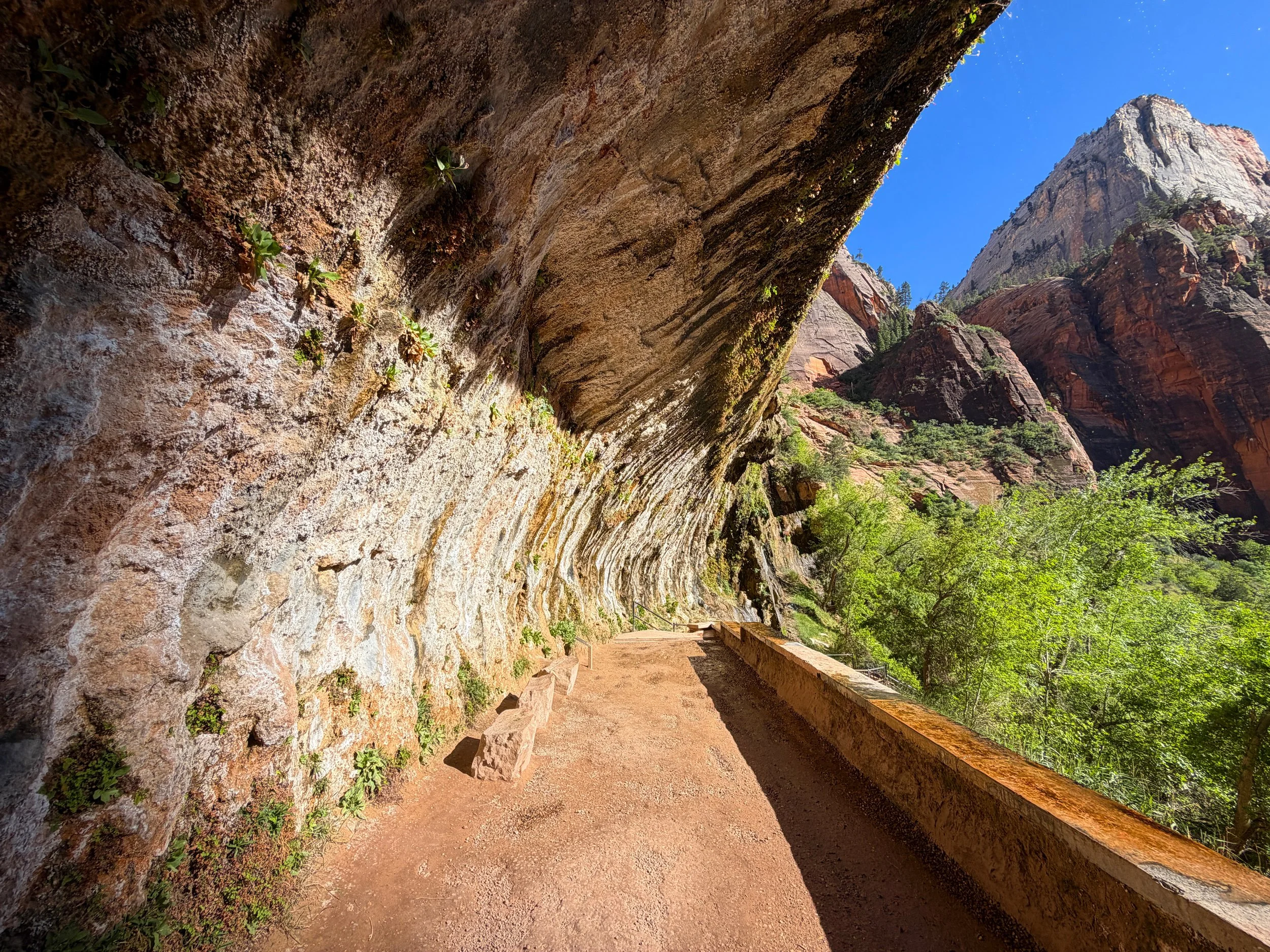
The ledges and chains
Eventually the trail narrowed and traversed cliffside ledges. In the most exposed sections, chains were bolted into the rock as a handhold. The chains were there because in spots a slip could be catastrophic. This was not a place to casually check your phone or adjust your playlist.
The tread varied. Some sections felt like a narrow sidewalk. Others tilted. Others had sand or grit that could roll under shoes. When it was busy, you also dealt with passing. That was where confidence and calm mattered most.
Inside the canyon
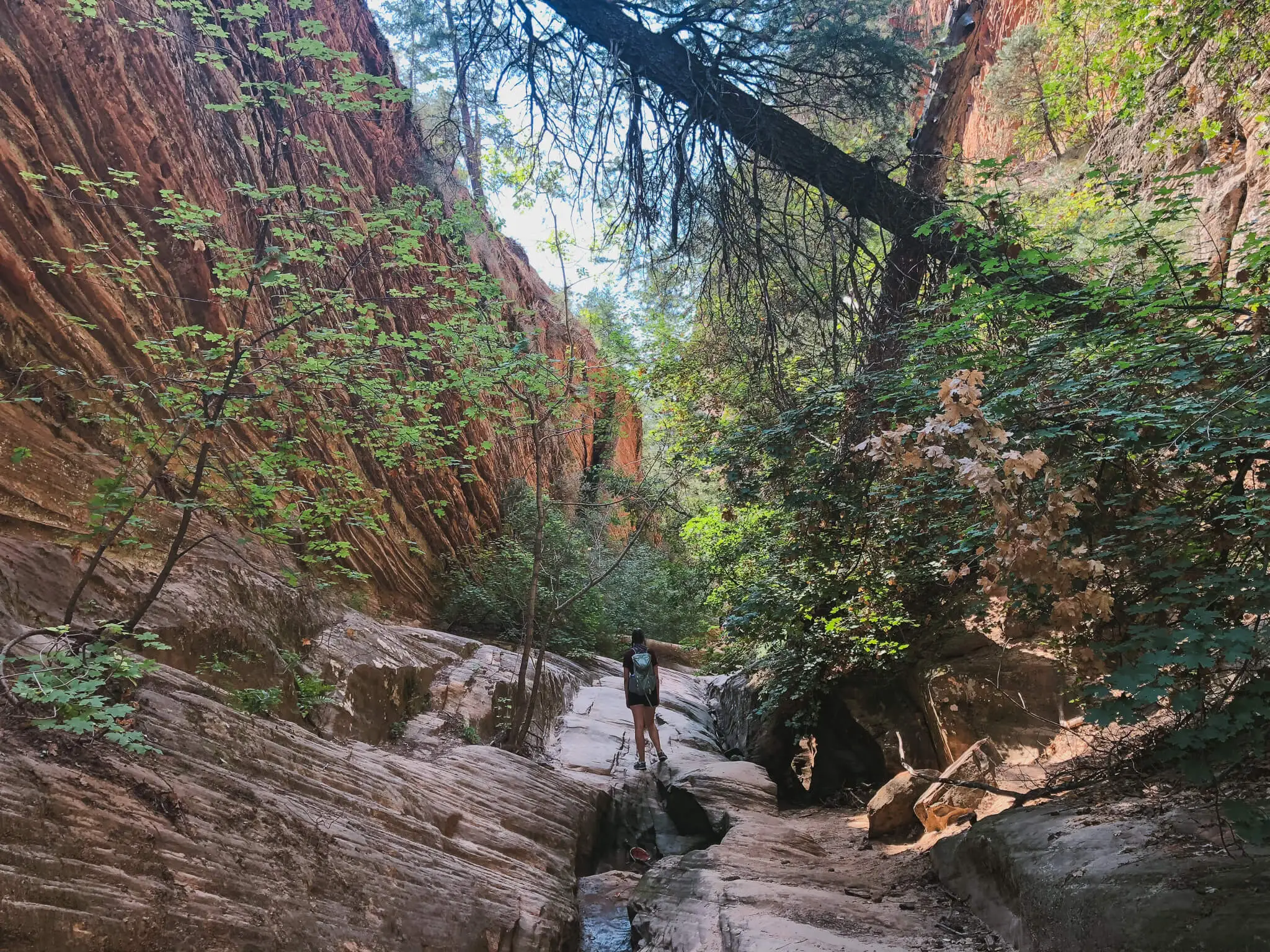
After the exposed traverse, the route ducked into Hidden Canyon. It felt like stepping into a secret hallway of sandstone. You scrambled over boulders and weaved around vegetation, and depending on recent weather there could be damp spots or small trickles.
Do not expect a single dramatic destination like an arch. The reward was the canyon atmosphere: cool shade, high walls, and that satisfying sense of being tucked away from the main corridor.
Exposure reality check
The chains were a handhold, not a guarantee. You were still responsible for your footing, your pace, and your ability to stay composed when your brain started doing that thing where it imagined worst-case scenarios.
A few things that made Hidden Canyon feel harder than the mileage suggested:
- Consequences were high. The drop-offs were real, and some sections had little margin for error.
- Foot traffic changed everything. Passing others could be the most stressful part, especially if someone froze.
- Wind and weather mattered. Gusts could knock your balance. Rain could turn slick rock into a problem fast.
- Down felt different than up. Many people felt fine going up, then realized the descent felt steeper and more exposed.
Who should skip it
I am not interested in gatekeeping trails. I am interested in people getting back to town in one piece. If Hidden Canyon ever reopens, skip it, or turn around early, if any of these are true:
- You get shaky legs on heights. Not “a little nervous.” I mean the involuntary wobble.
- You freeze when you feel exposed. If you have ever had to sit down on a trail to calm yourself, this is a big flag.
- You rely on speed to get through scary parts. The safest movement here was controlled and deliberate, not rushed.
- You are hiking with someone you might have to manage. If your partner panics and you tend to panic too, that combo can spiral.
- You are with young kids who cannot follow strict “one hand on rock, one hand on chain” rules.
- You planned to bring a pet. Zion generally restricts pets to the Pa’rus Trail and developed areas, and an exposed ledge route is a bad match even if rules ever change.
- You do not have appropriate shoes. Smooth-soled casual sneakers, sandals, or anything with poor traction is a no.
There was zero shame in turning around. In Zion, the alternative is still gorgeous: take a calmer trail, then reward yourself with a patio meal in Springdale and a really good coffee. That is my kind of balance.
Signs it is too much
If you are trying to decide in the moment on any exposed trail, watch for these very specific signals:
- Your breathing turns shallow and fast and you cannot slow it down within a minute.
- You cannot look at your next three footsteps because you are fixated on the drop.
- Your hands are death-gripping the chain to the point your forearms cramp.
- You feel tunnel vision or lightheadedness on the ledge.
- You start bargaining with yourself like, “If I just get past this one spot…” and you keep saying it at every corner.
- You are angry at other hikers for existing. Irritability is a stress sign, and passing is part of this kind of route.
What to do: stop at the widest safe spot you can find, face into the wall if that helps, take a few slow breaths, and decide calmly. If you turn back, do it before you are fully flooded with adrenaline. On the way down, go one careful step at a time, keep a hand on the chain where available, and let faster hikers pass at safe wider points.
When to go
This section matters most for other exposed trails in Zion right now, since Hidden Canyon is closed.
Time of day
Earlier is usually better. You get cooler temps, better light, and often fewer people. Fewer people means fewer stressful passes on narrow sections.
Weather to avoid
- Rain or recent storms: slick rock and runoff are a bad mix with exposure.
- High winds: even if you feel stable, sudden gusts on ledges are no joke.
- Extreme heat: the climb can feel brutal, and heat stress makes decision-making worse.
Season notes
Spring and fall tend to be the sweet spot for comfort. Winter can bring ice in shady areas, and summer can turn the approach into a furnace. In any season, if the ledges are crowded and you are already nervous, consider calling it. That is not quitting. That is good judgment.
What to pack
This is one of those trails where light packing is great, but not careless packing. My carry-on-only brain loves efficiency, but I still bring the basics.
- Grippy shoes: trail runners or hiking shoes with solid traction
- Water: at least 1 liter per person, more in warm weather
- Sun protection: hat, sunscreen, sunglasses
- Small snack: keeps your blood sugar steady, which helps with nerves
- Layers: the canyon can feel cooler than the exposed switchbacks
- Optional but helpful: thin gloves if you prefer a more comfortable grip on chains
Skip trekking poles on narrow ledges unless you are very practiced at collapsing and stowing them quickly. You want hands free for balance and chains.
Etiquette on ledges
Any chained route goes smoother when everyone treats it like a shared safety system.
- Communicate before passing. A simple “Mind if I pass when it widens?” goes a long way.
- Give nervous hikers space. Pressuring someone to move faster can cause mistakes.
- Pause at wide spots. If you need to rest, do it where others can safely get by.
- Keep your group tight. Do not spread out so far that you block passing on both ends.
Other options
If the chains sound like a hard no, or if you are adjusting plans because Hidden Canyon is closed, Zion still delivers in a big way. Here is the quick sorting hat version.
If you want that airy, exposed feel
- Angels Landing: iconic and intense, and it now uses a permit system for the chain section.
- Canyon Overlook: short with a huge payoff, and it can feel airy in spots even without chains.
If you want lower exposure
- Riverside Walk: easy, scenic, and a perfect warm-up for the canyon environment
- Emerald Pools (check current status): a classic for a reason, with shorter options
My rule of thumb: if your goal is to enjoy Zion, not endure it, pick the hike that lets you breathe normally and look around.
FAQ
Is Hidden Canyon open?
As of the long-term closure that began after the 2018 rockfall, Hidden Canyon and the Weeping Rock area have been closed. Check the National Park Service for the most current status before you plan your day.
Was it scarier than Angels Landing?
For many people, Angels Landing feels more intense because the exposure lasts longer and the traffic can be heavier. Hidden Canyon was shorter, but the ledge sections still had real consequence. If chains make you uneasy, both can be a problem.
Did you need a permit?
No permit was required for day hiking Hidden Canyon when it was open. That is different from Angels Landing, which uses a permit system for the chain section.
How hard was it if I was okay with heights?
If you were comfortable with exposure, the difficulty was mostly the steep climb and the careful footwork on ledges. Most reasonably fit hikers could do it in a half day without feeling wrecked, but you did need focus.