Hoh River Trail Turnarounds Without a Wilderness Permit
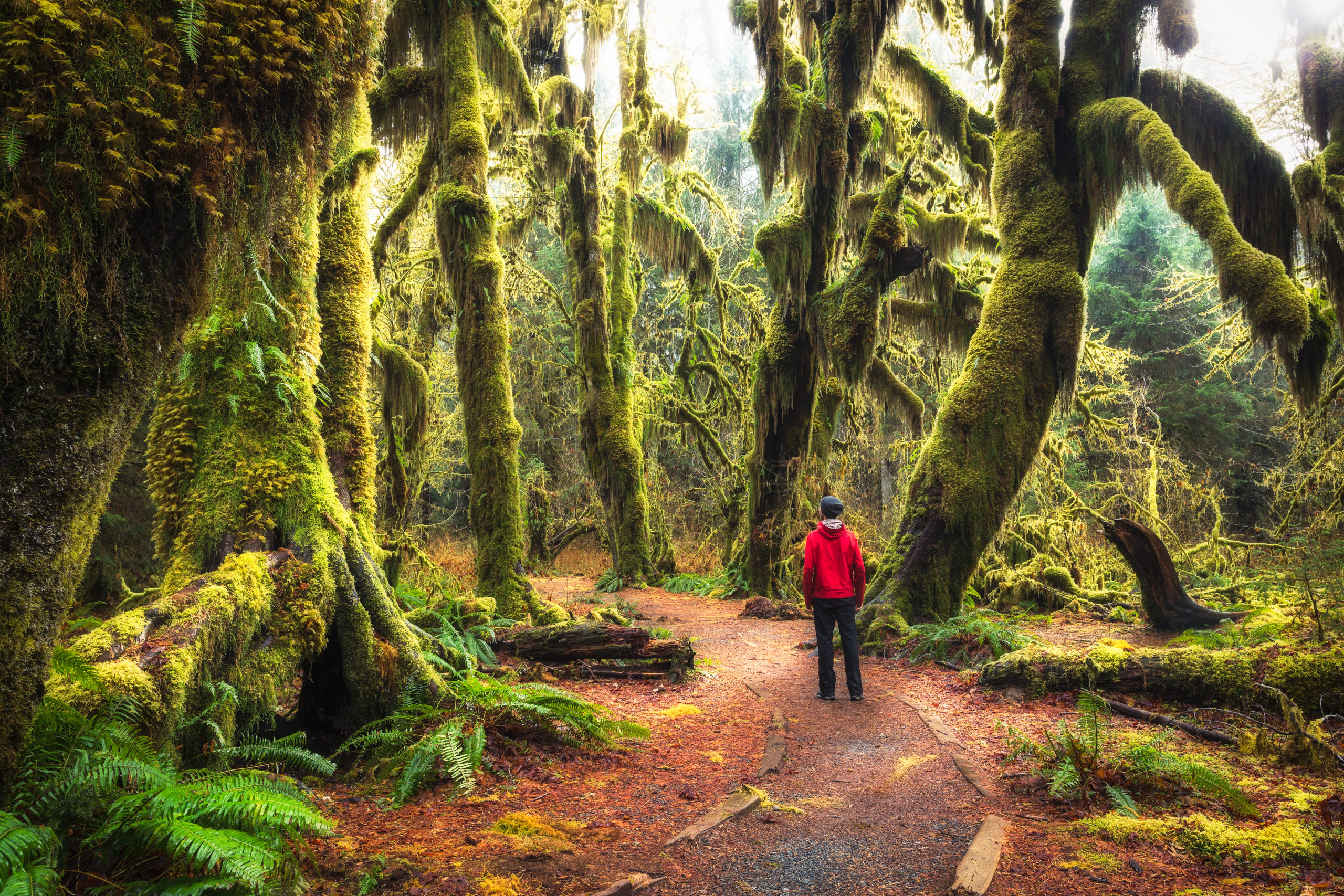
The Hoh Rainforest has a way of making you feel like you stepped into a green cathedral and someone forgot to turn on the lights. Everything is damp, everything is alive, and the Hoh River keeps sliding by with that snow-and-glacier-fed, steel-blue confidence. The best part for most visitors is that you can get a deeply satisfying taste of “Hoh depth” (that swallowed-by-green feeling) without a backcountry or wilderness permit, as long as you keep your day hike within your time, weather, and comfort zone.
Below are my favorite Hoh River Trail turnaround targets for half-day budgets, plus the practical stuff that rarely makes it into a quick blurb: how Hall of Mosses pacing differs from river-trail pacing, where the mud and root zones actually slow you down, where a couple named creeks help you cross-check your progress, what to do when everyone wants the same creek photo, and how to enjoy elk safely without turning their commute into your wildlife show.

Permits, fees, and access basics
If you are hiking the Hoh River Trail as a day trip from the Hoh Rain Forest Visitor Center area and you are not staying overnight in the backcountry, you generally do not need a wilderness camping permit. Wilderness permits come into play for overnight backcountry camping in Olympic National Park.
You do still need to cover the park entrance fee (or have a valid pass).
Also, the Hoh does not usually have timed-entry reservations in the way some parks do. Instead, it has the more ancient system of supply and demand: too many cars, one road, one lot.
Conditions change fast here. Always check Olympic National Park updates for trail closures, washouts, river hazards, and any temporary restrictions before you drive all the way out the Hoh Road. The Hoh corridor is famous for winter storms and high water that can rearrange trails.
Quick on-the-ground expectations
- Entrance station lines: In peak summer, it is not unusual to see 1 to 2 hour vehicle lines at the entrance station. That can eat half your “half-day” before you even lace up.
- Parking: The Hoh Rain Forest area can fill on peak summer days. Earlier is better.
- Facilities: Bathrooms and information are near the visitor center. Once you are on the Hoh River Trail, amenities disappear quickly.
- Connectivity: Expect limited to no cell service. Download maps offline before you arrive.
- Leave No Trace: Stay on tread, especially around creek edges and mossy root beds that look sturdy but are extremely fragile.
Hall of Mosses vs river trail pace
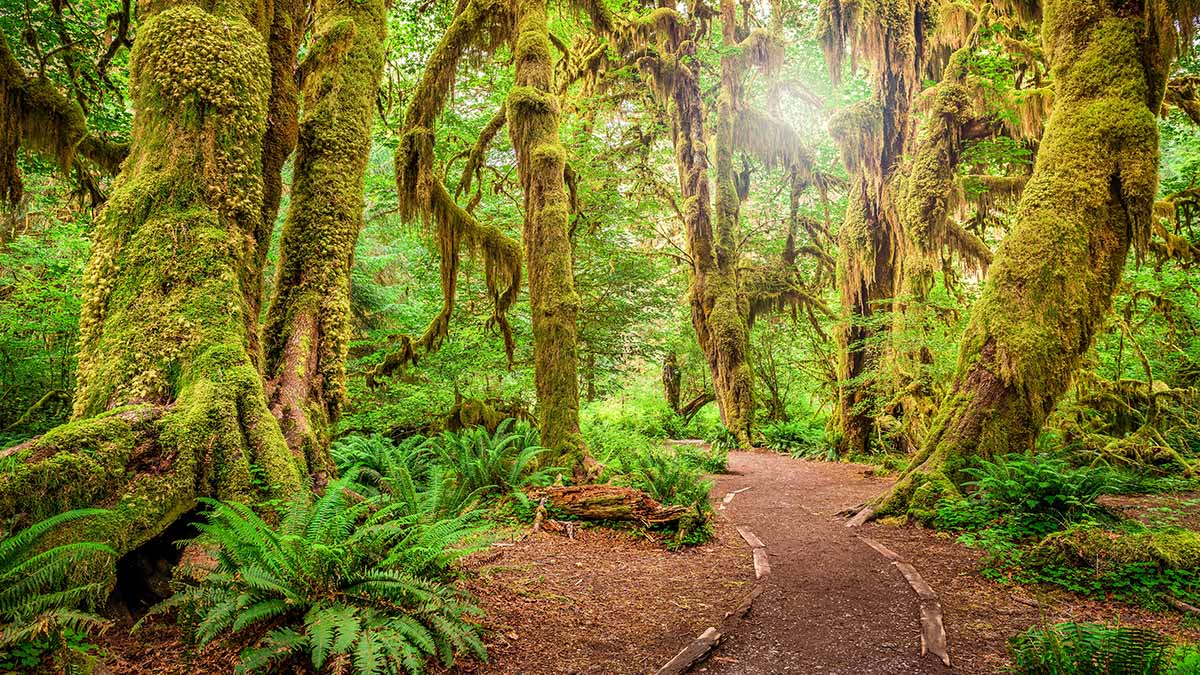
Most first-timers start with Hall of Mosses, and it is a perfect warm-up. It is short, photogenic, and slow in the best way. But the pacing is totally different from the Hoh River Trail.
Hall of Mosses pace
You move in micro-moments: step, look up, step, whisper “wow,” wait for a gap in the crowd, take the photo, repeat. Plan on it taking longer than the mileage suggests, especially mid-day.
Hoh River Trail pace
Once you commit to the river trail, you get into a steadier rhythm. It is still lush and cinematic, but the photos are more about layers: ferns close-up, tree trunks in texture, then that long corridor of green pulling you forward. You can cover more ground here, until you hit the sections where roots and mud insist on humility.
Half-day turnaround targets
Think of these as progressively deeper objectives. Each one gives you a satisfying reason to turn around without feeling like you “quit early.”
Important note on numbers: Distances can vary depending on exact routing, detours, and any reroutes after storms. Use trail signage and a map app to confirm where you are, and remember that mud adds minutes.
1) Moss and coffee later (1 to 2 hours)
Goal: Pair Hall of Mosses with a short out-and-back on the Hoh River Trail for a quick immersion and then a comfortable exit.
- Approx distance: About 1 to 2 miles total hiking if you keep it truly short (plus whatever time you spend on Hall of Mosses).
- Why it works: You get the iconic mossy scene plus the quieter, deeper forest feel of the river trail.
- Who it is for: Families, jet-lagged travelers, and anyone building in time for a beach sunset or a Port Angeles dinner.
- Turnaround cue: When you notice you have stopped hearing the parking-area soundtrack of doors and voices, and your footsteps have become the loudest thing.
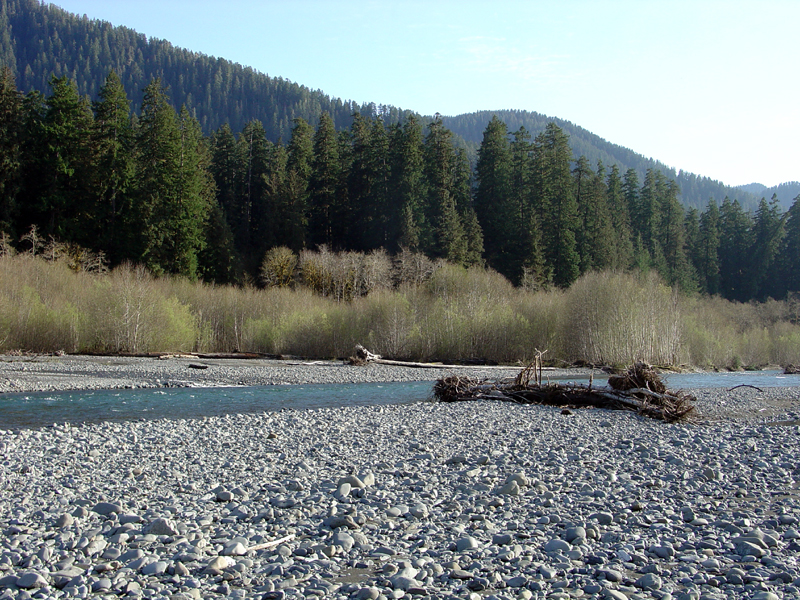
2) First gravel bar view (2 to 3.5 hours)
Goal: Reach a safe river edge or gravel bar area for an open view and then head back.
This is the sweet spot for people who want to feel the river, not just walk beside it. Gravel bars are dynamic and can change season to season, so treat them as optional viewpoints rather than guaranteed destinations.
- Approx distance: Often 2 to 4 miles round trip, depending on where you find a durable, safe opening.
- Why it works: You get a contrast shot: dark rainforest framing a bright, braided river.
- Footing note: Gravel bars can be uneven and slick near waterline algae. Move slowly.
- Safety note: Stay well back from fast water and avoid getting boxed in by channels.
3) Root and mud reality check (3 to 5 hours)
Goal: Push far enough that you experience the Hoh River Trail’s most honest texture: slick roots, puddled depressions, and those sections where every step asks for a decision.
In dry conditions, this can feel like a fun obstacle course. In wet conditions, it can become a pace-killer that doubles your time estimate.
- Approx distance: Roughly 4 to 7 miles round trip for many hikers, depending on conditions.
- Why it works: You earn your rainforest experience, and you learn whether your footwear and balance are ready for “deeper Hoh” next time.
- Turnaround cue: When you catch yourself hopping from root to root and you realize your attention has shifted from wonder to foot placement.
- Time budgeting tip: Turn around when you hit your halfway time, not your halfway distance.
4) Creek photo linger (4 to 6 hours)
Goal: Choose a creek crossing or side creek viewpoint where you can linger for photos and soundscapes, then head back without racing daylight.
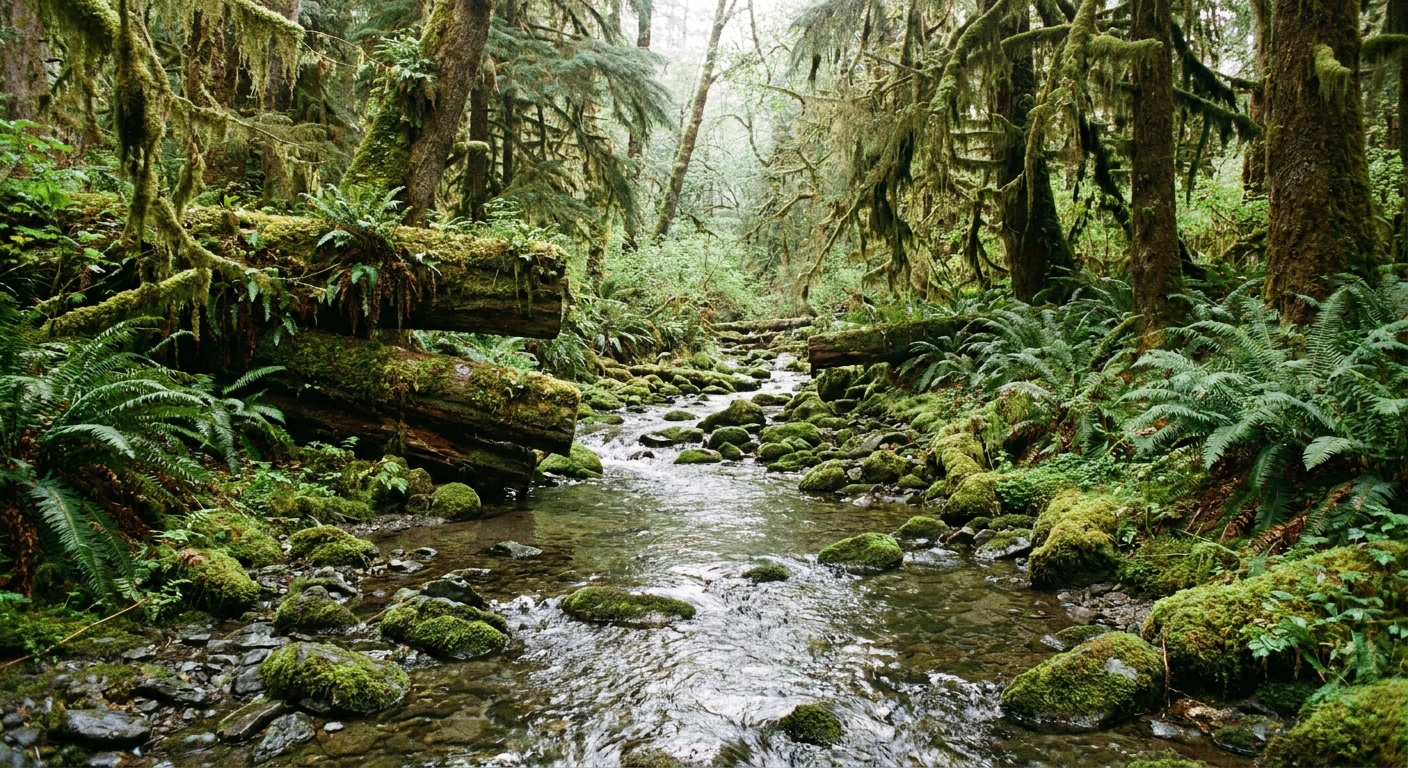
Small creeks in the Hoh are where the rainforest feels most intimate: tannin-stained pools, foam tracing eddies, and filtered light on wet stones. It is also where people unintentionally trample banks while chasing the perfect angle.
- Named cross-checks: Many hikers like using Mineral Creek and Mount Tom Creek as “am I roughly where I think I am?” signposts. Treat mileage as approximate and defer to park signage and current conditions.
- Approx distance: Commonly 6 to 10 miles round trip if you are heading far enough to settle into quieter creek moments.
- Trail-friendly photo goal: Compose from established tread or durable gravel, not the delicate vegetated edge.
- Turnaround cue: When you have your shot and your snack, and you can still walk back without “making up time.”
Trail feel and terrain
The early Hoh River Trail is generally a gentle grade, which is why it pairs so well with time-based turnarounds. The difficulty is not steepness. The difficulty is persistence: wet, slick, and just uneven enough to keep you honest.
Muddy root zones and footwear reality
Let’s be honest about the Hoh: it is not technical, but it is consistently wet. Even in summer, shaded sections hold moisture, and roots can be as slick as polished wood.
What actually helps
- Waterproof hiking shoes or boots: Not mandatory, but they buy you comfort when puddles are unavoidable.
- Grippy soles: Roots plus algae plus rain is a three-part slip recipe.
- Gaiters (optional): Great if you hate the feeling of mud splatter soaking your socks.
- Trekking poles (optional): A confidence boost on root webs and during sloppy descents.
What to skip if you want to enjoy yourself
- Fresh white sneakers: They will not be white again.
- Flat-soled casual shoes: Fine until they are suddenly not.
- New boots you have not worn: The Hoh is not the place to discover a blister personality.
River edge safety
- Undercut banks happen: Give edges space, especially after rain.
- Skip slick logs near water: They are beautiful and they are basically a banana peel with scenery.
- No river crossings: Treat the Hoh as a boundary, not a challenge, unless you have a specific, safe plan and conditions are truly appropriate.
Creek photo etiquette
The Hoh looks wild, but many of its most photogenic edges are vulnerable. A few simple habits keep the banks from unraveling under thousands of well-meaning feet.
- Stay on durable surfaces: Trail tread, gravel, rock, and established pullouts are your friends.
- Do not widen the trail: If there is mud, walk through it instead of around it. Going around creates braids that kill vegetation.
- One photographer at a time: If a narrow spot only fits one tripod, treat it like a single-lane bridge.
- Keep your voice low: Creeks are a natural quiet zone where others are listening for birds and water.
- Leave props at home: No rearranging sticks, no building rock stacks, no “improving” the scene.
Elk viewing basics
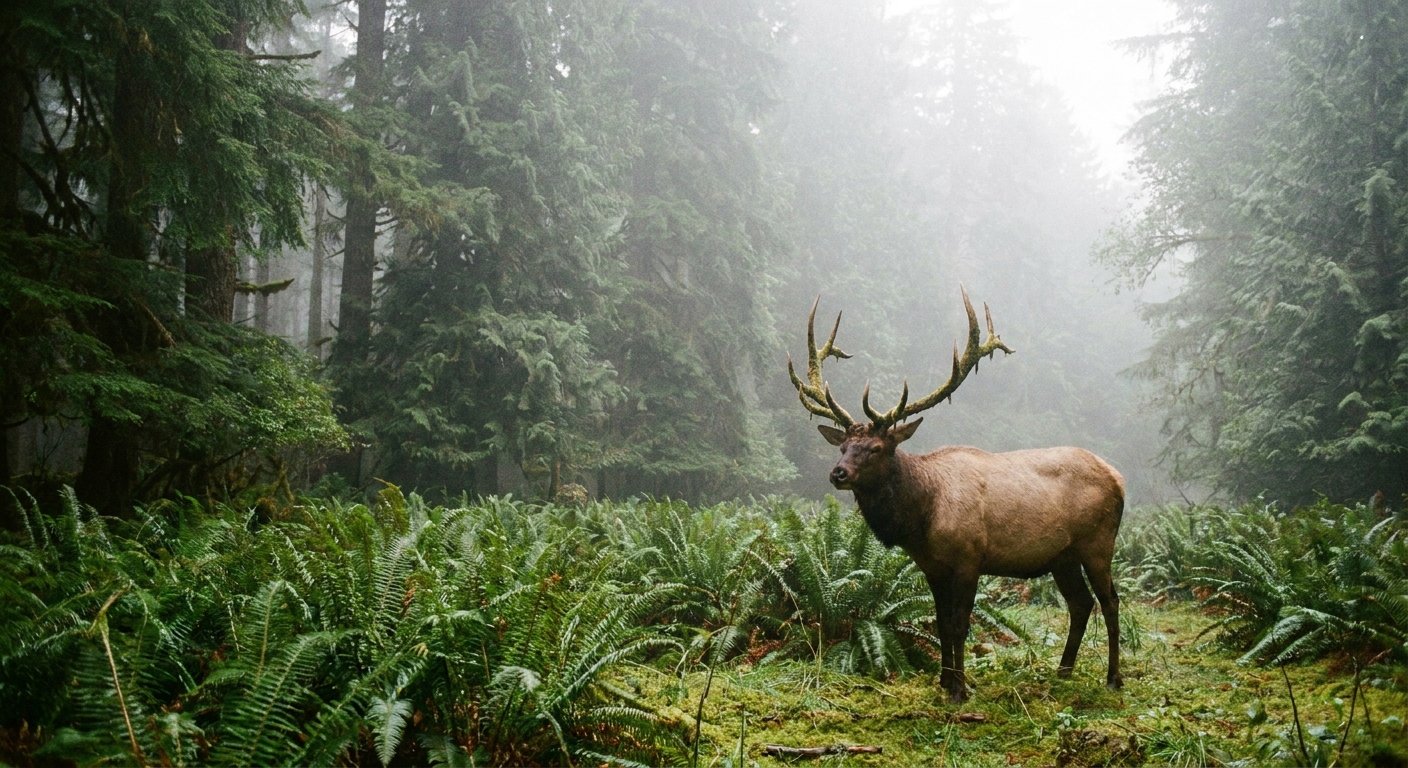
Seeing Roosevelt elk in the Hoh is unforgettable, especially when the fog makes them look like they wandered out of a myth. It is also where visitors accidentally create stress for wildlife and risk for themselves.
Distance you can use
- At least 25 yards from elk and most wildlife.
- At least 100 yards from bears and cougars.
Behavior cues
- If the elk looks up and locks onto you: You are likely too close. Pause, give space, and let it go back to what it was doing.
- If it changes direction because of you: Too close. Back away slowly.
- If you are tempted to whisper “just a little closer”: Definitely too close.
Calm habits that keep everyone safe
- Give them a wide buffer: Especially around calves or during rut season when bulls can be unpredictable.
- Do not block the trail: If elk are near the tread, wait at a distance and let them choose where to go.
- No feeding, ever: It trains wildlife to approach people, which often ends badly for the animal.
Choose your turnaround
If you are standing at the trailhead wondering how far to go, use these quick filters.
Hall of Mosses plus short out-and-back
- You arrived late or the entrance line and parking were stressful.
- You want iconic rainforest photos with minimal mud commitment.
- You are saving energy for a second stop today, like Rialto Beach or a lake viewpoint.
Gravel bar objective
- You want that river-open view that breaks up the green tunnel.
- You are hiking with kids who love “destination rocks.”
- You want a snack spot with space to spread out, without stepping off-trail into fragile plants.
Root and mud reality check
- You have the time buffer to go slower than expected.
- You want a quieter trail feel without needing an all-day push.
- You are testing footwear for a future longer Hoh day.
Creek photo linger
- You love long-exposure water shots or detail photography.
- You are happy to go fewer miles and spend more time observing.
- You can commit to low-impact positioning and patient shooting.
Half-day pack list
This is my minimal, no-drama kit for a half-day in the Hoh. Adjust for season and weather, but do not underestimate how cold “damp” can feel when you stop moving.
- Rain jacket with a real hood
- Warm layer (light fleece or puffy)
- Water and a snack that survives being squished
- Phone or camera in a dry bag or zip bag
- Small first-aid basics and blister care
- Map app offline download or paper map
- Optional: trekking poles, gaiters
Timing and season notes
- Best time of day: Morning buys you parking luck and softer light, plus a better chance at quiet.
- Shoulder seasons: Often fewer crowds, but bring real rain gear and expect more mud.
- Winter caution: Storms, flooding, and downed trees can change the whole plan. Check conditions and be willing to pivot.
Slow travel in a famous place
The Hoh is popular for a reason. If you want it to feel wilder without going farther, go slower. Take the same ten-minute break you would take in a city cafe, but do it on a dry patch of trail edge or a durable gravel pullout. Listen for the shift in sound when the wind moves through the canopy. Watch how moss holds water like a sponge. The rainforest rewards patience more than mileage.
And if you finish early, that is not failure. That is a well-chosen turnaround, dry socks, and time to hunt down the perfect post-hike coffee somewhere back on Highway 101.