Hole-in-the-Rock Road: Half-Day Pullouts and Safety Basics
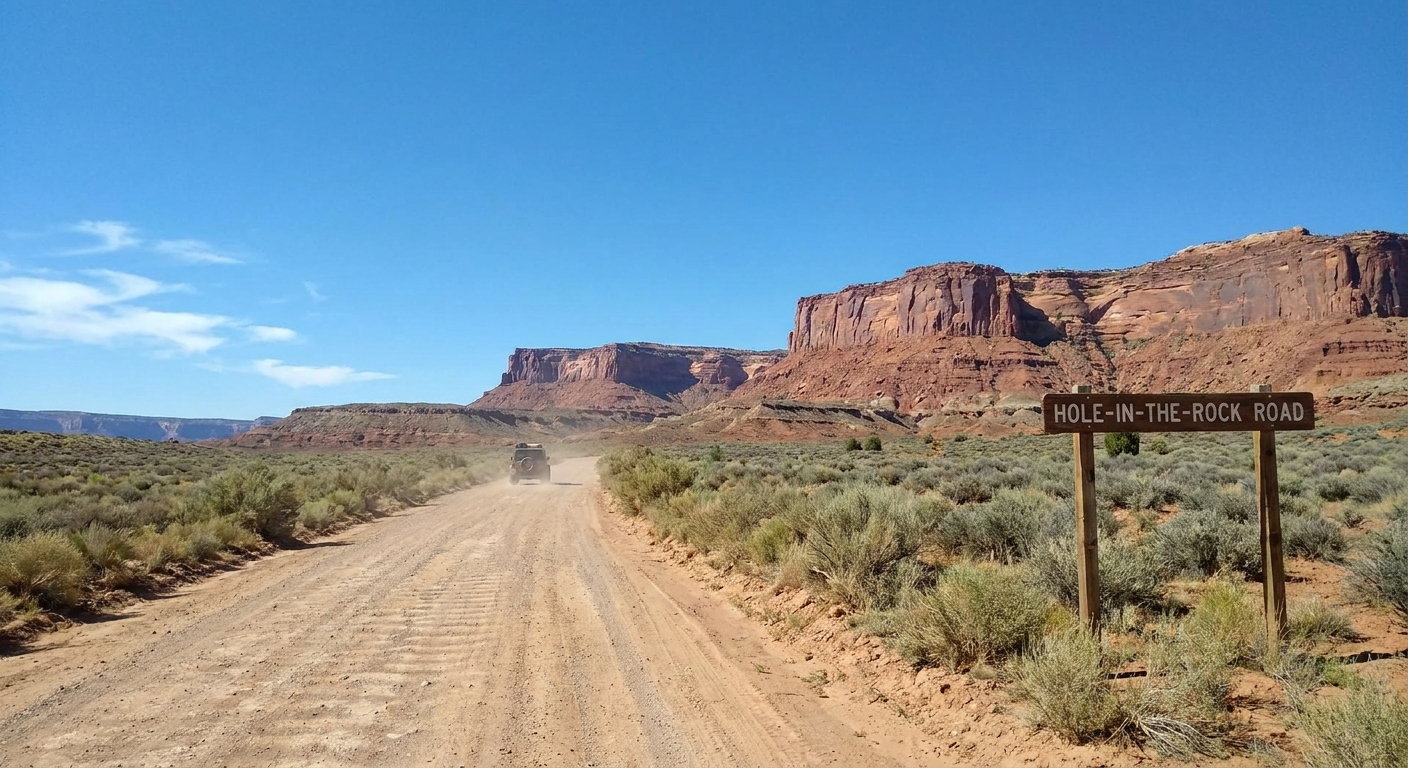
Hole-in-the-Rock Road is the dusty spine of Grand Staircase-Escalante, running east and southeast from the town of Escalante into a wide-open world of slickrock domes, striped cliffs, and sandy side roads that tempt you to keep going “just a little farther.” If it is your first time, this is the sweet spot: a half-day drive with a few short walks, big overlooks, and a realistic plan for turning around before the road, weather, or your rental agreement makes the decision for you.
This page is intentionally a scenic-drive primer. No permit deep-dives, no long backpacking itineraries. Just what you need to enjoy the corridor safely, especially if you are in a stock SUV or a normal car. If you are in a rental, check restrictions before you leave pavement.

Quick orientation
Where it starts
Hole-in-the-Rock Road begins on the east side of Escalante, Utah, and heads into Grand Staircase-Escalante National Monument. The first miles are typically graded dirt, then the surface transitions to more persistent washboard and occasional ruts. Side roads branch off to trailheads and viewpoints.
Why it feels harder than the map looks
- Washboard can be relentless, even when the road is “good.” It shakes tires, loosens gear, and makes average speeds lower than you expect.
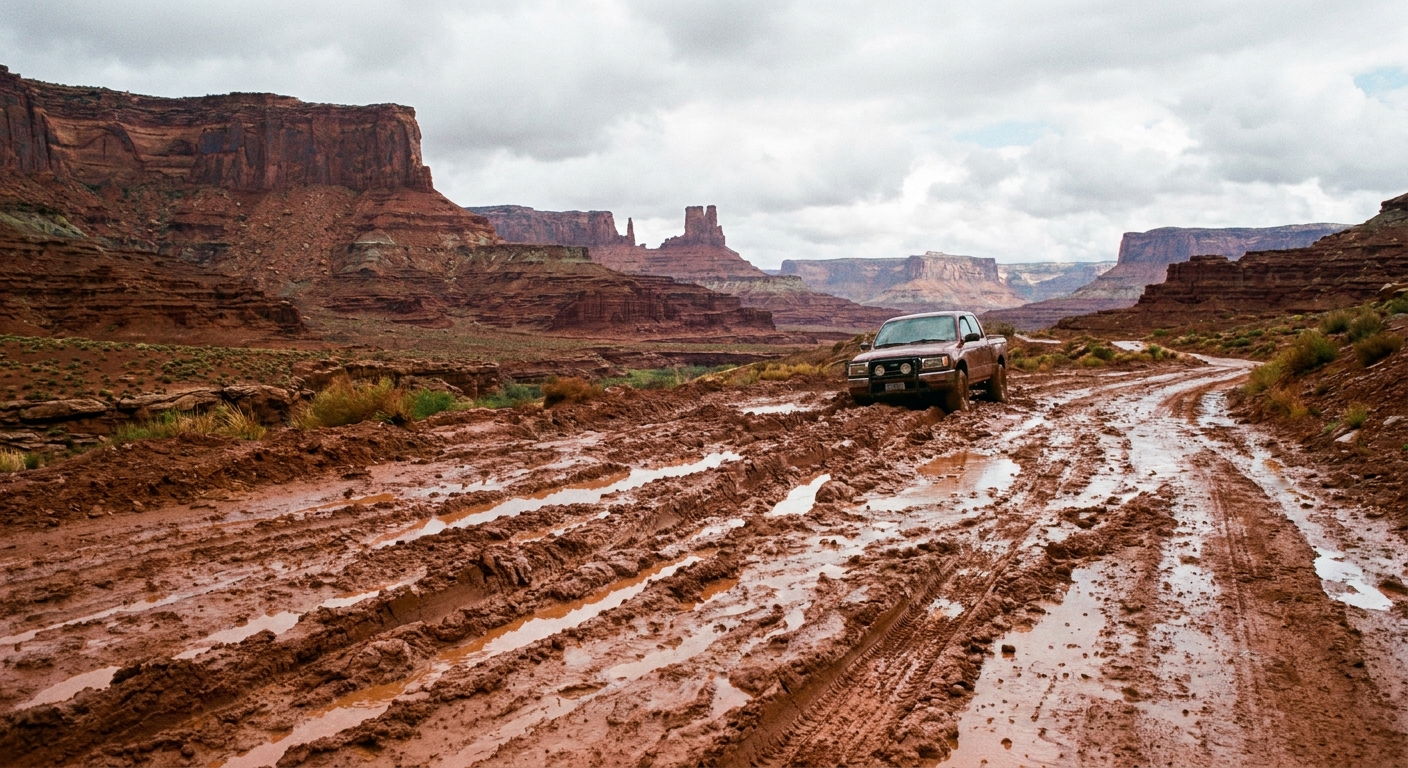
- Clay-heavy sections can turn into grease when wet, even if it only rained briefly.
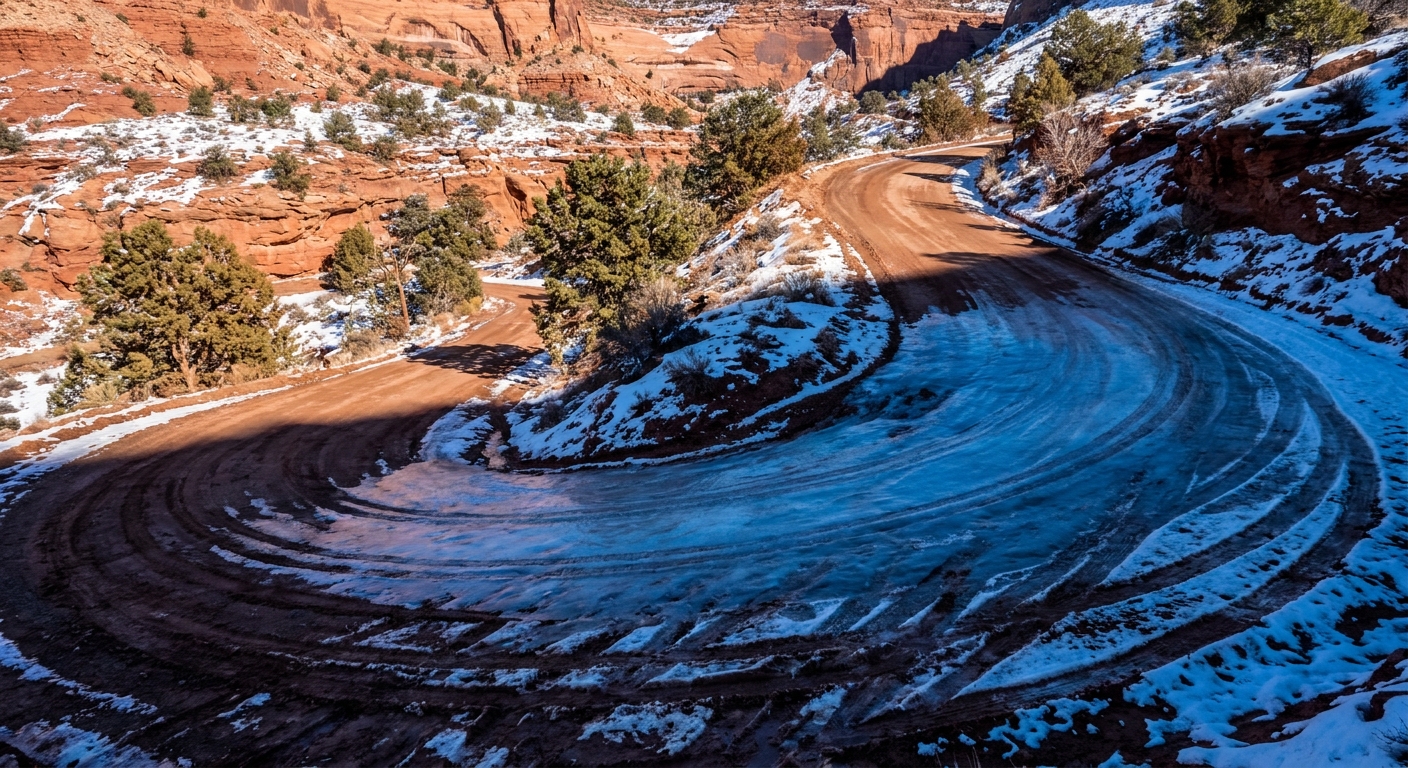
- Winter shade can hold ice in dips and north-facing sections long after sunny pavement in town is dry.
Mindset that saves trips: treat Hole-in-the-Rock Road as a choose-your-own-adventure where turning around early is a win, not a failure.
Simple seasonality
- Spring and fall: often the easiest for a half-day drive, with comfortable temps and fewer storms.
- Summer: heat plus monsoon-style storms can turn “fine” into mud fast. Plan earlier in the day and watch the sky.
- Winter: fewer crowds, more ice in shaded dips, and more consequences if you slide or get stuck.
Road condition tiers (and what that means for your vehicle)
Conditions change with grading, storms, and traffic. Use these tiers as a practical mental model, then confirm reality with recent local info before you go. Even the first 10 to 15 miles can go from friendly to rough after a storm or a busy weekend.
Tier 1: Graded dirt and mild washboard
Typical feel: mostly smooth dirt with shallow washboard, occasional small rocks.
Usually OK for: most passenger cars in dry weather, with careful driving and realistic speed.
Watch for: sudden dips at drainages, loose gravel corners, and surprise rough patches if the road has not been graded recently.
Tier 2: Heavy washboard, ruts, and sharper dips
Typical feel: frequent washboard, some ruts, potholes, and deeper “whoops” at washes.
Usually OK for: stock SUVs and crossovers with decent clearance in dry conditions. Many sedans will still make it some days, but it becomes a comfort and risk question.
Watch for: undercarriage scrapes at dips, heat buildup in tires, and driver fatigue from constant vibration.
Tier 3: Mud, sand pockets, or icy stretches
Typical feel: slick mud after rain or snow, isolated sandy drifts, or shaded ice that forces abrupt braking.
Usually OK for: high-clearance 4WD with appropriate tires and experience. Even then, only if you are comfortable turning around early.
Big truth: When this road is wet, it can become impassable astonishingly fast. “We will just try it” is how people end up stuck for hours.
Smart turnaround points for a half-day drive
Instead of chasing a mileage number, pick a turnaround that matches your vehicle, the season, and how much daylight you have. The goal is to enjoy the drive without white-knuckling the drive back. Mile markers are approximate and can vary depending on where you zero your odometer in town, so use offline maps too.
Turnaround A: Early viewpoints (low commitment)
Best for: sedans and anyone who just wants a taste of the monument.
Why it works: you get the wide-open desert scale quickly and can stop for photos without committing to rougher sections.
Turnaround B: Dry Fork area (classic half-day sweet spot)
Best for: stock SUVs and confident drivers in dry conditions.
Distance: roughly 26 miles from Escalante to the Dry Fork area trailheads.
Why it works: you can stretch your legs on short walks and still return to Escalante for a late lunch.
Slot-canyon reality check: The Dry Fork area is the access zone for Peek-a-Boo and Spooky. Even a “quick peek” can involve steep slickrock entry, sand, route-finding, and tight spaces. If anyone in your group is unsure, keep it to a short walk and save the slots for a dedicated day.
Turnaround C: When washboard stops being “annoying”
Best for: everyone.
Rule of thumb: if you catch yourself bracing your arms constantly or you cannot maintain a slow, controlled line without bouncing, you are at the personal limit where small mistakes become expensive. Turn around, find a pullout, and make it your picnic spot.
Tip from too many desert roads: if you are debating whether to turn around, you have already found your turnaround.
Half-day pullouts and short walks worth your time
The magic of Hole-in-the-Rock Road is that you do not need a big hike to feel like you are deep in canyon country. These stops are about viewpoints, short strolls, and low-effort awe.
Big-sky viewpoints along the main road
Watch for informal pullouts where the terrain opens into layered slickrock and distant cliffs. The best ones usually have:
- a safe, level spot to park fully off the road
- a clear line of sight in both directions for dust traffic
- room to wander a few minutes without stepping onto cryptobiotic soil (that bumpy, dark crust that takes decades to recover)
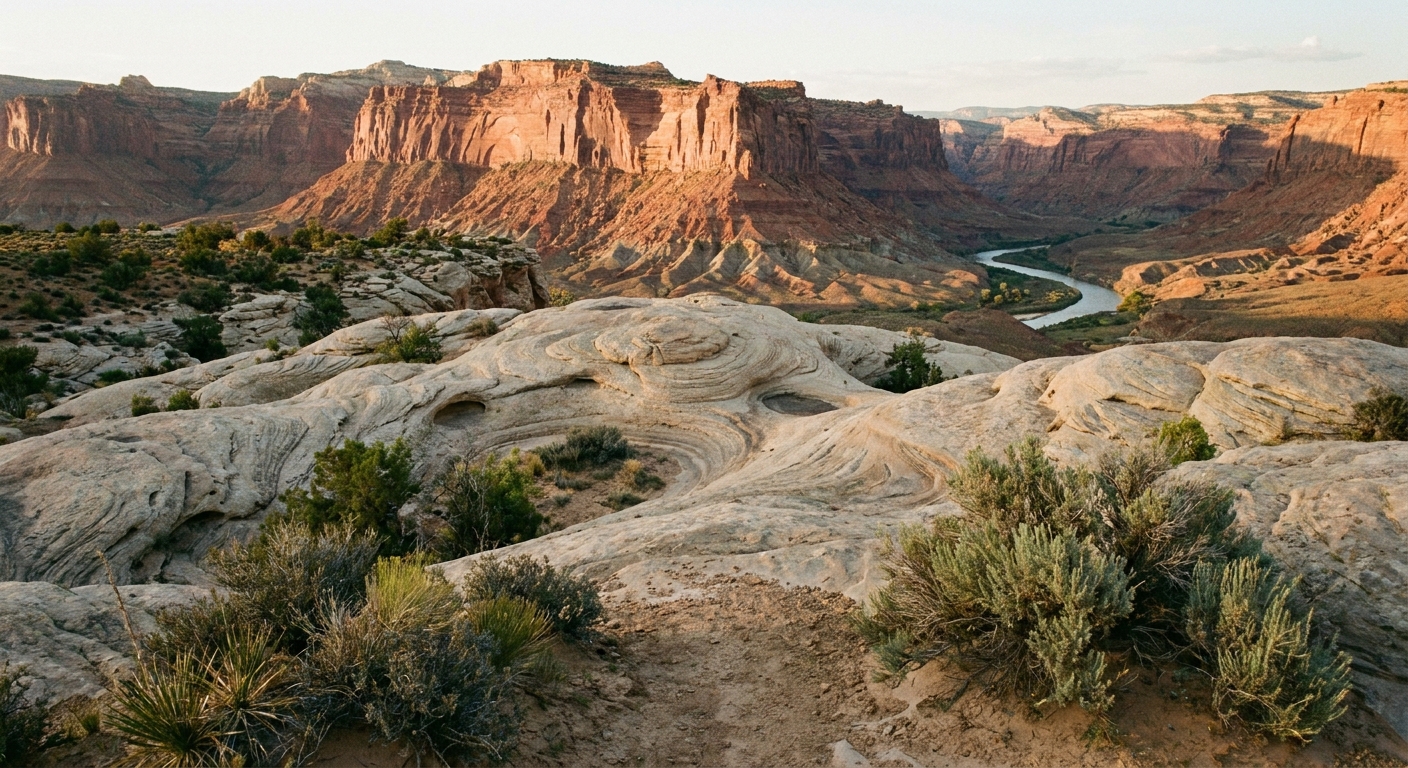
Dry Fork area: quick leg-stretch territory
This zone is a popular jumping-off point for short explorations. Even if you are not committing to a longer hike, it is a good place to:
- walk a few minutes, listen to the quiet, and let the washboard buzz leave your bones
- take photos where the desert colors pop, especially in late afternoon
- check the sky and reassess road conditions before deciding whether to continue
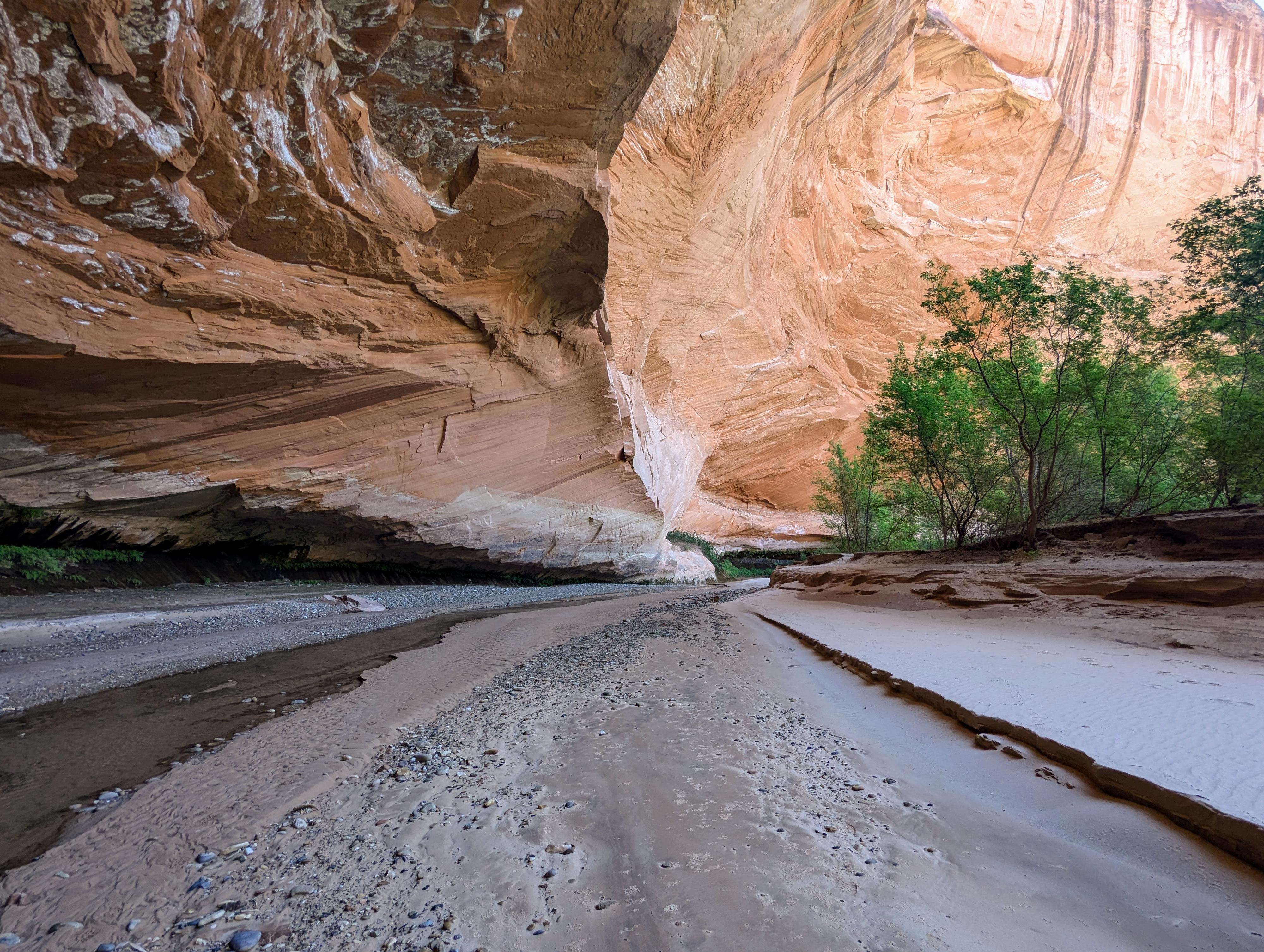
Harris Wash trailhead: a peaceful out-and-back
Distance: roughly 10.5 miles from Escalante to the Harris Wash trailhead area.
If you want a mellow walk, Harris Wash is often a satisfying option for a short out-and-back, depending on conditions. You do not need to go far to get that canyon corridor feeling. Keep it short, keep your water up, and keep track of time so you are not driving back in the dark.
Flash flood note: Like any wash or slot-adjacent terrain, avoid entering if thunderstorms are possible, even if the sky above you looks harmless.
Safety basics that actually matter out here
Carry more water than feels reasonable
Even for a “just driving” half day, bring water as if you might have to wait for help. Heat, wind, and the dry air sneak up fast when you step out for photos or a short walk.
- Minimum baseline: 2 liters per person for a half-day with short walks
- Better: 3 to 4 liters per person if it is hot, you plan to wander, or you are traveling with kids
- Plus: extra water kept in the vehicle, not just in your daypack
Fuel, tires, and the no-surprises checklist
- Fill up in Escalante. Do not count on cell service or quick assistance.
- Check your tires before you leave town, including pressure and obvious damage. Washboard and sharp rock edges are not kind.
- Check your spare tire (ideally full-size), including air pressure and that you have the tools to access it.
- Lower your speed. Washboard tempts you to go faster to “float” over it, but that increases blowout risk and reduces reaction time.
- Secure your gear. Washboard turns loose bottles into projectiles.
- Roadside assistance is limited. Plan like you will handle small problems yourself.
Navigation and comms
Download offline maps before you roll out. Cell coverage can be spotty to nonexistent. If you have a satellite messenger, this is a great day to bring it, even if you hope to never touch it.
Respect the road: dust, visibility, and pullouts
- Drive with headlights on in dusty conditions so oncoming vehicles see you sooner.
- Pull fully off the road when stopping, and avoid parking on blind curves or in low dips.
- If you are traveling in a group, keep more spacing than you think you need to avoid driving in each other’s dust.
When to abort: mud, ice, and the it-looked-fine trap
Abort in mud if any of these happen
- Your tires start packing with clay and you lose traction on gentle grades.
- You see deepening ruts forming as vehicles spin.
- Steering starts to feel like sliding rather than rolling.
In wet conditions, the safest move is often to turn around before you reach the sketchy section. Getting stuck is not just inconvenient, it can block the road for others and damage the surface.
Abort in ice if you cannot stop smoothly
Shaded dips and north-facing stretches can hide ice. If you tap the brakes and feel any sliding, turn around at the next safe spot. A low-speed slide into a ditch out here still becomes a long day.
Forecast rule that has saved me more than once
If meaningful rain or snow is in the forecast for the time you will be out there, treat Hole-in-the-Rock Road like a flexible plan. Choose a shorter turnaround, or swap to paved viewpoints closer to town. The desert will still be there tomorrow, and your suspension will thank you.
Leave no trace
Grand Staircase-Escalante’s desert surface is alive. That dark, knobby layer you see between plants is often cryptobiotic soil, a living crust that helps prevent erosion and supports the whole ecosystem. One careless shortcut can leave decades of damage.
- Walk on durable surfaces like slickrock, sand in washes, and established paths.
- Do not create new parking spots or widen pullouts.
- Pack out everything, including fruit peels and coffee grounds.
Half-day sample plans
Plan A: Easy scenic drive (2 to 3 hours)
- Start in Escalante with a full tank and water
- Drive out Hole-in-the-Rock Road, stopping at 2 to 3 wide viewpoints
- Short slickrock wander and photos
- Turn around while the road still feels comfortable
Plan B: Drive plus a short walk (4 to 5 hours)
- Drive toward the Dry Fork area in dry conditions (about 26 miles from town)
- Do a short out-and-back walk, keeping it conservative
- Snack break in the shade when available, or make your own shade with a hat and patience
- Head back before late-day fatigue sets in
Carry-on-only tip: Keep a small “dirt road kit” in a tote so you can grab it quickly. Water, salty snacks, sunscreen, a light layer, headlamp, a trash bag, and a paper towel roll for dust. It turns a bumpy road into an easy yes.
Before you go: quick checklist
- Check recent conditions with local sources in Escalante (visitor center, BLM info, or local outfitters)
- Download offline maps
- Full tank of gas
- 3 to 4 liters of water per person if it is hot or you plan to walk
- Tires and spare accessible and inflated
- Plan a turnaround point and a hard time to head back
- If the road is wet, icy, or you feel unsure, shorten the plan
Hole-in-the-Rock Road rewards cautious curiosity. Drive it like you are here for the views, not the miles, and you will end the day dusty, happy, and back in Escalante in time for a warm meal and a very satisfying shower.