How to Hike With Your Dog

Maya Lin
Maya Lin is a travel journalist and outdoor enthusiast who believes the best trips combine rugged adventures with urban comforts. After spending six years backpacking across four continents, she founded Trail & Town Guide to help fellow travelers navigate both hidden mountain passes and bustling city neighborhoods with confidence.
Hiking with your dog is one of those rare travel joys that feels both simple and epic: a shared snack break with a view, muddy paws, and that look your dog gives you like, Yes, this is exactly what life is for. But the outdoors has rules, hazards, and social norms that are easy to miss, especially if you are used to city walks where the biggest challenge is a squirrel on a sidewalk.
This guide will help you choose safe trails, follow leash laws and etiquette, pack the right gear, handle heat and cold exposure, navigate wildlife encounters, and build a canine first aid kit that actually makes sense.
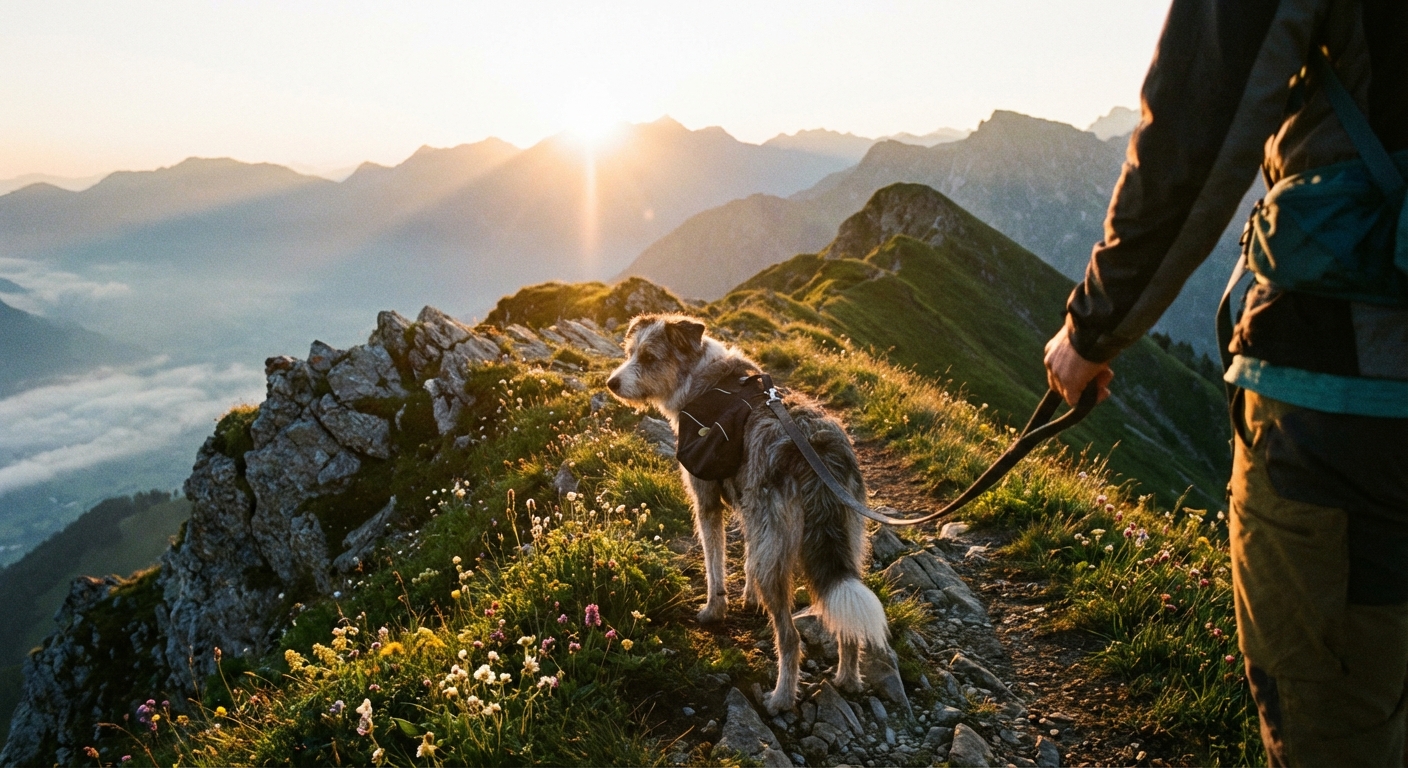
Before you go: Is this trail safe for your dog?
The best dog hike is the one where everyone gets back to the car happy, hydrated, and still speaking to each other. Start with an honest trail assessment and an even more honest assessment of your dog.
Trail checklist
- Dogs allowed: Some trails and protected areas do not allow dogs at all (even if the park is “dog-friendly” in general). Check the specific trail rules for the land manager you are visiting.
- Leash rules: Confirm whether the trail is on-leash only. Many parks have strict leash requirements, even if locals sometimes “forget.”
- Distance and elevation: A “short” hike can be a lot if it is steep, sandy, or high altitude. Start smaller than you think you need to.
- Surface: Hot rock, sharp scree, sand burs, and crusty snow can shred paws. Asphalt trailheads can burn pads in summer.
- Water availability: Natural water is not guaranteed and may be unsafe due to algae or parasites. Plan to carry water for your dog.
- Exposure: Open sun, wind ridges, and no shade can turn a mild day into a dangerous one for dogs.
- Wildlife and livestock: Off-leash dogs can trigger conflict with wildlife, horses, or grazing animals.
- Exit options: Know where you can turn around. If your dog gets injured, you may be carrying them.
Dog checklist (age, health, and temperament)
- Puppies: Long distance hiking is generally not recommended while growth plates are still developing. Ask your vet what is appropriate for your dog’s breed and age.
- Seniors: Arthritis, reduced heat tolerance, and slower recovery mean shorter hikes, softer surfaces, and more breaks.
- Flat-faced breeds (brachycephalic): Bulldogs, pugs, and similar breeds can overheat quickly and may struggle on steep or warm hikes. Choose cool temperatures, shaded trails, and very short distances.
- Double-coated breeds: Huskies and similar dogs can still overheat in sun, but they often handle cold better than heat. Do not shave double coats without vet advice.
- High-drive or reactive dogs: Crowded trails may be stressful. Choose wide trails, off-peak hours, and keep extra space.
- Medical considerations: Heart disease, airway issues, seizures, diabetes, or recovering injuries deserve a vet check before you turn your weekend hike into an emergency.
Rule of thumb: If you cannot comfortably carry your dog for at least a mile, keep the trail conservative until you are sure you have a plan.
Trail rules and etiquette
Dog-friendly does not mean dog-free-for-all. Etiquette is what keeps trails open to dogs.
Leash laws: what “on leash” really means
- Default to leashed: Even on off-leash-allowed trails, leashing is often the safer and more considerate choice when others are nearby.
- Use a standard leash: Many jurisdictions limit leash length (commonly around 6 feet), but rules vary. Retractable leashes can be risky on narrow trails, around bikes, and near cliffs.
- Voice control is not a leash: Park staff and other hikers generally do not accept “he’s friendly” as compliance.
Right of way and passing basics
- Step aside to let others pass: Bring your dog to your side, shorten the leash, and keep them calm.
- Yield to horses: Step downhill when possible, keep your dog close and quiet, and let riders tell you what they need. A barking dog can spook a horse.
- Be predictable around bikes and runners: Move to one side, keep the leash short, and avoid letting the leash cross the trail like a tripwire.
Dog-to-dog greetings: not required
Trail greetings are optional. Many dogs are overwhelmed on leash or protective of space. Ask first, keep it brief, and skip greetings if either dog seems stiff, overly excited, or avoidant.
Leave no trace, but for dogs
- Pack out poop bags: Do not leave bags on the side “for later.” Animals tear them open, and nobody wants to hike past a bag bouquet.
- Keep dogs out of sensitive areas: Meadows, cryptobiotic soil, and wildlife nesting zones matter, even if your dog really wants that one perfect sniff.
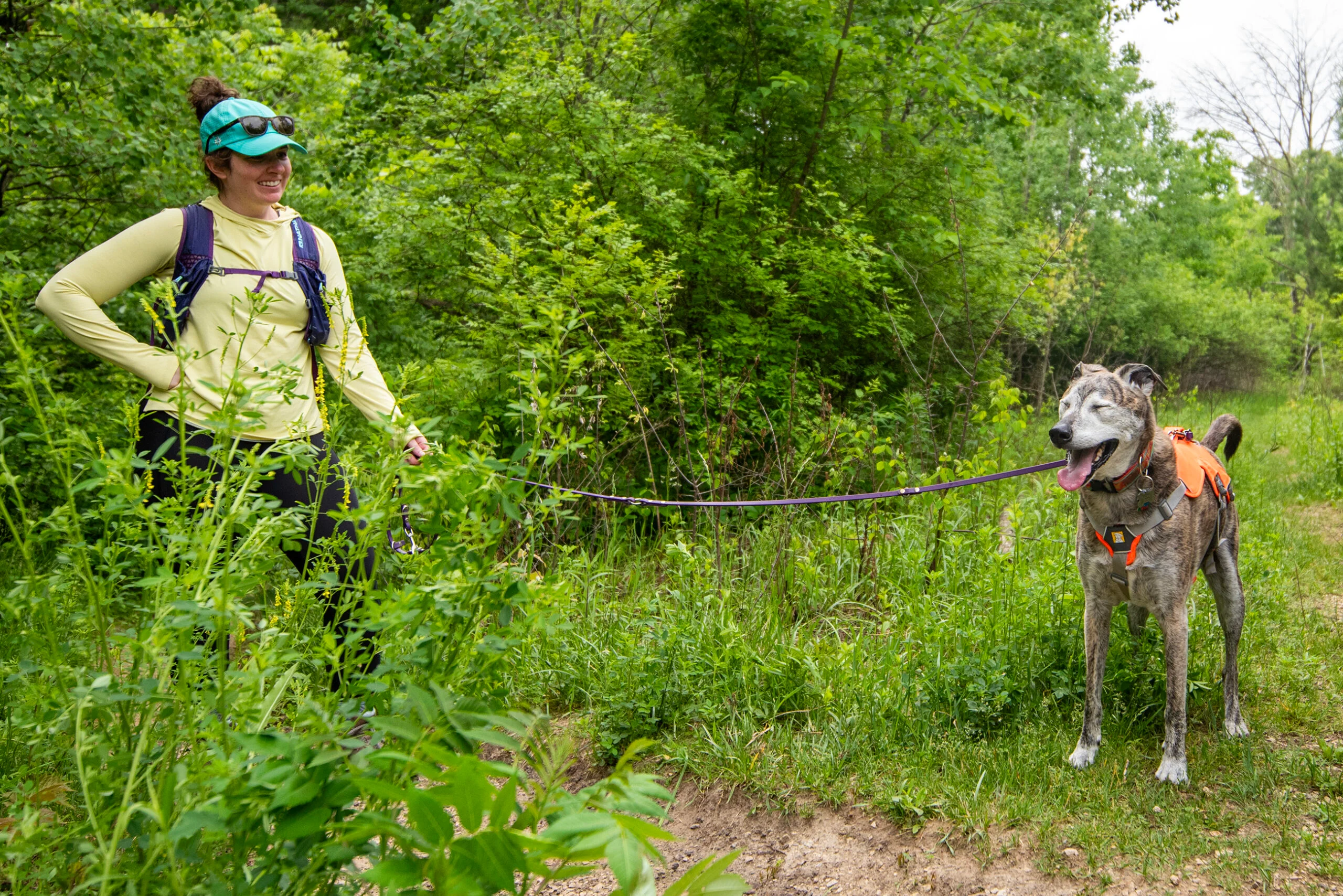
Essential dog hiking gear
When you pack like you mean it, you hike like you mean it. The goal is not to buy everything; it is to bring the items that prevent problems.
The basics
- Well-fitted harness: A harness reduces strain on the neck and gives you better control on scrambles. Look for a sturdy attachment point and a snug, rub-free fit.
- Standard leash: A six-foot leash is the most widely accepted. A hands-free waist leash can be great, but still keep control for passing and steep terrain.
- Collapsible bowl: Silicone or fabric bowls pack flat and make it easier to offer small, frequent drinks.
- Water for your dog (and you): Many dogs will not drink enough from streams, and some water sources are unsafe. Carry extra, and do not short yourself either; handling a dog issue while dehydrated is a bad time.
- Food and high-value treats: Bring more than you think for longer hikes. Treats help with recall, passing, and calm behavior.
- ID and microchip info: Collar tag plus microchip registration. Consider a GPS tracker for remote areas.
- Backup leash: A lightweight spare or slip lead is useful if a clasp breaks, gear gets lost, or you need a quick, simple option in an emergency.
Paw protection: booties and balm
Booties are not just for snow. They protect against sharp rock, hot ground, and sand burs. They also require practice at home first, unless you want to watch your dog do the full “I have forgotten how to walk” routine at the trailhead.
- Booties: Choose a secure closure and bring a spare. One always disappears.
- Paw balm: Useful for dry cracking or after a long day, but not a substitute for protection on harsh terrain.
Layering for dogs
- Insulated jacket: Helpful for short-haired dogs, small dogs, and windy ridge hikes.
- Rain shell: Keeps dogs warmer in cold rain and reduces chilling after breaks.
- Cooling gear: A cooling bandana or vest can help in dry heat, but it does not replace water and shade.
Safety add-ons worth considering
- Reflective vest or light: For low light, forest shade, or shoulder-season hikes.
- Tick remover: A simple tick key or fine tweezers, plus knowledge of what ticks look like in your region.
- Dog carry sling or emergency harness: Especially for small to medium dogs, or remote trails where evacuation is hard.
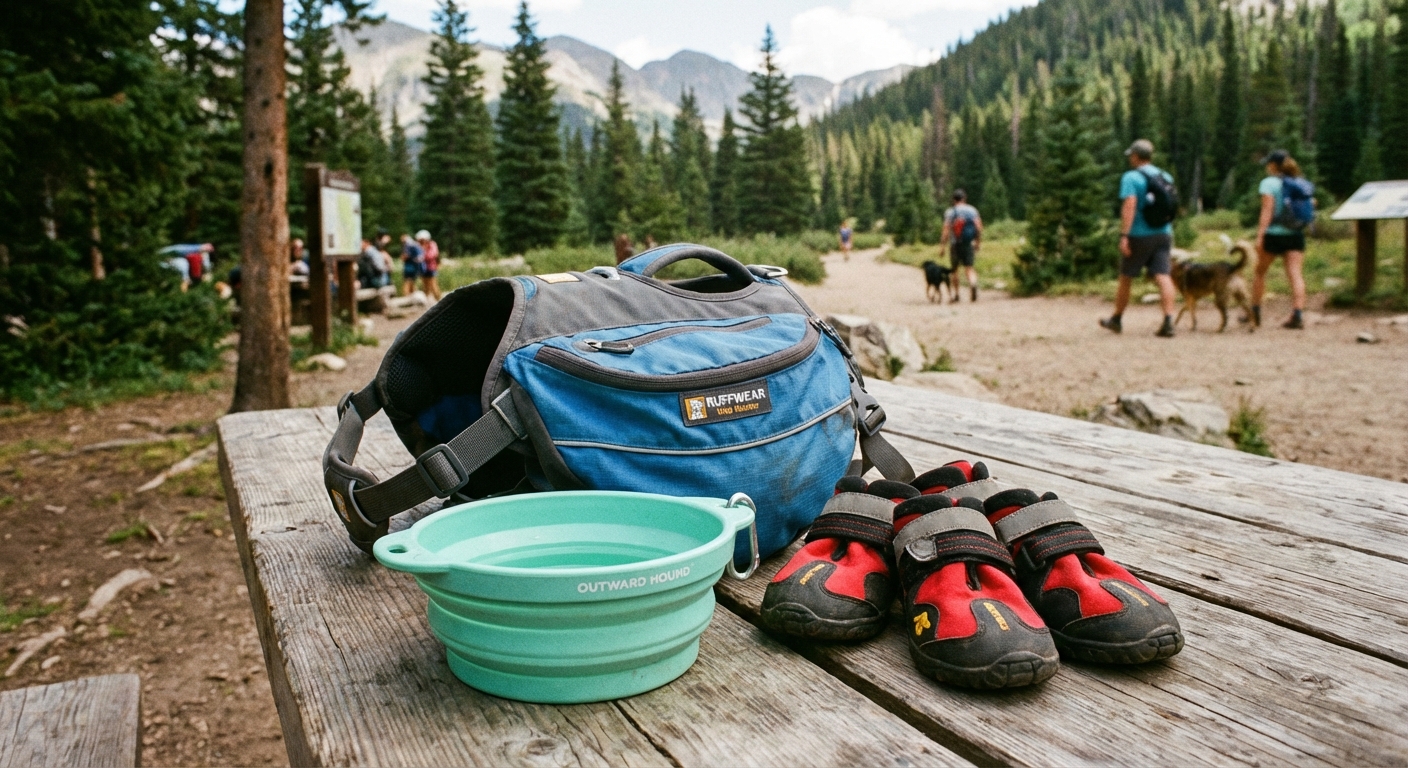
Heat safety
Overheating is one of the biggest risks for dogs outdoors because dogs do not sweat like we do. They sweat minimally through their paw pads, but they rely mostly on panting to cool down, and that system can get overwhelmed.
Heat risk factors
- Warm temperatures, direct sun, and high humidity
- Flat-faced breeds or dogs with thick coats
- Long climbs with no shade
- Hot surfaces that burn paw pads
- Dehydration and lack of breaks
Early signs of overheating
- Heavy, frantic panting that does not ease at rest
- Excess drooling, bright red gums, or very pale gums
- Lagging behind, refusing to move, or wobbliness
- Vomiting or diarrhea
- Glassy eyes or collapse (emergency)
What to do
- Stop and get to shade: Do not push for “one more viewpoint.”
- Offer small sips: Do not force large amounts of water quickly.
- Cool gradually: Wet the belly, armpits, and paws with cool to tepid water (not ice-cold). Increase airflow.
- Start your exit: Begin cooling while you head back to the car and contact a vet if symptoms are moderate to severe.
- End the hike: Heat illness can worsen fast. If symptoms are moderate to severe, seek veterinary care immediately.
Hot ground test: A rule many handlers use is holding the back of your hand on the surface for 5 to 7 seconds. If it is too hot for you, it is too hot for paws.
Cold safety
Cold is not automatically safer. Wind plus wet fur can chill dogs fast, especially smaller dogs and short-haired breeds.
Cold exposure signs
- Shivering, hunched posture, tucked tail
- Reluctance to keep walking or trying to curl up
- Slow, stiff movement (could be cold or ice in paw pads)
- Pale gums, lethargy, or confusion (emergency)
Cold trail habits that help
- Pack a jacket: Especially if you will stop for lunch or photos on a windy ridge.
- Watch paws: Ice balls can form between toes. Booties help; so does trimming excess paw fur as recommended by your groomer or vet.
- Dry off: If your dog wades in water on a cold day, towel them quickly.
- Shorten the outing: Cold injuries are not a badge of honor.

Wildlife encounters
Dogs change the wildlife equation. Their scent, movement, and barking can stress animals and put you in the middle of a bad situation.
General rule: leash up early
If you spot wildlife, leash immediately, shorten the leash, and create distance. Do not allow chasing, even if your dog is “just curious.”
If you see large mammals (deer, elk, moose, bison)
- Give them lots of space and do not approach for photos.
- Move calmly away and keep your dog quiet and close.
- Never let a dog harass ungulates. It can lead to severe injury for your dog and legal consequences for you.
If you encounter a bear
- Keep your dog leashed: A dog that runs up to a bear and then runs back to you is a common way people get pulled into danger.
- Back away slowly: Do not run. Speak calmly.
- Carry bear spray where appropriate: Learn how to use it and keep it accessible, not buried in your pack.
If you encounter snakes
- Keep your dog on trail and out of tall grass and rock piles in snake country.
- Do not let your dog investigate holes or brushy edges.
- If bitten, keep your dog calm, restrict movement, and seek veterinary care immediately. Do not cut the wound or attempt to suck out venom.
If you hike in tick country
- Use vet-recommended tick prevention.
- Do a full-body tick check after the hike, including ears, armpits, groin, and between toes.
Note: If you are traveling, research region-specific risks like toxic blue-green algae in lakes, foxtails in the West, wildfire smoke and air quality, and seasonal closures for wildlife.
Water safety reminder: Avoid letting your dog drink from stagnant or scummy water. If a lake or pond has a blue-green algae advisory, skip it entirely; filters do not reliably remove cyanotoxins.
Canine first aid kit
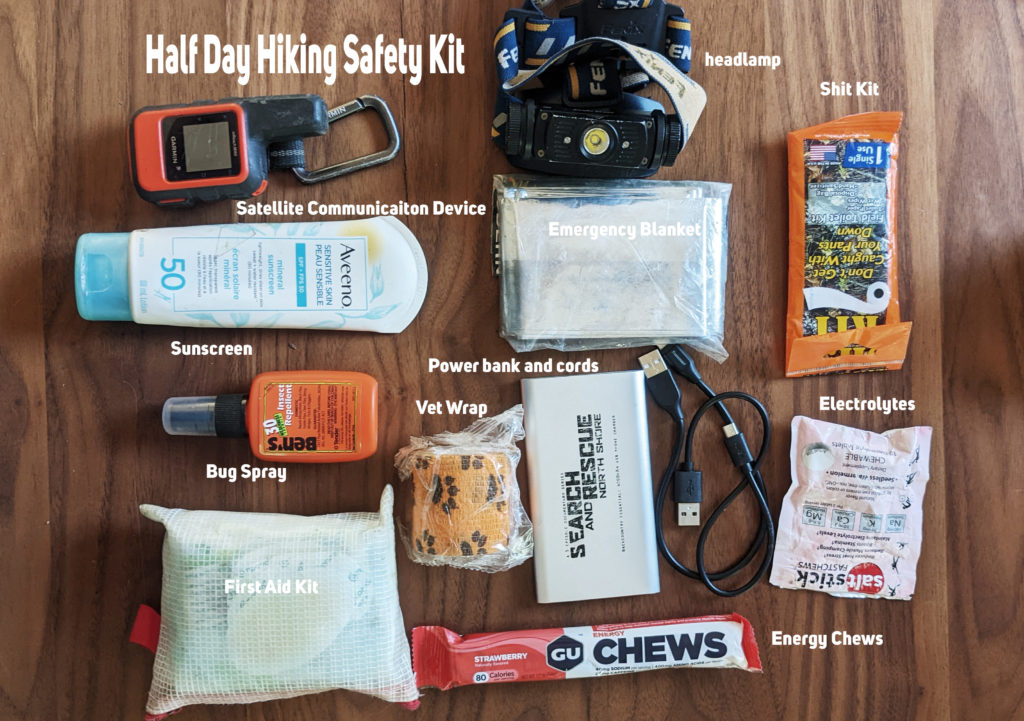
Hopefully you never need it, but this is the section you will be grateful you read. A dog first aid kit does not need to be huge. It needs to cover the most common trail issues: cuts, paw injuries, ticks, sprains, and stomach surprises.
Must-haves
- Gauze pads and roll gauze: For bleeding control and padding.
- Self-adhering wrap (vet wrap): Holds dressings in place without tape. Do not wrap too tight.
- Antiseptic wipes: For cleaning small wounds.
- Saline or wound wash: Useful for flushing debris.
- Tweezers and a tick remover: For ticks, splinters, and cactus spines.
- Blunt-tip scissors: For cutting gauze or trimming fur around a wound.
- Disposable gloves: Cleaner care and less contamination.
- Nonstick pads: For abrasions or hotspots.
- Booties or paw wrap supplies: Paw injuries are common and can end a hike fast.
- Soft muzzle or gauze wrap: Even friendly dogs may bite when scared or in pain.
- Emergency contact card: Your vet number and the closest emergency vet near the trailhead.
Nice-to-haves
- Digital thermometer: A more accurate read on overheating concerns.
- Benadryl (diphenhydramine): Only if your vet has provided dosing guidance for your dog. Never guess dosage. Also, it is not a substitute for emergency care if your dog has facial swelling, breathing trouble, or signs of anaphylaxis.
- Styptic powder: For torn nails, which bleed dramatically.
- Space blanket: For warmth if you are stuck waiting for help.
Important: First aid is not a substitute for veterinary care. If your dog is lethargic, struggling to breathe, has uncontrolled bleeding, repeated vomiting, signs of bloat, or suspected heatstroke, treat it as an emergency.
Breed, fitness, and training
Some dogs are born trail buddies. Others can become trail buddies with the right expectations and conditioning. The trick is not comparing your dog to the neighbor’s cattle dog who runs vertical miles for fun.
Build trail fitness
- Start with short, easy walks: Increase distance gradually.
- Add elevation last: Hills are harder on joints and paws.
- Practice breaks: Teach your dog to rest, drink, and settle on cue.
- Strengthen basics: Good leash manners and a reliable recall (even if you stay leashed) make every hike safer.
Watch for overuse injuries
Dogs will often push past discomfort to stay with you. Pay attention to limping, licking paws, slowed pace, or reluctance to jump in and out of the car afterward.
Reactive or anxious dogs
- Choose wide trails with good sightlines.
- Go early on weekdays if possible.
- Bring extra treats and plan “step off trail” moments to let others pass.
- Consider working with a trainer before attempting busy routes.
On-trail routine
- Start early: Cooler temps, fewer crowds, less stress.
- Offer water often: Small drinks every 15 to 30 minutes in warm conditions.
- Snack breaks: Especially on longer hikes, for both energy and mood.
- Paw checks: Quick look for cuts, foxtails, or limping at each break.
- Leash up for blind corners and passing: Predictability prevents conflicts.
- Turn around sooner than you think: The goal is a happy dog tomorrow, not a heroic dog today.
Quick packing list
- Harness and 6-foot leash
- Backup leash or slip lead
- Collapsible bowl
- Extra water for your dog (and for you)
- Extra treats
- Poop bags and a way to pack them out
- Booties (plus a spare) and/or paw balm
- Weather layer (jacket or rain shell as needed)
- Tick remover and prevention plan
- Canine first aid kit (including a soft muzzle or wrap)
- Emergency carry plan (sling or knowledge of how you will assist your dog)
If you are new to this: pick one easy, shady, two-mile loop and treat it like a test run. You will learn more in that first low-stakes outing than from any gear aisle.
Hiking with your dog is not about perfection. It is about good decisions, good manners, and knowing when to call it early. Do that, and you will earn a trail partner who is always ready for the next turn in the path.