Hubbell Trading Post National Historic Site

Maya Lin
Maya Lin is a travel journalist and outdoor enthusiast who believes the best trips combine rugged adventures with urban comforts. After spending six years backpacking across four continents, she founded Trail & Town Guide to help fellow travelers navigate both hidden mountain passes and bustling city neighborhoods with confidence.
On the long, open-road stretch of northern Arizona, Hubbell Trading Post National Historic Site is the kind of stop that quietly resets your pace. It is not a “quick photo-and-go” attraction. It is a living place where trade, family histories, and regional artistry meet, and where a visitor’s best move is to slow down, listen, and let the post reveal itself.
If you have 60 to 120 minutes, you can step into the historic trading room, walk the grounds, learn the basics of buying rugs and jewelry respectfully, and still make daylight miles toward Chinle, Holbrook, or wherever your loop is taking you next.
Before you go
Where it is
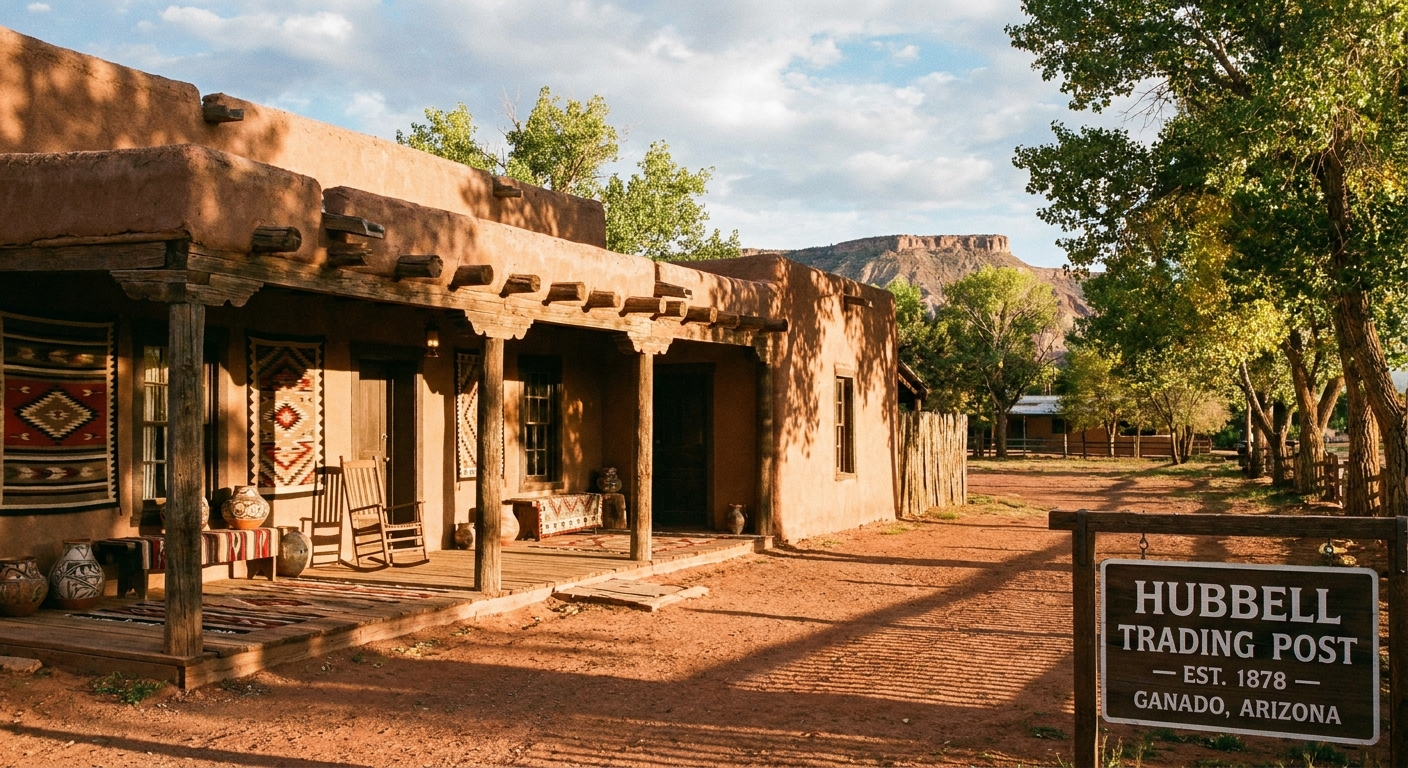
Hubbell Trading Post is in Ganado, Arizona, within the boundaries of the Navajo Nation. The site is near US-191 and is commonly reached via AZ-264 as well.
Navigation reality check: This can be a perfect stop if you are looping through Monument Valley, Canyon de Chelly, and Petrified Forest, but it is not on the most direct line between every pair of those places. Think of it as a worthy detour that adds culture and history to a scenery-heavy road trip day.
Hours, fees, and quick checks
Hours, tours, and fees can shift by season, staffing, and special events. The most reliable plan is to:
- Check the official National Park Service (NPS) Hubbell Trading Post page the night before for current hours, tour times, and any closures.
- Confirm fees and accepted payment options on the NPS page, especially if you are arriving late in the day or visiting during a holiday week.
Time planning tip: Even when the visitor areas are open, specific programs may be limited. If you arrive close to closing time, prioritize the trading room first, then take a short grounds walk.
Accessibility and facilities
This is a historic site, so expect a few practical constraints. In general, you will find restrooms and a visitor contact point on-site, but:
- Accessibility varies by area. Historic thresholds, uneven surfaces, and tight interior spaces can affect mobility access.
- If accessibility is a deciding factor for your visit, check the NPS accessibility notes or call ahead for the most current details on the trading room, home tour route, and paths around the grounds.
What to do in 1 to 2 hours
Do not miss
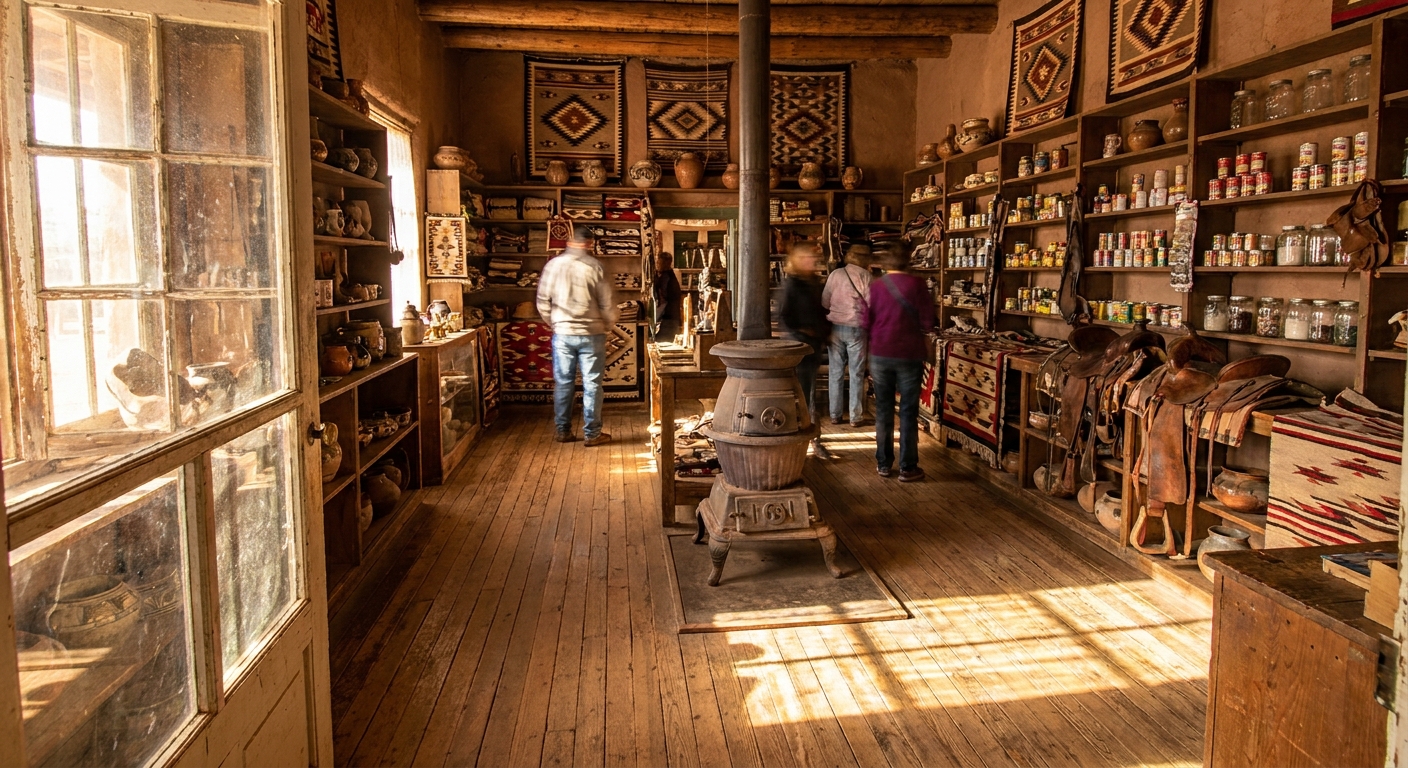
- The trading room: the heart of the site and the fastest way to understand why this place matters.
- The grounds: orchard and outbuildings that make the post feel like a working landscape, not a hallway museum.
- A ranger question: one sincere question will often give you more than ten signs. A good one is: “What is the best way to be respectful while shopping and photographing here?”
Option A: Self-guided basics
If you only have about an hour, keep it simple:
- Start in the trading post to understand what this place is and what is still being sold today.
- Walk the grounds at an unhurried pace. Notice the spacing, shade, and quiet details that do not show up in a quick snapshot.
- Ask one question and accept the answer as guidance, not a debate.
Option B: Guided home tour plus a short shop
If you have closer to two hours, try to add the guided home tour when it is available. Browsing the trading room is one experience. The home tour adds context for the Hubbell family, the site’s preservation, and how a trading post functioned as a social and economic hub.
How to choose:
- Pick self-guided if your drive day is packed and you mainly want a cultural stop and a chance to shop thoughtfully.
- Pick the guided home tour if you like history and want the story behind what you are seeing on the shelves.
Shopping etiquette
Hubbell Trading Post is a place to buy art, not souvenirs. Whether you spend $20 or $2,000, the etiquette is the same: be calm, be curious, and do not treat people’s work like a prop for your road trip.
You may see Navajo weaving and jewelry and other regional arts depending on current inventory and programs. If you are looking for something specific, ask staff what is available right now rather than assuming.
Rugs
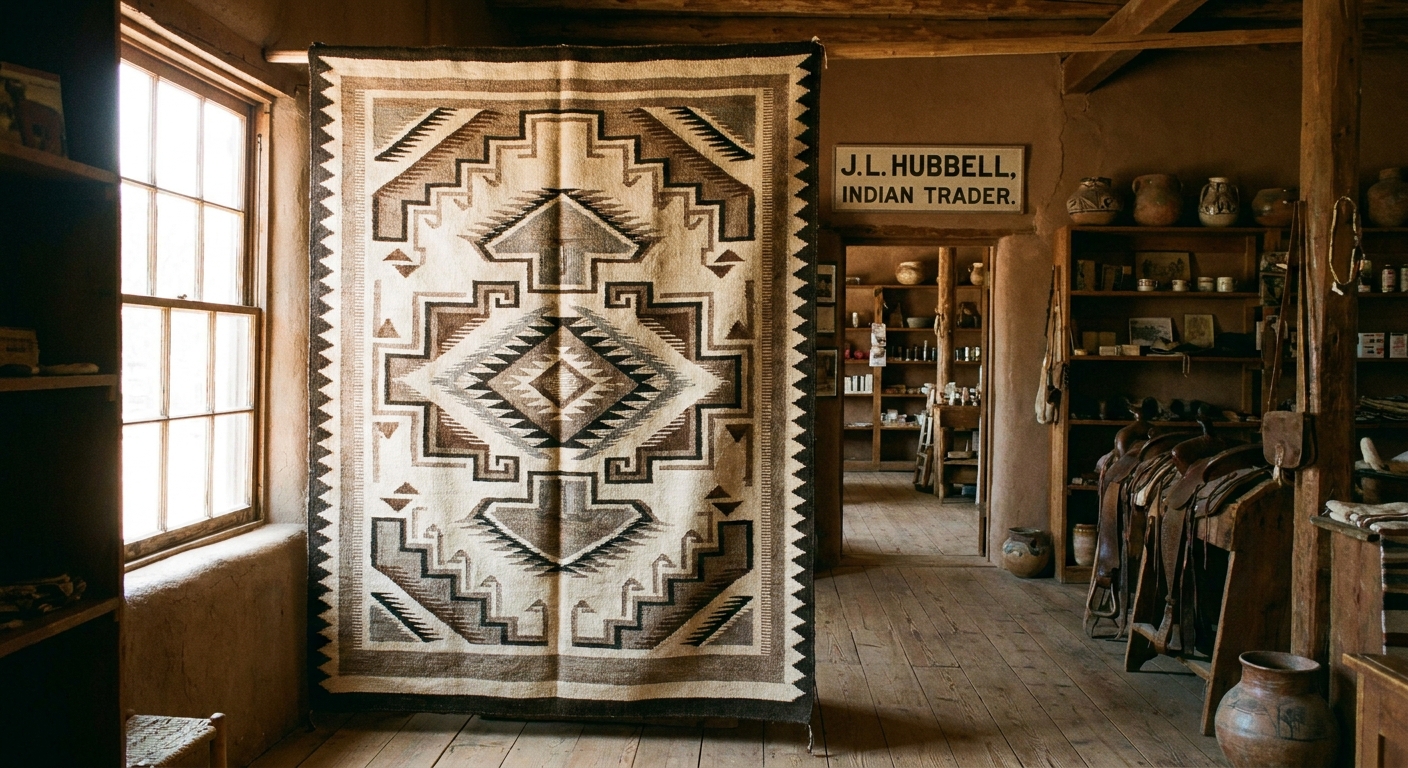
- Ask before handling a rug, unfolding it, or flipping it to look at the back. Even a quick “May I?” matters.
- Do not step on textiles and keep bags off them. If you are dusty from the road, be extra mindful.
- Ask learning questions about weaving style, wool, dyes, and region, without turning it into an interrogation.
- Go easy on bargaining. Prices reflect labor, skill, and cultural value. If you want to ask, keep it simple and respectful. One good phrase is: “Is the price firm?”
Jewelry
- Ask who made it and what materials are used, especially with turquoise and silver pieces.
- Do not assume everything is “old” or “antique.” Contemporary work is not lesser, it is alive.
- Try on carefully and return items to staff rather than placing pieces back randomly.
Photography while shopping
Even when photography is allowed in some areas, photographing merchandise up close can feel like you are collecting images instead of engaging with the work. If you want a photo of a rug or a display, ask first. If the answer is no, accept it without pushing.
Photography rules
Rules can vary by room, exhibit, and current site guidance. Your safest approach is:
- Look for posted signs at entrances and in exhibit spaces.
- Ask a ranger or staff member before photographing inside the trading post or during any guided tour.
- Do not photograph people without permission. This includes staff, artisans, and other visitors.
- Avoid flash inside historic interiors. Even when it is not explicitly prohibited, it is a good preservation and courtesy habit.
My personal rule when traveling on the Navajo Nation: If I am unsure, I put the camera away. You will remember the smell of old wood and the hush of the trading room more clearly than you will ever use a quick phone photo.
How to fit it in
Simple stop plan
On a drive day, the easiest way to keep this visit stress-free is to treat it like a structured break instead of an open-ended wander.
- 0:00 to 0:15: Park, quick restroom stop if needed, and scan posted rules.
- 0:15 to 0:50: Trading room browsing with one focused goal, such as learning one weaving style or buying one meaningful item.
- 0:50 to 1:20: Grounds walk.
- 1:20 to 2:00: Optional guided home tour if available, or more time for staff questions and shopping.
Routing notes
Ganado is well positioned if you are building a loop through Kayenta, Chinle, Holbrook, and Petrified Forest, but it is easiest when you plan it deliberately. A few practical baselines (always verify with current road conditions):
- From Chinle (Canyon de Chelly area): often around 1 hour to 1 hour 30 minutes.
- From Kayenta (Monument Valley area): often around 1 hour 30 minutes to 2 hours.
- From Holbrook: often around 1 hour to 1 hour 30 minutes.
- From Petrified Forest (main entrances/visitor areas): often around 1 hour 15 minutes to 2 hours depending on your entry point and route.
Canyon de Chelly note: The canyon is accessed via Chinle and is not “on the way” unless you choose that routing. If you are doing the canyon, Hubbell can work well as a cultural anchor either before or after your canyon time, depending on your lodging.
Daylight tip: Aim to arrive earlier when possible. You will have more flexibility with tours, and you will not feel rushed by closing hours.
Ganado basics
Ganado is small, but it is a smart place to reset your car and your body after long highway miles.
- Fuel: Top off if you are heading into longer stretches toward Chinle, Kayenta, or Holbrook. Stations can be spaced out, and hours can be limited.
- Water: Restock more than you think you need, especially in warmer months. Dry air plus wind can dehydrate you quietly.
- Snacks and basics: Grab simple road food so you are not forced into rushed decisions later.
- Respect the local pace: Service can be slower than in bigger towns. Build a buffer and keep your expectations kind.
Do and do not
Do
- Do treat Hubbell as a cultural site first, shopping stop second.
- Do ask before handling rugs or photographing inside.
- Do listen to staff guidance without debating it.
- Do buy intentionally if you choose to buy, and choose quality over quantity.
Do not
- Do not treat sacred or culturally significant items as novelty props.
- Do not photograph people without clear permission.
- Do not aggressively bargain or push for discounts.
- Do not rush through the trading room like it is a convenience store.
Worth it?
If your Southwest road trip is all epic overlooks and windshield miles, Hubbell Trading Post adds something rarer: a grounded sense of place. It rewards travelers who can do two things at once, staying curious like a museum visitor and practical like someone who still needs to make it to the next desert sunset.