If You See a Coyote on the Trail
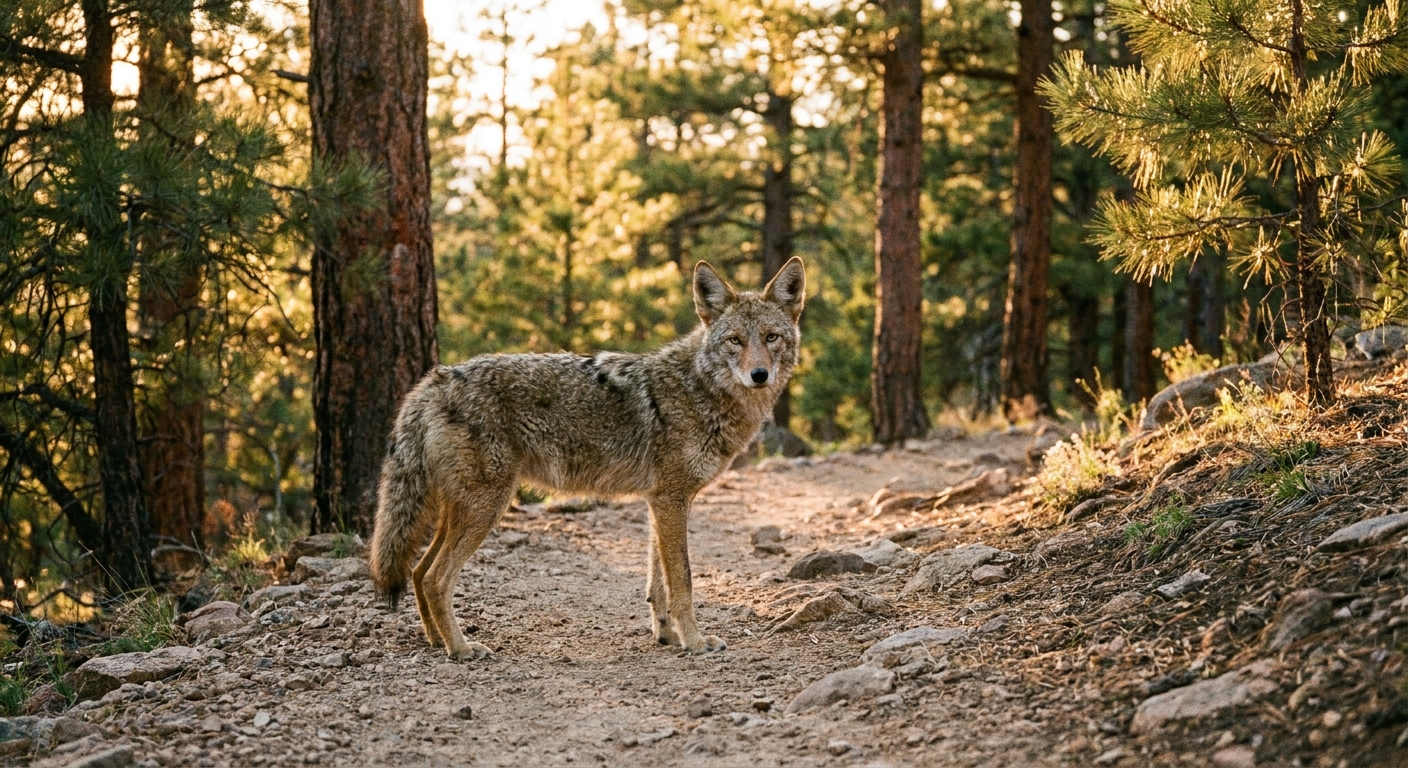
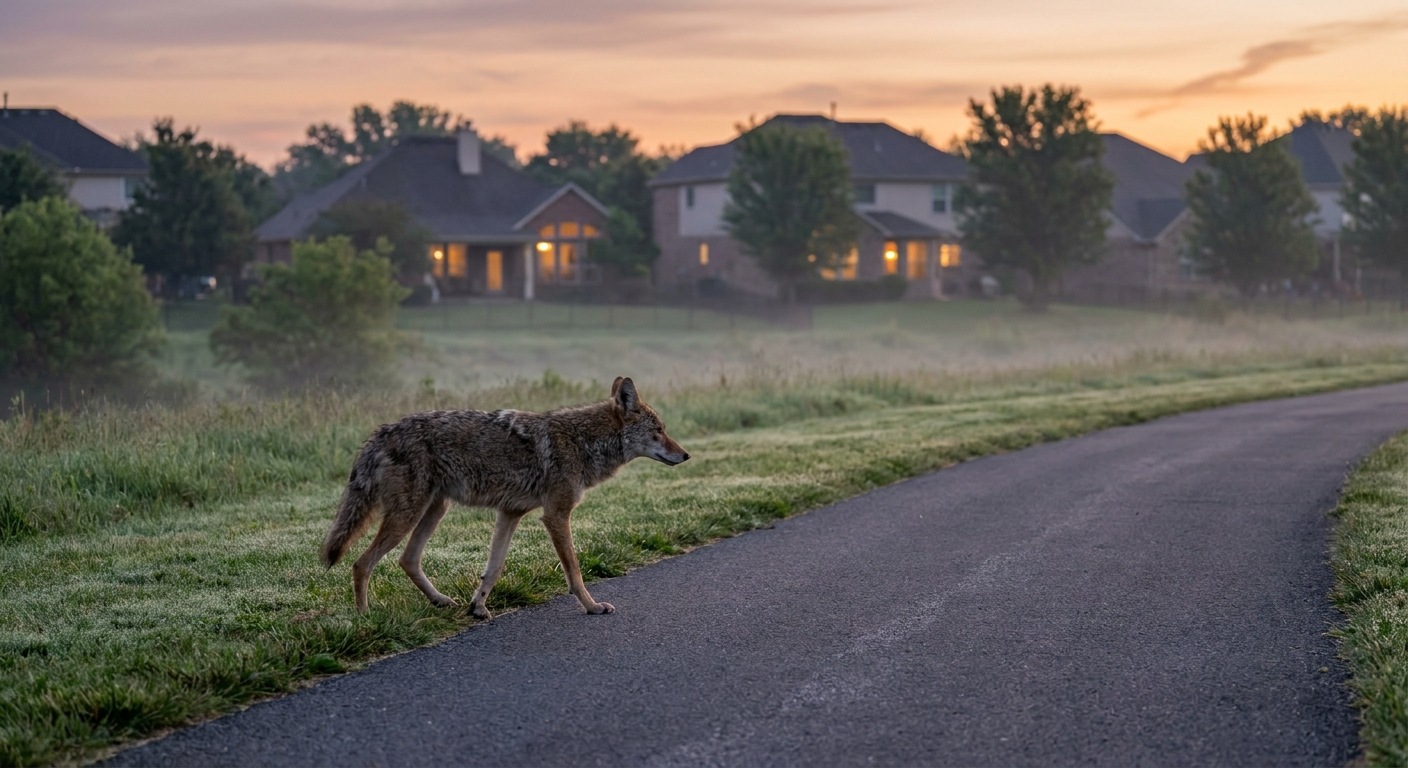
Coyotes are the ultimate boundary-crossers. I have seen them trot across alpine meadows like they own the place, and I have watched one ghost along a neighborhood greenbelt at dusk as if it were a city sidewalk. Most of the time, a coyote sighting is a normal wildlife moment, not an emergency.
The trick is knowing the handful of situations when “cool, a coyote” should turn into “okay, we are changing our plan.” This guide breaks down distance, dogs, kids, food, behavior cues, hazing versus backing away, regional quirks, and when to escalate.

First: stop and assess
Your first 10 seconds matter because they set the tone for everything that follows. Coyotes read body language. So do your hiking partners and your dog.
- Stop where you are. Avoid a sudden sprint or frantic waving.
- Locate the coyote and scan for others. Coyotes sometimes travel in pairs or family groups, especially near denning season.
- Check your surroundings. Is this a narrow trail with nowhere to step off? Are you near a road, neighborhood edge, campground, or trash cans?
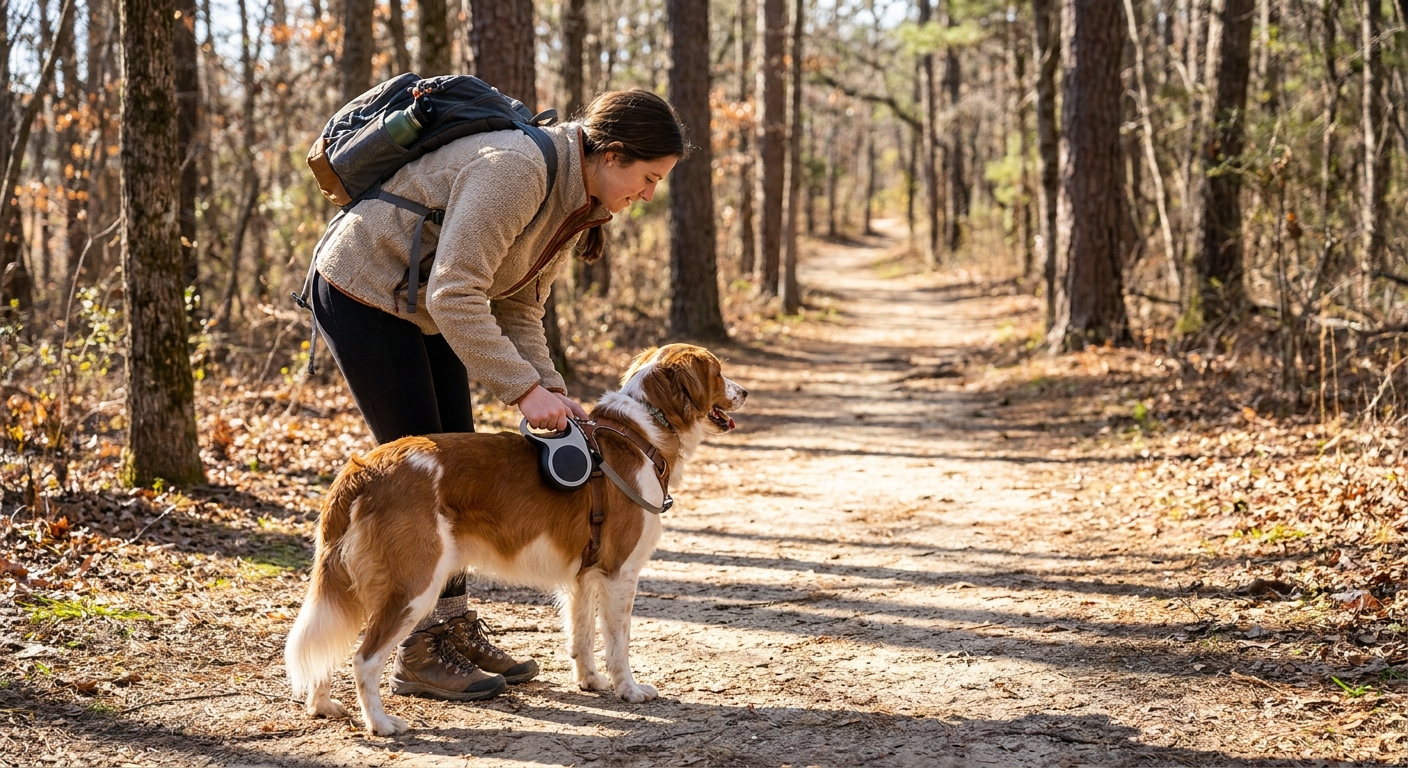
- Get your dog close, immediately. If your dog is off-leash, call them in and leash up before anything escalates.
- Pull kids in close. Hold hands, keep everyone together, and do not let children run ahead (or run at all).
In most cases, the coyote will keep moving. Your job is to make sure you are not accidentally inviting it closer.
How much distance to keep
There is no single official number that applies everywhere, so follow local guidance when it exists. For practical trail decision-making, many wildlife agencies use a simple baseline for most wildlife: give it lots of space. Here is a workable rule of thumb:
- Aim for at least 50 yards (45 m). If the coyote is farther than this and moving away, you are likely fine to pause and let it pass.
- 100 yards (90 m) is better when you can. Especially if you have a dog, the coyote is lingering, or the terrain funnels you together.
If you cannot maintain distance because the trail is narrow or the coyote is on the path ahead, do not try to “squeeze by.” Instead, create space by backing away to the last wide spot, stepping off trail if safe and durable to do so, or turning around.
Distance is not just about safety. It also helps prevent habituation, which is when coyotes learn that humans are neutral background noise and start approaching more boldly over time.
Read the coyote
Most coyotes want nothing to do with you. The ones that cause problems are usually habituated (too comfortable around people) or food-conditioned (they have learned humans equal snacks).
Common, normal behaviors
- Trotting across the trail and disappearing into brush.
- Pausing to look for a few seconds, then moving on.
- Keeping distance while paralleling you briefly (often to assess you or to move around you).
Behaviors that deserve extra caution
- Approaching you on purpose or closing distance repeatedly after you stop.
- Staring, tracking, or “shadowing” you for more than a short stretch.
- Circling or trying to get behind you.
- Acting bold near people, strollers, or pets in parks and on greenways.
Red flags that warrant immediate escalation
- Growling, baring teeth, snapping, or charging.
- Repeated daytime boldness in a suburban park or neighborhood trail.
- Drooling, staggering, disorientation, or unusually fearless behavior. This can indicate illness, injury, poisoning, or (rarely) rabies depending on region. Do not diagnose on the trail. Create distance, keep pets away, and report it.
One quick myth check: seeing a coyote in daylight can be normal. What matters is how it behaves around people and pets.
Dogs change everything
If you hike with a dog, you are not just another human on the trail. To a coyote, your dog can look like:
- a rival (territory dispute)
- a potential mate (especially during breeding season)
- prey (rare, but possible with very small dogs)
What to do immediately
- Leash your dog. Even if your dog is normally reliable, an off-leash rush is the fastest route to an incident.
- Shorten the leash. Keep your dog close to your leg. Avoid taut, extended leashes that let your dog lunge forward.
- Stay calm and quiet with your dog. High-pitched panic can amp them up.
What not to do
- Do not let your dog “say hi.” Coyotes are not trail acquaintances.
- Do not pick up a medium or large dog in a way that makes you unstable.
- For a small dog, picking them up can help, but it can also increase a coyote’s interest because the dog is still present and visible. If you pick up your small dog, do it smoothly, keep your face and hands protected, keep the leash secured, and start creating distance right away while staying aware of the coyote.
- Do not allow your dog to eat anything on the ground. Food scraps attract coyotes, and scavenging increases the chance of conflict.
Retractable leashes
If you use a retractable leash, lock it short the moment you see a coyote. Better yet, use a standard 4 to 6 foot leash on wildlife-heavy trails. Control is kindness here.
Hazing vs backing away
You will see two types of advice online that seem to contradict each other: “make yourself big and scare it off” versus “back away slowly.” Both are useful, but in different moments.
Back away when it is normal
If the coyote is at a distance, not approaching, and you have room to increase that distance, the best move is often the least dramatic:
- Face the coyote and walk backward to a wider spot or back the way you came.
- Keep your group together.
- Do not turn and run. Running may trigger a chase response in many canids.
Haze when it is bold
Hazing is appropriate when a coyote is approaching, lingering too close, or clearly comfortable around people. The goal is to make the coyote decide, very quickly, that humans are not worth the trouble.
- Get tall and confident. Square your shoulders, hold trekking poles out, raise your arms.
- Use a firm, low voice. “Go on!” works better than screaming.
- Make noise. Clap, stomp, or use a whistle if you carry one.
- If it keeps closing distance, throw small objects near, not at, the coyote. A rock tossed to land a few feet in front of it can be effective. Never throw if it would put you closer or off-balance.
What hazing is not
- Do not chase it down the trail. You want distance, not a footrace.
- Do not corner it. Always leave the coyote an exit route.
- Do not feed it. Ever. Even “just this once” rewires the risk for the next hiker.
If you remember one line: Back away for normal coyotes. Haze bold coyotes.
Food and trash
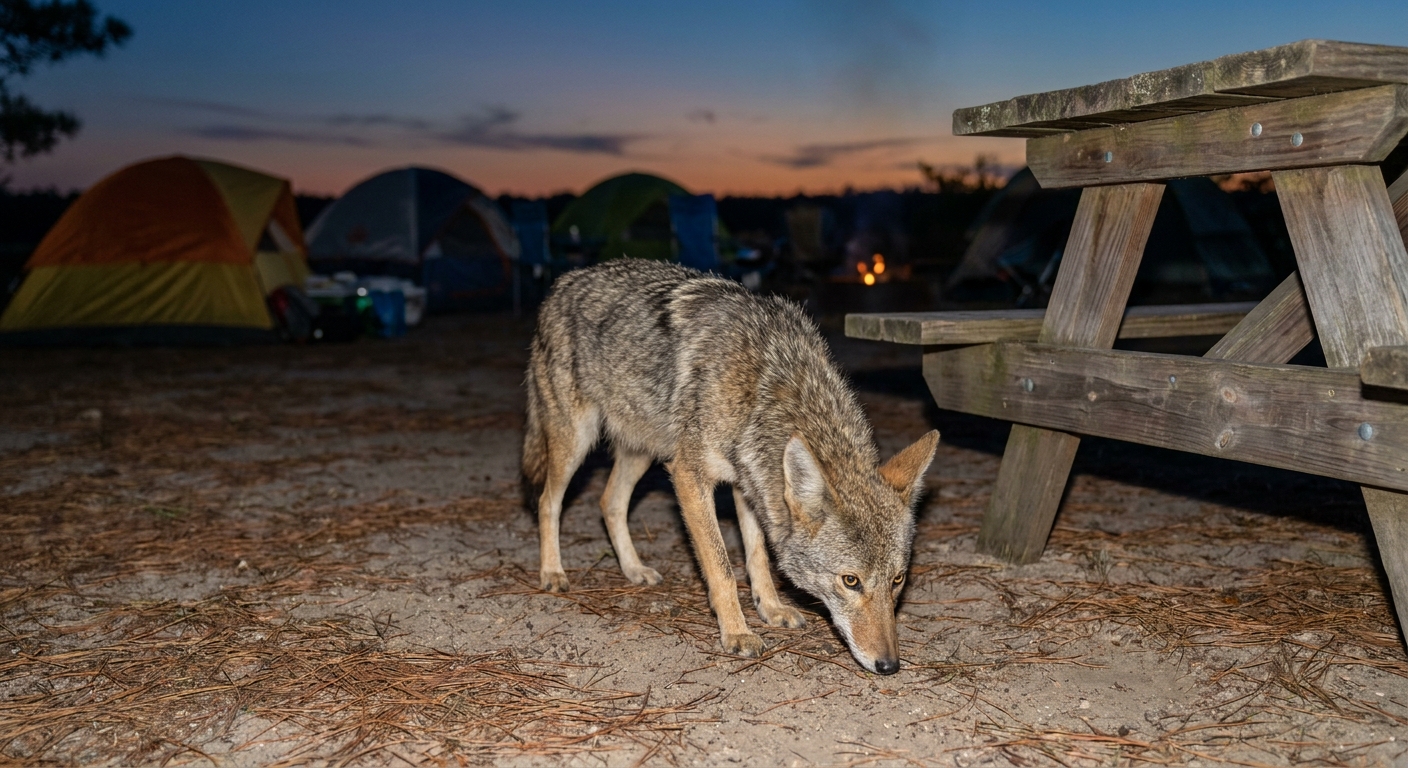
On the trail, coyotes are often there for the same reason we are: there is a reliable corridor. But the reason coyotes stick around is usually food. If they have learned that trailheads, picnic tables, or campsites equal calories, they get bolder fast.
Day hiking basics
- Pack out all trash, including fruit peels and “biodegradable” scraps.
- Do not leave food unattended while you wander to a viewpoint.
- Keep snacks in your pack if a coyote is nearby. Do not eat while it watches you at close range.
If you are camping
Coyote country rules often overlap with general wildlife etiquette, but you do not need to treat coyotes like bears to be effective. Focus on removing easy wins:
- Store all scented items (food, trash, toiletries) according to local regulations.
- Keep a clean kitchen. Strain dishwater, pack out scraps, and avoid spilling.
- Never toss scraps into the bushes. That creates a repeat offender.
For a broader overview of trail food and scent management across animals, see Town Wander’s wildlife safety hub.
Where you are matters
Where you are matters as much as what the coyote is doing.
Suburban parks and greenbelts
Coyotes here are more likely to be habituated. They see people daily. That means:
- Be quicker to haze if a coyote lingers or approaches.
- Reporting matters more. Local agencies track bold behavior to prevent incidents.
- Leashing dogs is non-negotiable in hotspots, especially at dawn and dusk.
Backcountry
Coyotes are often more wary and simply passing through.
- Backing away and giving space is usually enough.
- Denning season can change the vibe. If you notice repeated barking, escort behavior (following you while trying to push you away), or agitation, you are probably too close to a den. Leave the area calmly and take a different route.
- If you see pups, assume a den is nearby and leave immediately. Do not approach for photos.
Regional notes
- Southwest and West: Coyotes are widespread and sightings are common, including in cities. Boldness is often tied to feeding and trash access.
- Northeast and Great Lakes: “Eastern coyotes” are often larger due to regional genetics (commonly discussed as wolf and dog admixture). Behavior guidance is the same, but be especially mindful with dogs.
- Coastal and beach-adjacent trails: Food waste from picnics and parking lots can increase habituation.
When it is normal
It is normal to see a coyote:
- at dawn or dusk, especially near open meadows, washes, or edges of forest
- crossing a trail quickly with no interest in you
- at a distance in the daytime, particularly in winter or in quiet backcountry corridors
If it keeps its distance and continues on, chalk it up as a wild moment and keep moving once you have space.
When to escalate
Escalate when the behavior suggests risk to people or pets, or when the coyote is likely food-conditioned and will repeat the behavior.
Escalate immediately if
- the coyote charges, bites, or makes physical contact
- it follows closely and will not break off even after hazing
- you suspect injury or illness based on severe disorientation or abnormal fearlessness
- there is an active incident with a pet
Who to contact
- In parks and public lands: park rangers or the land management office listed on trailhead signage.
- In neighborhoods and city greenways: animal control or the city or county wildlife office.
- In an active emergency: local emergency services.
What to note
- exact location (trail name, nearest mile marker, GPS pin if you have it)
- time of day
- distance and behavior (approached, followed, retreated, vocalized)
- presence of food sources (overflowing trash, intentional feeding, carcass nearby)
- whether dogs were present
Photos can help agencies identify individuals or patterns, but do not sacrifice distance to get them.
If a bite happens
Get to safety, call emergency services, and seek urgent medical care. Wash the wound with soap and running water if you can. Rabies is rare, but it is not something to gamble with. Report the bite to rangers or animal control as soon as possible.
Quick trail checklist
- Give it space: aim for at least 50 yards, more if possible, and follow local guidance.
- Leash dogs fast: keep them close and calm.
- Keep kids close: no running, group up.
- Back away for normal behavior: facing the coyote, no running.
- Haze bold behavior: big posture, firm voice, noise, throw near it only if it keeps closing distance.
- Remove food incentives: secure snacks, pack out trash.
- Report unusual encounters: especially in suburban parks.
If you want a broader overview of staying calm around wildlife without memorizing a different playbook for every species, start here: Wildlife Safety on Town Wander.