Javelina and Coatimundi on the Trail: Keep Your Distance (Especially With Dogs)
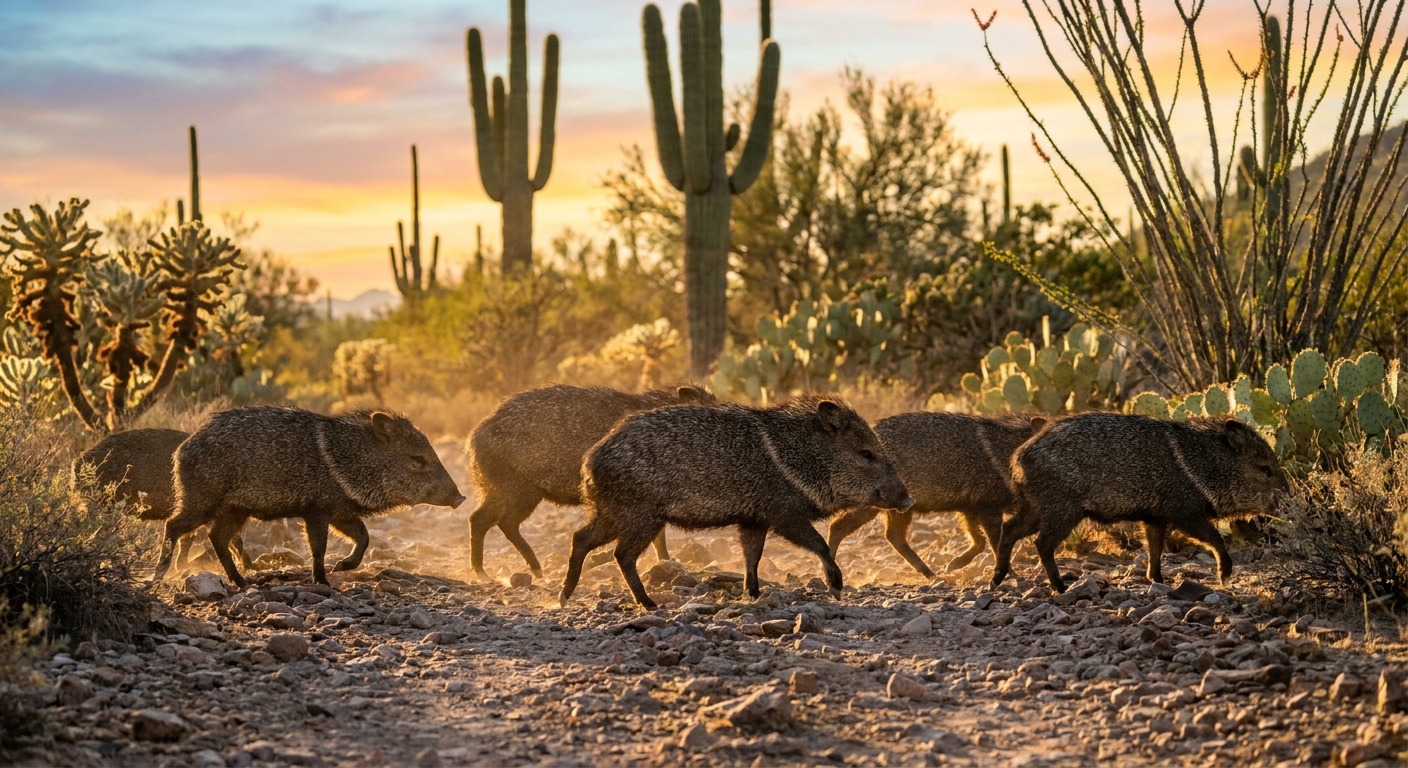
On Sonoran Desert trails, wildlife sightings are part of the magic. The problem is that two of the more commonly misunderstood animals hikers run into in parts of the region, javelina and coatimundi, can be easy to accidentally escalate an encounter with, especially if you hike with a dog. Most conflicts are not about “aggressive animals.” They are about surprise distance, food, habituation, and the chaotic energy a curious pup can bring to a tense moment.
This guide helps you (1) correctly identify what you are seeing, (2) understand the dog-related patterns that drive incidents, and (3) use calm, effective retreat behavior on the trail or around camp. I also break down what “good etiquette” looks like on remote desert routes versus busy metro-edge trail systems where animals and humans overlap daily.

Meet the animals: quick ID in the field
Javelina (collared peccary) vs feral pig
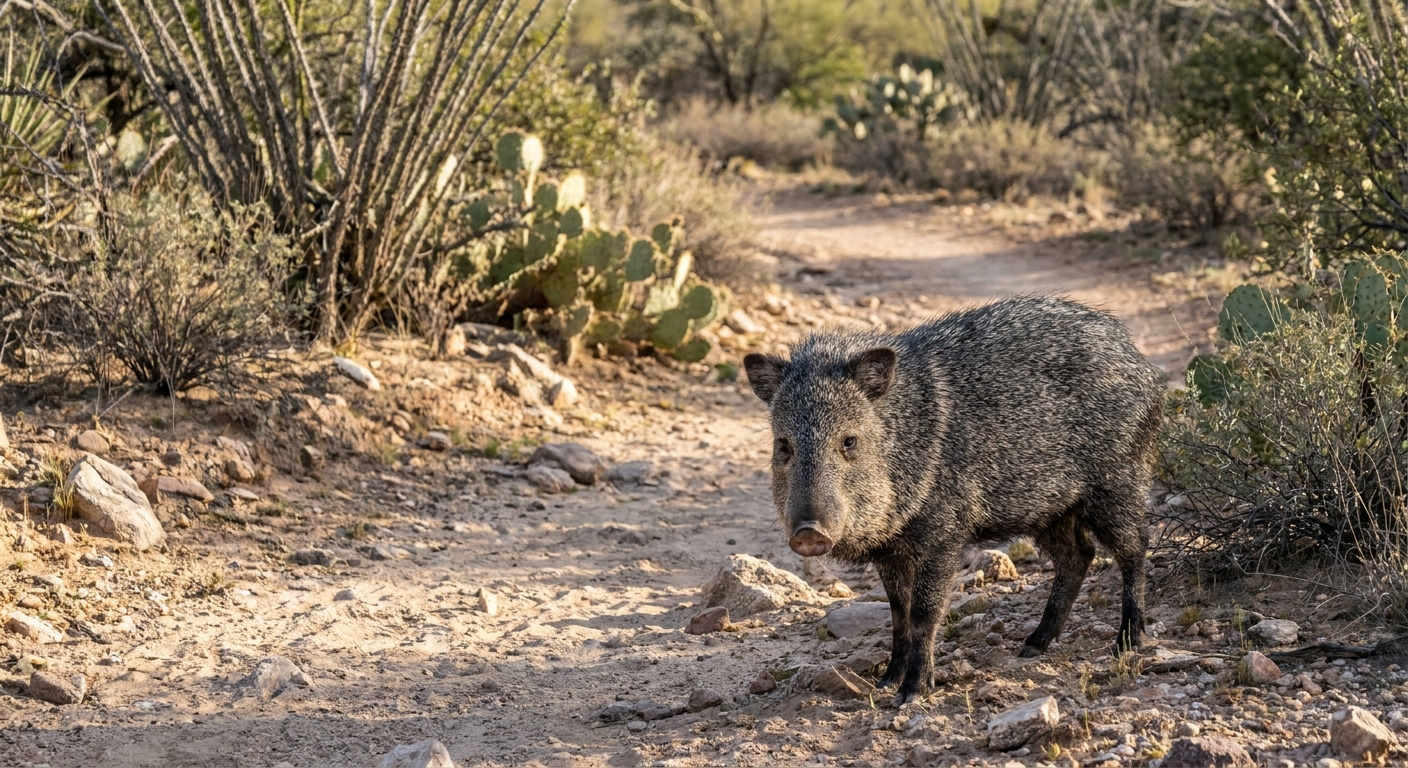
First, the identity crisis: javelina are not feral pigs. They look pig-like, but they are peccaries, a different family with different behavior and anatomy. That distinction matters because people often apply “boar logic” to javelina and make bad decisions.
- Size and shape: Javelina are stocky, usually about medium-dog sized, with shorter legs and a blocky head. Feral pigs can be much larger with a longer snout and a more “boar” silhouette.
- Coat: Javelina have a bristly salt-and-pepper coat and often a lighter “collar” around the shoulders (not always obvious at a distance).
- Tail: Javelina have a very short, nearly invisible tail. Feral pigs have a more noticeable tail.
- Group behavior: Javelina often travel in tight family groups (a “squad” vibe). Feral pigs can group too, but javelina groups in the Southwest are a common trail sight.
One detail that explains a lot: javelina have famously poor eyesight. They rely heavily on smell and hearing, which is why surprise, close-distance encounters happen so often in brushy washes and around blind corners.
Why mis-ID matters: People sometimes try to “shoo” javelina like they would a farm pig, or they assume a lone animal is harmless. Javelina can defend themselves fast, and they do not need much reason if a dog is involved.
Coatimundi (coati): the long-nosed climber
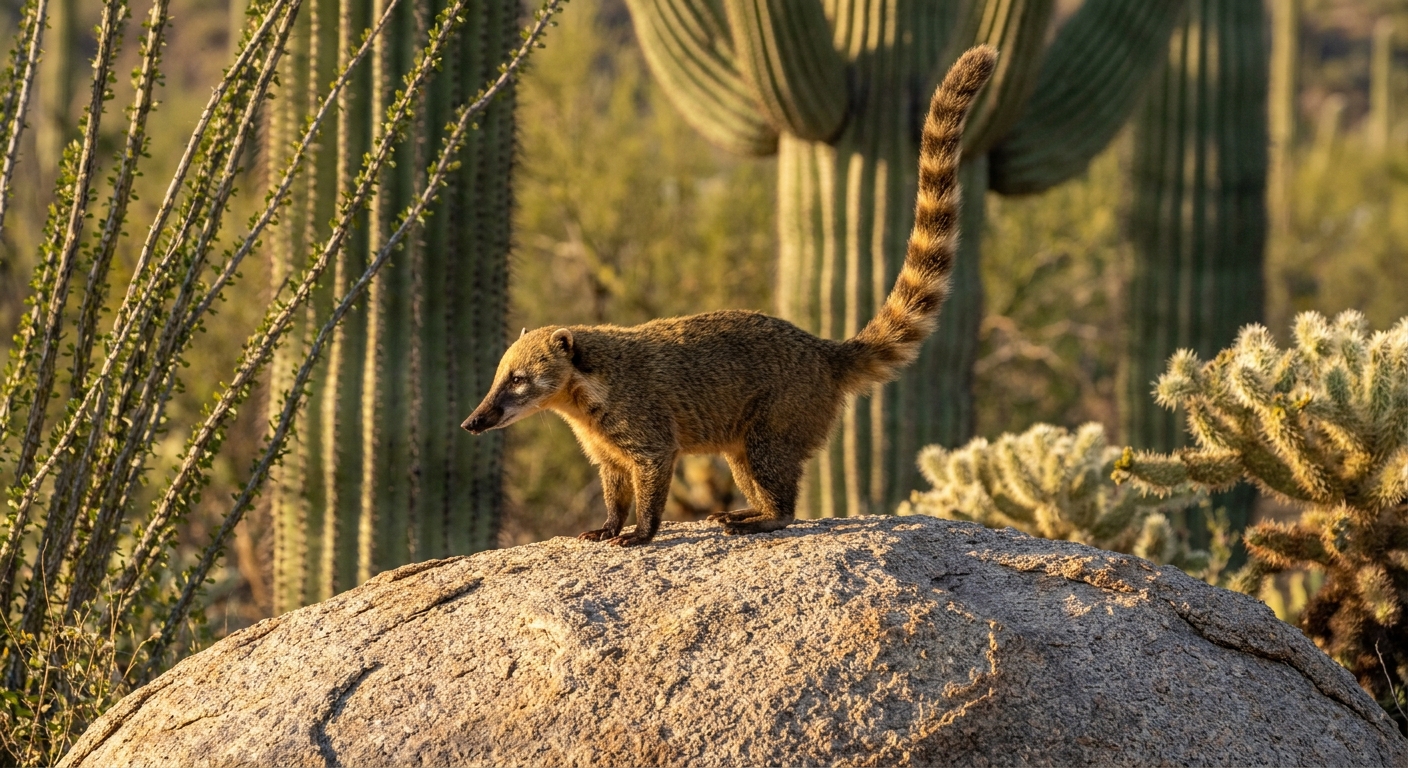
Coatimundi are members of the raccoon family, but they look like a raccoon that decided to specialize in scrambling up rock faces. In Arizona, sightings are most common in southern Arizona and the sky-island ranges, especially in foothills canyons and riparian pockets, and sometimes in neighborhoods that back right up to wild land.
- Face: Long, flexible snout that they use like a living pry bar to root under rocks and leaf litter.
- Tail: Long tail often held upright when moving, sometimes with faint rings.
- Movement: Agile, curious, and quick to climb. If a coati decides you are too close, it can be gone in seconds.
- Group patterns: Females and young can travel in bands; adult males are more solitary. Either way, do not assume “small” equals “safe.”
Why dogs change everything
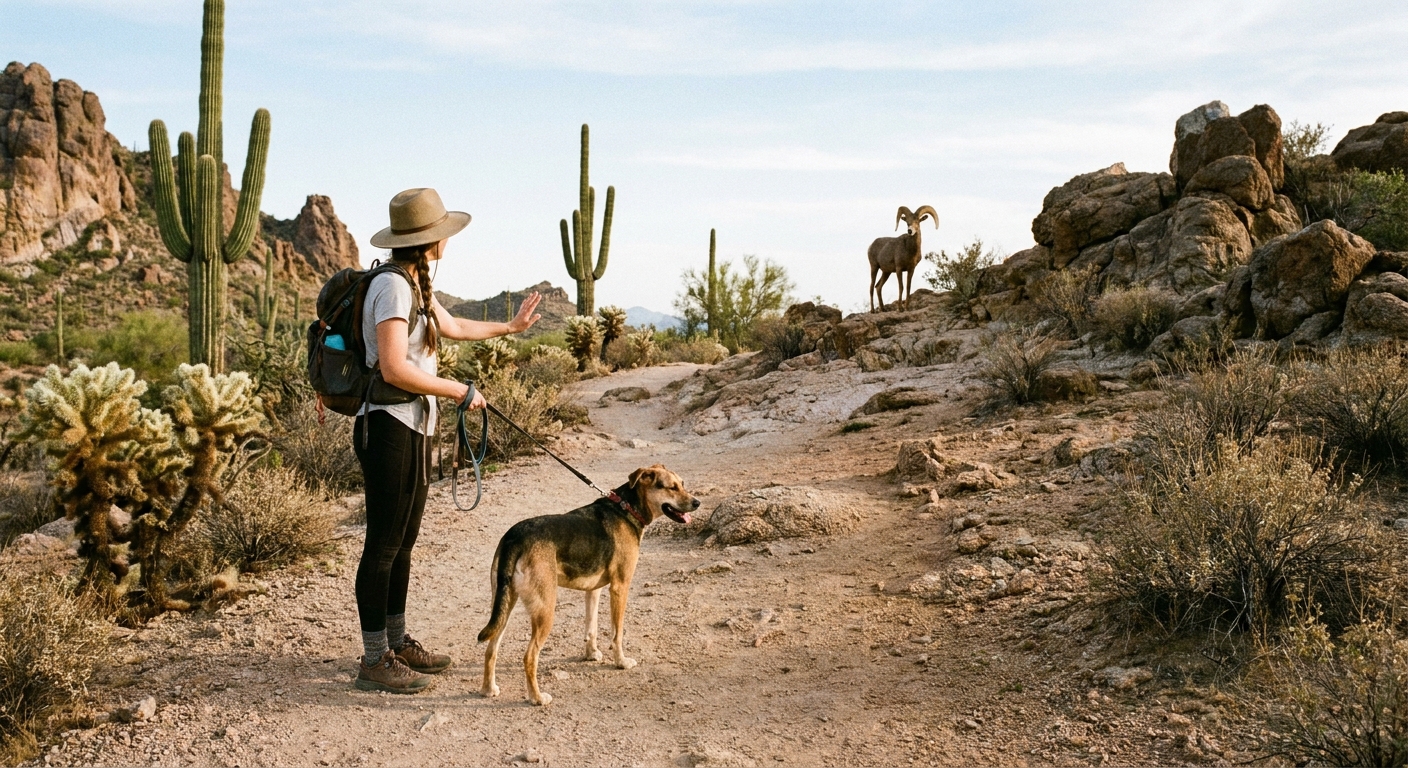
In my experience, the fastest way to turn a neutral wildlife encounter into a messy one is to add a dog on a retractable leash, a dog off leash, or a dog whose body language says “LET ME INTRODUCE MYSELF.” Both javelina and coatis are likely to defend themselves at close range, and dogs read like predators.
Common javelina + dog incident patterns
- Dog rushes the herd: Even a “friendly” dog running up to sniff can trigger a defensive response. Javelina have sharp canines (tusk-like upper teeth) and can injure a dog quickly at close range.
- Startled at close distance: Javelina often feed in brushy washes and under mesquite. A dog leading around a blind corner can surprise them at under 10 to 20 feet, especially since javelina may not see you coming.
- Guarding young or tight groups: When they bunch up, it is often a defensive posture. A dog pulling toward that cluster is a major escalation trigger. Encounters can also feel touchier when young are present.
- Human tries to “break it up”: People stepping between a dog and javelina can get knocked down or bitten in the chaos.
Common coati + dog incident patterns
- Chase instinct: Coatis move fast and look chaseable. A dog that bolts can push a coati into a corner or up a tree where it may scratch or bite if approached.
- Food attraction: Coatis are opportunistic. If a dog has treats, or you are snacking, they may approach more closely than you expect. In areas where people feed wildlife, coatis can be noticeably bolder.
- Leash tangle near rocks: On narrow canyon trails, a dog pulling toward a coati can lead to falls or the dog slipping out of a harness.
Trail rule that saves situations: if you see either animal, shorten the leash before your dog notices. You want calm curiosity, not a lunge.
What to do on the trail: calm, effective retreat
When people ask, “Should I make noise?” my answer is: make space first. Sudden shouting or running can spike tension. Your goal is to look boring, predictable, and not worth engaging.
If you see javelina
- Stop and assess distance: Rule of thumb: if you are within about 50 feet and they have noticed you, treat it as close. More space is better, so increase distance whenever you can.
- Leash short, dog behind you: Move your dog to the side away from the animals. If you can, step off-trail to create more space without cornering them.
- Back away slowly: Do not run. Do not stomp toward them to “push them off.” Give them a clear way to leave.
- Detour if needed: If a herd is on the trail and not moving, take a wide arc back the way you came. On popular routes, this is normal and worth the extra minutes.
- If one approaches: Hold your ground, keep the dog close, and use a firm voice while increasing distance. Most issues resolve when you stop advancing and stop letting your dog pull forward.
If you see a coatimundi
- Give it space and a way out: Coatis often want to move past you or climb away. Do not block narrow passages.
- Secure food immediately: Put snacks away. Do not toss food to “distract” it.
- Break the stare: Prolonged hard staring can read as a challenge. A simple “let’s go,” turning your body slightly sideways, and continuing on can help de-escalate.
- Do not try to photograph up close: Zoom exists for a reason, and a coati that feels trapped can bite or scratch.
Do not do this
- Do not let kids or dogs run toward wildlife “to see it better.”
- Do not throw rocks or try to haze at close range.
- Do not feed, bait, or “test” how close you can get.
- Do not use a retractable leash in areas with known wildlife traffic.
Context note: Dawn, dusk, and shaded canyon sections increase surprise encounters for everyone. If you know you will be hiking low-visibility stretches, slow down and keep your dog closer than usual.
If animals are near camp: keep it boring and locked down
Most “camp encounters” happen because animals learned that camps equal calories. Even in arid landscapes, the scent of an orange peel, dog kibble, or dishwater is basically a dinner bell. Your best defense is to eliminate rewards.
Camp behavior that prevents repeat visits
- Store all food and scented items: Use hard-sided storage where required, and at minimum keep food sealed and inside a vehicle or secure container. Do not leave trash or dog food out.
- Control dishwater: Strain bits, pack them out with trash, and dispose of wastewater according to local rules. When allowed, disperse small amounts widely at least 200 feet from camp and water sources (after straining), rather than dumping it in one spot.
- Feed dogs inside or on a strict schedule: Pick up bowls immediately. Kibble left out is an invitation.
- Keep dogs close at night: A dog investigating brush after dark is how surprise encounters happen. Use a short leash or keep them in the tent or vehicle.
If javelina show up in camp
Do not try to “herd” them out. Calmly gather your dog, make yourself big without charging, and move to a safe spot like a vehicle or behind a solid barrier. Give them time to leave. If they linger, it is usually because there is something to eat or drink nearby, so do a slow scan for what you missed.
If a coati is investigating your camp
Remove food rewards and increase distance. Coatis can be bold if they are used to people, especially near heavily trafficked areas. Never corner them or try to chase them under a vehicle. Let them have an escape path, and focus on eliminating attractants.
Sonoran Desert etiquette vs metro-edge trails
The same animals behave differently depending on how often they bump into people. That is why a remote desert trail encounter can feel “wild and fleeting,” while a foothills greenbelt sighting can feel oddly casual.
On classic Sonoran Desert trails
- Expect surprise encounters: Sight lines can be short in washes, around boulders, and in dense desert shrubs.
- Yield early: Step aside, let animals pass, and avoid funneling them into tight spots.
- Pack out smells: In dry country, animals work hard for calories. Do not make your snack trash their lucky day.
- Keep dogs leashed: Remote does not mean rules-free. It means help is farther away.
On metro-edge trails
- Assume animals have learned routines: They may use the same underpass, wash, or trail corridor daily.
- Leash discipline matters more: Busy trails amplify risk because there are more dogs, more distractions, and more opportunities for a chain reaction.
- Do not normalize feeding: A coati that gets snacks from one person starts approaching everyone. That is how bites happen and how animals get removed.
- Be the calm example: If you back up and give space, others often follow your lead.
Quick rules reminder: Leash laws vary by park and trail system. Follow posted regulations, and when in doubt, leash up.
Sustainable travel is not just about leaving no trace. It is also about not teaching wildlife that humans and dogs are part of the food web.
Quick safety checklist
- Correct the ID: Javelina are peccaries, not feral pigs. Coatis are raccoon relatives with a long snout and climbing skills.
- Leash early, not late: Shorten the leash before your dog locks in.
- Give them room to leave: Do not block narrow trails or washes.
- Back away, do not rush: Calm retreat beats dramatic shooing.
- Lock down food at camp: Dog bowls, trash, and dishwater are the usual culprits.
- Choose zoom over closeness: If you want the photo, take it from a respectful distance.
If you hike the desert often, consider carrying a small light for dusk walks, a sturdy non-retractable leash, and a harness that your dog cannot back out of. Those three choices prevent a surprising number of “it happened so fast” stories.
When to turn around or seek help
Most encounters end peacefully with distance. Still, it is smart to call it and leave when conditions stack up.
- Turn around if javelina are blocking a narrow stretch and your dog is highly reactive, or if you see repeated bluff approaches.
- Leave the area if a coati is persistently approaching for food, which suggests habituation.
- If your dog is injured: Create distance, leash and calm your dog, and check for punctures or tearing. Even small-looking wounds can be serious. Get veterinary care as soon as possible.
- Seek medical care for any bite or significant scratch. Animal mouths and claws carry bacteria, and puncture wounds can look small but become serious. In southern Arizona, coatis are also a known rabies vector, so take any bite or saliva-to-open-wound exposure seriously and follow medical guidance.
- Report aggressive or habituated behavior to the local land manager (park department, forest service, or city agency), especially on metro-edge trails where patterns can be addressed.
The Sonoran Desert rewards the travelers who move slowly, notice details, and respect personal space. Treat javelina and coatimundi like the neighbors they are, and you will both have a better day on the trail.