Lee’s Ferry and Glen Canyon Dam in a Half-Day

Maya Lin
Maya Lin is a travel journalist and outdoor enthusiast who believes the best trips combine rugged adventures with urban comforts. After spending six years backpacking across four continents, she founded Trail & Town Guide to help fellow travelers navigate both hidden mountain passes and bustling city neighborhoods with confidence.
If you are staying in Page, there is a sweet little half-day loop that feels like you have time-traveled through the Colorado Plateau: you start above the river at Glen Canyon Dam, then drop down to Lee’s Ferry where expeditions push off into the Grand Canyon, and finish with one of the best easy photo stops in northern Arizona at Navajo Bridge.
This page is meant to complement, not replace, a broader Page trip planner. Consider it your focused, boots-on-the-ground guide to doing Lee’s Ferry + Glen Canyon Dam without overcommitting your day or underestimating the desert.
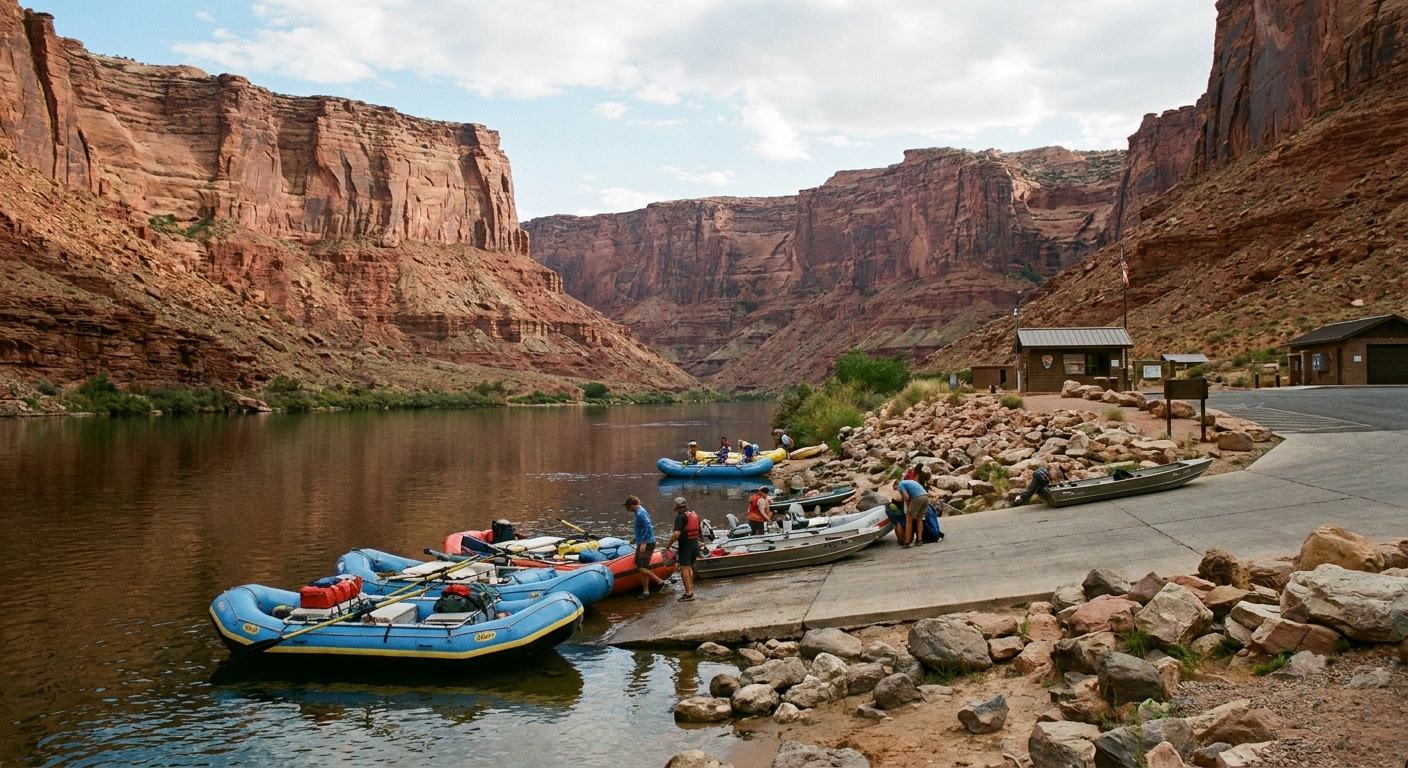
Quick half-day plan (from Page)
From Page, you can comfortably hit all three highlights in about 4 to 5 hours including stops. The key is to keep the hikes short and the transitions smooth.
Half-day order that works
- Glen Canyon Dam overlooks (quick leg-stretcher, big views)
- Lee’s Ferry (river access, historic buildings, launch watching)
- Navajo Bridge (sunset-friendly walk and photos)
One thing that helps with orientation
You will drive right past (and over) Navajo Bridge on US-89A to reach the Lee’s Ferry turnoff. Doing the bridge last makes sense for light and pacing, but it is helpful to know you will see it twice. If you spot condors or perfect light on the first pass, you can always flip the order.
Realistic timing (Page start)
- Drive Page to Glen Canyon Dam overlooks: about 10 to 15 minutes
- Overlook walks and photos: 20 to 45 minutes
- Drive to Lee’s Ferry: about 45 to 60 minutes (scenic, but do not rush)
- Lee’s Ferry exploring: 60 to 120 minutes
- Drive to Navajo Bridge: about 15 to 20 minutes
- Bridge walk and photos: 30 to 60 minutes
- Drive back to Page from Navajo Bridge: about 45 to 60 minutes
If you want the calmer version, go early. If you want golden light at the bridge, go later and keep Lee’s Ferry tight.
Glen Canyon Dam overlooks
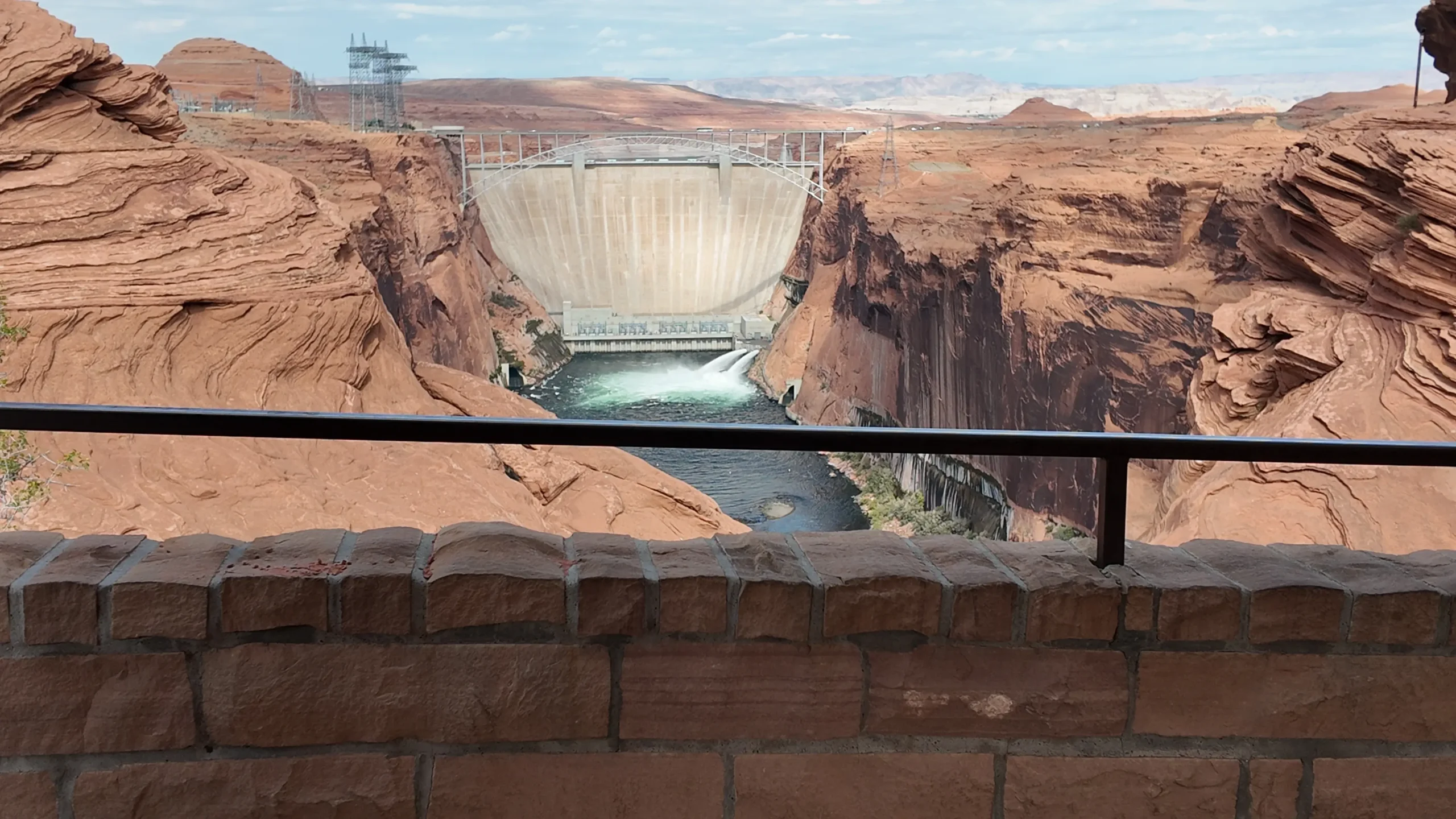
Glen Canyon Dam is one of those places that changes how you understand the region. You are standing at the seam where engineered infrastructure meets wild canyon geography. Even if you are not “a dam person,” the overlooks are worth it for a quick, windy reality check on just how deep Glen Canyon is.
Where to go (simple, reliable stops)
- Carl Hayden Visitor Center: Easy access, informative exhibits, and solid views that help you put the dam and Lake Powell into context.
- Dam Overlook Trail (Scenic View Road): A short walk to a clean, high perspective. Expect sun, wind, and zero shade.
What to do
- Park and walk to the overlooks for views of the dam, the river corridor, and the surrounding sandstone.
- Keep the visit short if it is hot or windy. There is little shade and the sun can feel extra sharp on exposed concrete and rock.
- Save your longer time block for Lee’s Ferry, where the river level is accessible and the scenery is more immersive at ground level.
Lee’s Ferry
Lee’s Ferry is the most famous “put-in” on the Colorado River for Grand Canyon trips, but it is also a surprisingly chill place to simply wander. You get cottonwoods, rippling water, and a sense of anticipation from people packing dry bags and checking straps.
Entrance fees and passes
Lee’s Ferry is part of Glen Canyon National Recreation Area. You should expect an entrance fee at the fee station, unless you have a valid National Parks pass (like an America the Beautiful pass). Fees and rules can change, so confirm current rates on the official NPS site before you go.
Launch etiquette (how to be a good visitor)
- Do not block the ramp. The boat launch is a working zone. Stay to the side and keep walkways clear.
- Ask before photographing close-up. Wide scenic shots are fine, but be respectful with faces, families, and guided groups gearing up.
- Keep kids and pets close. Lines, trailers, and moving vehicles are common around the launch area.
- Lower your voice near briefings. Guides often give safety talks right by the ramp. Give them the space to be heard.
- Pack out everything. Even tiny scraps matter here. Wind and water move litter fast.
Easy things to do at Lee’s Ferry
- Walk along the river for a few minutes in either direction and watch the current and light change.
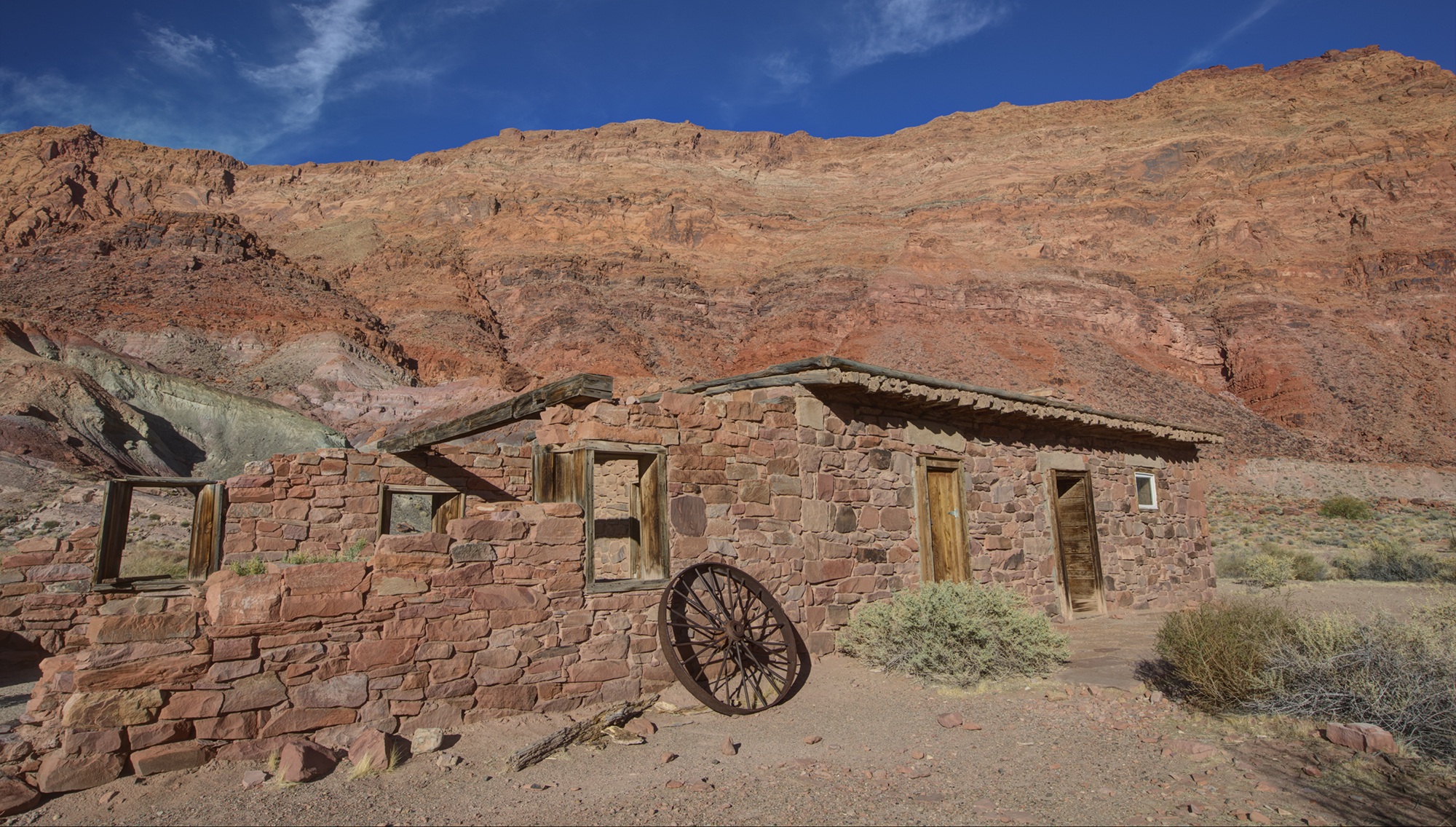
- Look for historic buildings and signage that explain why this crossing mattered long before the modern highway system.
- Relax in the shade if you can find it. This is one of the rare spots on this loop where lingering feels good.
Colorado River access basics
Rules can vary by area and season, and closures can happen due to weather, river conditions, or resource protection. The safest plan is to assume that access is managed and to follow posted signs at every parking area and trailhead.
Practical guidelines
- Use designated paths and beaches. Fragile riverbanks erode easily, and “one shortcut” becomes a permanent scar fast.
- Do not wade casually. The Colorado can have deceptively strong current and cold water, and the riverbed can drop off quickly.
- Leave driftwood and natural features. They are part of the ecosystem and shoreline stability.
- Respect restricted areas. If a sign says no access, it usually has a resource or safety reason behind it.
If you are planning any kind of boating, fishing, or more complex river time, confirm current regulations and permits with the managing agencies before you go. For a half-day visitor, the simplest strategy is to enjoy the viewpoints and easy riverbank walks and keep it low impact.
Navajo Bridge
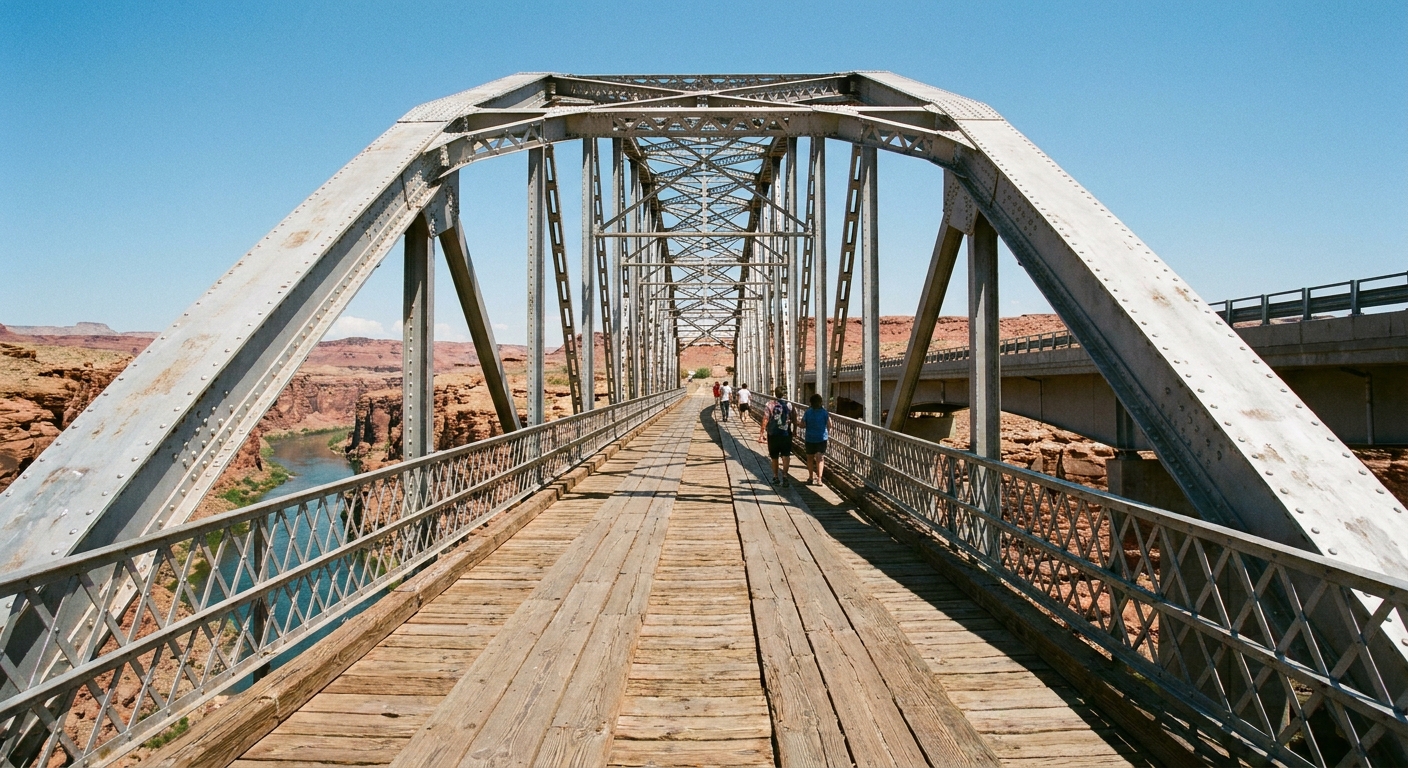
Navajo Bridge is the kind of stop that feels like a bonus and ends up being the moment you remember most. The Colorado River threads through Marble Canyon far below, and the bridge frames it in a clean, dramatic way that is almost too easy to photograph well.
Do not skip the condors
This is also one of the most reliable places to spot California condors, the massive, highly endangered birds that often hang out on the bridge struts and ride the canyon thermals. Look for big silhouettes, numbered wing tags, and a slow, effortless glide. Bring binoculars if you have them.
Photo and walking tips
- Walk the pedestrian path for a few minutes to change your angle. The view shifts quickly.
- Bring a lens cloth. Wind and dust are common, especially in the afternoon.
- Look downriver and upriver. Most people fixate on one direction, but the canyon bends reward the extra steps.
- Scan the steelwork. Condors can be perched on crossbeams or soaring just below eye level in the draft.
Heat and flash-flood cautions
This loop is short on paper, but it is classic desert travel: exposed viewpoints, long stretches with minimal services, and weather that can turn fast.
Heat basics
- Carry more water than you think you need. For a half-day, many travelers are comfortable with at least 2 liters per person, more in summer.
- Wear sun protection. Hat, sunscreen, and light layers help more than sheer toughness.
- Plan midday breaks. If it is peak summer, consider doing overlooks early, then spending your hottest hour in the car with AC between stops.
Flash-flood awareness
- Do not enter narrow drainages during storms. Even distant rain can send water downstream.
- Watch the sky and the forecast. Monsoon season can bring sudden lightning and heavy bursts.
- If water is moving across a road, do not cross. Turn around. The desert is not forgiving about this.
From Flagstaff
From Flagstaff, you can still do Lee’s Ferry and Glen Canyon Dam in a day, but it stops being a relaxed half-day and starts being a road trip. If you are basing in Flagstaff, the best mindset is “full day with strategic stops” rather than “quick side quest.”
What changes when you start in Flagstaff
- More drive time, less linger time. You will likely need to pick either extra river time at Lee’s Ferry or extra overlooks in Page, not both.
- Fewer daylight buffers. In winter especially, short days make sunset timing feel rushed.
- It pairs well with other corridor stops. If you like scenic drives, you can combine this with viewpoints along the way, but keep expectations realistic.
Flagstaff pacing suggestion
- Start early to buy yourself margin for photos and short walks.
- Pick 2 main stops + 1 bonus. For example: Lee’s Ferry and Navajo Bridge as your musts, plus a quick dam overlook if time and light are good.
- Eat and fuel up before the long stretch. Services are not constant once you get out into the corridor.
What to pack
I am a carry-on only person, but desert day trips still deserve a tiny kit. You will enjoy the stops more when you are not managing minor discomforts.
- Water and a salty snack
- Sun hat and sunscreen
- Comfortable walking shoes with grip
- Light layer for wind at overlooks
- Camera or phone, plus a lens cloth
- Offline map or downloaded route (service can be inconsistent)
- National Parks pass or a way to pay the Glen Canyon NRA entrance fee
Make it a Town Wander day
If you want that “rugged adventure meets urban comfort” balance, do the overlooks and river time first, then come back to Page for a late lunch, a cold drink, and a coffee shop reset. The contrast is the whole point: canyon wind in the morning, a cozy seat and a real espresso in the afternoon.
Keep it simple, keep it respectful at the launch, and let the Colorado River do what it has always done here: make everything feel bigger.