Little Wild Horse Canyon: Width, Turnarounds, and Goblin Valley Pairing

Maya Lin
Maya Lin is a travel journalist and outdoor enthusiast who believes the best trips combine rugged adventures with urban comforts. After spending six years backpacking across four continents, she founded Trail & Town Guide to help fellow travelers navigate both hidden mountain passes and bustling city neighborhoods with confidence.
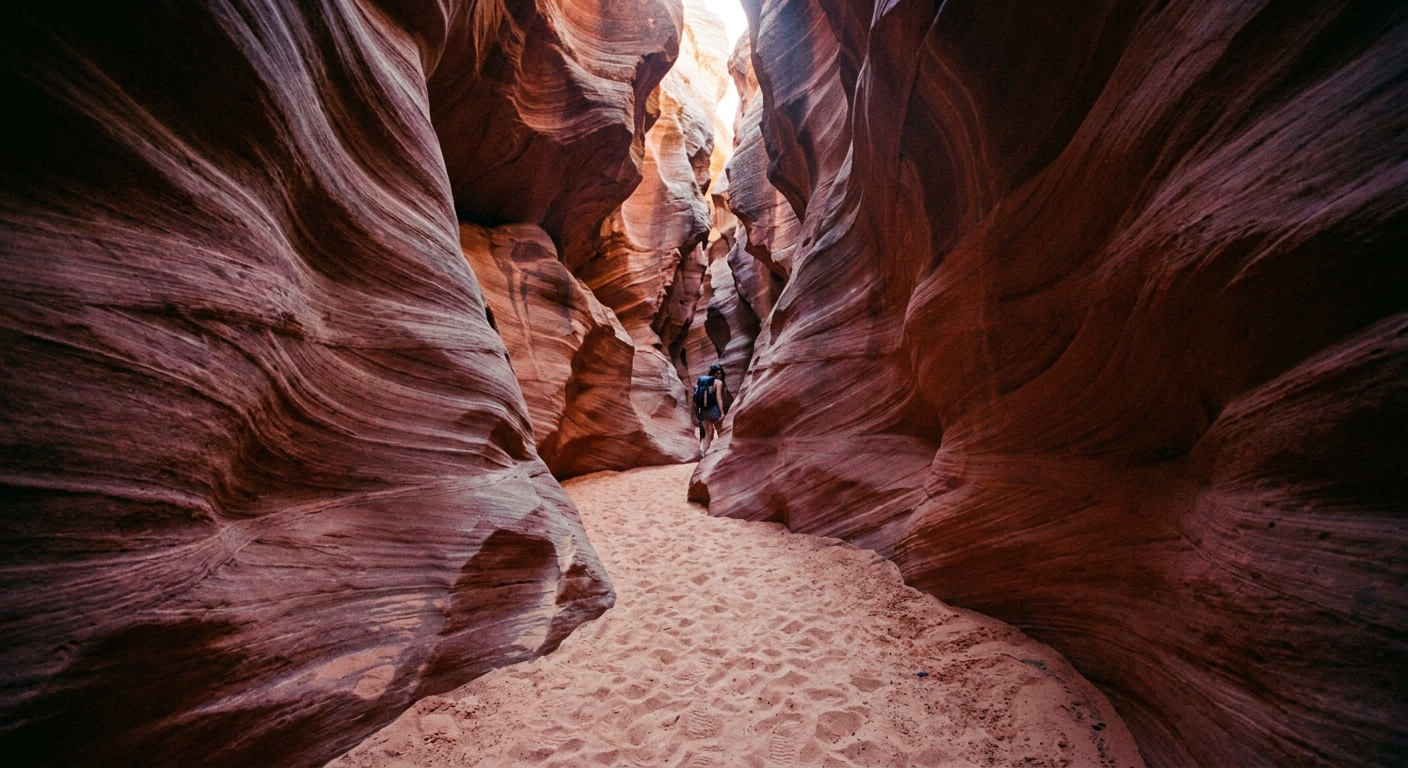
Little Wild Horse Canyon is the kind of Utah slot canyon that makes first-timers feel like they discovered something secret, even though it is a classic. You get smooth, sculpted walls, twisty corridors, and that quiet, cool air that smells faintly like wet stone, all within minutes of Goblin Valley State Park. The catch is that it is still a slot canyon, which means narrow sections and flash-flood risk deserve real respect. One more honest catch: depending on recent weather, it can also mean standing water and surprise wading in cold, muddy pools.
This guide is built for your first visit: what the road is like, how tight the slot gets, comfort checks for anyone uneasy with tight spaces, family-friendly turnaround points, what to expect if the canyon is holding water, and a realistic half-day that pairs Little Wild Horse with Goblin Valley’s main valley.
Quick facts to set expectations
- Trail type: Out and back for most first-timers, or a longer loop if you continue through Bell Canyon
- Best for: People who want a true slot canyon without technical canyoneering
- Typical time: 1.5 to 3 hours out and back to your comfort point, plus driving and breaks
- Terrain: Sandy wash, occasional rock steps and minor scrambling, and sometimes standing water in the narrows after storms
- Shade: Lots once you enter the slot, but the approach is exposed
- Main risks: Flash flooding, cold water and slick mud in pools, getting stuck if storms build, turning around too late for your group’s comfort
Road access and parking near Goblin Valley
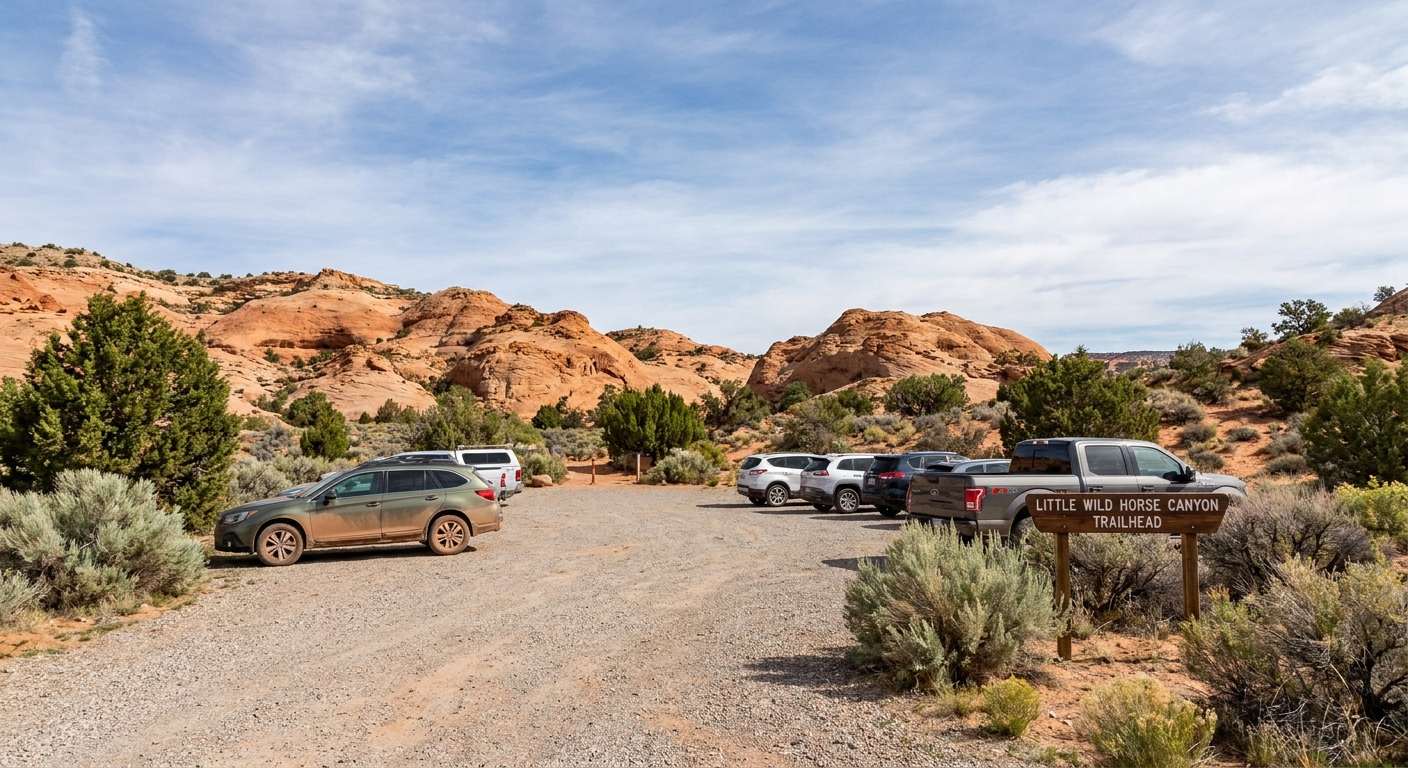
Little Wild Horse Canyon sits in the San Rafael Swell area, close to Goblin Valley State Park. The usual approach is via the Goblin Valley road network, then onto the dirt access road that leads to the Little Wild Horse and Bell Canyon trailhead area.
What the drive is like
- Paved to dirt: You will be on pavement near Goblin Valley, then transition to a graded dirt road.
- Usually passable: In dry conditions, a standard car often makes it fine, but rain can change everything fast. Clay-based desert roads can turn slick, rutted, or impassable.
- After storms: If the road is wet, you are better off waiting it out or changing plans rather than gambling with a stuck vehicle far from cell service.
Parking: Park at the signed trailhead area for Little Wild Horse and Bell Canyon. Expect vault toilets at or near the trailhead in many seasons, but do not count on water.
Fees: The Little Wild Horse and Bell Canyon trailhead is on BLM land and is typically free to access. If you pair it with Goblin Valley State Park, the park charges an entrance fee to enter the main valley area.
My habit here: Before leaving pavement, I do a quick “exit plan” check: if the sky looks unsettled, I ask myself if I would be comfortable driving back out if the dirt turns greasy. If the answer is no, I do Goblin Valley first and save the slot for a clearer day.
How narrow is Little Wild Horse Canyon, really?
People hear “slot canyon” and picture squeezing sideways for miles. Little Wild Horse is usually not that extreme, but it does have pinch points where shoulders feel close to the walls. And when the canyon is holding water, those tighter turns are often where the pools linger, which can make the whole section feel more committing.
Width reality check
- Most of the canyon: You can walk normally with space to swing your arms a bit.
- Narrow sections: There are short stretches where the walls come in and you may need to turn your shoulders or step carefully around bulges.
- Not a technical squeeze: For most average-sized adults, it is snug but manageable. If tight spaces trigger anxiety, those narrow turns can feel longer than they are.
Water reality check
- Standing pools happen: After rain, Little Wild Horse can hold cold, muddy water for days or even weeks in the shaded narrows.
- Depth varies: Sometimes it is an easy step through. Sometimes it is ankle to thigh deep depending on conditions.
- Alternatives are not guaranteed: You might be able to rock-hop or carefully stem around a pool, but do not count on staying dry.
Comfort checks before you commit
- Backpack test: If your pack keeps scraping early on, consider turning around sooner. A slim daypack rides better than a bulky school backpack.
- Breathing test: If you notice shallow breathing or panic creeping in, that is your cue to call the turnaround while it is easy to do so.
- Water willingness test: If anyone in your group is not willing to get wet, cold, or muddy, set a conservative turnaround before the tightest narrows. Pools can be the difference between “fun slot canyon” and “nope.”
- Kid check: Kids often love the “canyon fort” feeling, but they can also spook quickly when the light dims or when they realize they might have to wade. Watch their mood at the first shady narrows.
Small tip that helps a lot: Clip water bottles and dangling gear inside your pack. The canyon walls will find anything that swings.
Turnaround points for families and first-timers
You do not need to hike the entire canyon to have an excellent day. In fact, the best first-time strategy is to pick a turnaround point based on comfort, weather, time, and, on some days, water conditions, not ego.
Option A: First narrows
After the open wash approach, you will enter the first stretch where the walls rise and start to twist. This is a perfect low-stakes goal for families with younger kids, anyone unsure about tight spaces, or groups arriving later in the day.
- Why it works: You still get the slot canyon magic and photos, but you stay close to the exit.
- Best for: Kids under about 7 to 9, nervous first-timers, or hot afternoons when you want a shorter shaded walk.
- Bonus: If the canyon is holding water deeper in, this turnaround often lets you enjoy the vibe without committing to wading.
Option B: Mid-slot
If everyone is comfortable in the first narrows, keep going until you hit a noticeably tighter, more winding section. Many groups naturally pause here, snack, take photos, and decide whether to continue.
- Why it works: This is where the canyon starts feeling like the classic slot you came for.
- Best for: Families with older kids, casual hikers, and anyone pairing with Goblin Valley later the same day.
- Note: This is also where you are more likely to encounter lingering pools after storms.
Option C: Full slot with a hard turn time
If your plan is to hike deeper, set a strict time to turn around no matter what. Slot canyons are not where you want to be lingering as clouds build, and standing water can slow you down more than expected.
- Why it works: You keep the day fun and avoid that anxious “are we too far in?” feeling.
- Best for: Groups with solid hiking stamina, an early start, and a clear-weather day.
If one person in your group is uncomfortable, the kind move is to turn around early. Little Wild Horse is impressive even in the first sections, and nobody remembers the exact mileage. They remember how safe and supported they felt.
Flash-flood conservatism: when to skip the slot
The number one safety rule for Little Wild Horse is simple: do not enter if storms are possible, even if it is sunny at the trailhead. Flash floods can be triggered by rain miles away, and narrow canyons funnel water with shocking speed.
Be conservative if any of these are true
- Rain is in the forecast for the area, especially thunderstorms.
- You see building clouds that look tall, dark, or fast-moving.
- The wash shows recent flow like damp sand, fresh debris lines, or muddy pools.
- You cannot confidently name your exit plan if water starts moving.
What “playing it safe” looks like here
- Check the forecast twice: Once the night before, and again right before you drive out. Pay attention to thunderstorm probabilities, not just precipitation totals.
- Start early: Desert storms often build in the afternoon.
- Turn around sooner than you think: If you are deep in the slot and you hear thunder, treat that as a decision point to head out.
If you need a backup plan: Goblin Valley’s main valley is generally a safer bet during unsettled weather since you are not confined in a drainage, but you should still avoid low washes if heavy rain is actively falling.
What to bring for a half-day slot canyon
This is not a technical canyon, but the right basics make it smoother, especially with kids. Plan for the possibility of water in the narrows.
- Water: More than you think, even when it is cool in the slot. The approach and parking area are exposed.
- Snacks: Quick calories for decision-making and morale.
- Footwear: Grippy shoes you do not mind getting wet and sandy. In dry periods, grippy sneakers or light hikers are great. If pools are likely, consider shoes that handle wading and mud well, and bring a spare pair of socks for the car.
- Sun protection: Hat, sunscreen, and sunglasses for the approach. The slot itself is shady but the desert is not.
- Layers: The canyon can feel cooler than the open valley, especially in shoulder seasons. Cold water makes this more noticeable.
- Small first aid: Bandages for scraped hands or knees.
- Kid extras: Gloves can help little hands on rough sandstone if they like to touch the walls. A small towel in the car is also a sanity saver if someone ends up soaked.
Carry-on only mindset, desert edition: Keep your pack slim. Tight spots are more pleasant when you are not wedged by your own gear.
A realistic half-day plan: Little Wild Horse + Goblin Valley
This pairing is my favorite way to do the area without overplanning. You get a true slot canyon experience, then swap to open, playful sandstone terrain in Goblin Valley where everyone can roam and decompress.
Option 1: Morning slot, afternoon goblins
- Stop 1: Little Wild Horse Canyon (about 2 to 3 hours including photos and a comfort-based turnaround)
- Drive: Short hop back toward Goblin Valley State Park
- Stop 2: Goblin Valley main valley (about 1.5 to 2.5 hours wandering)
Option 2: Goblins first, slot later for shade
- Stop 1: Goblin Valley main valley (early exploration, great for families who want space first)
- Midday: Lunch, then drive to the Little Wild Horse trailhead
- Stop 2: Little Wild Horse Canyon (shorter out and back into the first narrows for cooler temps)
Keep Goblin Valley simple
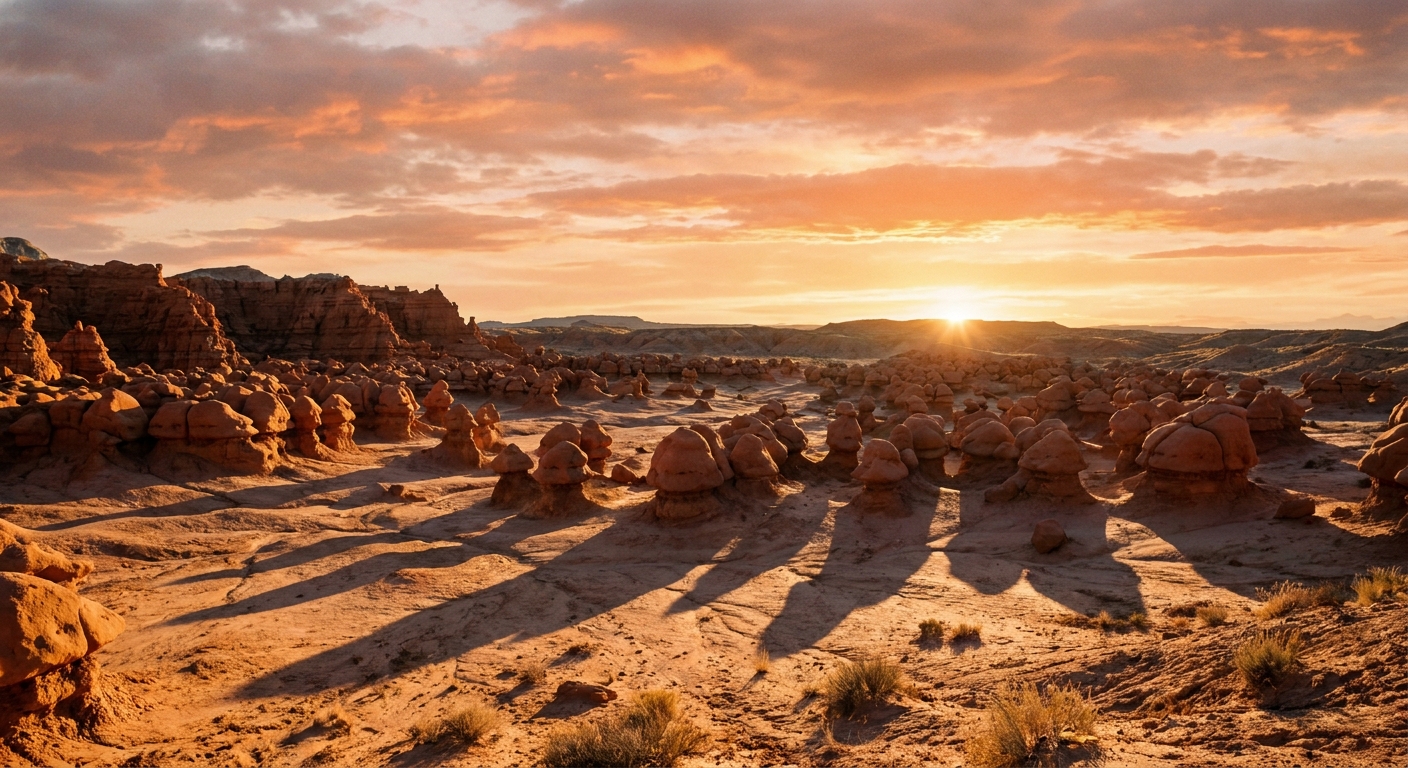
The main valley is the iconic area with the highest concentration of hoodoos and easy wandering. For a first-timer pairing day, keep it simple:
- Pick one area of the main valley and explore slowly instead of trying to “cover” everything.
- Let kids lead within sightlines. The terrain is basically a natural playground of sandstone bumps and sandy paths.
- Golden hour is magic if you can time it. The goblins glow and shadows add texture.
Common first-timer questions
Is Little Wild Horse okay for kids?
For many families, yes, especially as an out-and-back with a conservative turnaround. The main considerations are flash-flood safety, your child’s comfort with dim narrow spaces, and keeping hands and feet safe on small scrambles. Also plan for the possibility of cold, muddy pools after recent rain.
Can I bring my dog?
Often, yes. Little Wild Horse is on BLM land and is commonly considered dog-friendly if your dog is on leash and comfortable with narrow spaces, small scrambles, and potential wading. Bring extra water, be ready to lift your dog over obstacles if needed, and do not take a pet into the slot if storms are possible.
Do I need to do the Bell Canyon loop?
No. The loop can be great for experienced hikers on a stable-weather day, but it is not required for an excellent first visit. Many people prefer Little Wild Horse as a simple in-and-out so the narrowest parts never feel like a one-way commitment.
Will I need to climb anything sketchy?
Most obstacles are minor, more like stepping up and down on rock. If anyone in your group dislikes scrambling, turn around before the canyon tightens and obstacles become more frequent. Standing water can make some steps slick, so take your time.
Is it crowded?
It can be, especially on weekends and peak travel seasons. Starting early makes the biggest difference. If you crave quiet, aim for weekdays or shoulder seasons.
Leave-no-trace and canyon etiquette
- Stay on durable surfaces: Walk in the wash and on rock where possible to protect fragile soil crust.
- Pack out everything: Including food scraps. Desert critters do not need our snacks.
- Let faster groups pass: Step to a wider spot and keep traffic flowing in the narrows.
- Keep sound low: Slots amplify voices. The quiet is part of the experience.
The simplest way to have a great day here
Do Little Wild Horse early, turn around at the first point that makes anyone hesitate, then reward the whole crew with a slow wander through Goblin Valley’s main valley. You will get both sides of my favorite Utah combo: a rugged, sensory slot canyon adventure, followed by open-air exploring that feels almost like strolling an outdoor sculpture garden.
If you want one final rule to take with you: when in doubt about weather, choose the goblins and save the slot for a blue-sky day. And if recent rain has left cold pools in the narrows, call an audible, keep your turnaround earlier, or treat it as a “wet shoes” adventure on purpose instead of an unpleasant surprise.