Los Alamos and Manhattan Project National Historical Park: Half-Day Plan

Maya Lin
Maya Lin is a travel journalist and outdoor enthusiast who believes the best trips combine rugged adventures with urban comforts. After spending six years backpacking across four continents, she founded Trail & Town Guide to help fellow travelers navigate both hidden mountain passes and bustling city neighborhoods with confidence.
Los Alamos is one of those places where the scenery tries to steal the show. Ponderosa pines, volcanic mesas, sudden canyon edges, and then, almost quietly, the weight of history. If you have half a day from Santa Fe or you are staying in White Rock, you can see the most meaningful Manhattan Project sites without sprinting, and still leave room for a Bandelier afternoon that feels like a completely different trip.
This plan focuses on the Manhattan Project National Historical Park locations you can realistically hit in a few hours, plus the practical stuff that tends to trip visitors up: where to begin, what is inside versus outside, what sometimes requires a ranger or special access, and what you should know about weather at roughly 7,300 to 7,400 feet.
Quick reality check: what the park is
Manhattan Project National Historical Park (NHP) is a unit of the National Park Service spread across three main areas: Los Alamos, New Mexico; Oak Ridge, Tennessee; and Hanford, Washington. In Los Alamos, the “park” is not a single gated area you enter. It is a collection of historic buildings, neighborhoods, and interpretive stops woven into a modern town and an active national laboratory community.
That is why the best strategy for a half-day is: start with context (exhibits and maps), then do a tight loop of the most accessible historic sites, and finish with one viewpoint that reminds you you are in Northern New Mexico, not just in a history book.
Half-day plan (3.5 to 5 hours)
Option A: From Santa Fe (best for a morning)
- Drive Santa Fe to Los Alamos: about an hour in typical conditions, but it can run longer depending on where you start in Santa Fe, traffic, roadwork, and weather.
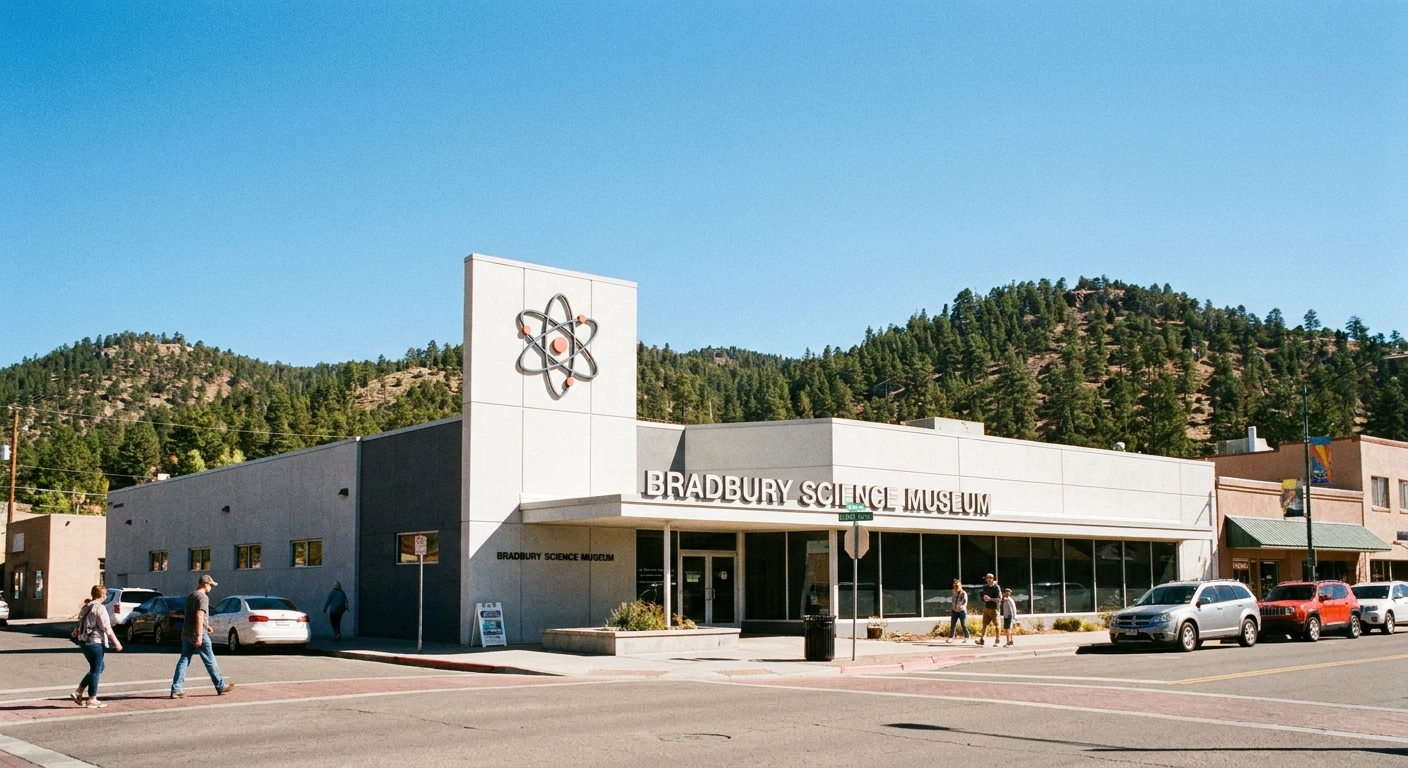
- Stop 1: Bradbury Science Museum (45 to 75 minutes)
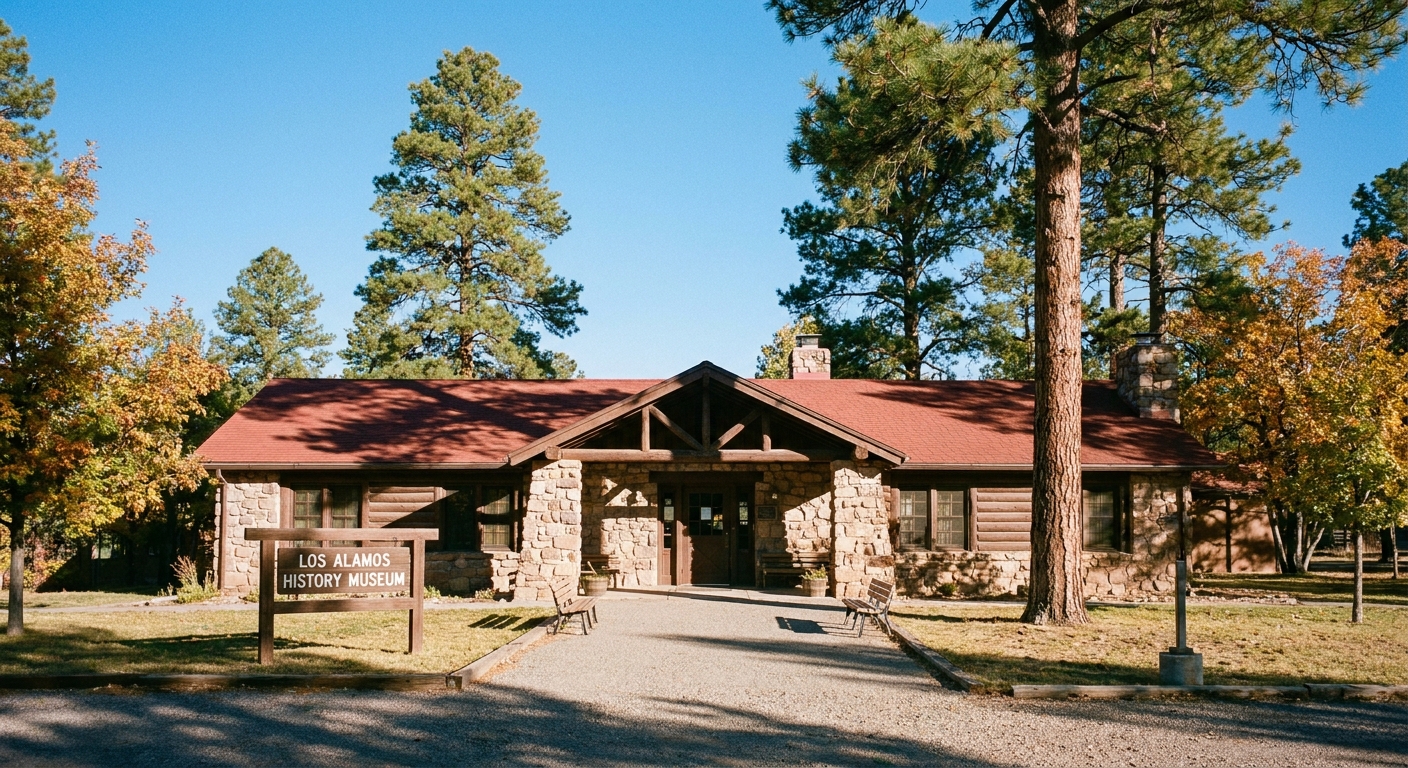
- Stop 2: Los Alamos History Museum and the historic district nearby (30 to 60 minutes)
- Stop 3: Manhattan Project NHP interpretive sites you can see without special access (45 to 75 minutes)
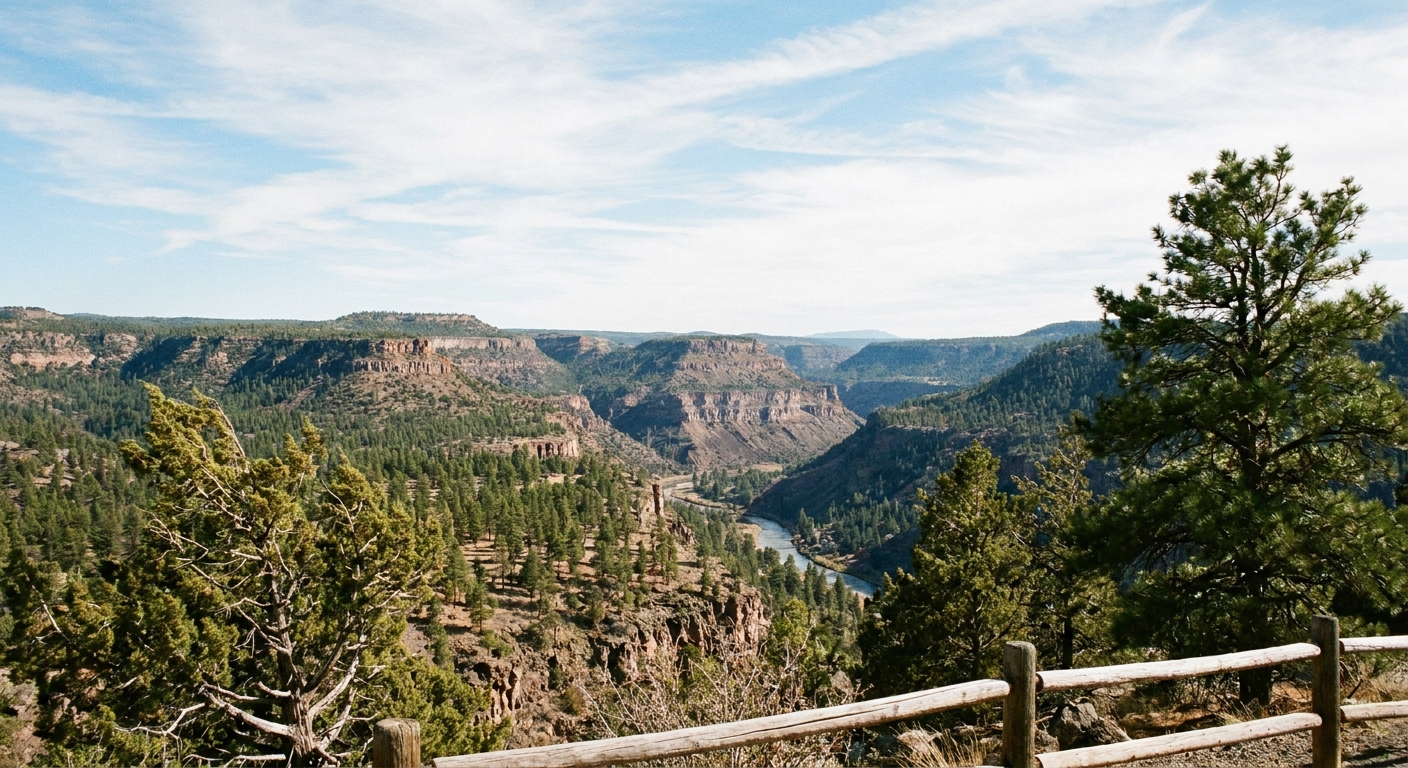
- Stop 4: A quick canyon or mesa viewpoint (15 to 25 minutes)
- Optional coffee or early lunch: 20 to 45 minutes
Option B: From White Rock (best for an easy afternoon)
- Drive White Rock to Los Alamos: about 10 to 15 minutes.
- Follow the same stop order below, then finish with a quick White Rock overlook on the way back if the wind is not too strong (it can get gusty on the plateau).
Start here: get oriented fast
Bradbury Science Museum (best first stop)
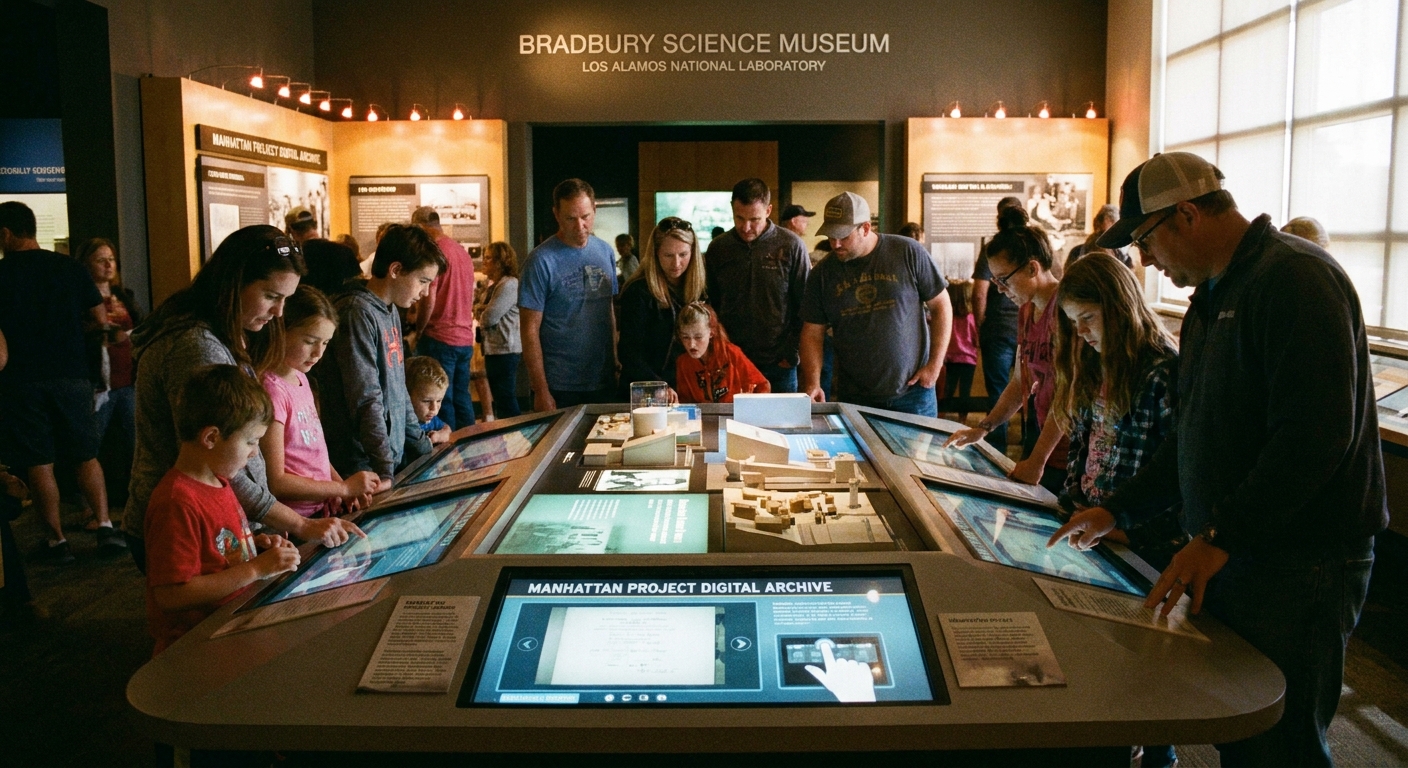
If you have limited time, I like starting at the Bradbury Science Museum because it gives you the “why this place” overview in under an hour. Exhibits cover Los Alamos National Laboratory science and the Manhattan Project era at a level that works even if you have not pre-studied the timeline.
- Time needed: 45 to 75 minutes
- Why first: You leave with vocabulary and context, so the historic buildings around town feel real, not random.
- Good to know: This is a museum setting, so photography is usually easier here than at some historic structures. Still, follow posted rules and avoid photographing restricted signage or security infrastructure.
Los Alamos Visitor Center and maps
Depending on your day, you may use the Los Alamos Visitor Center as your official first stop, especially if you want printed maps, local recommendations, or the latest on what is open. Think of it as your logistics desk. I still recommend doing your deeper “what am I looking at” learning at Bradbury, then using the Visitor Center to confirm your route.
- Time needed: 10 to 25 minutes
- What to grab: town map, current museum hours, and any info on ranger-led opportunities for Manhattan Project NHP sites.
- Planning shortcut: ask for the Manhattan Project NHP driving or walking tour information (printed handouts and official links vary by season).
- Parking tip: if you are trying to park once, the downtown area around the Visitor Center and Bradbury is usually the easiest place to start, then you can do your short drives from there.
The core loop: high impact, low friction
For a half-day, you want stops that are both high impact and low friction. That typically means museum exhibits, exterior views of historic buildings, and designated interpretive points that do not require special access.
Los Alamos History Museum and historic district
This is where Los Alamos starts to feel like a community story, not only a science milestone. The museum is also an easy bridge between the Manhattan Project narrative and the larger timeline of the Pajarito Plateau, including homesteading, education, and the social reality of a secret city.
- Time needed: 30 to 60 minutes
- Best for: grounding the war-era story in place and people
- Seasonal note: hours can shift by day of week and season, so it is worth a quick same-day check.
Manhattan Project NHP stops you can usually do
In Los Alamos, some Manhattan Project locations are easy to visit, while others are restricted, available only via specific programs, or viewable primarily from outside. On a half-day plan, assume you will focus on publicly accessible sites and any locations clearly marked for visitors. If a ranger-led or timed-entry opportunity happens to line up, treat it as a bonus rather than the backbone of your itinerary.
To make your planning easier, here are a few commonly sought, commonly viewable stops that often work well as quick add-ons between the museums. Availability and exterior viewing conditions can still change, so confirm day-of.
- Fuller Lodge (exterior and grounds): one of the most iconic historic structures in town and a good “this was really a place people lived” moment.
- Bathtub Row (drive-through or short walk): a historic area known for its early housing and the famous “Bathtub Row” story. Even if you keep it exterior-only, it gives you a feel for the wartime neighborhood layout.
- Historic plaques and interpretive markers around downtown: small stops, but they add up fast when you have the Bradbury context in your head.
- Omega Bridge overlook (quick photo stop): a modern landmark tied to how you move around the canyon landscape, and an easy way to remember Los Alamos is a plateau town carved by dramatic terrain.
- Good half-day approach: prioritize sites with interpretation on-site and clear public access, then do one “bigger” stop (like a museum) for depth.
- How to confirm access: check the National Park Service page for Manhattan Project NHP and ask the Visitor Center the day you arrive. Access can change due to staffing, preservation needs, or safety restrictions.
Access and logistics: what to expect
This is the part that saves you from the classic Los Alamos frustration spiral: showing up at a historic site and realizing it is not open for walk-in visitors.
What might need a ranger or program
Some of the most historically significant structures in Los Alamos are fragile, small, or located in areas where access is carefully managed. As a general rule, anything that is a preserved interior space, a sensitive historic building, or an area near active lab functions may have limited visiting opportunities.
- Plan assumption: you may only be able to view certain Manhattan Project-era buildings from the exterior on a casual half-day.
- Best workaround: build your half-day around museums and outdoor interpretation first, then slot a ranger-led stop if it is available.
Do you need a shuttle or timed entry?
In Los Alamos, most visitors drive their own car between stops in town. Distances are short, but the town is spread out enough that walking between everything is not efficient for a half-day. Ask at the Visitor Center about current transit options, but do not assume a hop-on shuttle system like you might find in a large national park.
One important clarification: seasonal shuttles and timed-entry systems are more commonly a Bandelier concern than a Los Alamos-in-town concern. For Los Alamos, think “town logistics.” For Bandelier, think “park logistics,” especially in peak season.
Photography rules and boundaries
Los Alamos is both a visitor destination and a place with real security considerations. You can absolutely take photos, but you should do it thoughtfully.
- Follow posted signs first: if a building, exhibit, or area says no photography, treat it as non-negotiable.
- Be mindful near lab-related facilities: do not photograph security checkpoints, controlled access points, or anything that feels like operational infrastructure.
- Inside museums: photography policies vary by exhibit. Ask staff if you are unsure, especially around artifacts or temporary displays.
- Tripod note: if you are carrying a tripod, expect it to be restricted in some indoor spaces. For a half-day visit, a phone or small camera setup is usually easiest.
If you want a single “safe” photo that still captures the vibe, aim for streetscapes, museum exteriors, and wide landscape views across the mesas and canyons.
Altitude and wind
Santa Fe is already high, but Los Alamos sits higher, and many visitors feel it in subtle ways: you get thirstier, the sun hits harder, and a quick uphill stroll can feel more athletic than expected.
- Altitude: Los Alamos is roughly 7,300 to 7,400 feet. Drink water earlier than you think you need it.
- Wind: spring and shoulder seasons can be gusty on the plateau. Bring a light wind layer even if Santa Fe feels calm.
- Temperature swings: mornings can start cool, then warm fast in direct sun. Layers win.
- Road awareness: watch for sudden weather changes, especially if afternoon clouds build over the Jemez Mountains.
Coffee and a quick bite
My personal travel rule is: if a place changed history, you deserve a good coffee before you try to understand it. Los Alamos has low-key, local spots that make a half-day visit feel less like a drive-by.
- If you have 15 minutes: grab coffee to-go and keep your loop tight.
- If you have 45 minutes: sit down for an early lunch, then head out for a viewpoint stop before driving back to Santa Fe.
Ask the Visitor Center staff where locals actually go on weekdays. In small mountain towns, that tip is gold.
Pairing Los Alamos with Bandelier
Bandelier is often marketed for the cliff dwellings, ladders, and that classic loop experience. If you are doing Bandelier the same day, keep Los Alamos focused on history and town and keep Bandelier focused on landscape and culture on the plateau. That way, you get two distinct experiences instead of two versions of “museum then short walk.”
Best pairing strategy
- Do Los Alamos first, Bandelier second: museums and historic sites are better when your brain is fresh, and Bandelier is a perfect afternoon reset outdoors.
- Main Loop Trail is a great quick win: often described as about 1.4 miles, and many visitors do it in roughly an hour or so, depending on stops and crowds. Expect ladders and uneven terrain, and check current conditions before you go.
- Keep the themes separate: Los Alamos for Manhattan Project context, Bandelier for the older human story of the region and the geology that shaped it.
Time budgeting that works
- Half-day Los Alamos: 3.5 to 5 hours including coffee and a viewpoint
- Then Bandelier: pick one focused outing and enjoy it. For most visitors, that means the Main Loop Trail and one extra viewpoint if daylight and energy allow.
Half-day checklist
- Water bottle (you will drink more at altitude)
- Wind layer or light jacket
- Sunscreen and sunglasses (high-elevation sun is no joke)
- Comfortable walking shoes for museums, sidewalks, and short viewpoints
- Government-issued ID (helpful to have, especially if any controlled-access tour option is offered)
Sample timelines
Fast half-day (about 3.5 hours in town)
- Hour 0: Arrive and park once near your first museum stop
- Hour 0 to 1: Bradbury Science Museum
- Hour 1 to 2: Los Alamos History Museum or a short historic district wander
- Hour 2 to 3: Drive-by or walk-up Manhattan Project NHP interpretive points that are publicly accessible (pick 2 to 4)
- Hour 3 to 3.5: Quick overlook, then depart
Relaxed half-day (about 5 hours in town)
- Hour 0 to 1.25: Bradbury Science Museum
- Hour 1.25 to 2.5: Los Alamos History Museum and a slow wander nearby
- Hour 2.5 to 3.25: Coffee or early lunch
- Hour 3.25 to 4.5: Manhattan Project NHP interpretive sites you can access that day
- Hour 4.5 to 5: Viewpoint stop, then depart
Final tip: keep it flexible
Los Alamos is not a museum campus frozen in time. It is a living town with preserved history inside it. The smartest half-day visitors do two things: they start with museums for guaranteed depth, and they stay flexible about which specific Manhattan Project sites they will see up close.