Lower Yosemite Fall Boardwalk

Maya Lin
Maya Lin is a travel journalist and outdoor enthusiast who believes the best trips combine rugged adventures with urban comforts. After spending six years backpacking across four continents, she founded Trail & Town Guide to help fellow travelers navigate both hidden mountain passes and bustling city neighborhoods with confidence.
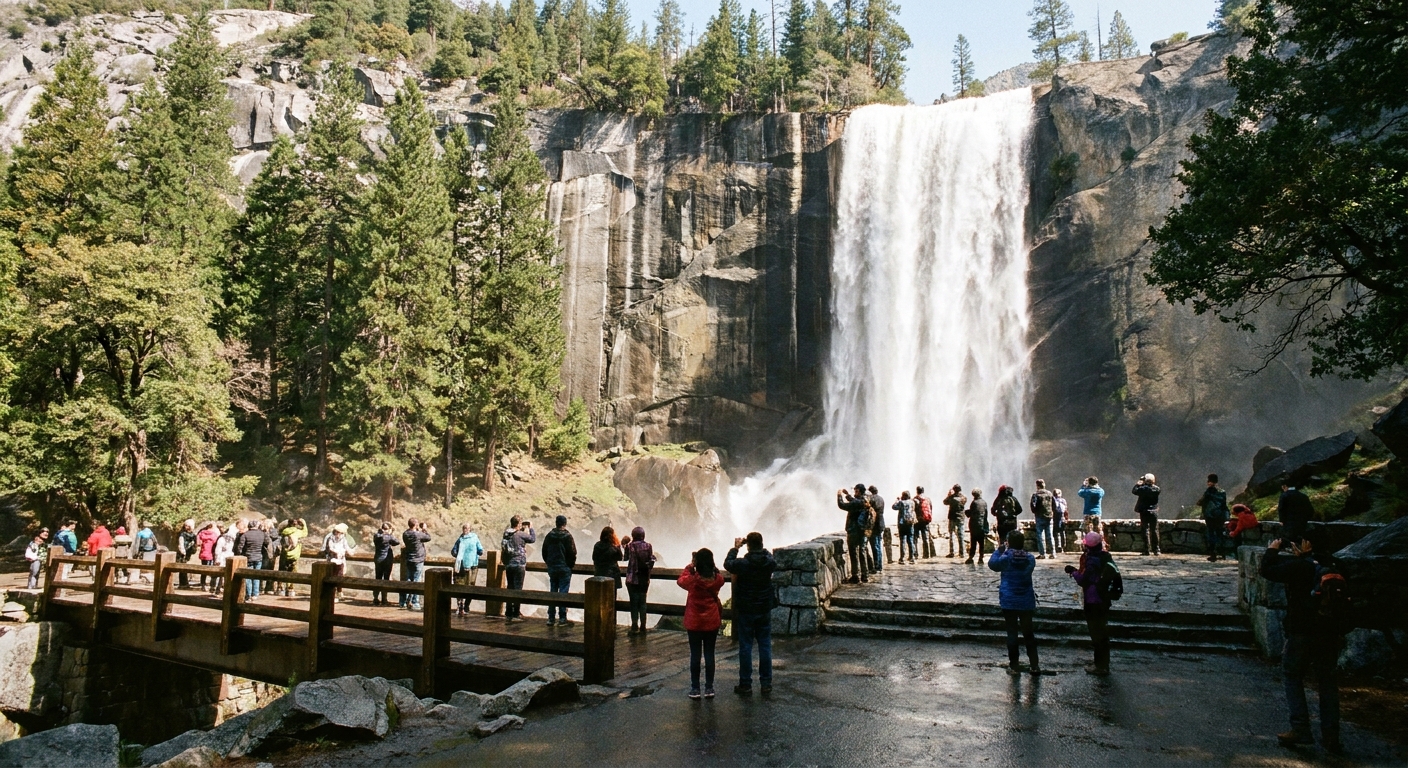
Some Yosemite experiences feel like you earned them the hard way, sweat, switchbacks, and snack math. The Lower Yosemite Fall Boardwalk is not one of those, and that is exactly the point. It’s a short, paved loop that drops you into the roar and mist (in spring) or a cathedral-quiet granite amphitheater (late summer and fall) with almost no effort. If you are traveling with kids, older relatives, a stroller, a recovering knee, or you just want a high reward-to-effort ratio before your next big hike, this is your move.
Quick facts
- Type: Paved loop with a short boardwalk spur to viewpoints
- Distance: Roughly 1.0 to 1.2 miles round trip, depending on the exact loop routing and any seasonal adjustments
- Time: 20 to 45 minutes, depending on crowds and how long you linger
- Elevation gain: Minimal, essentially flat
- Difficulty: Easy
- Trail surface: Mostly pavement with boardwalk sections
- Best for: Families, first-timers, stroller-friendly sightseeing, quick sunrise or golden-hour strolls
Where it starts
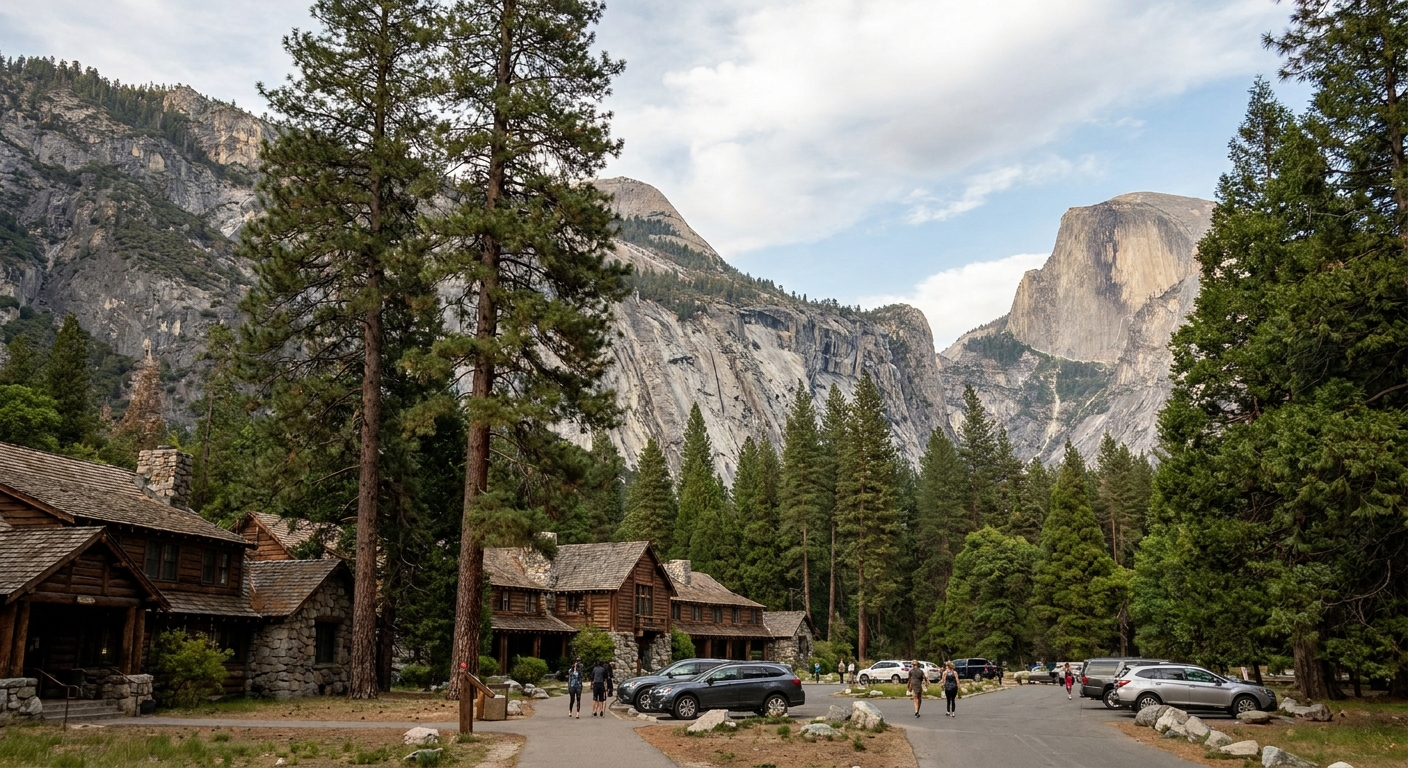
The Lower Yosemite Fall trailhead is in Yosemite Valley near Yosemite Valley Lodge. In peak season, the easiest way to reach it is usually the free Valley shuttle. If you are driving, expect parking to fill early and plan for a short walk from wherever you find a legal spot.
Parking tip: The day-use lots around Yosemite Valley Lodge are typically the closest go-to areas, but they are also some of the first to max out. If you miss them, do not circle forever. Park where you can and use the shuttle.
Shuttle access
Use the Yosemite Valley shuttle and get off at the stop signed for Lower Yosemite Fall. Stop names and service can change by season, so check the current shuttle map and schedule when you arrive.
My timing tip: If you are visiting midday in spring, build in extra time. This boardwalk is one of the most popular first stops in the Valley, and the pinch points at the viewpoints can slow you down.
What you will see
Lower Yosemite Fall is the bottom section of Yosemite Falls, and it is the part you can access with almost no climbing. The boardwalk leads you through forest and along the sandy floodplain to viewing areas where the fall drops directly ahead.
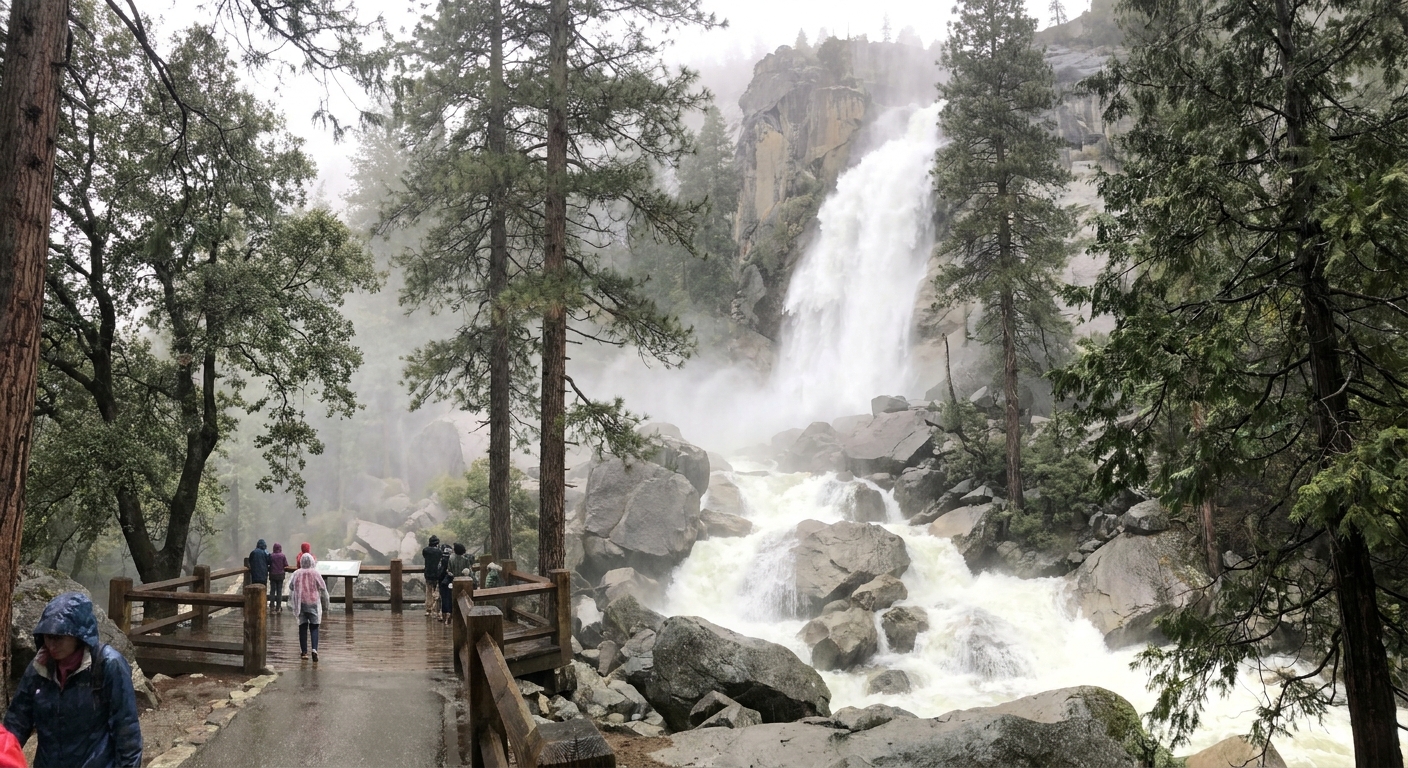
In peak flow, you get a full sensory blast: water thunder, wind-driven mist, and that clean, icy scent that makes you want a hot coffee immediately after. When flow is low, you might be looking at a thin ribbon of water or, in drought years and late season, a dry or nearly dry cliff. Even then, the place still delivers. Your footsteps echo, the wind moves through the pines, and the granite walls do a lot of the heavy lifting.
Seasonal conditions
Spring and early summer
During snowmelt, Lower Yosemite Fall can be loud, forceful, and very misty. You may get sprayed even if you stay on the boardwalk and do not push to the closest viewing rail. Mist can make the viewing area slick, so take your time.
- What to wear: A light rain jacket or wind shell is ideal. A brimmed hat helps if the mist is blowing sideways.
- What to protect: Phone cameras love Yosemite, but they do not love spray. Keep a small microfiber cloth handy.
Late summer and fall
By late summer, Yosemite Falls often slows dramatically, and some years it can become a trickle or dry out. If you arrive expecting a thundering waterfall and instead find a quiet wall of granite, do not feel cheated. This is part of Yosemite’s seasonal rhythm.
- Why it is still worth it: The loop is shaded, quick, and photogenic, especially at golden hour when the cliff faces glow.
- Bonus: Fewer people linger when there is no spray, so the walk can feel calmer.
Winter
In winter, you might see ice formations and a very different mood in the Valley. Expect cold shade and occasional slick patches on paths. Shuttle service and facilities can be seasonal, and conditions can change fast, so check current conditions and posted safety notices.
The walk
The best way I can describe this trail is Yosemite’s easiest big payoff. You are mostly walking on flat pavement through tall trees, with occasional openings where you catch a glimpse of the Falls or the surrounding Valley walls. The boardwalk sections guide you over sensitive ground and keep feet from widening the trail into the meadow edges.
How the route works
Most people simply follow the signed paved loop and take the short spur onto the boardwalk to the main viewing platform. You can walk it in either direction, it is truly a choose-your-own-adventure loop, just with more granite and fewer plot twists.
How long to plan
- 20 minutes: Quick loop, a few photos, keep moving.
- 30 to 45 minutes: Time to wait out crowds at the railing, take a slow lap, and enjoy the soundscape.
- 60+ minutes: If you are photographing (tripod, long exposures) or visiting at peak spring flow and want to linger in the mist.
Lower vs Upper Yosemite Fall
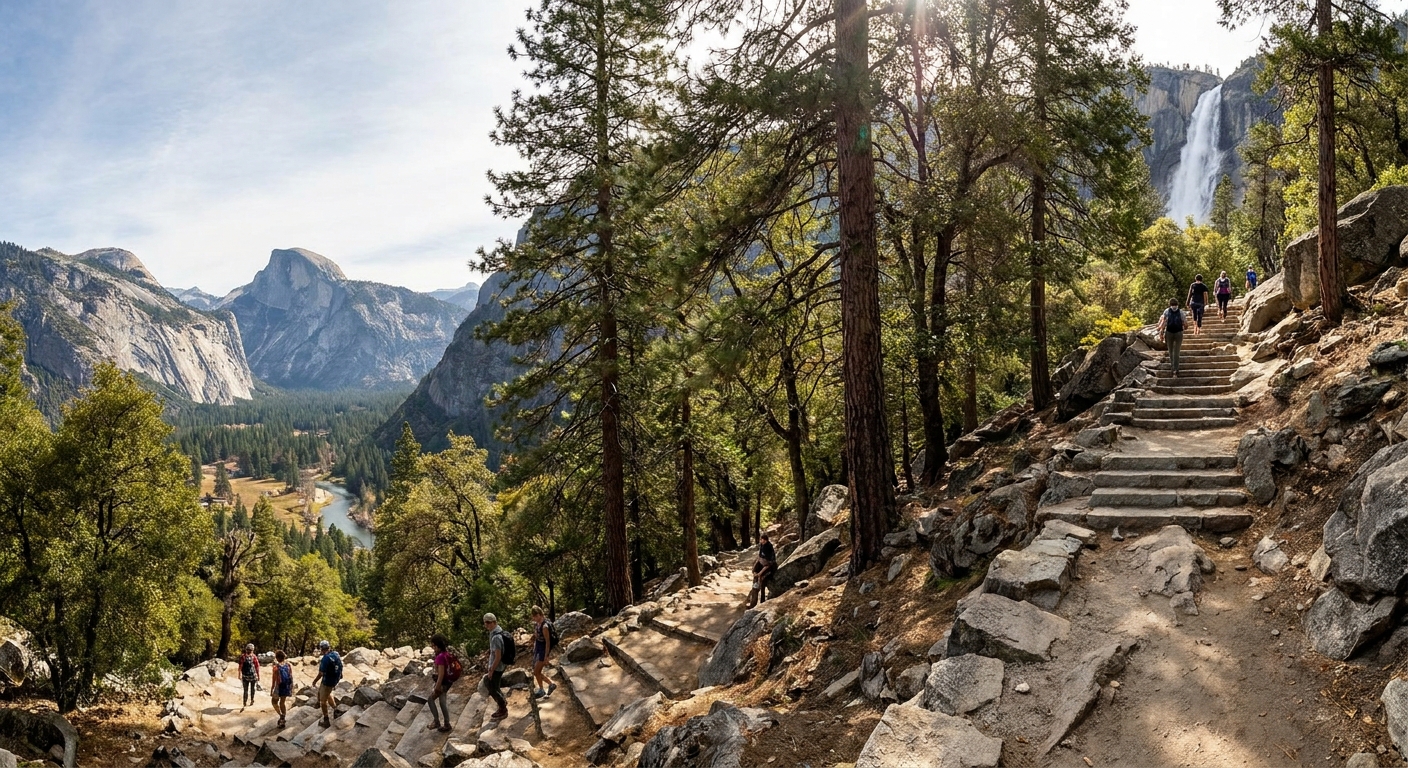
This is the most common Yosemite Falls confusion I see on the ground. The Lower Yosemite Fall Boardwalk is a flat, paved loop in the Valley. The Upper Yosemite Fall hike is a steep, sustained climb that switchbacks up the Valley wall toward Columbia Rock and beyond. They do not feel remotely similar.
Lower Yosemite Fall Boardwalk
- Short, paved, and mostly flat
- Great for a quick waterfall moment without committing to a half-day hike
- Often works well for strollers and many mobility needs, especially outside peak crowd times
Upper Yosemite Fall
- Steep trail with major climbing from the Valley floor
- More time, more water, more sun exposure planning
- A workout first, views second, and absolutely worth it if you are prepared
If your group has mixed energy levels, I like pairing them like this: everyone does Lower Yosemite Fall together, then the hikers peel off for the Upper Yosemite Falls route while the rest enjoy a picnic, a café stop, or an easy Valley bike ride.
Accessibility and families
Because the route is paved and generally flat, this is one of the most approachable waterfall walks in Yosemite Valley. Crowds can be the biggest obstacle, especially near the main viewing area where the walkway narrows. For the most up-to-date accessibility details, check current NPS accessibility notes before you go.
- Strollers: Usually stroller-friendly, though you may need patience in tight spots.
- Wheelchairs and mobility devices: Often works well thanks to the paved surface, but expect congestion and occasional uneven transitions where pavement meets boardwalk.
- Kids: Keep a close hand near the viewing rail. Mist can make surfaces slick, and the water and rocks are not places to scramble, even when flow looks low.
Best time of day
If you can swing it, aim for early morning or later in the evening. Midday in peak season can feel like a greatest-hits traffic jam.
- Early morning: Cooler temps, fewer people, cleaner soundscape. Great if you are pairing this with breakfast at Yosemite Valley Lodge afterward.
- Golden hour: Softer light on granite and a calmer vibe as day-trippers thin out.
- After rain or during peak runoff: Expect more spray and more dramatic photos, but also slicker surfaces near the wettest viewpoints.
What to pack
I know, it feels silly to pack for a one-mile loop. But Yosemite has a way of turning a quick stroll into a lingering hangout, and being comfortable is the difference between savoring it and speed-walking back to the shuttle.
- Water: Even a small bottle is enough.
- Light shell: For spring mist or windy Valley days.
- Phone lens cloth: Tiny item, huge payoff in spray season.
- Sun protection: Hat and sunscreen, especially if you continue to other open Valley stops.
Leave no trace
This area is popular for a reason, and it stays beautiful because people stick to the path. The boardwalk is there to protect sensitive ground and keep the surrounding meadow and riparian areas from getting trampled.
- Stay on the paved route and boardwalk, even if you see social trails.
- Do not climb on wet rocks near the fall base.
- Pack out everything, including snack wrappers and fruit peels.
- Give people space at the rail so everyone gets a turn.
FAQ
How long is the Lower Yosemite Fall Boardwalk?
Plan on roughly 1.0 to 1.2 miles round trip for the commonly walked paved loop and viewpoints, with very little elevation change. Exact routing can vary a bit with conditions.
Is Lower Yosemite Fall always flowing?
No. Flow is strongest in spring and early summer during snowmelt. In late summer and fall, it can slow to a trickle or dry out in some years, especially in drought conditions.
Is this the same hike as Upper Yosemite Fall?
No. Lower Yosemite Fall is an easy, paved Valley walk. Upper Yosemite Fall involves steep switchbacks and major elevation gain.
Can I do this without a car?
Yes. When it is operating, the free Yosemite Valley shuttle is the easiest way to reach the trailhead area near Yosemite Valley Lodge. Always check the current seasonal schedule and stop locations.