Mesa Arch Sunrise Timing and Logistics

Maya Lin
Maya Lin is a travel journalist and outdoor enthusiast who believes the best trips combine rugged adventures with urban comforts. After spending six years backpacking across four continents, she founded Trail & Town Guide to help fellow travelers navigate both hidden mountain passes and bustling city neighborhoods with confidence.
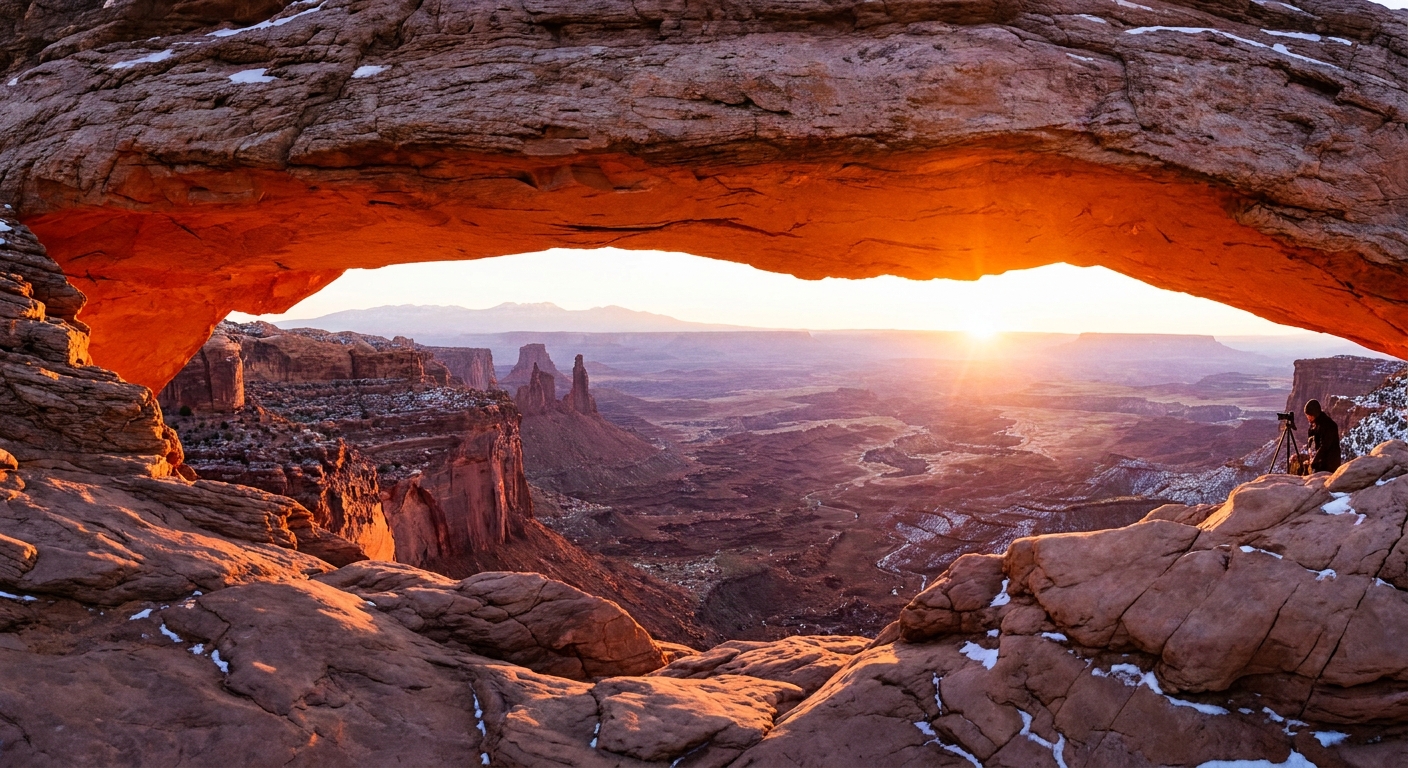
Mesa Arch is the kind of sunrise that makes you understand why people set alarms that feel personally offensive. When the first light hits the underside of the arch and turns it into a glowing orange ribbon, the whole canyon seems to wake up at once. The catch is that you are sharing that moment with a lot of other early risers, and the logistics matter more here than on most short hikes.
This is a sunrise-first, no-drama guide to getting there on time, parking without panic, photographing the scene without blocking anyone, and rolling your morning into a full Island in the Sky day.
Know the basics
- Location: Mesa Arch is in Canyonlands National Park, Island in the Sky district.
- How to get there: From Moab, you typically take UT-313 up to Island in the Sky, then follow signs to the Mesa Arch trailhead. Distance is roughly 30 miles from Moab, give or take where you are staying.
- Trail: Mesa Arch Trail, a short loop commonly listed around 0.5 miles (some apps show slightly longer depending on how they track the loop).
- Time on trail: Most people walk it in 20 to 40 minutes, but sunrise crowds stretch that timeline.
- Difficulty: Easy mileage, uneven rock steps. In winter, traction can turn this into a very different hike.
- Facilities: Vault toilets at the trailhead parking area, no water.
Entry: You will need to pay the Canyonlands entrance fee or have an America the Beautiful pass. The Island in the Sky entrance station is not always staffed early. If you enter before it is staffed, you are still responsible for having a valid pass or paying the fee. Do not assume you will breeze through without slowing down.
Predawn timing from Moab
The most common sunrise mistake at Mesa Arch is treating it like a normal scenic stop. It is not. Sunrise visitors move like a small migration, parking fills early, and the final walk to the arch often includes a slow shuffle through headlamp-lit bottlenecks.
Typical drive time from Moab
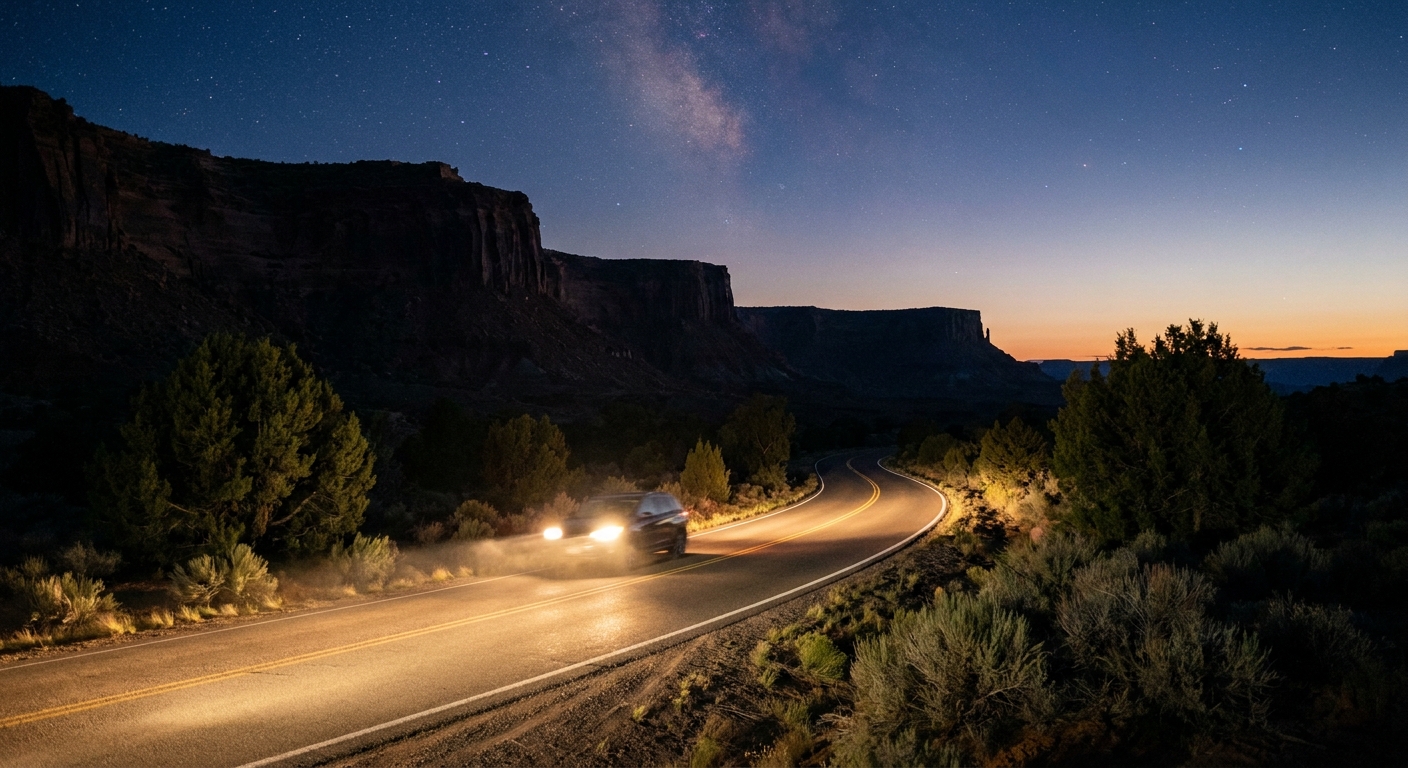
From downtown Moab to Mesa Arch Trailhead, plan on roughly 40 to 50 minutes in the dark on a normal day. Many people experience 45 to 60 minutes door to parking spot depending on where they are staying, how quickly they clear town, wildlife on the road, and any slowdown near the entrance station and trailhead.
When to leave Moab
- Peak season (spring and fall): Plan to leave Moab 90 minutes before sunrise. If you want your pick of spots and time to settle in, make it 105 to 120 minutes.
- Summer: Sunrise is early. Leave 75 to 90 minutes before sunrise, then focus on staying cool and safe after the glow fades.
- Winter: Sunrise is later, but roads and trails can be icy. Leave 90 to 120 minutes before sunrise to account for careful driving and slower walking.
Rule of thumb that rarely fails: Aim to be parked 60 minutes before sunrise in spring and fall, 45 to 60 minutes in summer, and 60 to 75 minutes in winter.
Parking at the trailhead
The Mesa Arch Trailhead lot is small for the demand. On busy mornings, it can feel like everyone in Moab had the same idea, because they did.
What to expect
- Limited spaces: The main lot fills fast near sunrise in spring and fall.
- Overflow behavior: When full, drivers often loop, wait for a spot, or park along the road where permitted. Do not block travel lanes or pullouts.
- Headlamp traffic: Expect a steady stream of people crossing from cars to the trailhead. Drive slowly.
A calm strategy
- Have your gear ready before you arrive: headlamp on, layers accessible, camera packed. You want a quick park and go.
- Make one loop: If the lot is full, do one slow pass. If nothing opens, commit to legal roadside parking (only where signs and the shoulder make it clearly allowed) and walk in.
- Park like you are a guest in a fragile place: Use established pullouts only. Do not crush vegetation or step onto cryptobiotic soil just to save a few steps.
- Do not count on cell service: Download your map offline and screenshot sunrise time the night before.
Night driving note: Mule deer are active pre-dawn. Keep your speed conservative, especially in winter when black ice can show up on shaded bends.
Crowds by season
People love to say “go early” for sunrise. At Mesa Arch, the more useful advice is “go earlier than you think, and know what kind of crowd day you signed up for.”
Spring (March to May)
- Crowds: Very high. This is prime Moab season, and Mesa Arch is the marquee sunrise.
- Arrival pattern: Many photographers arrive 60 to 90 minutes before sunrise.
- Best tactic: Park early, stay patient, and keep your setup compact.
Summer (June to August)
- Crowds: Moderate to high. Some people avoid the heat, but sunrise is still popular.
- Arrival pattern: Earlier sunrise means fewer casual visitors, but serious photographers still show.
- Best tactic: Nail the sunrise, then keep the rest of your morning simple and heat-smart.
Fall (September to November)
- Crowds: Very high, often the busiest. Temperatures are comfortable and skies are frequently clear.
- Arrival pattern: Similar to spring, sometimes earlier.
- Best tactic: Treat it like a small event. Show up early, rotate through, keep the vibe friendly.
Winter (December to February)
- Crowds: Lower overall, but weekends and holidays can still be busy.
- Arrival pattern: Later sunrise is convenient, but icy trail conditions slow everyone down.
- Best tactic: Bring traction, allow extra walking time, and assume you will be sharing the rim even in January.
Winter ice cautions
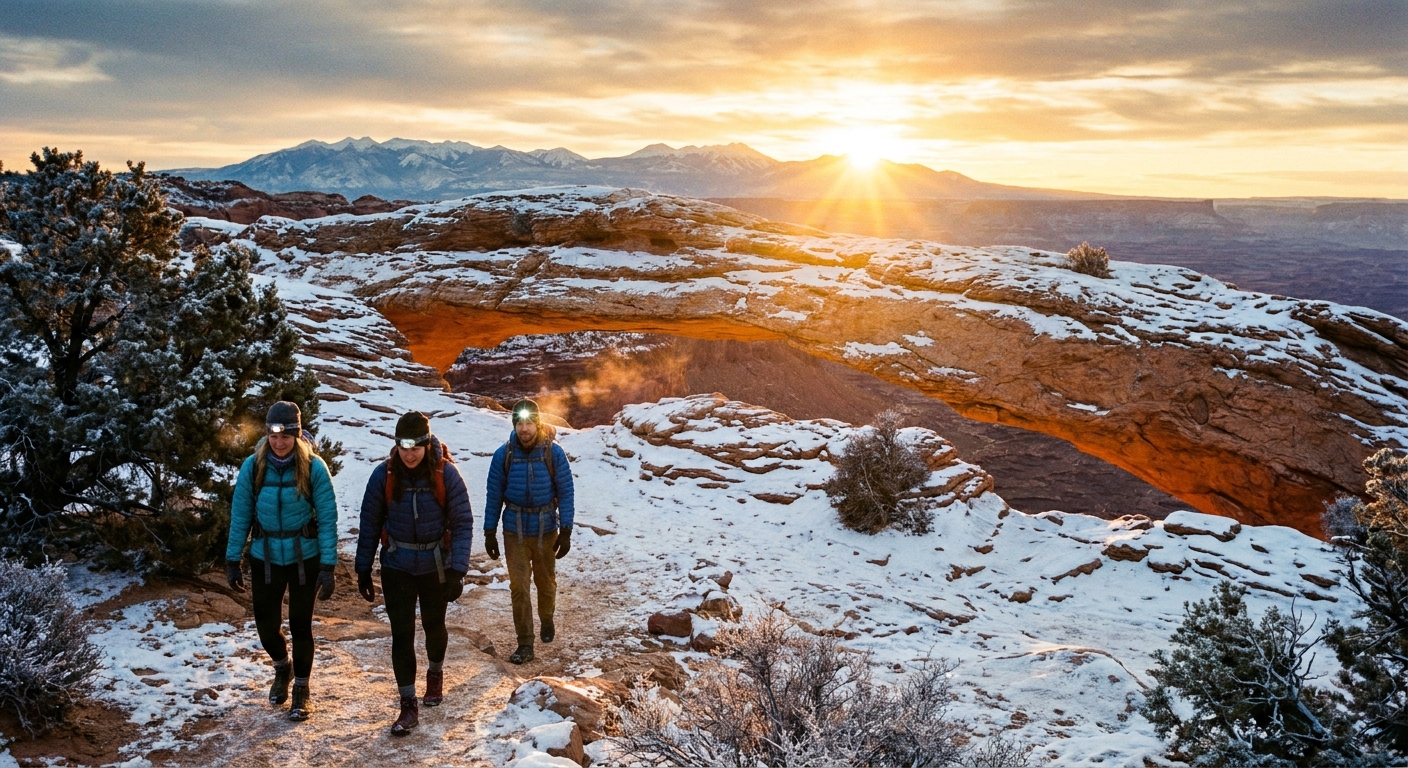
Island in the Sky can be deceptively cold. Even when Moab feels mild, the mesa is higher and windier, and shaded slickrock holds ice.
Where ice hides
- On the rock steps and shaded slickrock near the loop.
- In the final approach where foot traffic polishes the rock.
- Around the rim where frost lingers after sunrise.
What to do about it
- Wear traction devices: Microspikes or similar. This is one of those “I did not need them until I really did” places.
- Use a headlamp even if you think you can see: The trail blends into rock.
- Keep a wider buffer near the edge: Ice plus crowded jostling is a bad combo.
- Avoid dark wet patches: In freezing temps, those are often ice.
Cold + wind reality: Bring a warm layer you can stand still in. Sunrise at Mesa Arch includes a lot of waiting.
Summer heat rules
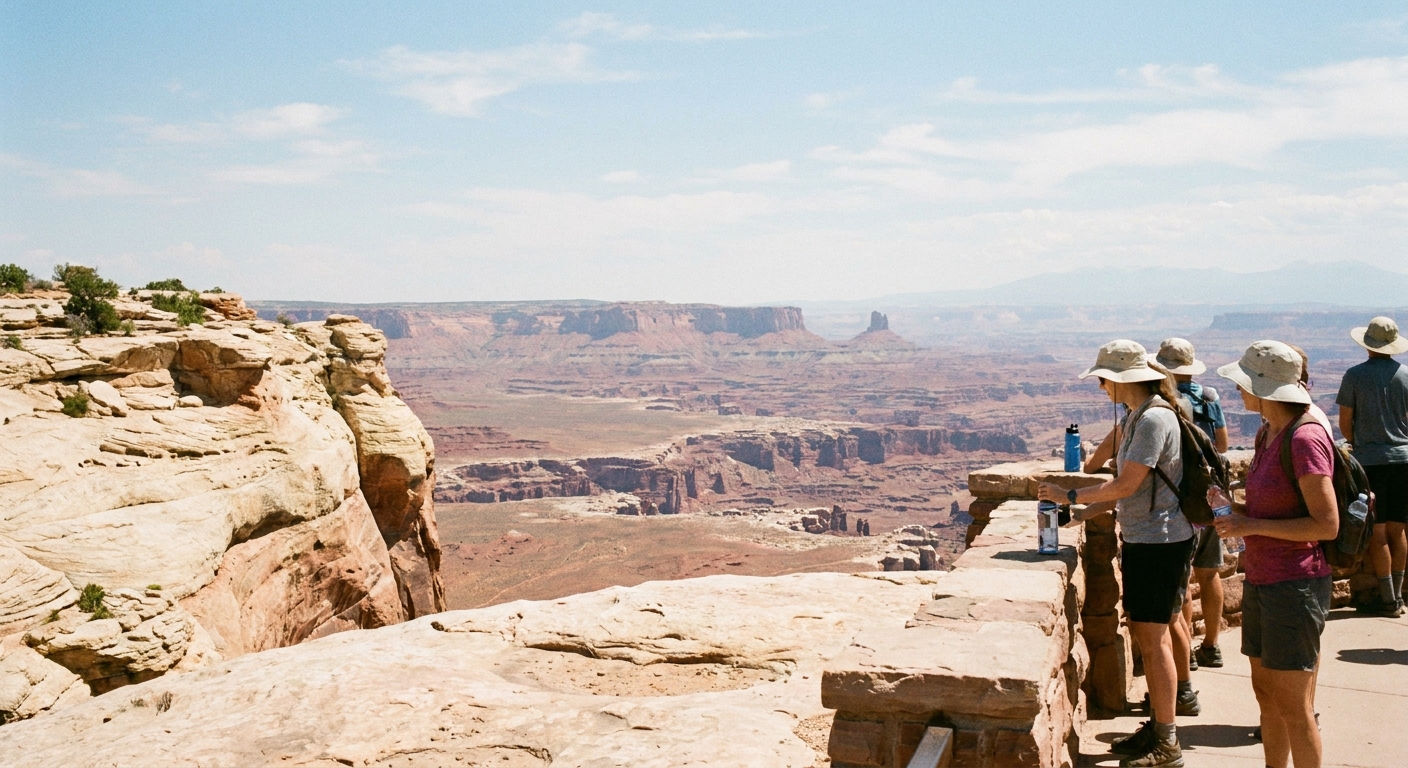
Mesa Arch is short, but summer in Canyonlands is not forgiving. The real risk is not the sunrise hike itself. It is what people do after, when the day heats up and water runs low.
Hard rules I use
- If you are already low on water after sunrise: abort any longer hikes and stick to drive-up overlooks.
- If the forecast is 100°F or higher: plan a sunrise-only visit, then retreat to Moab for shade, lunch, and a reset before any late-day outing.
- If anyone feels faint, confused, headachy, nauseated, gets chills or goosebumps, or stops sweating: treat it as a stop-now situation. Get to shade or A/C, cool down fast, and consider medical help. Heat illness escalates quickly out here.
- If there is no cloud cover and wind is calm: heat stress ramps up faster than you expect, even in shoulder seasons.
Water reality: Do not count on finding reliable potable water at trailheads or along trails in Island in the Sky. Services can be limited or seasonal even at developed areas, so arrive with what you need for your plan.
Sunrise photo tips
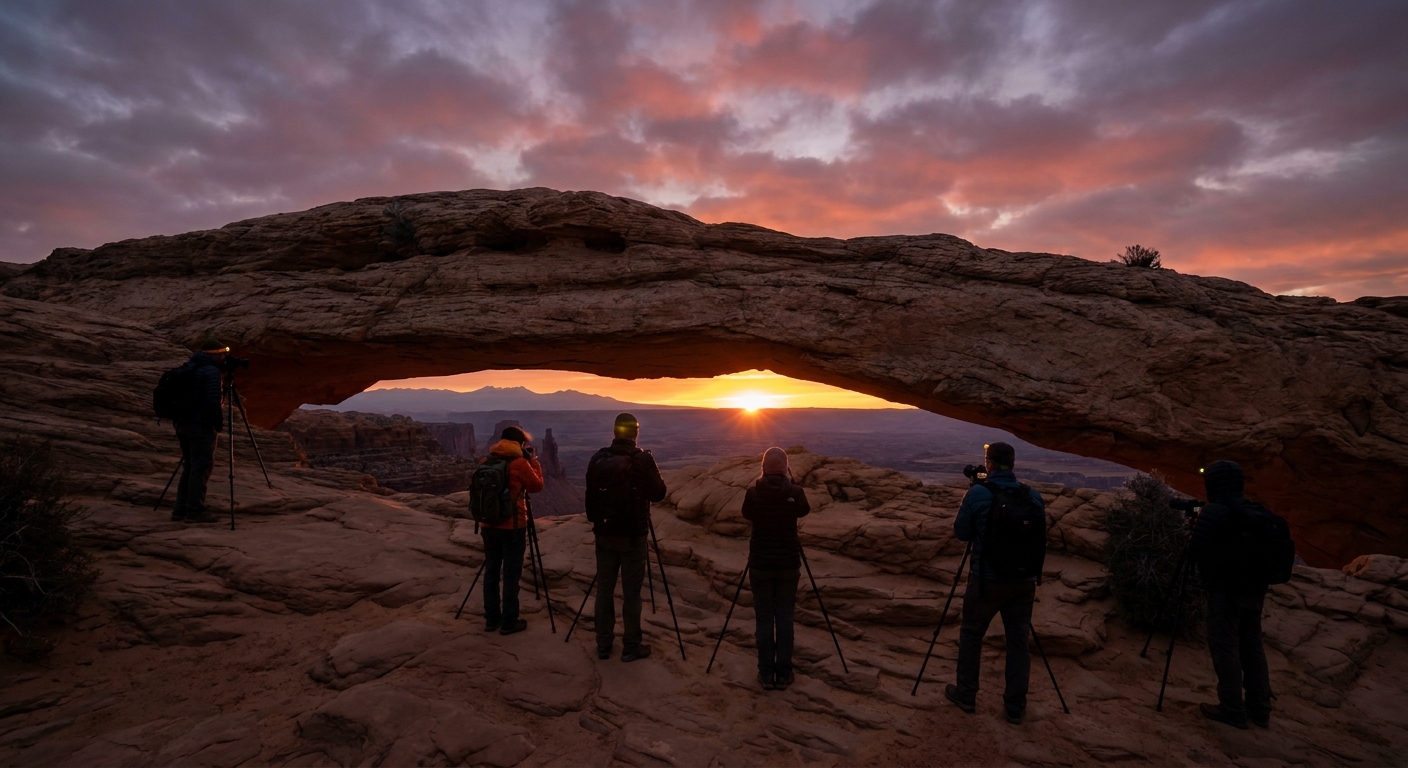
Mesa Arch has a famous composition for a reason. It is also a narrow space where one tripod can become everyone’s problem. The best photographers I have met here are the ones who shoot beautifully and still leave room for other people’s once-in-a-lifetime morning.
Shoot the classic, be considerate
- The “under-arch glow” frame: Most people shoot from directly behind the arch looking out over the canyon. If you set up here, keep your footprint tight and do not spread tripod legs into the main path.
- Arrive early if you want center position: Do not shoulder in at the last minute. That is how sunrise arguments start.
- Rotate, do not camp: Once you get your set of frames, offer space to the next person. You can always step back and shoot a wider angle from a different spot.
- Keep headlamps low: Point your beam down when people are composing. Bright headlamps blasting into lenses is the fastest way to ruin the vibe.
Try something beyond the postcard
- Go wider: Include more of the bowl of canyon beyond the arch to show scale.
- Go vertical: Frame the arch as a top border with the canyon layers stacked below.
- Look left and right: The rim area has textured slickrock, pinyon pine silhouettes, and side angles that avoid the central crowd line.
- Stay for the second act: The glow under the arch is the headline, but the 10 to 20 minutes after sunrise often bring softer, more even light on the canyon.
The sunrise timeline
If you like a plan, this one works on most days.
- T minus 60 minutes: Park, use the restroom, start walking with a headlamp. Add time in winter.
- T minus 40 minutes: Arrive at the arch area, choose a spot, and let your eyes adjust. Keep movement minimal near the edge.
- T minus 25 minutes: Blue hour. Great for canyon tones and a calmer pace before the orange glow.
- T minus 10 minutes to sunrise: The crowd quiets. This is when you want to be steady and polite, because everyone is focused.
- Sunrise to +20 minutes: The underside glow typically peaks shortly after the posted sunrise time, then fades. Stay a little longer for softer light and fewer elbows.
How the glow works: You need the sun to clear the horizon at the right angle to light the underside of the arch. Thin clouds can stretch the color. Thick clouds can erase it. Even when the glow is a no-show, the canyon at dawn is still a good trade.
After sunrise
Once the glow fades, a lot of people leave immediately. I get it. Coffee is calling. But if you are already up on the mesa, you have one of Utah’s best scenic loops basically gift-wrapped for you, and the morning light is still excellent.
Option A: Easy overlooks
Perfect if you want minimal hiking, maximum views, and a flexible schedule.
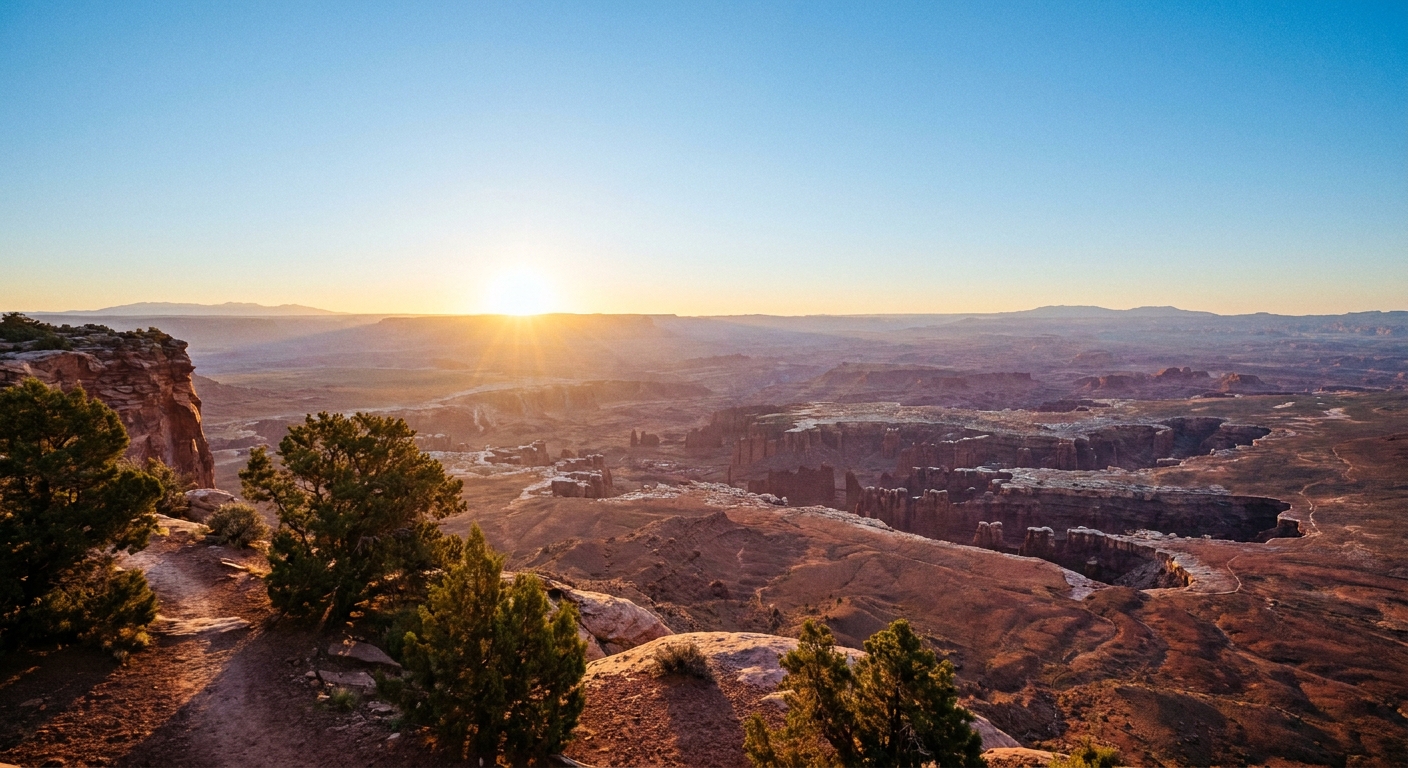
- Grand View Point: A short walk to a big, sweeping view. Great morning layers.
- Green River Overlook: Wide open canyon perspective, usually breezy and quiet.
- Buck Canyon Overlook: Quick stop that tends to be less crowded.
Option B: One short trail
- Upheaval Dome (first overlook): A moderate outing with a unique view into the crater. Go early in summer.
- Aztec Butte: Short but steeper. Big payoff views and a chance to see ancestral Puebloan granaries. Stay on trail and respect cultural sites.
Option C: Longer hike, only if conditions allow
- Syncline Loop: Strenuous and route-finding heavy. Not a casual add-on after sunrise if you are already tired or under-watered.
My favorite flow: Mesa Arch at sunrise, then Grand View Point and Green River Overlook, then back to Moab for breakfast and caffeine that tastes like victory.
Small-pack packing list
This is a short hike, but sunrise changes the rules. You are standing still in the dark, often in wind, and you want to be self-sufficient.
- Headlamp (plus spare batteries)
- Warm layer even in shoulder season
- Traction in winter (microspikes)
- Gloves for cold mornings and tripod handling
- Water and a snack
- Camera basics if you shoot: extra battery, lens cloth, and a small tripod if you use one
- Sun protection for later: hat, sunscreen, sunglasses
Coffee note: If you are the type who needs a warm drink at 5 a.m., a small thermos turns waiting time into something you actually enjoy.
Etiquette and safety
- Stay back from edges: Especially in wind or ice.
- Let people rotate through: The arch is not a private studio.
- Keep voices low: It is a shared sunrise, not a group chat.
- Stay on durable surfaces: Stick to slickrock, the established trail, and cairned routes. Avoid stepping on cryptobiotic soil, it is alive and it takes forever to recover.
- Pack out everything: Including orange peels and tissues.
- Do not climb on the arch: It is fragile, and it is prohibited.
- Know your limits: Heat and ice are both legitimate reasons to change plans.
If you do Mesa Arch right, it feels effortless: a dark drive, a quiet walk, a glowing horizon, and then a whole day of canyon viewpoints while most people are still hitting snooze. That is my favorite kind of travel win, rugged adventure first, then back to town for breakfast like you earned it.