Meteor Crater: Tickets, Viewpoints, and a Flagstaff Half-Day Stop

Maya Lin
Maya Lin is a travel journalist and outdoor enthusiast who believes the best trips combine rugged adventures with urban comforts. After spending six years backpacking across four continents, she founded Trail & Town Guide to help fellow travelers navigate both hidden mountain passes and bustling city neighborhoods with confidence.
There is a certain kind of Arizona road trip magic that happens on I-40 between Flagstaff and Winslow. Pine forest fades into high-desert openness, the sky gets bigger, and suddenly the landscape looks like it is hiding a secret. Meteor Crater is that secret, except it is not subtle at all. It is a near-perfect impact bowl carved into the Colorado Plateau, and it is one of the most memorable paid stops in the Flagstaff corridor because you can understand the whole place in a couple of hours without committing to a long hike.
This page focuses on the practical stuff people actually need mid-road-trip: ticket tiers (with a real-world budget range), what you see from each viewpoint, how long to plan, the I-40 exit number and drive times, the pet policy, accessibility basics, and what the rim weather feels like at roughly 5,700 feet. Then we will stitch Meteor Crater into a Flagstaff-area day with either Sunset Crater or Walnut Canyon, without repeating the trail-by-trail details you can find on those monument pages.
What it is
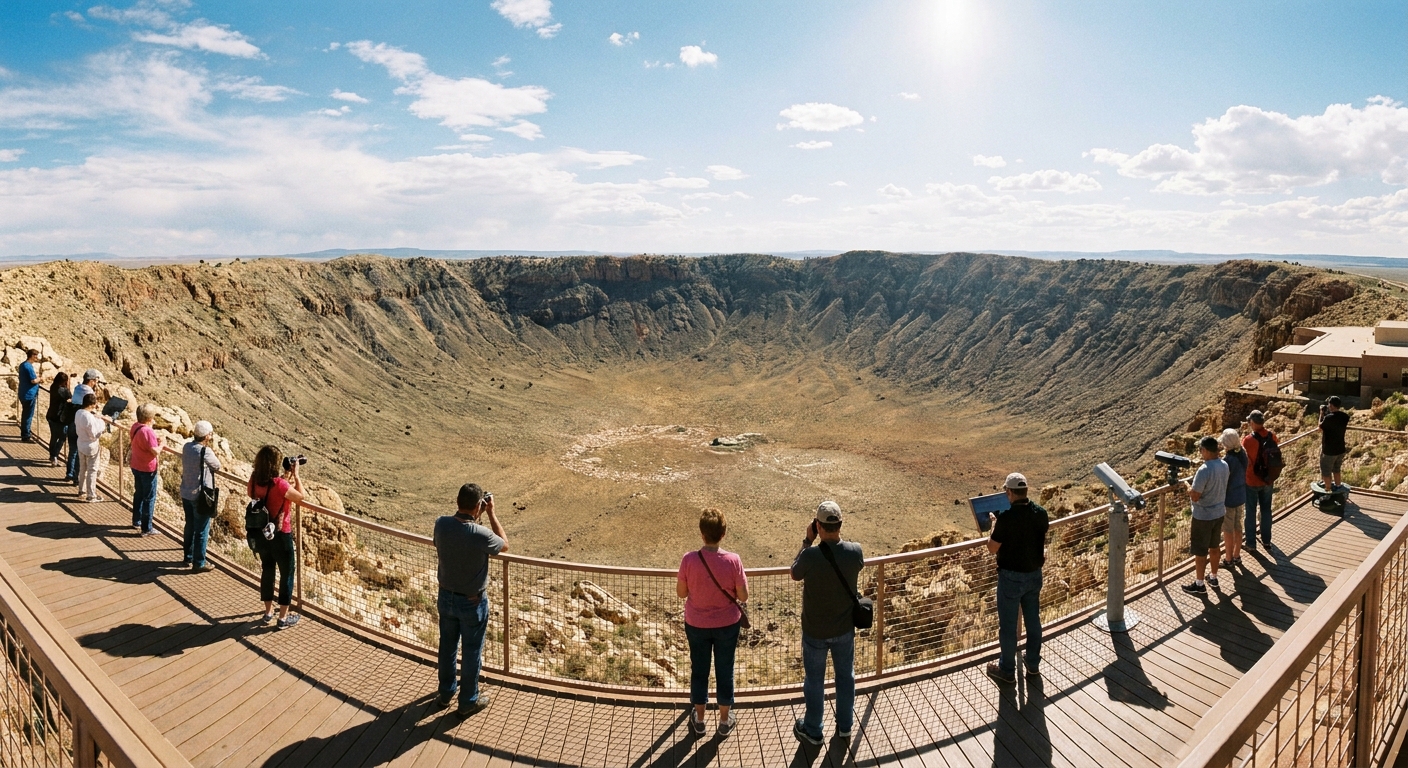
Meteor Crater, also known as Barringer Crater, was formed by a meteorite impact roughly 50,000 years ago. The crater is commonly described as about 1.2 miles (1.9 km) wide and about 550 feet (170 m) deep, which is large enough to feel unreal when you first step onto the viewing area. Unlike many Southwest stops, you are not peering at a distant formation. You are right at designated rim viewpoints, looking into the geometry of an impact site that helped confirm impact cratering on Earth and later informed planetary research.
It is privately owned and operated, which is why it has a ticket booth, a visitor center, a cafe, and structured viewing areas instead of the usual national park setup.
Tickets
Meteor Crater tickets are typically sold as general admission, with add-ons or upgrades depending on season and availability. Offerings can change, so use the official site for current pricing and times. Still, here is what the tiers usually look like in real-world value, plus a budget gut-check so you can decide before you pull off the interstate.
General admission
- Best for: Most travelers, families, and anyone doing a half-day stop from Flagstaff.
- Ballpark cost: Adults are often in the mid-$20s to low-$30s (pricing changes, and discounts may apply for kids, seniors, military, and online purchase). If you are publishing this, consider adding a quick “as of” note once you verify the current rate.
- Includes: Visitor Center exhibits, films or multimedia presentations (when running), access to the main viewing areas and any rim trail segments open to the public, plus scheduled guided rim tours when offered (verify what is included with your ticket on the day you go).
- Why it is worth it: The interpretive exhibits and the scale from the viewing areas make the science click fast, even if you are not a geology person.
Guided rim tour (when offered)
- Best for: People who want context without reading every sign.
- What it adds: A ranger-style walkthrough of impact facts, crater dimensions, and the human story of research at the site.
- Good to know: Tour times can be limited, especially in shoulder seasons. If you care about doing it, arrive with enough buffer to catch the next departure. Always confirm whether it is included with admission, offered for an additional fee, or paused for the season.
Premium tours (limited)
- Best for: Repeat visitors, space geeks, photographers, or anyone who loves getting beyond the standard view.
- What it adds: Potential access to areas not open with standard admission, often with deeper geology and history.
- Reality check: These are usually scheduled, capacity-limited, and can sell out. For a simple Flagstaff half-day, most people do not need this tier. Also note that, in general, you cannot hike down into the crater on regular admission. Any below-rim access is typically tour-only when available.
My take: If you are deciding in the car, general admission plus the best viewing areas is enough to be impressed. Put the premium tour money toward a great Flagstaff dinner or a coffee stop in Winslow, unless you are specifically collecting impact sites.
Viewpoints
Meteor Crater is a “wow” destination because it is easy to see, but it rewards a little strategy. Different overlooks give you slightly different angles and photo opportunities, and wind can make you want to keep moving.
Main observation deck
This is where most people have their first jaw-drop moment. You get the widest sense of scale and the cleanest look into the crater bowl. On clear days, the far rim looks like a drawn circle.
- Best for: First look, family photos, quick panorama shots.
- Look for: Color changes in the rock layers and the way the crater walls slope down to the floor.
Rim walk overlooks
These spots tend to feel calmer and can give you better angles into details like the crater floor and the opposing wall. If the main deck is crowded, this is where you can slow down and actually take in what you are seeing. The walking is close-in and generally straightforward, but stick to designated paths because access and routes can vary.
- Best for: Less crowded photos, lingering, and spotting details.
- Look for: How shadows change depth perception. Late afternoon can make the crater feel even deeper.
Visitor Center windows and exhibits
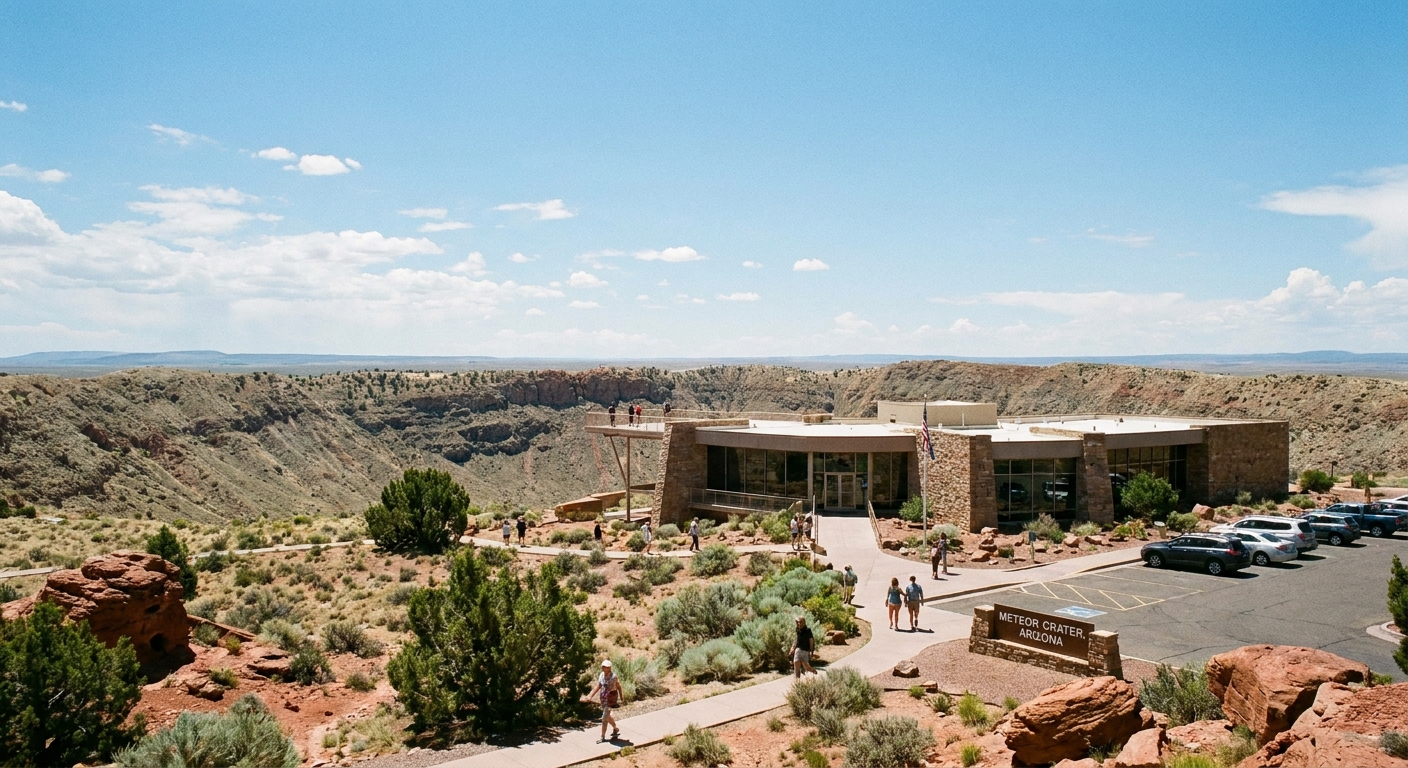
If the wind is ripping or the sun is punishing, duck into the Visitor Center. Between the indoor viewing angles and the interpretive displays, it is where the crater stops being just a big hole and starts being a story.
- Best for: Midday heat, windy days, and anyone traveling with kids who need a reset.
- Look for: Impact science exhibits and historical context about research on the site.
How long to plan
This is one of my favorite Flagstaff-area attractions for people who hate overplanning because it scales easily. Everything is centered around the Visitor Center and viewing areas, so you can do a lot without feeling like you are committing to a full hike day.
- 45 to 75 minutes: Restroom, quick exhibits, main deck, a fast loop to one extra overlook, and you are back on I-40.
- 1.5 to 2.5 hours (sweet spot): Exhibits, film or presentation if running, multiple overlooks, and time to catch a guided rim tour slot if it is operating.
- 3+ hours: Add a meal break, deep-dive exhibits, gift shop browsing, and any premium tour component.
Pack-light tip, road-trip edition: The experience is mostly exposed and breezy. You will be happier with a light layer and water than with extra “stuff.”
Hours
Hours and last entry rules can change seasonally, and special events can affect the schedule. Check the official site the morning you go, especially in winter and shoulder seasons. If you are building your day around a guided tour or the cafe, confirm those specific hours too since they can run on a different schedule than the viewing areas.
Light tip: Late afternoon often gives the most dramatic shadows in the crater walls, but midday can still be spectacular if you want the clearest, most evenly lit “it is a perfect circle” look.
Exit and drive times
Meteor Crater is easy to reach once you know the one key detail: the exit number. It is not a quick “pull off and see it” overlook, but the access is straightforward.
Getting off I-40
Take I-40 Exit 233 (Meteor Crater Road). Exit numbers and signage can change over time, so if you are publishing this, do a quick check against current official directions or a current map app before you lock it in.
- From downtown Flagstaff: About 40 minutes by car (roughly 35 to 40 miles, depending on where you start).
- From Winslow: About 20 minutes by car (roughly 20 miles).
Parking and entry flow
- Parking: Large lot near the Visitor Center, generally easy for standard vehicles and many RVs.
- Tickets: Purchased on-site or online depending on current policies. On busy weekends, pre-purchasing can reduce time in line.
- Bathrooms: Available at the Visitor Center. Use them before you head out to the viewing areas if you are traveling with kids or anyone sensitive to wind and sun.
Timing note: If you are building this into a Flagstaff day, try to arrive earlier in the day in summer. The rim can feel deceptively intense once the sun is high.
Accessibility
This is a strong stop for mixed-mobility groups because you can get a huge experience without a long hike.
- Generally accessible areas: The Visitor Center and the main observation deck are typically wheelchair and stroller friendly, with paved surfaces and a straightforward, short walk from parking.
- Know before you roll: Some outdoor paths and secondary overlooks may have grades, uneven sections, or tighter spaces. If you need fully step-free routes, ask at the front desk which viewing areas are best that day.
- Comfort: Benches and indoor breaks make it easier for seniors and kids who do not want sustained exposure to wind and sun.
Pets
If you are road-tripping with a dog, plan ahead. Pet policies can be specific (and exceptions for service animals follow ADA rules), so verify the current rules on the official site before you arrive.
In general, pets are not allowed in the Visitor Center or on the main viewing areas. The good news is that there is often an on-site pet ramada style kennel area that travelers can use while they do the viewpoints and exhibits. Bring water, avoid the hottest part of the day, and do not assume your pet can hang out in the car comfortably in summer. Also confirm kennel hours and availability when you arrive, especially if you are visiting near opening or close.
Wind, sun, and elevation
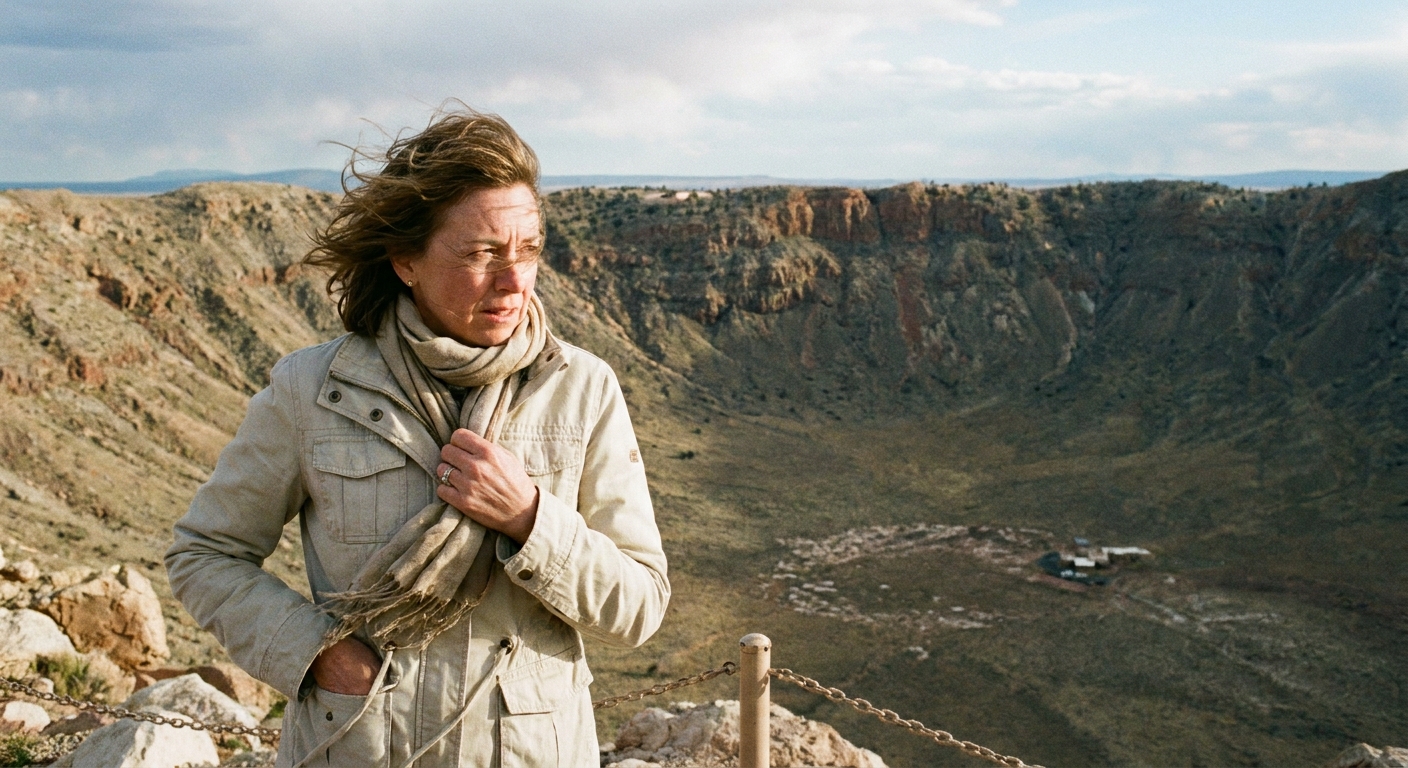
The crater sits on the high desert at roughly 5,700 feet, and the rim is exposed. Translation: you can get sunburned and chilled in the same visit, and wind is common and can be strong.
Wind
- What to expect: Gusts can be strong enough to make photos tricky and hats a bad idea.
- What to bring: A light windbreaker or long-sleeve layer, even on warm days. If you wear a cap, consider one with a secure strap.
- Comfort move: Step inside the Visitor Center between overlooks to reset.
Sun and heat
- What to expect: Bright sun with minimal shade on the outdoor viewing areas.
- What to bring: Water, sunscreen, and sunglasses. If you are sensitive to glare, this is not the day to forget your shades in the car.
Cold snaps and shoulder seasons
Spring and fall can bring big temperature swings, and the elevation makes mornings and evenings feel extra sharp. Winter visits can be crisp, and wind makes it feel colder. Dress like you are going to a viewpoint at altitude, because you are.
Food and breaks
There is a cafe on-site, which is a big deal on this stretch of I-40. That said, cafe hours and menu availability can be seasonal or limited, so treat it as a helpful bonus, not the foundation of your whole day. If your crew gets cranky without snacks, bring your own and plan to hydrate.
Pair it with a Flagstaff day
Meteor Crater fits best as the “paid, high-impact, low-effort” centerpiece of a day where your other stop is a national monument with different scenery. The trick is not to cram two long, exposed walks back-to-back, especially in summer.
Meteor Crater + Sunset Crater
Who this day is for: You want big landscapes and geology variety, plus a little driving through pine and lava fields.
- Flow that works: Do Sunset Crater in the cooler morning hours, then drive east for Meteor Crater as your midday anchor when you want more structured facilities, exhibits, and a cafe break.
- Why it pairs well: Volcano-to-impact crater is an A-plus geology double feature, and they feel totally different. One is textured and walkable, the other is a single massive view.
- Do not overdo it: If you also plan Wupatki the same day, be honest about drive time and sun exposure. Meteor Crater is easy, but it still takes focus and time.
Meteor Crater + Walnut Canyon
Who this day is for: You want one “wow view” stop and one cultural history stop, plus you like the idea of ending your day closer to Flagstaff.
- Flow that works: Start with Meteor Crater (especially if you are coming from Winslow or eastern I-40), then head back toward Flagstaff for Walnut Canyon later in the day.
- Why it pairs well: Meteor Crater is exposed and expansive. Walnut Canyon brings you back into trees and layered human history. The contrast keeps the day from feeling repetitive.
- Energy note: Walnut Canyon involves stairs and elevation change. If anyone in your group is heat-sensitive, consider doing Walnut Canyon earlier and keeping Meteor Crater for later when you can choose shorter outdoor bursts.
Half-day crater + Flagstaff comforts
If your group is split between hikers and city wanderers, this is the compromise day I love. Do Meteor Crater for your shared “big Arizona moment,” then head back to Flagstaff for coffee, bookstores, breweries, or a relaxed dinner. Rugged view, urban reward.
Mini checklist
- Bring: Water, sunscreen, sunglasses, and a light wind layer.
- Footwear: Comfortable walking shoes are enough. This is not a technical hike.
- Photo tip: Hold your phone tight on gusty days and look for people near the railings to show scale.
- If you are tight on time: Skip lingering in the gift shop and prioritize the main deck plus one extra overlook.
- If you have a pet: Confirm the current pet policy, plan on using the pet ramada if available, and time your visit to avoid peak heat.
Worth it?
If you are driving I-40 through northern Arizona, Meteor Crater is one of the rare attractions that delivers exactly what you came for. You will see something scientifically significant, visually dramatic, and genuinely hard to grasp until you are standing at the designated viewing areas. Plan for the wind, give yourself a solid two hours, and you will be back on the highway feeling like you just stepped onto another planet for a minute.