Microspikes vs. Crampons vs. Yaktrax

Maya Lin
Maya Lin is a travel journalist and outdoor enthusiast who believes the best trips combine rugged adventures with urban comforts. After spending six years backpacking across four continents, she founded Trail & Town Guide to help fellow travelers navigate both hidden mountain passes and bustling city neighborhoods with confidence.
Winter travel in gateway towns has a funny rhythm: one minute you are crunching up a packed-snow trail to a viewpoint, the next you are trying not to wipe out crossing an icy parking lot in town with a coffee in hand. Traction devices are the low-key piece of gear that makes both moments safer and more fun, but only if you bring the right kind.
This guide defines microspikes, crampons, and coil-style traction in plain language, then matches each to the terrain you actually encounter in winter national parks and nearby towns: packed snow that turns to ice, steep scenic stairs, slushy sidewalks, and those polished patches that form where thousands of boots have gone before.
Quick trademark note: Yaktrax is a brand (often used casually to mean coil-style traction). And “MICROspikes” is a Kahtoola trademark, even though people use “microspikes” generically. When shopping, it helps to search by both style and brand.
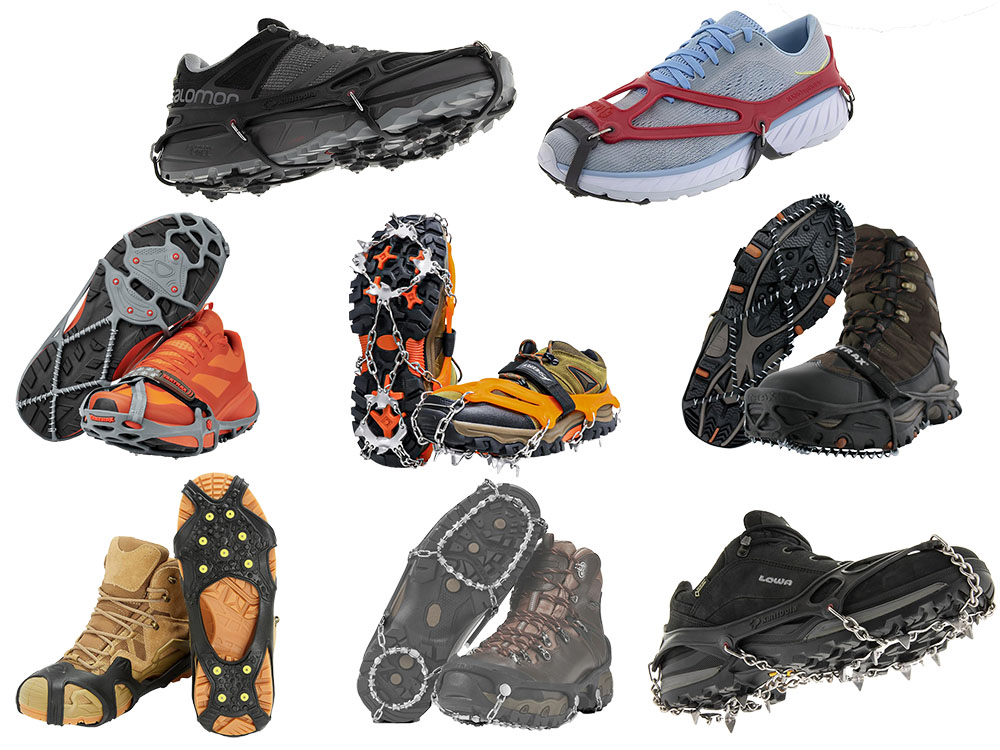
Quick definitions
Microspikes (spike-and-chain style)
Microspikes are rubber or elastomer harnesses that stretch over your shoe or boot, with short steel chains and small spikes underneath. Think of them as a traction upgrade for packed snow and low-angle ice, where you want dependable grip without the bulk of mountaineering gear.
Shopping tip: Kahtoola (MICROspikes), Hillsound, and Black Diamond are common names to look for in this category.
Boundary line: they are great for winter hiking, but they are not for technical climbing or steep, consequential ice.
Crampons (rigid, longer points)
Crampons are a more rigid metal frame with longer points (front and bottom). They are designed for steeper snow and alpine ice, including slopes where slipping is not an option. Some models are flexible enough for hiking boots, but they are still a serious terrain tool compared to microspikes.
Coil-style traction (Yaktrax-style)
Yaktrax is a popular brand of coil-style traction devices. The common design uses wrapped metal coils underfoot rather than sharp points. They are built for flat, everyday ice and snow, like sidewalks, plowed paths, and icy parking lots.
Where each works best
Coil-style traction: town first, trail second
If your winter day is mostly paved surfaces, coil-style traction is the easy win. It adds friction on slick, hard surfaces without feeling like you are walking on cleats.
- Best for: icy sidewalks, compact snow on flat paths, crossing plowed but slick streets, walking dogs, waiting at bus stops, quick errands in gateway towns.
- Common winter travel scenario: you drove into town after a snowy park day and everything is refreezing at dusk.
Why they work: coils can help on lightly icy pavement and compact snow by increasing surface contact. They typically have limited bite on glare ice and do not inspire confidence on slopes.
Microspikes: the national-park sweet spot
Microspikes are the most versatile pick for the classic winter national-park experience: popular trails compacted by foot traffic, icy sections where meltwater refreezes overnight, and short climbs to overlooks.
- Best for: packed snow, mixed snow and ice, rolling trails, icy viewpoints, maintained winter routes with frequent foot traffic.
- Common winter travel scenario: a well-trodden trail that looks “fine” until you hit the shiny, angled ice where everyone has slid before.
Why they work: the spikes and chains penetrate and grip unevenly, which helps on the textured surface of packed snow and broken ice.
Trail crampons: the in-between option
If you want more bite than standard microspikes but you are not in full crampon terrain, “trail crampons” can be a nice middle ground. They usually use a flexible harness like microspikes, but with slightly longer spikes and a beefier underfoot plate. Hillsound is a well-known name here.
Reality check: they still are not a replacement for rigid crampons on steep alpine ice, but they can feel more secure on stubborn, packed-down trails that have turned into a hard, icy staircase.
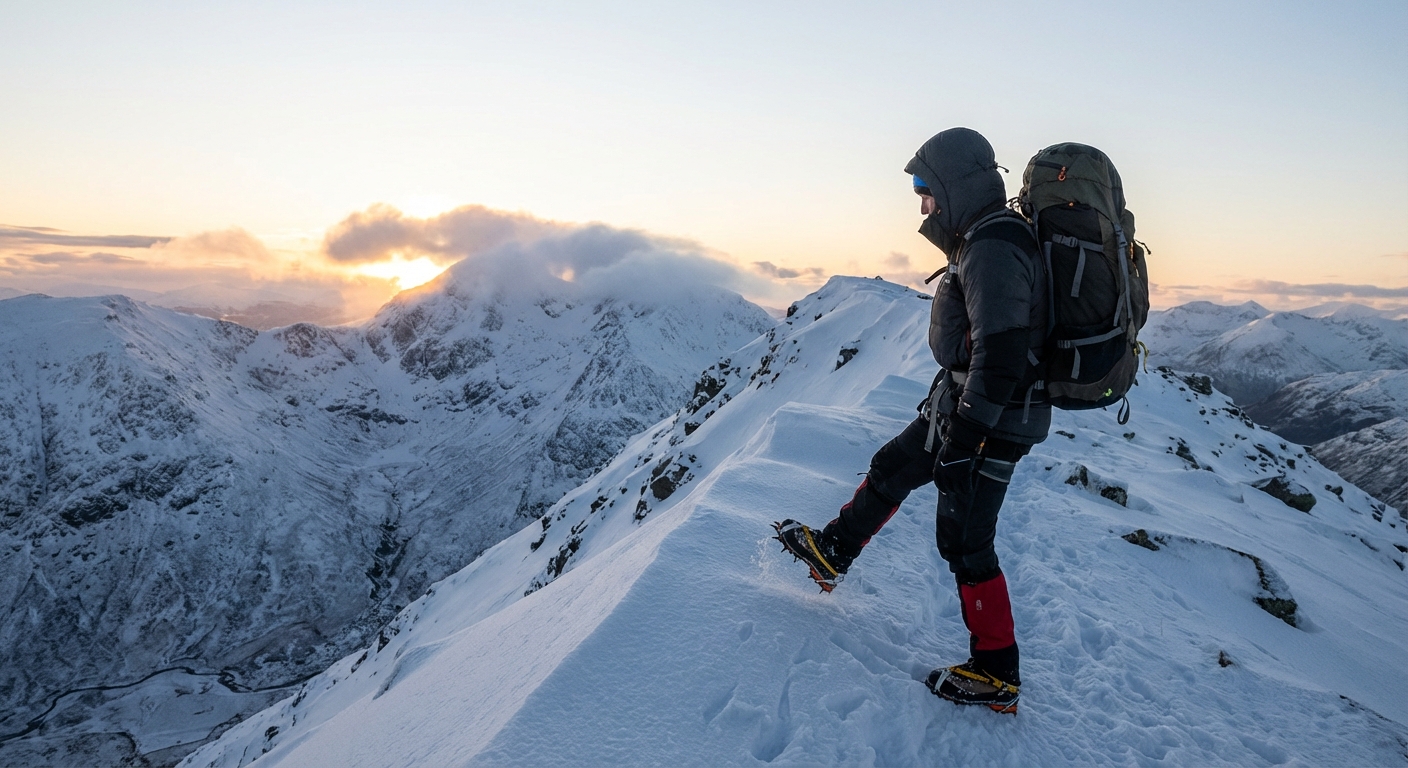
Crampons: steep, consequential terrain
When a trail turns into a steep snow slope, a frozen gully, or a hard, angled face where a slide would be dangerous, crampons are the tool meant for that job.
- Best for: steep snow, alpine routes, hard ice, mountaineering objectives, travel where you may need front points for secure climbing steps.
- Common winter travel scenario: you are not just sightseeing. You are intentionally heading into terrain that stays frozen, steep, or exposed.
Why they work: longer, sharper points and a more rigid platform improve purchase on steep angles where short spikes can skate.
Where each fails
Coil-style traction failures
- Steep trails: coils do not bite like points. On angled ice, you can still slide.
- Glare ice: coils often struggle on smooth, hard ice where you need penetration, not just friction.
- Deep, soft snow: they can clog and offer little control.
- Rocky trail sections: coils can feel unstable, and they can wear faster on abrasive rock.
Microspike failures
- Very steep or hard ice: short points are not a replacement for crampons on consequential slopes.
- Deep fresh snow: they do not add float, so you may still posthole without snowshoes.
- Indoor floors and smooth tile: they can be slippery and they can damage flooring. Carry a small bag and remove them at doors.
- Mixed bare rock: microspikes can skate on smooth rock slabs and wear down quickly if you are clanking over long stretches of exposed stone.
Crampon failures
- Town walking: too aggressive, awkward, and overkill on sidewalks. Also a great way to destroy floors and annoy everyone in a café.
- Wrong boot match: a crampon that does not fit your boot can pop off or shift, which is dangerous.
- Low-angle casual trails: the extra weight and stiffness is unnecessary for the typical packed-snow national-park path.
Footwear compatibility
Coil-style traction
Designed for everyday footwear. They usually stretch over:
- running shoes
- casual winter boots
- light hikers
Fit tip: if your shoe has a very bulky heel or an exaggerated sole shape, some coil devices can twist. Test them outside before committing to an icy walk across town.
Microspikes
Microspikes also use a stretchy harness, but they are happiest on sturdier footwear:
- hiking boots
- trail runners with a stable sole (works, but can feel squirmy if the shoe is very flexible)
- insulated winter hikers
Fit tip: you want the harness snug and centered so the spikes sit under the ball and heel of your foot. If it feels like the chains are creeping to one side, size down or switch models.
Sizing note: sizing varies by brand. Try them on over the exact boots you plan to wear, especially if you have bulky winter soles.
Crampons
Crampons come in common attachment styles:
- Strap-on: most adaptable for hiking boots, but still needs a secure fit.
- Hybrid (semi-automatic): typically a toe basket and heel lever, requires a compatible heel welt.
- Step-in (automatic): requires toe and heel welts and a stiff boot, typical mountaineering setup.
Fit tip: if you are not sure your boots are crampon-compatible, treat that as a sign you probably do not need crampons for your trip. For most winter sightseeing trails, microspikes are the better match.
National-park winter reality check
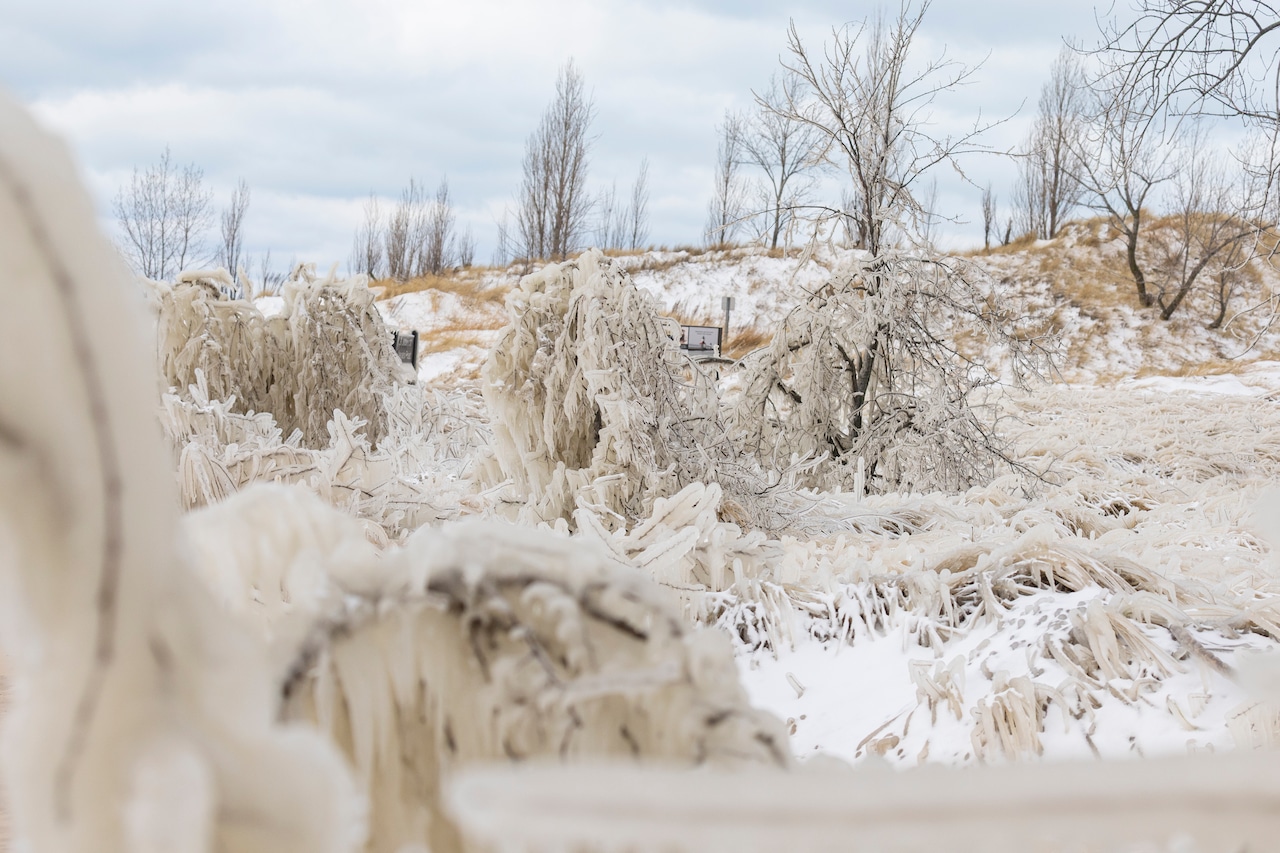
In many national parks and popular winter destinations, the “trail” is often a compacted trench of snow created by thousands of visitors. Add daytime sun, nighttime freeze, and occasional meltwater, and you get a hard, shiny surface that behaves like ice.
Where traction matters most
- Overlook paths: short, steep, and polished by traffic.
- Stairs and boardwalks: wooden steps can ice over, metal edges get slick fast, and some traction can feel a little skittery on hard surfaces like metal grating.
- Waterfall viewpoints: mist freezes into glassy layers near railings and rocks.
- Parking lots and shuttle stops: plowed snow turns to refrozen sheets where everyone is stepping.
Practical takeaway: if your itinerary includes winter viewpoints, canyon rims, waterfalls, or any maintained path with lots of foot traffic, microspikes are often the safest default choice for typical packed and icy, high-traffic routes. Yaktrax-style coils can cover the town parts, but they may not feel secure on those short, icy climbs that define many winter park days.
One more safety boundary: traction helps with slipping, not with avalanche risk. If you are thinking about steep open slopes or backcountry routes, assess conditions and your skills, not just your spikes.
Weight and packability
I am a carry-on only person, so I think about traction the way I think about rain layers: it needs to earn its space.
Coil-style traction
- Packability: very packable, often folds down easily.
- Weight: light.
- Best if: your trip is mostly urban or you want a backup for slick sidewalks.
Microspikes
- Packability: compact, but bulkier than coils because of chains and spikes.
- Weight: moderate, still reasonable for a daypack or carry-on.
- Best if: you are splitting time between winter trails and town, especially around national parks.
Crampons
- Packability: the least packable, and the points require careful storage.
- Weight: heaviest of the three.
- Best if: your trip includes steep objectives where crampons are non-negotiable.
Carry-on tip: whatever you bring, pack it in a durable pouch so spikes do not shred your puffer jacket. Also, sharp points can trigger extra scrutiny at airport security. Check current TSA and airline guidance before you fly, and be prepared to check a bag if asked.
How to choose fast
Pick coil-style traction if:
- you are mainly walking around town
- your surfaces are flat and paved
- you want something you can slip on for short errands
Pick microspikes if:
- you are doing winter day hikes on popular, packed trails
- you expect mixed snow and ice near overlooks, waterfalls, or rim trails
- you want one item that handles both park paths and many town situations
Pick trail crampons if:
- you want a step up from microspikes for hard-packed trails
- you still want a flexible harness that works with hiking boots
- you are not heading into true alpine crampon terrain
Pick crampons if:
- you are heading into steep, exposed, or alpine terrain
- you have boots that fit them properly
- you have the skills for winter travel, including knowing when to turn around
Use them well
- Put traction on early. The most common mistake is waiting until you reach the iciest section, which is often the exact spot where it is hardest to stop and gear up.
- Take shorter steps on ice. Let your feet land under you, and keep your weight balanced instead of reaching with your lead foot.
- Walk slightly wider. A tiny bit of a wider stance improves stability, especially on stairs.
- Watch transitions. Ice to bare rock and back to ice is where feet skid because your brain relaxes for half a second.
- Take them off indoors. Besides being slippery on smooth floors, metal traction can wreck surfaces. Bring a small bag so you are not juggling sharp gear in a gift shop.
My personal rule for gateway towns: if locals are walking like penguins on the sidewalk, I want traction on. Pride heals faster than a sprained wrist.
Care and maintenance
Traction devices live a hard life. A little care keeps them from failing when you need them.
- Rinse and dry: road salt and gritty snowmelt can speed up rust and wear. A quick rinse, then air dry, goes a long way.
- Do a fast check: look for stretched harness rubber, broken coils, bent points, and worn chains.
- Store smart: keep them in a pouch so they do not punch holes in jackets, packs, or car upholstery.
Common scenarios
Weekend in a snowy mountain town with one national-park day
Microspikes if you plan to hike or visit viewpoints. If your park time is mostly short boardwalks and your hotel is downtown, you can add coil-style traction instead, but expect less confidence on steeper icy stretches.
City break with occasional icy mornings
Coil-style traction. Easy on and off for sidewalks and transit stops, minimal space in your bag.
Winter summit attempt or steep backcountry route
Crampons, plus the training and supporting gear appropriate to your objective. If that sentence feels like a lot, it is a sign your trip is probably microspikes territory.
The bottom line
Coil-style traction (Yaktrax-style) is for everyday winter walking. Microspikes are the most versatile choice for the packed-snow and ice mix you find on popular winter trails near national parks. Trail crampons can bridge the gap if you want a little more bite without going full rigid. Crampons belong on steep, serious terrain with compatible boots and the skills to match.
If your trip is the classic sunrise overlook plus afternoon café combo, microspikes are usually the traction that keeps you confident in both worlds. Add coils if you want a more pavement-friendly option for pure town days, and save crampons for when your itinerary genuinely requires them.