Moab: Where to Stay, Eat, and Plan Arches, Canyonlands, and Dead Horse Point
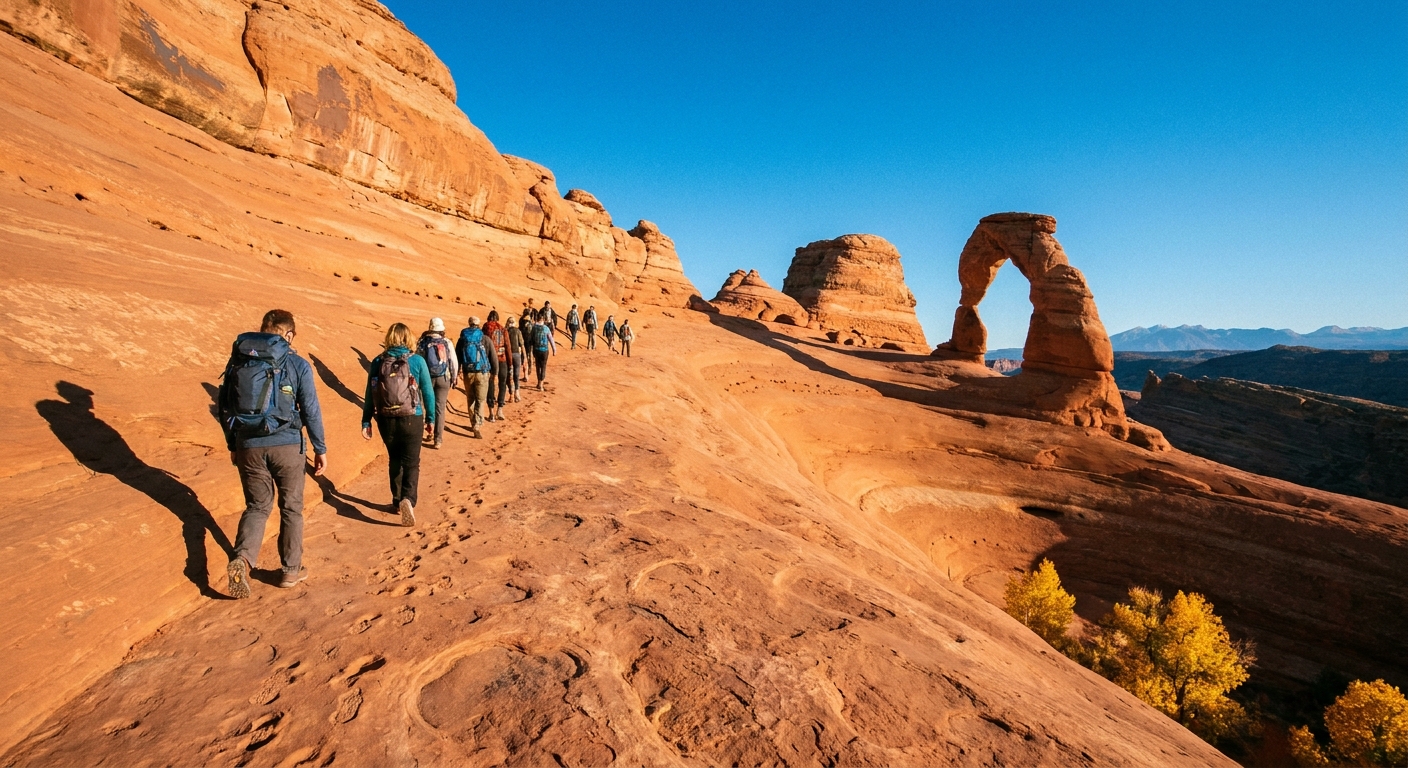
Moab is one of those rare gateway towns where you can watch sunrise turn the cliffs neon, hike all day in a national park, then clean up and eat something that is not trail mix. It's also a place where timing matters. Start too late and you'll be circling for parking while your water warms into soup. Pick the wrong area and you'll spend your trip driving through town traffic when you should be staring at sandstone.
This guide is built for the Moab trip most people actually take: Arches and Canyonlands with at least one sunset at Dead Horse Point, plus a few town comforts in between. I'll help you choose where to stay, plan your days by area, and nail the crucial post-hike dinner window.

Moab at a glance
- Best seasons: Spring (late March to May) and fall (mid September to early November) for hiking and biking.
- Hot season reality: Summer heat can be intense, especially midday. Plan sunrise starts, long shade breaks, and later dinners.
- Parking stress: Typically worst late morning through early afternoon at Arches and Island in the Sky overlooks, and in town on weekends.
- Moab works best as a base for: Arches, Dead Horse Point State Park, Canyonlands Island in the Sky, and the Colorado River corridor.
- When Moab is not ideal: If you want multiple days in Canyonlands Needles, consider staying closer to that district instead of commuting.
Key drive times
Moab is a true hub, but the spokes aren't all the same length. Drive times vary with traffic, construction, and park entry lines, but these ballparks help you plan.
- Arches entrance: about 10 minutes from downtown Moab.
- Canyonlands (Island in the Sky): about 40 to 50 minutes from downtown (via UT-313).
- Dead Horse Point State Park: about 45 to 55 minutes from downtown (often paired with Island in the Sky).
- Canyonlands (Needles): about 1 hour 30 minutes to 2 hours each way, depending on where you stay in Moab.
Where to stay in Moab
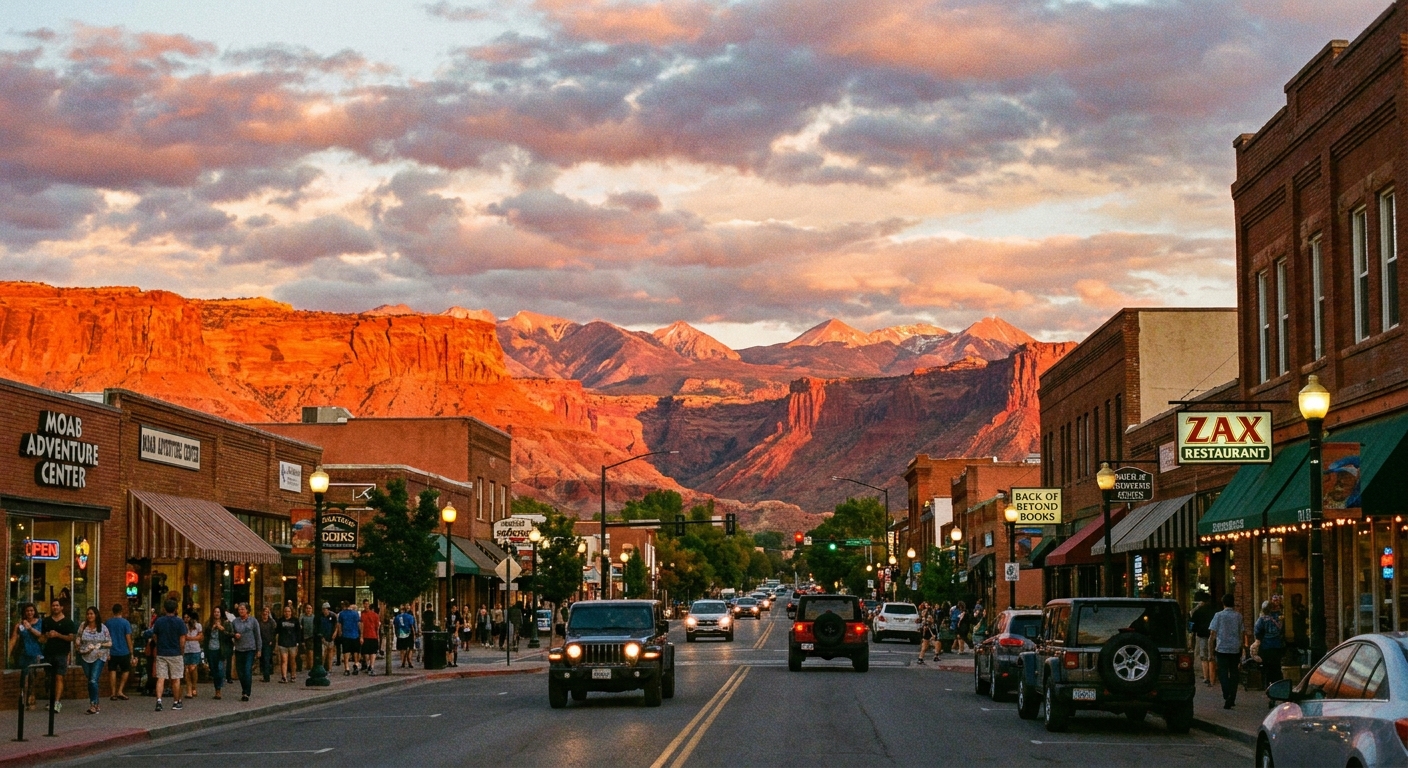
Moab is essentially a long strip anchored by Main Street (US-191), plus a few pockets that feel quieter once you step away from traffic. Some parts are pleasantly walkable and some stretches feel more highway-like, especially in the heat. Choosing the right area is less about “best neighborhood” and more about how you plan to use your mornings and evenings.
Main Street and downtown
Best for: travelers who want to walk to coffee, grab breakfast early, and have dinner options without driving.
Tradeoffs: road noise, more foot traffic, and peak-weekend parking can be annoying if you're in and out a lot.
- Choose this if you want to finish a hike, shower, then walk to dinner.
- Skip this if you're sensitive to noise or you're traveling with a dog that hates crowds and exhaust.
North Moab
Best for: early starts at Arches and travelers who want calmer nights while staying close to town.
Tradeoffs: fewer quick-walk dining options depending on exactly where you land. You'll likely drive a few minutes for most meals.
- Choose this if Arches is your priority and you want to reduce drive time and friction for first-light entry.
- Skip this if you want a “park the car and forget it” town experience.
South Moab
Best for: budget-minded travelers and people who don't mind a short drive into the center for restaurants.
Tradeoffs: it can feel more spread out, and you'll be less likely to stroll to dinner on a whim.
Good to know: south Moab can be convenient if you're day-tripping toward the Needles District, Monticello, or Blanding. For Island in the Sky and Dead Horse Point, you'll still head north through town first.
Spanish Valley and the fringes
Best for: families, groups, and anyone who wants more space, a kitchen, and quieter evenings.
Tradeoffs: you're committing to driving for almost everything, and you'll want to plan meals and groceries a bit more intentionally.
Hotel vs rental
This is the Moab decision that quietly shapes your whole trip. Here's how I recommend thinking about it.
- Choose a hotel if: you want predictable air conditioning, quick showers between hikes, and zero cleanup. Hotels also make it easy to pivot when you're tired and want someone else to handle the logistics.
- Choose a vacation rental if: you're staying 4+ nights, you want a kitchen for early breakfasts, or you're traveling with a group and would rather share a living room than book multiple rooms.
- Kitchen strategy that actually helps: plan breakfasts and one reset dinner (something easy like tacos or pasta). You'll still want to eat out in Moab, but one home meal can save your energy on a big hiking day.
- Parking and gear: if you're hauling bikes, a rooftop box, or a cooler, confirm parking space and access before you book. Moab is an adventure town, but not every property is designed for bulky gear.
Seasonality
Spring
Spring is peak Moab for a reason. Days are longer, temperatures are generally friendly, and trails are in their sweet spot. It's also when Arches parking and town dining waits spike.
- Plan: start early, reserve popular dinners, and build buffer time for park entry lines.
- Pack: a light insulating layer for mornings, plus sun protection. Desert spring sun still means business.
Summer
Moab in summer can be brutally hot midday. The upside is that sunrise and evening adventures feel magical, and you can structure your day like a local: early trail, long break, late outing.
- Plan: sunrise park entry, midday siesta, then an easy scenic drive or short hike near sunset.
- Food timing: you'll likely eat dinner later. Keep a snack in the car so you're not hungry at 4 pm with another two hours until you can face sitting down.
Fall
Fall is my favorite balance. The light is gorgeous, daytime temps are comfortable, and the town feels alive but not always frantic.
- Plan: similar to spring, but bring a warmer layer for evenings and early starts.
Winter
Winter Moab can be quiet and surprisingly pleasant on sunny days, with occasional snow and icy sections on trails. Some services run limited hours, but you may have viewpoints to yourself.
- Plan: check road conditions before driving to Island in the Sky and Dead Horse Point, and be realistic about ice. Sunny spots soften, but shaded sections can stay icy all day. Consider traction devices if you're hiking.
Timing, permits, and parking
Moab logistics aren't hard, but they are punishing if you wing it. A few small decisions make everything smoother.
Arches entry
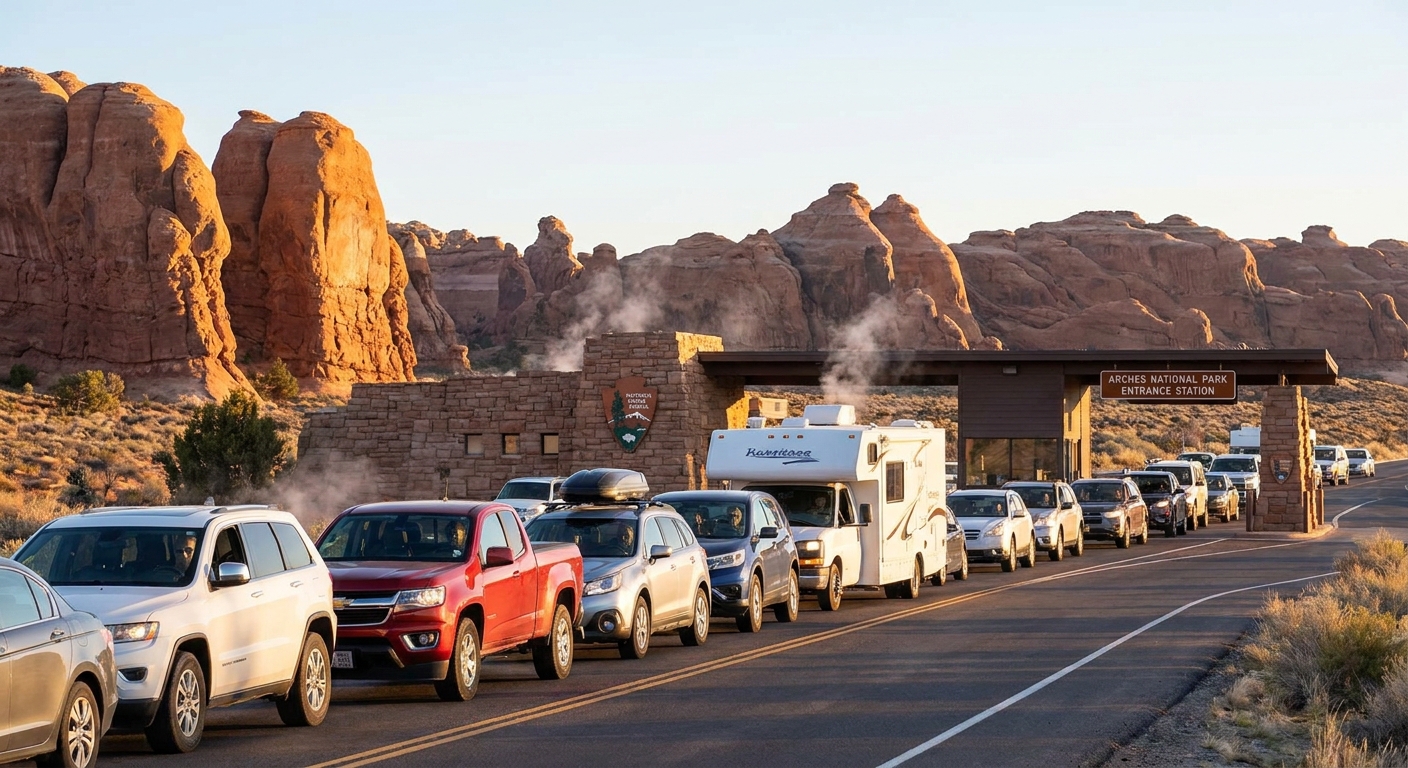
- Best move: aim to be on the road early. Sunrise and early morning are cooler, quieter, and dramatically less stressful.
- Midday reality: late morning and early afternoon can feel like a slow hunt for trailhead spots at the most popular areas.
- Timed entry note: Arches has used a timed-entry reservation system in recent peak seasons. Requirements can vary by date and time, so check the official NPS Arches page for your trip window.
- Different reservations: timed entry is separate from campground reservations and separate from any tour or special-use permits.
Island in the Sky and Dead Horse Point
These areas reward earlier starts too, especially on weekends and during spring and fall. The overlooks are famous for a reason, which means everyone else has the same idea.
Town parking
If you're staying downtown, park once and walk for meals. If you're driving in, arrive a little before typical dinner times or be ready to cruise for a spot, especially Thursday through Sunday.
Safety and comfort notes
- Water and heat: for most warm-weather hikes, plan on roughly 1 liter of water per person per 2 hours as a starting point, and more if you're pushing mileage or hiking in direct sun on slickrock.
- Sun exposure: slickrock reflects heat and light. A hat, sunscreen, and sunglasses matter even on cooler days.
- Monsoon season: late summer can bring sudden storms. Avoid narrow washes if there's any flash-flood risk.
- Fuel and food: services are limited once you leave town. Top off gas, water, and snacks before heading to Island in the Sky, Dead Horse Point, or Needles.
- Leave No Trace: stay on trail and on rock where required. The desert crust is fragile, and the damage lasts.
Pair lodging with day trips
Think of Moab like a hub with four spokes: Arches to the north, Island in the Sky and Dead Horse Point to the west, and Needles much farther south. Your best base depends on which spokes you'll ride most.
If Arches is your priority
- Stay: north Moab or near downtown for quick morning exits.
- Plan: 1 to 2 early mornings in Arches to hit your must-dos with cooler temps and lighter crowds.
- Afternoon idea: come back for a shower and a late lunch, then do an easy sunset viewpoint or short walk closer to town.
If you want the classic viewpoints
- Stay: anywhere in Moab works. South Moab can feel convenient if you are also mixing in southbound day trips later in your stay.
- Plan: bundle Island in the Sky and Dead Horse Point State Park on the same day to reduce driving back and forth.
- Sunset: Dead Horse Point is a standout sunset location. Eat dinner after, not before.
If Needles is on your list
The Needles District is spectacular and feels more remote, but it's a longer drive. If you're doing a single day there, Moab can still work. If you're doing two or more days, consider shifting your base closer to the Needles area so you're not spending your mornings and evenings in the car.
- Moab as a base: best for one big Needles day with an early start, packed food, and realistic expectations about drive time.
- Alternative base: look toward towns and lodging options closer to the Needles access area for multi-day plans.
Eat and drink in Moab
Moab has grown into a seriously good food town, but it still runs on adventure hours. Many hikers finish trails hungry at the same time, which creates the classic Moab situation: you get cleaned up, you show up at 6:30 pm, and suddenly every table has a 45-minute wait.
The post-hike dinner window
- If you finish hiking by 3 pm: you can shower, do a cafe stop, and aim for an early dinner around 5 pm. This is the easiest way to avoid long waits in peak season.
- If you finish hiking at 5 pm: grab a quick snack immediately, then either commit to the dinner rush (and expect a wait) or pick a casual spot where waiting feels fine.
- If you're doing sunset at Dead Horse Point: eat a late lunch in town, pack snacks for sunset, then do dinner after you return.
Breakfast and coffee
I judge a Moab morning by one thing: can I get caffeine quickly and still make a sunrise start. Look for coffee shops with grab-and-go breakfast, then save your sit-down brunch for a rest day.
- Two easy local anchors: Love Muffin Cafe is great for breakfast sandwiches and quick pastries, and Moab Coffee Roasters is a reliable stop when you want a fast coffee and something portable.
- Order strategy: get something you can carry plus extra water before you leave town. Trails and overlooks feel farther when you're running on fumes.
- Packable add-ons: a banana, a pastry, or a breakfast burrito you can eat at the trailhead without drama.
Lunch
For Arches and Island in the Sky, lunch often works best as a picnic. It saves time, avoids mid-afternoon restaurant lines, and keeps your day inside the parks where the light is best.
- Do this: buy sandwiches or simple groceries the night before.
- Not this: count on finding a quick seat in town at 1 pm on a Saturday in April.
Dinner
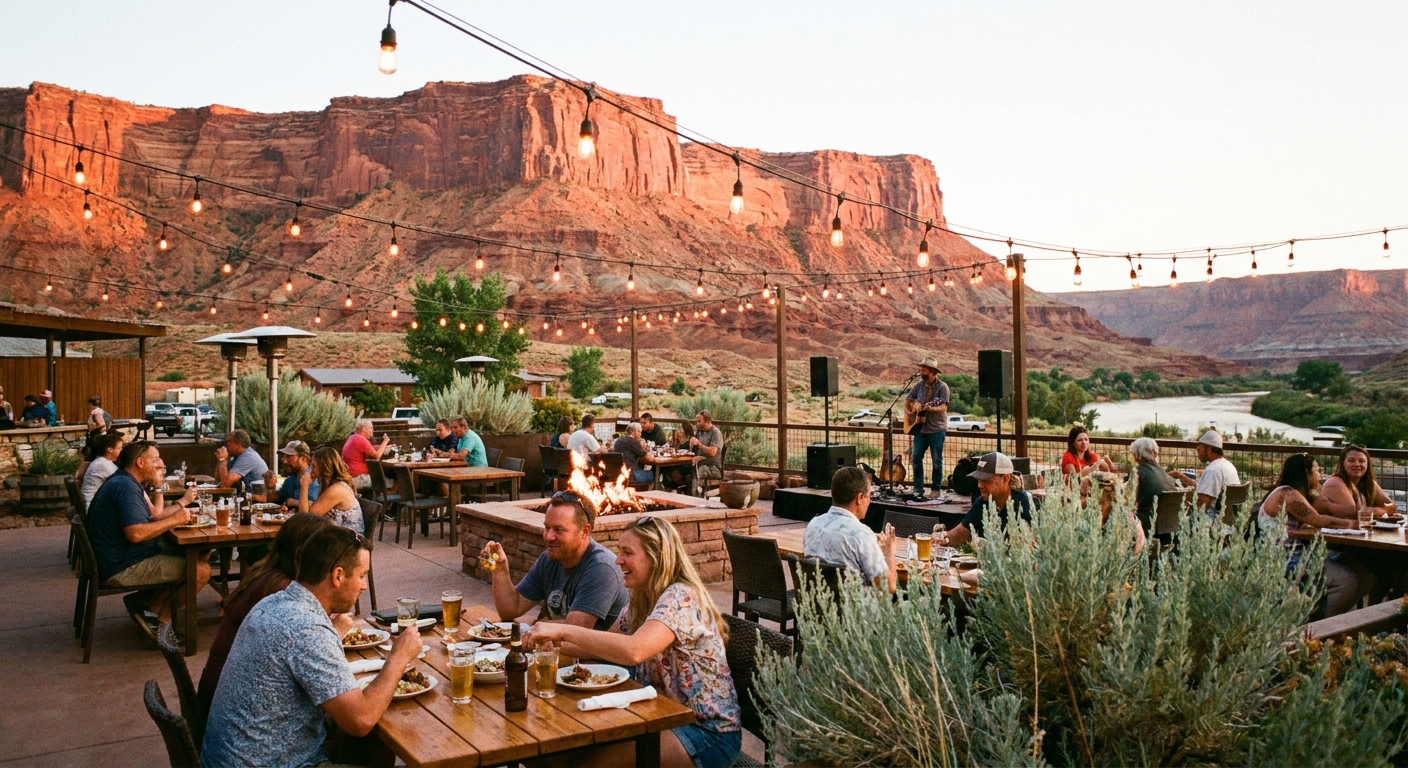
Moab dinner is a choose-your-own-adventure: casual patios, refuel burgers, and places that feel surprisingly nice after a dusty day.
- After a big hike: prioritize a spot with fast service and hearty portions.
- After a scenic drive day: book something a little nicer and linger. Moab sunsets don't end when you get back to town.
- If you have dietary needs: check menus in advance. Moab is generally accommodating, but options can be limited in smaller venues during busy periods.
Suggested itineraries
3 days
- Day 1: Arches early morning, back to town for rest, easy sunset viewpoint or short walk.
- Day 2: Canyonlands Island in the Sky overlooks and a hike, then Dead Horse Point for sunset.
- Day 3: choose-your-adventure: another Arches morning, a river corridor drive, or a slower town day with shops and a long meal.
5 days
- Day 1: Arches at first light and a marquee hike.
- Day 2: Island in the Sky and Dead Horse Point.
- Day 3: rest morning, coffee and town wandering, sunset stroll close to Moab.
- Day 4: Arches again for the trails you skipped, or swap in a half-day guided activity if you want a break from navigation.
- Day 5: Needles as a long day trip, or keep it local with a slower scenic day and fewer miles.
Easy, moderate, hard options
- Easy: a sunrise scenic drive and short walks to overlooks in Island in the Sky, plus a relaxed afternoon in town.
- Moderate: one longer Arches hike in the morning, then a short sunset stroll closer to Moab.
- Hard: a big mileage day in Arches or Needles with an early start, packed lunch, and an early bedtime plan.
My personal rule: schedule your hardest hike for your second or third morning. Day one is often a travel day, and by day four your feet start lobbying for a vote.
When to base in Moab
Moab is a strong base camp because it's close to Arches, relatively close to Island in the Sky and Dead Horse Point, and it has the services that make adventure travel easier: gear shops, groceries, solid restaurants, and a wide range of lodging.
Moab works well if
- You want a mix of national park days and town comfort.
- You're prioritizing Arches and Island in the Sky, plus a Dead Horse Point sunset.
- You like having choices for food and coffee without planning every meal.
Stay closer to Needles if
- You plan to hike in Needles for multiple days.
- You want earlier starts there without a long pre-dawn drive.
- You prefer quieter nights and don't need Moab's full restaurant scene.
Packing notes
- Sun kit: hat, sunglasses, sunscreen, and lip balm. Desert air is sneaky.
- Layers: mornings can be cool even when afternoons are warm, especially in spring and fall.
- Hydration: bring more water than you think you need, plus electrolytes for long days.
- Footwear: grippy hiking shoes for slickrock. Sand gets everywhere, so easy-off sandals help at the end of the day.
- Food: a few reliable snacks in your daypack so you're not forced into the nearest option when you're tired.
Quick checklist
- Check Arches entry requirements for your dates (timed entry has been used in peak seasons) and book if needed.
- Pick lodging based on your priority park: north Moab for Arches, downtown for walkability, rentals for kitchens and quiet.
- Build at least one early dinner into peak-season days to dodge the rush.
- Plan one rest and town block so the trip stays fun, not just a hike marathon.
- Pack lunches for park days to protect your time and energy.
Moab rewards travelers who treat logistics like part of the adventure. Start early, eat well, leave space for spontaneous viewpoints, and you'll get that perfect blend of rugged days and real comfort that makes this town such a classic.