North Cascades Day Hikes and Diablo Lake Stops

Maya Lin
Maya Lin is a travel journalist and outdoor enthusiast who believes the best trips combine rugged adventures with urban comforts. After spending six years backpacking across four continents, she founded Trail & Town Guide to help fellow travelers navigate both hidden mountain passes and bustling city neighborhoods with confidence.
North Cascades National Park is the rare Washington flex where you can sip a good espresso in the morning, drive a world-class mountain highway at lunch, and be on an alpine ridge by afternoon with glaciers hanging in the distance. Most visitors experience it from State Route 20 (North Cascades Highway), which strings together overlooks, short walks, and classic day hikes around Diablo Lake and Washington Pass.
This guide focuses on the easiest to plan, highest payoff stops along Highway 20, with the practical stuff people forget to tell you: when the snow finally clears, what is inside the national park boundary, which trailheads can trigger passes or limited parking headaches, and the two big “don’t get stuck” details: gas gaps and dog rules.
Quick orientation: what’s where
The Highway 20 corridor crosses multiple jurisdictions in a short distance. You’ll hear three names a lot, and they matter for rules, passes, and dog access.
- Ross Lake National Recreation Area (NRA): includes Diablo Lake and many popular trailheads and overlooks. It is managed by the National Park Service but is not technically “the national park.”
- North Cascades National Park: the rugged, mostly roadless core. Many famous views are of the park, even if you are standing in the NRA.
- Okanogan-Wenatchee National Forest: many east side trailheads around Rainy Pass, Washington Pass, and beyond are often on national forest land, where rules and passes can differ. Boundaries are patchy, so don’t assume. Check the kiosk and map.
Translation: you can have a perfect day in “North Cascades” without ever stepping inside the park boundary, and that is normal.
Dog owner translation: this is exactly why trail choice matters. Dogs are generally allowed on leash in the Ross Lake NRA and on many national forest trails, but dogs are not allowed on trails inside North Cascades National Park. If you’re hiking with a dog, confirm the land manager at the trailhead before you commit.
Before you go (read this)
- Fuel up: there are no gas stations between Marblemount (west) and Mazama (east). That is a 70+ mile stretch of mountain highway. Top off before you climb and do not count on “finding something later.”
- Check road status: Highway 20 is seasonal. Use WSDOT for current opening status, closures, and construction.
- Check trail conditions: use recent trip reports (WTA is great) for snow, blowdowns, and parking updates.
- Check alerts: late summer can mean wildfire smoke or closures. Look at current NPS and USFS alerts before you drive out.
- Bring the basics: offline maps, layers, real food, and extra water. Cell service is spotty.
Diablo Lake: best overlooks and easy stops
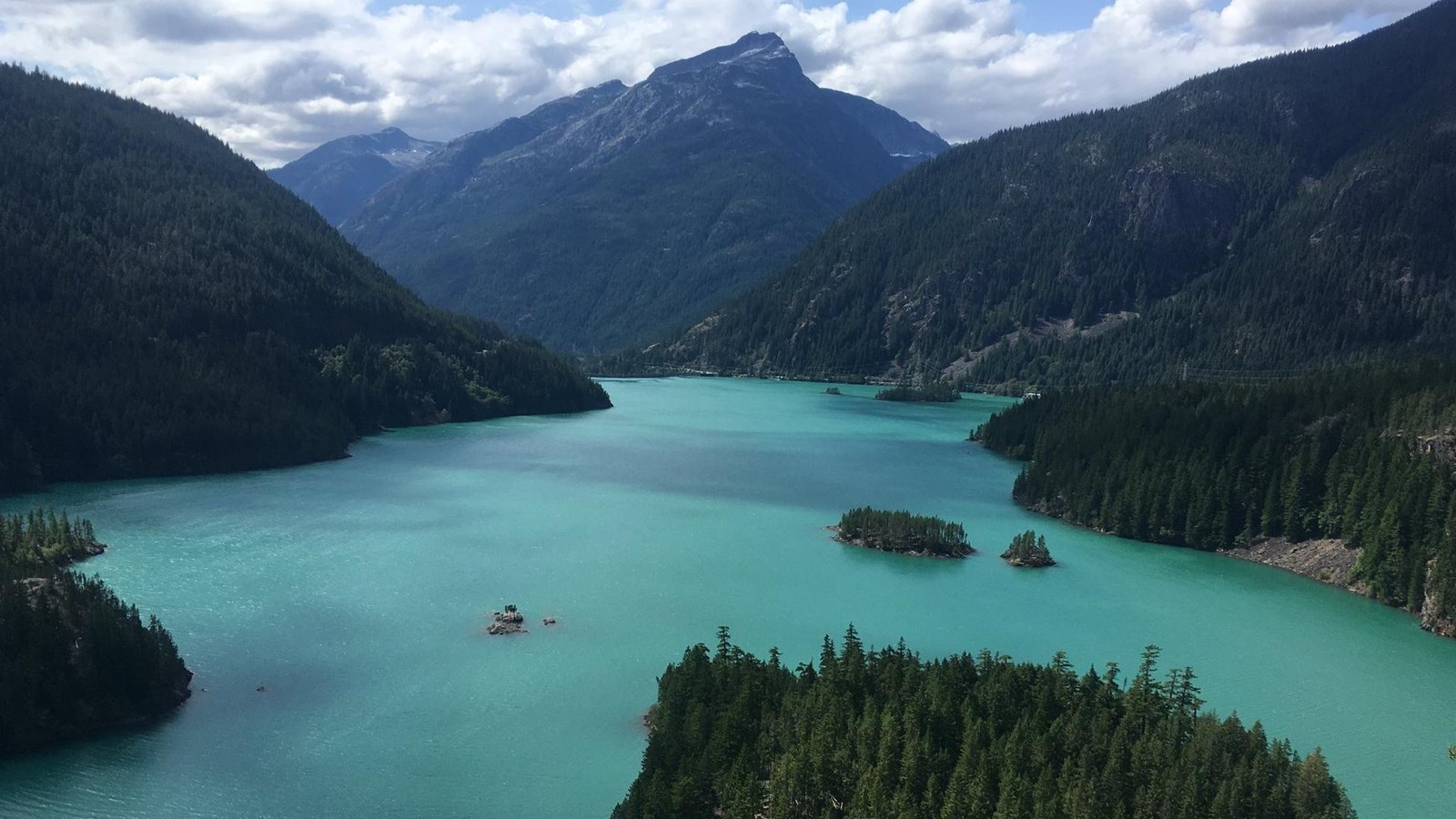
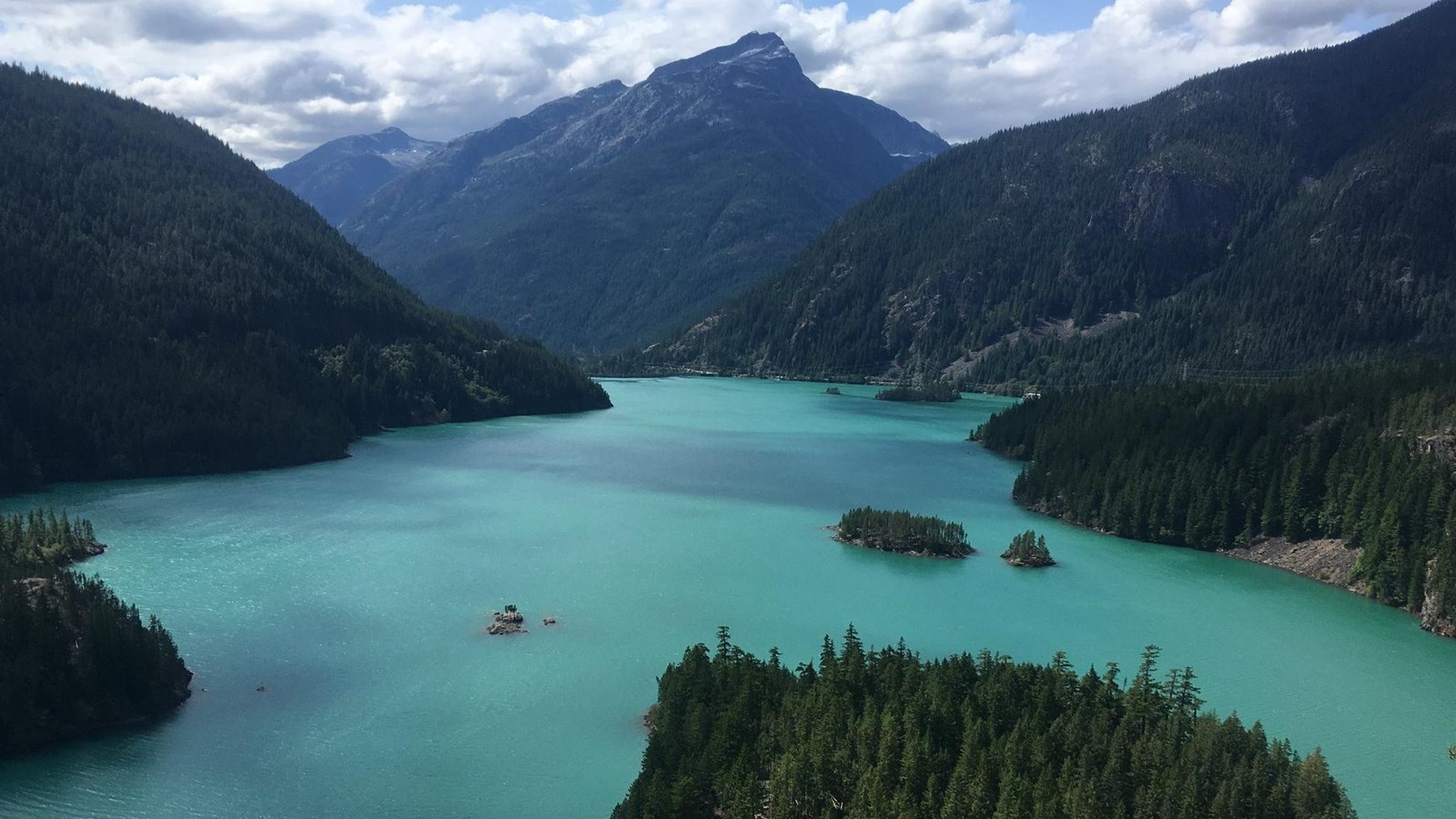
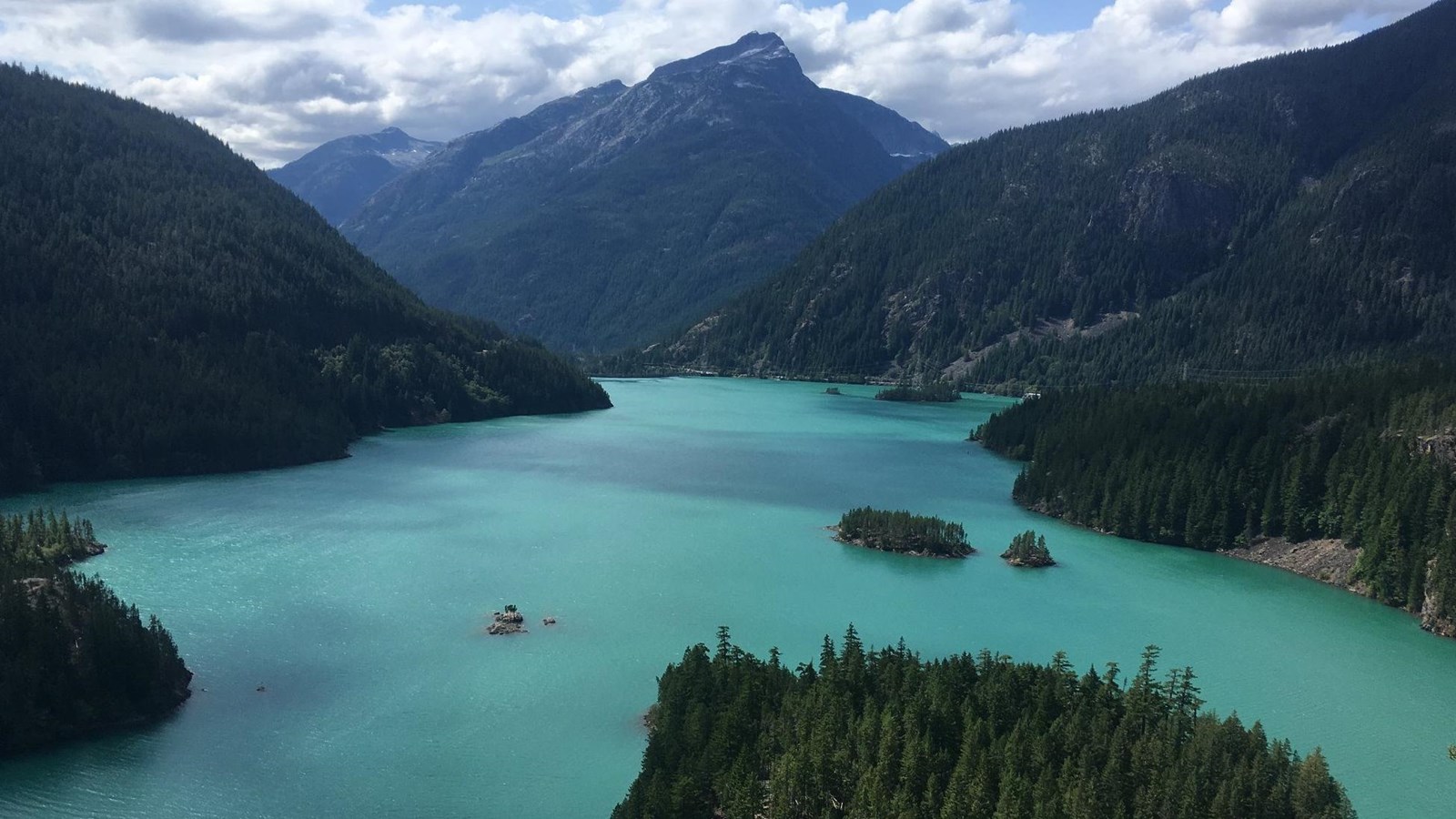
Diablo Lake is that unreal shade of blue-green that makes your camera roll look edited, even when it is not. The color comes from glacial flour, tiny rock particles suspended in the water. For most people, the best experience is a mix of one or two viewpoints plus one short walk.
Diablo Lake Vista Point
This is the classic, postcard view. It is a fast stop with a big payoff, and it is the easiest way to see the lake’s color when you are short on time.
- Time needed: 10 to 20 minutes
- Why stop: iconic panoramic overlook of the lake and surrounding peaks
- Tips: go early or late in the day for calmer crowds and softer light
- Restrooms: available in the corridor, but not at every overlook. Plan like you might not have one at the exact stop you want.
Diablo Dam area (short walks and big infrastructure)
If you want to get closer to the water, aim for the dam area. You can usually find a quick leg-stretch walk, viewpoints, and a “real place” feel compared to pure pullouts. You’ll also get a sense of the Skagit River hydro system that shaped this valley.
- Time needed: 20 to 45 minutes
- Why stop: dramatic dam scenery, different angles of the lake, and interpretive context
- Parking reality: small areas can fill by late morning on summer weekends
- Important: parts of the area are tied to Seattle City Light infrastructure. Follow posted access rules and closures and do not hop barriers.
Rainy Lake (family-friendly classic)
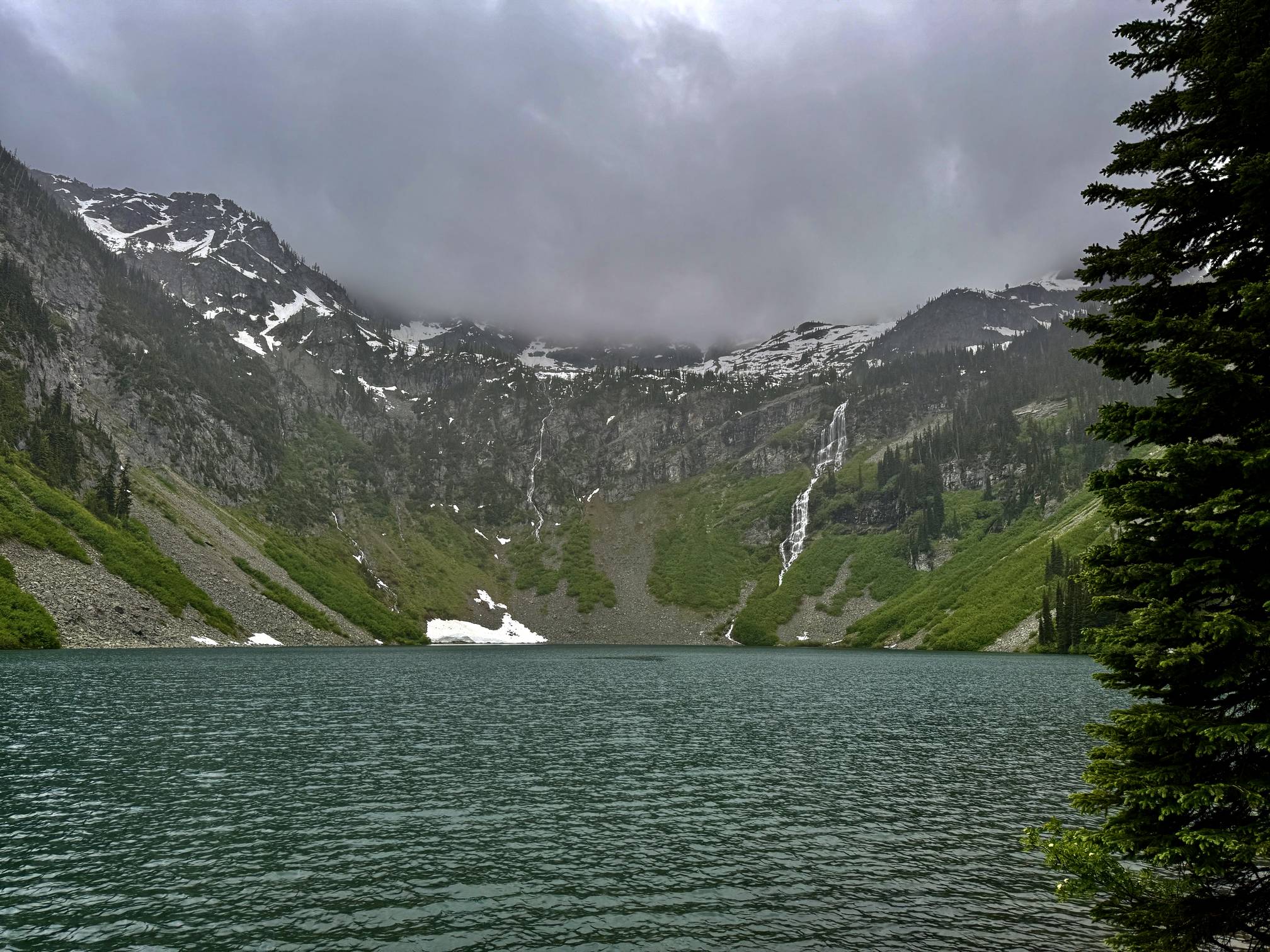
If your group has mixed energy levels, Rainy Lake is the peace treaty. It is an easy, mostly flat walk to a mountain lake framed by peaks. It also tends to melt out earlier than higher routes.
- Distance: about 2 miles round trip
- Effort: easy
- Why it’s worth it: huge scenery for minimal sweat, good for kids and recovery days
- Trailhead: Rainy Pass area along Highway 20
Best day hikes along Highway 20
These are the hikes I recommend most often to friends visiting from Seattle or the North Puget Sound who want a real North Cascades day without complicated logistics. All are accessed from Highway 20, and each one gives you a distinct flavor of the range.
Maple Pass Loop (the headliner)
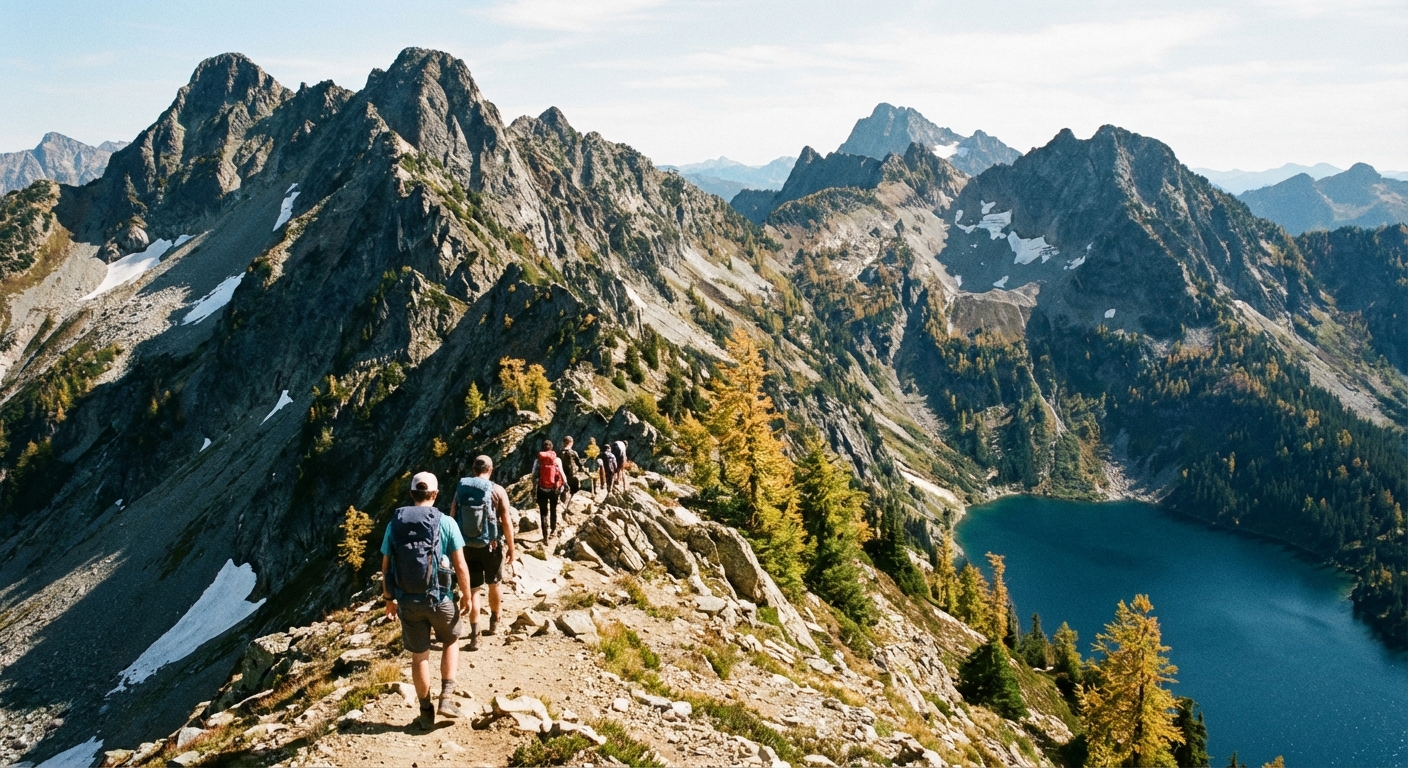
If you do only one hike in the Highway 20 corridor, make it Maple Pass Loop. It is a leg-burner, but the views come fast and keep coming: larch slopes in fall, ridgelines and lakes, and a sense of being truly up in the mountains.
- Distance: about 7 to 8 miles loop (varies slightly by exact route choices)
- Effort: strenuous, sustained climbing
- Why it’s worth it: one of Washington’s best day hikes, period
- Parking reality: the lot at Rainy Pass fills early on summer weekends. Have a backup plan.
Snow window: typically best mid-July through September. Early season snow can linger on the pass and create steep, sketchy crossings.
Safety note: if you hit steep snowfields, turning around is normal. In early season, traction like microspikes can help, and some people carry an ice axe. If you do not have experience on steep snow, choose a lower-commitment option that day.
Blue Lake (short, stunning, and popular)
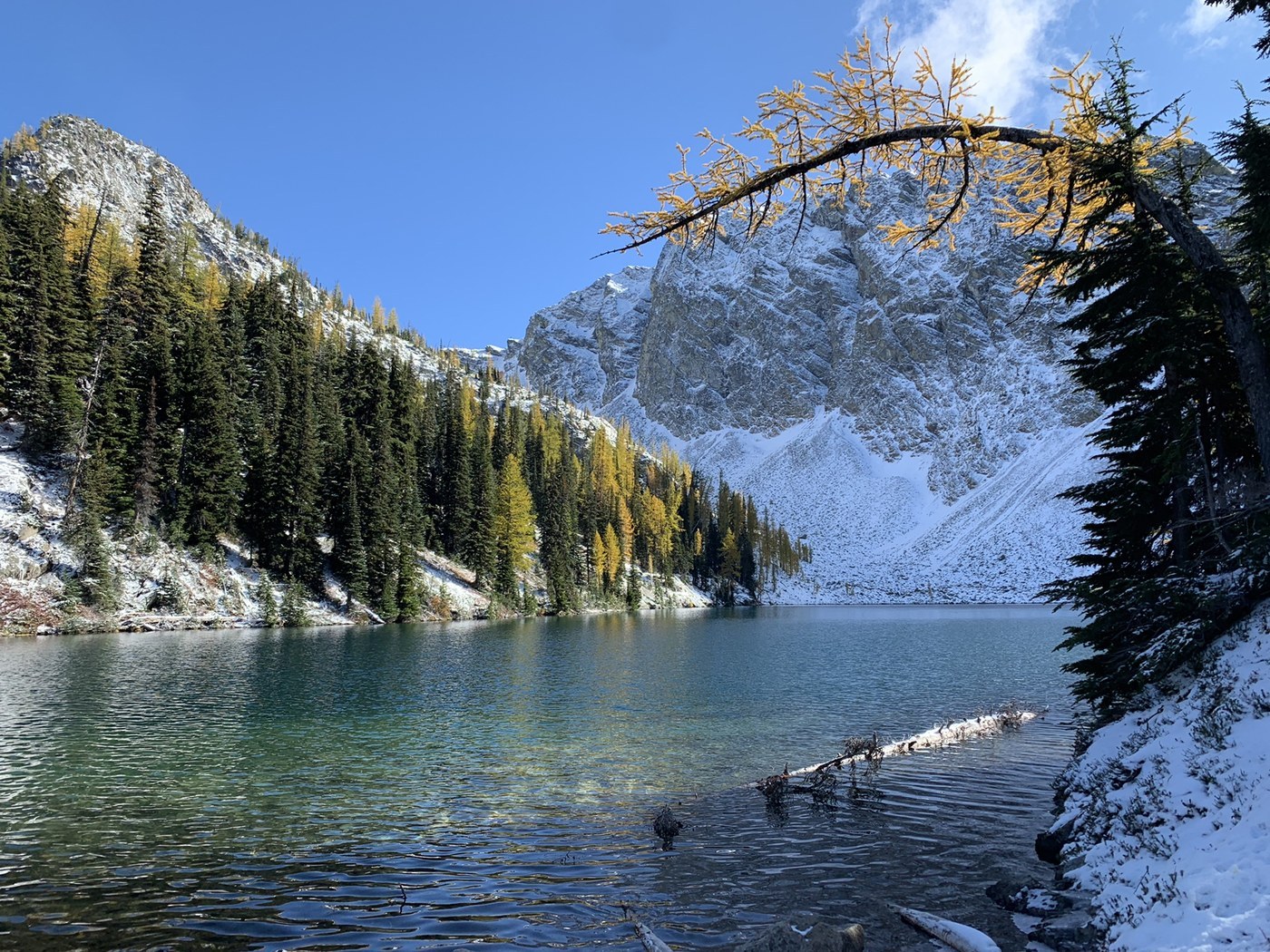
Blue Lake is the crowd-pleaser. It is shorter than Maple Pass, less intimidating for newer hikers, and ends at a vivid alpine lake backed by rugged cliffs. Expect company, especially on weekends.
- Distance: about 4 to 5 miles round trip
- Effort: moderate
- Why it’s worth it: high payoff lake view with a manageable climb
- Best time: weekday mornings for a quieter shoreline
Snow window: often best mid-July through September. Late September and October can work in low-snow years, but early storms are common and snow can return fast.
Thunder Knob (Diablo Lake from above)
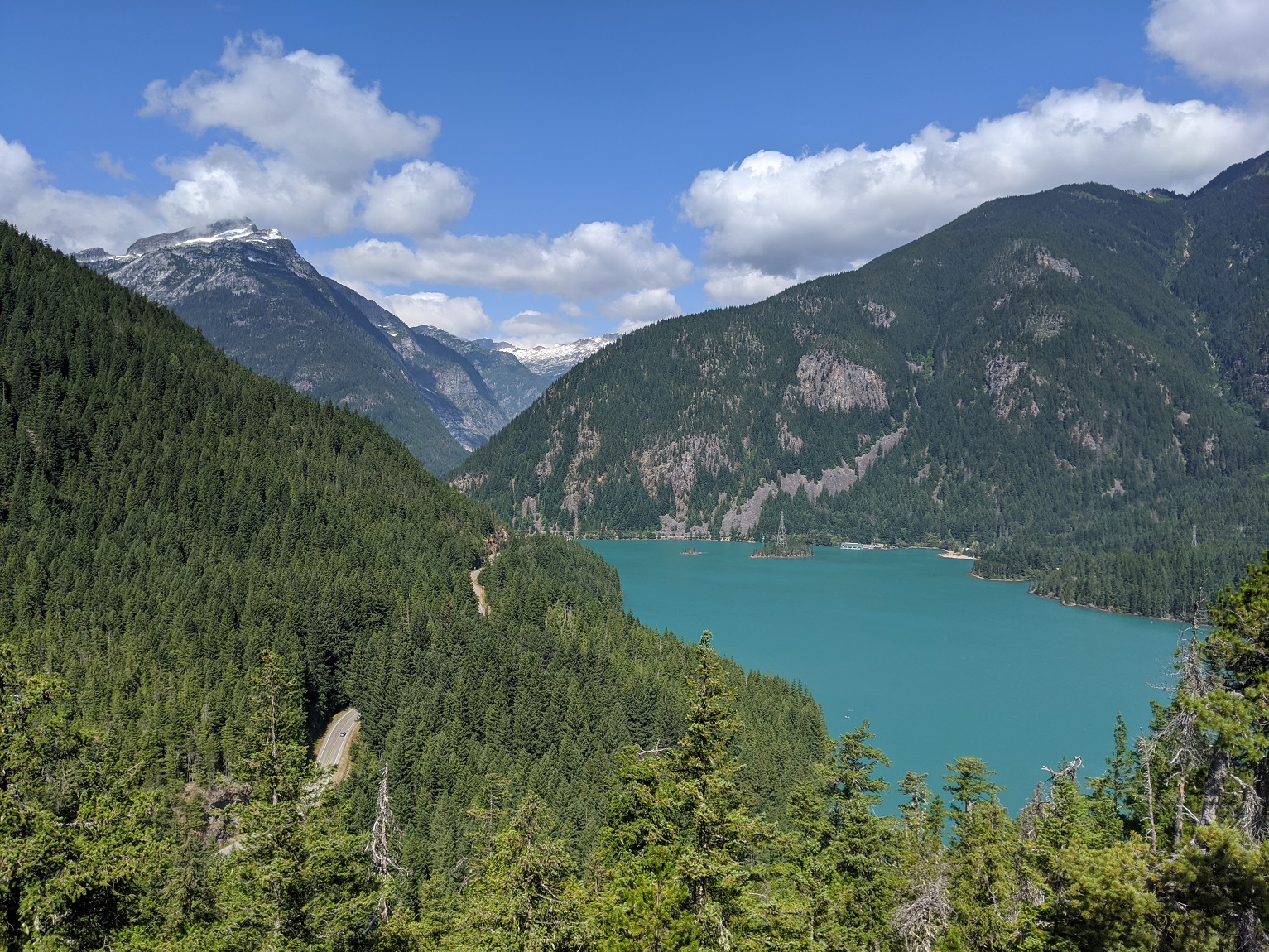
Want a Diablo Lake view that feels earned but still leaves time for more stops? Thunder Knob is a fantastic half-day option near Diablo Lake. It gives you a classic look down toward the lake and surrounding ridges without the full commitment of longer alpine routes.
- Distance: roughly 3 to 4 miles round trip
- Effort: moderate
- Why it’s worth it: big-view payoff close to the lake corridor
- Bonus: easier to fit into a day that includes overlooks and a picnic
Snow window: usually earlier than higher-elevation hikes, but still expect lingering snow in late spring.
Washington Pass Overlook (short walk, huge drama)
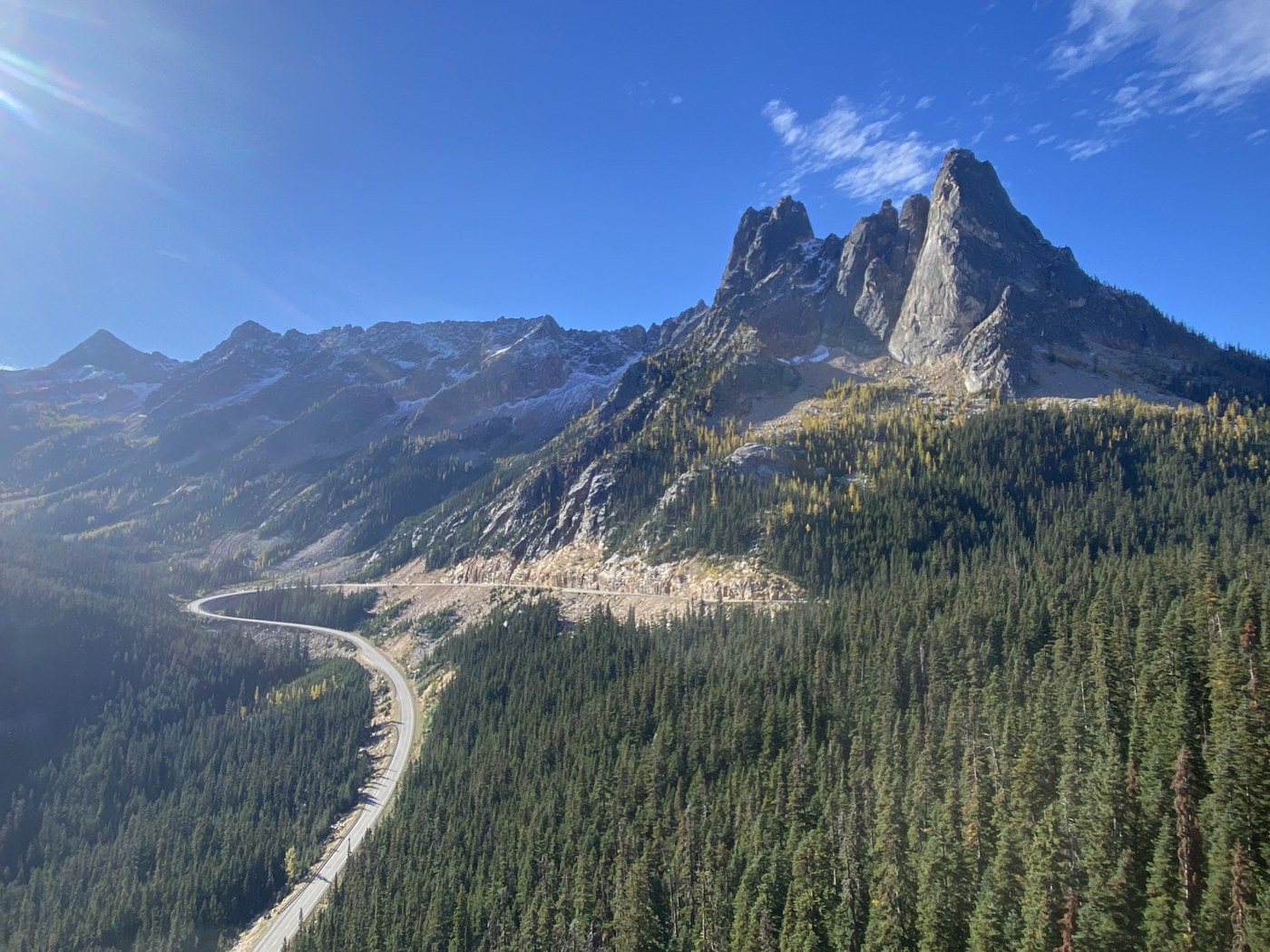
This is not a long hike, but it is one of the best “effort-to-wow” stops on the entire highway. The overlook frames Liberty Bell Mountain and the serrated peaks around Washington Pass.
- Distance: short, under 1 mile round trip
- Effort: easy
- Why it’s worth it: immediate, cinematic mountain scenery
- Tip: bring a layer. Wind at the pass can be surprisingly chilly even on sunny days.
Permit and pass basics
Most of the hikes and overlooks in this guide are straightforward day trips with no special permits needed for day hiking. The two “gotchas” are parking passes and backcountry permits.
Parking passes
- Many USFS trailheads: around Rainy Pass and Washington Pass, trailhead parking is often signed for a Northwest Forest Pass or an accepted alternative. In many places, the America the Beautiful Interagency Pass is accepted too, but not everywhere. Read the sign at the specific lot.
- NPS areas (Ross Lake NRA and the park complex): some developed areas have their own rules. In practice, the move is simple: check the kiosk each time and match the pass requirement to the land manager.
Backcountry permits (mostly irrelevant for this page, but important context)
If you decide to turn your day into an overnight, the North Cascades backcountry is permit-managed, and popular zones can book out. That does not affect typical day hikes like Rainy Lake, Blue Lake, or Maple Pass when done as day trips, but it matters if you are tempted to “just camp somewhere” after your hike.
Pro tip: if you are unsure whether your trailhead is forest or NPS managed, check the trailhead kiosk and an official map rather than guessing. It is the easiest way to avoid an unnecessary ticket and it also helps dog owners avoid accidentally picking an NPS trail where dogs are banned.
Snow timing: when to go
The North Cascades are famously snow-heavy, and Highway 20 itself usually closes in winter and reopens in spring once crews clear avalanche zones. Even after the road opens, higher trails can stay snowy for weeks.
- Road access (Highway 20): typically reopens in spring, but exact timing varies year to year based on snow and avalanche conditions.
- Best overall hiking window: mid-July through September is the safest bet for mostly snow-free trails on popular routes like Maple Pass.
- Shoulder season: early July can be beautiful but patchy with snow at elevation. October can be crisp and stunning, but storms can return quickly and change the whole plan overnight.
If you are planning around a Seattle trip and only have one shot, aim for late July through early September for the best odds of clear trail and accessible viewpoints.
How to build your day
Option A: Scenic stops with one easy walk
- Morning coffee in Burlington, Sedro-Woolley, or Mount Vernon, then drive Highway 20 east
- Diablo Lake Vista Point
- Diablo Dam area wander
- Rainy Lake
- Washington Pass Overlook
This option is perfect if you want lots of variety and photos without committing to a long hike.
Option B: One big hike, then Diablo Lake at golden hour
- Start early at Rainy Pass for Maple Pass Loop
- Post-hike stop at Diablo Lake Vista Point on your drive back
- Quick stretch at the dam or a nearby picnic spot
This is my favorite “earned dessert” day: big effort, big views, then the lake glowing in late light.
Option C: Moderate hike plus extra viewpoints
- Blue Lake in the morning
- Washington Pass Overlook
- Diablo Lake Vista Point and a relaxed stop near the water
Ideal for a weekend when you want a true hike but still have energy for plenty of stops.
Practical tips
- Start earlier than you think. Summer parking at Rainy Pass and Washington Pass fills quickly, especially on weekends.
- Plan for a bathroom gap. Restrooms exist at some major trailheads and developed areas, but not at every pullout. Handle it before you drive deep into the corridor.
- Cell service is unreliable. Download offline maps before you leave the lowlands.
- Carry layers. Even on hot days, mountain passes can be windy and cool.
- Pack water and real food. Options are limited along the highway, and you will enjoy the overlooks more with a snack in hand.
- Respect fragile terrain. Stay on trail in alpine zones. That bright green tundra recovers slowly.
Easy tie-in from Seattle
If you are based in Seattle, Everett, Bellingham, or anywhere along the I-5 corridor, the Highway 20 approach makes the North Cascades a satisfying long day or an easy overnight. For a single-day push, keep your plan tight: one major hike or two short walks, plus Diablo Lake viewpoints. For a weekend, add a second hike and give yourself time to linger at Washington Pass when the light gets dramatic.
If you are choosing between “more miles” and “more stops,” pick the stops. The North Cascades are a landscape you absorb in layers, and Highway 20 is basically a curated highlight reel.
Leave no trace
This corridor gets busy for a reason. A few small choices keep it wild for everyone: pack out all trash, keep dogs leashed where required, yield politely on narrow trails, and give wildlife space. If you are chasing that perfect Diablo Lake photo, step back from the edge, slow down, and let the place be bigger than the shot.
When you are ready, you have two simple ingredients for a great North Cascades day: a trail that matches your energy level, and enough time to stop at the water and actually look.