Packing Cubes 101

Maya Lin
Maya Lin is a travel journalist and outdoor enthusiast who believes the best trips combine rugged adventures with urban comforts. After spending six years backpacking across four continents, she founded Trail & Town Guide to help fellow travelers navigate both hidden mountain passes and bustling city neighborhoods with confidence.
Packing cubes are one of those travel “why didn’t I do this sooner” upgrades. They do not magically bend the laws of physics, but they do cut dead space, stop your bag from turning into a clothes soup, and make hotel check-ins and trailhead overnights way smoother.
I’m a carry-on only traveler who bounces between hikes and cities, which means my bag has to do double duty: breathable layers and trail grit on one side, clean clothes that can pass for dinner on the other. Packing cubes are how I keep that peace treaty intact.
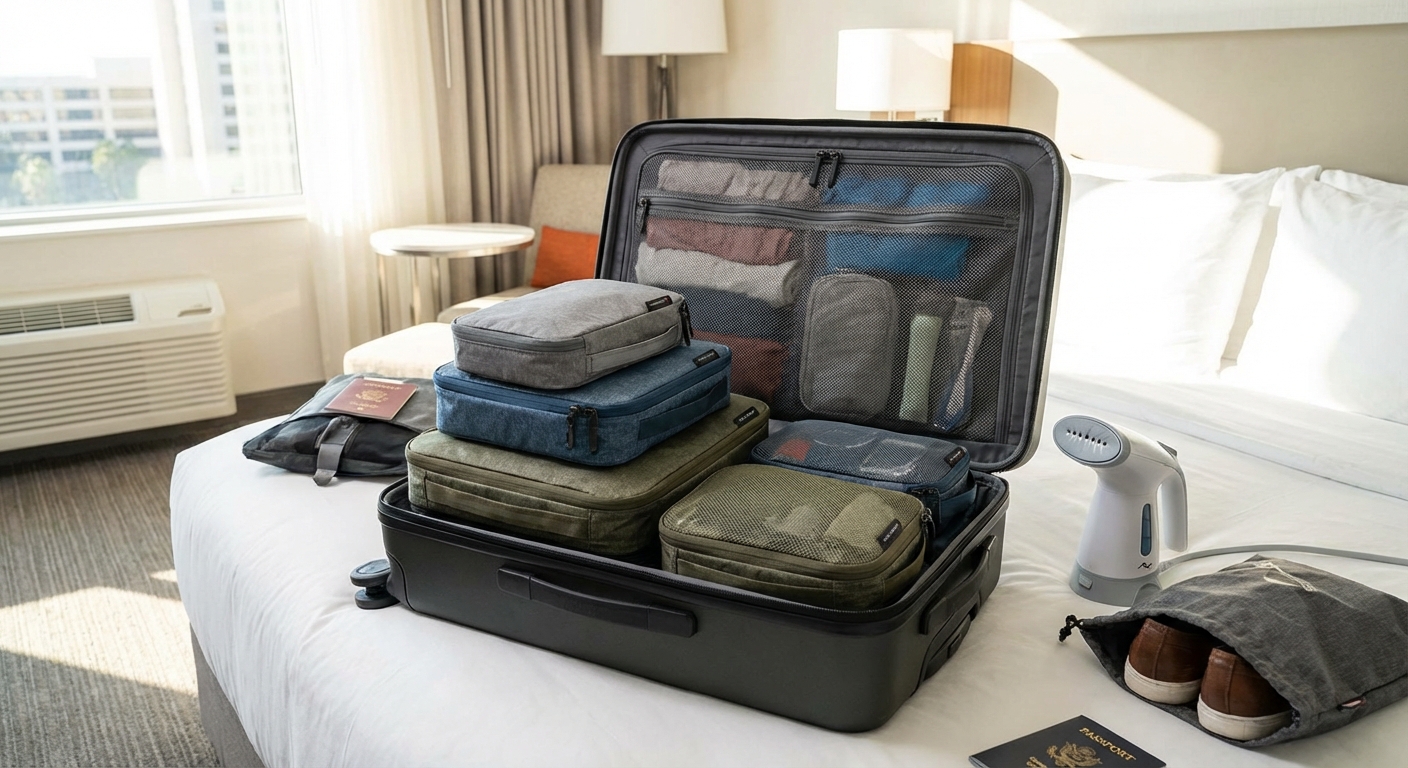
What packing cubes actually do
Think of packing cubes as drawers for your luggage. They make three things easier:
- Organization: You can pull one cube out without detonating everything else.
- Compression: Not all cubes compress, but even standard cubes help you pack more densely by shaping soft clothing into stackable blocks.
- Separation: Clean vs. dirty, city vs. trail, warm layers vs. beach gear, and yes, keeping socks from migrating.
What they do not do: reduce weight. If you tend to overpack, cubes can enable your habit. Use them as a system, not a challenge.
Choosing the right cubes (without overthinking it)
You can buy a dozen cubes and still feel messy if the sizes do not match how you actually travel. Start with a simple set and build from there.
Sizes that cover most trips
- 1 large cube: Bulky items like sweaters, fleece, or pants.
- 1 to 2 medium cubes: Shirts, base layers, dresses.
- 1 small cube: Underwear, socks, sleepwear.
- 1 slim cube or pouch: Tech, chargers, or toiletries depending on your setup.
Compression cubes vs. standard cubes
Standard cubes are lighter, simpler, and plenty for most travelers. Compression cubes have a second zipper that tightens the cube like a mini suitcase. They shine when you are packing puffier layers or trying to keep a backpack streamlined.
My rule: if you often travel with a puffy jacket, extra knitwear, or you are fitting gear into a smaller pack, add one compression cube to your kit. You do not need all compression everything.
Materials and features worth paying for
- Ripstop nylon or durable polyester that can handle zippers being yanked at 6 a.m.
- Mesh panel so you can see what is inside without unzipping.
- Good zippers (this is usually the first failure point).
- Grab handle for quick pull-out and hotel drawer transfers.
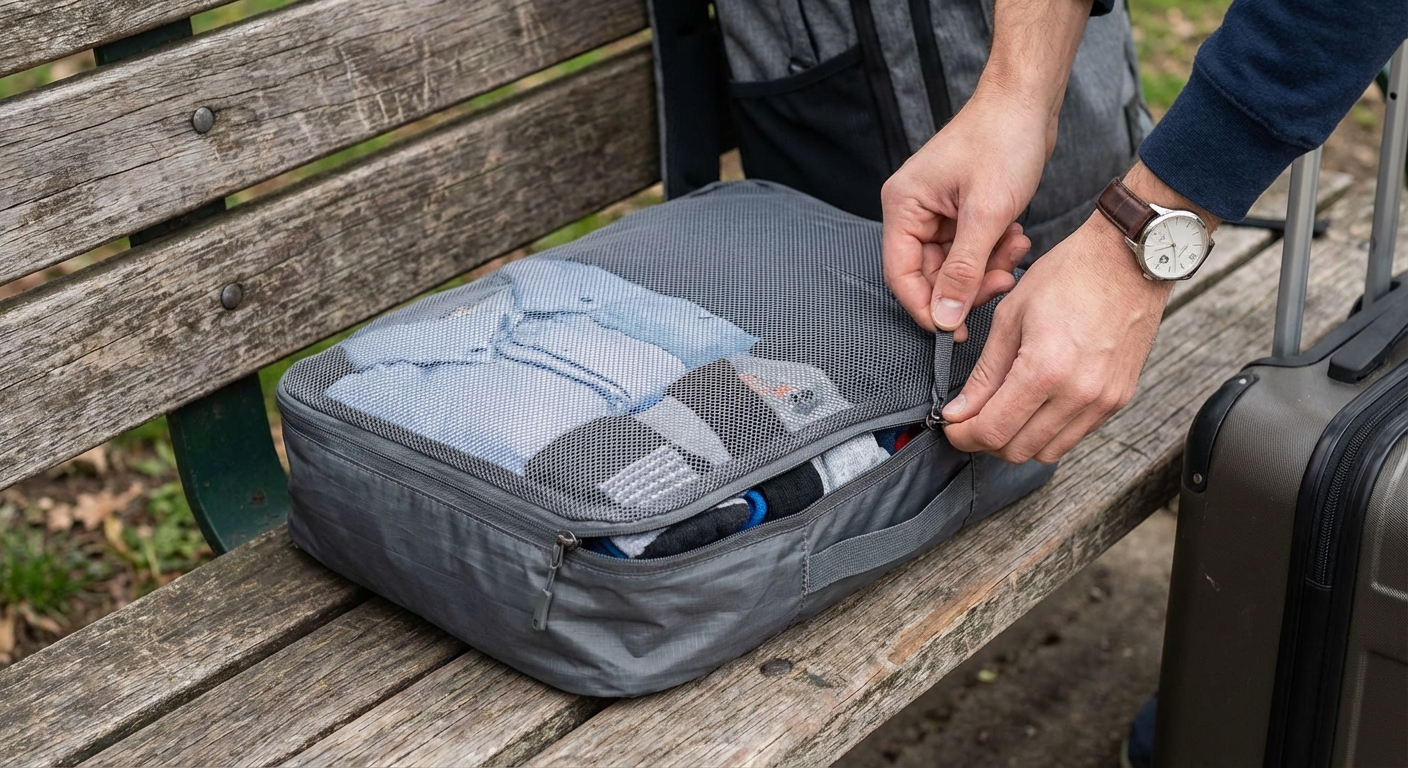
The three packing methods: fold, roll, or bundle
There is no single best method. The pro move is matching the method to the fabric and the job.
1) Folding: best for structure and fewer wrinkles
Fold items that you want to stay crisp or flat, like button-downs, linen shirts, trousers, and dresses. Folding also makes cubes stack like clean little bricks.
- Tip: If an item creases easily, fold it once, then lay it on top of a cube instead of compressing it at the bottom.
2) Rolling: best for knits, tees, and maximizing corners
Rolling works great for T-shirts, workout gear, base layers, and anything stretchy. It also lets you slot “rolls” into the edges of a cube where folded stacks waste space.
- Tip: Roll firmly but not aggressively. If you are forcing it, you are just making wrinkles with extra steps.
3) Bundling: best for dressier pieces
Bundling is when you wrap multiple garments around a soft core (like socks or a T-shirt) to reduce hard crease lines. If you travel with one blazer or a nicer dress, bundling can be your secret weapon.
- Tip: Bundle items together inside one medium cube, then use the cube to keep the bundle from unraveling.
How to pack cubes for maximum space
This is where people either become packing-cube believers or quit in frustration. The goal is density with logic.
Step-by-step cube loading
- Start with a category: tops, bottoms, underwear, outer layers. Do not mix until you have a system you can repeat.
- Fill the base: place folded items flat or create a row of rolls.
- Use the edges: tuck socks, a buff, or a belt along the sides.
- Top with delicate items: anything you want less compressed goes on top.
- Zip slowly: if you have to kneel on it, you packed too much for that cube size.
Strategic compression (so you do not destroy your clothes)
Compression is best used on soft bulk (fleece, activewear, base layers). It is not ideal for crisp fabrics, structured jackets, or anything you would like to wear without an emergency ironing session.
Also, do not compress wet gear. It is a recipe for mildew and regret.
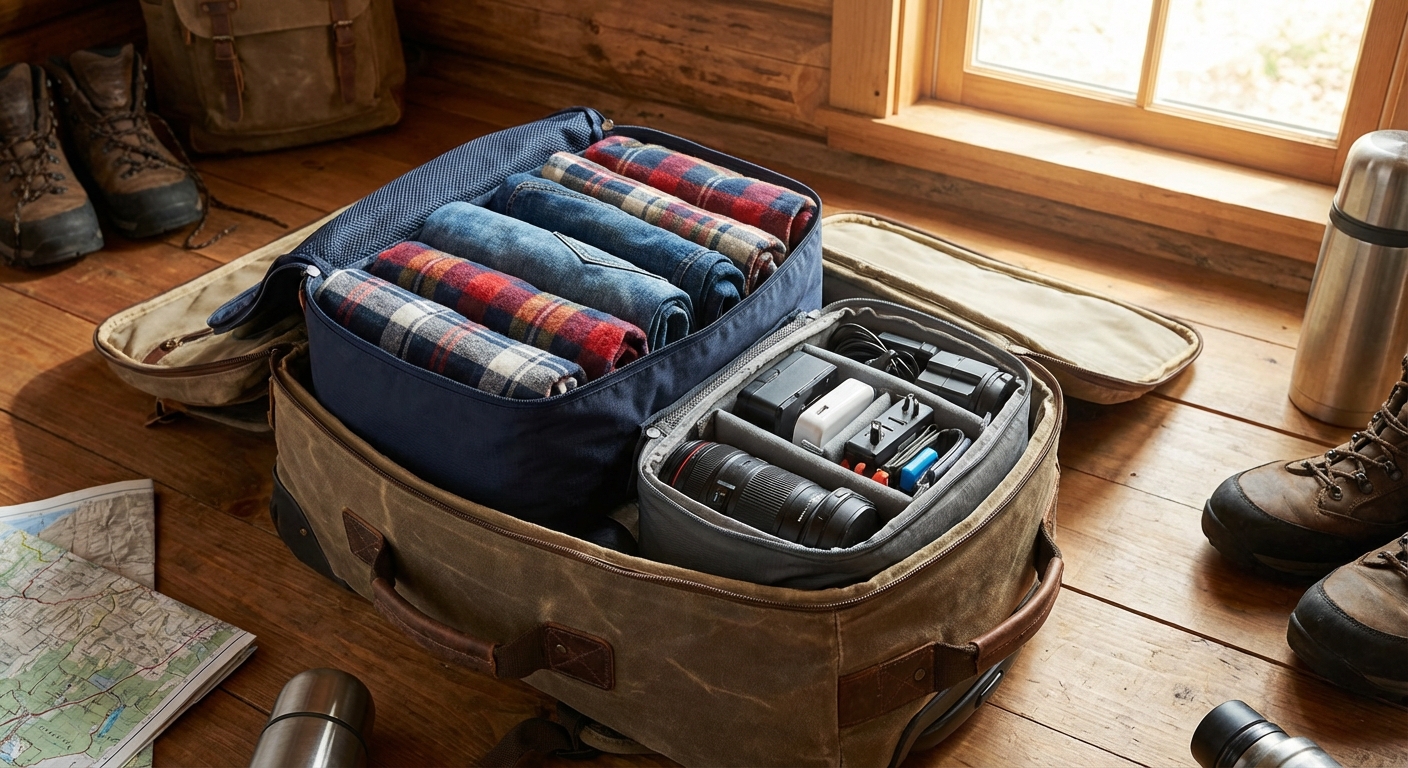
Cube layouts that work (copy and paste these)
Here are a few plug-and-play setups I use for the classic Trail & Town split itinerary.
Carry-on suitcase: city weekend plus one hike
- Medium cube: city outfits (2 tops, 1 bottom, 1 dinner option)
- Medium cube: trail clothes (base layer, hike shirt, shorts or leggings)
- Small cube: underwear, socks, sleepwear
- Loose items: shell jacket laid flat on top, shoes in a bag on the bottom
Travel backpack: one-bag trip with lots of transit
- Large cube: all clothes except underwear
- Small cube: underwear and socks
- Small pouch: chargers, headlamp, small essentials
- Outside pocket: rain shell and snack kit for quick access
Cold weather: the “layers everywhere” problem
- Compression cube: base layers, midlayers, beanie, gloves
- Large cube: pants and heavier tops
- Small cube: socks (yes, more than you think), underwear
- Loose: puffy jacket laid flat or stuffed into a dedicated jacket pocket in your bag
Trail and town organization hacks
This is the part that keeps your city clothes from smelling like yesterday’s climb.
Create a clean and dirty system from day one
- Option A: one cube for clean clothes, one cube for worn clothes.
- Option B: keep clean clothes in cubes and carry a separate lightweight laundry bag for dirty items.
If you are moving accommodations often, Option A is faster. If you are staying put for a few nights, Option B usually packs better.
Use “transition cubes” for mixed days
On a day that starts with a hike and ends with a restaurant, I like a small “transition” cube with:
- a clean top
- fresh underwear and socks
- deo and a small face wipe pack
It turns a bus station bathroom into a workable changing room and keeps your main cubes untouched.
Shoes: treat them like a separate category
Shoes are often the mess-maker. Keep them in a shoe bag and pack socks inside the shoes to reclaim space. If you bring trail runners and one city pair, your shoe count is already in the danger zone for carry-on life.
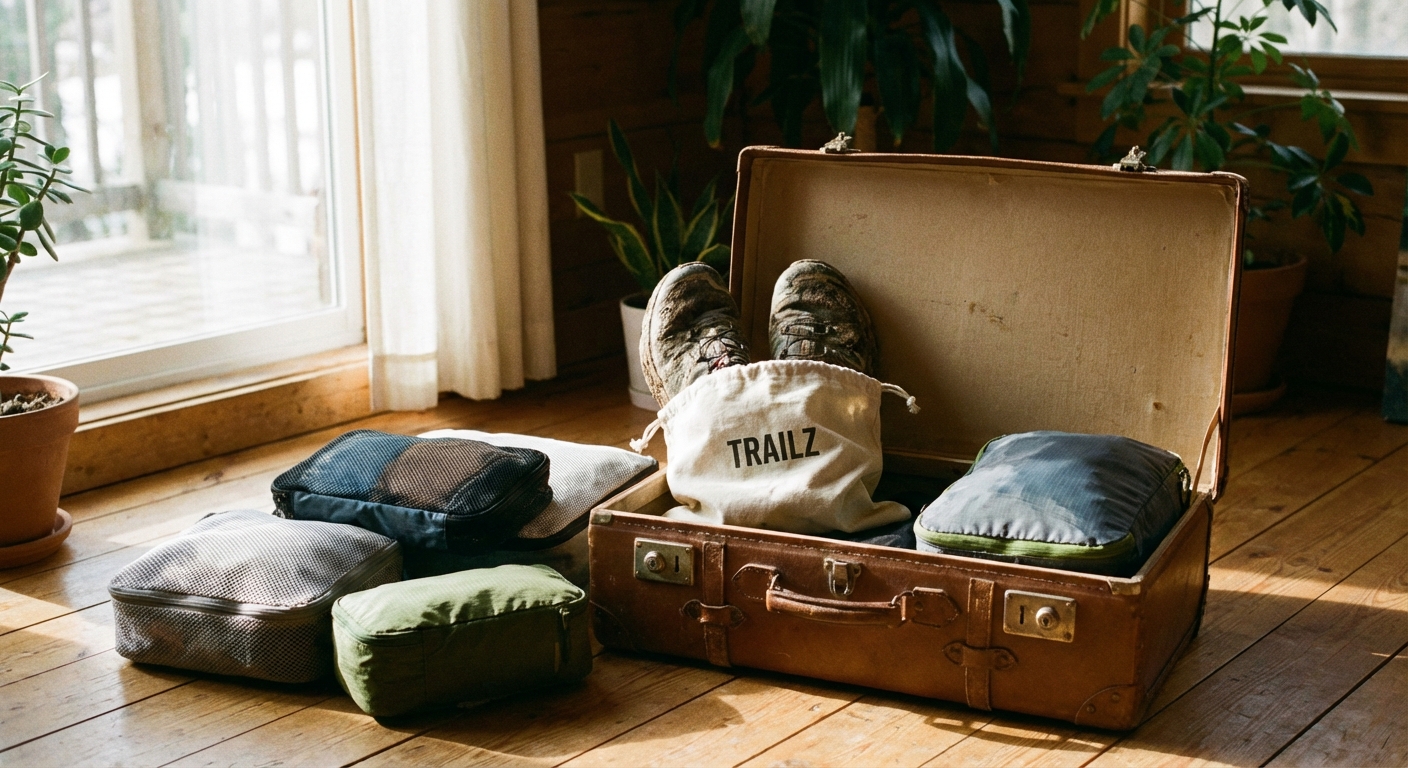
Common packing cube mistakes (and how to fix them)
Overstuffing every cube
If every cube is packed to the absolute limit, you lose flexibility. Leave a little breathing room so you can repack quickly and stash a last-minute purchase.
Using too many cubes
More cubes can equal more clutter. Aim for a system you can explain in one sentence, like “left cube is tops, right cube is bottoms.”
Mixing categories too early
If you combine underwear, shirts, and random accessories in one cube, you are recreating the original problem but with zippers. Start by separating, then combine only if it genuinely helps.
Ignoring your bag’s shape
A suitcase likes flat rectangles. A hiking-style travel pack likes vertical stacks and slimmer cubes. Buy cubes that match your most-used luggage, not the aesthetic of the product photos.
My carry-on only cube checklist
If you want a simple baseline, this setup works for most 5 to 10 day trips with laundry or sink-washing.
- 1 medium cube: tops (3 to 5)
- 1 medium cube: bottoms (2 to 3) and one nicer piece
- 1 small cube: underwear (5 to 7), socks (3 to 5), sleepwear
- Optional compression cube: cold-weather layers or activewear
- Separate bag: laundry or wet items
Trail & Town rule: If an item only works in one setting, it needs to earn its space. The best pieces are crossover: a merino tee that hikes well and looks normal in a cafe, or black pants that can handle a long walk and still pass at dinner.
Quick FAQ
Do packing cubes save space?
Standard cubes mostly save space by reducing dead zones and helping you pack tightly. Compression cubes can reduce volume for soft items, but the biggest win is organization and faster packing.
Are packing cubes worth it for backpacks?
Yes, especially if you are in and out of your bag often. Cubes prevent the “everything falls out” problem and make it easier to access layers without unpacking your life.
Can I use packing cubes with ultralight gear?
You can, but keep weight in mind. One or two lightweight cubes or a single compression cube is usually enough. For strict ultralight trips, a simple stuff sack system might be lighter.
Final pack test (do this before you leave)
Before you zip your bag for real, do a two-minute reality check:
- Can you pull out one cube without disturbing the rest?
- Do you have a place for dirty clothes on day three?
- Can you close the bag without forcing the zipper?
- Do your first-day essentials live on top or in an easy pocket?
If you can answer yes across the board, you are officially packing like a pro. Now go earn those cubes a few scuffs, whether that is on a mountain pass or on the walk to the best coffee shop in town.